
Bright and early this morning we walked down the road to Ebiil’s mesei (taro patches). Cultivating Taro is a culturally important practice to Palauan’s women. Often, maintaining a Taro patch is a way that Palauan women provide for their families. These taro patches can be passed down generation to generation for hundreds of years!
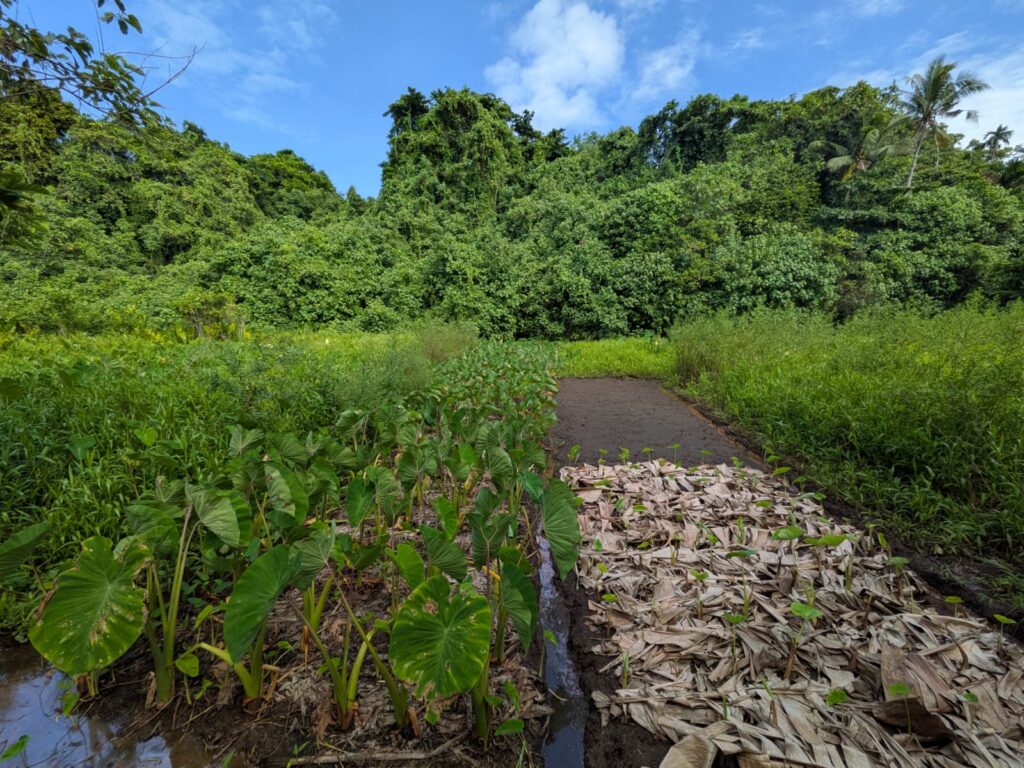
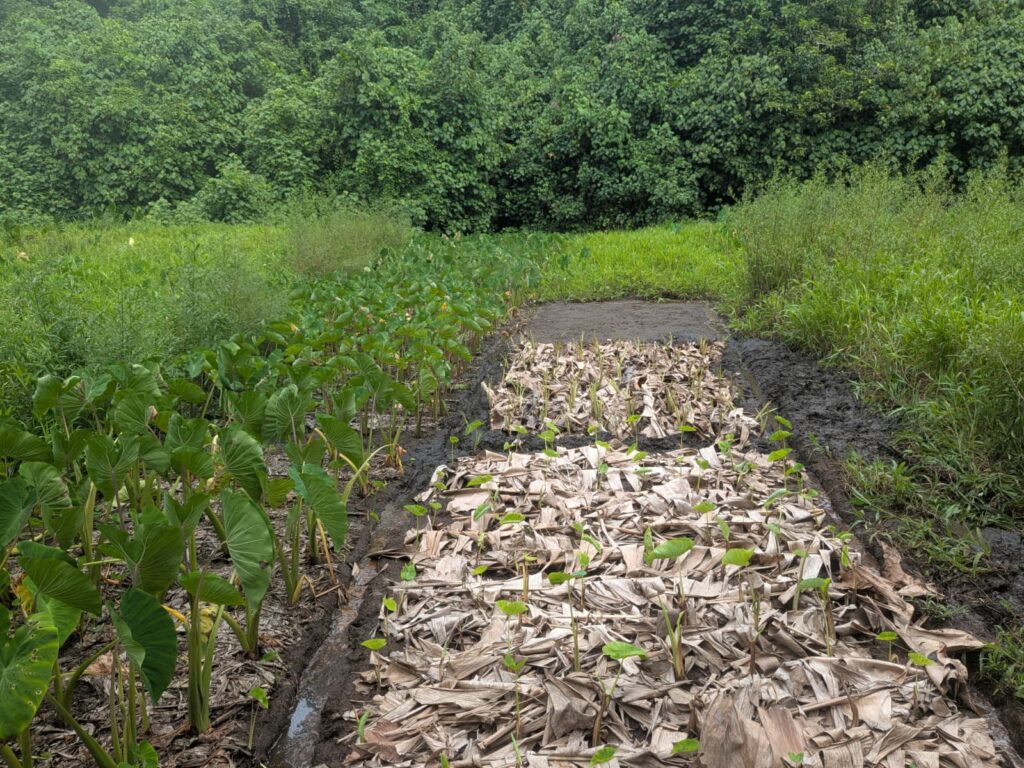
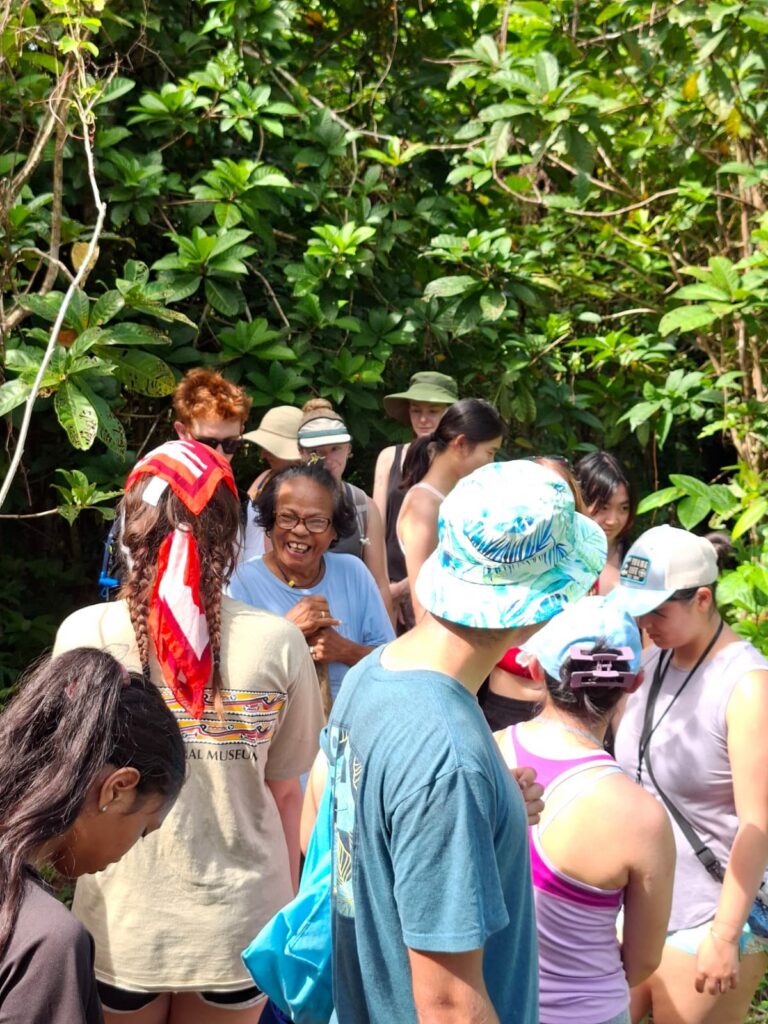
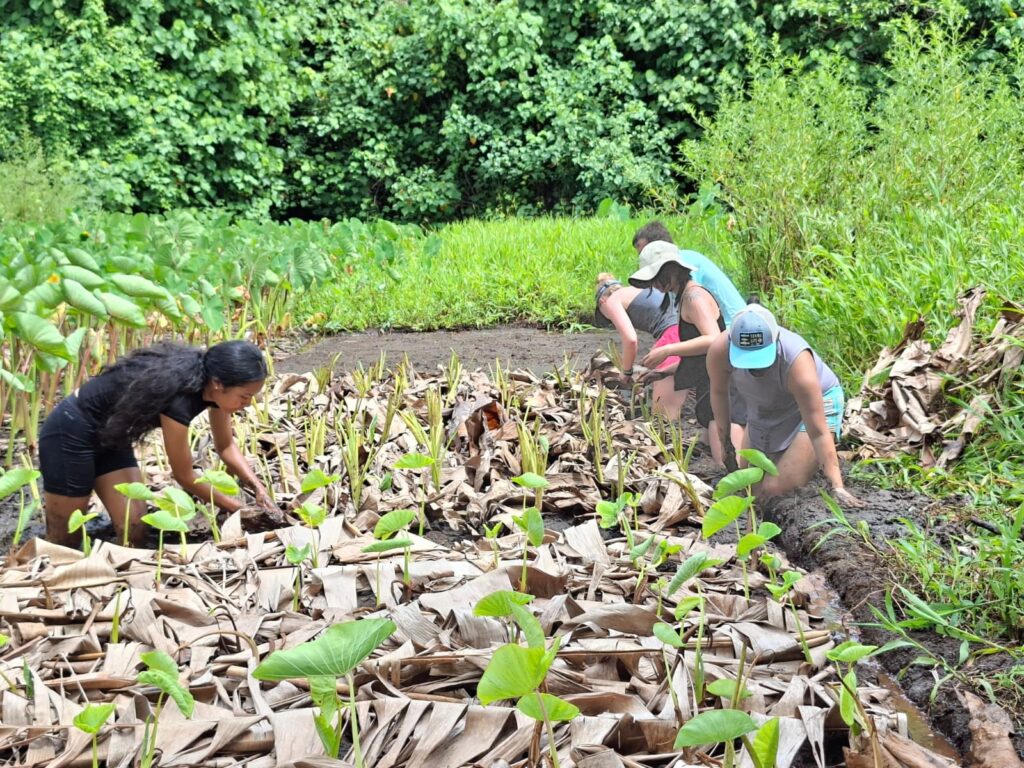
Once at the mesei we learned about their significance from Auntie Marie. In Palauan culture, taro is always planted left to right. We got a short demonstration on how to plant taro using stems from previous taro plants from Iseko of the Ebill staff. We then got to plant our own patch! The mesei are split into bluu (squares with taro planted) and kellaeb (The waterways between each bluu). We walked in the waterways so that we did not disturb any of the already planted taro. While walking in the waterways we sunk into the mud up to our thighs! Luckily we were given coconut oil to spread on our legs before hand so that the mud and taro did not bother our skin. Once planted, the taro will take 8-9 months until they are ready to be harvested. Learning about this practice made us appreciate all of the taro that we have been served at Ebiil.
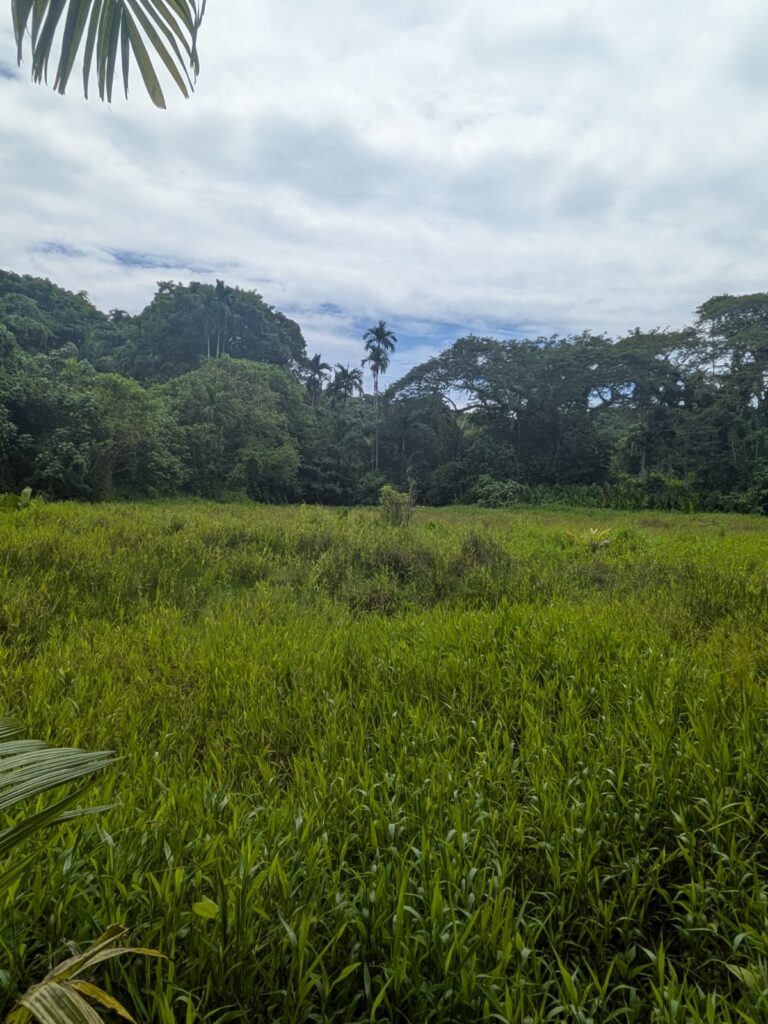
Water management of mesei is extremely important for the health of the taro. The waterways that flow between the mesei are often connected to many other mesei belonging to other families. It is important to keep the water clean and flowing so that the community can all share water. After planting taro we went to look at a mesei that has been completely destroyed. A dam was built to provide clean water and water pressure to the village. While this is good, the women of the village shared concerns that the dam would flood the community mesei. Their concerns were not taken into consideration and when the dam was built, exactly that happened. Today the mesei are overrun with grasses.
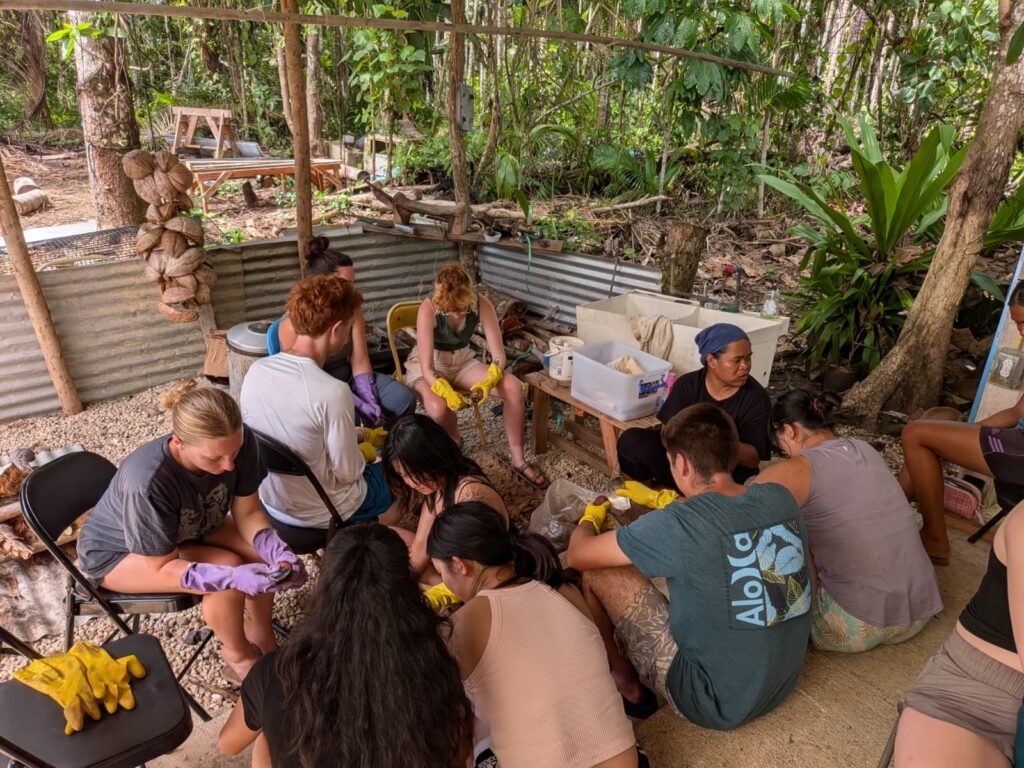
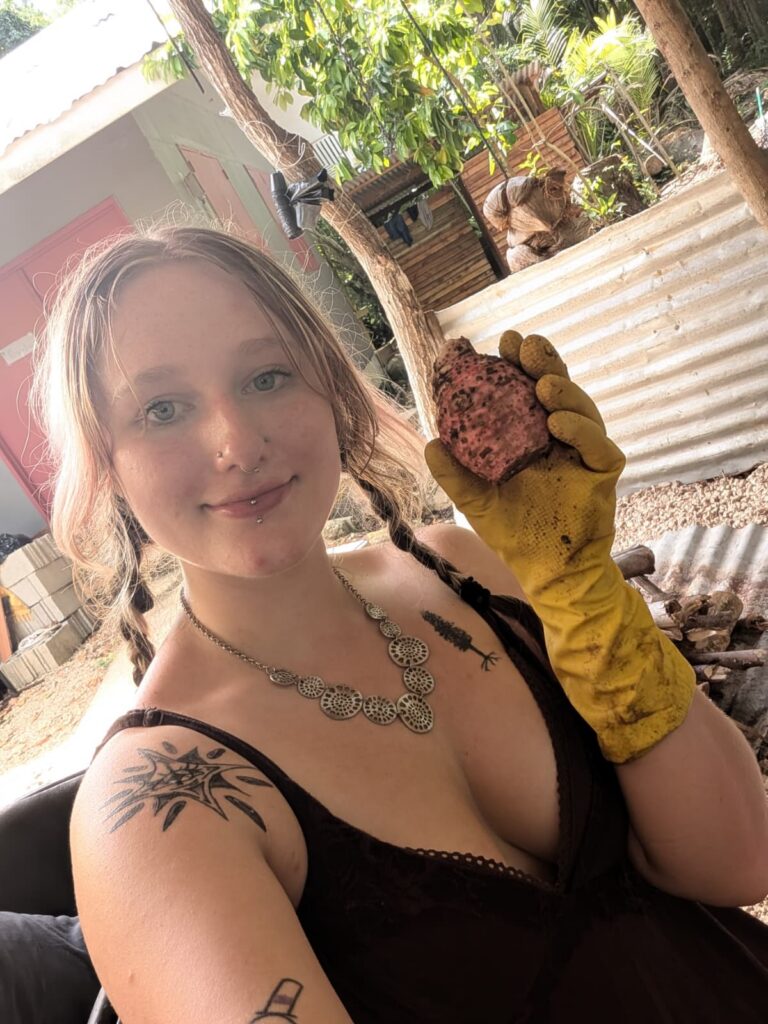
When we got back to Ebiil we had a delicious lunch of fried rice, tofu salad, and poki. Just the energy kick that everyone needed to move on to our next activity of the day! Now that taro was planted it was time for us to start processing taro. We started by helping the staff scrape all of the dirt off of some taro that they had cut from the stems. Wearing gloves during this process is essential as taro skin containes calcium oxalate crystals. When handled raw this compound can cause irritated and itchy skin. The process of scraping the dirt off the taro was oddly satisfying and got us one step closer to our meal!
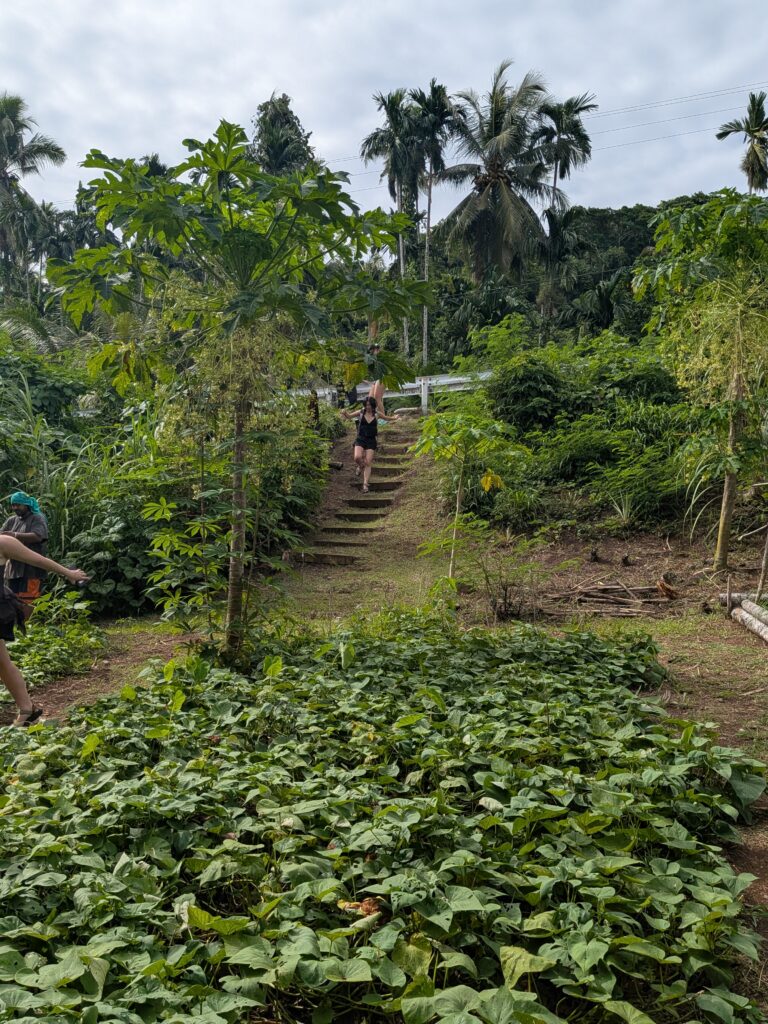
After lunch we had some free time. Brian , Daniel, Red, and Dora lee took some students on a tour of the garden at Oleii that provides the Ebiil society with food. The garden grows many important foods and medicines like papaya, tapioca and sweet potatoe as well as fresh eggs. Not only are these foods important for nutrition, but they also have cultural importance for Palauans. By continuing grow them and use them, the Ebiil society is helping to protect Palauan Culture.
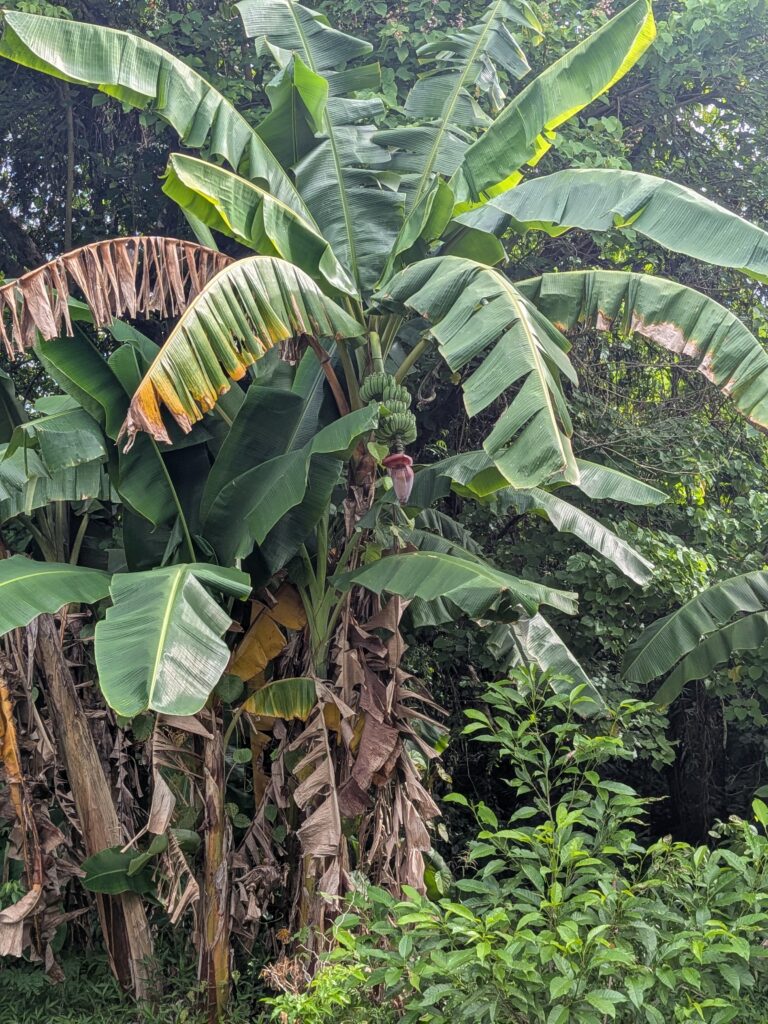
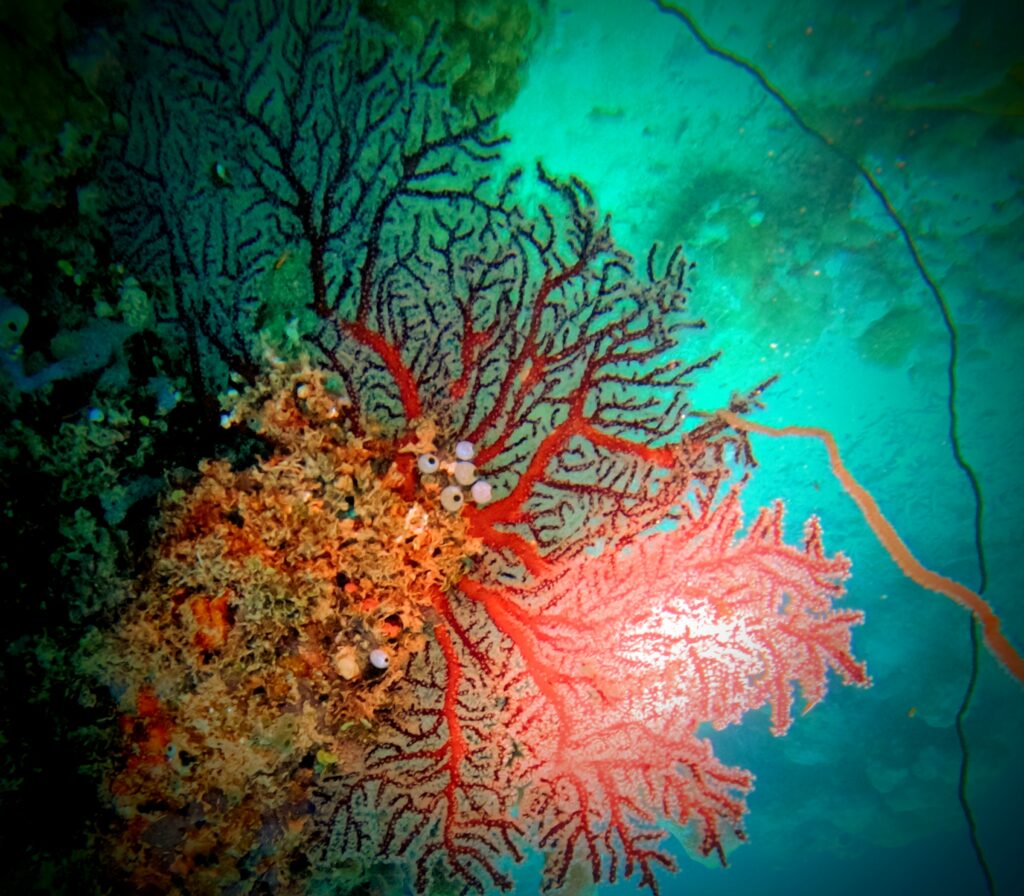
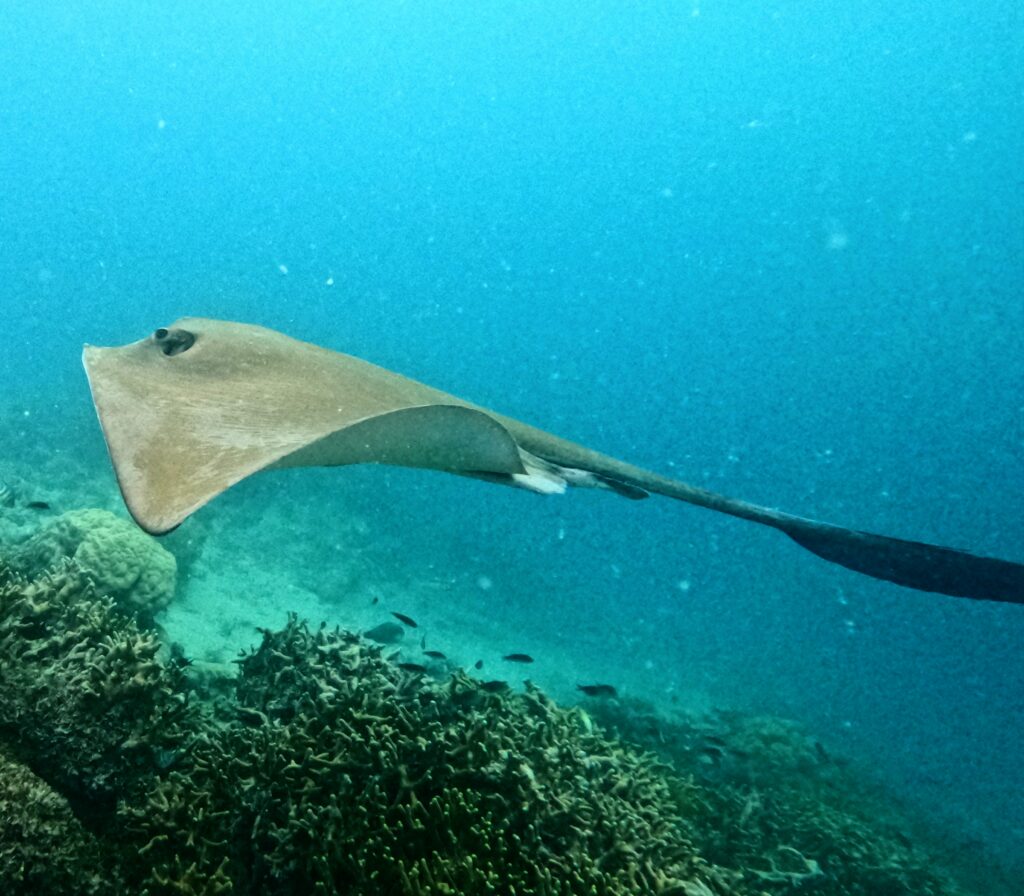
After returning to the main site, their was still more extra time before dinner. Some of the students spent time interacting with the young fruit bat Razor, a pet of one of the workers at Ebiil. Others decided to snorkel out to try and find a WW2 sunken plane just the jetty. Me (Noah) and Adam went off in search of the wreck. On the way out to the reef they found several interesting creatures in the eelgrass such as crocodilefish, sea stars, and jellyfish. Eventually the eelgrsss transitioned into coral. We searched for the wreck but were quickly distracted by the pristine reef. We saw numerous hard and soft corals, sharks, stingrays, angelfish and feather stars.
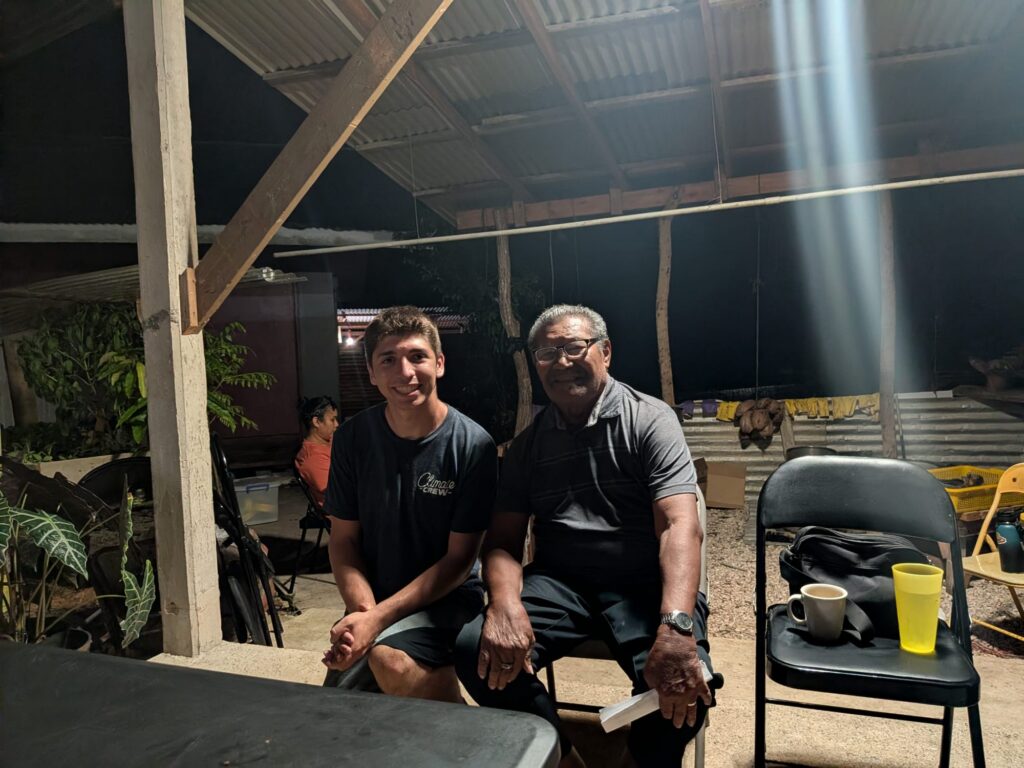
Heading back to camp, the Ebiil Society had prepared a delicious dinner of BBQ chicken. We then cleaned up and waited for the arrival of the fifth Chief of Ollei. As third chief, it is his responsibility to be the messenger between the different Chiefs. He has done a lot of important work to protect the fisheries around Ebiil, particuraly protecting giant clams and establishing a protected zone around Ebiil Channel. In Palau, roles are split between genders where the woment tend to the taro patches and harvest clams while the men go out and fish. That is why it is the responsibilty of the Chief to protect to oceans and fisheries.
Written by Abigail Johnson and Noah Brown