
By Lorelle Sherman, OSU Extension Forester
What comes to mind when you hear the term ‘wildlife habitat’? Do you imagine lush forests, cattail-filled wetlands, river corridors, and mountain meadows? Or are you the type that likes to zoom in to the scale of a mossy log, a decaying stump, or the underside of a rock?
The latter could be described as microhabitats nestled within the former larger-scale habitats. A microhabitat is a small, structurally distinct area within a larger habitat that provides everything a species needs: food, water, shelter, space. Think of a large Douglas-fir log decomposing on the forest floor. It is simultaneously a microhabitat for red-backed salamanders sheltering under the bark, a hunting ground for ground beetles prowling through the moss on its surface, a substrate where decay fungi are threading their hyphae into the wood, and a microsite where a western hemlock seedling has germinated on the nutrient-rich, moisture-retaining surface of the decaying wood. One log, many stories.
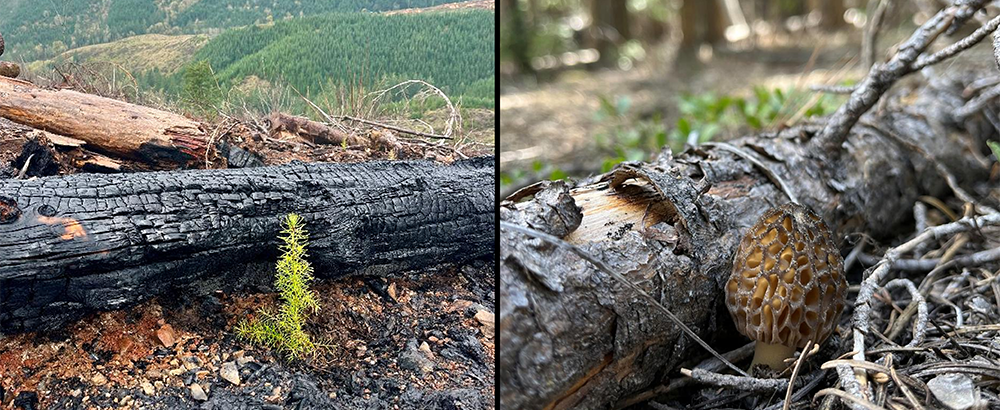
Microsites are little pockets with distinctly different environmental conditions than the larger surrounding area. Microhabitat creates microsites. After a wildfire, large downed logs create a cooler, moister microsite on the north-northeast side of the log by providing shade from the summer sun. Sometimes the decaying log even retains moisture through the dry summers. You may find all sorts of creatures utilizing these microsites as refugia, buffering them from otherwise prohibitive environmental conditions. Salamanders, ground beetles, tree seedlings, and mushrooms come to mind.
Amphibians and microsites
Oregon’s amphibians (salamanders, frogs, and toads) are incredibly sensitive to microsite conditions. These creatures breathe partially through their permeable skin, so they are vulnerable to desiccation. For salamanders in particular, the choice of microhabitat is not a preference so much as a physiological necessity.
The ensatina (Ensatina eschscholtzii) is one of our most common lungless salamanders and a good example of microhabitat dependency. Ensatinas spend the dry summer months deep underground or tucked into the cool, moist interiors of large decomposing logs. They emerge and become active on the forest floor once our fall rains hit. They seek out damp soil under bark slabs, the underside of large downed wood, and root tunnels left by decomposed roots because they maintain high humidity even when the surrounding forest floor has dried out. Without these structural features, the ensatina’s activity window shrinks dramatically.
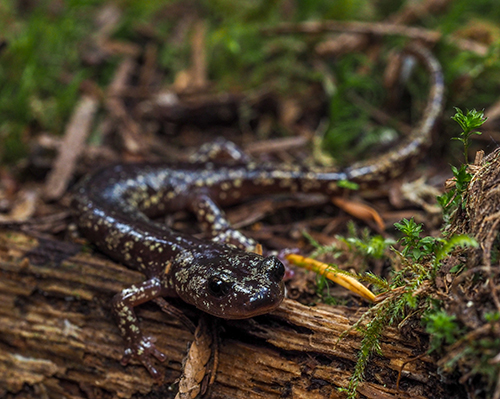
The clouded salamander (Plethodon elongatus) takes microhabitat specialization a step further and is nearly inseparable from large woody debris. This species forages and overwinters within the layered bark and interior of large conifer logs, particularly old-growth Douglas-fir and ponderosa pine. Studies in the Pacific Northwest have found clouded salamanders in very low densities or absent from young managed forests that lack large logs, underscoring how dependent they are not just on the presence of wood, but on logs of a specific size and decay class.
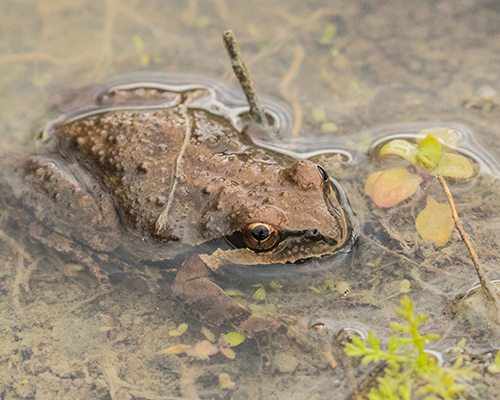
Even our more generalist amphibians rely on microsites in ways that aren’t always obvious. Pacific tree frogs (Pseudacris regilla) breed in shallow, ephemeral wetlands, which are pools that dry up every summer. This sounds risky, but it’s quite strategic. Fish eat chorus frog tadpoles and fish can’t survive in pools that dry out seasonally. Loss of these micro-wetlands across the Willamette Valley has contributed to local amphibian declines.
Invertebrates and microsites
It is easy to underestimate invertebrates when thinking about habitat, but they represent the majority of forest biodiversity and perform irreplaceable ecological functions, such as decomposition, nutrient cycling, pollination, and serving as food for a whole slew of forest predators. Invertebrates are microhabitat specialists to an extraordinary degree.
Ground beetles (family Carabidae) are a good entry point into this world. Many species are highly sensitive to soil temperature, moisture, and structure. Certain carabid beetles are found almost exclusively under large flat rocks on south-facing slopes where daytime sun warms the underside of the rock, creating a warm microsite for overwintering or egg development.
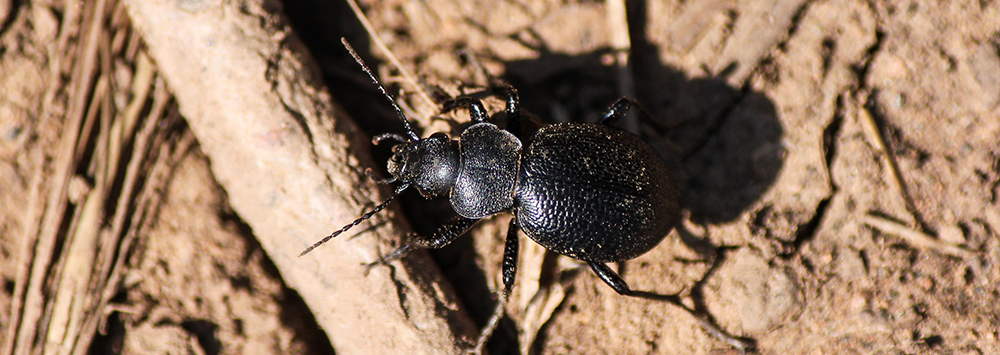
Invertebrates that depend on large downed wood illustrate how decay class matters, not just the presence or absence of logs. A freshly fallen log hosts a very different invertebrate community than a soft, punky log in advanced decay. Wood-boring beetles in the family Cerambycidae tend to colonize recently dead wood, while later-stage decay specialists like certain flies, beetles, and mites move in only once fungal decomposition has softened and transformed the wood’s chemistry. This succession of microhabitat, shifting over time, means that maintaining a diversity of decay stages supports far more species than a landscape with logs all at the same stage.
Perhaps the most striking example of microhabitat dependency in invertebrates is found among cavity-nesting bees. Oregon supports over 500 native bee species, and a substantial portion of them nest in bare, undisturbed soil. Patches of bare mineral soil are critical microsites for ground-nesting bees. Even a small, sunny patch of exposed soil on a south-facing embankment can host dozens of bee species. Bumble bees (Bombus spp.) often nest in abandoned rodent burrows, relying on the structural microhabitat provided by small mammals. The connections run deep.
Tree seedlings and microsites
If you’ve gone through the process of reforestation, you know that seedling establishment is a vulnerable stage of a tree’s life. You may have also noticed that survival of tree seedlings can sometimes depend on planting in the right microsite.
Douglas-fir (Pseudotsuga menziesii) seedlings establish best on bare mineral soil where competing vegetation is minimal and the seed can make direct contact with the soil. Disturbances like windthrow, fire, and even the uprooting of a large tree create these conditions. The north to northeast side of a large downed log stays cooler and retains moisture longer into the dry season than the surrounding forest floor, giving a young Douglas-fir seedling a fighting chance through its first summer. Seedlings establishing on the north side of a fallen log, in the shade cast by a rock, or in the small depression left by a rotting root wad can survive summer drought that kills seedlings just a few inches away on exposed mineral soil.
Oregon white oak (Quercus garryana) acorns are cached by western scrub-jays and squirrels, often in small soil disturbances or leaf litter pockets that provide just enough cover for germination. Excessive trampling by livestock can compact soil, eliminating microsite conditions and potentially causing regeneration failure.
Mushrooms and microsites
While I don’t have data to back this up, I notice many species of mushrooms fruit on the cooler side of logs in drier habitats or drier years. Many mushroom hunters will say “look for the microsites” in dry years. When rainfall is scarce or arrives late, the cool, shaded side of a log may hold the only moisture around. Why does this matter? Mushrooms are composed of up to 90% water, meaning adequate soil moisture is a prerequisite for emergence. Without moisture, the fungal mycelium may remain dormant in the soil even if the calendar says it’s mushroom hunting season.
This is a good reminder that the microsite conditions created by large downed wood ripple through the entire food web: the invertebrates that feed on fungi, the small mammals that cache and consume them, and the mycorrhizal networks that connect tree roots underground are all quietly dependent on the moisture refuge that a single large log can provide.
How do I manage for microsites?
In forestry, we often think about how we can manage our forests at the stand- and even landscape-scale. Landscape-scale decisions are not at conflict with the concepts of microhabitats and microsites. In fact, we can cultivate these unique complexities through a few simple actions:
Retain structural complexity. The most effective thing you can do for microhabitat diversity is to maintain a variety of structural features across your property: logs in multiple decay classes, rocks, soil disturbances, intact duff layers, standing snags, and areas of bare mineral soil.
Think like a microsite. When planting seedlings, pay attention to microsites. Where possible, plant in small depressions, on the north side of logs or rocks. You can move downed wood around to create these opportunities either by hand or with machinery. Larger-scale operations will even move all their downed logs into an east-west alignment, so there are increased opportunities for planting on the north side.
Balance fuels reductions with wood retention. Large downed logs do not carry fire the way fine fuels do. You can reduce fuels across the landscape and still maintain large wood structure of various sizes across the land. Assess your local fire risk with the help of a forester to identify where you can retain wood for habitat.
Wet spots are more than headaches! Seasonal ponds, seeps, and even consistently damp depressions are disproportionately important for amphibians and invertebrates. Protecting or restoring these small features is a cost-effective action available to private landowners. You wouldn’t want to build a road here, anyways!