My name is Jessica and I am majoring in marine biology at Oregon State University. This summer I will be working with the Human Dimensions Project within the Oregon Department of Fish and Wildlife. I will travel to Oregon’s marine reserves to survey visitors about their awareness and opinions of Oregon’s marine reserve system. I will also be going to tourist-oriented businesses in nearby towns to ask about their awareness of marine reserves as well as how they think the reserves have impacted their businesses. Later in the Summer I will enter the data collected into a database so that it can be analyzed and used in a report due to Oregon’s legislature in 2023.
When the marine reserve system started in Oregon, the legislation required a report be submitted ten years after implementation describing the affect marine reserves have had on coastal communities and ecosystems. Baseline data was collected for two years before any restrictions were put in place so that the state of the ecosystem and the opinions of local communities before the reserves were fully up and running would be known. The data collected this Summer will be compared to the baseline data, allowing the Oregon Department of Fish and Wildlife to determine the impact of marine reserves on local communities.
One of the main goals of the Human Dimensions Project is to ensure conservation efforts are not negatively impacting coastal communities. Without community support ODFW would not be able to carry out its mission of, “protecting and enhancing Oregon’s fish and wildlife and their habitats for use and enjoyment by present and future generations.” The coastal community focus of the project also helps to further Oregon Sea Grant’s mission by supporting a management approach to marine resources that prioritizes thriving coastal communities as well as a healthy ecosystem.
My name is Phoenix A. McFarlane and I am a Doris Duke Conservation Scholar who is going to spend the summer right alongside Oregon SeaGrant’s Summer Scholars! I am a junior at the University of Idaho and am majoring in Environmental Science. Though I thoroughly enjoy the outdoor recreation and wilderness aspects of Idaho, I was ready for a change! Spending the summer on the Oregon Coast is going to be an unforgettable adventure!!!
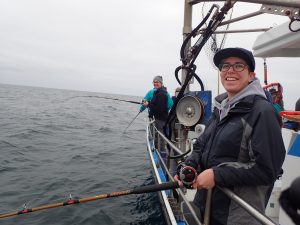
Fishing @ Lucky Peak Lake. Boise, ID.
For my summer internship, I am working with the Oregon Department of Fish and Wildlife (ODFW) within their Marine Reserves division. My summer will be spent conducting visitor surveys in hopes of assessing awareness of Oregon’s marine reserves amongst the visitor population. Also, I will be surveying coastal businesses and determining if they have faced any socioeconomic impacts from the implementation of the marine reserves. Though my summer will mostly consist of interactions amongst the public, I will also be tasked with the responsibilities of data entry and interpretation. So far I am realizing that it sounds easier said than done! However, I have no doubt I will overcome the obstacles and develop new skills that will help me in my future as a scientist.
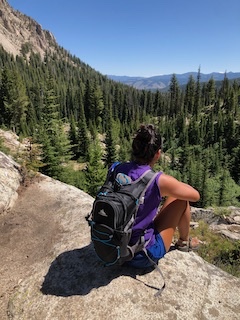
Day hike in the Sawtooth Wilderness. Stanley, ID.
Overall, the exploring I have accomplished up to this point has been a much needed change of scenery. Slowly in the process of getting familiar with the coastal species and their common names. I am so grateful for this opportunity and the connections I am making! Shoutout to my roomies Grace Roa and Lisette Perez for making this summer experience that much more meaningful!
I can’t believe I’ve already been a fellow for six months! Time is really flying by. In the last quarter, I have distributed a needs assessment survey to stakeholders involved in Oregon aquaculture, continued working with West Coast Sea Grant partners to plan a seaweed symposium, served as a reviewer for two grant proposals, and started working on an aquaculture regulations report. In my next blog post, I plan to give a more thorough update on these projects, but for now, I am going to discuss a side topic that is frequently brought up in literature (and other media) and conversations about sustainable aquaculture development.
Every other week I participate in a regional meeting facilitated by the National Oceanic and Atmospheric Administration (NOAA) where all of the West Coast Sea Grant programs give an update on their aquaculture work. Sometimes we spend part of the meeting discussing a relevant topic, and we have recently been focusing on aquaculture literacy, which I am defining very generally as knowledge and understanding of aquaculture among the public. This has sparked some very interesting conversations about how the public perceives aquaculture, how these perspectives have changed (or not) over time, and how to address the myriad of misconceptions that persist.
To give you some background, there is a general lack of awareness of current aquaculture practices among the public. Aquaculture is not something that most people knowingly interact with on a regular basis, and this is especially true for folks living in landlocked states – although these states grow a large number of freshwater aquaculture products. About half of consumed seafood is farmed (NOAA Fisheries 2020), so it is likely that most people who eat seafood regularly are consuming some aquaculture products. Despite this prevalence, negative perceptions of aquaculture are abundant and persistent, which can limit aquaculture development. Like any method of food production, farming of aquatic species comes with risks to the environment. For example, some forms of aquaculture can contribute to pollution and disease spread from farmed to wild species. But aquaculture also provides benefits such as jobs, food security, and ecosystem services. Additionally, scientific literature has refuted many of the associated risks that are commonly cited (Knapp and Rubino 2016), but since most people have limited engagement with updated information about aquaculture, negative perceptions can still present a barrier to expansion.
When addressing the issue of aquaculture literacy, I think it is really important to acknowledge that aquaculture is a diverse and growing industry that utilizes several farming methods to grow numerous aquatic and marine species (e.g., fish, shellfish, seaweed, etc.). This diversity means that blanket statements about the environmental impacts of aquaculture are rarely representative of the industry as a whole. The impacts and sustainability are very much dependent on the species, habitat, and method of farming, just like they are for any other type of food production. For example, raising fish in an offshore net pen in the open ocean will have very different risks than raising them in a recirculating tank system on land. The industry has grown significantly over the past 20 years, and has experienced a lot of pressure to increase the sustainability of their practices (Naylor et al. 2021). During this time, they have been working hard to implement improvements that greatly reduce risk. As a local example, longline oyster growers in Washington have developed tools to reduce the amount of marine debris (specifically yellow rope fragments) released into the environment, including a machine called the “cluster buster”.
Aquaculture is an important tool to meet increased demands for seafood products since the majority of wild caught fisheries have plateaued (see Figure 1). In order for the aquaculture industry to expand sustainably, there is a need to improve aquaculture literacy and address misinformation. The question is, what is the best way to do this? In our regional meeting discussions, some suggestions included focusing on the environmental and economic benefits of aquaculture (e.g., jobs, food security), reaching K-12th grade audiences, working with aquariums and other informal/formal environmental education facilities, and sharing success stories from the industry. These are all great ideas and I would add highlighting the diverse, sustainable forms of aquaculture and technological advances. Check out this article from NOAA that discusses some current technology and regulations. I also think it is helpful to frame the sustainability of aquaculture in comparison to other food production systems, which may assist consumers in making informed choices. For a good comparison with wild caught fisheries, plant-based meat and livestock, I recommend this article. Lastly, funding opportunities that prioritize aquaculture literacy are needed to provide resources to educational institutions. There was a recent call for proposals from NOAA and the North American Association for Environmental Education (NAAEE) to address aquaculture literacy by providing funding to partnerships among informal learning centers (i.e., aquariums), the aquaculture industry, and NOAA. I am excited to see these organizations creating opportunities to support effective science communication and look forward to continued discussions about ways to address this issue.
Figure 1. Plot showing the amount of capture fisheries vs. aquaculture production from 1950-2018. Source: Food and Agricultural Organization of the United Nations (FAO) State of World Fisheries and Aquaculture report (2020).
Knapp, G., Rubino, M.C., 2016. The Political Economics of Marine Aquaculture in the United States. Reviews in Fisheries Science & Aquaculture 24, 213–229. https://doi.org/10.1080/23308249.2015.1121202
Naylor, R.L., Hardy, R.W., Buschmann, A.H., Bush, S.R., Cao, L., Klinger, D.H., Little, D.C., Lubchenco, J., Shumway, S.E., Troell, M., 2021. A 20-year retrospective review of global aquaculture. Nature 591, 551–563. https://doi.org/10.1038/s41586-021-03308-6
I am currently a second year Master’s student studying Fisheries Science under Dr. Scott Heppell at Oregon State University. When it comes to my research project, I have not started collecting or analyzing data yet (a global pandemic did get a bit in the way in that regard). However, I have put together a research proposal and successfully completed my “research review” (which is a formal meeting that confirms the organization of your thesis committee and allows for everyone to review and sign off on your proposal) in December, which certainly has helped me to feel more accomplished and like progress is being made!
The idea behind the project…
Fisheries monitoring is an important aspect of fisheries management, used to assess populations and determine sustainable harvest. In the commercial fishery there are several means of collecting this data (fish tickets, at-sea fishery observers, electronic logbooks, and various electronic monitoring technologies). In Oregon, however, there is currently only one way that we collect data on the recreational fishery, port samplers. The Oregon Department of Fish and Wildlife (ODFW) conducts dockside interviews, counting landed catch (all fish caught) and interviewing anglers regarding discards (released fish) via the Ocean Recreational Boat Survey (ORBS). Of the recreational charter fishery alone, ORBS samples an impressive 30%. Yet, compared to the commercial fishery, there remains a significant lack of monitoring data.
Dockside sampling via ODFW’s Oregon Recreational Boat Survey Photo credit: Oregon Department of Fish and Wildlife
Which is why I am proposing an alternative form of electronic monitoring of the recreational fishery on the Oregon Coast. In collaboration with Oregon Department of Fish and Wildlife (ODFW) and the California Collaborative Fisheries Research Program (CCFRP), my master’s project will test a stereo-video system onboard recreational charter vessels. Utilizing photogrammetry (the science of obtaining reliable measurements using photos and/or videos), I will identify and quantify recreational catch data off the Oregon coast and compare it to sampling data collected by state port samplers via standard sampling techniques. Both the ODFW Marine Reserves team and CCFRP conduct several hook-and-line surveys every year (targeting groundfish). These surveys are conducted both inside and outside of marine reserves and all fish caught are brought on board, identified, measured, and recorded by ODFW or CCFRP trained volunteers.
Volunteer anglers with the California Collaborative Fisheries Research Program (CCFRP) assist in conducting fishery-independent hook-and-line, catch and release surveys. Photo credit: California Collaborative Fisheries Research Program
I will simultaneously collect stereo-video data on as many surveys as I can tag-along on in 2021. Which means I can then compare the length measurements I collect via stereo-video to the length measurements collected by hand during these surveys. Additionally, this is a unique opportunity to collect previously unobtainable data of the bycatch typically discarded on recreational charter boats. With this sampling design, I can make various comparisons that would shed light on whether electronic monitoring could be appropriate in recreational fisheries. Additionally, I will compare current reported data (collected via port samplers) to my own, with the ability to assess the accuracy of current reporting techniques and propose a cost effective, low maintenance alternative.
Given the current pandemic and potential for other disease outbreaks, I can imagine that in this new world of social distancing, an alternative form of port sampling may be necessary in the future. The stereo-video technology utilized in my project could be integrated into kiosks located at filet stations in all major Oregon ports. Thereby allowing the continued collection of recreational catch data without placing ODFW port samplers in danger or managing large absences in data.
Stereo-video systems are traditionally used in this manner (underwater) to identify and measure fish in a non-invasive way. I will be using this same technology and software ABOVE water and on the deck of a charter vessel. Photo credit: Pilbara Marine Conservation Partnership
The second half of my research project, entails investigating further into the uncertainty associated with bycatch data in the recreational fishery. Retained catch can be measured directly at the dock, but accurate monitoring of bycatch requires (1) anglers accurately identify released species and (2) remember what they released. Due to event recall biases and variability in species ID skills, this can introduce a high degree of uncertainty in recreational fisheries data. The main source of bycatch data for the recreational fishery in Oregon are in-person interviews conducted by port samplers. To supplement this, three at-sea observers sample a portion of the sport charter vessels for species composition, discard rates and sizes, location, depth, and catch per angler as part of ODFW’s Sport Groundfish Onboard Sampling Program (SGOSP). My objective is to determine whether current average bycatch values are accurately represented in port sampler collected interviews. To assess this uncertainty, we will compare data currently being collected by ODFW via ORBS port samplers to data collected by at-sea observers via SGOSP. By comparing these data, I will determine if bycatch recall values reported by recreational charter boat captains are in line with the same data documented by at-sea fisheries observers.
That’s the plan anyway. As the sun starts to peak out from the clouds more frequently, plans begin to form and pressure begins to build for my upcoming field season. I have a few updates I would like to share soon, so stay posted!
California Collaborative Fisheries Research Program (CCFRP). Video put together by volunteer angler Matt Michie.
As I transitioned from academia to a government agency, I noticed some similarities between the two. In both places I have worked with an incredible lab/team that are always willing to help figure out why some R code isn’t working or review a paper. Also, in both places I have been constantly learning new things and testing my skills. On the other hand, I have noticed many differences between my experience as a graduate student at the University of Florida and as a fellow with the Marine Reserves Program at the Oregon Department of Fish and Wildlife (ODFW).
One major difference between the two places is how I speak about my research. As a student I was allowed to be an advocate. I could speak about wanting to expand protected areas and conserve all species to my heart’s content. It was practically expected of me to have these strong opinions about conservation and discuss them openly. Working for a state agency, the expectation is exactly the opposite. I now must be impartial in my word choice both in person and in writing. Though I work for the Marine Reserves Program, I am not an advocate for marine reserves. I am simply studying how the marine reserves may have impacted communities and presenting these results in a straightforward manner. If I take a strong position on marine reserves, the public may lose trust in my ability to conduct unbiased research. If the public loses this trust, they are less likely to support the agency and follow agency regulations. This trust is crucial, but also fragile.
Another difference between academia and government is the type of research being conducted. In academia, the focus is more on what is interesting and would advance the field. In government, the focus is on achieving the mandate. Therefore, our research options are limited and must be strictly applied research rather than theoretical. We also must be transparent about our research and where funds are going since we are a largely tax-funded agency. This is another important component of building that trust.
Government agencies typically work on projects with larger scale timeframes than what graduate students are involved in. While long-term monitoring projects are typically considered boring and unpublishable in academia, these types of data are the bread and butter of ODFW reports. We are constantly monitoring fish stocks, commercial fishing pressure, license sales, oceanographic conditions, etc. Most of these data are written up in annual reports and used to inform management. While long-term monitoring is generally not considered “sexy” research, it is extremely useful to have these historical datasets to understand how things have changed over time. I am using many of these historical datasets in my current work looking at how marine reserves may have impacted factors like recreational anglers’ Catch Per Unit Effort (CPUE), commercial fishing employment, and coastal communities’ socioeconomic conditions.
Lastly, one of the best changes I experienced when going from academia to government was an increased focus on having a work-life balance. In graduate school I was applauded for staying in the lab late and working on weekends. In my current position, I am expected to only be working 40-hour weeks and taking weekends off. We spend time in our weekly meetings discussing general life announcements that aren’t marine reserves related in the slightest. We even share good places to hike, mountain bike, snowshoe, camp, etc. because we know we will all have time to do these fun hobbies.
These are some of the major differences I observed in my life going from academia to government. These are solely based on my personal experience and are likely not applicable to everyone that made this transition.
Hello! I am a new fellow so I’ll start by introducing myself and my background. My name is Amy Ehrhart and I am the Aquaculture Fellow for Oregon Sea Grant. I started this position in November 2020 part-time while I finished my PhD in Environmental Science and Management at Portland State University. I was about two weeks away from my defense when the position began which made for a whirlwind of a month. But somehow I was able to defend, edit and submit everything on time. It feels surreal to be done with graduate school and starting a fellowship, especially during a pandemic.
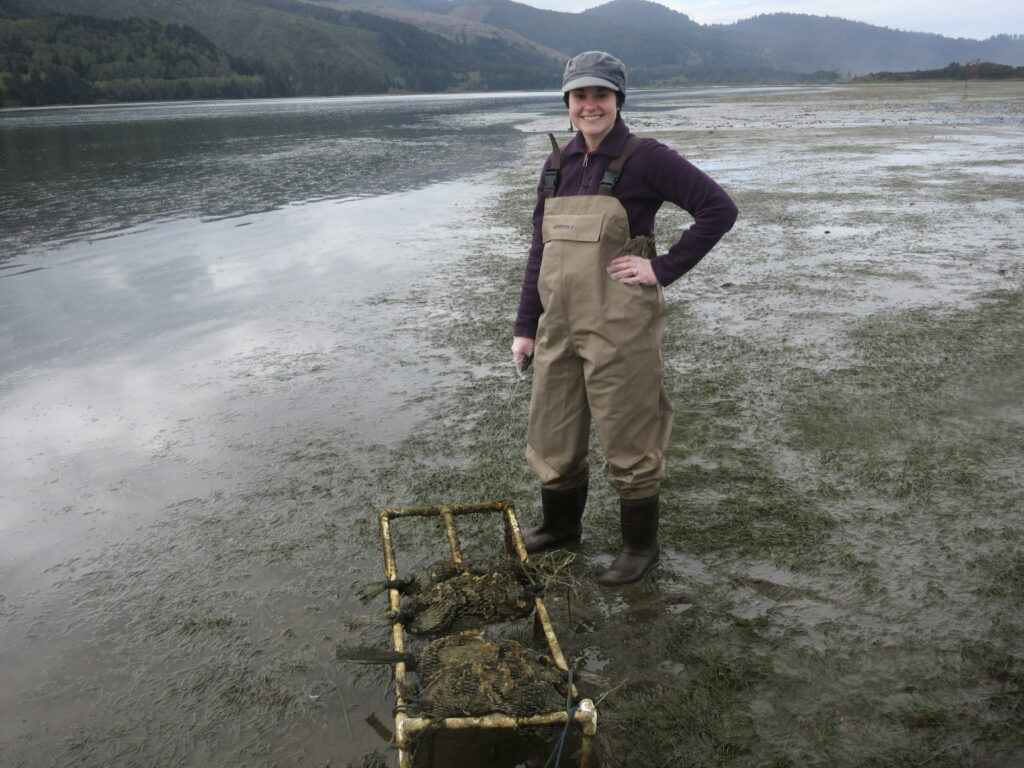
So how did I get into aquaculture? My dissertation research focused on pharmaceutical contaminants in coastal ecosystems. Two of my research chapters addressed effects and accumulation of these compounds in Pacific oysters, which are commercially grown in Oregon and Washington. To conduct field experiments, I used off-bottom rack-and-bag culture methods (see picture below) to grow oysters in areas near and far from contaminant sources. While aquaculture was not the main focus of my research, I gained a good understanding of oyster biology/ecology, different growing methods, areas where culture is taking place, and some industry priorities. Since starting the fellowship I have learned A LOT more about aquaculture in Oregon and the West coast and I am enjoying the deep dive into this topic.
Pacific oysters being grown in mesh bags attached to a PVC rack in Netarts Bay, Oregon (April 2017).
So far in my fellowship I have focused on three main projects: conducting a landscape analysis, planning a needs assessment, and participating in a regional seaweed aquaculture collaborative. I also provided updated content for the Oregon Sea Grant aquaculture website to highlight these current endeavors. There hasn’t been a large focus on aquaculture at Oregon Sea Grant for a few years so there was a need to identify who the major players are in the industry. I was tasked with completing a “landscape analysis” or more simply put, a spreadsheet of people, groups, and agencies involved with marine aquaculture in Oregon. I spent a good portion of my time compiling this information, and I continue adding to it as my work continues.
My second project involved planning a needs assessment for growers, prospective growers, agencies, and researchers working on aquaculture topics. Globally, about 50% of seafood comes from aquaculture (NOAA Fisheries), and a lot of this is imported to the U.S. from other countries. There is federal support for coastal states to increase domestic aquaculture production, but they face several challenges and barriers. Oregon aquaculture production is fairly low compared to other states, and there is a potential opportunity for expansion, which could provide significant economic benefits for the state. But we don’t know if there is interest in expansion in marine aquaculture or what the current challenges are for growers. The goal of the needs assessment is to identify needs and barriers surrounding aquaculture expansion and use this information to inform outreach and engagement strategies. I am currently finalizing an online survey that will be distributed as soon as it gets human subjects research approval.
My third project has been participating in a collaborative group that represents California, Washington, Oregon, and Alaska with a focus on seaweed aquaculture. Seaweed is a relatively new product, and one that I knew very little about coming into this group. I have been working hard to catch up so I can contribute meaningful recommendations. Our goal is to plan a regional symposium on seaweed farming that will be beneficial to growers and other industry members in all west coast states. This is incredibly challenging as all of the states have highly variable regulatory requirements, environmental constraints, and current seaweed operations. In Oregon, seaweed aquaculture is in the very early stages and constitutes 2-3 growers that cultivate Pacific dulse seaweed in land-based tanks. This is very different from a state like Alaska, that produces large amounts of kelp in the offshore environment. Identifying topics and strategies that apply to all states at a regional level has been an interesting challenge, and I look forward to strategizing and learning more.
These first three months of my fellowship have flown by and I am really enjoying the work! It was difficult to start a job with a heavy focus on stakeholder engagement during a pandemic that restricts in-person interactions, but I am feeling much more optimistic about the future as vaccines are being administered and COVID-19 cases are starting to drop.
Graduate school can be hard and a dredge. You get lost in the details, in YOUR project, in the details of your project and you lose perspective. When I decided to come back to school for my graduate degree, I decided that I would lay down some boundaries that might help me keep better perspective. Work whilst at work, play and rest at home. Obviously there would be some exceptions (research is not a 40 hour a week job, between teaching classes, taking classes, applying for funding and grants, conducting your research, and professional service inevitably there is always some working during your planned free time), but I found that sticking to this plan to be very helpful. Working from my office gave me a chance to engage in work actively and intentionally, reinforcing a need to use my time wisely and efficiently. This also meant that I was able to disengage and recharge when I went home.
Then, COVID-19 made its internationally debut. EVERYONE has been impacted by COVID, I am no exception. Overall, I feel very lucky and privileged to have faired as well as I have. Yes, my field work has been continually delayed, but I have a paying job, food in my belly, and a roof over my head, and a loved one (and furry one) to keep me company at home. It is hard not to be grateful when I know that I am much better off than many. That is the large-scale perspective.
When I analyze how my professional life has been affected by COVID-19 things start to get fuzzy. For the safety of myself and my family, I work from home. I have a quiet place to work and have no real obligations or worries that hinder my ability to work from home (like children or loved ones that need my care). Yet, I know that my ability to stay focused and motivated has decreased. My ability to draw the lines between work hours and personal hours has blurred, my efficiency has gone down, and as a result my morale has greatly suffered. Being a graduate student can be hard… I have so many privileges including setting my own schedule and having ultimate flexibility and culpability with nearly every choice that effects my professional life. But it can be difficult to keep perspective when you have ONE over-arching goal over the course of several years to accomplish – your research project, your thesis, your publication(s). It is hard to see the progress you have made, to see the steps forward, and the steps you have already taken behind you.
In my experience, field work keeps you connected to your study subject. Working in the field rejuvenates your excitement, inspires new ideas, and thus keeps you motivated throughout the rest of the year. Like many, my field work has been delayed due to COVID-19 (hopefully, I will be collecting data this fall). However, the combination of working from home on a research project with no definite end date, and without any field work or significant excuse to leave the safety of my home, has left me feeling a bit lost and dejected.
Do the next right thing…
Alas, time continues to pass and the reality of an impending defense date looms somewhere in the future. Currently, it seems difficult to see the light at the end of the tunnel. It almost feels as though I have stalled out before my project even started, yet I remind myself of the long-term goal. The goal is to conduct a research project from start to finish, complete a thesis, publish, and obtain my master’s degree in fisheries science and hopefully along the way I will take a step towards doing some good in the world of marine science.
For now, I will keep in mind advice that I once received from a wise source, Disney’s animated film Frozen 2, “All one can do is the next right thing”. At this point in time that means continuing to engage in my quantitative ecology class where I am learning about how to better conduct data analysis; continue to make appointments with mentors and collaborators who can help inspire ideas and motivate me during this strange time; and lastly, to refine my methodology as much as possible before data collection begins this fall. One day at a time, one step at a time, just doing the next right thing.
We’ve almost made it! The year 2020 is just about to end and 2021 is right around the corner. Though many issues that were highlighted in 2020 won’t be going away in 2021 and need to continue to be addressed, there are some things to look forward to. Just this month, healthcare workers started receiving the first round of the COVID-19 vaccine. As more and more people get vaccinated, we will hopefully see the end of strict quarantine measures in the near future. Maybe we will even be able to spend the 2021 holidays with family without a mask in sight! 2021 will also bring a new administration with climate change as a top priority, which will likely influence ocean policies and management. So, while 2020 was an important year and we should not forget what we learned in it, here’s to hoping that 2021 doesn’t throw us any detrimental curveballs.
Now that you’re up to date on some of what’s happening in the USA, let me update you on what I’ve been working on. In my last blog post I outlined how I’m using the Oregon Department of Fish and Wildlife’s (ODFW) daily angling license sale data to determine if marine reserves have influenced recreational fishing. Since people are no longer able to fish in the marine reserve sites, we might expect this to result in fewer licenses purchased in towns near the reserves post implementation. This might also be observed by an increase in licenses purchased in towns further from the reserves.
However, whether or not people decide to go fishing is just one aspect of measuring a potential reserve effect on recreational fishing communities. For those that do decide to go fishing, how much they catch and over what time period is another crucial component. This metric is referred to as Catch Per Unit Effort (CPUE). For our analysis, we calculate CPUE by dividing the total number of fish caught by the number of anglers aboard the vessel and by the number of hours fished. This creates a standardized metric whereby we can compare fishing trips with varying numbers of anglers and hours fished. Specifically, we can compare CPUE reported at docks near marine reserves pre- and post-marine reserve implementation. We might expect that marine reserve site closures could increase effort, thereby decreasing CPUE, by forcing anglers to spend more time traveling further to avoid the reserves. On the other hand, we might expect site closures to increase catch, thereby increasing CPUE, due to spillover effects whereby a greater abundance of fish inside the reserves leads to a greater abundance of fish outside the reserves.
Lucky for me, ODFW has been collecting the information I need to calculate CPUE through the Ocean Recreational Boat Survey (ORBS). This is an annual survey of Oregon’s marine recreational fishery that estimates both catch and effort at the top 10-11 ocean access points. This survey was first developed in 1979, but the original focus was on generating accurate salmon estimates in a timely manner. The ORBS survey has since expanded and provides valuable data on stock abundance and health for many species, which is used for management purposes.
By looking at both daily angling license sales as well as CPUE on charter boats, we should be able to uncover any potential marine reserve effects on the recreational fishing community. Of course, there are many covariates to take into account that could influence CPUE, such as catch regulations and environmental variables. I won’t dive into this right now, but maybe another blog post detailing the difficulties of finding downloadable historical buoy data without huge gaps is in order. Signing off for now, happy New Year!
Amid the chaotic nature of this summer with COVID-19, protests, wildfires, and an upcoming election, I have managed to seamlessly transition into my second year as a Natural Resource Policy Fellow with the Oregon Department of Fish and Wildlife (ODFW). Over the next year, I will continue to evaluate the impacts of marine reserves on coastal communities, communities of interest (e.g. commercial fishers), and ocean users (e.g. tourists).
Over the last year working on this mandate I have discovered that there are no perfect data sources to answer this question. Data often have errors associated with insufficient sampling in small communities, issues with changes in methodology, or are simply not available for the years or communities of interest. However, we can’t let these issues stop us. Therefore, we are gathering and analyzing relevant data from as many sources as possible while documenting the limitations of the data.
One source of data we have used are ODFW’s one- through seven-day fishing and shellfishing license sales. Implementing marine reserves closes off any extractive activities within that area. Therefore, we might expect that daily fishing and shellfishing license sales in communities located near marine reserves would decrease following reserve implementation. However, we also need to control for the historical trend in license sales on the coast. If license sales are decreasing in towns located near reserves, but also decreasing across the entire coast, then this reduction may be caused by something other than the reserves, such as a change in culture.
License sales are just one example of the data we are using to analyze marine reserve impacts. While we don’t always have perfect data to work with, using the best data available from multiple sources should be sufficient to understand if and how marine reserves have impacted communities.
As the end of my internship encroaches I am feeling like I have accomplished my goals and completed my tasks. I learned a lot this summer and as I reflect on my last 8 weeks I am very happy with who I have met and worked with, and what I learned from them. I am also happy that I got to learn a little bit more about myself and how I might respond to a remote position in the future.
Our three dogs: Wolf the chocolate brown Pomeranian-Poodle, Kona the merle Pomeranian, and Einstein the white Pomeranian.
I was surprised about how productive I can be at home. There are so many distractions for me to get tangled up in like the pile of laundry in my closet, the dogs (we have 3!), or even the sudden urge to clean out my refrigerator but I was able to manage my needs and get my work done. Some days I was more productive than others and I definitely didn’t work a M-F, 9-5 either. I put in a full eight hours of work some days and other days I didn’t. I was lucky because although my organization operated on standard business hours, I could complete my tasks outside of the work day if I pleased.
Me on vacation last week in North Bend, WA visiting the Snoqualmie Falls on an early morning hike.
If I could start the summer over again before the internship, I would have dedicated a space for me to complete my work. This summer I worked on the back patio, the living room couch, my bed and even in the basement. Having a desk where I can keep my computer and notes would have been ideal to keep me focused for a longer period of time. I would also have planned my vacations after the internship because although my internship was remote, it was a little difficult to stay on the computer while everybody else is relaxing!