An Enriching Summer

I can’t believe we’re about to finish week 8 of this internship program. Time has been going so fast and I’ve gained so much knowledge in the past few weeks. 

This internship has definitely let me build skills that I would have never gotten otherwise. The main one being graphic design skills which I never thought I would gain from a marine biology internship. Adobe Illustrator was definitely frustrating to figure out at first, but once I got the hang of it I’ve really enjoyed delving more into my artistic side. When I was a freshman in high school I thought that I wanted to be an animator but slowly lost passion for that over the course of high school. While I no longer have the desire to pursue a career in art, this internship has allowed me to rekindle my artistic side while combining it with my scientific side. 

Some of my old artwork from high school. The bottom one I submitted to the Tri-Valley Art Show where it won for Mixed Media!

On the science side, I have definitely learned how to better read scientific articles. During my undergrad, reading scientific articles was often a daunting task, especially during my thesis project. Much of the language was so complex and sometimes hard to interpret. But after spending about three weeks reading over 100 scientific papers, they are no longer as intimidating as they once were. Interestingly, it even restarted my interest in reading books.  

Another important thing that I have learned about is informational interviews and how helpful these can be. I’ve always had anxiety around asking for help, especially if it requires a meeting as I am worried about bothering people. But with all my conversations with ODFW employees, I have been pleasantly surprised as to how open people are to speaking with me to talk about their paths and provide advice. I always appreciate the enthusiasm they bring to our conversation and the genuine interest that have in helping me in my career path. Even within the CEI program, I’ve been surrounded by people to ask for advice and to help me build connections with others. Networking is definitely a huge part of any career path and I’ve learned to be less afraid to build those connections. 

On that note, I’ve been surprised by simply how many things each person within the organization is working on. Every person I have talked to seems to be working on about 100 projects at once and it just seems to be magic that they still get everything done. Despite their busy schedules, they still find time in their day to meet with me which just makes me that much more appreciative of them. 

Another surprising thing for me was how I haven’t been burnt out by virtual work yet. After a year and a half of doing college virtually and already at Zoom burnout, I have been surprisingly okay with doing the whole internship virtually. Not sure if it’s the change in settings, if I’ve just finally gotten used to the virtual world, or if I just really enjoy the work, but being in front of my computer for 8 hours a day hasn’t been as exhausting as I thought it would be. I even find the energy occasionally to spend an hour or two after the workday to edit a couple of my undergraduate projects for publication.

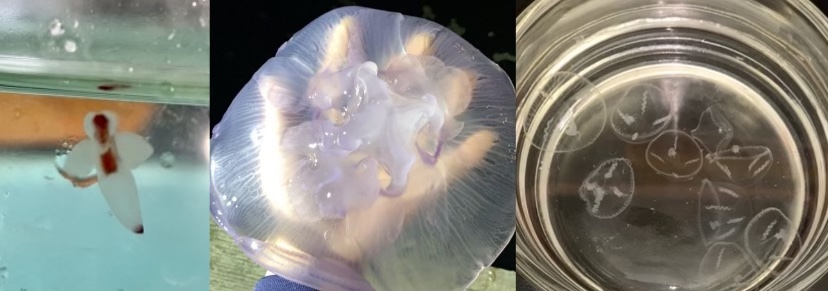
Some of the gelatinous creatures I found last summer at OIMB while I was working on my thesis project. Left: Clione, middle: Aurelia aurita, right: Eutonia indicans.

If I could do anything differently, it would be to have engaged with people earlier on in my internship. It took until about week 4 or 5 for me to start setting meetings to talk with professionals as I was just finding myself overwhelmed with having to talk with them one-on-one. But these conversations have been so beneficial to my learning, as well as a great break from just sitting alone in my room and working.

~Yalin 🐟

Shrimping in Washington was not a (Cape) Disappointment

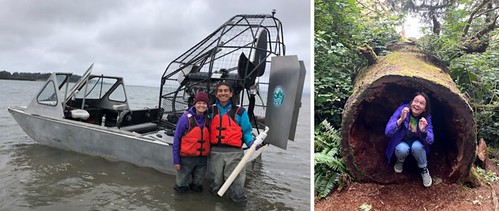
The last two weeks have been absolutely crazy! Joshua and I went to Tillamook, OR and Long Beach, WA last Tuesday-Friday for field work. We sampled mud shrimp and ghost shrimp in both Tillamook Bay and Willapa Bay. In Washington, we got the opportunity to go out in an air boat and work with the Washington Department of Fish and Wildlife. At the beginning of the summer, I couldn’t pull up a single core but by the end of last week, I was pulling several in a row! We also had the chance to go to Cape Disappointment and, no, it did not disappoint. It was beautiful!

Tillamook, OR & Long Beach, WA
Biggest oysters I’ve ever seen from Tillamook Bay, OR. “World’s Longest Beach” in Long Beach, WA.

Because my internship has been more of a scientific research project, I haven’t been exposed to much science policy and outreach with the public. Therefore, my view of science policy has not really changed that much. I always knew it was a complicated balance of different group’s needs and wants, but never quite realized just how complicated that process can be. I presume other science policy organizations in Oregon, like me at OSU and USDA-ARS, must find that balance of ecology vs economy. The overarching question in our meetings is always “how can we keep these shrimp that are important to the ecosystem but also manage them for good oyster growing conditions?” That being said, I must be pretty inspired because I am going to start my Marine Resource Management master’s program in the fall where I will learn more about science policy and continue this line of work in my future endeavors.

WDFW airboat & Cape Disappointment
Joshua and I with the WDFW airboat. Inside a giant hollowed out tree at Cape Disappointment.

Diving into the intersection of science and policy

Hello again,

I came into this internship wanting to learn more about the policy side of conservation and environmental work and the intersection of science and policy. I can confidently say that after 6 weeks working for ODFW that I have vastly improved my knowledge about the policy side of this work. Aside from the various meetings that I have participated in, I’ve also been able to connect with various professionals one-on-one and follow part of the process of HB3114 that just got signed by the governor this week! In addition, I’ve been able to build many other skills such as graphic design that I never knew would be so useful in this field. 

ODFW biologist surveying shellfish and their habitats which is one of the projects HB3114 will help fund (source: ODFW SEACOR)

Listening and participating in all these meetings has given me an insight into how long of a process it takes to establish a new law, management plan, etc. I had to pleasure to talk to Cristen Don, the Marine Reserves Program Leader, who informed me that it took almost 10 years to establish the marine reserves as it’s a very intensive process. The process of establishing regulations etc. is much more engaged of a process than I had initially thought with steps that include not just scientific research and negotiation but also community engagement. I have been pleasantly surprised by the number of opportunities the public is given to interact with any step of the process. Fishermen, scientists, lawmakers, and everyone in between is given a chance to have their say in the process and collaborate with one another to find the best solution to the issue at hand. I’ve also noticed how far-reaching some of these collaborations can be, for example, the Pacific Coast Collaborative brings together people from California, Oregon, Washington, and British Columbia. On the other hand, there is definitely this trade-off between this long process has it hinders the ability to act quickly to problems as they arise. For example, HB3114, which invests $1 million into the study of ocean chemistry and problems related to acidification and hypoxia, has been in progress for about 2 years and just got signed this week. 

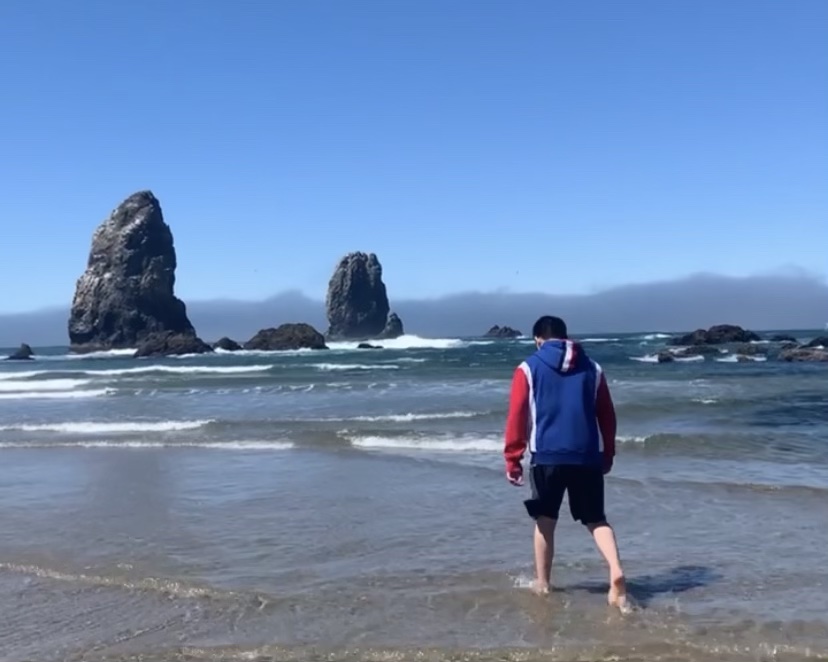
My brother enjoying the water at Haystack Rock

With my current path leading to starting my master’s program in the fall at UC Davis in Environmental Policy and Management, this internship has definitely inspired me to delve further into my studies. I had so many questions going and I accumulate more and more questions as I continue on. I hope to maybe connect with people in the California Department of Fish and Wildlife or non-profits like the California Ocean Science Trust while I’m at Davis and continue working at the intersection of science and policy. 

Do I see agency work in my future…?

Hello, 

These past few weeks have been a roller coaster of responsibilities, emotions, and experiences! I have attended many Oregon Department of Fish and Wildlife agency meetings and better understand the inner workings of their mission and obligations to the public. What I have learned is that there are pros and cons to working for an agency. The collaborative and “team” aspect of agency work seems the most fulfilling. However, the biggest con of working for an agency like ODFW is that as the face of the agency, an employee needs to directly reflect the agency’s mission in all professional actions. To some degree, I would like my future career or professional goals to allow me the freedom to be an environmental advocate or activist. Also, there will always be some level of inefficiency within agency level work at the state or federal government level. I have realized how collaborative ODFW is with other working bodies like Oregon State University, PISCO, and other organizations. 

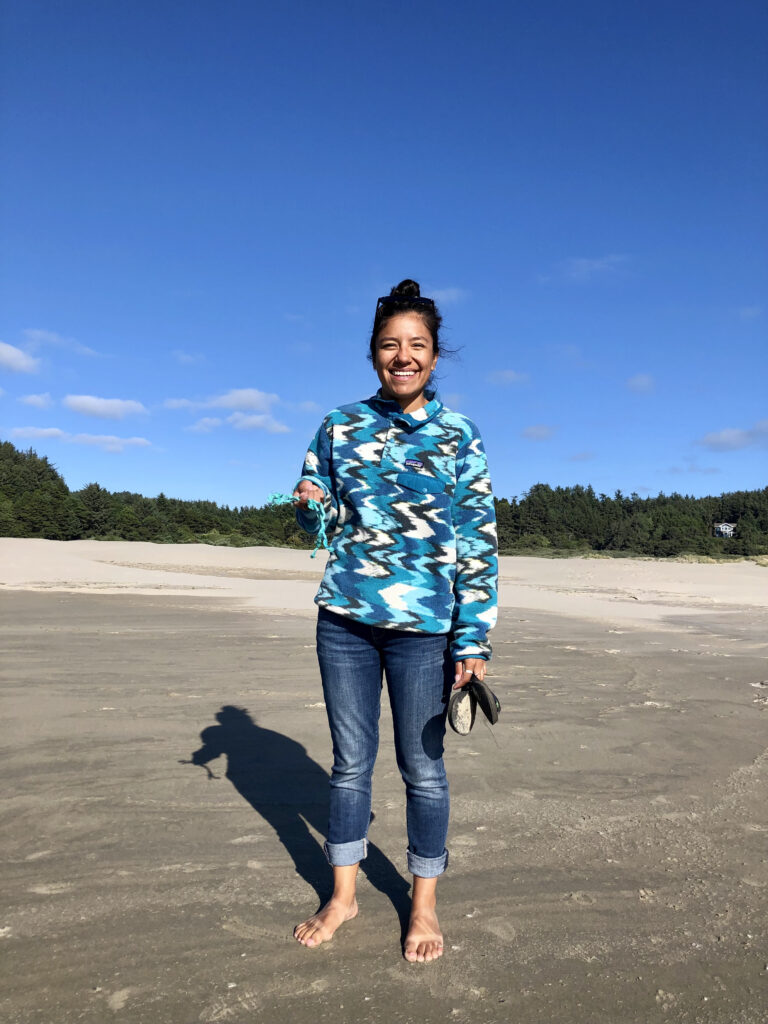
Beach walk @ Agate Beach with Jessica French and Lisette Perez

I would say I have learned a lot about science policy this summer. Historically, there has been a gap between science and policy communication. I think during my lifetime and beyond, this gap could either widen or narrow and that it is our responsibility as future scientists and policy makers to realize these will always be interconnected. Win/win scenarios can occur with policy and science. It is still a very complicated dilemma, and many of us already realize this from our experiences this summer. I see state level agency work potentially weaving in and out of my future. However, I will always be a steward of the earth and our environment and this will truly be what guides my career direction. 

Visit from a very small portion of my Idaho family.

Overall, I have learned a lot from working with ODFW and have met great people with different educational and career backgrounds. By far, my interactions with the individuals within the Marine Reserves Division of Oregon Department of Fish and Wildlife have been genuine and sincere. I hope to one day carry that much passion and grit in my future endeavors. 

Work day = Beach day?!!!

Hello all,

So far working with the Oregon Department of Fish and Wildlife has been a great experience. The first few weeks of the job were spent creating codebooks for surveys, hashing out logistics regarding the sampling schedule, and getting out in the field to begin collecting the 800+ visitor intercepts needed for the final project statistics. I also conducted business surveys in Lincoln City and this upcoming week I will be conducting them in Yachats, OR. 

Lisette Perez and I @ Cascade Head conducting visitor surveys.

Usually, my work day begins with much needed coffee and stuffing various things into my backpack to successfully complete a day of visitor surveys. At around 8-9 AM, I began traveling to certain sites along the Oregon Coast’s marine reserves to initiate participation in ODFW’s anonymous business and visitor surveys. At around 3:30-4:00, site surveying is typically complete and the teams meet back up in the office for data entry and other logistics regarding ID numbers for surveys or scheduling. Much of the data collection of this project comes directly from the public. Therefore, a majority of my time has been spent at Oregon’s marine reserves. I check in with supervisors once a week and team meetings happen during these check ins as well. 

I would say that my motivation has come directly from the team members that I work with and support from friends or family. I would also go as far to say that being able to call the Oregon Coastline my office for several hours of the day helps me realize that much of my worries or doubts are unnecessary-I’m in a beautiful place! I am now fully vaccinated and glad that I could contribute to the numbers that lifted the mask mandate. Perhaps my favorite part of the job so far is that while conducting visitor surveys I meet so many dogs or young kiddos ready to play on the beach!

Amanda’s Trail. Yachats, OR.

Week 4 Update at HRAP!

Week four is almost over and my time in Cannon Beach is really ramping up! My project is centered around reviewing the current virtual field trip program at Haystack Rock Awareness Program (HRAP) and then conducting a literature review to make recommendations for how the program can be improved going forward. I personally really love this project because I think that it’s a great way to involve kids that might not have a way to be able to come to the beach or get to see tide pools. 

I have spent the last couple of weeks doing lots of research about both environmental education and field trips. More specifically, virtual field trips. This has been really interesting because it’s a very new field so there isn’t tons of research that has been done and there are still lots of gaps in the field. However, it’s really interesting to see how many different perspectives there are for something as seemingly simple as field trips and how many different considerations there are in where schools go and how they impact student learning. 

Because so much of my work is research and recommendation based, it means that I spend most of my time on a laptop looking up research or writing out my report. This week I’ve also been reaching out to some teachers to see what obstacles they face in engaging with online learning resources and how I might be able to overcome them. 

Since so much of work is done on a computer, I have a really hard time focusing for the entire day and my favorite way to take a break is to get outside! I personally love going down to the beach and getting to talk to everyone that’s visiting. It always pushes me to learn more about all the plants and animals we have down at the beach and I love getting to answer questions and explain things that they might not have known before. It’s a great way to get outside, especially when the weather’s nice and it’s always a welcome break from staring at a screen. I am definitely lucky that I get to be fully in-person for the summer and I really try to take advantage of that by getting involved in as many things as possible and really getting to know the area. For example, today I started my day by spending a couple hours down at the beach where I saw a molting barnacle which was definitely a fun sight and then attended a board meeting for a partner organization of HRAP where I gave a brief introduction of what I’m working on for the summer and how it will benefit the conservation efforts at Haystack Rock. Over the next couple of weeks I hope to continue to do my research as well as get to talk to some teachers about what they would like to see from a virtual format. 

IMG_3362
A Goosebeck Barnacle molting it’s cirri (mouth parts)

A Day in the Life of a Virtual Intern

Hello all! Yalin again, I am working with the Oregon Department of Fish and Wildlife (ODFW) this summer researching the effects of ocean acidification and hypoxia (OAH) on our coastal species with a focus on creating a hypoxia infographic.

So far I have read over 100 scientific papers on how hypoxia is affecting our coastal species, and I still have tons more readings to do in the coming week or so. As I am a virtual intern due to COVID, my daily routine has been pretty simple. I get up bright and early to get a nice cup of coffee and a warm breakfast before I settling into my desk for the rest of the day. Typically, my day split up between reading papers, attending seminars, meetings, and starting to figure out how Adobe Illustrator works. I have weekly check-in meetings with my mentor Liz Perotti and Caren Braby, who is one of the co-chairs of the OAH Council. Other meetings I partake in with my mentor Liz include the Pacific Coast Collaborative bi-weekly meetings, the Shellfish Program meetings, and much more. 

Clams found at the North Jetty Beach in Florance

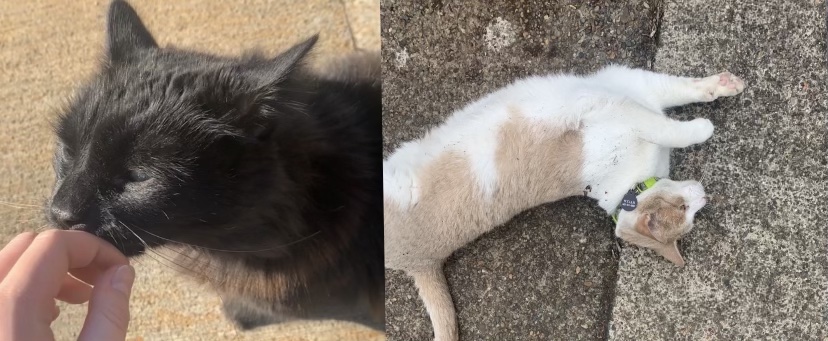
As it can get pretty quiet just working alone from home, I try to play music or listen to podcasts to liven up my room a bit. My current favorite podcast is called “Two Hot Takes” which I highly recommend you check out. To give my brain a break between reading papers, I will treat myself to 5 or so minutes of scrolling through TikTok or just people watch outside my window to give my eyes a break from looking at a screen. After the workday is over, I usually take a walk around my neighborhood and say hi to the neighborhood cats if it’s not too hot outside. On the weekends, I try to give myself as much outdoor time and social interaction as I can handle to make up for the hours of being indoors for work. This last weekend, I was cat-sitting for a past professor of mine in Eugene and got to visit a few friends while I was there. We even made a trip to Florance where we found a few clams and saw tons of crabs. 

Friendly neighborhood cats

One of my favorite on-the-job activities so far has been interacting with other interns and getting to talk with other professionals from ODFW and beyond. Last week I got to meet Jack Barth, who is the other co-chair of the OAH Council, and Emily Marrow who is an MSI intern working on an ocean acidification awareness project. We had a great time sharing outreach ideas but also just talking amongst ourself about our interest, thoughts about a certain ocean documentary, and so on. We are hoping to meet up in person sometime this summer in Newport, so fingers crossed that we can make that happen!

So much shrimp, I might as well be Forrest Gump

Hey y’all! It’s me, Grace, your resident shrimp scientist! I’m working with the USDA and OSU Fisheries and Wildlife to determine cryptoniscan lifespan and settlement and ground truthing the age/size relationship between Orthione and Upogebia.

I’ve been up to my elbows in shrimp the last two weeks! A lot of my time gets spent in the lab. I usually analyze the shrimp and input their data while my lab partner, Joshua, does the cryptoniscan experiments. Since June 25, I’ve analyzed over 200 mud shrimp! Only about 124 more shrimp from the May sample to go. We plan to go back out in late July to get another big sample. But hopefully not as big as the May sample…We usually work for a couple hours in the morning, have lunch together outside (weather permitting), and work for another couple hours in the afternoon. We have pretty similar tastes in music so we usually put on a fun playlist and sing to each other while we work or listen to cool ecology podcasts.

Large female Upogebia
A large female mud shrimp in my palm for size reference

On Wednesday night, we biked out to the fishing pier with Sarah Henkel and her grad and REU students to do plankton tows. We didn’t get back to the lab until about 1:15am! Thankfully we waited to comb through the samples for cryptoniscans until the next day. We’re planning to go out onto the mudflat behind HMSC on Friday morning around 5am with Brett Dumbauld and his crew to see how they do their annual sampling for USDA. We are also gearing up to go out with them next week to a couple different sites in Washington to look for remaining Upogebia populations. It’s going to be a great but hard working week next week!

Plankton tows on the fishing pier
Joshua and I doing plankton tows on the fishing pier next to Rogue (July 7, 2021)

We usually send our data to our supervisors/research team at the end of each work day and have meetings at least once a week. COVID-19 hasn’t affected us much. In the beginning we wore our masks in the lab, but with the most up-to-date info from OSU we are back to just about normal operating conditions. My favorite activity so far is field work! It feels good to be able to put in some physical activity while doing science. Being in the lab is fun too, mostly because of my great working relationship with Joshua, but it can drive you a little crazy looking at shrimp all day, every day. But it’s all definitely worth it to try and protect our ecosystems and estuaries.

The Start of a Summer Researching the Ocean from the Comfort of My Own Home

Hello!

My name is Yalin Li, I am a recent graduate from the University of Oregon and I am working with the Oregon Department of Fish and Wildlife (ODFW) this summer. The project I’m working on focused on researching ocean acidification and hypoxia (OAH) on our coastal species with a focus on the effects of hypoxia, and it affects our coastal communities. It’s nearing the end of week 2 of my time as a Summer Scholar, yet I have already learned and participated in so much in my short time working.

View of all my house plants keeping me company during my long hours at my desk

Oregon was one of the first places to be impacted by ocean acidification and OAH is unique in Oregon as it is driven by the natural process of upwelling that occurs along the Oregon coast. The OAH Council was created to guide Oregon on how to combat this issue of the rising intensity of ocean acidification and hypoxia as it threatens the security and resilience of Oregon’s fisheries, communities, and ecosystem. They created and released an OAH Action plan that acts as a roadmap to address and mitigate OAH with many of the actions being focused around public awareness. 

My main contribution to this project is the creation of an ocean hypoxia infographic to relaying the information from scientific studies to various audiences. I am currently in the process of conducting a comprehensive literature search and reviewing scientific papers to pull out relevant information to put on the infographic. This inforgraphic will show people how the species they care about are being impacted by OAH, and highlight where gaps in knowledge are, so we know what studies need to be conducted to fill in those gaps. In doing so, I will be supporting ODFW’s overall mission to “protect and enhance Oregon’s fish and wildlife and their habitats for use and enjoyment by present and future generations.” Alongside the infographic, I will be participating in various meetings with my mentor Liz Perotti, such as the Pacific Coast Collaborative and Tillamook Bay Clam Advisory Committee (TBCAC) meetings, and aiding in the creation of other pieces of outreach material. 

By participating in the OAH project, I am helping in spreading awareness of the impact of OAH condensing down the current pool of knowledge to make it accessible to managers, legislatures, and the public. This is right in line with the Oregon Sea Grant mission to promote discovery, understanding, and resilience for Oregon coastal communities and ecosystems to achieve their vision of thriving coastal communities and ecosystems here in Oregon. With more support and hands working on this topic, the quicker we can adapt and protect our oceans from OAH so that we and the future generations can continue to use and enjoy Oregon’s thriving coastal communities and ecosystems.

Subtidal collection of clams by the SEACOR Team at Tillamook Bay (source: Tillamook Bay Clam Advisory Committee)

While I might not be able to actively work at the coast this summer, I’m so excited to be part of such an amazing project and can’t wait to see it all come together! ~Yalin 🦑

SOS: Save Our (mud) Shrimps

Moving out of your parent’s house for the first time is not an easy thing to do. Especially if you move all the way across the country! But two weeks into my OSG Summer Scholars internship and I know I’m doing the right thing for myself. I’m excited to work live and in person with the animals and people that I’ve been working with for over a year. This summer I’m working on another piece of the 10+ year project trying to understand the relationship between a native burrowing mud shrimp, Upogebia pugettensis, and it’s invasive parasitic isopod, Orthione griffenis. Upogebia pugettensis populations up and down the west coast have drastically declined, with some local extinctions in California. Collapses in mud shrimp populations have been associated with infestations of Orthione and former pesticide use from oyster farmers.

Looking for juvenile mud shrimp in the lab (May 2021)

After taking a week to drive from North Georgia to the Oregon coast, I jumped right into my work duties. My lab partner, Joshua (an Oregon State REU intern), and I get the privilege of doing field and lab work this summer. Some of our field work includes trudging out onto the mudflats behind Hatfield Marine Science Center at low tides. On the mudflat, we take cores and sieve them down to collect the mud shrimp. We also get to bike out onto the fishing pier next to the Yaquina Bay Bridge after dark during high tides. On the pier, we are doing plankton tows, which are conical fine-mesh nets with a cod end that traps critters that are riding the incoming tides into the bay. Back in the lab, we sort and analyze the mud shrimp and the plankton tows. The mud shrimp are analyzed based on aspects like species, sex, carapace length, infested with Orthione, size of Orthione, and other important factors. The plankton tows get analyzed for juvenile mud shrimp (both Upogebia and Neotrypea) and Orthione cryptoniscans (one of the larval stages of Orthione).

Field sampling on the mudflat at low tide for Upogebia pugettensis (May 2021)

Through this project we are hoping to determine the life span and the settlement schedule of the cryptoniscans and to get large enough samples of mud shrimp to overcome sampling bias to ground truth the age/size relationship. Ultimately, accomplishing this project is putting another piece of the puzzle down into saving this mud shrimp from extinction. To do that, we need to know the relationship between the shrimp and the parasite better. That’s where my team and I come into play. With our work we can try and answer questions like: When do the shrimp become infested? Do the cryptoniscans settle on the shrimp or on other Orthione? Do cryptoniscans wait for a certain time to settle? What are they waiting for? Some kind of signal from the shrimp? Learning these answers will be one step closer to answering the big picture question “how can we turn this around or CAN we turn this around?”

Mud shrimp are native ecosystem engineers. They build permanent y-shaped burrows in the sediment that influence the estuarine benthic community by providing habitat and enhancing nutrient cycling. By saving these shrimp we are helping to advance OSG’s vision and mission to have thriving coastal communities & ecosystems. This research would also help to balance the forces of ecology and economy to inform oyster growers how to safely manage the burrowing mud shrimp populations without depleting them.