Working with the data you have

Amid the chaotic nature of this summer with COVID-19, protests, wildfires, and an upcoming election, I have managed to seamlessly transition into my second year as a Natural Resource Policy Fellow with the Oregon Department of Fish and Wildlife (ODFW). Over the next year, I will continue to evaluate the impacts of marine reserves on coastal communities, communities of interest (e.g. commercial fishers), and ocean users (e.g. tourists).

Over the last year working on this mandate I have discovered that there are no perfect data sources to answer this question. Data often have errors associated with insufficient sampling in small communities, issues with changes in methodology, or are simply not available for the years or communities of interest. However, we can’t let these issues stop us. Therefore, we are gathering and analyzing relevant data from as many sources as possible while documenting the limitations of the data.

One source of data we have used are ODFW’s one- through seven-day fishing and shellfishing license sales. Implementing marine reserves closes off any extractive activities within that area. Therefore, we might expect that daily fishing and shellfishing license sales in communities located near marine reserves would decrease following reserve implementation. However, we also need to control for the historical trend in license sales on the coast. If license sales are decreasing in towns located near reserves, but also decreasing across the entire coast, then this reduction may be caused by something other than the reserves, such as a change in culture.

License sales are just one example of the data we are using to analyze marine reserve impacts. While we don’t always have perfect data to work with, using the best data available from multiple sources should be sufficient to understand if and how marine reserves have impacted communities.

Wrapping up a Malouf year and a Master’s project

As we transition into the Fall, I am wrapping up my Master’s program in Marine Resource Management! For this post, I’d like to give a short overview of my project over the last couple years. 

My project looked at ideas of adaptation in small-scale fisheries. Fishermen are constantly adapting and changing the way they fish in response to a variety of unpredictabilities in social-ecological systems. For example, changes in the weather, market, fishing seasons, and even larger scale climate and ocean patterns affect the ways people fish. Adaptive capacity is the abilities of fishermen to cope with these changes in order to continue fishing and maintain their livelihoods.

One way to adapt is to catch several different species. That way, there are other options of species to fish for in case certain species become unavailable. This strategy is called “portfolio diversification.” There are ways to build a diverse portfolio to make one more resilient or better able to adapt to change.

A resilient portfolio consists of species that are uncorrelated with each other, meaning that their landings do not coincide or overlap with one another. Here, a fisherman is able to fish for at least one abundant species throughout the entire year.

On the other hand, a less resilient portfolio would consist of landings peaking at similar times as one another. This scenario would imply “busy seasons” where a fisherman catches several species, but it would not allow for a continuous income throughout the year. A less resilient portfolio would look something like this. 

Network theory helps to study the patterns of these portfolios in order to understand fishermen’s adaptive capacities. Fisheries connectivity networks display the timing of fisheries landings, and they can be measured to see the extent that species landings that may or may not correspond with one another. Representing small-scale fisheries this way acknowledges that there are several diverse target species.

I used this analysis to look at fishing portfolios of small-scale fisheries around the Baja California Peninsula in Mexico from 2001-2017. Region 1’s networks showed increasing adaptive capacity while the others decreased. This is important because it alludes to the fact that fishing patterns vary through time and space. Such information can be helpful when thinking about how to manage multi-species fisheries in areas of different adaptive capacities. 

My project has been really interesting and I’ve loved learning about different aspects of fisheries resilience over the past couple years. Being a Malouf scholar over the last year and having access to professional development through Oregon Sea Grant has helped me think more about how to communicate these topics to others outside of academia, especially as more and more education is being done remotely. Currently, I am creating short 2-minute videos to post on social media that explain topics I study, describing keywords such as adaptation, resilience, and social-ecological systems. I’m excited to continue working on this as I move onto a PhD in Geography here at OSU.

It’s been interesting to study adaptation and resilience while experiencing unprecedented current events like pandemic and wildfires. Mostly, it’s heartening to see communities’ generosity and resilience as people all around Oregon help each other in times of need. I hope everyone is staying safe!

Until next time,

Keiko

Summer’s End

The days are getting shorter, and the nights are getting cooler, and it’s really starting to feel like this strange summer is winding to a close. In this last week before the start of my classes, I’ve been thinking about my fellowship with the Oregon Sea Grant. What have I learned, and how will this experience affect me in the future?

I’ll start by addressing the elephant in the room: this has been a crazy summer! I consider myself to be a resilient and adaptable person, but a pandemic, unrest and violence on the streets of my home town, and then huge fires looming down on us and spewing smoke was a lot to try and take in stride. I’m so grateful for my health and that I still have a place to call home!

I’m also so grateful to all the people who I’ve had the chance to work with during my fellowship. I know that at best these folks were going through the same experience that I was, and it’s entirely possible that this whole cascade of events has touched them in a more personal way than it has me. Despite everything that was going on, I consistently encountered generosity, kindness, and willingness to help from all the people I had the chance to work with. I would like to give a special thanks to Lisa Cox at the Oregon DEQ, who took me in as an intern at the last minute, was my guide to the wild world of water quality, and also got me involved with the amazing OASE program. Everyone I met with this summer helped to show me what true professionalism looks like, and that is something I’ll remember.

Another take-away for me is a greater understanding of the complexity of conservation projects and some of the particular challenges of applied science. I’ve had a chance to learn about how conservation projects can get started, how they sometimes get funded, how they’re affected by politics and the relationships between conservation agencies and other stakeholders, and how much work and expertise is needed to get one off the ground. To me navigating all these layers seems trickier than the science in many ways, and equally as important if the goal is to have a positive effect on our environment. I’ve developed a growing respect for the people with the skills and experience to do good work in the thorny world of policy and legislation. Maybe I’ll be one of them someday.

I’m also very happy to have had the opportunity to learn about the Oregon Applied Sustainability Experience. This program partners Oregon businesses with students from a variety of fields with a goal of reducing waste, improving efficiency, helping with certification processes, and generally working to improve environmental outcomes. As part of my video project on the OASE program, I’ve had a chance to meet a few of the interns and business owners, and it’s been a great experience to get to know this passionate, bright, and innovative group of people. Each time I’ve visited the interns at their work I always end up with a big smile on my face. Special thanks to Connor Nolan, Alexi Overland, Angel Contreras Cruz, and to POSS, Defunkify, and the Oregon Soap Company for letting me point my camera around and for sharing your experiences with me.

Looking back, this summer feels like it’s gone amazingly fast. Two weeks from now I’ll have my head buried in a textbook again, and the longed-for rain will probably not be far behind. I hope the changing of the seasons will bring with it peace and understanding for us all. Thanks for reading this, I had a great experience this summer, and I’m happy I got this chance to share it with you.

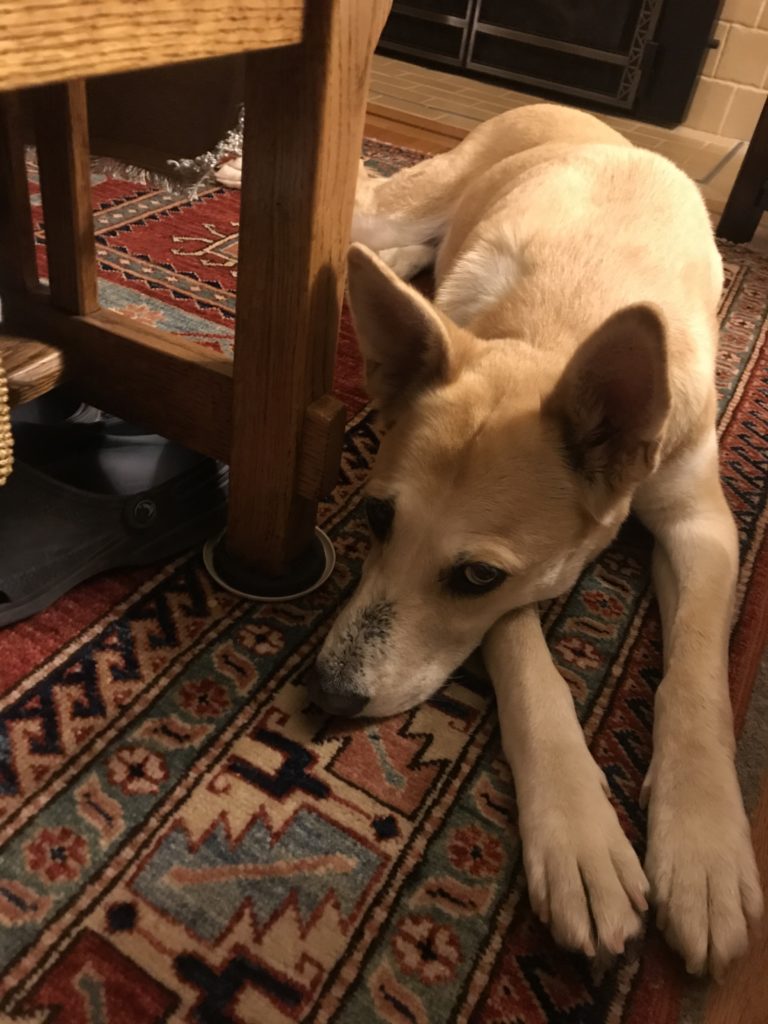
P.S Can’t forget a picture of my helper :)

Summer Internship Reflection

Reflection: Throughout all of the craziness that has ensued from 2020, I am still so grateful that I had the opportunity to be a Sea Grant summer scholar and to have had the opportunity to work with the ODFW’s Marine Reserve Program. I’m thankful that everyone I’ve worked with has been so flexible with everything that has happened and that we all still pushed forward to make this internship happen. It’s pretty amazing to look back and see all of the work done by all of the other summer scholars as well.

Moving forward: Doing this internship only solidified that I’d like to continue in learning more about marine policies and marine outreach. With the recent wildfires that have happened across the Pacific Northwest, I only feel more motivated to engage more with the public on policies and knowledge of the environment.

Next steps: My next steps are to finish my couple of classes for undergrad. After finishing my undergrad, I am considering graduate school but I know I’d like to take a year off by either doing another internship, or working for a year for an organization that engages with the public about environmental education. It’s hard to solidify any of my plans though because we don’t know how long COVID-19 will affect travel, internships, jobs, etc.

IMG_3161
Finally back at home, grateful for our firefighters, and trying to remain positive throughout all of this!

On my time as an Oregon Sea Scholar…

Final Weeks

So, we made it! It’s been a very strange year and under the circumstances, it makes me especially grateful that I’ve been able to be a part of this program. I’m particularly thankful for the Sea Grant team and my mentors at the Oregon Department of Fish and Wildlife (ODFW).

In these upcoming weeks, I have my last translations to work on which feels bittersweet. My lexicon with shellfish and estuarine ecology has grown a lot; it’s easy to see how far I’ve progressed with my documents as mile markers. I have a much better understanding about the shellfish populations in coastal Oregon and how important it is to the community on a recreational and commercial level. I’ve also been working with a SEACOR team member on best practices while using R, she’s been a huge help.

A final focus of mine is a better look on how projects are funded. My mentor Dr. D’Andrea is showing me his previous proposals and explaining the process. As a hopeful scientist, this information will be necessary when my own projects need to be funded as well as understanding why some topics are rigorously studied while others may not be prioritized.

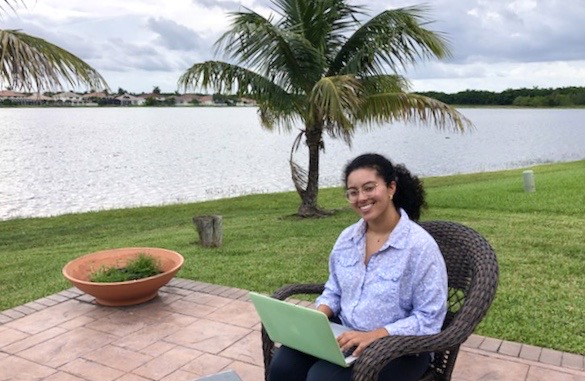
My workspace when the sun isn’t so strong.

Last Thoughts

I reflected a little bit in my previous post on how great the resources at Sea Grant are and the many benefits but the best part was learning about Oregon. I’ve really appreciated the larger perspective I’ve gained in resource management and the role of science in a community. I’m finishing this internship even more keen to go to Oregon.

In the future, I hope to be attending graduate school studying biological oceanography or marine ecology. Coming in, I had this goal but it’s been solidified and seems more attainable to reach. As for those interested in this program, I highly recommend it. The Sea Grant team wants each one of the Scholars to succeed and they will help wherever they can.

Finally, thank you for reading and for contributing to my experiences this summer.

Summer Reflections at the Rock

A Look Back

At the start of my internship with the Haystack Rock Awareness Program (HRAP), I wasn’t sure what to expect. Working from home was a new experience for me, but a welcome one as I was excited to still get to be a part of the team despite the pandemic. Of all the different avenues I could have chosen for my project, I’m glad I picked one that had more of a community-based focus. Interacting remotely with different kinds of people in Cannon Beach gave me a bigger picture of how and why a site like Haystack Rock is so important.

By managing the different sections of my project, I have been able to improve my time management skills. Between blocking off time for data collection, interviews, and analysis, I have to make sure that I’m giving myself plenty of time to complete everything. I’ve also learned how to conduct a research project that focuses on more of the human dimensions side of environmental conservation. This was a great way for me to apply what I learned from my anthropology studies, while looking into the complex interactions between humans and their coastal environment.

Final Weeks   

As things are winding down and my data collection is now complete, I’m focusing on my analysis. With the visitor intercept surveys, I’m interested in understanding where people are coming from when they visit and why they come. I’ll also be paying close attention to respondent awareness of Haystack Rock’s Marine Garden status and visitor opinions of HRAP. With the business surveys I’ll be looking for why business owners think visitors come to the coast, which businesses are most familiar with HRAP, and what their perceptions of HRAP are. Identifying the businesses with weaker connections to HRAP will help illuminate where they can be strengthened.

Talking with residents and members of the local government over the past few weeks provided some free response answers delving a little deeper into their perceptions of HRAP and Haystack Rock. Their perspectives are being used to help create a legislative history and a guide to how Haystack Rock was able to enact their protections.  

Sea Star at Haystack Rock

Looking to the Future

This internship with Sea Grant has been a wonderful learning experience. I was able to utilize a wealth of opportunities to network, build meaningful connections, and gain valuable skills for my future career in marine conservation. If I could give any advice to future Sea Grant Scholars, I would tell them to say yes to everything! Attend every webinar and networking opportunity you can because you never know what you might learn or who you might meet.

Next year I am planning on attending graduate school for a master’s degree. When I began my internship with Sea Grant, I was pretty set on obtaining a master’s in conservation biology. Now, after working with HRAP, I have started to take an interest in resource management and policy. I’m excited for my next steps and to hopefully visit Oregon someday to see Haystack Rock in all it’s natural beauty in person! In the meantime, I hope everyone is staying safe out there on the west coast between the pandemic and wildfires.

Take care, and thanks for reading!

A photo of me from my workspace this summer

Reflecting on my Internship

I have had an amazing summer internship working with the USDA-ARS in Newport, OR. It has been a summer of adapting as we deal with the pandemic and wildfires here in Oregon. Newport has been safe from wildfires, but the smoke caused some eerie scenes last week. The picture below is right outside of Hatfield Marine Science Center housing. Looking out of the window seeing this when it was midday definitely made working difficult!

I am still glad that I was able to do some work in person while using social distancing protocols throughout the first half of the summer. The second half of my internship has been mostly working from home and doing data analysis with R statistical software. I am learning a lot about how to use R and I spend most of my time making plots of the data I am working with. Pictured below is a screenshot of some of the work I have been doing in R.

I am really grateful for my time at Hatfield Marine Science Center. I am working with some amazing scientists who I have learned a lot from and that in itself has been invaluable. I also really love the Oregon Coast! It has really made me think about my career path. I did not expect to enjoy my internship as much as I have so I feel like it has opened up another potential career path that I may be interested in pursing if working with coral reefs doesn’t work out for me.

Future Directions:

After I leave Newport, I will be heading to Reston, VA to do an internship with USGS. This internship will focus more on biogeochemistry of watersheds so it will be a totally different experience. I am also hoping to start applying to graduate schools next year so hopefully I will get into some programs! I will definitely be keeping Oregon in mind; I would like to spend more time here!

Adaptive management in conservation planning

It’s hard to believe that it’s already September and that the end of the year is fast approaching. Over the last few months we’ve made significant progress on development of a Conservation Plan (CP) for the commercial Dungeness crab fishery describing the various efforts and management measures being implemented to reduce the risk of marine life entanglements off Oregon. To date, much of our work has focused on drafting descriptions of the fishery and protected whale and turtle species. Additionally, we have been working to refine our methods for assessing the anticipated incidental take of those species that may be expected to occur under the CP.

In the coming weeks, we will shift gears and tackle another key component of the CP which describes the adaptive management components that are an integral part of the overall CP strategy. Adaptive management is a tool that is commonly used, particularly for large-scale systems, to address uncertainty in conservation planning. This uncertainty may stem from limited data or information on the ecology of the species or its habitat, or from lack of clarity about the effectiveness of various management techniques and their potential impacts on the species. A direct relationship exists between the level of biological uncertainty for a species and the degree of risk that an incidental take permit (ITP) could pose for that species (USFWS and NMFS, 2016).

With regards to whale entanglement and conservation planning across the West Coast, various efforts are taking place by state and federal fishery managers, scientists, researchers, industry members, and other stakeholders to fill some of the critical information gaps in order to effectively address this issue. In Oregon, this includes work to better understand seasonal whale distribution off our coast (see my last post here), analyses to estimate the potential impacts (i.e., reduction in pot-days; a metric equal to one pot fished for one day) of proposed management measures, and collaboration across the West Coast to consider the effectiveness and feasibility of alternative management techniques (e.g., gear modifications or configurations).

The development of a complete CP and ITP application is slated to be finished and ready for submission to the National Marine Fisheries Service (NMFS) this winter. While we are working hard to ensure that this CP includes the best available information, many of the efforts to better understand and respond to this issue will still be underway when an ITP is applied for. It is for this reason that adaptive management is such a crucial element.

The CP handbook borrows from the 2009 Department of the Interior Adaptive Management Technical Guide to describe adaptive management as follows (Williams et al., 2009):

An adaptive approach involves exploring alternative ways to meet management objectives, predicting the outcomes of alternatives based on the current state of knowledge, implementing one or more of these alternatives, monitoring to learn about the impacts of management actions, and then using the results to update knowledge and adjust management actions. Adaptive management focuses on learning and adapting, through partnerships of managers, scientist, and other stakeholders who learn together how to create and maintain sustainable resource systems.

As this description points out, partnerships and collaboration are essential to developing an effective adaptive management approach. To this end, adaptive measures will be a key topic at our upcoming crab industry public meetings which will take place in October. At these meetings, we hope to provide information and solicit feedback from industry to design an approach that both minimizes impacts to the fishery, while maximizing the conservation benefit provided to endangered and/or threatened species. Through additional collaboration with NMFS, we will refine this strategy to ensure that it meets the necessary standards.

While this is certainly going to be one of the more challenging components of the CP process, I look forward to seeing much of the work that I have been doing over the last few months come together into a refined strategy that is responsive to new or changing information and circumstances.

References

U.S. Fish and Wildlife Service and National Marine Fisheries Service. 2016. Habitat conservation planning and incidental take permit processing handbook. 405 pp.

Williams, B. L., Szaro, R. C., and Shapiro, C. D. 2009. Adaptive management: the U.S. Department of the Interior Technical Guide. Adaptive Management Working Group, 84 pp.

Blog Post 4 – Second Half of the Internship

As I move into the 2nd half of my internship, some things that I’ve learned on the job is that networking/meeting new people during COVID wasn’t as hard as I thought it was going to be, I’ve gained insight in the inner workings of the ODFW Marine Reserves Program and being able to read/write more about statistics.

What has surprised me the most about this work this summer is the difficulty of doing remote work. I have done some remote work before and I knew that with doing remote work there is always more of a learning curve, but I am trying my best!

If I could start the summer knowing what I know now, I would search for more webinars to attend. There were several webinars I would’ve liked to attend earlier in the summer, but I did not know about them. I also wish I reached out to more organizations/summer scholars to sit in on their meetings to learn more about what they were doing.

Progress in my ODFW Experience

Reflections

I’ve been learning a lot about myself in this internship. With the pandemic, I had to adapt to the constraints of my current project and how to work remotely. I’m now equipped with the knowledge of what works and what doesn’t while working independently, and while this situation persists, this will definitely help me in future endeavors.

In the latter half of my internship, I’ve been continuously working on each new document quicker than the ones from the beginning. Learning about estuarine and marine issues in English and Spanish has made me a more culturally aware scientist. I believe that this may help me in the future to connect with people and places that couldn’t have been reached otherwise.

Upcoming

I’ve gotten more comfortable with the demands of translation and can now focus on my R training. I’m happy to be meeting with SEACOR team members to work through best practices and understand how they use R as a tool. It’s been great having the time and support to develop important professional skills.

Starting page of an R computer program that I’m learning from called Swirl

Coming up next on the translation front is a document that is of priority to SEACOR and seems heftier than the previous brochures I’ve had to work on. I’m looking forward to the challenge. Although time seems to be going faster now that I’ve settled into my role, I’ve still got a lot to look forward to in my internship and I’m excited for what’s coming next.

My next brochure will be about crabbing!

My advice for upcoming Scholars with Sea Grant

Some of my best moments in this experience came from attending lots of webinars. So many people are farther ahead on the scientific track and their insight can prevent you from making the same mistake they did. Also, I happen to think the webinars are very interesting as well!

I’m glad that I was able to set up some meetings with the Scholars and bond even though the pandemic has made this quite difficult. I hope to connect with the people I have met even after I’m finished with this experience.

If I were to start this internship over, I would take more advantage of the resources the Sea Grant provides. Don’t be afraid to ask if you need help. As I am going through grad school applications, I wished I asked for more support for the Sea Grant staff however I’m changing this while I still have time left!

Thanks for reading!