This Summer has gone by incredibly quick. I have had to dust off my “nice voice” that I haven’t used since I was taking orders at Texas Roadhouse, and honestly, I will be glad to put it away again. I have learned that most people are incredibly nice and a shocking number are willing to take time out of their day to take a survey. There are other people who are not as accommodating. I forgot how bad it feels for people to avoid eye contact and try to make you go away by ignoring you. Hopefully interacting with this much of the public will not be in my future.
On a more positive note, I have gotten to gain experience with R studio and see some of the innerworkings of what happens to all this data we are collecting. I won’t say I have a great understanding of data analyses but more than I did last week. Early on we sat in on some meetings where a survey was being developed and sample design was being decided. This Summer has given me a more complete picture of the planning, execution, and analyses process that is human dimensions research.
Knowing what I know now I would have tried to get an earlier start on some of the R studio work and tried to be a little more productive with my days off. Time has gone by so fast and there never seems to be enough to get everything done. The next few days will be filled with surveying in Cape Falcon and putting our final presentation together, hopefully the wifi in Garibaldi is working.
As a Summer Scholar, I work with the Oregon Coastal and Ocean Information Network (OCOIN). Updating their Coastal Research Explorer tool and leaving my mark on it is one of my most significant tasks this summer. The tool uses ArcGIS, featuring an interactive map to present research along the Oregon coast. ArcGIS is software that I have not worked with before, but I have hoped for the chance to learn it. With OCOIN staff, I have had one-on-one trainings, tutorials to complete on my own, and an in-depth opportunity to put these skills to use as I updated the Coastal Research Explorer tool. I am grateful to have the opportunity to learn such useful software in my field, fulling one of my goals this summer of learning a technical skill that I can add to my resume. With OCOIN, I have learned additional software skills, learning ESRI’s Survey123, Mailchimp, and becoming more proficient with the programming language R.
Working remotely, I get to take breaks in my garden.
Over that past year and a half, I have gotten used to working remotely. However, before this summer, remote work could get lonely. Working with OCOIN, I have daily meetings with staff and Zoom work parties with the other intern Charlotte. As a Summer Scholar, I have learned a new, more inspiring form of remote work, collaborating with those in my network.
Prior to my internship, I wished I realized that professional development could come from additional sources other than those directly related to OCOIN. While getting acquainted with OCOIN staff and tools, there was some lag time before I could work on my projects. I was invited to outside organization meetings, informational interviews, and offered training materials during this time. I was assured that while I could not start my projects yet, professional development was equally important. It has felt amazing to feel support during my internship to learn what I need. One of these learnings has been a deeper knowledge of the programing language R, even though it didn’t directly relate to my placement with OCOIN. Since this onboarding period, I have been quite busy with my OCOIN projects and have still been able to work through the expectations laid out for me while also fulfilling some additional professional goals for the summer.
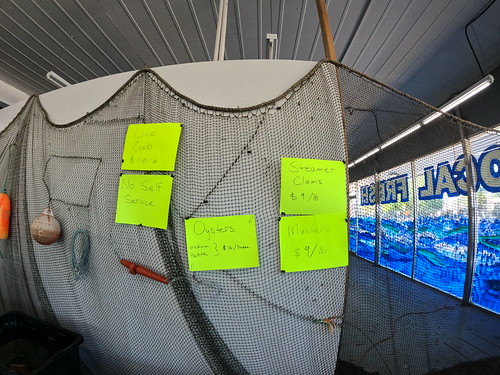
This summer has flown by! I can’t believe it is already week eight of the summer scholars internship. In the past two weeks I have been able to attend Eat Oregon Seafood’s “Shop at the Dock” events. Shop at the Dock is a tour of the local fishing docks that goes over Oregon fishing management regulations and helps consumers navigate purchasing seafood directly from fishermen. In addition to contributing information to the tours, I have also learned a lot from participating in them. One fun fact is that all Oregon fishing gear is required to have safety systems in place that release gear after a short period of time to prevent ghost fishing!
This Friday will mark my last Shop at the Dock and my last interview for my Oregon Seafood Journey project. I am so excited to be posting the interviews from this project to our Instagram account (@eatORseafood) next week! I have learned a lot about the Oregon seafood industry while connecting with people up and down the coast and hope these interviews make other Oregonians just as passionate about purchasing local seafood. In addition to learning more about the industry, I have also gotten a lot better with my interview skills. It is fun comparing the flow of my first interview to my most recent one and realizing how much more relaxed they sound now. Hopefully I’ll be able to use my new found interview skills during my graduate degree!
The docks of Newport
The most surprising part of the summer for me was how similar the values of everyone I interviewed was. It didn’t matter if they were a processor or fisher or restaurant owner or retailer. Every person wanted the public to know how well managed and beneficial (for the environment and the economy) the Oregon seafood industry is! This message also shined through at our Shop at the Dock tours. In post tour interviews, consumers were even raving about the high standards of the Oregon seafood industry!
The outside of Port Orford Sustainable Seafoods
If I could start the summer over, knowing what I know now, there is one thing that I would definitely change. I would connect more with the other Oregon seafood commissions and try to set up a better network for re-sharing our information. I would also write a couple of press releases to try and spread the word more as well! Nevertheless, I am glad our posts are reaching as many people as they are currently. Hopefully the information will continue to spread to other Oregonians!!
Interning at the Oregon Coastal and Ocean Information Network forced me to become a jack of all trades – working on outreach emails, interviewing researchers and writing spotlight articles, drafting a budget, and understanding ArcGIS online. I have gained valuable experience in areas that I could never have imagined at the start of my internship because I was willing to jump into any and all projects, even those outside of the scope of original internship description!
With wonderful mentors in the Sea Grant CEI program, and within OCOIN itself, I learned the importance of networking and met passionate ocean and coastal researchers. I am also grateful for my coworker and fellow summer scholar, Joshua, who I teamed up with at OCOIN to divide and complete all of our summer tasks. Together we have navigated working in a remote environment, learning new software, and optimizing a research mapping tool. Our teamwork allowed us to share and learn from one another and organize our agendas and workloads like a real professional team.
As I enter the last few weeks of my internship, I look forward to organizing OCOIN’s annual meeting and updating more research in our mapping tool that will help our research network stay connected throughout the year to come.
Even though my internship is virtual, I still made it to some tidepools on the coast!
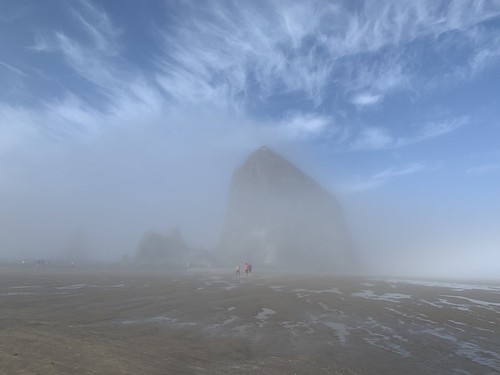
Doing an internship through Oregon Seagrant has been an incredible experience. Working alongside the Haystack Rock Awareness Program and Friends of Haystack Rock has provided me with invaluable experience. Approaching the end of the internship feels a bit bittersweet. I am excited to see the manifestation of my project, but I’m also fully aware that the days of watching the puffins jump off of the Haystack Rock are coming to an end.
Through this internship, I’ve been able to learn a lot about people’s passions regarding nature. Throughout the summer I have spoken to many people that have shared stories about what the tidepools looked like when they were younger or about how their love for the outdoors always leads them back to the rock. I’ve learned that many people have traveled all around the world, but Haystack Rock remains special in their hearts. They often talk about how they came as kids, and how they ended up bringing their own kids. While I’ve learned a lot about the marine environment and species identification, I’ve also learned that Haystack Rock is also home to many people and that’s why its protection is important. It has been mentioned to me time and time again that there is a feeling of hopelessness a feeling that there is little they can do as individuals to help. I’ve realized it is a common notion to feel helpless and alone when it comes to the state of the natural environment, however, we have this feeling as a collective. Collective hopelessness, about individual impact. I believe that through effective methods of science communication, this feeling can transform into a feeling of collective hope and community. Science communication is more than just making research more accessible, it is also a way to bring people from all different backgrounds together for the things that matter.
Something that surprised me this summer was the large disparity between female and male volunteers and staff. I noticed that the majority of the staff and volunteers were female and as introductions were being made and I attended meetings, I realized that most of the people I was meeting were women. This was something that made me feel empowered because throughout my college career I have felt imposter syndrome because of the lack of representation within stem for women and people of color. Seeing women in the different positions and involvement in marine conservation provided me with a great perspective and a better sense of the different roles I can see myself in, in the future.
If I could start the internship again with what I know now, I would start by asking more questions in the beginning. I would give myself the flexibility to be more curious about my project and not just take it as a set of tasks that need to be completed. While I wouldn’t really change anything about my approach to the project, I would make sure to give myself the room to feel the confidence and comfort I feel coming towards the final weeks of the internship. Confidence is something I’ve always valued, but it is something that I know comes with practice.
This summer has been a great learning experience for me on so many levels. On a personal level, I have learned how to manage my time with the utmost efficiency; I have learned how to cut out the time spent on meaningless brain-dead tasks that don’t get me closer to achieving my goals. As I am working on the completion of my honors thesis, serving as an OSG intern, participating in a bird physiology lab, and preparing for PhD program and fellowship applications, I have never been busier. This summer has forced me to manage my time well and to learn what is truly important for my own well-being. If I didn’t have time to relax and socialize, I would surely go nuts, so I have really learned to optimize the free time that I do get. I feel that this summer has taught me that I can handle a large workload and still enjoy my life… as long as I cut out wasted time on the phone, TV, etc.
A brown pelican that I saw while exploring the tidepools with summer science campers at South Cove in Charleston, OR.Urchins and anemones spotted during last camp.
On a completely separate note, I have learned a lot about how various water quality parameters, such as temperature, salinity, turbidity, etc. affect estuarine ecosystems, such as the South Slough. On virtual weeks this summer, I have been working on putting together the SWMP water quality exhibit, which will be a touch-screen exhibit set up at the South Slough Visitor’s Center. In doing so, I have had to read about the different effects that water quality parameters can have on dozens of organisms. The hope is to develop informative slides that visitors can read through, in addition to an interactive slide that allows visitors to manipulate water quality parameters and watch what happens to the organisms on screen (increase in number, disappear, become sick, etc.). Working on this project has forced me to read a surprising amount of primary literature in order to establish the water quality ranges in which different animals and plants can survive!
What’s been surprising:
Compared to last summer, when I was one of the only interns at the South Slough, there are so many interns working this summer! Last year, I worked with both the education team and the science team, but this summer, it seems like every member of the science team has a personal intern, so I am exclusively serving as an education intern. It’s really nice to see SSNERR thriving and busy with projects, research, etc. While, for selfish reasons (more fieldwork opportunities), I enjoyed being one of the couple interns last year, it’s great for the South Slough to have so much support this summer.
What I’d do differently:
I really feel satisfied with how my internship has gone this summer, so there isn’t anything serious that I would have liked to do differently. That being said, I did try to join in with the summer campers on shirt painting during last camp, and boy did I suck at that,,, See pictures below.
This is the front and back of the shirt I painted last camp. That blob you see is supposed to be a flounder. I also tried to write “Bad at Painting” on the back, but started running out of room and thought “Bad at Paint” would be funnier anyway!
Working with the Oregon Coastal and Ocean Information Network (OCOIN) has provided me the unique opportunity of seeing the intersection of science and policy. OCOIN was established to facilitate collaboration between researchers and policymakers. When I first started with OCOIN, I primarily imagined OCOIN as an organization that makes research more available to policymakers. While this is a significant part of OCOIN, I also have begun to see OCOIN as the entity that can provide policymakers the opportunity to connect with researchers about future research needs. This collaborative relationship is imperative for the health of our coasts.
Zoom Selfie! Remote working means lots of time spent on Zoom.
The lesson that stands out the most so far in my learnings with OCOIN is that this type of collaboration takes time. I had initially thought that the goals I had for my internship would be easier to accomplish. However, like any relationship, you must invest time and energy to create a lasting connection. This is a beautiful thing; the steering committee at OCOIN comprises individuals from various organizations throughout Oregon. While each person works for a different organization, they have a familiarity with each other, making it seem as though they work side-by-side. It is this healthy network of organizations that has been most inspiring for me throughout my internship. After college, I look forward to working for an organization that networks with others in the field.
One of the agencies that has stood out to me the most is Oregon’s Department of Land Conservation and Development (DLCD). A couple of people from the OCIOIN steering committee work for DLCD, and they have been very helpful during my onboarding process. They have provided professional development opportunities such as ArcGIS trainings and an invite to a DLCD coastal staff meeting. Each person in the coastal staff meeting was very welcoming and introduced themselves to the other OCOIN intern and me. I feel lucky to have had the opportunity to learn about so many various roles within an organization. The meeting left me excited to finish my degree and start working for an organization that helps drive change in Oregon.
I am now wrapping up week six with Eat Oregon Seafood. Over the past two weeks, I met with various commission groups from the Oregon groundfish commission to the Oregon Department of Agriculture. Through these meetings, I was able to paint a clearer picture of how to use social media to engage communities. I also learned more about topics within the seafood industry that are more likely to create controversy on social media platforms. All of this information helped me further my social media campaigns!
Social media platforms are a great way to share science in a digestible format, however, sharing to such a large audience does come with some challenges. Because social media audiences can be so expansive, you have to be more intentional about posts. Instead of catering to one population, as I have done in the past when working with academia, you have to cater to all the populations your posts could possibly reach. Speaking of social media… I was able to post my first videos to the new Eat Oregon Seafood youtube channel this week! Check them out here to learn all about seafood in Oregon.
In addition to learning more about public outreach to broader audiences, my views about policy work have changed as well. I have learned that a large part of policy work is networking. In order to make science education work, you need to reach a broad audience. AND in order to reach a broad audience, you need connections. Before this summer, I never realized how much other platforms sharing and spreading your information matters. In retrospect it makes total sense – you need to put effort into both creating science education material and spreading that material. If you do one without the other your message will be lost.
I am really enjoying seeing a different side of science this summer. My previous experiences have been mostly fieldwork and lab work-related. During grad school, I plan on sticking to field and lab work during my “job job”. However, in my free time, I plan on continuing to promote science education to a broader audience by posting science and culture education videos on a personal vlog. If you’re interested in learning about Guam, what it means to be in graduate school or coral genetics then you can check out that vlog here!
One last update: I started interviews for the “Oregon Seafood Journey” social media campaign. It is great being able to meet industry leaders across the coast and hear the stories of the coastal community. Here is a photo of oyster tanks from my first interview at Pacifica Seafoods in Corvallis!
Thanks for tuning in and I look forward to sharing weeks seven and eight with you during my next post!
Now that you’ve been on the job for several weeks, how has your view of science policy changed (if at all)?
The boring (but truthful) answer is that my view of science policy has not changed. Given that I worked as a Summer Scholar last year, my knowledge for how the National Estuarine Research Reserve System (NERRS) and state-run reserve systems has not really increased. Last summer, understanding how NERRS worked was one of my primary goals.
Do you have a better understanding of how policy organizations work?
Again, I wouldn’t say my understanding has become better because of how much I had already learned last summer. However, being around members of an organization governed by multiple levels of the government helps keep what I learned last summer fresh in my mind.
Have you had a chance to attend any agency-level meetings?
Last year I had the chance to attend education team meetings, full South Slough staff meetings, and a NERRS meeting. This year, so far, I have only participated in education team meetings (as those are the ones I can contribute meaningfully in).
Discuss any tradeoffs you see in your organization between serving the public good and being able to respond nimbly.
I don’t believe that serving the public good and being able to respond nimbly to different issues are mutually exclusive practices. In some cases they could be, but I believe the trade offs that would occur are very situation-specific.
On wilderness reserves, there tends to be somewhat of a dilemma between protecting the natural environment and allowing people to enjoy it. In almost all circumstances, the more human traffic there is in an area, the worse off the environment will be. Of course, for a place like the South Slough, there can be a proper balance… but at what point are there too many people walking the trails? At what point is the natural environment being altered in a negative way by human activity?
Fortunately, too many visitors has not been a significant problem at the South Slough (that I am aware of), but if it became an issue, decisions would have to be made about limiting the number of visitors. In such a circumstance, I could see where serving the public good (allowing more people to experience a beautiful natural setting) and being able to act nimbly (responding quickly to negative environmental changes) could come to a clash. Though, one could also argue that taking the necessary precautions to protect the reserve by limiting visitors would still be serving the public good by preserving the reserve’s beauty for future visitors. Under this belief, serving the public good and being able to act nimbly are complementary actions, rather than opposing.
Do you have a better understanding of how science policy operates in the state of Oregon?
My understanding of science policy has not changed all that much since last summer. Last summer is really when I went from not knowing much at all to feeling that I had a pretty decent grasp on the basics of science policy in Oregon.
Does your agency have ties to other states, and/or to national-level organizations?
Yes, the South Slough National Estuarine Research Reserve (SSNERR) is tied to the National Estuarine Research Reserve System (NERRS). Fun fact: the South Slough was the very first NERR and was designated as so in 1974. Now there are a total of 29 NERRs across the country.
The 29 national estuarine research reserves that compose NERRS. The South Slough is showcased with the red arrow. This map can be found at https://coast.noaa.gov/nerrs/
Are you inspired to continue with this line of work into the future?
Absolutely — I am very interested in pursuing lines of work that allow me to work with management of reserve systems and public outreach in the future. I think that getting people excited about the beauty that nature has to offer and protecting wild places work hand-in-hand. Through both informing management decisions with science and teaching future generations how to protect and enjoy the wilderness, I believe that beautiful natural areas can be conserved and restored.
At the start of my internship I thought I would be mostly completing what I’ll call techy/computery tasks (GIS, database management, etc.) for the Oregon Coastal and Ocean Information Network’s (OCOIN’s) Coastal Research Explorer tool. However, my daily work walks the line between science and policy more than I imagined.
Our main goal at OCOIN is to facilitate the exchange of novel research happening in Oregon through a Coastal Research Explorer tool, both for the benefit of researchers in the ocean science realm but also to make research more accessible for policymakers. In other words, the Coastal Research Explorer is really a science communication device. I’ve come to understand, over my last 6 weeks at OCOIN, that science communication is an essential bridge between scientific discoveries made by researchers and the creation of science-based management and policy. Prioritizing effective communication and easy user experience have guided many updates to the Coastal Research Explorer this summer, including the creation of new legends for our mapping tool and the inclusion of links to journal articles for each research project.
In addition to discussions of effective science communication surrounding our own webmapping tool, I also had the opportunity to learn more about the inner workings and implementation of coastal policy at a meeting with the Ocean and Coastal Services team from Oregon’s Department of Land Conservation and Development. It was intriguing to learn more about web-mapping tools, similar to OCOIN’s Coastal Research Explorer, that are created and operated by DLCD to educate the public on management areas like the Rocky Habitat Web Mapping Tool. Webmaps can be an effective research sharing device (like OCOIN’s Coastal Research Explorer) but can be just as user friendly for the end of the policy-making process, informing the public!