Summer Roles and Summer Goals at the South Slough: The Sequel!

I had a blast as an Oregon Sea Grant Summer Scholar last summer and was sad to see my time as an OSG intern end… If only I had known that I would get the opportunity again, I could have saved all my feelings of disappointment from last summer and waited to feel emotion until the end of this summer!

Collecting and recording data on invasive European green crabs last summer (2020) in Charleston, OR

Just a couple of weeks ago, I found out that extenuating circumstances left the South Slough National Estuarine Research Reserve (SSNERR) without an OSG intern for the summer and was offered the opportunity to repeat as an OSG intern this summer. Though I currently live in Corvallis and am conducting research here, I could not turn down the opportunity! I planned on driving down to Charleston a few times this summer to volunteer at the South Slough anyway, but now my role has been expanded.

As a Summer Scholar this summer, like last summer, one of my primary work duties will be to help organize, prepare for, and lead in-person summer science camps at the reserve. In addition to helping with the science camps, my big project this summer will be assisting in the creation of a new exhibit at the South Slough Interpretive Center, which will help to educate visitors about water quality throughout the slough and associated watersheds. This exhibit will allow visitors to have a greater appreciation and understanding for the important role that water quality has on the entire local ecosystem. Other tasks I will be taking on include assisting the science team in conducting fieldwork when they need extra hands, creating additional educational materials (like guides similar to the plant guide I created last summer or species-specific conservation posters), and assisting in the delivery of educational workshops or tours for the general public.

Ultimately, by assisting in the duties discussed above, I will be helping the education team at the South Slough to achieve its goal to improve public understanding of how estuarine systems work and why they are so important. I will also help advance SSNERR’s mission, which is to serve as a model for how to properly manage coastal communities on regional, national, and global levels. Management of national estuarine research reserves (NERRs) involves public outreach and education workshops, so through these avenues, I will be serving South Slough’s mission. As I discussed last summer too, these project goals will help advance Oregon Sea Grant’s mission for coastal communities to flourish. By educating citizens of coastal communities about how to best utilize and care for their natural environments, the number of people who value health of Oregon’s coastal ecosystems should see growth (even if that means one person at a time). Moreover, increasing the excitement and knowledge base in regards to coastal ecosystems amongst youth will hopefully encourage some members of our future generations to pursue careers in biology, ecology, conservation, and wilderness management.
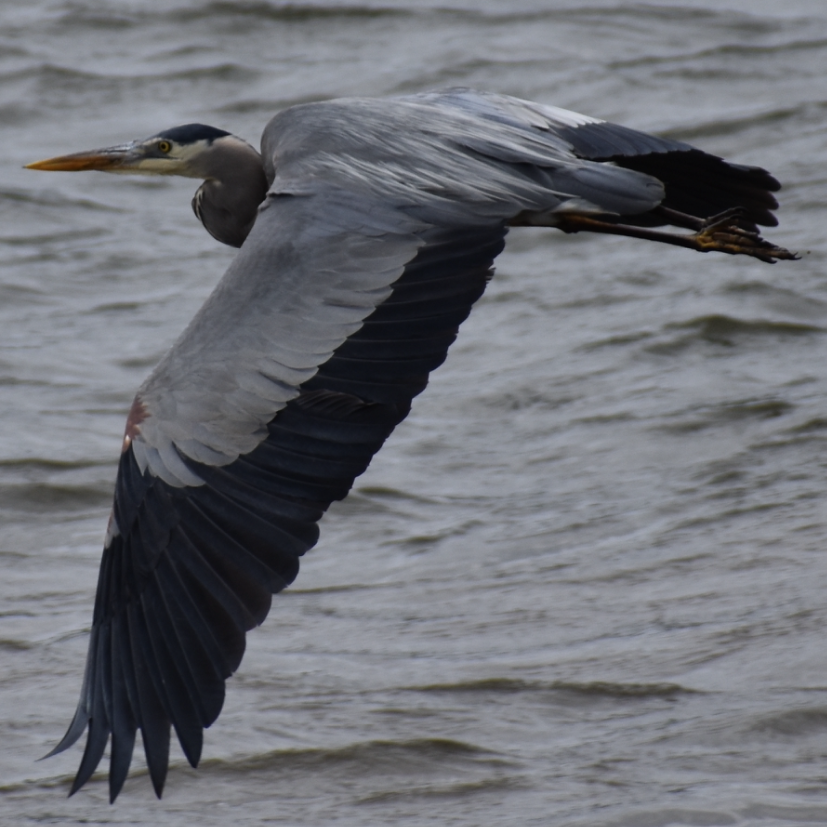
Great blue heron in Coos Bay, OR

Though, I’m still in Corvallis and will be doing much of my OSG work virtually this summer, I am excited to be on the coast again soon working at the South Slough and enjoying wildlife – like the great blue heron seen above… (also the mascot for SSNERR!)

I am looking forward to working with Oregon Sea Grant and the South Slough Reserve again this summer. Thanks!

Start of the Summer with Eat Oregon Seafood

I am just one week into my Oregon Sea Grant Summer Scholar position and I am already starting to get a clearer idea about my role as a Summer Scholar! One thing I have started to figure out is how my work fits into the broader picture of Sea Grant. This summer I am working for Eat Oregon Seafood (EOS) which is an initiative created by Oregon Sea Grant. EOS was created after a survey asked individuals in the Oregon fishing community about the effects of COVID-19 on their income. The survey reported that 95% of respondents had suffered negative impacts due to the pandemic. In response, the EOS mission was created: “to give the coastal seafood economies a boost as they recover from restaurant closures and other issues related to COVID-19”. My goal this summer is to participate in smaller projects that help advance the larger EOS mission.

I have a few different projects I will be working on this summer. The first is creating a social media campaign to boost the reach of EOS content. Part of this campaign will include short videos to highlight different members of the fishing community. I will also be working on creating a way to analyze the effectiveness of the outreach program “Shop at the Docks”. Shop at the Docks provides tours of the Newport fishing docks every Friday. The goal of these tours is to show the public how to purchase seafood directly from fishers. All of these duties aim to increase the public’s awareness of issues facing coastal communities.

The project I am starting on right away is the social media campaign. I will post infographics and seafood recipes on a weekly basis on the EOS social media. Hopefully, this will increase the number of people these resources reach. If you’re interested in keeping up with our social media you can follow us on Twitter or Instagram @EatORSeafood! If we are able to reach more people and increase the number of people buying seafood from fishermen, then we may be able to slightly offset the other negative impacts these coastal communities are facing. Hopefully, these projects will help the community enough so individuals can bounce back from COVID-19 impacts and reach a pre-pandemic economy.

The EOS goal ties directly into the broader goals of Oregon Sea Grant. Oregon Sea Grant’s mission is to be “a catalyst that promotes discovery, understanding, and resilience for Oregon coastal communities and ecosystems”. EOS is directly impacting the resilience of Oregon coastal communities by increasing financial buy-in. EOS also increases interactions between fishers, scientists, policymakers, and the public. My hope for the summer is to use my projects to strengthen the connection of fishermen with other community members. Then fishers can use these connections to help build a more resilient fishing community. I am excited to see where this summer goes and will keep you all updated throughout my journey as a Summer Scholar!

GPTempDownload

Virtual museum study approach – my dissertation plan B under the Covid-19 2nd outburst

Things are changing quickly especially the impacts of Covid-19 on the research plan. Originally, I planned to start my pilot study in July in Taiwan. And I planned to start my Phase I and II study in early September or mid-December based on Taiwan’s cooperating school’s curriculum. Also, the study in the western U.S. will be conducted in August at Hatfield Marine Center and at cooperating schools after the school year starts (September). Schools in both Taiwan and the western U.S. will be those that cooperate with the National Museum of Marine Biology and Aquarium (Taiwan) and the Hatfield Marine Science Center (US). As for the phase III study, I decided to conduct the interview in December or early January of next year (both Taiwan and the western U.S.). However, the timeline above is under an ideal situation. Because of the pandemic worldwide, my research plan should be flexible to change so the research team has had several meetings to discuss a plan B for my research plan.

Overall, the contexts of the three-phase studies in plan B will stay the same. The only difference is that these studies will be done online. Specifically, we will set up a website consisting of links to the phase I survey, phase II PMM pre-test, local marine issues (e.g., outreach videos, interactive online activities, photos, etc.), and phase II PMM post-test. As for phase III in-depth interview, the selected subjects (the same selection methods in the original research plan) will receive an email asking whether they would be willing to participate in the last phase of the study – in-depth interview – through zoom. The link (or QR code) of the website will be sent to teachers (schools) who cooperate with the museums or aquariums to ask them to share with the potential subjects (i.e., early adolescents) who would like to participate in this research.

Since the mutate Covid-19 is happening now in Asia including Taiwan, I am now setting an online outreach website. I first constructed the website framework and asked the technical team to set it up for me. After the team sends me the sketch of the website, I will discuss it with aquarium curators and educators (especially environmental educators) to see what should be added or deleted on my website. It will be interesting to do an online PMM since the participants could choose different types of marine issues that they would like to learn more about. And this could be a precious opportunity to study cultural impacts on the public’s perceptions and interests on these issues even though some of the issues are not local.

Aquaculture Literacy

I can’t believe I’ve already been a fellow for six months! Time is really flying by. In the last quarter, I have distributed a needs assessment survey to stakeholders involved in Oregon aquaculture, continued working with West Coast Sea Grant partners to plan a seaweed symposium, served as a reviewer for two grant proposals, and started working on an aquaculture regulations report. In my next blog post, I plan to give a more thorough update on these projects, but for now, I am going to discuss a side topic that is frequently brought up in literature (and other media) and conversations about sustainable aquaculture development.

Every other week I participate in a regional meeting facilitated by the National Oceanic and Atmospheric Administration (NOAA) where all of the West Coast Sea Grant programs give an update on their aquaculture work. Sometimes we spend part of the meeting discussing a relevant topic, and we have recently been focusing on aquaculture literacy, which I am defining very generally as knowledge and understanding of aquaculture among the public. This has sparked some very interesting conversations about how the public perceives aquaculture, how these perspectives have changed (or not) over time, and how to address the myriad of misconceptions that persist. 

To give you some background, there is a general lack of awareness of current aquaculture practices among the public. Aquaculture is not something that most people knowingly interact with on a regular basis, and this is especially true for folks living in landlocked states – although these states grow a large number of freshwater aquaculture products. About half of consumed seafood is farmed (NOAA Fisheries 2020), so it is likely that most people who eat seafood regularly are consuming some aquaculture products. Despite this prevalence, negative perceptions of aquaculture are abundant and persistent, which can limit aquaculture development. Like any method of food production, farming of aquatic species comes with risks to the environment. For example, some forms of aquaculture can contribute to pollution and disease spread from farmed to wild species. But aquaculture also provides benefits such as jobs, food security, and ecosystem services. Additionally, scientific literature has refuted many of the associated risks that are commonly cited (Knapp and Rubino 2016), but since most people have limited engagement with updated information about aquaculture, negative perceptions can still present a barrier to expansion.

When addressing the issue of aquaculture literacy, I think it is really important to acknowledge that aquaculture is a diverse and growing industry that utilizes several farming methods to grow numerous aquatic and marine species (e.g., fish, shellfish, seaweed, etc.). This diversity means that blanket statements about the environmental impacts of aquaculture are rarely representative of the industry as a whole. The impacts and sustainability are very much dependent on the species, habitat, and method of farming, just like they are for any other type of food production. For example, raising fish in an offshore net pen in the open ocean will have very different risks than raising them in a recirculating tank system on land. The industry has grown significantly over the past 20 years, and has experienced a lot of pressure to increase the sustainability of their practices (Naylor et al. 2021). During this time, they have been working hard to implement improvements that greatly reduce risk. As a local example, longline oyster growers in Washington have developed tools to reduce the amount of marine debris (specifically yellow rope fragments) released into the environment, including a machine called the “cluster buster”.

Aquaculture is an important tool to meet increased demands for seafood products since the majority of wild caught fisheries have plateaued (see Figure 1). In order for the aquaculture industry to expand sustainably, there is a need to improve aquaculture literacy and address misinformation. The question is, what is the best way to do this? In our regional meeting discussions, some suggestions included focusing on the environmental and economic benefits of aquaculture (e.g., jobs, food security), reaching K-12th grade audiences, working with aquariums and other informal/formal environmental education facilities, and sharing success stories from the industry. These are all great ideas and I would add highlighting the diverse, sustainable forms of aquaculture and technological advances. Check out this article from NOAA that discusses some current technology and regulations. I also think it is helpful to frame the sustainability of aquaculture in comparison to other food production systems, which may assist consumers in making informed choices. For a good comparison with wild caught fisheries, plant-based meat and livestock, I recommend this article. Lastly, funding opportunities that prioritize aquaculture literacy are needed to provide resources to educational institutions. There was a recent call for proposals from NOAA and the North American Association for Environmental Education (NAAEE) to address aquaculture literacy by providing funding to partnerships among informal learning centers (i.e., aquariums), the aquaculture industry, and NOAA. I am excited to see these organizations creating opportunities to support effective science communication and look forward to continued discussions about ways to address this issue.

Graph comparing world fisheries and aquaculture production from 1950-2018.
Figure 1. Plot showing the amount of capture fisheries vs. aquaculture production from 1950-2018. Source: Food and Agricultural Organization of the United Nations (FAO) State of World Fisheries and Aquaculture report (2020).

References

FAO, 2020. The State of World Fisheries and Aquaculture. https://doi.org/10.4060/ca9229en

Knapp, G., Rubino, M.C., 2016. The Political Economics of Marine Aquaculture in the United States. Reviews in Fisheries Science & Aquaculture 24, 213–229. https://doi.org/10.1080/23308249.2015.1121202

Naylor, R.L., Hardy, R.W., Buschmann, A.H., Bush, S.R., Cao, L., Klinger, D.H., Little, D.C., Lubchenco, J., Shumway, S.E., Troell, M., 2021. A 20-year retrospective review of global aquaculture. Nature 591, 551–563. https://doi.org/10.1038/s41586-021-03308-6

NOAA Fisheries, 2020. U.S. Aquaculture. https://www.fisheries.noaa.gov/national/aquaculture/us-aquaculture