Getting My Hands Dirty ~ Designing a Series of Interactive Experiences Using Sediment Cores

Every spring, Oregon State University’s SMILE (Science & Math Investigative Learning Experiences) program, which is part of the Office of Precollege Programs, hosts Challenge events for high school, middle school, and elementary school students. These K-12 students are involved in SMILE clubs all over the state of Oregon. SMILE’s mission is to “increase underrepresented students’ success in STEM degree programs and careers and deliver high-quality teacher professional development” [1].
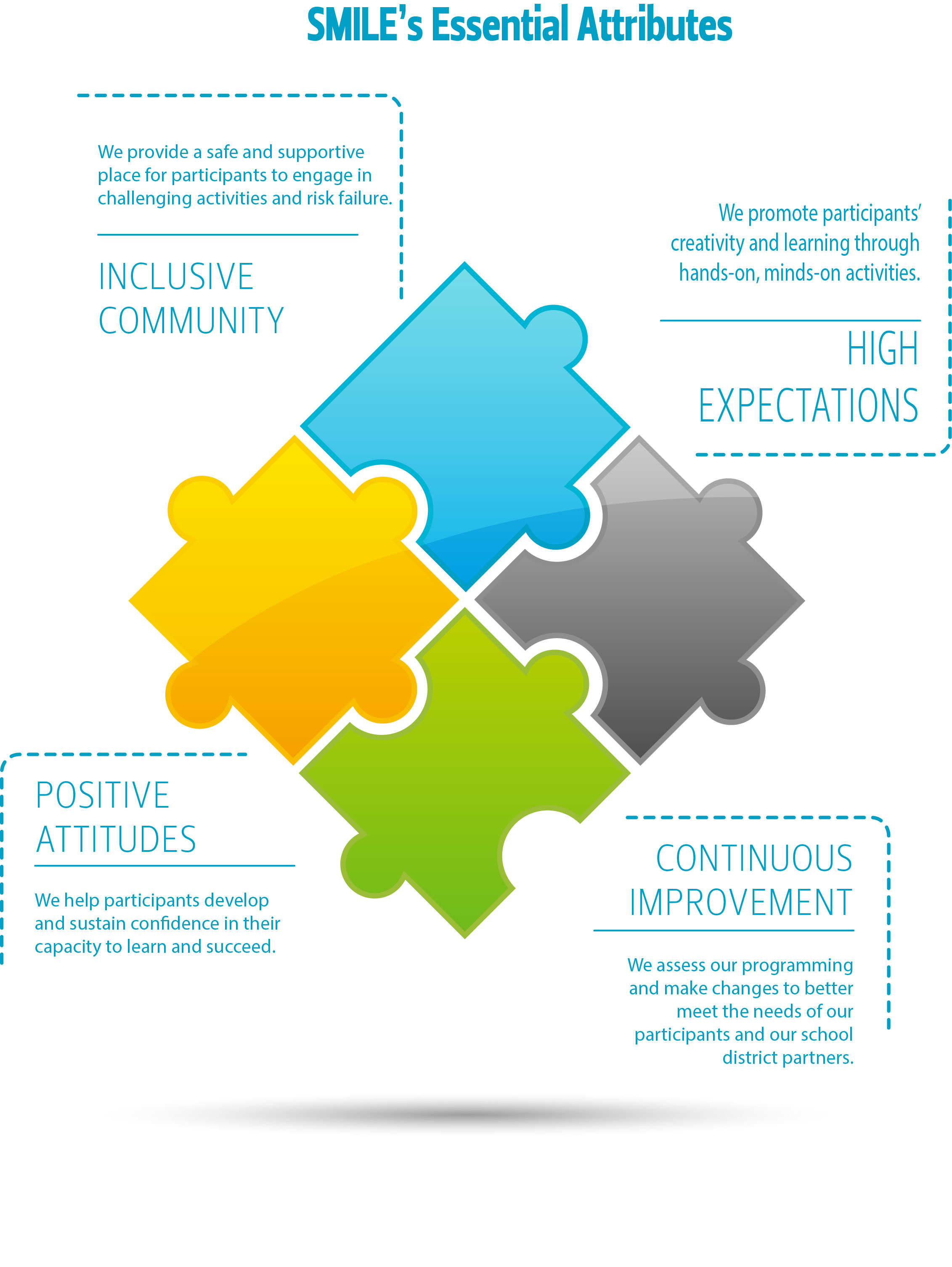
I am designing an activity for the spring Challenge Events at OSU’s new Marine Geology Repository (MGR) for elementary students (4th and 5th grade) and high school students (9th through 12th grade). Each group of ~25 students will visit the MGR for 1 hour.

I have designed each event with the Next Generation Science Standards (NGSS) in mind. For the high school students, I’ve drawn from HS-ESS2-6, which strives to, “develop a quantitative model to describe the cycling of carbon among the hydrosphere, atmosphere, geosphere, and biosphere. [emphasis is on modelling biogeochemical cycles that include the cycling of carbon through the ocean, atmosphere, soil and biosphere (including humans), providing that foundation for living organisms]” [2]. For the elementary students, I’ve drawn from the disciplinary core ideas for 4th graders related to understanding the history of the Earth and how living things affect the physical characteristics of their regions. For all K-12 students, the NGSS seeks to instil an enduring understanding of the scientific method. Thus, my broad objective is for learners to have an enduring understanding of estuarine habitats and their ecosystem services (especially carbon burial) so they can rationally use and advocate for conservation of coastal resources. Another important goal is for students to see themselves as scientists. I will therefore both speak about my pathway into science and also set up the activities to follow hypothesis-based lines of reasoning.

This is a lot to accomplish in only one hour! I’ve been working to design a lesson plan that covers all of these topics in hands-on activities that fit into my limited timeframe. I plan to allocate 10 minutes to welcoming the students to the core lab, describing the MGR, and talking about my path into science. We’ll then have a 10-minute discussion about the carbon cycle, why it’s important for global climate, and where carbon gets stored. I’ll also play our video of how we collect sediment cores.


Students will then be divided into groups of three and the next twenty minutes will be devoted to a hands-on activity assessing carbon concentrations within a sediment core. The cores I’ve chosen for each group will have obvious stratigraphy, with many different layers of sand, silt, and clay (below is an example). Along the length of the core, I will have a timeline so the students can get a sense of the timeframe over which salt marshes record environmental history. Samples from the core that vary in terms of organic matter content will also be set up under stereoscopes for students to look at the core material in detail. The students will have the ability to feel the sediment and look at it using hand lenses, as well. After the students have been able to observe the core, the aid at the table will ask the students to formulate a hypothesis about what kind of sediment from the core will have the highest carbon content. They will then take small samples (~3) and put them in beakers on a hot plate. A little bit of hydrogen peroxide will then be poured over the samples and the ones that bubble the most will have the highest organic matter content. They will then assess their hypothesis and the aid will lead them through a series of follow up questions. For instance, what kind of sediment (mud or sand) stores the most carbon? What other kinds of factors might influence the amount of carbon buried in salt marshes?

CT scan of an example sediment core used in the activities. The lighter portions of the image are more dense, sandy material. Darker portions of the image are less dense, organic-rich sediment. The left side of the core is the top, which is present day.

Following the activity, we’ll all come back together for a short, ~10-min discussion of what they learned, and I will answer final questions from students. In the remaining time, students will be led on a short tour of the MGR.

Throughout this process, I’ve received a lot of helpful advice and support from friends and colleagues. Members of the College of Earth, Ocean, and Atmospheric Sciences (CEOAS) Science Communication group, including Abby Metzger (the Communication Manager in CEOAS), have provided me with advice along the way and have donated their time to a mock demonstration at the MGR. At the OSU MGR, the education and outreach coordinator, Cara Fritz, and other staff (Maziet Cheseby, Coquille Rex, and Valerie Stanley) have been wonderful sources of knowledge. Cara has additionally graciously agreed to help during the Challenge Events. Additionally, I’m very grateful to the staff at Precollege Programs. I’ve been working with Jay Well, who has been extremely helpful and generous with his time. Outreach takes a village!

Citations:
[1] https://smile.oregonstate.edu/mission
[2] https://www.nextgenscience.org/sites/default/files/AllTopic.pdf

Life in Newport: My Introduction to Oregon’s State Crustacean

Posted on behalf of Brittany Harrington

For those of you who have spent time on the Oregon coast in December, you’ve almost certainly heard talk of the commercial crab season opening. These conversations aren’t confined to the docks or a visit to the ODFW office, they can be heard over dinner at any one of the local seafood restaurants, in line at the grocery store, or casually discussed on the city bus.

As the most valuable single species fishery in Oregon, Dungeness crab represent an important source of income to many of the people and communities along the coast. Landings of Dungeness crab have been recorded in Oregon since 1889 and, since that time, three very active targeted fisheries have developed surrounding this species. The fisheries are managed at the state level with the Oregon Department of Fish and Wildlife (ODFW) as the lead agency. However, managers currently face a number of complex management challenges associated with this key resource.

Over the past three months, I have had the opportunity to closely observe many of the conversations about Dungeness crab between fishery managers, industry members, and the broader coastal community. In December, I was brought on to work alongside staff from ODFW’s Marine Resources Program (MRP) to develop a Fisheries Management Plan (FMP) for the Dungeness crab fisheries in Oregon. My position is supported by the Nature Conservancy, who shares the goal of developing FMPs that allow for equitable access to marine resources while promoting the sustainability of fishery species.

I have a degree in Marine Resource Management from OSU and have spent many hours learning about different principles and practices in fisheries management, but I was particularly excited about this fellowship because it would allow me to be a part of the process and experience the practical applications of those topics that I knew largely from textbooks. I looked forward to learning from the many years of experience of the fishery managers that I am working with and from the complex interactions between stakeholders. What I had not anticipated, was how much I would learn simply from living in the town of Newport and exploring my new coastal community.

So far, the list of experiences that I’ve had in this position have been extremely diverse and rewarding. I’ve been able to dive into research on historical and existing policies surrounding the commercial and recreational crab fisheries in Oregon. I’ve assisted with hold inspections and dockside sampling which allowed me to interact with fishermen in a variety of positions and on different vessels ranging from small boats that fish for several hours and hold less than 1000 lbs of crab, to those that spend two weeks at sea and return with 150,000 lbs. I’ve attended meetings of the Oregon Dungeness Crab Advisory Committee (ODCAC) which has provided me a glimpse of the unique needs and perspectives within the commercial crab industry that we will strive to encompass in the crab FMP.

However, I would add to that list that I have also eaten in restaurants eagerly anticipating the influx of fresh crab that draws crowds of locals and tourists alike. I have witnessed the community mourning the loss of their own after the tragic death of three crab fishermen in the capsizing of the Mary B II in January. And I frequently walk along the working waterfront in Newport and observe the many indirect ties between crabbing and other local businesses.

Given the suite of emerging issues and changing ocean conditions related to this fishery, a fisheries management plan for Dungeness crab will not only provide an important, comprehensive tool for managers, but will also help to support a fishery that is central to the culture and identity of the Oregon coast. I look forward to learning more as I continue to become a part of the Newport community.

Trying my hand at recreational crabbing back in 2017 with former OSG Fellow, Deanna Caracciolo, and my husband, Cole (note: we did, in fact, get some crab that day!)

Much to my dismay, I have yet to take the obligatory headshot holding a crab for use in all work-related presentations, so instead, here is a picture of me and my pup, Charlie, enjoying a beautiful day exploring our new home!”

(Attempting) To Resolve Natural Resources Conflicts

I received an incredible opportunity to attend a portion of the annual meeting for the Oregon Chapter of The Wildlife Society. One event that particularly stood out to me was a workshop about building interpersonal and group communication skills for resolving conflict in natural resources. From my experience, natural resource conflict usually arises between industries, conservation, and regulatory bodies. Whether it be commercial fishing, ranching, logging, or farming, there is almost always and equal and opposite conservation voice, advocating for the revision of industry practices and policy and a government agency constrained by time, resources, and politics.

So how do high level policy makers leverage the interests of all stakeholders? While one side heavily supports multiple sectors of Oregon’s diverse economic profile, the other side may be categorically opposed to practices used to mitigate occupational hazards; for example, ranchers lethally removing grey wolves that threaten cattle. How do we mitigate what one group says is morally reprehensible and what the other group says is necessary for economic viability?

In conflict resolution, the strategy that you decide to use depends on the varying levels of importance that policy substance and maintaining relationships have at any given moment (Figure 1). Each strategy is appropriate in different situations, and representative of the time and resources available for the process. While collaboration is typically the goal for long-term, complex, and integrative problems, a competing strategy may be the most appropriate when an emergency is impending and a quick solution is critical.

Figure 1. Situation dependent conflict resolution strategies (adapted from www.mwi.org).

Evaluating and deciding which strategy to use requires a great deal of introspection and flexibility. It require a significant amount of self-awareness to determine if a policy detail is more important than one aspect of a relationship. In reflecting on which strategy I most often use, I typically fluctuate between compromising and competing. This has mainly been due to my short term involvement in different projects, where sustaining and building relationships are much less relevant to solving the acute problem at hand.

This workshop also gave me an opportunity to reflect on the fact that while I typically use the strategy that is most compatible with my personality, it is important to be flexible and utilize the strategy most compatible with the situation and groups I am interacting with. I’ve always been under the impression that collaboration was the best way to handle any problem, however, I did learn that avoiding conflict or accommodating another person’s viewpoint are equally acceptable and valid strategies.

This workshop left me with several lingering questions that will likely only be answered with extensive time and experience;

  • When collaboration is the best strategy, what do we do when groups are too polarized to value relationships?
  • Is it ever possible to fully compromise and how do we mitigate if one side feels like they’ve given up more than the other?
  • How do we effectively balance conflict resolution within agreeing and between opposing groups?

There may not be a right answer to any of these questions, but it is important to evaluate and possess enough self-awareness to contemplate the solutions and promote the development and growth of my own interpersonal communication skills.

Fire and Drought and El Niño, Oh My!

Oregon Sea Grant Sponsored Study Looks at Improving Communication About Environmental Conditions Between Scientific Experts and Oregon’s Natural Resource Managers

It was the beginning of 2016. Unusually warm seawater named “The Blob” collected in the North-East Pacific Ocean. A massive harmful algal bloom formed in Oregon’s coastal waters. High amounts of a marine biotoxin called domoic acid resulted in closures of the recreational razor clam fishery. Almost 5,000 people along the North Coast (where the majority of recreational razor clamming occurs) stayed home because of this closure. “…You can imagine the lost economic opportunities,” said the Oregon Department of Fish and Wildlife Shellfish Program Manager. “People don’t come out and rent vacation homes or they don’t go camping, they’re not eating in the restaurants, state parks are not filled; all those kinds of things occur because we’ve made this decision to not allow harvest.”

This is just one example of how changing ocean conditions are affecting Oregon’s coastal communities. Now, researchers at Oregon State University are evaluating a National Oceanic and Atmospheric Administration (NOAA) webinar called NOAA West Watch. Specifically, they are seeing if the webinar can be changed to communicate these extreme environmental conditions to Oregon’s natural resource managers. Currently, NOAA West Watch communicates information about abnormal environmental conditions to NOAA scientists.

Specifically, the research team is including Oregon’s natural resource managers in this webinar to improve regional coordination and communication. This could lead to a more ecosystem-based view for problem solving. To do this, the researchers are inviting a variety of Oregon resource managers, local scientists, and non-governmental organizations to watch the webinars and provide feedback on how to improve the webinar for a more manager-friendly audience.

Why do we need a more “ecosystem-based” view and manager-friendly audience, you may ask? Historically, much of our natural resource science and management occurred on a sector-basis. For example, scientists who studied fisheries often didn’t talk to scientists who studied estuaries. The same often occurred with management, as agencies have specific jobs and management roles in the environment. Managers had to find information across many subjects and determine what was important for their decision-making. Over the past couple of decades, management has shifted to an ecosystem-based management (EBM) framework that considers all ecological and human connections within and to the environment. Despite this mentality shift, natural resource science and management is still highly disjointed.

Strengthening connections between natural resource science and management is increasingly important as our coastal ocean changes. Accordingly, both scientists and managers will have to anticipate and plan for changes to our environment and resources. Evaluating NOAA West Watch can determine if this communication tool can support EBM by including a variety of scientists and managers in a setting that is responsive and adaptive to environmental changes on the West Coast.

Taking A Deep (Ocean) Dive into EBM

To determine if NOAA West Watch is a useful tool for supporting EBM, researchers are evaluating the following:

  1. the most useful spatial scale for information;
  2. if it can connect human and natural systems;
  3. if it can serve as a way for discussing competing environmental values and uses; and
  4. if it can be flexible to changes in the natural and human environments.

On a cold, windy day along the Oregon Coast, it can be easy to want to head indoors and forget about the rest of the world. But as a larger ecosystem, Oregon’s coast is connected not only to the surrounding ocean environment, but also to land. Additionally, the coast serves as a place where humans make connections, including providing opportunities for managers and scientists to work together. Scientists and managers are tasked with effectively studying and managing this diverse, changing ecosystem. To do so, they need to understand ecological and human connections that are occurring in the coastal region. “Sometimes we get so focused on what is happening here that we might fail to look at connections that are happening in other places,” said one Oregon resource manager who participated in the study.

The Oregon State researchers think NOAA West Watch may be able to explore these connections. In particular, the evaluation seeks to determine the most useful spatial scale for the webinar’s information. By considering the West Coast as an ecosystem, scientists can communicate changes in large-scale environmental conditions. Managers would then respond to those changes that can impact local environments and communities. An estuary manager who participated in the study shared, “Thinking about those kinds of bigger-picture issues is always helpful. It takes the blinders off so you’re not just looking at your little estuary; there’s these bigger conditions and factors that are influencing what you’re seeing.”

Additionally, the researchers are seeing if NOAA West Watch can help with the reporting of Oregon’s local marine environmental impacts. As community representatives, Oregon’s managers would speak for a local perspective in global environmental changes. Managers can share community environmental observations with NOAA employees during NOAA West Watch. NOAA can then include these observations in future science and policy. Initial results indicate that NOAA West Watch can help communicate human connections in the larger western regional ecosystem.


 Large waves hit Haystack Rock in Pacific City, Oregon Crab pots sit on a fishing dock in Oregon.
Examples of unusual environmental conditions and their impacts to Oregon that were presented in NOAA West Watch. Left, large offshore storms created record high waves along the Oregon coast in January of 2018 that left one dead. Right, delays to commercial Dungeness crabbing along the West Coast resulted in $400 million of direct impacts in January of 2017.


Furthermore, evaluators are determining if NOAA West Watch can bring together a wide range of science and management fields to build communication among competing coastal users. Given the ocean’s limited space, stakeholders need to discuss which ocean uses they prefer. However, it can be difficult to explore costs and benefits of certain uses if information is distributed across natural resource subjects. This research seeks to represent a variety of Oregon’s coastal science and management interest in NOAA West Watch webinars. Broad representation may help promote individual connections to build into institutional partnerships.

Compared to land environments, the ocean is generally not as well understood. Therefore, Oregon resource managers have to be flexible to changes in scientific progress. NOAA West Watch may help improve understanding by quickly combining and communicating environmental condition information; Oregon’s managers could then use that information for decision-making. Frequent webinars may help managers monitor changing physical conditions used to anticipate biological events. For example, managers can keep an eye on conditions that may lead to harmful algal blooms and shellfish fishery closures.

January 2017 clorophyll off in Oregon's coastal ocean. March 2017 chlorophyll off Oregon's coast.
NOAA West Watch webinars present environmental condition information to follow changes in the coastal ocean, such as these maps of chlorophyll concentration which can indicate harmful algal blooms. On the left, January 2017 conditions show a low number of phytoplankton, our marine plants. However, two months later (right), chlorophyll concentrations increase, indicating that a harmful algal bloom may be developing.


Keeping Pace with Oregon’s Changing Environment

With a changing climate, Oregon is expected to have increased droughts, changes in fish distribution, and increased wildfires. Natural resource scientists and managers have to predict and plan for these types of changes. Oregonians have recreational, economic, cultural, or personal interests in ensuring our resources are managed sustainably for long-term public use.

Ecosystem-based management is a framework that managers work under, and scientists can inform. Better communication can help managers understand our changing environment. Results from this NOAA West Watch evaluation suggest that this communication tool can be changed to fit the needs of an EBM management system. It can connect scientists and Oregon’s natural resource managers to promote collaboration and co-management.

As our coastal environment changes, what marine resources are you concerned about managing? [Comment below!]