“The oldest active member of the Chemistry Department, Ken Hedberg, turns 90 today. As an emeritus professor, Hedberg still remains very engaged in his research, which involves the determination of the structures of molecules by analyzing the scattering of electrons by them. Hedberg is acknowledged as the world’s leading expert in his field and his work has been continuously supported by the National Science Foundation for more than 50 years. He received his BS degree from OSU in 1939 and has the distinction of having four OSU athletic letters, as an outstanding tennis player.”
Category Archives: Main Page
Finding aid fury
Elizabeth Nielsen, Senior Staff Archivist and generally fast & furious finding aid creator, has compiled her “best of” / status report list for the state of the Archives’ world at the end of 2009. It is an impressive thing to read!
Here are a few highlights:
- 944 total collections in the Archives. This includes 173 record groups (RG); 458 manuscript collections; 244 photo collections; 43 moving image collections; and 15 oral history collections.
- 464 collections represented in the NWDA finding aids database. More than half of the RGs (61%), MSS (53%), moving images (79%), and oral histories (67%) are reflected in NWDA.
- 73 preliminary collection-level descriptions. This is an increase of almost 30 since Jan 2009. They will probably continue to grow at this rate (or higher) as we continue to receive large new collections and the number of undescribed collections that are large.
- 257 collections with no information online (other than perhaps a collection title). This is a reduction from 308 in Jan 2009 and is approaching only a quarter of the total collections. This number includes 8 scrapbooks and photo albums. She is plowing through this at a breakneck pace to work on these and hope to zero-out the scrapbooks/albums category during 2010. The components of our collections that are “least well represented” online are the photograph (51%) and oral history (33%) collections — although both have improved since Jan 2009. She keeps whittling away at these collections by preparing collection-level finding aids (final for small collections and preliminary for larger ones).
More people doing more stuff!
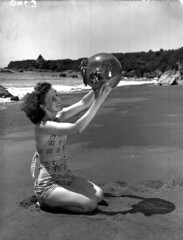
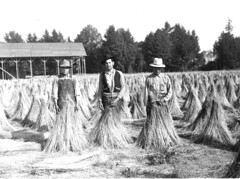
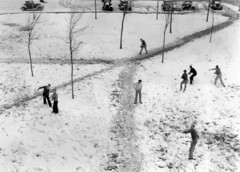
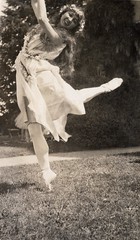
That’s right, it’s time for the next addition to the “People Doing Stuff” collection in Flickr Commons. This time we’ve gathered some of the best images of people doing stuff “Through the Seasons.” Unlike the majority of our Flickr Commons collections, these images are from a variety of photographic collections, all of which depict the beauty of the Pacific Northwest’s four vibrant seasons.
Getting really cold …
Enjoy all the seasons — and check back in 2 weeks for even more fun …
Welcome back!

We’re wishing you all a hearty “happy new decade” from the OSU Archives! Wondering when we are here?
University Archives Academic Year Hours
Monday — Friday: 9am – 5pm
Maps & Microforms Academic Year Hours
Monday –Thursday 9am – 9pm
Friday 9am – 5pm
Saturday 1pm – 5pm
Sunday 1pm – 9pm
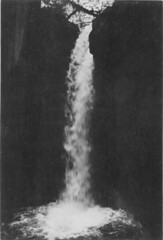
Water Falling
It’s nearing winter in Oregon, so we think a lot about the water that falls from the sky … But what about the glorious drops that tumble over rocks, under bridges, and through the woods?
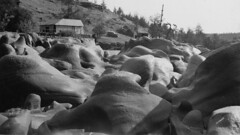
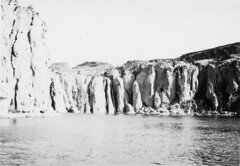
To celebrate the rain (?), we’ve released the last set in our “Western Waters!” collection, appropriately called “Water Falling.” What is it? It’s a set is dedicated to all that falling water, of the waterfall kind!

The images in these sets are from our “Pacific Northwest Stream Survey” digital collection, which includes over 1000 field images taken between 1934 and 1945 and spanning the 390 streams in the Columbia River Basin.
Winter Break Hours in the Archives
Trip report: “Local Treasures — Special Collections and Archives in the Portland Area”
Who doesn’t love a guest blogger? Monique Lloyd, who staffs our desk 2 days a week and is a prolific blogger in her own right, sent me this report on her journey to Portland last Friday to attend the “Local Treasures — Special Collections and Archives in the Portland Area” workshop. sadly, I couldn’t go — happily, Monique could and she’s written a wonderful post (yes, with pictures attached).
First off, always the archivist, I have to establish the historical context by answering the question “What was this event?”
Workshop Description: The Portland area is rich in primary documents and historical records. Learn about the wonderful resources available in local archives and special collections, and their availability to the public, in this training at Multnomah County Central Library. Archivists and librarians will be available to talk about their collections.
I had the pleasure of attending this workshop, sponsored by PORTALS (Portland Area Library Association for Continuing Education), and held at the Central Branch of the Multnomah County Library on December 4th. The three hour program was organized by Roberta Richards, and the discussion was moderated by Bob Kingston, who are both librarians at Portland Community College. Presenters from archives, museums, libraries, and special collections discussed their institutions and treasures.
The Oregon Historical Society Research Library

Shawn Gandy informed us that the Library was founded in 1899 and began as a way to collect stories related to Oregon and Oregon Country. She explained how OHS is involved in the Oregon History Project which is online and organized around subject searches and that 100% of their books and 95% of their serials are cataloged online.
The City of Portland Archives and Records Center
Diana Banning shared that the archives began in 1851 beginning with mayoral records and the collection now includes a quarter of a million photographs, many of which are contained in project records.

Terry Baxter told us that records were first kept by the County Clerk, mainly on microfilm, and in the late 1970’s began using records management. Most records began in 1915 and there are some large gaps. They are considering using targeted digitization in the future.
Central Library’s John Wilson Special Collections

Jim Carmin described the Special Collections as having six primary collections: the history of the book from mid 13th century to the present; children’s literature, both contemporary and historical; Oregon history; natural history with a focus on ornithology and roses; English literature, and Native American literature. The collection began in 1964, has over 10,000 items and their primary goal is increasing access. They are also in the process of pulling books, as appropriate, from the library collection and putting them in the archives.

Anne Prahl explained that this museum is 20 years and started with volunteers showing exhibits in different locations. In the 1970’s they merged with the Jewish Historical Society. The museum collects art and artifacts that illustrates the story of the Jewish experience in Oregon. They have 350 oral history interviews of Jewish community members going back to 1880. Their focus is on exhibits and they work often with Portland schools. The collection includes photographs, correspondence, scrapbooks, ephemera, diaries, minute books, ledgers, and family papers as well as organizational records.

Dave Hegeman began with discussing the OSL in general, stating that it was founded in 1906, and that its mission is to preserve Oregon documents and serve state officials as well as citizens. Their Special Collections include historic Oregon documents and WPA federal worker’s projects including manuscripts, photographs, and local histories. They also house historic photographs, with more than 5,000 online, the Oregon Index which is card index to Portland and Salem newspapers from 1900-1986, as well as maps of Oregon and the Northwest from the 1850’s to the present.
Lewis and Clark College Special Collection

Robyn Ward (for Doug Erickson). Robyn is a Serials Technical Specialist at Lewis and Clark and a fellow Emporia Oregon-7 graduate who earned an Archives Studies Certificate as well as her MLS. She graciously offered to fill in for Doug at the very last minute. Lewis and Clark has a large collection on the Lewis and Clark expedition as well as collections of Pacific Northwest poetry and literature, and the William Stafford archives.
The workshop ended with a discussion about digitizing and the importance of developing a collection policy to determine what to accept and what not to accept. Following the workshop, Jim Carmin invited participants to tour the Central Library’s collection. Special treats included Beatrix Potter’s scarce first illustrated book, the exquisite A Happy Pair, held in only a dozen public collections worldwide, and The Birds of America by John James Audubon.
A wonderful resource page for the workshop is available on the Northwest Central webpage and can be found here.
Early Oregonians Database now online!
As a legacy to commemorate the sesquicentennial of Oregon’s statehood, the Oregon State Archives announces the launch of the Early Oregonians Database on its website.
This resource uses data from census, death, probate, and other records to help researchers find information and documents about people who lived in Oregon prior to statehood. Volunteers at the Archives have worked on this project for more than five years. The database currently contains over 105,500 entries for individuals who lived in Oregon prior to statehood. Because of limits on available records and documentation, the project can be defined to include people living in Oregon from 1800 to 1860.
If you have any questions or documentation you would like to contribute to the database, please contact the Archives staff.
Fresh news from the OSU Press!
It’s true, I am a shameless promoter of all things related to the OSU Press…Today the “First Peoples: New Directions in Indigenous Studies” publishing initiative announced the launch of its new website!
What will the website do? Officially, it will “serve as a tool to broaden the reach and audiences for the books they publish on Indigenous studies.” But really, it’s a great place to go to read their blog, learn about the books, check out their Twitter feed, find upcoming events, and just get lost exploring…
Want the details on the initiative? In January 2009, the Andrew W. Mellon Foundation awarded four university presses a grant to established an innovative partnership. Seeking the best and most robust scholarship by junior authors whose publications will contribute to the development of the field, the grant supports both the publication of 40 books over four years and the collaboration of the presses to further scholarly communication in the field of Indigenous studies.
Who is involved? University of Arizona Press, University of Minnesota Press, University of North Carolina Press, and (of course) Oregon State University Press.
Salmon, Beavers, & Ducks?
Is this a university archive or a petting zoo?
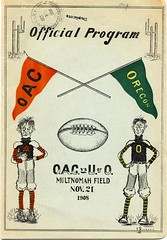
OSU’s campus is all a flutter — and covered with orange and black, of course. Why? Today is the big day: Civil War 2009! Tonight’s winner goes for Roses … That’s right, for those of you who haven’t heard because you’ve been hiding out to avoid the rain and/or 29 degree temperatures, the winner will be in the Rose Bowl!
Hasn’t this happened before? According to OSU’s Game Day Central, the answer is no.
“It looks like it has, but it really hasn’t. The winner of the 113th Civil War will know that it has clinched the Pac-10 title and a berth to the Rose Bowl when the clock shows 0:00. It’s the first time that both teams have entered the game with the “winner take all” scenario. The Beavers entered the 1957 season finale 6-1 in the league, while the Ducks were 5-2 – Oregon won that game 20-0 to share the title, but the Beavers knew that they were out of the Rose Bowl going in, due to a no-repeat clause – OSU played in the ’57 Rose Bowl (’56 season).”
The rivalry between the two schools, especially that pig skin rivalry, goes waaaay back. To read all about it, and see lots of great pictures from the UO Archives and Special Collections, check out Anne Peterson’s article for KPIC news. Here’s a teaser to get you reading…
“While this season’s Civil War between Oregon and Oregon State has been called the biggest game in the rivalry’s history, there have been plenty of significant – and just plain strange – Civil Wars in the past. Case in point: 1983’s “Toilet Bowl,” a 0-0 rain-drenched exercise in futility.“
No rain tonight, just Jack Frost and his chilly dew.
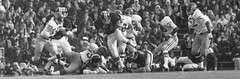
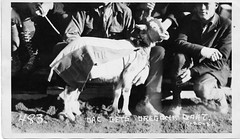
The OSU Archives got in on the historic photo action as well! Check out our Civil War set in Flickr. Want to see more football pics? Check out the Football at OSU set. And yes, it includes a picture of a goat.
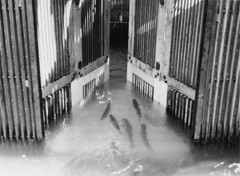
While you are there, check out the new Flickr Commons set on salmon fishing in Oregon. Everyone is swimming on over, don’t be left at the gate…