So… How the Heck Do We Handle This?

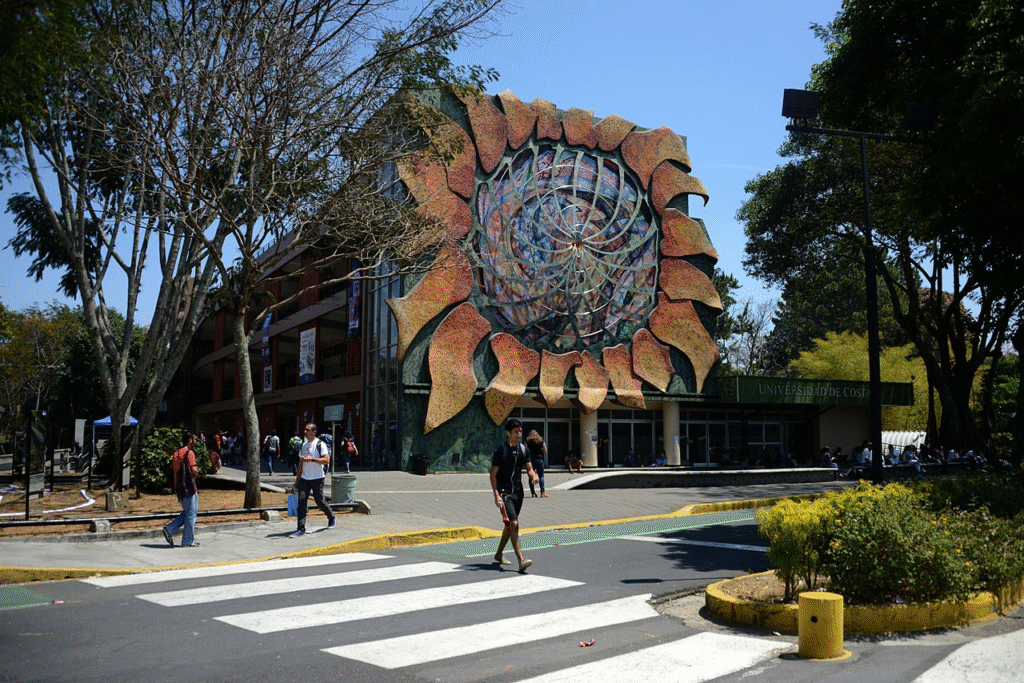
University of Costa Rica by Laura Rodriguez on Wikimedia Commons

By now you’ve looked you’ve hopefully looked through each of the sections regarding Environmental, Social/Cultural, and Environmental impacts. If you haven’t, please get through these before reading this article. You might be feeling a bit depressed about all of this, but like everything, there’s hope! There are always possible solutions no matter how dire a situation might be and that just happens to be the case for Costa Rica and it’s relationship with tourism.

Possible Environmental Solutions

As mentioned in the environmental impacts by Haley Davis, the depletion of resources by hospitality businesses such as hotels is detrimental to both the local population and the environment surrounding it. Possibly having the government introduce a certification method or some sort of inspection regarding natural resource usage to ensure compliance and environmental regulations could help a lot.

Pollution is a major issue and instead of just one major blanket solution, many ‘micro solutions’ could be implemented instead. Forbidding single-use plastics, encouraging public transportation(or expanding it in the first place), and granting economic bonuses to companies that go above and beyond in environmental consciousness practices could go a long way. Really, something is better than nothing.

Possible Social/Cultural Solutions

Having the government create websites or spread information regarding indigenous peoples to tourists and expats could go a long way in ensuring that they are treated correctly with respect instead of delegated as an oddity or tourist attraction. Ecotourism often revolves around education, so implementing this is extremely beneficial and I would argue almost necessary. Perhaps also instructing or training tour guides on how best to approach this would be a massive help to making the indigenous peoples feel less like a stop along the way and something to genuinely immerse yourself in and appreciate.

Having stricter requirements on businesses/companies communicating projects and major developments to locals and governments to increase transparency and allow for feedback could go a very long way in increasing satisfaction in locals. It would be a bit of a trade-off for the businesses, but the people come first as it is their land and community that is potentially being changed.

Possible Economic Solutions

There are two immediately off of the bat that I could think of. The first of which is to increase spending on infrastructure and police, to help alleviate some of the reasons why tourists are wary to visit. Costa Rica gets most of it’s tourists from the US and US tourists are spooked the most when it comes to places being potentially unsafe. Furthermore, this would help combat some issues that locals have been complaining about and it would be a relatively simple solution to implement.

The second of which has to do with wealth inequality. This might be a bit of a stretch, but a government program that could give the poorest of the poor opportunities for business development WITH support could be a potential solution. It would have to be implemented smartly, not just rubber stamping different proposals and calling it a day.

What Can You Do?

While, admittedly, there isn’t a whole lot that one single visitor or group of tourists can do, every little bit helps. Please feel free to share any ideas you have in the comment section to help others visiting get started. Here are a few ideas to help start you off though: Researching tour companies to ensure that they are local and reputable, respecting wildlife, and approaching cultures and native/indigenous peoples with an open mind.
Economics Impacts: The Nitty-Gritty

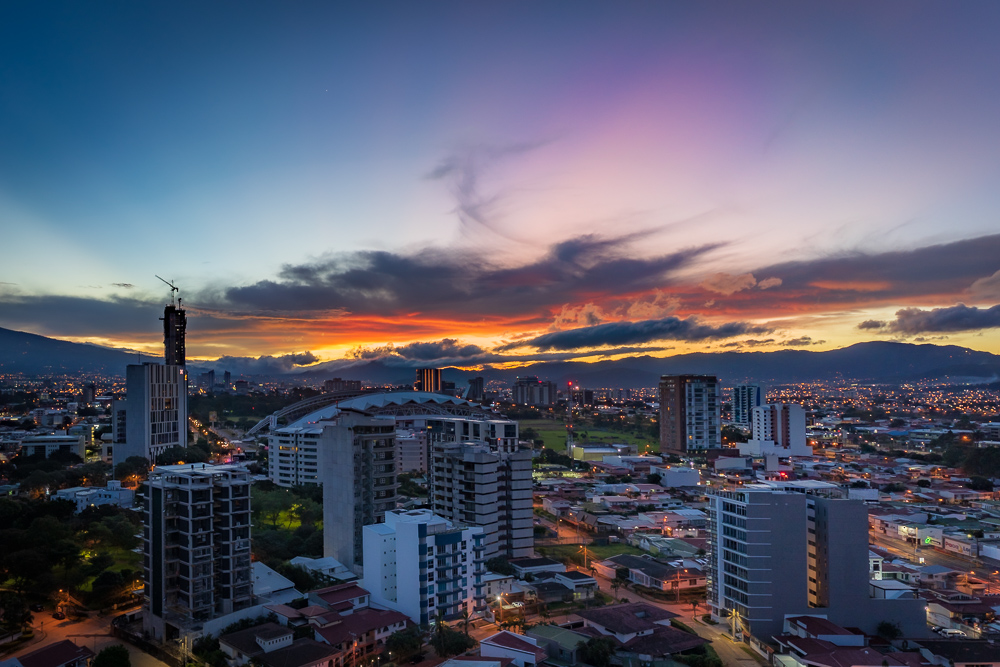
San José skyline at dawn by Jpczcaya on Wikimedia Commons

Money is always a topic of contention. There’s never enough of it to go around and it’s almost always a hassle to think about. When we go on vacation, we try to escape the stresses of money and it usually falls to the wayside. However, the same could not be said for the locals in Costa Rica. As mentioned in the introductory and welcome page of this blog, Costa Rica is the most visited Central American country. The nation sees a lot of revenue from tourism as whole, which makes you think that everybody sees part of the wealth and it’s distributed evenly. Unfortunately, as you’ll see in this blog post, that is not the case.

Distribution of Wealth

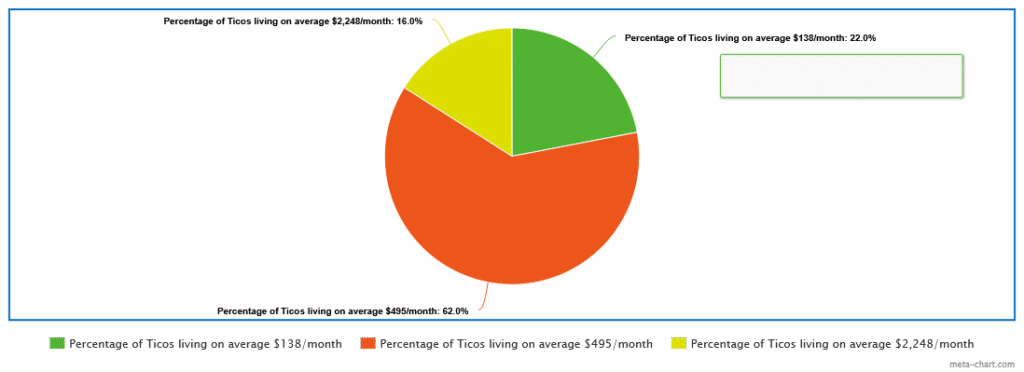
Graph by Robin Gamble using Meta-Chart

Lets try to make sense of this pie chart together, shall we? For context, a Tico(masculine) or Tica(feminine) is a way that locals refer to each other as Costa Ricans, so I will be referring to the population as Ticos here on out. Each of these figures was taken from Aliesha Baldé on Medium, but she took those figures from survey data in The National Institute of Statistics and Censuses(INEC). Since I don’t speak Spanish, I took the figures from her article.

The first slice of this graph, the green, is the percentage of the lower class which lives on average $138/month USD. What this graph doesn’t include is that 5.9% of Ticos live under The World Bank’s poverty line, which is $3/day USD, or around ~$90/month USD. That’s a heart breaking amount. Furthermore, that 5.9% lives in extreme poverty. This figure was found by Joseph Webb of The Borgen Project, an NGO working to combat poverty. What’s frustrating is that tourism can help alleviate poverty in certain conditions and circumstances. This is not one of those circumstances.

The next slice of this graph, the orange, focuses on the ‘middle class’ which lives on average $495/month USD. I put middle class in quotes because despite the fact that it’s around 3.5 times the lower class, it’s still a very low figure. I compared this figure to various expat(immigrant) sites to see what the comfortable price of living might be for a single person and it fluctuated between $1000/month USD and $1500/month USD in a city. I am not exactly sure how reputable these sites are individually, but considering that many websites were throwing these figures around, I think that estimation is valid. So taking these numbers into consideration, I speculate that Ticos are being pushed out of major cities(or if they are, they are cohabitating or have roommates) and can scarcely afford luxuries or utilities. This of course also applies to the green slice as well but exacerbated to the extreme.

Last, but certainly not least, we come to the yellow slice. This is where the wealth inequality really shows up. These folks live on average $2,248/month USD and are clearly the upper class of Costa Rica. That’s 16.28 times the lower class make on average in a month and 4.54 times the middle class. It’s not rocket science to figure out that it’s a ludicrous amount of wealth inequality.

Unequal Distribution of Benefits

This wealth inequality also demonstrates that there is an unequal distribution of benefits when it comes to the revenue generated by tourism. The touristy areas: beach towns and cities where locals were already living in and could afford to keep living in, I argue receive the most benefits as those are the upper-class and expensive areas. Since they receive the most amount of tourists, the government can keep funneling money into those locations and neglect more rural and inland areas where plenty of Ticos live.

But Why?

That’s the kicker, isn’t it? Why on earth are these issues occurring in the first place? Costa Rica receives plenty of visitors. I have pinpointed two main reasons. One of them is more innocent than the other. The first of which is that the Colón is becoming stronger. The Colón is the currency of Costa Rica and it has been slowly becoming stronger and stronger compared to the dollar. One Colón now is 0.0021 USD. That doesn’t sound like a lot. But comparing it to July 2022, we can see that it was 0.0014 USD, a 150% increase over four years. That is a significant increase. A 150% increase is even enough to slow down the amount of tourists that can come to visit. According to Ticotimes.net, an English language newspaper in Costa Rica, 2025 ended with a 1% increase in tourism in Costa Rica. While this sounds good, the standard global tourism rate grew by 5% in that year. Costa Rica started to slip it’s competitive edge to other countries like Columbia, the Dominican Republic, and Mexico. The Tico Times cited other issues like infrastructures, rising insecurities, and “the rapid spread of informal accommodations and travel agencies” Furthermore, this slipping has been happening for a bit. In Q3 of 2025, 22,000 jobs were also lost(Ticotimes.net), largely for the same reasons. This was because of many of the same reasons, including rising crime which deterred tourists on top of the exchange rate.

The other major reason why there is a downtick in tourist arrivals is ironically, that the government is focusing on making tourists happy rather than their own citizens. This seems counter-intuitive at first. If the government is focusing on tourists, why haven’t there been more tourists? Well, as mentioned in the previous paragraph a lot of the issues that have been neglected for the general population would honestly bring more tourists in than whatever they’re currently focusing on. I will present possible solutions for this in the solutions section of this blog.

Shouldn’t Poverty Alleviate Tourism?

In theory, yes! But it can only alleviate poverty if it is built from the ground up to do so. If it is just an afterthought then it won’t work. Tourism can contribute to poverty reduction IF it does some or all of the following: it can create employment and income for local households, provides decent work(not just jobs), builds up local capabilities and assets such as skills and savings and business opportunities, strengthens local supply chains, supports social services through coordinated long-term investment, respects land rights and benefit-sharing, and enhances resilience to economic and climate-related shocks.

According to Regina Scheyvens and Emma Hughes and their paper Can Tourism help to “end all poverty in all its forms everywhere”? The challenge of tourism addressing SDG1 a lot of times tourism often falls short because of structural inequality, profit imperatives, poor labour conditions, exclusion of the poorest, and limited government capacity and regulatory will. A lot of these are already happening to Costa Rica.

Sources: https://borgenproject.org/wealth-inequality-in-costa-rica/, https://medium.com/@ayeebalde/4-reasons-why-costa-rica-is-so-expensive-2cfda1bc15fb, https://ticotimes.net/2026/01/17/costa-ricas-tourism-is-losing-ground-to-mexico-guatemala-and-others, https://ticotimes.net/2025/11/22/costa-rica-tourism-crisis-as-22000-jobs-are-lost-in-downturn, https://www.tandfonline.com/doi/full/10.1080/09669582.2018.1551404

References

Kamal Thapa, David King, Zsuzsa Banhalmi-Zakar & Amy Diedrich (2022):
Nature-based tourism in protected areas: a systematic review of socio-economic benefits and costs to local people, International Journal of Sustainable Development & World Ecology, DOI: 10.1080/13504509.2022.2073616

Kleszczynski, Kimberly A., “Impacts of Ecotourism in Costa Rica: A Sustainable Alternative to
Conventional Tourism” (2016). Pell Scholars and Senior Theses. 106.

Pham, T. -L. (2016). Cultural, Social, and Environmental Effects of Tourism: A Case Study on Coastal Costa Rica. Retrieved from http://purl.flvc.org/fsu/fd/FSU_libsubv1_scholarship_submission_1481306039

What is Sustainable Tourism?

The Sustainable Tourism Framework is a structured approach designed to promote coexistence between tourism activity and local communities, with the goal of minimizing conflict and mitigating significant unfavorable effects. The framework centers on three core dimensions, environmental, socio-cultural, and economic, and examines how these elements intersect to affect the overall well-being of a destination. Environmental goes over how tourism harms the natural area and resources, socio-cultural gives a deeper understanding as to how tourism may affect the community, and economic impacts state how tourism may affect the jobs and affordability of the area. By categorizing impacts in this way, the framework enables a clearer understanding of how tourism can generate both harm and opportunity, and it supports targeted efforts to address root causes rather than symptoms. For governing bodies, this structure provides a practical tool for identifying priority areas and implementing policies, such as regulations for businesses or visitor guidelines, that protect local interests while letting tourism still exist. In the context of this project, applying the framework will help organize the analysis around the interconnected ways tourism affects both the people and natural environments of Costa Rica, ensuring that the assessment captures the full scope of its impacts.

Welcome to our blog!

Image Credit: Michal Dziekonski

Hello, and thanks ahead of time for checking out our blog! We’re happy you’ve decided to check us out. We’re a blog centered around Costa Rica, a premiere travel destination for folks looking to see beautiful landscapes and wildlife.

About Costa Rica

Costa Rica is located in Central America, directly south of Nicaragua and to the northeast of Panama. The country is flanked by the Pacific Ocean to the east and the Caribbean Sea to the west.

According to CEOS.org(Committee on Earth Observation Satellites), Costa Rica is one of the most biodiverse places on the planet. Despite only taking up 0.3% of the Earth’s surface area, the country takes up a whopping 6% of the world’s biodiversity. With numbers like that, it’s no wonder that tourists flock here.

Costa Rica is without a doubt the most visited country in Central America. According to Worlddata.info(Who got their data from the World Tourism Organisation), a staggering 2.91m overnight tourists and 301k same-day tourists visited Costa Rica in 2024. Most of the tourists that come to visit are interested in the rainforest and humid environments, animals, and national parks that populate the country as that is the main ‘pull factor’.

Costa Rica gets a lot out of tourism. In 2024, 5.45bn USD of revenue was generated directly from tourism, making it one of the largest sectors in the country. Each tourist generates about 1,693USD(Worlddata.info). In addition to that, many industries rely on travelers and tourism as a whole such as hospitality, food and beverage, and souvenirs/arts/crafts. Tourism also helps fund national parks, which attract many visitors.

Why is Sustainability Important?

If you prompt somebody to think of sustainability, odds are they often think of ‘going green’ and being environmentally-friendly. And yes, being environmentally-friendly is very important, but the truth of the matter is that sustainability is multi-faceted. Sustainability also has to account for the culture of a region and its economy. This might be a bit difficult to wrap your head around at first. 

Take for example you’re a fledgling tourist who’s heard about a pristine island nation. There isn’t any litter, the culture is rich, and it’s cheap. It sounds absolutely wonderful. So you book a trip to the nation and the first thing you notice is that everything is clean. There are safeguards for swimming and diving near coral reefs and there’s a mandate for tour vehicles to be electric. You’re positively ecstatic. You were super excited for nature and now you’re glad they’re doing a good job of taking care of their country and the environment. After the initial hype, you go out grocery shopping and you find that the prices are a lot more than what your friend told you about. That’s odd, but it’s just one thing. Then you get to the hotel and find out that it is pricey as well. Now you’re starting to get concerned. Prices are a bit out of control. But at least the culture was great, right? You find that one of your tours stem from a company operating out of Switzerland and it’s difficult to find authentic local-run shops or restaurants because they are completely overshadowed by ones from Western countries.

This is why sustainability is important. The environment matters, but the people residing in said environment matter just as much, if not even more. If the locals cannot afford to live in their home anymore, then slowly, the culture will start to drift away from what people loved about the site, and eventually, it just won’t be the same anymore.

Our Purpose

The goal of this blog is to approach tourism from a realist’s perspective. There are a lot of positives that are associated with tourism, but there are a lot of negatives as well.  We, the writers aim to do three things. One, show the social/cultural, economic, and environmental negatives associated with tourism in Costa Rica. Two, suggest possible solutions at large. Lastly, three, present some solutions or things that you, the reader, can do to help.

Don’t Hesitate!

If you’re into sustainability, tourism, Costa Rica, or just have something to share in general, don’t be afraid or ashamed to comment. We would love to hear about things you have encountered on your trip to Costa Rica, your professional expertise, or a local’s perspective on how tourism is impacting your home.

Sources used: 1. https://ceos.org/news/tropical-forests-costa-rica/ 2. https://www.worlddata.info/america/costa-rica/tourism.php

Depletion of Culture and Community due to Tourism

With the rise of issues of outreach for resources that are necessary for the lives of the people in Costa Rica due to tourism, the attempt to get those resources has become competitive. The international tourism driver manifests through large-scale hotels whose operational demands, particularly for water to maintain amenities like golf courses during the dry season, create a pressure pathway of disproportionate extraction from shared local aquifers without adequate community consultation. The international businesses using up these resources do not share whatever profits they may receive with the community. While this slightly makes sense due to the fact there aren’t full ties between the two, this means there isn’t money to balance out the reality that resources are being used at a high rate. Profits coming first isn’t particularly new, as in a previous study it was concluded that economic benefits were more common in tourist destinations in comparison to socio-cultural benefits (Thapa et. al 7). However this continuous strain of minuscule amounts of conversation between the businesses and the communities leads to major socio-cultural consequences for the region, as stated in an article covering socio-cultural impacts in Costa Rica: “Without consultation of the community or the respective technical studies, the company chose to extract water from the aquifer in the alluvial valley for the hotel, exactly in the location where the community of Sardinal is situated… In situations like these, competition over scarce basic resources, such as clean water or electricity, spark social tension and conflict within local areas” (Kleszczynski 20). Local communities are directly affected by such adverse social effects of tourism, facing water scarcity that forces dependence on trucked deliveries while witnessing their traditional access rights diminished, with adverse implications including potential long-term community resentment toward tourism development and significant costs to residents’ quality of life and sense of local autonomy.

Another impact on the cultures of the locale from tourism is the miscommunication of the indigenous people and their history. When international tourists engage with indigenous communities through superficial visits rather than meaningful cultural exchange, their behavior functions as a tourism driver that produces lasting socio-cultural damage. This pattern typically emerges when tourists, often staying at foreign-owned hotels, make brief stops at indigenous villages as if they were just another attraction on an itinerary. The pressure pathway begins with economic leakage, tourist spending flows primarily to international tour operators and accommodations rather than reaching local hands and extends into the realm of social relations, where indigenous people are reduced to exhibits for tourist consumption. The socio-cultural consequences of this dynamic are profound: community members experience feelings of exploitation and dehumanization, traditional practices lose their authentic meaning when performed primarily for cameras, and intergenerational transmission of culture may weaken as younger community members internalize this distorted, performative version of their heritage. Indigenous communities themselves are most directly affected by these adverse social effects, facing the painful paradox of being visited yet unseen. As one Costa Rican informant observed, when tourists treat communities like museums, “this is hurting these communities. This makes these communities very closed [off], and they try to avoid tourism” (Kleszczynski 22). The adverse implications extend to both tourism and community: for residents, the psychological toll of being treated as a spectacle fosters resentment and cultural withdrawal, cutting off potential economic opportunities; for the tourism industry, the loss of authentic cultural exchange degrades the visitor experience and risks perpetuating stereotypes, ultimately undermining the sector’s long-term sustainability by alienating the very communities that give destinations their unique character.

One more harmful event that arose from tourism was when foreign residents decide to move to Costa Rica permanently but don’t make much effort to learn Spanish or become part of the local culture, it creates real friction between them and the communities they’ve moved into. The tourism driver here is a specific type of migration, expatriates and retirees, mostly from the United States, who settle down in beach towns but kind of stay in their own bubble linguistically and culturally. The pressure pathway works through this one-sided expectation: locals have to adapt by learning English and changing how they run their businesses to cater to these new residents, but there’s rarely any effort made in return. Over time, the socio-cultural consequences build up. Locals start feeling frustrated and resentful toward people who are happy to live in Costa Rica and enjoy everything it offers but won’t actually engage with the people or the culture in any meaningful way. Small business owners, shopkeepers, service workers (the people who interact with these foreign residents day in and day out) are the ones most directly affected. They end up in this exhausting position where they’re constantly adapting to accommodate people who won’t meet them halfway. As one souvenir shop owner in Jaco put it, “What really bothers me a lot is when tourists come to live here and they criticize the culture all the time, but they are living here and also there are also some people here who are not interested in learning Spanish, and they live here” (Pham 32). The implications here cut both ways. For the local community, constantly accommodating without getting anything back takes a toll. It breeds resentment and eventually people just start pulling away. For the tourism industry, having all these unassimilated foreign residents around creates visible divisions that kind of undercut the whole idea of authentic cultural exchange that draws people to Costa Rica in the first place. It ends up chipping away at the community character that made the place attractive to visitors and new residents alike.

Costs of Tourism on the Environment

Costa Rica is a highly visited tourist destination due to its unique and beautiful scenery that spans the entire country. Tourists typically go there to explore the native wildlife and the surrounding scenery. This allows tourists to invade the areas where wildlife reside more commonly, such as the national parks within Costa Rica. This engagement with the wildlife is largely encouraged because it is the main driver of what brings in more tourists. However, this engagement between humans and wildlife leads to unnatural occurrences between the two. In an article that goes over the environmental impacts of tourism in Costa Rica, an informant states, “I saw a female raccoon run beside me and stand inches from my friends and put on a cute show… I had also watched monkeys ‘smile’ for pictures and run down the beach and steal packed lunches from tourists who were busy swimming. These were very unnatural behaviors for these animals. Raccoons are naturally nocturnal, so seeing one during the day was extremely peculiar” (Kleszczynski 19). Having wild animals make changes in their instincts and daily structure is harmful to their larger populations. These animals will have to end up relying on these humans if tourism like this is continuously encouraged and provided. No population of animals can sustain entirely on humans unless domesticated, and because of that, it can lead to certain species that interact with humans more becoming endangered due to the fact that they rely on their natural instincts less.

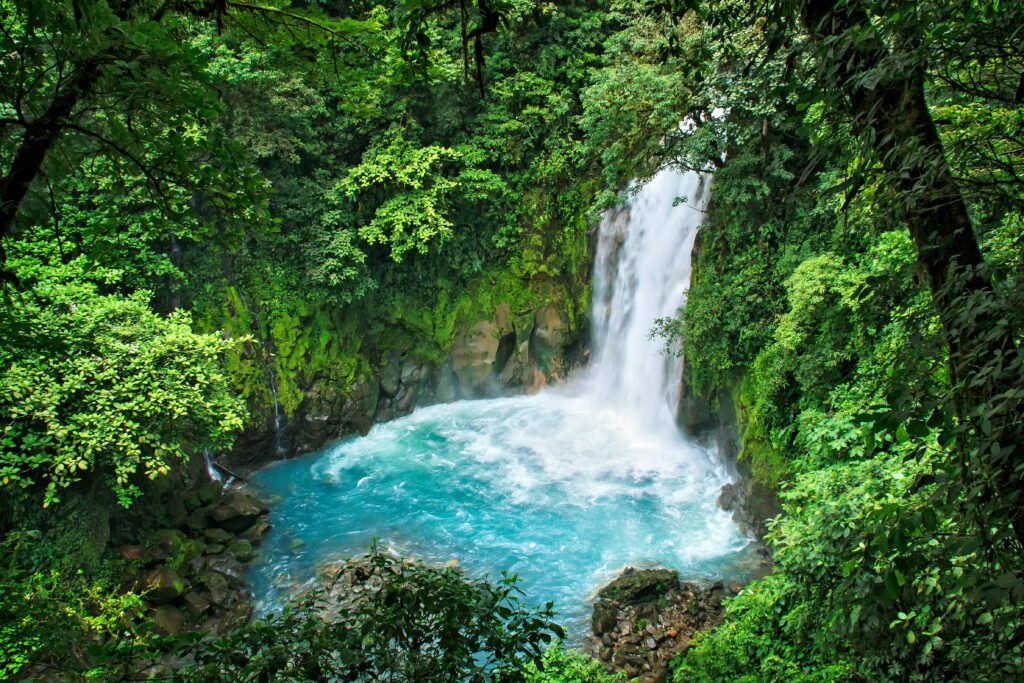
Celeste River Waterfall, Photo by Sterling Lanier via Unsplash

Two other environmentally related impacts that are currently affecting Costa Rica are pollution and depletion of resources. They go hand in hand as they have come from the same cause. The most common buildings that derive from tourism are the hotels and resorts those traveling stay. These buildings are typically massive in size, meaning they take up many different resources, whether it is the materials required to build the resort or the large quantities of water and electricity it takes to keep it running. Having to use so much water for a singular building leaves the rest of the city with very little to use, and it isn’t just hotels using so much. In the article that goes over ecotourism in Costa Rica, it is stated, “In Guanacaste, for example, they are having huge trouble with the golf course because there are huge hotels and to have the really nice green grass, they have to water the land every single day during the dry season. And keeping the grass green during the dry season means that a lot of people in the town are not having water for six months because all the water is being used towards the golf course” (Kleszczynski 16). Water is one of the essential resources that people need, and having entire towns and cities go without it for so long just allows tourists to engage with a sport that is completely unnecessary. The same article goes over how even with ecotourism, there are issues with pollution, as well as it references, “Successful ecotourism initiatives may draw higher numbers of travelers, thus increasing negative environmental impacts such as increased solid waste generation, habitat disturbance, and forest degradation from trail erosion” (Stem, Lassoie, Lee, & Deshler, 2003). No matter how effective ecotourism may try to be, if it brings in a considerable number of people, there will be large drawbacks from the overuse of the resources, which will thus lead to more pollution, especially in the cities of Costa Rica. Although ecotourism has the environment in mind, it isn’t always perfect, and the root cause is usually just the idea of tourism in and of itself.