BioResource Research Major, Water Resources option with minors in Chemistry and Statistics
Question: So, my first question for you is; what can you tell me about yourself and what drew you to the major?
“Well I really like to be outside and I had a really hard time choosing majors but I worked a field work job this summer with someone that was a BioResource Research student [Jack Schultz] and he brought up like ‘it’s interdisciplinary and you can combine all these components’ because I had been in engineering and then environmental science and then botany and I kind of wanted like a mix of all three. So then when I heard about it I was like ‘this is great’ because I can kind of combine like the best parts of each of them into my own thesis.”
Question: Can you tell me a bit about your project and what you would like the average person to understand about your research?
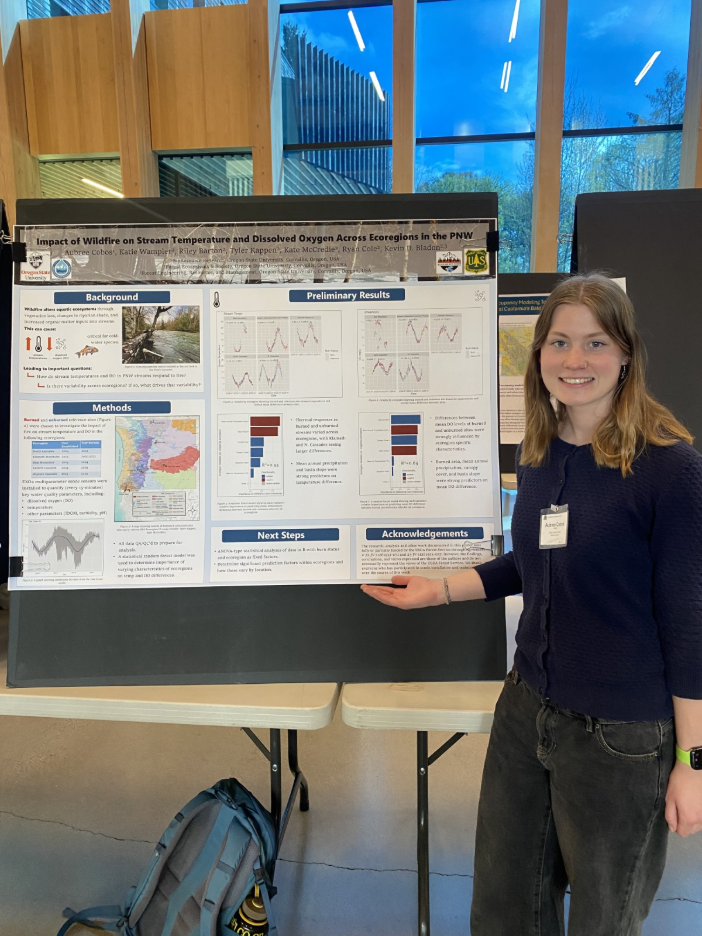
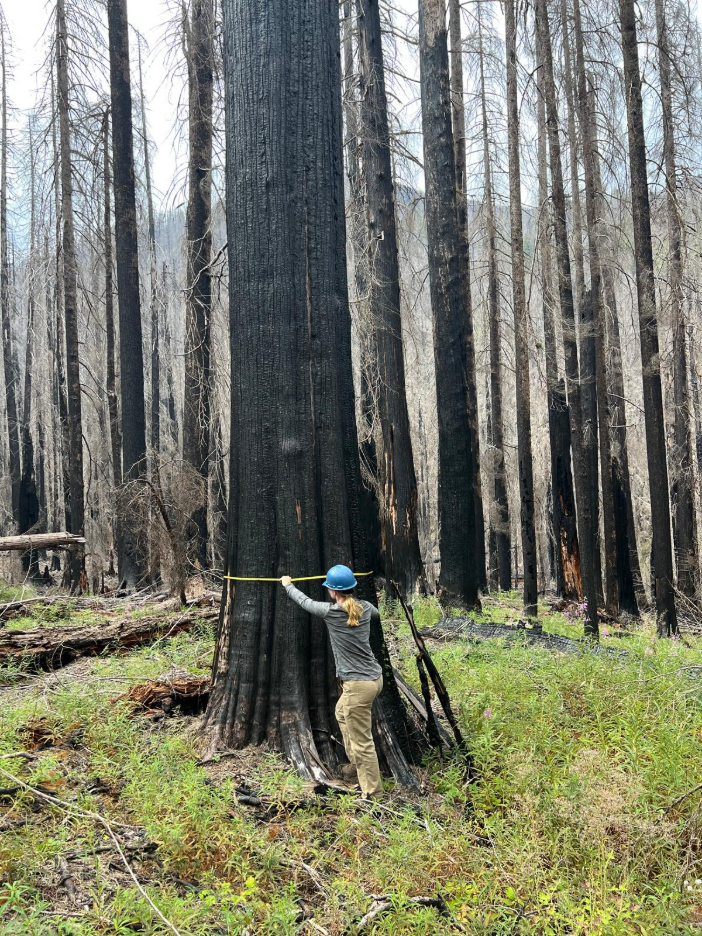
“Yeah, okay so my project’s on water temperatures in streams and then DO, which is dissolved oxygen, after a wild fire. So it’s looking at the change in those metrics after it burns and if that’s like harmful for fish populations or aquatic species in those environments. It’s also looking… across different regions to see if some regions are more susceptible to fire than others.”
How did you get connected with that project?
“So I looked for like forestry faculty members because I am really interested in any forestry related research, I really like the forest ecology side of things, and then Wanda had recommended Kevin Bladon, and he is in FES (or Forest Ecosystems in Society), and so I met with him and some of his post-docs, and they kind of laid out a group of projects that I could choose from and that one looked really interesting because that one was very like data analysis heavy. I really liked the statistical analysis that was kind of like ‘we have these three years of stream data with the burned and unburned sites and you can kind of do whatever you want’ so I was very hands-on in terms of the data.”
So it’s like yes you had a faculty in mind who had some projects lined up, but you really got to pick and choose and semi-modify the project for what you wanted to do?
“Yeah, so they have like a wildfire and water security group, and then like this massive set of data and were like ‘you can do organic carbon, or pyrogenic carbon, or even design your own experiment’ but then it was like, ‘you want to write a paper you should probably do something more data oriented’ so I kind of had some flexibility with what I could do.”
Question: What do the next steps in continuing this work look like? Is this something you are thinking of continuing yourself?
“Well right now I am midway through, so in terms of the actual project mostly just like kind of wrapping up the results and the stats stuff because it’s like very heavy on the coding portion. In terms of going forward, I’d like to publish this paper which would be really fun as like a first-author publication. I have a year or so of writing to do. And then going forward, I’d like to like continue a stream analysis for maybe a PhD but something maybe with more USGS sites or something broader than just like the PNW.”
So basically, this project, when it wraps up will be pretty much concluded, but you’re interested in pursuing further education around this field.
“Yeah, anything forest ecology, but looking at like some of the stream data, there’s some cool questions that I think would make a good dissertation.”
Question: Do you have any advice for students considering or recently joining the major?
“Well I would say definitely go with a topic you’re passionate about. I think if you’re stuck with for two years doing research on something you don’t care about it would get very monotonous so like don’t slack on like the prep that goes behind the BRR project. I got kind of lucky in that I found really good faculty and secondary mentors and they had like a project that worked out for me, but if you kind of go in blind you might not enjoy it as much as if it’s something you’re passionate about.”
Basically, tailoring the project that you are going to do around things that you are actually interested in.
“Yes, as opposed to like checking a box that’s like ‘oh I did my thesis’ it’s like something you care about.”
It is such a big project that having an inherent passion for it is going to make the experience much more enjoyable.
“Absolutely, yeah.”