BioResource Research Major, Sustainable Ecosystems Option
BioResource Research (BRR) is a broad major, with 13 options available to customize each student’s academic experience. Through this and future posts I hope to shed some light on just a few of the many paths students can take towards earning a research-focused B.S. degree, and help highlight some of the incredible work being done by students in the program.
This first post is autobiographical and structured as an informal interview. More interviews with other BRR students will follow.
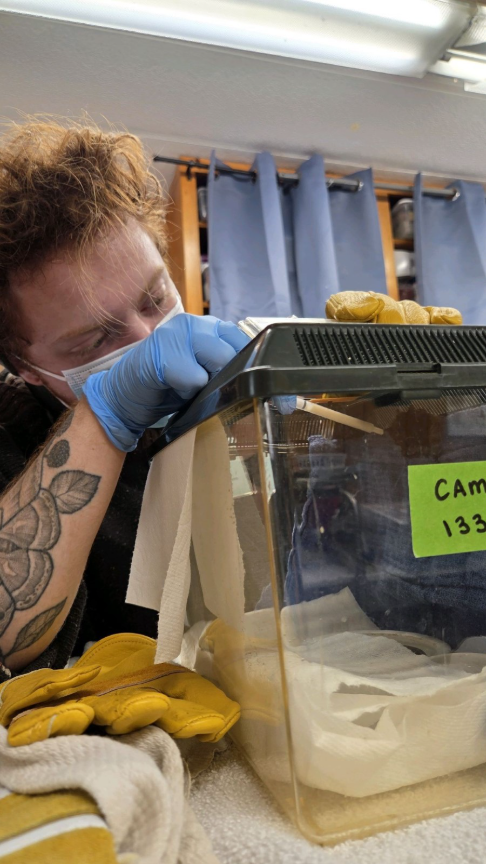
Question: So Tori, what can you tell me about yourself and what drew you to the major?
“Well, I have had a passion for wildlife, but especially bats, for my whole life. After taking a large break from my degree over the course of the pandemic, I returned to OSU excited and ready to get back on track. Wanda Crannell [BRR advisor] has been such a huge help in navigating my return and I could not imagine another major with such incredible support.
As I am preparing for graduate school, the experiences this major offers in planning a research project, working with a mentor, and developing my science communication skills (to name a few) have all been vital stepping stones in making me a more competitive applicant and competent scientist.”
Question: Can you tell me a bit about your project and what you would like the average person to understand about your research?
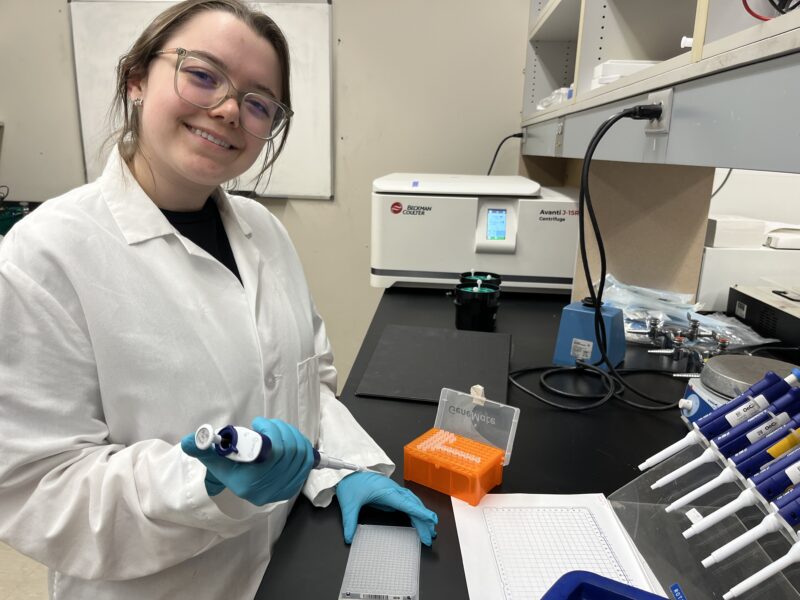
“Absolutely; my project is looking at possibly detecting Canine Distemper Virus in Pacific Northwest bats. This virus has never been documented in any of the five species I tested, despite being transmissible between mammals, making this a novel test for the species in question. Canine Distemper can cause neurological symptoms, like what we would see in a rabid animal, and is often fatal in those that are infected.
As my project involves testing bats that were negative for rabies, the big question was ‘if not rabid, why are these bats coming in contact with people or pets when they should naturally avoid them?’
While I did not find Canine Distemper in any of my bat samples, there may still be other diseases leading to these unusual behaviors that we simply haven’t tested for yet.”
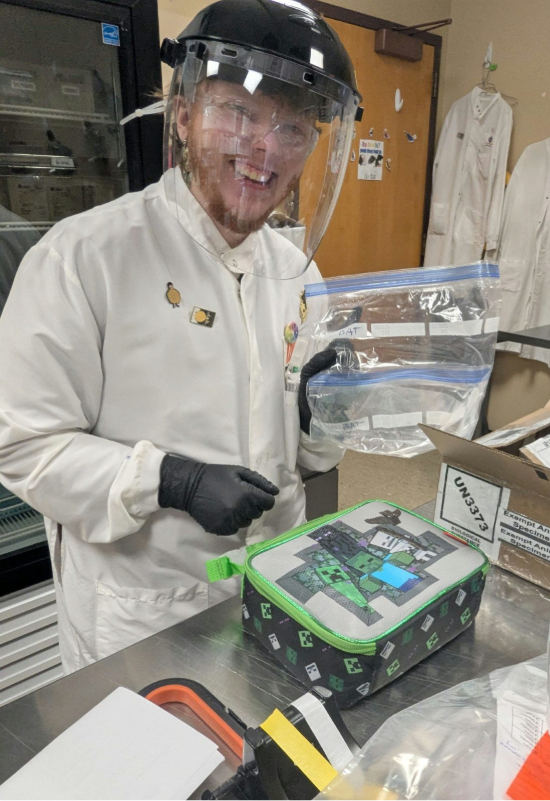
Question: What do the next steps in continuing this work look like? Is this something you are interested in continuing yourself?
“The obvious next step is expanding the variety of diseases being tested for and trying to rule out more things at least, if not confirm another disease entirely. The scope of that type of project can quickly get out of control though, as bats are a vector for many, many diseases.
Another perspective may be to look at the actual behaviors of the bats, leading to testing in the first place. ‘Cat caught’ was the most common reason that bats were submitted to the OSU Veterinary Diagnostics Lab for rabies testing, which is where I obtained the samples for my project. So, these samples may represent cases where the bats were perfectly healthy (albeit unlucky).
While I would love to do more digging into this topic, my future plans are looking more towards graduate school and the opportunities in wildlife management beyond only disease research. I look forward to seeing how the research in bat diseases develops further, and will certainly be keeping up on the literature.”
Question: Do you have any advice for students considering or recently joining the major?
“It is absolutely worth your time to meet with multiple faculty and find the best fit for the kind of project you want to do. Once you have a project, keep chipping away at it a little at a time. The thesis requirements may seem daunting, but spending just a little time each week working on it will save you a lot of stress down the line. Rome wasn’t built in a day and all that.
And the light at the end of the tunnel; you are going to make a top-notch graduate student at the end of it!”
As I wrap up this autobiographical interview, I have reflected on the amount of work I have put into creating this project, and the pride I feel is very genuine. This is one of the very few undergraduate majors at OSU that are centered around student research and the production of a thesis, and it is no small feat, but the opportunities available through BRR and beyond make it all worth it in my opinion.