BioResource Research Major, Sustainable Ecosystems Option
Question: So Florian, what can you tell me about yourself and what drew you to the major?
“So I actually went to OSU wanting to be a veterinarian, so I thought I would do the animal sciences option of BRR, but I also wasn’t entirely sure that’s what I wanted to do, so what drew me to the major was just all the different options that I could do. It was a way of choosing a major without really having to actually choose my exact area of specialization… I also like the idea of doing undergraduate research. That was a big part of me choosing OSU. There were other schools I wanted to go to as well, but they were smaller and didn’t have the same research opportunities.”
Question: Can you tell me a bit about your project and what you would like the average person to understand about your research?
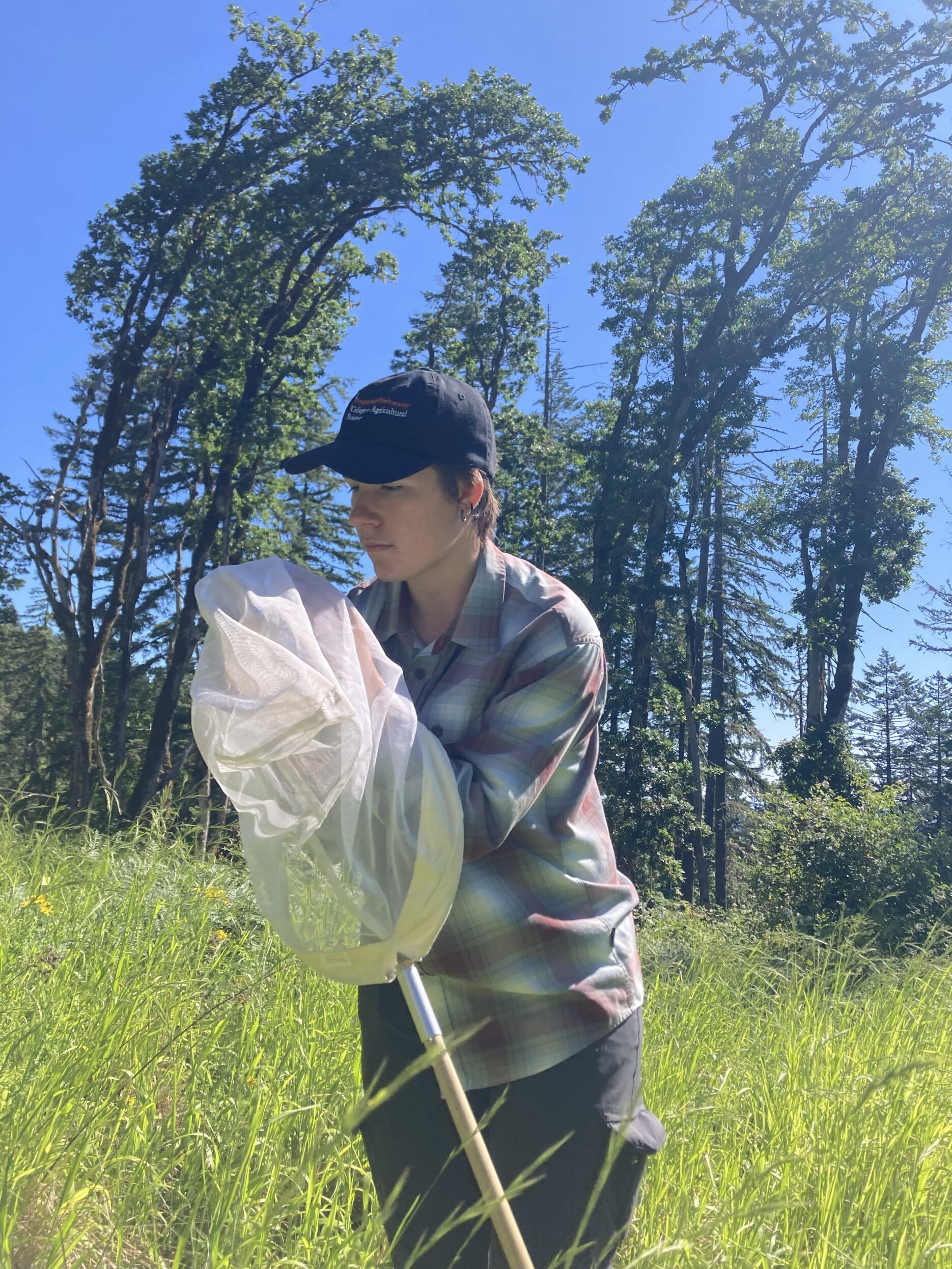
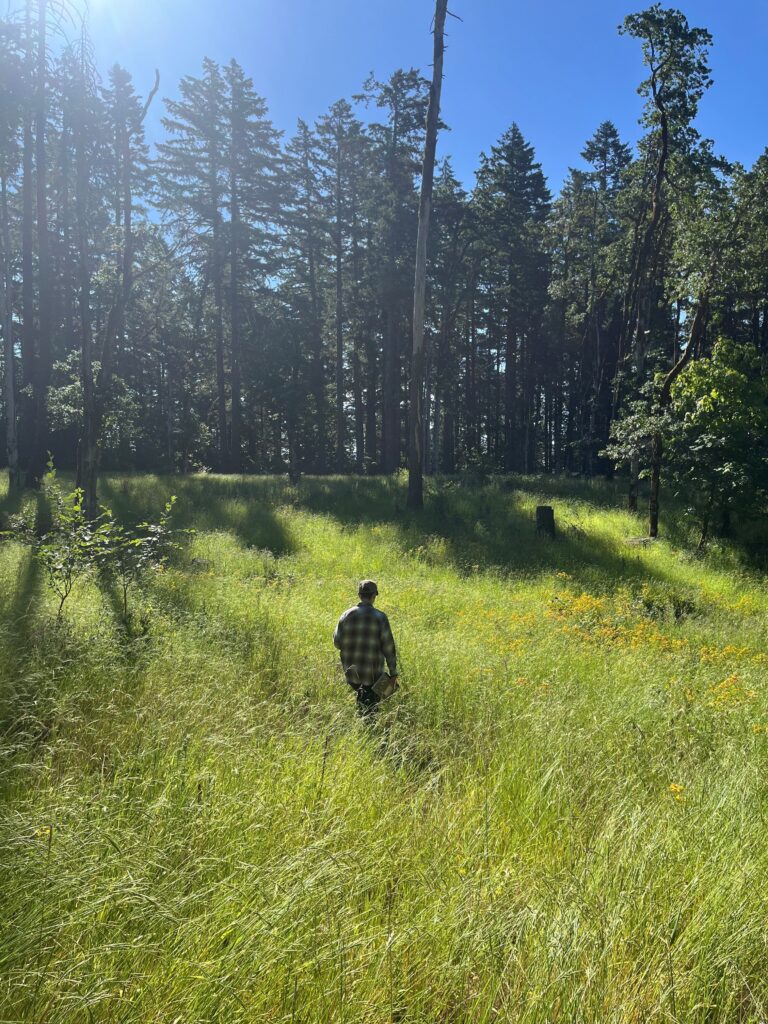
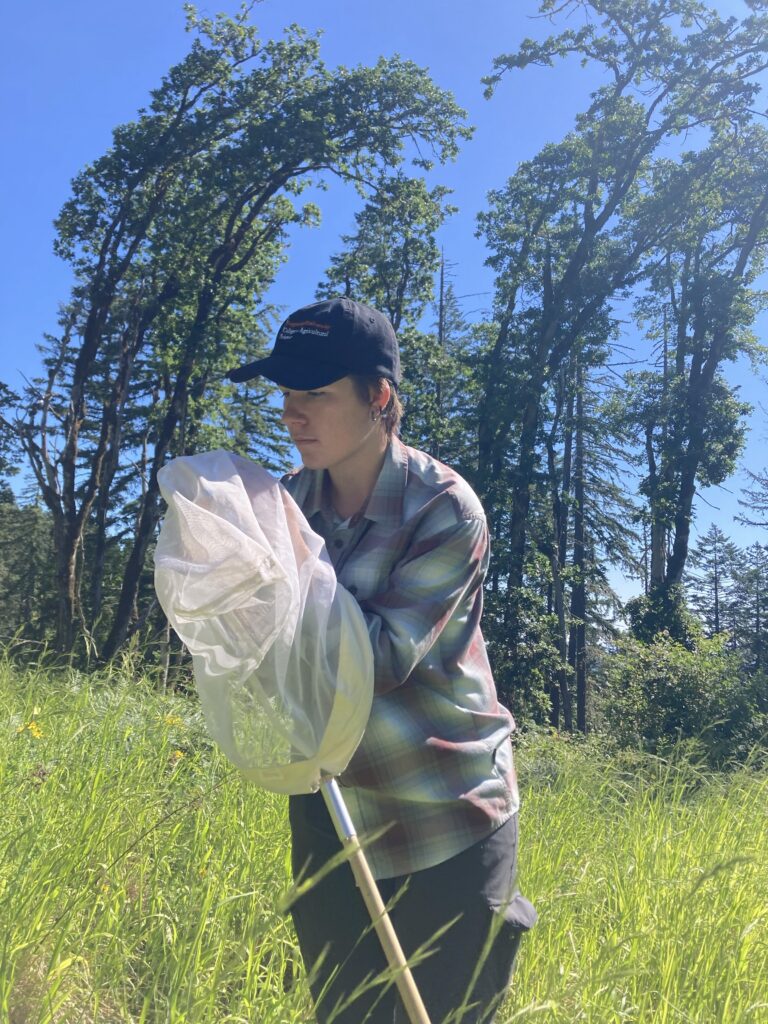
“Okay, so I’m looking at Oak Savannah habitat which is an at-risk habitat. There used to be a lot of it in the Willamette valley going up all the way up into Canada. And now there is only ~10% of it left in the Willamette valley, I’m not sure about other areas, but it’s a very interesting habitat and part of restoration of that habitat is the pollinators. So I wanted to look at flowering plants that are in oak savannah and which ones pollinators like to visit to get pollen and nectar… [I was] looking at what plants are in the oak savannah, what pollinators are visiting them, what plants the pollinators like, and found that pollinators didn’t have a lot of choices of what plants to visit. It was mostly invasive plants, so it highlights the importance of restoration. That’s also a lot of the reason those areas haven’t been restored as the [McDonald research] forest doesn’t have much funding to do that. Which is really sad… We can really only restore tiny little pieces at a time and in the meantime while they are restoring one piece the rest gets worse… A lot of it [the historically oak savannah habitat] is agriculture also now.”
Question: What do the next steps in continuing this work look like? Is this something you are interested in continuing yourself?
“So, probably not because the sites that I chose were fragments of oak savannah, but they haven’t been restored at all, so they are very full of invasive plants. So my results were actually [that] there was one species of native plant that was there that was in high abundance that the pollinators liked and all the other ones that pollinators visited and that were there in high abundance were invasive. So I think if I were to do this for next steps I would maybe compare the results of this study to a restored oak savannah to see what plants, what native plants, are there that maybe have been replanted or are able to grow when the invasive plants are removed… I was only able to identify most of my pollinators to the order level, I identified the bees to genus level, but it would be interesting to identify all of them to the species level. To do a measure of species richness for each plant.”
Question: Are you looking at doing graduate school, or schooling beyond BRR?
“I do want to do grad school at OSU and am hoping to do something continuing with entomology, either with pollinators or agricultural pest management or conservation pest management but I’m currently planning to work in Corvallis for a few years because there’s not a whole lot of funding opportunities for grad school. So stay here, work, and hopefully apply to grad school in a few years.”
Question: Do you think that your experience with this pollinator project will give you some good background entering graduate school in an entomology based program?
“Yeah I think so because it helped me learn a lot about insect population dynamics and how insects behave in a natural environment, which can also be applied to an agricultural ecosystem, especially when I’m looking at sustainable agriculture which is a main area of interest. I also think that just knowing how to design a research project and write a project proposal, write a grant proposal, and all those things that I had to do for this project are going to be useful in the future for grad school. It’s kind of like mini-grad school. Lower stakes, not quite as much pressure not quite as much work but like it gives you the skills to build upon later.”
Question: Do you have any advice for students considering or recently joining the major?
“I would say getting started early in just any research project is a good idea. It doesn’t necessarily need to be the one that you start with, but what I did is the College of Agriculture has branch experimentation program summer internships. I did one of those and that’s how I met my current mentor, when working on a different project, and then I later came up with this project and asked if she wanted to be my mentor for it and she agreed. So I think that’s a good thing, is just get started with research early, figure out what things you enjoy about research. You might learn that you don’t like research but I think most people really enjoy it.”