thanks for the memories!

Well, I guess this is it…

It’s hard to believe this is the end of my fellowship. It all happened so quickly, but I am extremely grateful for the experience, opportunities, and friendships made in the process. Since this project will take several years to complete, I am satisfied with the progress we have made so far. Overall, Oregon and Washington are closer to Geographic Location Descriptions (GLDs) for seabed mining, seafood processing discharge, and offshore aquaculture. While some are closer than others, I believe each coastal program is equipped with the tools necessary to finish the product. We also were able to complete a Guidance Document for other Coastal Programs who wish to pursue GLDs in the future.

Geographic Location Descriptions are one of the many tools available to Coastal Programs, including the Oregon and Washington Coastal Management Programs. These documents allow the Coastal Program to review activities outside of the coastal zone for reasonably foreseeable effects to coastal resources. These resources span from recreation and tourism, to fishing practices in state waters. Each of these uses/resources must be balanced with the authorization of an activity in federal waters that is shown to have those effects.

 Seabed Mining

Seabed mining is something most Coastal Programs should plan for, as it is likely to become an emerging use in the future. Scientists have estimated that it is only a matter of time before mining activities shift their focus on the mineral resources found in the ocean. As technology evolves, and the resources found on land become more finite, it can be inferred that seabed mining will be an emerging use. To best prepare for these activities and the reasonably foreseeable effects to coastal resources, both Oregon and Washinton have begun to prepare a GLD for offshore seabed mining. This GLD will ensure each Coastal Program has a seat at the table, as it coordinates with the relevant federal agencies. Under the Coastal Zone Management Act, and its implementing regulations, federal agencies are tasked with coordinating with State Coastal Management Programs to ensure that those federal actions are consistent with enforceable policies located in the coastal zone. In this case, there still needs to be more information known about the technology, but the reasonably foreseeable effects are well delineated. Some of these effects include permanent changes to benthic habitat, water quality degradation, and other natural resource management concerns. This work has been critical to each Coastal Program as they find more information, so much so, that the Washington State Legislature and Governor placed a moratorium on seabed mining activities in the coastal zone. This moratorium is encouraged because it has been put in place before political concerns are taken into account.

 Offshore Aquaculture

As of today, the US has remained focused on developing aquaculture facilities in both the nearshore and offshore. The main goal is to decrease the amount of imported seafood that the US relies upon each year. For this reason, the federal government has remained focused on siting facilities in US waters every four years. A GLD will ensure that concerns for natural resources will be discussed prior to authorization. Some of these things include excess nutrient

input, HABs, OAH, competition with the fishing industry, and other relevant/valid issues with an offshore aquaculture facility. The three main types of aquaculture were considered in developing the analysis of reasonably foreseeable effects of aquaculture siting on natural resources. The three main types of aquaculture are: finfish, marine vegetation, and shellfish. Each of these types of aquaculture have impacts to coastal resources and uses, so the Coastal Program remains focused on coordinating with the relevant agencies on developing the framework for siting these facilities in the future. These impacts will be helpful in starting the conversation, in the same way the BOEM Wind Energy Task Force uses the information in the Marine Renewable GLD to determine what the reasonably foreseeable effects could be.

 Offshore Seafood Processing Discharge

This is probably the activity I spent the most time on. Starting in 2015, the State of Oregon and the EPA began coordinating on a permit for offshore seafood processing discharge on the Oregon and Washington continental shelves. Unfortunately, the two agencies were unable to reach an agreement on the coastal effects of the authorization of the activity. One of the primary points of disagreement was that each agency needed to know a lot more information about the oceanographic currents, where the material is going, what the respiration rate is of the material, etc. During my fellowship, I was able to bring this permit to the EPA’s enforcement division along with creating a coordination process with the Quileute Tribe, Quinault Tribe, the State of Washington, the State of Oregon, and the EPA. This coordination group meets quarterly to discuss the complexities of permit enforcement and how to ensure the reporting information can be used to inform the next iteration of the permit in 2024.

 GLD Guidance Document

Due to the gray area involved in drafting GLDs, I was able to help draft a Guidance Document for GLDs. This document discusses the complexities that come with undertaking these projects, especially when the technology is so new. For example, seabed mining is not a practice in the US, so it is difficult to ascertain the types of impacts to key coastal resources without further research. This document should be in publication within the next year.

Final Note

This has been a fantastic opportunity, and I wouldn’t trade it for the world. I feel better equipped to take on a career in coastal management, and am incredibly excited to see what’s next. In the meantime, I was able to participate in a podcast with Felicia Olmeta-Schult to discuss lessons learned from my fellowship, and other information about coastal management.
Tool to increase coastal hazards preparedness in Oregon

I mentioned in my last blog post that I was working on the development of a tool – a library and mapper of case studies on coastal hazards preparedness in Oregon – similar to the Washington Coastal Hazards Risk Reduction Project Mapper.

This tool will compile and geographically display case studies on alternatives to traditional shoreline armoring (e.g., nature-based designs) and on practical approaches to acute and chronic coastal hazards (e.g., tsunami caches). There, individuals, communities, and tribal and local governments will be able to share their work and learn from each other. I created a list of existing projects and approaches, and I am drafting case studies for the mapper. I also started using the ArcGIS Online StoryMap app to design a mock-up of this future tool.

I would like to clarify that nature-based or soft shoreline armoring aiming to reduce coastal erosion and flooding are not a panacea, and are specific to the local environment (natural and man-made) where they would be located. Resources, capacity, and political and community leadership will also often influence and determine the design and implementation of a project.

In this blog I will introduce you to three local programs and initiatives aiming to increase tsunami preparedness, and one project that used nature-based approaches for shoreline protection to erosion (I briefly mentioned this one in my last post). These case studies will be part of the mapper.

  1. The Emergency Volunteer Corps of Nehalem Bay (EVCNB)

EVCNB is a non-profit organization dedicated to building personal, community and regional resilience, developing programs to ensure readiness, and promoting a culture of emergency preparedness. EVCNB was founded and is run by local community volunteers.

EVCNB was formed in February 2008 following a storm that brought hurricane-force winds, flooding, and a total power outage to the north Oregon Coast, temporarily isolating the three small communities and surrounding areas of Manzanita, Nehalem and Wheeler. Therefore, EVCNB found it critical to have their community members be trained and prepared to respond in a self-sufficient manner.

To learn more about EVCNB, go to https://evcnb.org/.

2. City of Rockaway Beach, Tsunami Resilience Planning Project, Tillamook County, Oregon

The geography, older infrastructure, and human settlement patterns in Rockaway Beach have created challenges for timely evacuation from a local tsunami. Coastal lakes, non-retrofitted bridges, manufactured homes, residents over 65 years of age, and visitors who tend to stay close to the ocean all create evacuation concerns for the city.

The City of Rockaway Beach undertook a risk-based and community-specific approach to tsunami resilience planning, which resulted in a Tsunami Hazard Overlay Zone and a Tsunami Evacuation Facilities Improvement Plan (TEFIP), both of which were adopted into the Rockaway Beach Zoning Ordinance through a plan amendment process.

You can read the Rockaway Beach TEFIP Planning Commission Draft (April 2019) here.

3. City of Seaside, Tsunami Supply Barrel Program, Clatsop County, Oregon

The City of Seaside provides emergency supply caches in high ground areas throughout the city.  The supplies are stored in preparation for the aftermath of a Cascadia Subduction Zone earthquake and tsunami or other major disaster.  In 2013, with the help of state and federal grant funding and dedicated volunteers, the City filled 119 supply barrels (50-gallon recycled corn syrup barrel) with medical supplies, water purification systems, emergency rations, tarps and radios. Each barrel has enough supplies to last 20 individuals for at least 3 days. They are stored in private residences above the inundation zone in all five evacuation assembly areas throughout Seaside, and will be placed on the curb in the event of a tsunami.  In the summer of 2020, the city restocked the barrels with fresh food, water purification tablets, batteries and medical supplies.

You can find more information about the Tsunami Supply Barrel program here. If you are interested in creating your own community tsunami cache, information can be found in ‘Earthquake and Tsunami Community Disaster Cache Planning Guide,’ a report prepared for the Oregon Department of Geology and Mineral Industries and the Oregon Office of Emergency Management.

4. Cape Lookout State Park (CLSP) dynamic revetment, south end of Netarts Spit, north of the Cape Lookout headland, Tillamook county, Oregon

The Oregon State Parks and Recreation Department, in partnership with Oregon State University and the Oregon Department of Geology and Mineral Industries, constructed in 2000 a dynamic revetment or cobble berm and artificial dune in response to extensive erosion of the primary dune, which separates the beach from a campground located immediately landward of the eroding dune. State Park’s officials rejected the idea of a “hard” structure in the Park, a high mound of rocks between the campground and the recreational beach.

Gravel was extracted from the natural cobble beach in areas where it was believed that more than sufficient volumes were present to protect the dunes and where no park infrastructure was present. The artificial dune was overlaid with a jute coconut fiber cloth, on which native grasses were planted. The sand for the reconstructed dune came from an area south of the park, where there had been problems with sand blowing onto the roadway.

Since its construction in 2000, the CLSP structure has withstood multiple large Pacific Northwest winter storms. However, the Oregon Parks and Recreation Department (OPRD) has had to add additional cobbles to the dynamic revetment at least three times in the decade following the project completion.

The choice of a cobble berm backed by an artificial dune for shore-protection in the eroding state park proved to be cost effective, the expense being a small fraction of what it would have cost to construct a revetment or seawall. The construction was also simpler than that of a conventional revetment, and the material used more readily available than armor stones. In addition, the completed cobble berm and artificial dune are nearly indistinguishable from their natural counterparts on the Oregon coast, such that the visitors have little or no notion that these are in fact shore protection structures.

If you want to learn more about this project, read the report ‘Design with Nature” Strategies for Shore Protection: The Construction of a Cobble Berm and Artificial Dune in an Oregon State Park’ written by Paul Kolmar, Oregon State University, and Jonathan Allan, Oregon Department of Geology and Mineral Industries.

We need your help!

Do you know of projects, programs, initiatives, and research in your area I could add as case studies in this mapper? If you do, please contact me at olmetasf@oregonstate.edu. I am also looking for any existing projects and initiatives taken by individual homeowners/landowners.

Other work

Regarding my other tasks for the fellowship, I completed the design of the training needs assessment survey for the lodging industry and I am currently piloting the survey. This needs assessment asks questions about overall training needs and logistics, but mostly focuses on two trainings: the new OSG free online 30-minute Practical Customer Service Training, and the Office of Emergency Management (OEM) free online 30-minute Tsunami Safe Training. I aim to distribute this survey in the coming month. We waited for the busy summer season to be over so hotel managers would have more time available to complete the survey.

We are taking small steps with this project and decided to start with Curry County and the City of Seaside before expanding it coastwide. We may also expand this survey to other sectors in the hospitality industry.

I also continue my efforts in reaching out to tribal, state and federal agency staff, university researchers and staff, local government staff, and hotels to let them know about the Oregon Mapper and the lodging industry needs assessment projects, and to discuss their needs and how OSG could support them. So far, I had Zoom, phone, and email exchanges with a little over 50 people across Oregon State and a couple in Washington State.

I hope you enjoyed reading about this brief update on my main two projects! Do not hesitate contacting me at olmetasf@oregonstate.edu if you have any questions and suggestions.

Final Lessons from Oregon Sea Grant

Working as an Oregon Sea Grant Summer Scholar these past ten weeks has been a blast! I learned so many lessons that will be applicable throughout the entirety of my career in science. My favorite parts of my internship were all the times I was able to interact with other people interested in the Oregon seafood industry. I loved Fridays when I could join my mentor, Angee, at the Newport docks. I also enjoyed the interviews I had with industry leaders up and down the Oregon coast. Overall, I felt the most connected to the coast when I could interact with people who had deep connections with it. 

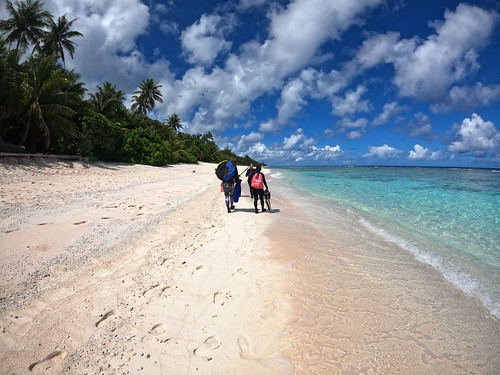
This feeling is something I hope to carry into my next step as a scientist. I am currently living in Guam working towards getting my masters degree in coral restoration genetics. While working here I plan to establish a relationship with community members and other scientists. By learning from people who have lived with and studied this area far longer than I have, I should be able to deepen my respect for corals and integrate a diverse range of disciplines into my work. In addition to expanding my community here, I plan to continue making science education videos and posts. Instead of posting about Eat Oregon Seafood, I will shift to posting about coral restoration research. I also hope to make some videos that may help demystify graduate school for students who don’t initially see themselves belonging there.

069DA7C0-9B34-4A28-B9F9-BC1C3345686D
Our first field day in Guam
407416B5-ACF7-464A-BCA0-E7033E55EE88
Corals located right behind the University of Guam Marine Lab

I will spend three years here in Guam completing my masters (and I can already tell they are going to be three of the best years of my life). Afterwards, I plan to pursue a PhD in coral science (and maybe even dive a little into policy as a Knauss fellow – who knows!). I am positive that I will continue to appreciate Oregon seafood management from afar and use everything I learned this summer to look at my current work from different perspectives. Big thank you to Oregon Sea Grant, my summer mentors, and everyone else who made this summer possible!

All good things must come to an end.

It is bittersweet knowing that I have to say goodbye to this amazing opportunity, but I was ready to return home. For the final weeks of the internship, we continued to survey, entered date into excel, and then created the final presentation. It was great to meet new people and learn about everything everyone was doing. I was really happy I took this awesome opportunity. I am happy that I accepted the position with the Oregon Department of Fish and Wildlife and was granted the honor of being an Oregon Sea Grant Scholar. I wouldn’t have changed it for the world. I met some great people, gained lot of professional skills and experiences. The west coast was defiantly something different. I would love to visit the west coast, but for vacation purposes. The scenery is so beautiful and I was honored to be on the ancestral lands of the Umatilla, Coos, Siletz and many more tribes. It is with gratitude that I had the opportunity to work there. Thank you. The Oregon Coast is unlike anything I have ever experienced, I am glad I had the opportunity. My favorite part was the scenery and will include one of my favorite photos that I captured while conducting surveys. It is in Otter Rock. Until next time.

Processed with VSCO with c9 preset

Summer in Review, and Next Steps

To echo the words of my mentors in a meeting yesterday, “it’s been 10 weeks already?!” My time at the Oregon Coastal and Ocean Information Network (OCOIN) has absolutely flown by. Beyond a doubt, my personal growth and learning over the course of this Summer is due to the amazing network of people within OCOIN and Sea Grant. I felt supported by my mentors who both helped me become an expert in ESRI software, like survey123, and supported my own curiosity and innovation while working on OCOIN’s tools this summer. I also want to recognize my fellow Oregon Sea Grant Summer Scholar, Joshua, whose collaboration allowed me to be a better team member and always challenged me to learn more skills and organize efficiently. 

This internship confirmed that after I graduate in 2022 I want to continue exploring the ways mapping and spatial data can be used as a research method and a vehicle for science communication. I plan on taking a year to work before pursuing a graduate degree in the geospatial data science realm, and I feel confident the skills I’ve learned at OCOIN will help me with both endeavors. Beyond software, my expanded confidence in troubleshooting and the  design and implementation of user-interface updates I gained while working on OCOIN’s tools will be invaluable while searching for jobs. 

Last day on the job selfie, featuring the Oregon Sea Grant hat!

Finally, I would like to say a heartfelt thank you to the Oregon Sea Grant, my mentors in the CEI program, and the entire team at OCOIN. It was a pleasure to work with everyone and I know we will be in contact in the future!

Ten Weeks Packed Full of Learning

I can’t believe that my time as a Summer Scholar is already coming to a close. Working with the Oregon Coastal and Ocean Information Network (OCOIN) has provided an amazing opportunity to see what my professional life will be like after I finish school. Within the OCOIN network, I have been able to gain a broader view of organizations working to provide for Oregon’s coast and have built connections with professionals within these networks. It has been a confirming experience working with people with common interests, with whom I can see myself working well with. 

My view this week, finishing up our updates to OCOIN’s Coastal Research Explorer.

While I don’t feel like I have a better understanding of what exactly I would like to do after school, I do feel more comfortable with the options before me. With OCOIN, I have seen a greater variety of professional tracks working within the environmental science realm. I have also learned valuable skills that will help me when it comes time for my job hunt. My biggest goal as a Summer Scholar was to learn ArcGIS, and I have gotten a deeper understanding of it than I thought was possible in just ten short weeks. Before this summer, I knew nothing about ArcGIS, but over my internship, I have completed many tutorials, had hours of hands-on training, been able to put my skills to use working on OCOIN’s Coastal Research Explorer, and have even had my share of troubleshooting to really gain a deep learning of this valuable skill. 

This fall, I will be starting graduate school at Portland State University, working towards my Master of Science in Environmental Science and Management. I will be a part of the Applied Coastal Ecology lab with Dr. Elise Granek. One of my goals as a Summer Scholar was to determine what I would like to research. While that is still taking shape, the vision of what it will be is much clearer. Throughout my internship, I worked hands-on with OCOIN’s Coastal Research Explorer, which hosts Oregon’s coastal research projects. This experience allowed me to see what research is taking place on the coast, aiding in my quest to find a research topic. I am grateful for the skills I acquired, the connections I made, and the hands-on experience I gained as a Summer Scholar. 

Saying “goodbye” to the South Slough a 2nd time… but not really

Reflection:

This summer, as the cliché goes, went by “in the blink of an eye.” I had a lot of fun at the Slough, and being there every other week truly felt like going on vacation. I have had a hectic schedule this summer to say the least, but working once again with the South Slough staff was a pleasure. While last summer’s internship largely prepared me to have success right away for this year’s science camps, I certainly became a more confident educator through my additional exposure to leading camps this summer.

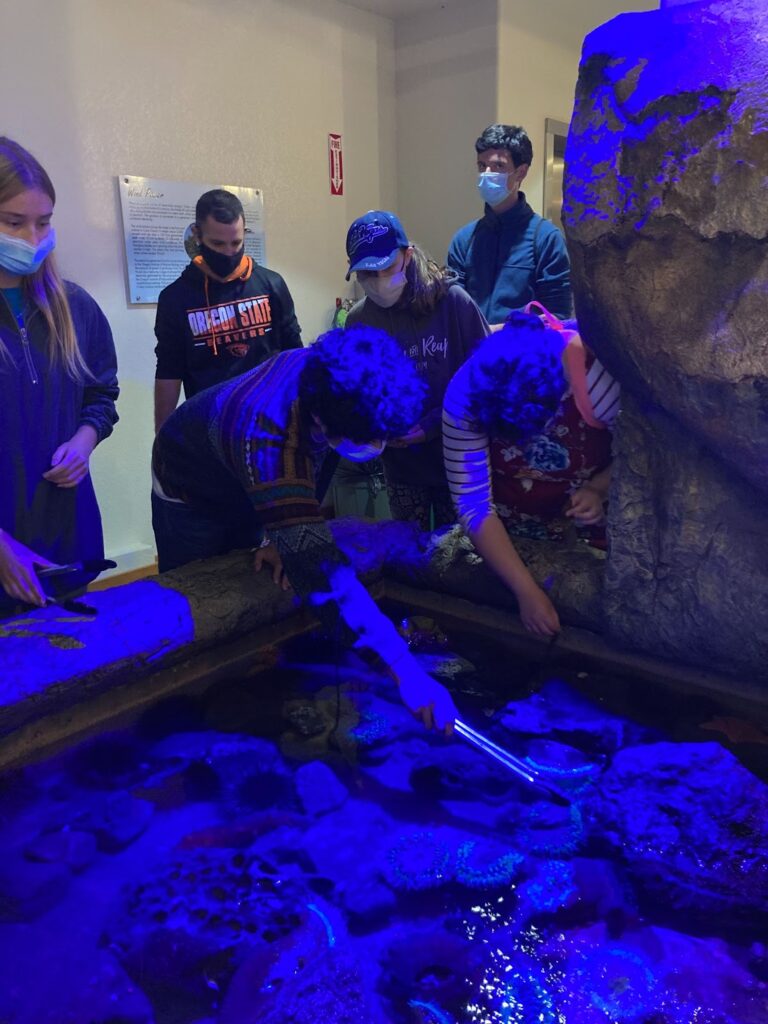
High school science campers feeding tide pool critters at the Charleston Marine Life Center in Charleston, OR.

Did this internship affect my future career choices?:

My experience this summer did not affect my career path, but my overall time as an Oregon Sea Grant intern at the South Slough certainly has. I am in the process of applying to Wildlife Ecology PhD programs and hope to pursue a career in academia, research, and wilderness management. My time at SSNERR has also motivated me to pursue educational outreach opportunities in the future, whether that be as a volunteer or through occupational means. I am a passionate student of ecology and animal behavior, which has only been amplified by my past two summers as a Summer Scholar.

Next Steps:

At this time, my next next steps are to complete my undergraduate honor thesis and to obtain funding for graduate school. I have spoken with prospective PhD mentors from various universities this summer and have options that are contingent on either their labs obtaining funding or me obtaining funding. Ideally, if I can win a competitive fellowship award, such as the NSF GRFP, then I will be able to conduct meaningful research under the mentor that I hope to work with. Most of my time is currently occupied with data collection for my thesis (which is a study on how blue fluorescent light affects bee movement and pollination behavior) and polishing my applications for graduate school funding. I am also preparing to take the GRE in September and working in a bird physiology lab, which will hopefully prepare me for some work I hope to do with birds in grad school. I will also be working closely with the South Slough to complete the SWMP water quality exhibit over the course of the next few months.

Thanks!

Thanks again to Oregon Sea Grant and the South Slough for the tremendous opportunities over the past two summers! I will keep in regular contact with members of the South Slough and appreciate all Sea Grant has done in opening new career pathways for me.

All by myself…

Just ten weeks ago Lisette, Phoenix, and I were headed to Otter Rock for our first practice run surveying visitors to Oregon’s marine reserves. Fast forward to today; Lisette headed back to Chicago last week and Phoenix left the week before. It has been a quite week finishing up data entry and checking from home so I have had more time to think about this blog post compared to previous ones.

Throughout these ten weeks I saw how human dimensions research is carried out from survey design to report writing. I sat in on meetings with the team designing and drafting a survey that would be sent out to thousands of recreational fishers, created a codebook for data entry, conducted hundreds of surveys of visitors and businesses, and now I’m starting the report writing phase.

This behind the scenes look has made me feel more confident in my career goals going forward. I have always said that I wanted to work for ODFW or similar agency because I felt that their mission aligned with my personal values. This experience has solidified that for me and, through our mentor Tommy, I have gained some insight into what it takes to get a permanent position at ODFW.

It looks more and more like graduate school is in my future. I have started doing some surface level research into where I could apply and what that process looks like. This is where I feel like I faltered at the end of my previous bachelor’s degree so this all makes me a little nervous. In the next few weeks I will develop more of a plan and set up some meetings with my advisor and others to make sure I’m on the right track.

In the short term I will be staying on with ODFW as a temporary biological science aid. This will allow me to continue helping write the reports for the data we collected this Summer. I’m excited to stick with the project a little longer and to have a job for the rest of the Summer!

Thistle is adjusting to the work from home life.

A truly shrimp-tacular summer

Looking back, this has probably been the best summer of my life! Although it started off rough leaving my family and friends behind, it progressively got better with time. I got to meet so many new and wonderful people, visit places I’ve never been, and experience things that I never imagined for myself. I mean, it was my actual job to go out and play in the mud like a little kid! This summer internship has truly been an amazing experience and I recommend it to anyone looking to get a foot in the door with marine sciences.

blog5a
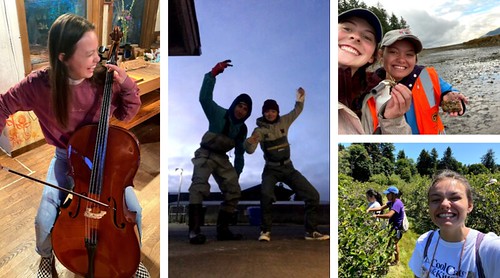
Top left: John and me on my very first day out in the field. Bottom left: Exploring a lake in Alaska with Mattias. Middle left: John on the first day of Alaska field work. Right: Phoenix and me at the Bayfront before the program started.

Hearing from my roommates and the other Sea Grant Scholars has helped me to narrow down my future aspirations. I know that my summer experience has been a bit different than others in the program by being more of a scientific research experiment rather than scientific community/policy outreach. Working with Oregon State University and USDA-ARS has given me the chance to work with a real research team instead of a classroom research team. Not only has it led me to meet and work with other students and professors from OSU and CU Boulder, but it has allowed me to visit and make professional contacts in Washington and Alaska. While I would like to work with a government agency in the future, I would prefer to do a similar role as here that has less interactions with the public and more hands-on science.

blog5c
Left: learning to play the cello with the Banks family. Middle: Joshua and me psyching ourselves up for field work with Brett at 4:45am. Top right: Emily and me with several Alaska mud shrimp. Bottom right: blueberry picking with the roomies.

The next step in life for me is heading off to graduate school for the Marine Resource Management master’s program at OSU in September. At OSU I’ll be continuing working with Brett, John, the Upogebia, and the Orthione for my master’s thesis to try and keep that balance between economy and ecology. I’m thrilled to be a part of a program that focuses on so many of the things that I care about. It will be an interesting transition to go back to school, especially in-person school. No matter what happens, I am extremely excited and nervous to start this next chapter of my life and see where it takes me. 

blog5b
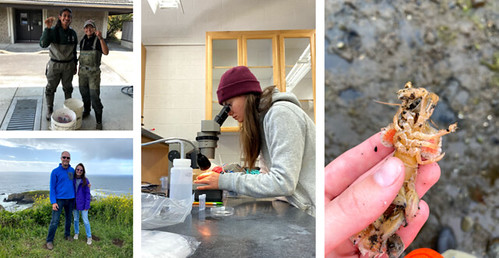
Top left: last Yaquina Bay field day for Joshua and me. Bottom left: exploring Yaquina Head Lighthouse with Mattias. Middle: a typical day of lab work. Right: a double infested mud shrimp from Alaska.

An end to an amazing summer

It always amazes me how quickly 10 weeks can just fly by. I wasn’t sure what I was expecting when I came into this internship, but everything has been above and beyond anything I could have imagined. During my undergrad, I was very focused on building my skills in scientific research which lead me to participate in various research opportunities. However, I felt that I lacked the skills to apply and communicate that scientific knowledge in a way that would make it useful for policy and management. Throughout this summer, after talking with various professionals and participating in a variety of meetings with my mentor, I can definitely say that I’ve gotten a pretty solid grasp on how to apply and communicate science. I’ve learned how to read and summarize scientific papers so that I am only pulling out the major key points. I got to build my artistic skills and participate in creating various outreach materials to communicate the scientific knowledge in a manner that is easier to digest to the target audience. Additionally, I got to see and interact with some of the “middlemen” between the scientific and the policy-makers to firsthand see how science helps inform policy and management. All the skills and knowledge I have gained throughout this summer will definitely benefit me as I continue with my education and solidify my career path.

Another important thing that I learned from this internship is that your degree doesn’t define what your future career is. I was pleasantly surprised to find just how many people working in the policy realm had a scientific background in biology, marine science, ecology, etc. While I originally thought I wanted to get my Ph.D. and only do research for the rest of my life, I soon realized that academia wasn’t really for me. It was comforting to hear just how many paths that a background in the biological sciences could give you and that it doesn’t necessarily have to take you down the path of academia. Talking individually with various professionals has really helped me start to see all the possibilities I can do with my degree. As I continue on to my master’s program at UC Davis in the fall, I will continue to look for interdisciplinary opportunities that will allow me to explore a career in the intersection between science and policy.

One of the grad photos I took at the blueberry farm where I conducted research during my last term at UO.