Week 1: SHEMs, SOPs, and PFDs at the PCEB of the EPA

Wow, what a week! After Thursday and Friday finals, moving out and cleaning out Saturday, and a Sunday afternoon graduation featuring First Lady Michelle Obama, Monday arrived with orientation with Sea Grant and the PCEB of the EPA at HMSC! That would be the Pacific Coastal Ecology Branch of the Environmental Protection Agency, located at the Hatfield Marine Science Center, and yes, this is only the beginning of the dizzying array of acronyms I would encounter this week.


In turns out, working for the federal government involves some fairly extensive training. The EPA requires employees to undergo 24 hours of Safety, Health and Environmental Management training (SHEM). Once those 24 hours were completed, I was able to move on to the science paperwork and the Standard Operating Procedures (SOPs)! Believe me, while not sounding incredibly interesting, these documents were a relief from the SHEM training. It was in these documents that I was able to see a glimpse of the future science I would be performing. Despite the endless amounts of paperwork that came through my door and unto my desk Tuesday, Wednesday, and into Thursday, I remained incredibly excited about the opportunity that I had received, and that excitement was rewarded on Friday.


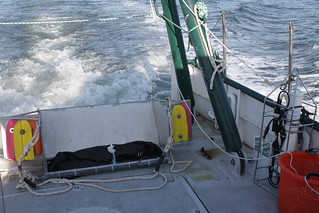
On Friday I got my first taste of fieldwork with the EPA. We took the boat out with our personal flotation devices (PFDs) securely fastened and collected samples showing the effects of different nutrient solutions on the growth of periphyton. While this project was not the one I will be working on, it was an important opportunity to get familiar with some of the procedures and equipment that I will be using in my own project. My project will examine nutrient limitations on phytoplankton, and it begins next week! So stay tuned for next week’s post where I will have exciting descriptions of my experimental design, and hopefully some super cool pictures of my laboratory work! Believe me, this lab is neat. Think mesocosm. I have said too much! See you next week!


Hello Oregon, Hello clams!

Boy, has it been a whirlwind first week here at the Hatfield. But before I get into that, here’s a brief introduction to myself and the job I’m doing.

My name is Maryna Sedoryk and I’m from the University of Califronia, Santa Cruz (you may have seen our fighting banana slug mascot, Sammy, around before). This summer I will be working under the Oregon Department of Fish and Wildlife (ODFW) on the Shellfish and Estuarine Habitat Assessment of Coastal Oregon (SEACOR: pronounced “seeker”) project. Basically we will be doing surveys in the Yaquina Bay to determine the location, abundance, and habitat preferences of recreationally important clams. I’ll also be working on a clam aging study.

So, back to the good stuff. My summer adventure officially began last Friday, June 15, which is the day my mom and I began our ~800 mile journey to Corvallis by car from Monterey, CA. We made a nice trip of it, enjoying the scenery and lots of beaches and state parks over a 2 day trip up the coast.

Monday we had our orientation and I finally got to see Sarah, Eric, and the rest of the Summer Scholars in person. I was really surprised at the diverse group we have. I am the only person from CA, but there are people from Utah, Maryland, and Illinois also! We also learned that a total of 40 students will be living at the Hatfield housing this summer! It will be quite a crowd!

I must admit, I was a little intimidated of what was going to be happening on Tuesday for my first day of work. I got an email on Friday from my mentor telling me to be prepared to be at the office at 5:30am for fieldwork. I liked the idea of having the chance to do fieldwork right away, because that is the fastest way to get a good understanding of what your job is. But I was also dreading that first morning because I would have to show up so early and get to know my team and figure out exactly what we were doing all while wandering around an unfamiliar environment.
Luckily, my colleagues are wonderfully nice and did their best to fill me in as we worked. I eventually figured out the easiest jobs and did those while I tried to figure out how everything else was completed. I spent Tuesday in the sandflats under the bridge, and Thursday in some sticky (…very sticky…) mudflats doing some RAM transects.

RAM=Rapid Assessment Method
RAM is basically the first step in doing the overall clam population study. It involves going to a randomly picked location and taking data such as sediment temperature, sediment type (mud/sand), and the species present for invertebrates, algae, and eelgrass. The whole process takes maybe 15 minutes per site – hence the “rapid”.

On Friday I had some real fun and got to go digging for clams! We were out at 7am (which felt awfully late after 5:30am & 6am start times earlier in the week!) and went to the flat behind the EPA office at Hatfield where we know gaper clams are found.
I have never dug for clams before in my life, so this was completely foreign to me. But eventually with the help of a shrimp gun and some careful digging I was able to pull a few out. I was very surprised at how delicate the shells actually are. I was told at the beginning to be careful with the shrimp gun because the water pressure could break the shell, but I broke a couple shells just from the pressure of my hand digging out the sand/mud! It was definitely a learning experience but I enjoyed sliding around in the mud and getting my hands dirty (and a little scraped up from shell fragments in the mud).

Now that I am more settled here, I’m hoping to have some time to explore the area in my free time. I went to the farmers market this morning with 2 of my housemates and we bought a big pot of herbs to grow and use all summer. Some other things we want to accomplish over the summer: surfing, ukelele, host a clambake, a trip to Seattle/Portland, and I’m sure we will think of more. Maybe we should make a big bucket list and hang it on our fridge… (and I would love recommendations!)

I’ll leave you with a picture of me with one of the gapers I dug up on Friday morning, this one with it’s shell intact.


~Maryna


Oregon…What is this place?

As a native east coast resident of Maryland and having never been to Oregon or the Pacific coast really, I was shocked at what Oregon was like.  When I first arrived it was cold and rainy; while in Maryland it does rain a good bit during the summer, it’s mainly summer showers that come in large thunderstorms compared to a drizzle all day long.  This week I was trained at the Hatfield Marine Science Center with a boat load of things including leading an estuary walk, a presentation about detecting earthquakes and volcanic eruptions and various other things including fishery knowledge and animal husbandry.  All of this information was amazing because I learned so much not only about biology and education, but the Oregon coast as well.

I learned all about the cold upwelling that occurs in the Pacific ocean as well as the axial seamount that is created by the Pacific plate and Juan de Fuca plate spreading.  This axial seamount is an underwater volcano that we don’t worry about with mega thrust earthquakes or tsunamis because it regularly erupts compared to becoming pressurized and then having a mega thrust earthquake and volcanic eruption.  I’ve never been very interested in plate tectonics, earthquakes or volcanoes, but having to do a presentation about them has made me very interested and wonder more about them.  So much technology is being created to detect this events soon especially technologies that are used underwater.  Many challenges come with these technologies like the pressure of the water and the fact that the deep sea is dark.  Challenges have been seen throughout this week such as learning all this new information to start work on Saturday and learning more about the west coast so I can answer guest questions at the Hatfield Marine Science Center.

Next week is going to be a huge challenge because it will be the start of my actual job of leading estaury walks and working in the Marine Science Center.  I feel like I’m ready for some things, but not all since I’m not as familiar with the environment.  Yet, I have high hopes for all of us summer interns and I hope we’ll be able to learn more and more as the summer goes on.  Especially since while doing all of the 40 hour a week work, we also have to do a project and create a plan for it that’s due 2 weeks from now.  My life will certainly be busy to say the least, but i’m up for the challenge.  Playing volleyball, talking to home friends online and just getting to more people here at HMSC has really helped me get into the groove of things.  My hope is that only more fun is to come and that mosquitoes will go down in number.


Spring Transition

This last term I took Comparative Embryology and Larval Biology taught by Dr. Maslakova at OIMB.  In the course we had the rare opportunity to witness first hand the development of many phyla of marine invertebrates.  We also maintained our own cultures of larvae changing their water and feeding them every other day.  The experience of  watching the organisms develop right before our very eyes was one I will never forget.  The class was very informative and I learned a lot about the development of many species.  One of the assignments in the class was to photograph the larva or embryo of an organism and write a brief blurb for the course blog.  I posted about crab zoea, barnacle nauplii and a polychaete called Polygordius.  I highly recommend that folks check out this blog and get a feel for what the larvae of many organisms look like.


IMG_3992

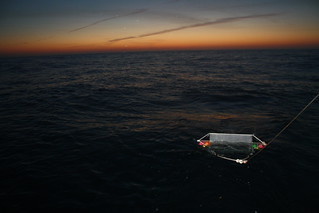
In my advisors previous research he found a correlation between the date of the year of the spring transition  and the amount of megalopae returning.  Our hypothesis is that upwelling that occurs following the spring transition brings the megalopae onto the shelf. My goal was to conduct a research cruise the week before the spring transition and a cruise the week after the spring transition to see if the number of megalopae on the shelf increased. Surface plankton samples and CTD casts were conducted on a 10 km transect perpendicular to shore.  We used a manta net (pictured to the left) to collect surface plankton tows.  The net works by skimming across the surface of the water collecting a sample just from the top fraction of water.

IMG_4084We conducted the tows at night and in the surface because previous research has found that the megalopae of Dungeness crabs inhabit the surface of the water column at night.  After deploying the net we towed it behind the boat for 10 minutes (picture to the right).  The cruise before the spring transition was rough and we had wind gusts to 45 knots. The entire crew did great and nobody got sea sick!!! The weather during the cruise the week after the spring transition was much calmer and was rather enjoyable.  We caught many interesting organisms such as salps and doliolids. The night we were out there was a great sunset and we all had the opportunity to watch it.  I am still in the process of analyzing the samples but will post again with the results later.

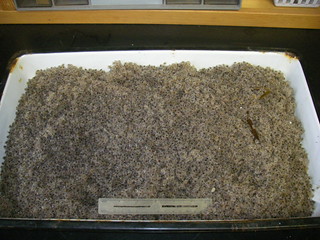
IMGP0017On April 2nd I put out our light trap to monitor recruitment of megalopae and I have been checking it daily. The photo to the left is of a sample collected on May 28th.  In the photo are approximately 60,000 megalopae that had climbed into the trap during the course of the night.  The recruitment events are highly pulsed and catch has ranged from 60,000 animals in a night to 0 animals in a night.

Winds of Change

Greetings SG Blog readers,

Although Oregon’s marine spatial planning process continues to unfold, the State is undoubtedly getting closer to developing a finalized, spatially explicit comprehensive plan for Oregon’s territorial sea.  In its completed form, the plan will document how the State intends to protect important ecological areas, fishing grounds, beneficial uses such as recreation, and identify some preliminary areas for ocean renewable energy development within nearshore waters.

Over the last several months I’ve provided assistance to both DLCD and ODFW in support of this planning effort.  In February, I attended seven TSPWG-sponsored public work sessions in Portland, Eugene, Warrenton, Cannon Beach, Waldport, and Reedsport.  I assisted DLCD by developing promotional materials and recording public comment during the meetings.  As for ODFW, the major pressing event has been the Scientific and Technical Advisory Committee‘s peer review of the Nearshore Ecological Data Atlas.  I developed two specific documents for the review: a list of data gaps related to territorial sea planning, and a list of data that was considered by ODFW, but not used in the analysis of nearshore ecological resources.  In the name of data management, I’ve also been working with ODFW staff to develop a relational database, using Access, to organize the vast amount of STUFF (spatial data, literature, scientific findings, etc.) that we’ve accumulated through this planning process.

….I don’t want to bore you too much…but that’s a quick summary of what’s been going on in my fellowship world….

And now I’d like to reflect on the title of this post – “Winds of Change.”  For Oregon, this is definitely the dawn of a new era in terms of ocean planning and management, and for the addition of new human uses within the marine environment.  In one way, the title is a nod in that direction.  However, it also refers to a huge change in my life.  Several weeks ago, I received an unexpected surprise – I was offered a full-time, permanent position with NOAA’s Pacific Services Center (PSC).  For many reasons, the offer was something that I just couldn’t pass up!   In my new position as a GIS analyst, I will focus on developing GIS-based tools to support coastal and marine planning in the Pacific region, and provide general technical assistance to PSC partners in Guam, American Samoa, and Northern Marinas Islands.

As the winds of change blow, my time as a Sea Grant fellow is quickly coming to an end. In the near future, I will be leaving the quaint coastal town of Newport, Oregon and relocating to the tourist mecca of Hawaii.  It will be quite the change!  I will miss the Oregon coast, surfing South Beach, the friendly Oregon sharks, porcini mushrooms,  my coworkers, and new friends….but of course, I also look forward to a new and exciting opportunity.  On a final note, I want to say thank you! to both Sea Grant and ODFW for making my fellowship experience priceless!  It’s been a complete joy.  I will definitely stay in touch, and by all means….if anyone comes tromping through Hawaii, please do not hesitate to look me up!

Cheers (soon to be ALOHA),

Ben


Taking advantage of fellowship benefits

Howdy folks. I’m now about 5 months into my SeaGrant fellowship and lately I’ve been taking advantage of all the perks of being a Fellow. Supported by Oregon SeaGrant and ODFW, I recently attended the 17th Western Groudfish Conference (WGC) in Seattle. My Natural Resources Policy fellowship includes a handy educational budget good for travel to conferences, and the folks organizing the WGC were also hugely supportive of my attendance.

 As I’ve been working with ODFW’s Marine Reserves program and spending a lot of time thinking about groundfish (marine reserves are expected to benefit rockfish, lingcod, flatfish and other “groundfish” and a host of other marine species), I decided to attend the WGC. I was particularly interested in learning about how other groups were approaching the monitoring of fish relative to their research or management questions and accompanying complications. At ODFW, we’ve been wrestling with how to approach monitoring of Oregon’s marine reserves in the near-term and long-term and recently held a workshop in Corvallis to solicit expert advise. The workshop featured over 30 scientists from west coast universities, non-profits, and agencies, and provided ODFW with valuable suggestions on future monitoring. A summary of the workshop can be found at www.oregonocean.info

I helped to plan and design materials for this meeting and found it to integrate nicely with WGC. I was able to build on workshop introductions at the WGC and connected with a wide variety of people interested in west coast fish. Having spent the better parts of the last two years thinking about marine invertebrates (oysters!), the WGC was a great crash course in west coast fish management and research issues. Some of my favorite talks included ones on the use of a jetski (with a giant aircraft-style propellor on the back) to map areas of the coastal ocean inaccessible to boats (R. Kvitek); seasonal habitat use by copper rockfish in coastal BC (J. Marliave); constraints on sandlance burrowing (J. Bizarro); innovative reduction in halibut bycatch (M. Lomeli); and a nostalgia-inducing talk on correlating haddock sound production and reproductive maturity  (I once worked as a deckhand on New England fishing boats; F. Juanes;). My friend Tom included a good presentation on his project studying home ranges and movement behaviors of fishes of Redfish Rocks Marine Reserve (http://www.fishtracker.org) and another talk has ODFW Marine Reserves wondering if some sandy areas punctuated with large scour depressions might be valuable juvenile fish habitat (Oregon marine reserves have lots of sandy bottom).

The WGC was relevant to what I’ve been working on and was hugely informative. Plus, it was fun–I ran along Puget Sound with a view of the Olympics every day and met dozens of interesting people. I’m looking forward to pursuing other educational opportunities before my time here is up, and in the meantime, ODFW is keeping me busy. Between analyzing video data, providing GIS services, an ongoing community profile, and pending field work, I’ve got plenty to do and its great to be working in the field I just finished studying 5 short months ago.

Territorial Sea Planning in Oregon: report from the field

Hello OSG Community,

This is Ben Reder, one of the Natural Resource Policy Fellows, reporting to you from Newport, Oregon.  To give you a refresher – I am working with Oregon Department of Fish and Wildlife’s (ODFW) Marine Resources Program (MRP).  As a fellow, I am assisting with the current Territorial Sea Plan (TSP) amendment process (aka Oregon’s marine spatial planning effort).  This process will eventually lead to the identification of potential areas for renewable energy development within state waters.

When I joined MRP this past October, the data collection effort for the spatial planning process was well underway.  What has now been coined the “Nearshore Ecological Data Atlas” (NEDA), is the product of that effort.  NEDA consists of data layers that depict oceanographic conditions, important ecological habitats, and information about fish, seabird, and marine mammal distribution.  NEDA is now available for public viewing on Oregon MarineMap.  As for my fellowship duties, I’ve been assisting in the coordination and review process of metadata for the NEDA geospatial layers.  The descriptive information from the metadata was used as abstract information on Oregon MarineMap (OMM).  Essentially, users can now click on any given data layer in OMM and access information about when the data was collected, who collected it, and how the data was collected.

MRP is responsible for identifying ecologically significant areas within the territorial sea.  DLCD has been responsible for mapping existing human uses, and Ecotrust developed the fishing grounds maps.  MRP utilized a software program, Marxan, to help identify the ecological hotspots.  Marxan was used to summarize the vast amount of ecological spatial information.  For MRP, Marxan provided decision support by identifying areas where many species occur in relatively high abundance.

MRP has wrapped up the effort to produce the “ecological hotspots” map, and DLCD and Ecotrust have also completed their spatial analyses.  We now have a series of maps that delineate hotspots for each of the three main Goal 19 resources.  This information is now being reviewed by the Territorial Sea Plan Working Group (TSPWG), a sub-group of the Ocean Policy Advisory Council.  In addition, the methodology used to identify the ecological significant areas is being reviewed by the Scientific and Technical Advisory Committee (STAC).  The TSPWG has begun a series of public meetings to touch base with interested citizens regarding the current status of the TSP amendment process, present resource maps and planning options, and receive feedback on how best to proceed with this planning exercise.  These public meetings will occur in various locations along the Oregon coast through March 6, 2012.  Visit the Oregon Ocean Info website to see the schedule.

That is what I’ve been up to.  I will definitely keep you posted on exciting highlights and events related to marine spatial planning in Oregon. Till next time…

Cheers to all,

Ben


Orals are done!!!

So last Friday I had my oral exams and I passed!!  Although the last few months of studying have been very stressful, the time I put in was beneficial.   The whole process was much less stressful than I expected but still something I do not want to do again.  I am really looking forward to getting to the microscope and starting to count the samples that I picked up from NOAA.  In addition to counting samples I will be working on designing some rapid deployment mooring for putting out thermistors and an ADCP this summer while I am sampling internal waves.  I look forward to sharing some of the interesting creatures I find in the samples with everyone.


Wow where did the term go!?!?

Well the term ended and it was a whirl wind.  The majority of the term was spent either TAing biological oceanography or studying and preparing for my oral exam.  The TAing went extremely well and I really enjoyed getting to hear the lectures again.  Hearing the lectures really helped me to feel more prepared for my upcoming orals.  For part of my project I am using plankton samples collected by NOAA to better understand the vertical migratory patterns of Dungeness crabs.  This quarter I went to pick up the samples from Newport and they filled the back of a pickup truck!!!!  It definitely seems I have my work cut out for me.  However, the majority of the quarter has been spent preparing for orals which has entailed reading countless scientific articles.  Before the oral exam I have to turn in a written form of my proposal so the next few weeks will be spent finalizing this.  I am looking forward to getting past the orals portion of my PhD so I can get to work counting samples and building my computer model.  I will be posting sometime in February to update everyone on how the orals went.