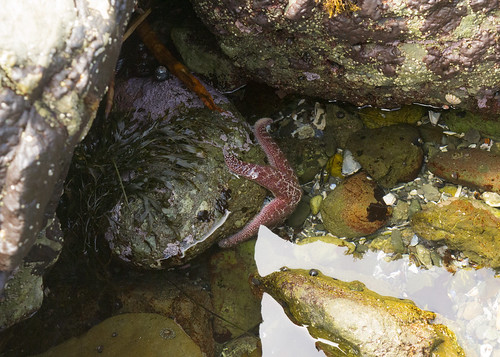
Gumboot

Prepare for rambling to make up for my lacking-in-words-posts in 3..2..1..

I haven’t written much about activities at work besides the action-packed trips we’ve taken thus far, mostly because the majority of my work-related time has been spent in front of a computer analyzing the available outdoor recreation experiences in southern Oregon and attempting to visualize all of the information in a digestible way. After many weeks of analyzing previously collected data, collecting my own data, analyzing that, creating a report, editing that, losing files, wanting to throw the computer out the window into the lily pond outside, and then thanking it for doing things my brain can’t, collecting more data, reviewing, editing, re-doing, reviewing, number crunching, watching obscure excel tutorials (thanks youtube), having dreams about formatting, editing, and so on (and that description is still probably an understatement) Miles and I have finally agreed on the project’s status as being tentatively finished.

To say the least, it’s been a bit grueling. I’ve never conducted a research project outside of school that didn’t involve sampling methods in a context that I’m already familiar with, i.e. field data collection, lab work. etc. I’ve also never been responsible for writing the final report for the research. I’ve felt a bit stir crazy having to create this project entirely from a desk, but lemme tell ya, does it feel GOOD to see it all laid out in colorful, organized graphs, trends, and a few pretty pictures of the coast to complement the data. To briefly explain its purpose, I’ve added a few paragraphs from the report here.

“This research project was conducted to fill a gap in the knowledge of guided fishing charters and outdoor recreation tours along the coast. Data on the number of and type of operators, how well they are marketing themselves online, the products they offer, and especially the price of services is not readily available. This research was conducted in order to identify guided fishing and outdoor recreational tour businesses that were successfully marketed online so that a search for the specific service offered in the targeted community would appear as a top result in a basic online search. A limited comparison of these results against other inventories of or estimate of the number of operators would then be possible. Collection of price data helps to understand the economic impact of these businesses and potentially to help identify new growth conducted annually to provide long term trend data. In addition, the model is one that could be reproduced for other coastal communities in different states and countries.

The data collected will provide a basis upon which a guide training program will be developed to aid guided tour operators in obtaining the knowledge, skills, and resources to better market themselves, reach customers, sell experiences, and attract more sustainable, experiential, and interpretive tourism to the southern coast of Oregon.” 

During this process, I’ve learned a lot about basic data analytics and visualization, interpretive communication, and how to create a project/write instructions that are clear enough to be successfully repeated by others. We have already shown the report to a couple of guides in the area and they are quite pleased with the information. In the fall, Miles will be sharing these findings with the Adventure Travel Trade Association World Summit in Argentina to present the Wild Rivers region of Oregon as a pilot location to implement a guide training development program based off of the needs assessment information we have been collecting. For the amount of time we’ve spent working with this data, it’s going to be a lot of fun keeping in touch with Miles to see what comes of this summit and where he is able to take his ideas. I just wish I could still be here to help make it happen! 10 weeks is just too short.

Now that the core project is finished, I’ll be spending the last couple weeks of the summer interviewing a few guides about their operations to get qualitative assessments of their operations, needs, and perspectives. In addition, I am making videos for the guide training program and working with Dustin to compile literature (about southern Oregon ecology, wildlife, tourism, sustainable business, interpretation, marine reserves, psychology, etc.) to use in the program.

Crabz on the docks in Bandon

In other news, it’s been yet another fun week outside of work. Dustin and I went crabbing with one of the photographers we hired and although most were just shy of the legal size, or female, it’s a pretty great feeling to put in almost no effort (you just throw the pot into the water with some chicken attached) and barely any time to then pull up the pot and there’s nine crabs scuttling around.

That same evening I attended a lecture at the OIMB given by Robert Pitman, a marine biologist of NOAA Fisheries who studies killer whales in the Antarctic. It was a great learning and networking experience; stay tuned for what’s to come of that.

This weekend, Dustin and I got to tag along on a kayaking tour out of Port Orford with South Coast Tours (perks of being a buddy of Dave’s).

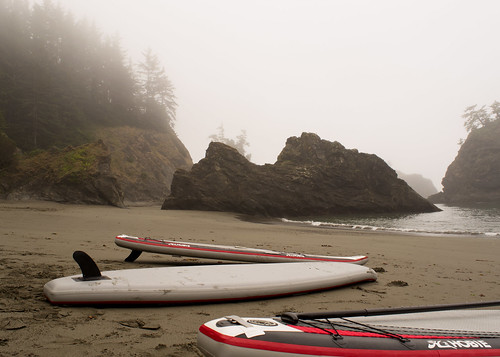
Our foggy launch site

The trip was definitely a highlight of the summer. We got to see an unbelievable amount of sea stars, which was incredibly encouraging. I did a kayaking/intertidal survey a few months ago in Morro Bay, CA where I work with the Estuary Program, to write a piece about the sea star wasting disease that’s been heavily impacting populations all along the Pacific coast. I only found one sea star that day, but during this trip there were definitely more than I could count and some were the biggest sea stars I’ve ever seen. We also saw two river otters and a number of harbor seals, pelagic cormorants, black oystercatchers, pigeon guillemots, and a peregrine falcon. We also saw a huge gumboot chiton, which is somehow just a ridiculously fitting name for such a creature.

Later that day, I hiked with my roommate and her boyfriend from Sunset Bay to Cape Arago and back, after having scouted the perfect hammock locations along the trail the evening before.

Prime.

PSA and lesson of the day: Do not let the presence of fog discourage you from a sunset expedition!

It was a gorgeous trail and we again saw some harbor seals, which always remind me of cookies and cream ice cream. We also saw the massive colony of sea lions located off the coast of Simpson’s Reef. It was crazy how loud they are, and how many there were. At cape Arago, we sat for 40 minutes timing the intervals between spouts of what I’m pretty sure was a grey whale. It was the first whale I’ve seen while here, and there’s really nothing like it. The perfect day filled with so many cool animals was ended with a beautiful sunset as we hiked back to the car.

Conservation, more than just behavior

“What do you think of when you hear the word ‘conservation’?”

What do you think of when you hear the word “conservation”? Do you approach it in the biological sense, as a need for sustainability of resources to continue to survive? Or perhaps see it through a historical lens, with images of colorfully clad activists of the ‘70s with ideals of peace and love?

The word “conservation” is often perceived as politically loaded. With the current debates surrounding climate change (or lack thereof), conservation has become a word that connotes a lifestyle change for many. This lifestyle change can come in a range of forms. A simple example of this would be the California Plastic Bag Ban, which requires multiple-use bags of thicker material to replace single-use plastic bags that cause pollution. This change can also be more complex, such as mass job loss in the coal industry due to the shift towards more renewable energy. In order to understand the ultimate result of behavioral change that occur from embraced efforts towards conservation, it is important to first understand the term.

When discussing the role of conservation in the professional realm, a common thread of education emerges. Though many environmentalists in the workforce aim to conserve different resources, the need for communication and education surrounding why and how to conserve is present for all. Though what constitutes conservation varies across the workforce, conservation will be defined broadly in this blog post as the “ethical use and protection of valuable natural resources”.

Anthropologists, activists, psychologists, and economists from around the world voice the the importance of teaching values rather than the concept of conservation. By communicating values such as respect, care, and responsibility, many professionals believe that individuals are then able to use their own discretion about how to treat natural resources. This makes sense, as it is not enough to teach behaviors (such as recycling) if overarching concepts such as respect and responsibility for maintaining a healthy environment free of pollution are not discussed as well.

When communicating to children in particular, teaching these core values such as respect for nature are easier to learn than countless facts about resource management, as they have already been modeled by human interaction in their families and schools. If a child first learns the deeper value of respect, he/she is then able to apply that concept across situations, including that regarding natural resource conservation. This reverence of core values is a strong tool when acquiring an understanding and providing education to people who all think of conservation and its effects differently.

“Don’t simply teach the ‘how’, teach the ‘why’.”

If you have been reading these weekly blogs, this concept is very similar to our discussion about Kohlberg’s six stages of moral development in my post “A Green Perspective on Rights and Wrongs”. As ethical views develop, children are able to make decisions out of moral judgement instead of simple obedience. Over time, “don’t take cookies from the jar” transforms from a behavioral command to the concept of stealing, an ethically moral wrong. As children shift into adulthood, this ethical train of thought continues to grow, further defining the difference between behaviors and deeper core values. Though not all professionals working towards conservation are child educators, keeping this developmental trend in mind is useful when communicating new concepts to an audience. Don’t simply teach the “how”, teach the “why”. 

Let’s go back to our original question. What do you think of when you hear the word “conservation”? Where did you learn the ideals behind your connotations with the word? Leave your comments in the provided box below. I look forward to reading your thoughts.

In the meantime, below is my photo gallery from the past two weeks. It is not all work here out on the Oregon coast!

Joined in on the sea star wasting surveys with ODFW and the Nature Conservancy last week!

Healthy sea star in the intertidal at Cape Perpetua.

Tamolitch Blue Pool was an incredible sight this past weekend on the OSG camping trip.

This pool was 38 degrees and we all jumped in! Oregon Sea Grant camping trip 2017.

No shortage of water here in Oregon!

Family visit this weekend. Toured lighthouses here in Newport.

Yaquina Bay Lighthouse in Newport, OR.

In search of great coastal views? Visit this stone lookout point at Cape Perpetua, one of five marine reserves on the Oregon coast!

Nothing like a little Merlot and a beautiful sunset to end a perfect weekend.

I AM MOOAANAAAAA

Well I’m incredibly late to the game in finally watching Moana, but let me just say that in the middle of all my emotional turmoil this movie has really brought me happiness. Never really thought that I would find an animation so inspiring but I truly do, especially after our Crater Lake trip and my hesitancy to enter cold water because 1. I hate cold anything and 2. I can’t really swim all that well. So I’ve watched this video approximately 37 times in the last few days and aspire to bring out the Moana in me exhibited at 2:17 in the song below.

Moving Forward

Our current struggle with the King Tides project is our reliance on our partners to supply us with the information we need. We are working with the Oregon Coast Visitors Association to host a photo contest this year and are now just waiting to hear back about the details so we can start spreading the word. We also have a few meetings with members of the Coastal Management Program coming up to get our photo submission form published and accessible as well as some contact information for potential new partners like REI.

In the mean time I have planned more field work for myself to get out of the office and enjoy the Oregon coast. I will be heading to Nehalem next week to take photos and spend a few hours around the Newport Bayfront as well. I am really happy to have the chance to be outside for a bit because I must admit that I’ve been really jealous of other scholars getting to be out in the field so often!

How to Share King Tides Photos

I have also been working on some content for our social media including tips on how to take good King Tides photos and how to share them online!

King Tides Tips and Tricks

My mentor Meg has been incredible in working with me this week and helping me find ways to benefit as much as I can from this opportunity. As Neal would say, “Top 3 mentors, top 3 opportunities.”

A Big Hole With Water In It

This weekend was exactly what I needed to get my head back on straight. A handful of interns as well as my boyfriend and best friend from back home came to visit and we headed down to Crater Lake to camp and hike.

Little did we know the so called “campground” was a pot farm run by two dudes and 3 dogs living out of a school bus. Their names were Austin and Norton and they were actually really kind and interesting people. They had about 20 ducks and ducklings as well. If the bathroom wasn’t just a trail into the forest I would say top 3 camping trips but that’s still a bit of a stretch.

I’ve been slacking on my photography game lately so I literally only took one okayish photo of the lake which wasn’t even at the peak of Mount Scott, though we tackled those 5 miles like champs.

Still, cheers to week 6, a beautiful view, and great company.

Film Frenzy

It’s hard to believe that there are only four weeks remaining in this program. It definitely doesn’t help when there has been so much going on. For this week’s blog post, I want to use the space to update y’all and show you what’s been going on instead of blabbering on. I’ve taken too many pictures to know what to do with, so they’ll likely serve more than words today. I promise this isn’t a cop out, pictures are just better.

To start, here are some of my film pictures from the photography trip a couple weeks ago that I recently got back…

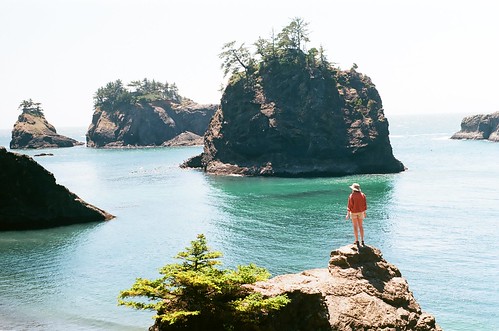
Samuel H. Boardman State Park. Can’t get enough of that place. This specific area is called the (not so) Secret Beach. This is where we saw the bait ball.

31710028

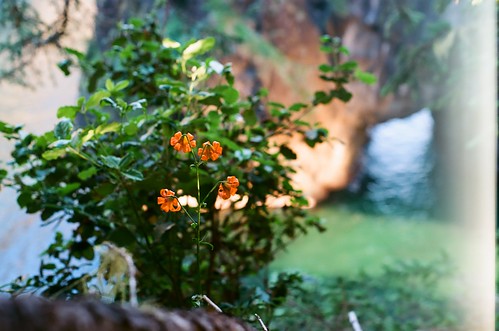
Thunder rock cove, featuring some Columbia lilies.

31710007

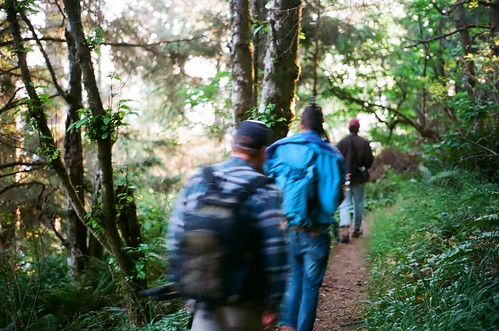
A blur but a beaut. Erik, Justin, and Dustin on the way to catch the sunset at Thunder Rock cove.

31710006

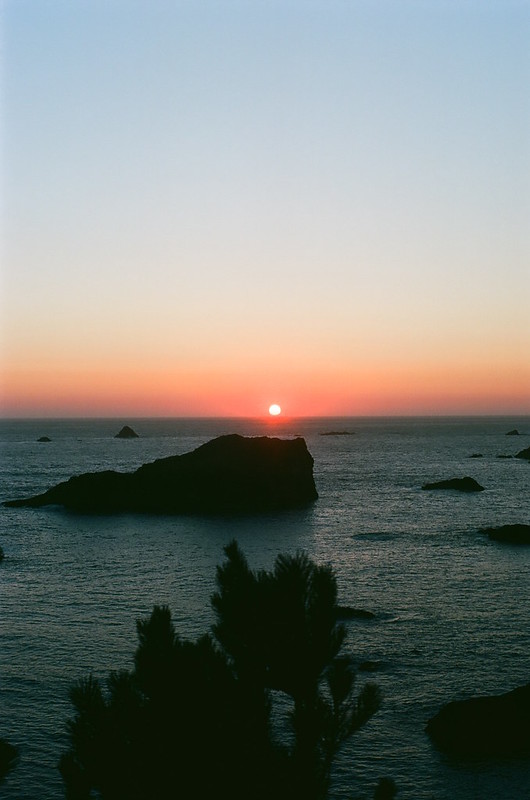
Sunset on the other side of Thunder Rock cove.

31710022

Port Orford.

31710037

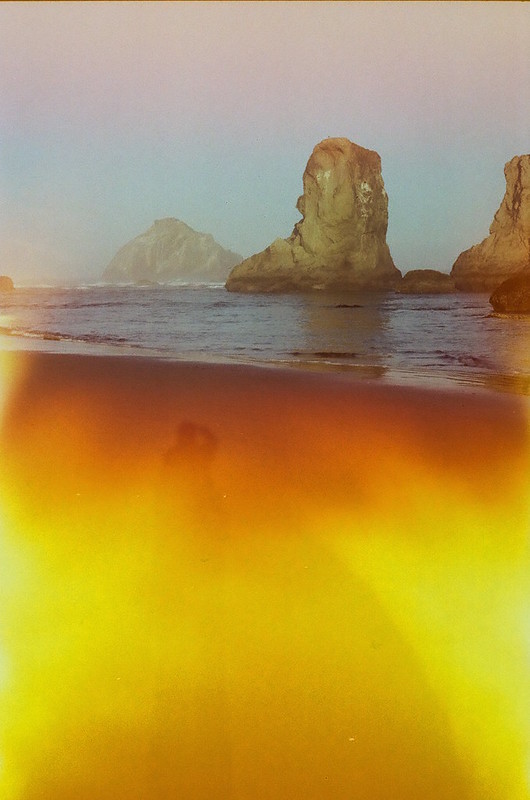
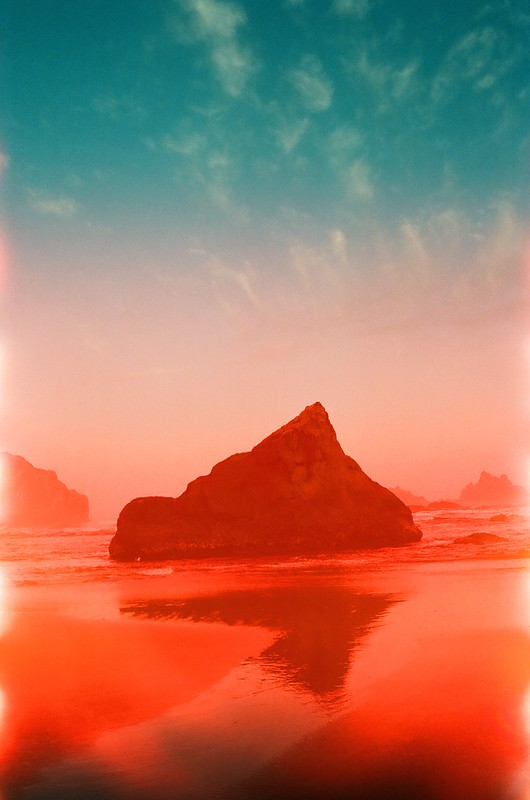
And here are some film pictures from the bright and early Fourth of July Bandon trip. On a hike a few days later, I tripped over literally nothing and one of my cameras popped open. I was devastated, because there were only two pictures left, so the entire roll was exposed. That is the risk you must take with film. I really need to learn to not be so emotionally dependent on my pictures turning out because half the fun is realizing you may not get anything. That’s fun, right? Right?

Anyway, somehow most of the roll turned out. I have no idea why. Thank you light gods. Look and these DIVINE leaks:

31700019

31700020

31700018

Some kitchen sink photos…

Rogue River-Siskiyou National Forest.

31720019

Bastendorff beach.

21780024

Finally, Andy visited me from CA this weekend. It was a blast showing him all of my favorite places and eating lots and lots of food. And ice cream. (The rest of these are digital).

Gorgeous and windy hikes with Rowland and Chris at Blacklock Point, the Sixes River, and Cape Blanco, the westernmost point in the contiguous United States besides Cape Alava, WA.

rowly

Getting soaked!

_DSC0426

More south coast beauty.

andy

andyrock

stacks

That’s all for now. I shall be sending four more rolls to the land of developing later this week. Stay tuned.

Exasperation, experience, and echinoderms

A few weeks ago I wrote my blog post all about how scientists are people too. In general, what I was trying to highlight was how the people who conduct research and write scientific material have personalities and enjoy relaxing just as much as the next person. It seems poignant this week to revisit that theme. Scientists laugh, cry, eat, sleep, and so on and so forth. We are human, and if there is anything that can be said with absolute certainty about humans, it’s that not a single one of us is perfect. We have setbacks, make mistakes, and experience frustration. In fact, mistakes, setbacks, and frustration could be steps of the scientific method.

It started with SMURFing two weeks ago. If you recall, SMURFing involves collecting juvenile fish in artificial habitats to help understand habitat usage in Oregon’s Marine Reserves. Currently, we have SMURFs in two Reserves, Otter Rock Marine Reserve near Newport (my home base), and Redfish Rocks Marine Reserve near Port Orford (~3 hours south). Every week, we alternate between sampling at Otter Rock and Redfish Rocks. Two weeks ago, it was a Redfish Rocks outing. At Redfish Rocks, we collaborate with a local team of urchin divers, who collect the fish from the SMURFs using their boat, then hand them off to us. All we have to do is drive the 3 hours south to Port Orford, pick up the fish, rinse some gear, and head home. Much easier than taking our own boat all the way down there. Port Orford has really embraced its Marine Reserve, and many citizens have taken advantage of opportunities to partner with scientists to aid research studying it. It’s a great setup where all parties benefit.

Anyways, two weeks ago, I hopped in the car with Maddy (REU) and Neal (fellow Sea Grant Scholar) to head to Port Orford and pick up the fish. Our first task was to drop off a bit of equipment to the urchin divers before they departed so they could repair one of the SMURF moorings. Unfortunately, construction traffic meant we arrived just a few minutes early, and our collaborators had already left the docks. Oh well, minor setback. It just meant we had a few hours to kill while we waited for the SMURFers to return. Port Orford isn’t a bad place to kill a few hours. It’s a beautiful little town on the south coast with a brilliant ocean view. We spent our time snorkeling in a protected cove and feasting at a local diner, then returned to the docks to meet the SMURFers as they returned.

SMURF season is in a bit of a lull right now, as normally occurs in the middle of the summer. If you want to understand why, read the latest blog post I authored for the Oregon Marine Reserves website here, but basically we weren’t expecting many fish. We got zero fish and a huge serving of bad news. Two of our moorings and two other SMURFs had disappeared. This is bad for a couple reasons. Firstly, it meant that we were sampling with just four of our eight SMURFs. Who knows if the other four SMURFs we lost would have had fish in them. Secondly, SMURFs aren’t the most high tech scientific equipment, but that doesn’t mean they’re cheap. Replacing moorings requires new lines, buoys, shackles, flags, anchors, and more, as well as time out on a boat to get them in the water.

Readying new moorings for deployment!

As far as setbacks go, this was a pretty major one for SMURFing. Maddy, Neal, and I had no choice but to retreat to Newport empty-handed; seven hours of driving and all we had to deliver was bad news. I was struck by how well it was received. To be clear, no one was happy to hear our tale, but there was no finger-pointing, despairing, or pity parties. All the scientists heading the project were only focused on fixing the problem. The very next day we were building new moorings, which will be deployed this week. Bad things happen in science, as they do in life. My mentors here in Oregon have obviously experienced adversity in their projects before and have learned how to handle it. For me, it was a great learning experience.

Just a few days later, I had another learning experience. The end of July tide series had some of the lowest low tides of the summer, which made it perfect for intertidal sea star surveys. I’ve basically been put in charge of the sea star surveys which is a responsibility I was eager to shoulder. I’d been planning the July outings for weeks, checking tide tables, rallying volunteers, gathering equipment, and so on. When the time finally came, I was pretty excited to make it happen. I scheduled the first survey for a Sunday morning at 6 AM. I spent Friday and Saturday camping with my fellow Sea Grant Scholars for our mid-summer check-in (awesome experience, I’ll get back to that later), and returned a day early from the trip to do the sea star survey. Unfortunately, while I returned from the camping trip, my office keys did not. I left them in the glove compartment of my friends’ car so that I wouldn’t lose them… brilliant. This realization struck me on the way home and I made some frantic calls to try and borrow keys from other Marine Reserves members, but, being a Saturday night, my last ditch efforts were fruitless. With no way to get into our building to pick up my equipment or the keys to the truck, we had no choice but to cancel Sunday’s survey. I was not a happy camper. Really, I wasn’t a camper at all because I had left my camping trip early to do this survey. All of my hard work and planning undone by a tiny mistake, which had actually been a precautionary measure!

Some super small sea stars!

My intrepid group of volunteers.

Neal getting dirty for some sea star science.

Thankfully, my anger was tempered by my mentor’s experience. “This stuff happens all the time in fieldwork,” she told me on the phone. Mistakes happen. Scientists, including myself, are very much human. The very next day, after collecting my keys, we were out in the field in the early morning, surveying sea stars. It was great. All of my volunteers came through and performed admirably in the intertidal, we found a ton of stars, and rewarded ourselves with a gigantic breakfast afterwards. It was enough to help me forget the frustration of the previous day.

The past few weeks included some setbacks, but they were also some of the best ones of the summer. As mentioned earlier, we spent on weekend camping with the rest of the Oregon Sea Grant scholars. Half of the scholars are housed here in Newport, so I know them pretty well. The other half live on the south coast, so we hadn’t seen them since literally day one at orientation. To be honest, I was a little apprehensive about the trip. What if our two groups didn’t get along? Two days in the woods could feel a lot longer than that. Fortunately though, the other scholars are cool kids. We spent a long time hanging around the campfire, wading in streams, and catching up on the last few months. Overall, an awesome trip, and I’m glad we got to spend some good times with the south coast folks. Hopefully we’ll get to meet up again the next time I head down to Port Orford.

Other highlights of the last two weeks included my second SMURFing outing. My first time out was perfectly calm. This outing was the perfect opposite. High winds meant big waves, and big waves meant a bumpy boat ride. I may have slightly realigned my spine bouncing up and down out on the ocean, but it was a cool experience. Now I can honestly say I’ve experienced the Oregon ocean.

#nofilter

Additionally, just yesterday I got back from camping at Crater Lake National Park! Another Oregon bucket list item, crossed off. The place is absolutely gorgeous. You could stare at those blue waters for hours, completely mesmerized. We circumnavigated the lake by car and stopped off to do a couple of hikes, including one to the peak of the tallest mountain in the park, which has a stellar view of the lake. It was an awesome experience, truly. Finally, I finished off the past two weeks last night by partaking in one truly human experience that unites us all, watching Game of Thrones.

Winter is coming. But for now I’ve got four more weeks of summer at least.

Let’s Get Graphic

This week I had a grand realization ultimately leading me to entirely rethink my career path, and that’s only ONE of the many events over the past 7 days that has caused me to be a late poster yet again (apologies!)

What was this realization you ask? Well, I’ve decided I simply cannot sit at a desk for eight hours a day unless I’m doing something creative. Quite frankly I find myself going a bit stir crazy and questioning why I studied the social sciences to begin with. After really thinking about it I came to accept that although I may not go in the exact direction I expected to go with my degree, I don’t regret the field I studied at all. Knowing all that I do about the environment, agriculture, and society as a whole has very much shaped me as a person. I did go vegan so if anything it’s drastically changed my eating habits and I’ll mark that as a plus. I love food more than most things and my degree has only helped grow that love.

I came to this conclusion after working on the website for the King Tides Photo Initiative. And this may sound odd but I actually LOVED it. Let me explain.

http://www.oregonkingtides.net/

Being given the opportunity to redesign the oregonkingtides.net website confirmed that graphic design was something I need to allow myself to continue exploring after this internship. Most days I find being in an office very hard, but when I’m working on something creative I get lost in it. I knew I would probably go back to school at some point but just didn’t know what for. I am now enrolling in a few graphic design courses back home and hope to eventually find a career that ties everything together for me.

The content of the website is still a work in progress but it has definitely improved! I now have a renewed excitement and hope to take this project to a new level in the next 5 weeks.

Meetings and Mexican Food

On Wednesday the Newport office and myself (total of 4) hopped in the car to attend the Coastal Management Program’s monthly staff meeting in Salem. Most of the meeting was focused on picking a new logo for the program (which I obviously truly enjoyed) but I did have the chance to show everyone the new look to the website.

I also learned of a new application through ArcGIS called Survey123 that will help us collect the King Tides’ photos in a much more efficient and organized manner this year. After only one YouTube tutorial I was able to set up a mock collection form that we’ll be testing out this week. Keep an eye out for the next blog because I might as for y’all to try it!

On the way home we stopped and grabbed a bite to eat at a little burrito place. It was one of the first opportunities I had to chat with Matt and Dave, the two older men who work in my office, and I really enjoyed getting to know them

NANOOS

On Thursday Meg and I attended a workshop at the community college on NANOOS – the Northwest Association of Networked Ocean Observing Systems. Although I didn’t have much to offer to the conversation it was really interesting to learn about the software and what it could do. To my understanding everyone from biologists to fisherman use it to check water temperatures, buoy locations, tsunami danger zones and more. The learning curve seems steep but once one understands how to utilize all the information it really is a goldmine.

Inked

Once again I headed up to Portland for the weekend (that’s 3 out of 4 weekends now) to see some of my best friends from college and to FINALLY get my tattoo! I had been planning this for a while and looking forward to it since I arrived in Oregon. I really wanted to represent womanly strength.

I think the relationship between the moon and the ocean exhibit the same kind of quiet power women often do in the world. At the same time the ocean can be intense and mysterious as all of us women are in some way or another. The moon is also representative of my mother, we both feel very connected to it, and her being a marine biologist makes the whole beach theme even more significant. As exhausting as it was to sit for 5 hours straight being poked by a needle I am absolutely over the moon (pun intended) about it and excited for when I can wear real pants again.

Cheers to week 4 and art in all forms.

No Hurry in Curry

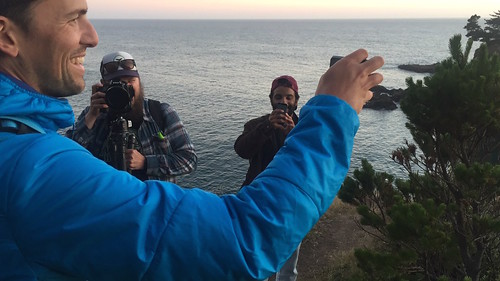
I cannot take credit for that phrase; unfortunately, as it is quite commonplace here in Curry County. As it should be, though – this place encourages a relaxed-yet-somehow-also-adventurous lifestyle with its numerous hiking trails, secret coves, breweries, thriving rivers, and gorgeous sunsets. As stated in my last post, Dustin and I are here staying at the Port Orford Research Station to shadow two photographers from Portland, Justin and Erik, as part of the South Coast’s media asset building project. South Coast expert Dave Lacey (owner of South Coast Tours) took us around to his favorite spots to partake in various outdoor activities for Justin and Erik to photograph. We essentially ended up being their outdoor recreation models while also shadowing them throughout the trip. It was a fantastic learning experience, as we got to ask them all the questions we liked about photography and the industry, equipment, freelance work, life, etc., all the while paddle boarding in the clearest creeks and over bait balls in the ocean, jumping off boulders into the Chetco river with steelhead fry swimming underneath us, catching newts, tide pooling, drinking local beer, and chasing sunsets. It was definitely one of the best experiences I was fortunate enough to have. I ALSO SAW A RIVER OTTER FOR THE FIRST TIME ON THE VERY FIRST DAY OF SHOOTING. The trip could’ve ended there and it would have been a-okay.

waterfall

Staying at the Research Station has been fantastic as well. There is something special about staying in a place that is primarily used by scientists, especially one on the coast near a marine reserve. To put it simply, this is the kind of thing I signed up for. For example, there are rockfish illustrations adorning the walls and books about Oregon coast hiking and marine biology filling the bookcase in my room. There’s also a frozen marbled murrelet in the freezer that has, according to Erik, been there waiting for an Audubon guy to pick it up since Erik was there last. Gross, but it honestly warms my heart. For science, right?

When expressing my interest in sperm whales, the station manager, Tom Calvanese (who is also a marine biologist, diver, rockfish researcher, and the Port Commissioner) lent me Bryant Austin‘s book, Beautiful Whale. Austin created the first ever high-resolution, life-sized composite images of humpback, sperm, and minke whales, and the book chronicles the dramatic story of how he did it.

spermwhale

I devoured that thing in one morning (okay, it’s relatively short, but still). I want to include a passage from the book here because it describes my sentiments about the species so precisely. When describing how it feels to meet the gaze of a whale within six feet, Austin says,

“It is disturbing, because this whale is challenging me to reevaluate our perceptions of intelligent, conscious life on this planet. And that which is challenging these perceptions may also disappear in our lifetimes. What compels me most of all is the thought of losing over five million years of evolving culture and communication in the largest brain ever to exist on Earth, and never to have understood it.” (He’s talking about sperm whales, whose brains are the largest of any creature and have been evolving for over five millions years). “Carl Sagan once said, ‘We are a way for the cosmos to know itself.’ We, being the self-aware cosmos, will lose a significant part of ourselves should we allow these creatures to go extinct.”

Tom also told me about a group of whale researchers who will be staying at the research station for the rest of the summer starting tomorrow. They will be tracking whales along the South Coast as part of a larger research project concerning whale excretion, prey, and ocean acoustics; I will hopefully get to meet them this summer. After seeing James Nestor’s Bioneers speech about Darewin and sperm whales a few months ago, I’ve been reading his book Deep and have been very interested in the creatures since. The plan is to someday become a free diver, join James and Darewin, communicate with the whales, and change the world. Just kidding. (But maybe). Also, sperm whales have learned to take sablefish (black cod) off of commercial long lines in the Gulf of Alaska and other places with their extremely dexterous jaws. This depredation is a huge problem for fishermen as black cod is an extremely marketable (and declining) species of fish, and it has caused significant economic loss for fishermen. Watch this eerie video of it happening. The clicks you hear are the whales.

The whales have begun to learn that the acoustics produced by the engine slipping in and out of gear while the fishermen haul the lines up mean that they get a free meal. Southeast Alaska Sperm Whale Avoidance Project is a group of scientists, fishermen, and fisheries managers working together to understand this issue and develop solutions to decrease the interactions while maintaining both whale populations and fisheries.

Being at the research station has been so enriching – learning about whales, getting to know the fellows next door at the Port Orford Sustainable Seafood office, receiving professional and project management advice from Tom (thanks Tom), running early on the beach, cooking delicious meals (thanks fully equipped kitchen), and posting up at sunset upstairs to catch the view.

window

Above & below: the view from my room.

FullSizeRender

We also got to know a BEAUTIFUL retired British couple who lives in Port Orford; Rowland is kindly donating some gorgeous wildlife photographs to our project. They took Dustin and I on a wonderful hike and they had us laughing the whole time while they lovingly bickered, told wild stories, and skillfully identified species of plants and insects.

I’d love to live here someday. I didn’t get the chance to see everything, but the people, the views, and Olivia the toothless cat at Tasty Kate’s were enough to get me hooked. Until next time, Port Orford! Here are some more pictures of the adventure (and four rolls of film in the near future. I don’t care what you say Rowly, film is better).

maidenhair

seastar

paddles

IMG_3363-1

Above, left to right: Justin, Erik, Dustin.

sunset

ledge

Above: Very tiny Justin, Dave, Mark, and Dustin.

Road Trips, Rockfish, and Redfish Rocks

There is a piece of vital information about science I feel I need to share at this point in the summer. Be advised, this may come as a bit of a shock. Scientists are people too. Every single one of us – human beings. If you are a scientist or know a scientist, you should know this. And if you’re reading this now and know me personally, I hope that you at least somewhat recognized this already. However, I accept that it can be easy to completely forget about the human dimension of this increasingly computerized, data-driven behemoth we call science. Last week provided me with ample examples of how we science geeks are just as human as anybody else.

It began with the 4th of July last Tuesday. While the laws of nature may never take a day off, the people studying them certainly do. I spent the day at the beach with a couple other Sea Grant scholars and a handful of the REUs here at Hatfield Marine Science Center. Let me take a moment to say that every one of my fellow interns is incredibly bright. Each intern is collaborating with other scientists, conducting high level research on topics that range from oyster antibiotics to deep-sea volcanoes. I’ve had some great conversations over the past few weeks and learned a ton, because I’m living in close quarters with a group of geniuses. However, our collective genius is probably not always fully apparent. For example, we spent a significant portion of beach time trying to push one another out of a small circle in the sand while playing the classic Independence Day game “Beach Sumo”. Hey, even geniuses need to blow off some steam. We grilled out, played some more conventional 4th of July games (e.g. beach volleyball), and watched the local fireworks just like any other collection of human beings might on America’s birthday. And the next day, it was right back to work in the lab and/or office.

Actually, for me, I wasn’t in the lab or office the next day. Instead I spent the day on a work road trip. Scientists take road trips too. Remember SMURFing? Well we took this road trip down to pick up the fish collected in SMURFs by our collaborators in Port Orford. I travelled with Will, a Ph.D. student at Oregon State studying juvenile rockfish, and Madeline, an REU student working with Will for the summer. The drive to Port Orford is a long one and we filled it with naps, swapping stories, and jamming to mid-90s grunge music. Once we arrived, though, it was all science again. We were somewhat disappointed to have driven four hours to pick up only five fish, but that’s all that had been collected from the SMURFs that morning. As the old saying goes, science is as science does. Rather than turn tail and retreat to Newport immediately though, we chose to take matters into our own hands. The three of us donned our wetsuits and hiked down some 300+ steps at a former coast guard station to reach a beautiful protected cove where we snorkeled for about an hour, collecting fish with nets. Fieldwork is awesome. When the sheer cold of Oregon’s waters finally overpowered the warmth we felt from the beauty of our surroundings (and, more importantly, our wetsuits) we loaded up in the car and drove back to Newport in high spirits. A few days later Will, Maddy, and I went snorkeling for juveniles again, this time in Newport. Conditions were much more difficult. I don’t want to shame Maddy and myself with exact numbers, but the number of fish captured collectively by the two of us was borderline pathetic. In contrast, Will raked in 20 fish all by himself. If I hadn’t personally witnessed him eating a gigantic burrito an hour later, I might believe that perhaps he actually is a fish-catching robot, rather than human.

I spent the most of the rest of my week working on writing up posts for the Marine Reserves website. Not to brag or anything, but the ODFW Marine Reserves Program has a fantastic website. If you have any interest in Oregon’s oceans, marine conservation, or just have a spare 10 minutes I encourage you to check it out at http://oregonmarinereserves.com/. There’s some great information and photos on there about the reserves and the hard work we do here to monitor them. Over the course of the summer I’ll be writing several posts for the news section on the homepage, covering topics such as SMURFing, sea star wasting syndrome, and some of the other projects I work with. The first post went up last Friday if you’re interested!

Writing these posts has gotten me thinking about all of the similar scientific material I’ve read either online or in print. All of these public posts and articles are written by real human people whether you believe it or not. And although the writing style is generally one that intentionally emphasizes the information over the author, I think some of the writer’s personality often leaks into the text whether they intend it or not. In my opinion, this is a good thing for communicating with the public. Making scientific information communicable involves expressing it in a way that interests the public. We’re all social creatures (even scientists), so we’re more interested in things that sound like they were written by humans rather than robots. Most people prefer novels over dictionaries, for example. Next time you’re reading something scientific –whether it’s in a newspaper, magazine, online, etc. – take a second and think about the person who wrote it. Can you tell a little bit about them just by reading it? Maybe they’re a distinguished Ph.D. with hundreds of publications. Or maybe they’re a slightly hungry 22-year-old who is two days late on their weekly blogging deadline, kind of like me!

I do have a (somewhat) decent excuse for being a little late with this post. I spent this weekend camping at Mount Hood with the other Hatfield interns, as well as a group of REUs from Corvallis. That’s right, scientists camp too. The trip was originally planned just for the REUs, but the director of Hatfield’s REU program is awesome and permitted myself and a few other non-REUs to tag along. It was spectacular. We hiked a total of about 20 miles in some 48 hours, the highlight being a 12 mile hike that traversed rivers, boulders, meadows, and mini-snow fields, and ended on a ridge overlooking the majestic Mount Hood. All of this was enhanced by the great group of people surrounding me. We joke around, dance in the moonlight, float down freezing cold streams, have snowball fights/duels/ambushes, and so on and so on. We’re all 100% human, but also 100% scientist, and if there’s enough other students out there who are similar to us, our oceans are in good hands for the future.

Do It For The Gram

Instagram, that is.

This week I only worked about two and a half days total, which was kind of a bummer but I think I’m FINALLY getting better!

I was in and out of the doctors for chest x-rays and though I don’t have pneumonia (whew!) I did have to go on steroids to get rid of whatever was happening in my lungs.

My mentor was on vacation this week so I had a few tasks to tackle on my own. As I’ve said one of our big goals is to increase participation, especially among younger crowds. This week I spent a lot of time digging through social media platforms like Instagram to find photographers that had a knack for capturing beautiful scenes along the coast. You may be surprised how many people in the PNW are incredibly skilled photographers and how simple it is to get in contact with them.

Social media has made it so easy to discover new people, especially when it comes to photography. And with our initiative I think we have the ability to really strike a chord with the outdoorsy Oregon youth. Through their participation they are not only serving as citizen scientists but truly helping educate the public about the future of the coast. This year, with the introduction of our photo contest and increased outreach efforts, I think the project will diversify and grow significantly.

We also plan to reach out to Sunset Magazine, REI, and the Travel Oregon group to see just how much coverage the King Tides can get before they arrive. I attempted to draft all the communications I could for the upcoming season – fingers crossed it works to get some attention!

July 4th – Newport Style

Amongst the doctors visits I was still able to enjoy the holiday with the clan of interns. I have always loved fireworks so the hype I heard about the show down here gave me high expectations. For a little beach town I was very impressed with the display, but in bed promptly. I am but a graduate, no longer the college party animal of my past.

I found it almost funny that so many of us said things like “I hope people don’t just dump the fireworks in the water when their done” and “I bet the wildlife around here is a little freaked out.” The reason I found this amusing is because it clearly demonstrates how we’ve transformed into the budding environmentalists we always dreamt of being.

As kids we only thought about the food, family, and fireworks. We didn’t have the knowledge or worries we have now about polluting the planet and saving the animals. As we weaved through the cars I noticed so many kids full of pure joy watching the sparks squeal and explode. It made me incredibly nostalgic for the days when we used to be so carefree, but also proud that all of us have chosen this path. No matter what we were all still able to truly enjoy it the show and spend time together as a group.

Cheers to week 3 and let’s hope I’ve got a lot more to report on for week 4!

A hodgepodge of plants, photographs, and shout-outs.

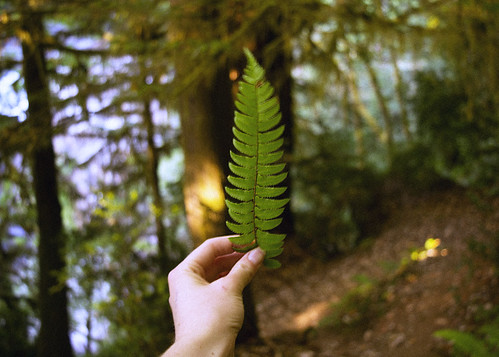
MOVE OVER, sword fern. I have a new favorite vascular flowerless specimen: Adiantum pedatum, or the northern maiden hair fern. These babies are moisture loving, deciduous ferns that favor nutrient rich soils and are honestly so cool. I first noticed its unique circular configuration while hiking on a small, conical shaped island in Japan called Yakushima. (For all those Miyazaki fans out there, the magical forest in Princess Mononoke was inspired by this very place). I thought it was the most exotic plant I had ever laid eyes on, and yet, it grows right here in our Oregonian backyard! Of course. I’m telling you – this is a special place in which I have found myself.

A personal project I am planning on completing over the summer is a series of illustrations of the plants I have encountered during my time here. You know the classic, stately illustrations of birds you see in those Sibley field guides and all the botanical masterpieces of Alexander Von Humboldt (my all time favorite naturalist) from his exploration of the Americas? Such an artistic representation of science, biology, life, and color deeply resonates with me, and studying something by recreating it through art is the most enriching learning experience. I hope to also use these illustrations as part of the interpretive guides Miles and I will be creating and distributing to tour operators across southern coastal Oregon in order to encourage the ‘experiential’ aspect of tourism that I discussed in my first post. To start, I’ve taken a few photos of some to which I will reference when I start drawing next week. As part of the development of tourism throughout the South Coast that both Dustin and I’s projects are contributing to, we will be staying at the Port Orford Field Station for a few days next week, during which we will be adventuring with professional landscape photographers from Portland by day and (I will be) drawing overly detailed pictures of plants by night. (Shout-out to Amazon and the postal service – ya’ll are the real MVPs for shipping my Portra 400 film on time). Here are a few samples of the plant photographs so far.


maidenhairfern

unknown

swordfern

  1. Maidenhair fern
  2. I’m sorry to say I haven’t been able to figure this one out. (But shout-out to Norma at the Extension office in Myrtle Point for the shrub and tree field guides of Southwestern Oregon – I’ll get on this right away…)
  3. Y’all better know this one already.


In other news, Fourth of July is my favorite holiday and this year’s was one for the books. I began the day by waking up at 4am. Now, before you ask yourself, “Why in the world would you get up so early on a holiday,” let me just show you this…

facerock

and this…

sisterrocks

Need I say more?

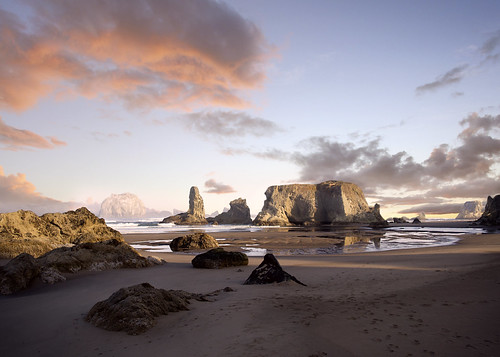
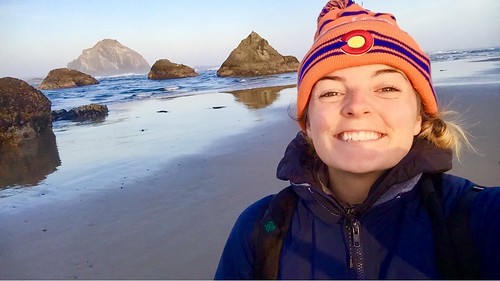
This is Face Rock State Scenic Viewpoint in Bandon, OR. Probably one of the more gorgeous places I have been (and will have been) in my lifetime. I believe I saw two other people the entire time I was there. There is nothing like enjoying the solitude and wildness of a place like this to celebrate the magnificent landscapes that saturate our country. Happy Birthday America, you are a dime and a half!

Here’s me, enjoying being up so early thanks to momma nature. (Shout-out to the Broncos).

selfiez

After this adventure, I returned home for the most restful nap and then savored some patriotic grilling with Dustin, Katie (fellow scholar), and her friends from the OIMB. Later that evening we all enjoyed a bonfire and firework show that lasted for the better part of three hours at Bastendorff Beach. Let me tell you, non-sanctioned firework shows are THE BEES KNEES. I thought the finale was happening more than a handful of times and the show extended to both ends of the beach. The best part is, the Surfrider Foundation led a beach clean-up there the next day to ensure that the previous night’s shenanigans weren’t at the expense of the beach’s health.

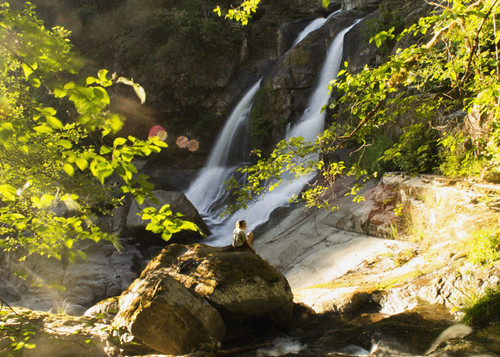
After the fantastic trips to the beach on the 4th, I was itching for an equally fulfilling forest adventure. I set out for the Rogue River-Siskiyou National Forest yesterday and got to see the Coquille River Falls in all its gloriousness. Blurry photo, but WHAT MAGIC. (Shout-out to my tripod for being a pal and not falling into the water).

coquille falls

With a few hours left of this weekend, I am off to check out Hanging Rock.