This week I was able to complete the first draft of my second project – an executive summary of the Rural Tourism Studio. I talked more in detail about the program in my post last week, but it is basically a workshop series that is provided by Travel Oregon to help promote tourism in rural Oregonian communities. The Wild Rivers Coast (a region from Bandon to Brookings) had their own workshop series and quite a few products have come about since the workshops. I summarized the program and its results as a sort of reassessment to help to move the project forward and continue developing tourism.
There were quite a few documents to sift through, but throughout my research and reading many meeting minutes, I noticed a few common themes that came up, that are also reminiscent of some of my experiences in on-campus organizations at Drury University. One that struck-home was how important it is to make note of everyone’s contributions in meetings, and how necessary it is to take time to reflect on the ideas that arise. I noticed a few times that ideas and questions had been repeated, like “What indicators can we use to make sure that our efforts are increasing tourism?”
At my college I serve as the head of sustainability for the Student Government Association, and I’ve been a member of the organization since my freshmen year, so I also hear concerns that are continuously repeated, like “Why is the Wi-Fi so slow?” or “Can we get a Starbucks on campus?” Going through the meeting minutes, I couldn’t help but think that perhaps there’s a similarity between our two organizations, and underlying common factors that inhibit the necessary action to address difficult problems. A few thoughts based on my own experiences that could shed some light:
First, I think that as students at a university, we can often feel helpless when it comes to big issues like fixing the Wi-Fi or trying to have better food. We can feel like our voice or concern is isolated, or that administration won’t listen because “everyone in every college thinks the food can get better” and that our thoughts will be diminished and we’re scared that we’ll be shut down. So a lack of confidence to believe that the concern is large enough to be addressed is likely the first initial barrier to solving problems.
To overcome this, one solution may be that one person or some people should have the courage to realize that their thoughts and opinions have value, and that they should be recognized and reflected upon. In lines with this, I’ve also noticed in SGA that some people are reluctant to be that person, as they feel that the burden of completing the task in its entirety will fall solely upon them. Committees can help to share the work so that the task load doesn’t seem to be so heavy, but it still takes one person to say, “Hey, this is a big problem that ought to be addressed, we ought to form a committee” and divvy up the tasks accordingly.
Another reoccurring problem I noticed throughout the minutes, and is definitely reflected in a student organization is the high turnover rate of members. Organizations find themselves starting anew with each new board, or progress can be slowed while trying to transition in new members. A potential solution may be to have a person in that organization that keeps up with products or processes, similar to the “our work” link often found on organizational websites. Alternatively, someone could go through a reassessment, similar to my work with RTS. This could decrease the needed transition time for new members by letting them know where the progress on current projects.
I also read in a few minutes how a few members would bring up a potential solution to a problem, but it was never delved into, and was glossed over within the tasks of the larger meeting agenda. A few moments of exploration within the meeting could also help to resolve ongoing concerns.
Most on-campus organizations usually have a secretary that is responsible for note taking at meetings and/or sending out emails about the meetings and events, but perhaps there is room for a person that actively goes through records to determine ongoing problems, as well as all relative discussion surrounding that particular issue. I’m not exactly sure that this position would look like, but I think it would definitely help with some of the student concerns that we hear in Student Government.
I’m sure that there are tons of books written on organizational structures and effective communication for productive problem-solving, but these are just a few similarities that I’ve seen throughout my variety of experiences that I have reflected upon to improve my own organizational management throughout my career.
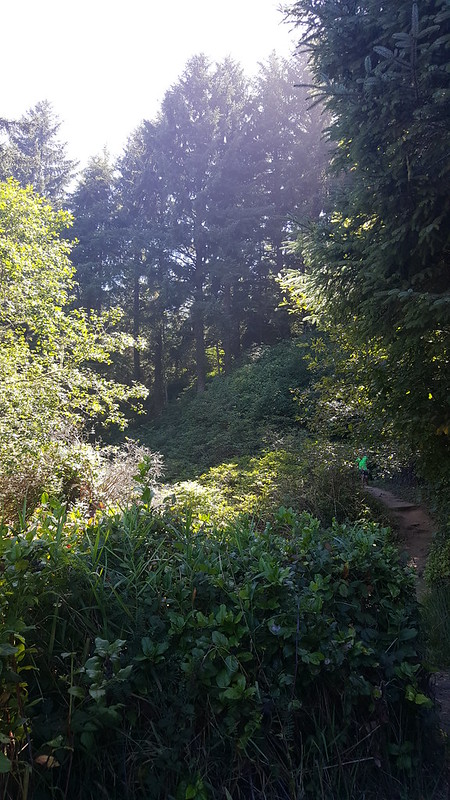
This week’s post was mostly reflective in nature, but I did go hiking at Sunset Bay yesterday, so here are some pretty neat pictures:



Thanks for reading!