Oregon Industries: circa 1925

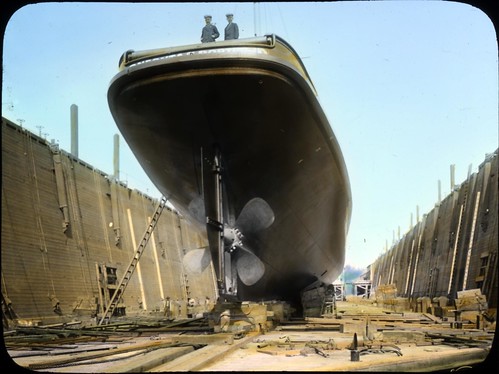
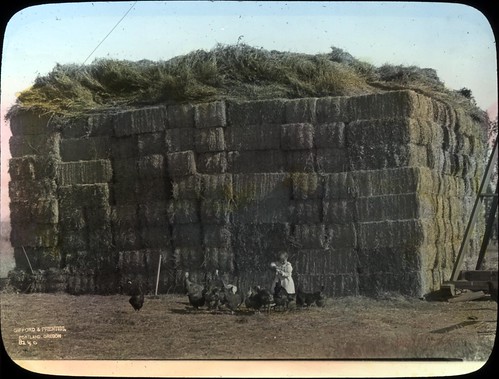
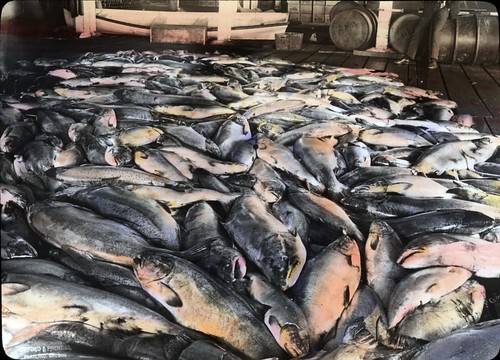
Where can you find logs, ladies, and lumber? Cows, carcasses, and chickens? Stacks of wheat and a pile of wool? In Oregon, of course!

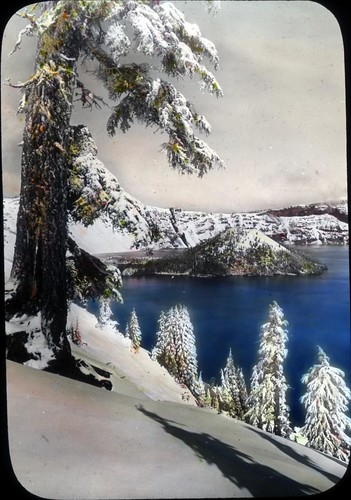
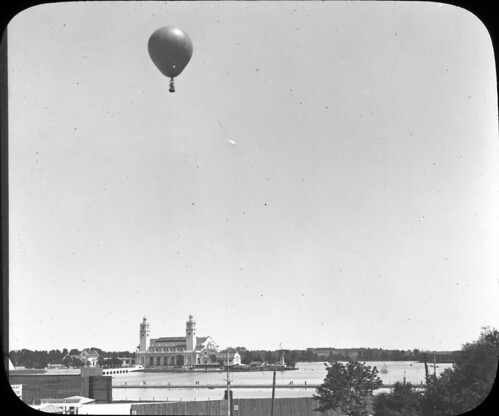
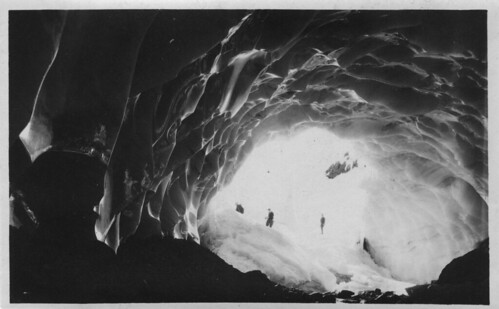
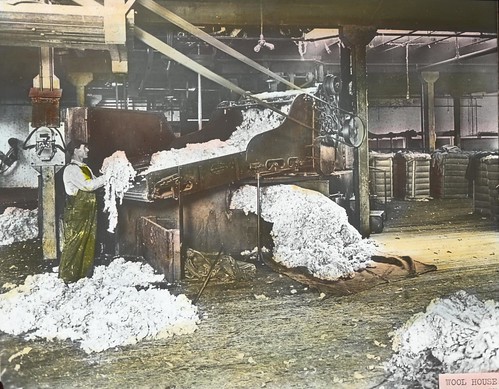
This week we launched the latest addition to our Flickr Commons account! The 1925 Oregon Industries set focuses on logging, agriculture, and textiles production – quite familiar topics to those of us at the OSU Archives…
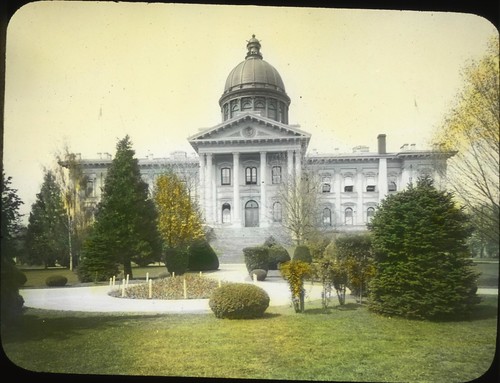
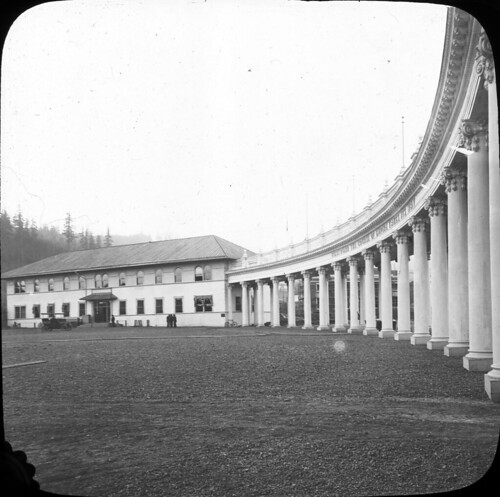
And, as I have mentioned many times before, the instruction booklet gives us gems of information about the images. For example, here’s the description for the “Oregon State Capitol Building in Salem, Oregon” image, which give information about the picture above, but also for the set as a whole.

It was in 1873 that work began on the erection of the State Capitol, commonly called the State House, at Salem. It was accepted by the state from the contractor on August 26, 1876. Of course later additions were made to the building and this picture shows it as it is today after a half century of service. During the fifty years the industrial growth of Oregon has been gradual until today, in proportion to population, the quantity and quality of the products of the state are very gratifying.

The lumber and timber products industry, including logging camps and sawmills, is the leader in manufacturing when measured either by value of products or the number of wage earners employed.”
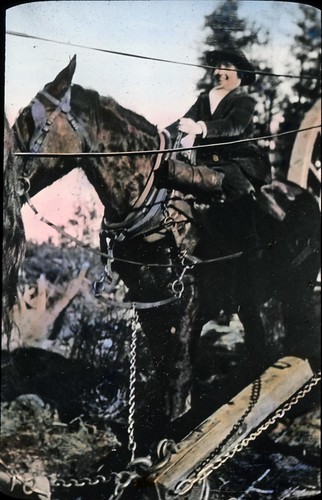
“The basic industry of Agriculture continues to increase its production, in spite of the fact that there were about 8000 less farm owners in 1925 than in 1920. While transportation companies in Oregon rank next to timber in the number of employees, the farms make possible the grain mills and flour mills, the output of which ranks next to timber products in value.”
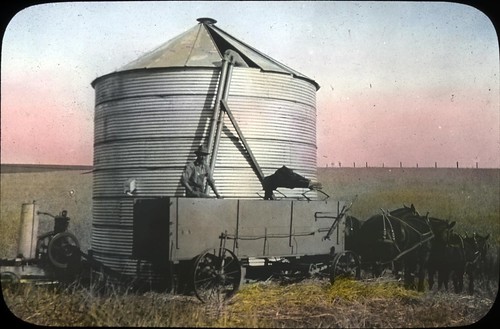
“Standing third in value in factory products is the slaughtering and meat packing industry, while butter-making flows closely and is steadily gaining in the value of its output.”

“The pictures following give glimpses indicative of a few industrial activities of Oregon.”
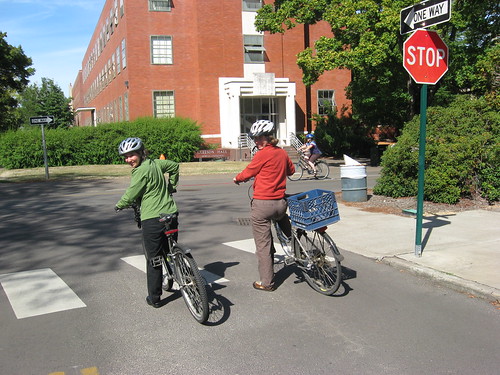
We’ve been busy riding!

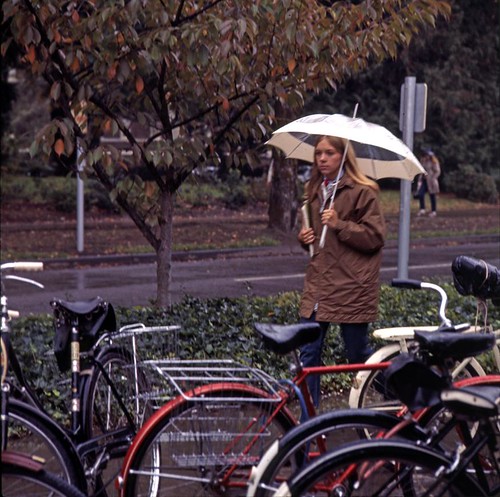
Check out our new set “OSU Libraries Staff: Flickr Folks Ride!” — it’s our nod to the BTA Bike Commute Challenge…

Why? Many of the folks who work at the OSU Libraries bike to work, though we come at “commuting” with a slightly different bent… Some are committed throughout the rainy season (Larry Landis and Chris Petersen are foul weather riders), some ride loooong distances to reach their desk (Terry Reese rides many, many, many, many miles each day, all year), some only ride in the sun (okay, not really, this is Oregon after all), some cart boxes full of archival documents (that’s me)!

So when I read about the Bike Commute Challenge, a friendly competition to see who can get more people biking to work in September, I thought it might make a fun Flickr set to take pictures of all the biking folks that grace our stacks. And really, it’s easy, fun, and free, so we decided to give it a try! But, never one to miss an opportunity to show off our great archival collections, I thought I’d give it a try with a “Then & Now” twist… Enjoy!

Want to know more about the Bike Challenge? Check out their site.

Speaking of digging for stuff… Try docking this one!

Happy Wednesday all! The new Visual Instruction Lantern Slide set for this week is all showing off the many ways Oregon works! Check out these glass lantern slides, many of them hand-colored, showing Oregon industries from 1905 to 1910.

Boats, ports, barns, fish, and some beautiful shots of Oregon scenery.

Try stacking one more!

Digging for History?

OSU Archaeology students sift through Fort Yamhill’s history and examine the remains of stone oven at Bake House site…

“A group of students from Oregon State University’s Archaeology Field School has unearthed the latest in a series of Fort Yamhill attractions, foundational remains of the long-gone Bake House’s stone oven, which served scores of officers and soldiers from the prestatehood years of the 1850s through Oregon’s early years to the fort’s closure in 1866.”

“This is archaeology in action right there in our own backyards,” said Matt Huerter, an interpretive ranger at the park. “People can have direct evidence that the military was here over 150 years ago.” Huerter combines his enthusiasm for the history of the area with a great willingness to share in the excitement with the students. “It’s very cool,” he said several times of the student work.

“Those grounds exhibit a gamut of lessons: a bit of history bolstered by archaeology; some tempering through civics, applied mathematics as archaeology students measure angles to get an accurate reading of a dig site; a little physical outlet as visitors stretch their legs for a walking tour over the gentle hills.”

Want to know more? Check out the Statesman Journal article.

The keeper of Benton County’s history!

There is a great article in the Gazette-Times today on the Benton County Historical Society. It’s worth reading the entire thing, but I couldn’t resist posting this quote, which paints such a delightful picture…

The Benton County Historical Society’s storage building is crammed to the rafters – literally – with a bewildering assortment of artifacts. They’re lined up in rows, stacked in boxes and arrayed on shelves like the accumulated clutter of God’s own attic.

So if you ventured 5 miles west of Corvallis to Philomath, what will you find there? The collection numbers somewhere around 120,000 items, so you’ll find a lot!

Tin lizzies and horse-drawn carriages. Hand-carved bedsteads and hand-woven baskets. Wedding dresses and military uniforms. A deep-sea diver’s helmet and a telephone operator’s switchboard. A congregation of pulpits and a veritable armada of rocking chairs.”

What does Mary Gallagher, the historical society’s collections manager, think? “I think we have too many chairs, personally.” Joking aside, Gallagher and the BCHS staff take their collection and mission of preserving the history of our county very seriously! Read more and you’ll see…

What a climb…


This weekend our Flickr Commons account hit 175,000 views!! Thanks to all our loyal viewers — you make this project great.

And while we thank you, we also tease you a bit …

Love the photo in this post? It’s part of a rapid fire release schedule we’re starting this week! We have 3 more sets to show you from the Visual Instruction Lantern Slide Department Collection, all focused on Oregon Industries between 1905 and 1940. You get lots of fish, some potato prep, tug boats, the OR State Capital Building, trees, chickens, corn, and so much more. So watch for the 1905 – 1910 set this Wednesday, followed by the 1925 set on September 9th, and the 1940 set on September 16th.

And after that? Stay tuned, we think you’ll like it …

Oregon, a story of progress and development

Were you left wanting more about the Lewis & Clark Centennial Exposition?

We’ve digitized the book Oregon, a story of progress and development, together with an account of the Lewis & Clark Centennial Exposition to be held in Portland, Oregon, from June first to October fifteenth, nineteen hundred and five and it is now available in ScholarsArchive!

“What is ScholarsArchive?” you might ask…

“ScholarsArchive@OSU is Oregon State University’s digital service for gathering, indexing, making available and storing the scholarly work of the Oregon State University community. It also includes materials from outside the institution in support of the university’s land, sun, sea and space grant missions and other research interests.”

Remember, it exists because people contribute their work and share the digitization dreams! Submitting your research to ScholarsArchive@OSU is easy. Want to know more? send them an email at scholarsarchive@oregonstate.edu.

Wait, isn’t it Friday?

Don’t worry, you haven’t skipped the weekend and fast forwarded to Wednesday — we’re just launching a new set today because I love random connections…

For those of you who have been following the blog posts for the past couple of days, I’ve been telling the story of Fred Kiser, a Gifford contemporary and fabulous photographer out of Portland in the early part of the 20th century. Why? It all started with a comment on this photo asking if we could provide a date for it.

That set us sleuthing, which led us to a treasure trove of information on dear old Fred. For those of you who want to know more about him, read the blog posts for August 26th and 27th — there’s a lot there!

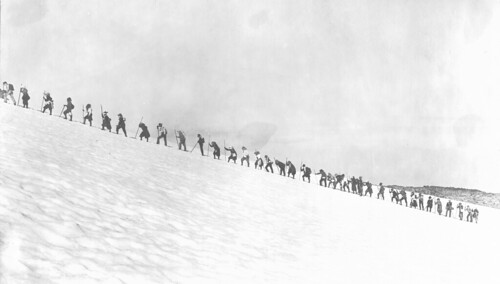
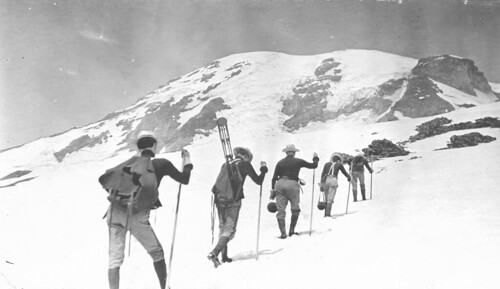
One of the things that did stand out in Kiser’s biographical information was his involvement with the Mazamas, a climbing club in Portland. It just so happens that we have some wonderful, and wintery, pictures of the Mazamas that we’ve added to the Gerald Williams Collection set. For more on what’s in the Williams Collection, check out our collection guide.

Now for more on this set… Thanks to Doug for the witty narrative description!

Have you ever wondered what your grandfather did for fun? While some undoubtedly whittled their lives away, others were out conquering the wilderness. If you’re from Oregon, ol’ grandpa might have even been part of the Mazamas. On top of Mt. Hood, the original 105 charter members of the Mazamas founded their organization on 19 July 1894. Since the organization’s founding, the Mazamas have fought for environmental preservation, built a number of lodges, named Mt. Mazama, and, of course, promoted and taught basic climbing education.

Spend a little time hiking through the snow, check out the new Mazamas set in Flickr Commons! And, of course, for more information on the Mazamas check out their site and find out how to start your own adventure!

Cool things about Fred Kiser

As promised yesterday, here’s is part two of the “cool things about Fred Kiser” post!

In 1907, a Kiser Exhibition opened at the Portland Hotel, attracting what was described as “an Admiring Crowd.” Again, I reach for the book Oregon Photographers: Biographical History and Directory.

“In many ways the finest art collection ever on exhibition in Portland is to be seen in the parlors of the Portland Hotel. The pictures are the results of eight years work by F. H. Kiser, one of the best scenic photographic artists in this country, and cost to produce over $40,000. On the walls of the two rooms are hung 200 exquisitely colored scenes of Oregon scenery, while on the tables are over 800 additional views.”

After the exhibit in Portland, the collection traveled to Oregon’s coastal towns and then headed to the east coast on a “Mission of Education.” And what an exhibit it was! Mayor Lane, in his introductory remarks said this:

Ladies and gentleman, I have been called upon to be present at the opening of the Kiser exhibit, a collection of photographs of the mountain scenery of the State of Oregon. It is a pleasure and an honor; we owe as a master of justice, many words of thanks to the gentleman who has risked his life and been to great expense and trouble to produce such an elegant collection of views as we see here today; and he has many more which are not an exhibition at this time.” He goes on to say that “In his efforts as an artist, Mr. Kiser has become, as a matter of fact, a public benefactor to the state. His work will live after him, and will bring great good to the state; for an exhibit of this kind cannot be made in the Eastern States.”

Finally, and I think this is the best part, he reports that “People in the East do not comprehend that such scenery as this exists; they would not believe it if we tried to describe it to them by word of mouth; if we made oath to it they would still doubt. They might even dispute the work of the painter, saying that it was the product of his imagination. But these cold facts as they are presented by the camera, a scientific and accurate instrument, is astonishing to those who are unacquainted with Oregon. Such an exhibit throughout the East will be of great advantage to the state; it will bring us tourists, hundreds and thousands of people who travel all over the world in the Summer season, many of them visiting places that have no such scenery as we have here.” Believe it — Oregon really is that beautiful!

You can read the entire article on Kiser on the genealogy.com forum page.

Lest you think that you’ll get away from this post without a random Flickr Commons connection, here it is: Kiser was also the official photographer for the 1905 Lewis and Clark Expo! Check out our Commons set to see some great images.

And, in a special release to celebrate Kiser’s Mazamas membership, we’ll be launching a new set tomorrow into our Commons account! 17 brand new images will be added to the Williams Collection. Here’s your sneak peak…

Bad News from Southern Oregon

The Southern Oregon Historical Society tries to preserve own future: Historical Society president says most operations will be closed for six months, vows to reorganize and reopen

“A worsening financial crisis at the Southern Oregon Historical Society will require shutting down its Jacksonville museums for six months and laying off most of its staff to restructure an organization that is the guardian of local history. ‘We will close most of the operations,’ said Terrie Martin, president of the SOHS board. On Sept. 7, the museums as well as the research library in Medford will be shut down, historical society officials said Thursday.” To read more, check out the Mail Tribune article from August 14th.

Ironically, I have been corresponding with a man who is interested in donating his research notes from a great genealogy project to an archives or historical society in Oregon. He’s frustrated and feels like the value his work isn’t being recognized. It’s hard not to understand, especially when the work he has done is the sort of thing archivists and historians love. And I’m sure I can speak for most of the archivists and historians I know when I say that we’re in business because there are people who save things, people who research things, and people who produce books/collections.

Unfortunately, inquiries about a donation come at a time when the historical societies are cutting and closing. As the current President of the NW Archivists, the professional association of archivists in WA, OR, ID, MT, and AL, my entire term has been spent thinking about the larger implications of massive lay-offs or the closing of cultural institutions…

What does this all mean for donors? In many cases, it means that repositories just can’t accept anything new. And it’s not just for the space/staffing/preservation/access issues you might immediately think of – ethically, we have a code that says that we are committed to preserving and providing access to the historical record. Again, what does this mean for donors? It means that it’s ethically “wrong” for us to accept anything that we know we can’t preserve or provide access to. It means we can’t take in materials that we know will sit indefinitely in a box on a shelf with little more than the report that was produced when the items showed up.

So please, remember the value of archives, support your local museums and historical societies, and keep collecting — fingers crossed that we come out of this budget crunch and can start chugging away again!