Categories
Uncategorized

Bad Management is the Ultimate Demotivator

Victoria’s Secret Store

In organizational leadership, we are often taught that compensation is a primary driver of employee behavior. However, my experience working at Victoria’s Secret proved that operational environment, communication, and management style matter just as much. Ultimately, a mix of poor communication, chaotic scheduling, and general job stagnation became the driving force that motivated me to submit my two weeks notice.

One issue that was an indicator was the store’s highly unprofessional approach to scheduling. Instead of maintaining a reliable, structured roster, management relied on last-minute crisis control. It became normal to receive a text message on the day of an unprompted shift asking me to rush into work. I would be met with absolute radio silence from management if I was unavailable, which was a lack of basic operational courtesy that made it impossible to plan my life outside of work. Beyond the chaotic logistics, the day to day role itself suffered by being extremely repetitive and boring. They offered zero engagement, or room for creative proactive learning. When a job lacks intrinsic rewards and is paired with a management team that fails to communicate professionally, employee effort naturally plummets.

For me, this experience was a massive turning point. It wasn’t the work itself that drove me away, but the realization that the store was being run with a complete disregard for the time and effort. In the end, the company’s unprofessionalism became my ultimate motivator and life lesson; not to work harder, but to protect my standards and walk away. It taught me that successful organizational leadership requires respect, transparency, and structure. As a management major, I was able to gain multiple takeaways on what I want to do to stand out and be the best manager I can one day.

Categories
Uncategorized

Bad Management is the Ultimate Demotivator

Victoria’s Secret Store

In organizational leadership, we are often taught that compensation is a primary driver of employee behavior. However, my experience working at Victoria’s Secret proved that operational environment, communication, and management style matter just as much. Ultimately, a mix of poor communication, chaotic scheduling, and general job stagnation became the driving force that motivated me to submit my two weeks notice.

One issue that was an indicator was the store’s highly unprofessional approach to scheduling. Instead of maintaining a reliable, structured roster, management relied on last-minute crisis control. It became normal to receive a text message on the day of an unprompted shift asking me to rush into work. I would be met with absolute radio silence from management if I was unavailable, which was a lack of basic operational courtesy that made it impossible to plan my life outside of work. Beyond the chaotic logistics, the day to day role itself suffered by being extremely repetitive and boring. They offered zero engagement, or room for creative proactive learning. When a job lacks intrinsic rewards and is paired with a management team that fails to communicate professionally, employee effort naturally plummets.

For me, this experience was a massive turning point. It wasn’t the work itself that drove me away, but the realization that the store was being run with a complete disregard for the time and effort. In the end, the company’s unprofessionalism became my ultimate motivator and life lesson; not to work harder, but to protect my standards and walk away. It taught me that successful organizational leadership requires respect, transparency, and structure. As a management major, I was able to gain multiple takeaways on what I want to do to stand out and be the best manager I can one day.

Categories
Uncategorized

Applying Effective Onboarding to Leadership

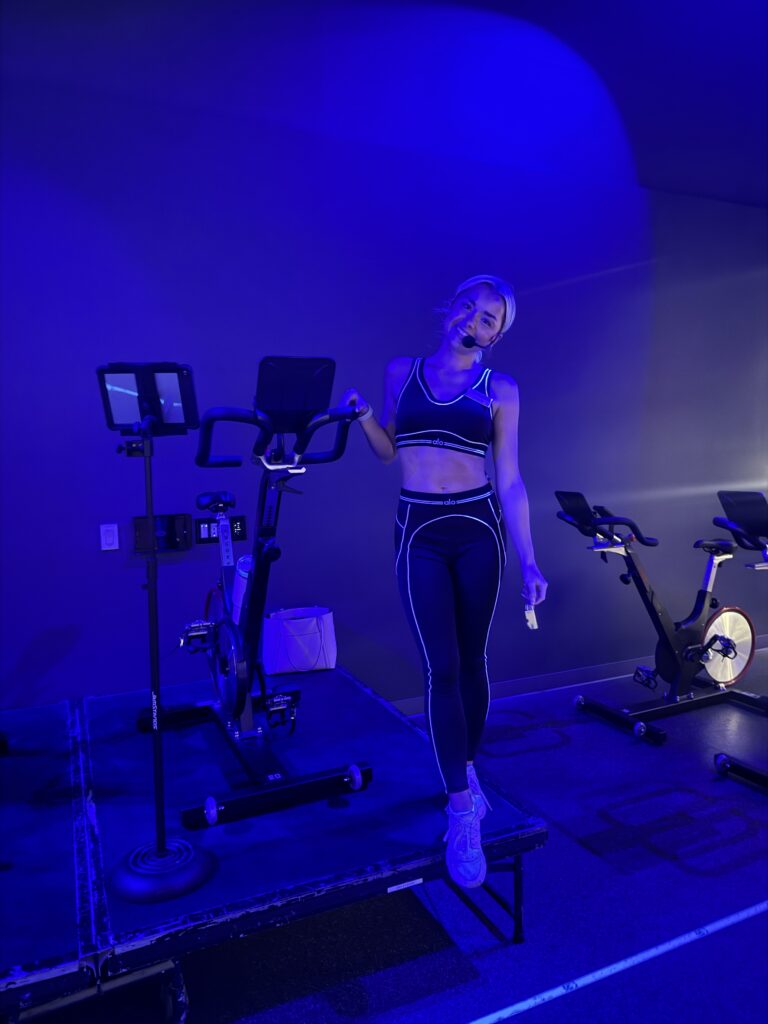
One training that was beneficial for me was my cycling instructor training at Dixon Recreation Center. This experience stood out because it used a hands on approach as I got thrown right into what I would be doing. I began by shadowing an experienced instructor and then progressively took on more responsibility until I was leading more and more of the class myself each week. This method reflects experiential learning, where actively practicing skills builds confidence and competence. I also received consistent feedback, which helped me improve quickly. This kind of structured, supportive learning is similar to effective onboarding, where guidance and gradual responsibility are key to success (Ellis, 2017).

In contrast, a group fitness instructor course I took in a classroom setting was much less effective. Although it covered important topics like adapting workouts and inclusivity, it lacked real-world application. Most of the time was spent listening to lectures rather than practicing how to lead a class. Because of this, it was harder to retain the information or feel confident applying it.

The article Your New Hires Won’t Succeed Unless You Onboard Them Properly emphasizes that successful training and onboarding require more than just information they require social support, interaction, and engagement. For example, research in the article shows that employees are more successful when they feel socially connected and supported by their managers, and that early experiences are critical to long-term success (Ellis, 2017). My cycling training reflected this through mentorship, feedback, and active participation, while the classroom course lacked those elements.

Overall, the key difference was applying what I was able to retain. Effective training involves hands on experience, feedback, and social support, while ineffective training tends to be passive and disconnected from real world performance.

References

Ellis, A. M., Nifadkar, S. S., Bauer, T. N., & Erdogan, B. (2017). Your new hires won’t succeed unless you onboard them properly. Harvard Business Review.

Categories
Uncategorized

Inside the Interview Room

One interview that stands out in my memory was a group interview at Victoria’s Secret, and reflecting on it through this week’s readings, I now understand why it felt ineffective. The role was primarily individual and customer‑focused, yet the group format pushed candidates to compete for attention rather than demonstrate job‑related skills. This lowered the interview’s validity, because the format didn’t measure the competencies actually required for retail sales. It also reduced reliability, since each candidate received different follow‑up questions and unequal speaking time. As someone going for the job, it almost felt like a competition against the other candidates instead of a meeting to provide my professionalism & experience.

Rebecca Knight’s article highlights exactly this issue. She explains that unstructured or inconsistent interviews are “often unreliable for predicting job success,” and that structured interviews help employers “focus on the factors that have a direct impact on performance.” My Victoria’s Secret interview lacked this structure, making it feel more like a personality contest than a fair assessment.

Buckingham and Coffman reinforce this point in First, Break All the Rules. They argue that great managers rely on consistent, talent focused measures, not gut feelings or casual conversations. Their research shows that effective selection requires identifying recurring patterns of behavior, not who happens to speak the loudest in a group setting. This aligns with the idea that interviews should be standardized and tied directly to job performance indicators. From a utility standpoint, the group interview didn’t generate meaningful information for the time invested.

Giving advice to a hiring team, I’d keep it simple such as using structured one on one interviews so everyone gets the same fair shot, add a few scenario or work sample questions to actually see how someone would handle the job, and make sure interviewers get basic training on unconscious bias since awareness really is the first step to unraveling it. Overall, after experience in multiple different interview styles, it’s pretty easy to see why some interviews feel fair and useful while others fall short.

Works Cited

Buckingham, Marcus, and Curt Coffman. First, Break All the Rules: What the World’s Greatest Managers Do Differently. Gallup Press, 2016.

Knight, Rebecca. “7 Practical Ways to Reduce Bias in Your Hiring Process.” Harvard Business Review, 12 June 2017.

Categories
Uncategorized

Aligning Job Descriptions with Real-World Performance

Dutch Bros Barista’s In the workplace

Job descriptions can be quite interesting, as some might be very accurate to your average day at work, and others might be the complete opposite of what you actually do. In my experience at Dutch Bros, the disconnect between a static job description and the actual requirements of the role is pretty accurate however it is missing key elements. While the description might focus on “crafting beverages” and cleaning, the day-to-day reality requires maintaining high spirits, delivering genuine customer interactions, and continuously adapting to new drink features; all while upholding core values like speed and quality. Although the job description was able to capture performance requirements, it failed to explain cultural and behavioral nuances of the job. 


The core challenge, as Kathryn Tyler notes in “Job Worth Doing: Update Descriptions,” is that HR often views updating as an afterthought. Tyler identifies the job description as the “mother of all HR processes,” yet it is frequently relegated to dusty binders. This neglect not only makes it inaccurate to date tasks within the job title, but is confusing to applicants as well as they do not know what they are signing up for when they apply. 

To overcome this, one idea would be to construct them. In First, Break All the Rules, Buckingham and Coffman suggest that the world’s greatest managers focus on defining the right outcomes for a role rather than micromanaging the exact tasks. By updating descriptions to reflect core results such as customer satisfaction metrics and cultural standards rather than just listing static duties, we create a more resilient document. Instead of constant, tedious revisions of granular tasks, we can focus on aligning descriptions with the strategic outcomes of the position. 

I think it is also important to add other factors like behavioral requirements, and cultural requirements, as this is a huge game changer when looking into a job. Integrating this outcome-based approach with annual performance reviews, as suggested by Tyler (2013), transforms the job description from a compliance checkbox into a dynamic, relevant roadmap for success.

Refrences

Buckingham, M., & Coffman, C. (2016). First, break all the rules: What the world’s greatest managers do differently. Simon & Schuster.

https://ebookcentral.proquest.com/lib/osu/reader.action?docID=1584214&c=RVBVQg&ppg=6

Tyler, K. (2013, January 1). Job worth doing: Update descriptions. HR Magazine.

https://canvas.oregonstate.edu/courses/2055828/pages/week-4-learning-materials?module_item_id=26642145

Categories
Uncategorized

A People First Environment Driven by Teamwork and Dedication

After reading employee comments, Marriott International stood out to me as I learned how the company is very guest-oriented and “putting people first”, which the company appears to continue through those values to their employees.

Jubel A, a butler service supervisor, explained: “My favorite part of working at Marriott is the opportunity to give back to the community through the Take Care program,” he says about Marriott’s global wellness program designed to support associates’ physical, mental, and financial health. For Jubel, diversity and inclusion aren’t just words, they’re lived values. “If I had to describe Marriott in what word it would be people-centric because we always put people first” (San Segundo, 5). The benefits of this company are what keeps their employees motivated, happy, and continuing to push the core values of the company everyday. Marriott’s commitment to nurturing both guests and employees creates a workplace where people feel genuinely valued and supported.

As I read into Hilton, I was able to interpret how Employees at Hilton consistently highlight the incredible sense of community that defines their workplace. What stands out most is the diversity of the team; people from different backgrounds, cultures, and even languages all coming together with one shared purpose: delivering exceptional service to guests. Team members describe an environment filled with learning, laughter, and genuine connection, where they support one another and grow together every day.

After learning from my recent management classes, I aspire to be a manager who pushes my employees to work their best and most efficiently, but also to be a very compassionate manager that my employees can look up to. I think it is important to work hard and efficiently in the workzone, but be a part of an uplifting team that is there to support, help, and have fun with each other while doing so.


References

San Segundo, Irene. “What Makes Marriott One of the Best Places to Work in the World.” Life at Marriott Blog, 13 Nov. 2025, life.marriott.com/blog/worlds-best-places-to-work/