Categories
Uncategorized

Bad Management is the Ultimate Demotivator

Victoria’s Secret Store

In organizational leadership, we are often taught that compensation is a primary driver of employee behavior. However, my experience working at Victoria’s Secret proved that operational environment, communication, and management style matter just as much. Ultimately, a mix of poor communication, chaotic scheduling, and general job stagnation became the driving force that motivated me to submit my two weeks notice.

One issue that was an indicator was the store’s highly unprofessional approach to scheduling. Instead of maintaining a reliable, structured roster, management relied on last-minute crisis control. It became normal to receive a text message on the day of an unprompted shift asking me to rush into work. I would be met with absolute radio silence from management if I was unavailable, which was a lack of basic operational courtesy that made it impossible to plan my life outside of work. Beyond the chaotic logistics, the day to day role itself suffered by being extremely repetitive and boring. They offered zero engagement, or room for creative proactive learning. When a job lacks intrinsic rewards and is paired with a management team that fails to communicate professionally, employee effort naturally plummets.

For me, this experience was a massive turning point. It wasn’t the work itself that drove me away, but the realization that the store was being run with a complete disregard for the time and effort. In the end, the company’s unprofessionalism became my ultimate motivator and life lesson; not to work harder, but to protect my standards and walk away. It taught me that successful organizational leadership requires respect, transparency, and structure. As a management major, I was able to gain multiple takeaways on what I want to do to stand out and be the best manager I can one day.

Categories
Uncategorized

Bad Management is the Ultimate Demotivator

Victoria’s Secret Store

In organizational leadership, we are often taught that compensation is a primary driver of employee behavior. However, my experience working at Victoria’s Secret proved that operational environment, communication, and management style matter just as much. Ultimately, a mix of poor communication, chaotic scheduling, and general job stagnation became the driving force that motivated me to submit my two weeks notice.

One issue that was an indicator was the store’s highly unprofessional approach to scheduling. Instead of maintaining a reliable, structured roster, management relied on last-minute crisis control. It became normal to receive a text message on the day of an unprompted shift asking me to rush into work. I would be met with absolute radio silence from management if I was unavailable, which was a lack of basic operational courtesy that made it impossible to plan my life outside of work. Beyond the chaotic logistics, the day to day role itself suffered by being extremely repetitive and boring. They offered zero engagement, or room for creative proactive learning. When a job lacks intrinsic rewards and is paired with a management team that fails to communicate professionally, employee effort naturally plummets.

For me, this experience was a massive turning point. It wasn’t the work itself that drove me away, but the realization that the store was being run with a complete disregard for the time and effort. In the end, the company’s unprofessionalism became my ultimate motivator and life lesson; not to work harder, but to protect my standards and walk away. It taught me that successful organizational leadership requires respect, transparency, and structure. As a management major, I was able to gain multiple takeaways on what I want to do to stand out and be the best manager I can one day.

Categories
Uncategorized

Applying Effective Onboarding to Leadership

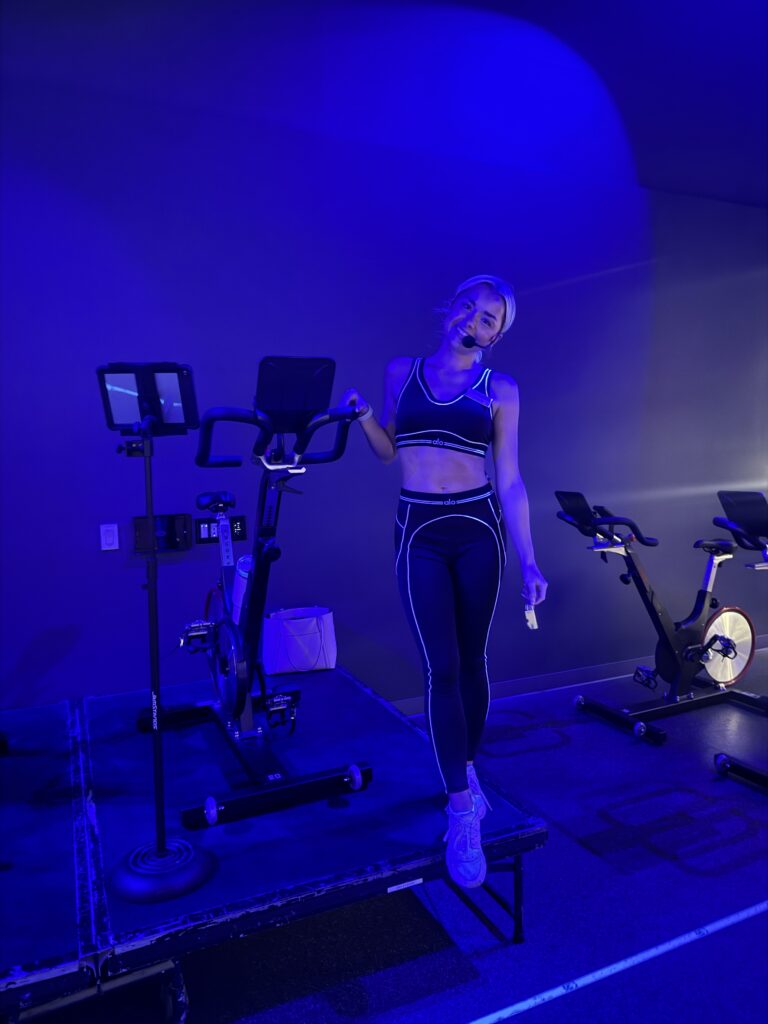
One training that was beneficial for me was my cycling instructor training at Dixon Recreation Center. This experience stood out because it used a hands on approach as I got thrown right into what I would be doing. I began by shadowing an experienced instructor and then progressively took on more responsibility until I was leading more and more of the class myself each week. This method reflects experiential learning, where actively practicing skills builds confidence and competence. I also received consistent feedback, which helped me improve quickly. This kind of structured, supportive learning is similar to effective onboarding, where guidance and gradual responsibility are key to success (Ellis, 2017).

In contrast, a group fitness instructor course I took in a classroom setting was much less effective. Although it covered important topics like adapting workouts and inclusivity, it lacked real-world application. Most of the time was spent listening to lectures rather than practicing how to lead a class. Because of this, it was harder to retain the information or feel confident applying it.

The article Your New Hires Won’t Succeed Unless You Onboard Them Properly emphasizes that successful training and onboarding require more than just information they require social support, interaction, and engagement. For example, research in the article shows that employees are more successful when they feel socially connected and supported by their managers, and that early experiences are critical to long-term success (Ellis, 2017). My cycling training reflected this through mentorship, feedback, and active participation, while the classroom course lacked those elements.

Overall, the key difference was applying what I was able to retain. Effective training involves hands on experience, feedback, and social support, while ineffective training tends to be passive and disconnected from real world performance.

References

Ellis, A. M., Nifadkar, S. S., Bauer, T. N., & Erdogan, B. (2017). Your new hires won’t succeed unless you onboard them properly. Harvard Business Review.