March 2026
This communication is an opportunity to learn more about the work conducted by the Office of Government Relations, state and federal policy actions, Tribal relations activities, and university engagements with elected officials. We encourage you to share it with your colleagues. They can also sign up to receive it using this link.
2026 Legislative Session By: Katie Fast, Executive Director of Government Relations and Katheryn Yetter, Policy & Government Relations
Due to the federal passage of HR 1 in July 2025, Oregon is experiencing significant reductions in federal funding, mostly SNAP and Medicare, and reduced state tax revenue. To respond to this funding change, the Legislature’s planning for the 2026 Oregon session included development of budget reduction scenarios.
The public universities started the legislative session with the potential of an up to 5% reduction to the Public University Support Fund and 7.1% to the OSU Statewides: Extension, Agricultural Experiment Station, and Forestry Research Lab.
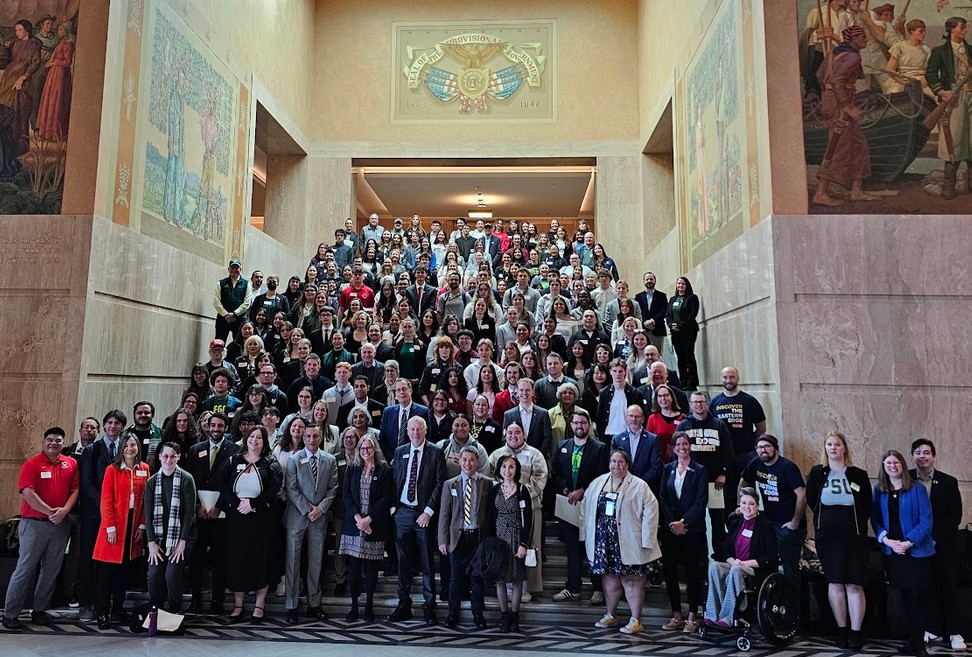
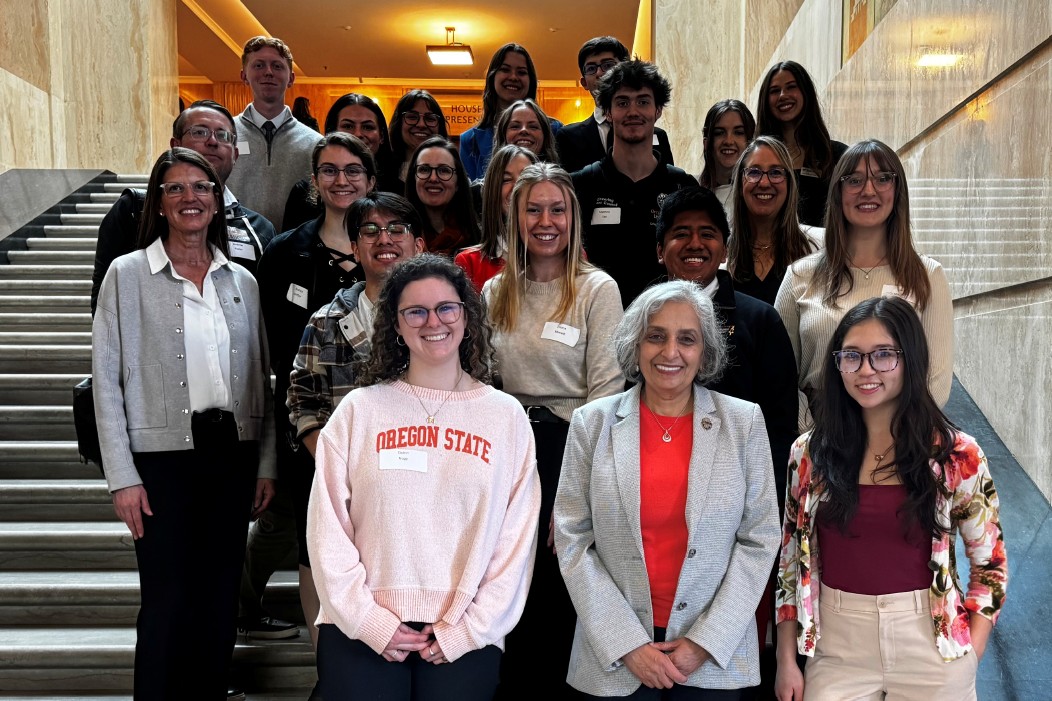
On February 12, Oregon’s public universities came together in Salem for University Day at the Capitol, a coordinated event that brought students and stakeholders from all seven public universities to the Legislature to advocate for our shared priorities in 2026 – preservation of the Public University Support Fund and the Oregon Opportunity Grant. The collaborative spirit among campuses contributed to a unified message and amplified the collective voice of Oregon’s higher education community.
Interest in the event exceeded expectations, as over 150 participants from all seven public universities arrived to share their stories and advocate for continued investment in higher education. This year’s event marked a new milestone in legislative engagement – organizers scheduled 78 meetings with legislative offices—a record level of outreach. Participants reported that conversations were productive, positive, and well received by lawmakers and their staff, and were instrumental in this Session’s positive outcomes in a year when cuts to essential funding were anticipated.
As session progressed, the state budget situation improved. Oregon benefited from a series of positive revenue forecasts. Also, the Legislature passed SB 1507, which disconnected Oregon’s tax code from some of the federal HR 1 tax breaks. Some uncertainty lingers around the future of SB 1507, which saved the state over $300M in lost revenue. Representative Ed Deihl (R-Santiam) has announced that he will attempt to refer the bill to the voters. This effort will require about 75,000 signatures to be collected in 90 days after session ends.
At the end of the 2026 legislative session, no reductions were made to higher education funding or programs at OSU.
OSU-Cascades Investment
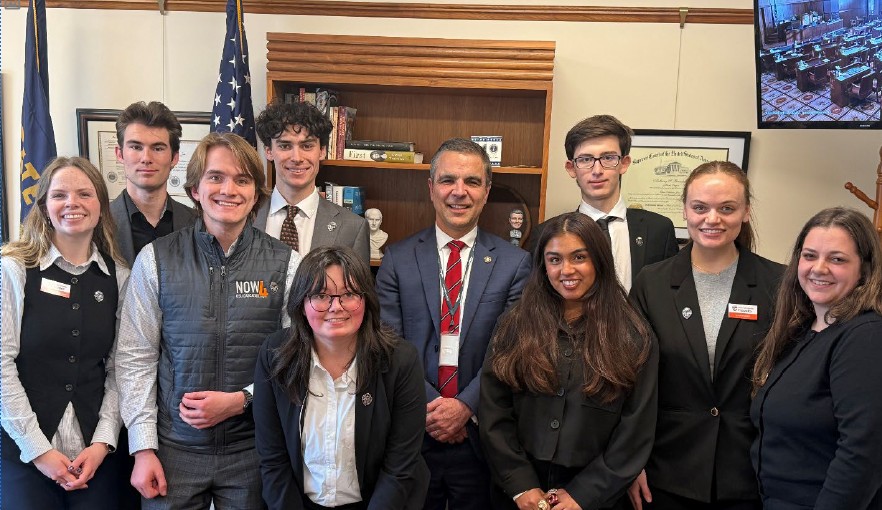
On the proactive side, OSU partnered with the Central Oregon legislative delegation to continue our advocacy to remediate an additional 24 acres at the OSU-Cascades campus and build a Health and Recreation Center. This project gained much support from the Central Oregon community. A lobby day organized by OSU Government Relations and ASCC brought students, administrators, and community members together to advocate for the project in Salem. Also, over 50 letters of support for the project were sent to legislators.
These advocacy efforts paid off, and the Legislature allocated $42M for the project! Appreciate Senator Anthony Broadman (D-Bend) for submitting the capital request for the project and support of the entire bipartisan Central Oregon delegation.
Oregon’s Higher Education Landscape
Higher education discussions in Salem were overshadowed by financial struggles at one of Oregon’s institutions. On the first day of session, SOU held an emergency board of trustees meeting to announce a shortfall and the potential need of $15M in bridge funding from the Legislature to continue operations through the biennium. The financial status at other institutions was also brought into question. This all came on the heels of the release legislatively directed spending and efficiency study by the Higher Education Coordinating Commission (HECC), which contained some controversial recommendations including continued study of institutional mergers and partnerships and review by HECC of academic programs.
These issues spurred Representative Marsh (D-Ashland) to introduce HB 4124, which garnered much support and over twenty co-sponsors, and directed HECC to conduct a study of the condition of Oregon’s post-secondary education system and develop recommendations for the design, implementation, and operation of a viable and superior institutional framework. OSU plans to actively engage with HECC through this process. Ben Cannon, HECC Executive Director, is expected to provide some initial thoughts to the OSU Board of Trustees during his report on Friday, March 13th.
At the end of the legislative session, the Legislature adopted two Budget Notes regarding SOU and made the following investments in higher education:
- $15M held in a Special Purpose Appropriation (otherwise known as a SPA) to be released by the Emergency Board with the following criteria described in a Budget Note:
- Requires SOU collaborate with HECC to submit a report by April 30, 2026, with the actions the university will take to ensure continued operations through June 30, 2027, including updated financial modeling demonstrating the institutions’ ability to meet all obligations.
- Requires SOU provide monthly financial statements, and an updated cash flow forecast on a quarterly basis summarizing the operational status of the institution and identifying any risks affecting contractual commitments and obligations to students.
- $500,000 to HECC for the development of a SOU long-term financial sustainability plan with the following direction in a Budget Note:
- Requires SOU and HECC collaborate to develop a plan for future delivery of higher education in southern Oregon, without reliance on ongoing increases in state support. The plan must:
- Align existing and potential revenue sources with budgeted expenditures to achieve a balanced budget for the biennium and long-term structural fiscal balance; Identify programs and functions of the university that are meaningful to southern Oregon or the state and that are capable of sustained delivery; and
- Evaluate options for sustainability that may include partnership with other institutions or as part of an alternative structure.
- Requires SOU and HECC collaborate to develop a plan for future delivery of higher education in southern Oregon, without reliance on ongoing increases in state support. The plan must:
- $2.5M to HECC to conduct the HB 4124 study with a preliminary report due on October 1, 2026 and final report on April 1, 2027.
Overview of Policy Bills
SB 1538 Education Discrimination – Adds immigration and citizenship to the definition of discrimination for use in related education laws. Appreciate Senator Frederick (D-NE Portland) working with OSU on amendments to ensure grant funding with certain criteria was protected.
HB 4079 Immigration Enforcement Notification – Directs the governing boards of public universities and community colleges to adopt policies that address how they will respond when a federal immigration authority is confirmed to have entered a campus for immigration enforcement. Appreciate Representative Finger McDonald (D-Corvallis) working with OSU on amendments that bolster compliance with these new requirements.
HB 4138 Law Enforcement Verification and Assistance – Requires public universities with law enforcement units to require their officers to (1) wear uniforms with identification and (2) refrain from wearing face coverings except in specified circumstances. Also, prohibits public university employees from knowingly and intentionally assisting federal law enforcement with unlawful activities. Appreciate Representative Chaichi (D-Beaverton) working with OSU on amendments that will support effective implementation.