June 2026

This communication is an opportunity to learn more about the work conducted by the Office of Government Relations, state and federal policy actions, Tribal relations activities, and university engagements with elected officials. We encourage you to share it with your colleagues. They can also sign up to receive it using this link.


Government Relations Update By: Katie Fast, Executive Director of Government Relations, and Katheryn Yetter, Policy & Government Relations

Revenue Up, Risks Remain: What Oregon’s Latest Forecast Means

Oregon’s May 20, 2026, Economic and Revenue Forecast presented a cautiously optimistic outlook for the state budget, showing modest General Fund revenue gains from the last quarterly forecast ($345M or 1.9%) driven largely by stronger-than-expected corporate tax collections and consumer spending. The forecast suggested Oregon lawmakers would have somewhat more flexibility as they prepare for the 2027 legislative session, although economists emphasized that the state’s financial position remains vulnerable to national economic uncertainty and uneven employment growth in the state. 

Despite the improved revenue picture, the forecast highlighted several warning signs in Oregon’s broader economy: Employment growth has remained weak, with payroll gains flat or slightly negative even as national economic conditions improved. Economists noted that Oregon continues to lag behind the national economy in job creation, reflecting ongoing challenges in sectors sensitive to trade, manufacturing, and consumer demand. The state also remains exposed to federal policy shifts, including tariffs, tax policy changes, and interest rate movements, all of which could affect future revenue collections and economic growth. 

As we have reported previously, there continue to be state-level concerns regarding the impact of the federal H.R. 1 (Big Beautiful Bill), notably phased changes to SNAP and Medicaid that may reduce benefits for some Oregonians over time. During the 2027 legislative session, anticipated funding pressures resulting from these federal changes will be a significant issue for the legislature to tackle.

Breakdown of the forecast

  • 2025-27 Personal Income Tax revenue: $30.1B, down $127.3M (-0.4%) from the 2025 Close-of-Session estimate
  • 2025-27 Corporate Tax revenue: $3.6B, up $157.3M (+4.6%) from the 2025 Close-of-Session estimate
  • 2025-27 Ending Balance: $345M, down $128M (-37%) from the 2025 Close-of-Session estimate.
  • Personal kicker: None projected for the 2027-29 biennium.
  • Corporate kicker: $157.3M projected for the 2027-29 biennium, to be dedicated to K-12 education spending in 2027-29.
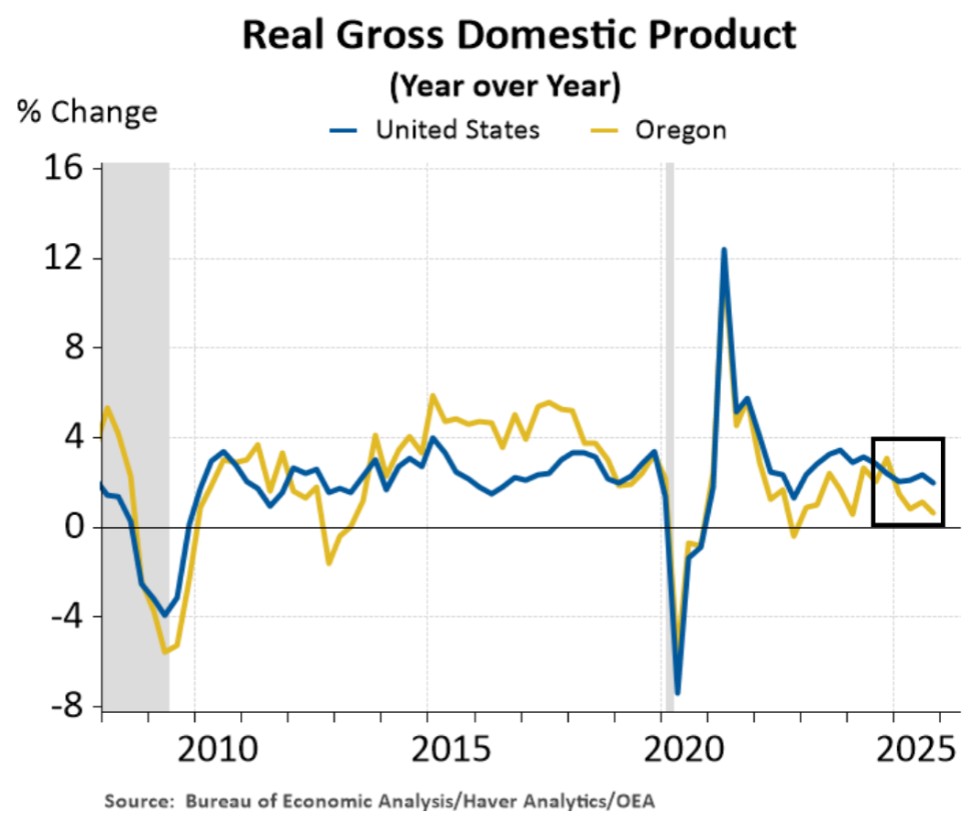
The Economic and Revenue Forecast presented several pieces of data to support the forecast, including this chart showing that Oregon’s GDP growth has trailed U.S. growth by just over 1% in the last year. Photo credit: Carl Riccadonna, Chief Economist, and Michael Kennedy, Senior Economist, Department of Administrative Services, Oregon’s Quarterly Economic and Revenue Forecast, May 20, 2026.


Primary Election Update
Oregon’s May 2026 primary set the stage for a high-profile rematch in the governor’s race, with Sen. Christine Drazan emerging from a crowded Republican field to challenge incumbent Gov. Tina Kotek in November.

The primary also delivered one of the night’s biggest surprises in the Legislature, as Sen. Janeen Sollman (D-Hillsboro) lost her reelection bid to Oregon Department of Education specialist Myrna Muñoz. Sollman, considered a moderate Democrat, was backed by what many described as Oregon’s political establishment, while Muñoz mounted a strong grassroots campaign from the left with significant support from several of the state’s public employee unions. Key issues in the race included land-use policy, tensions surrounding Washington County’s tech-heavy economy, data center growth, and K-12 education funding. Sollman currently co-chairs the Ways and Means Education Subcommittee, and her replacement on the powerful budget panel likely will not be appointed until closer to the start of the 2027 legislative session.

OSU Alumna Rep. Jami Cate (R-Lebanon) lost her attempt to take over the open Senate seat in SD 6 to Jack Tibbets, a rancher, and Lane County Planning Commissioner. He will face dietitian Sierrah Williams (D) in the general election.

Both Corvallis incumbents, Sen. Sara Gelser Blouin and Rep. Sarah Finger McDonald, had uncontested primaries. In the general election, Gelser Blouin will face DoorDash driver Valerie Draper Woldeit (R), and Finger McDonald will run unopposed as no Republican filed for the House seat.

For more on Oregon’s primary election results, OPB has a complete listing.

Innovation in Action: OSU Welcomes Leaders to Legislative Showcase

Oregon State University President Jayathi Murthy welcomed policymakers and their staff to its Corvallis campus on May 27, 2026, for its inaugural Legislative Showcase, a new event designed to highlight the university’s statewide impact. The Showcase centered on OSU’s leadership in economic development and research excellence, with a particular focus on the food and beverage industry and cutting-edge robotics innovation. Attendees experienced immersive tours of the Collaborative Robotics and Intelligent Systems Institute and OSU’s renowned food science facilities, known for producing the popular Beaver Classic line of products.

Throughout the day, faculty, students, and university leaders shared insights into their work and the partnerships that drive OSU’s contributions across Oregon. At lunch, Provost and Executive Vice President Roy Haggerty talked about OSU’s strategic plan Prosperity Widely Shared and how it aligns directly with the state’s priorities: innovation that matters to Oregon, opportunities for every student, and economic development statewide.

The event underscored OSU’s mission as the state’s land-grant university, expanding access to education while advancing research that supports industry and communities. By bringing together legislators and campus innovators, the Showcase offered a meaningful opportunity to strengthen collaboration and communicate the university’s vision for the future, reinforcing its commitment to serving all Oregonians through education, discovery, and engagement.
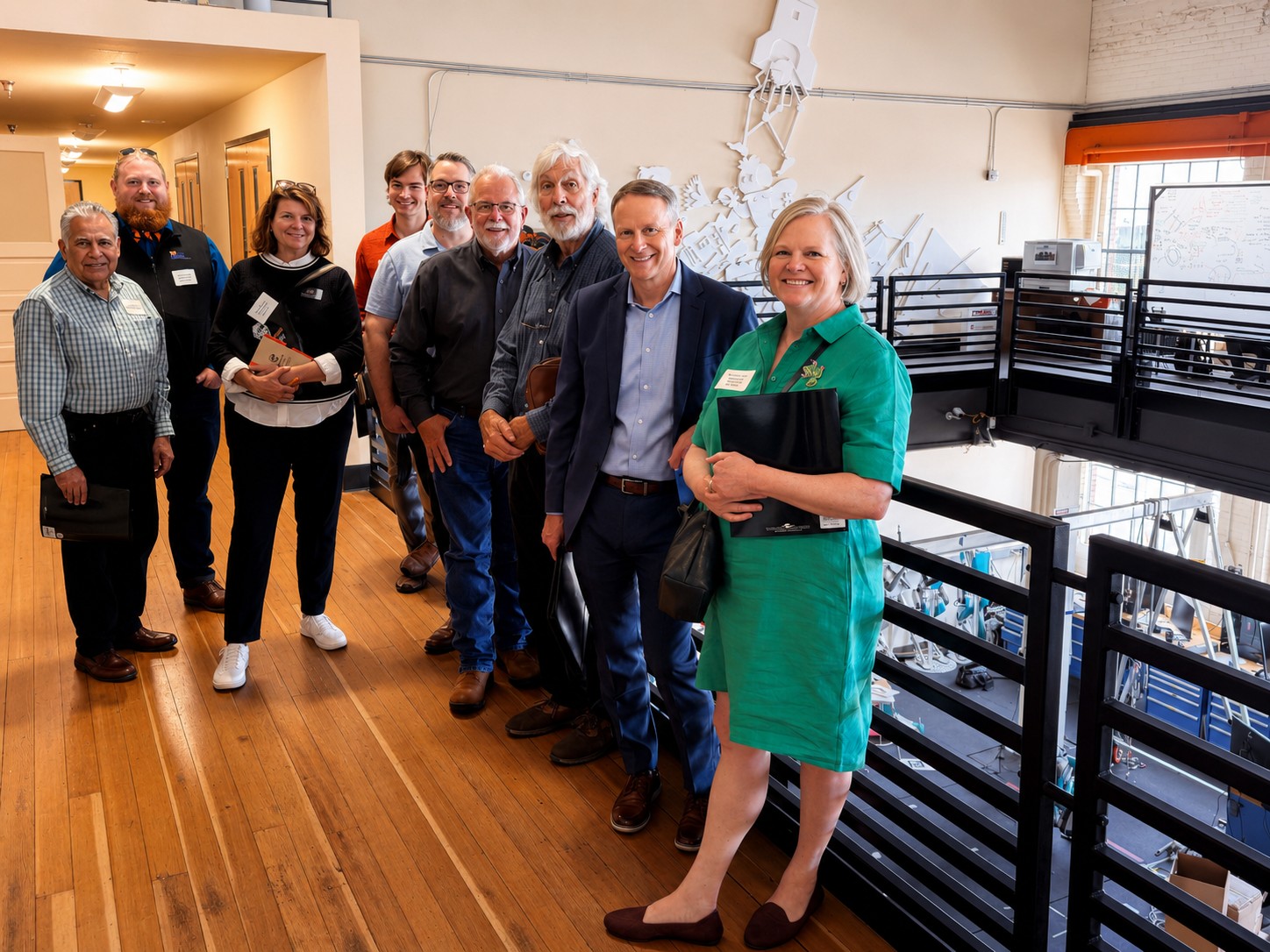
Legislative Showcase participants enjoying the OSU robotics lab. Left to right: Corvallis City Council President Tony Cadena, Benton County Commissioner Gabe Shepherd, Rep. Jules Walters (D-West Linn), Chris Stuckart, Dan Balm, Rep. Matt Bunch (R-Canby), Benton County Commissioner Pat Malone, Corvallis City Manager Mark Shepard, Rep. Sarah Finger McDonald (D-Corvallis).
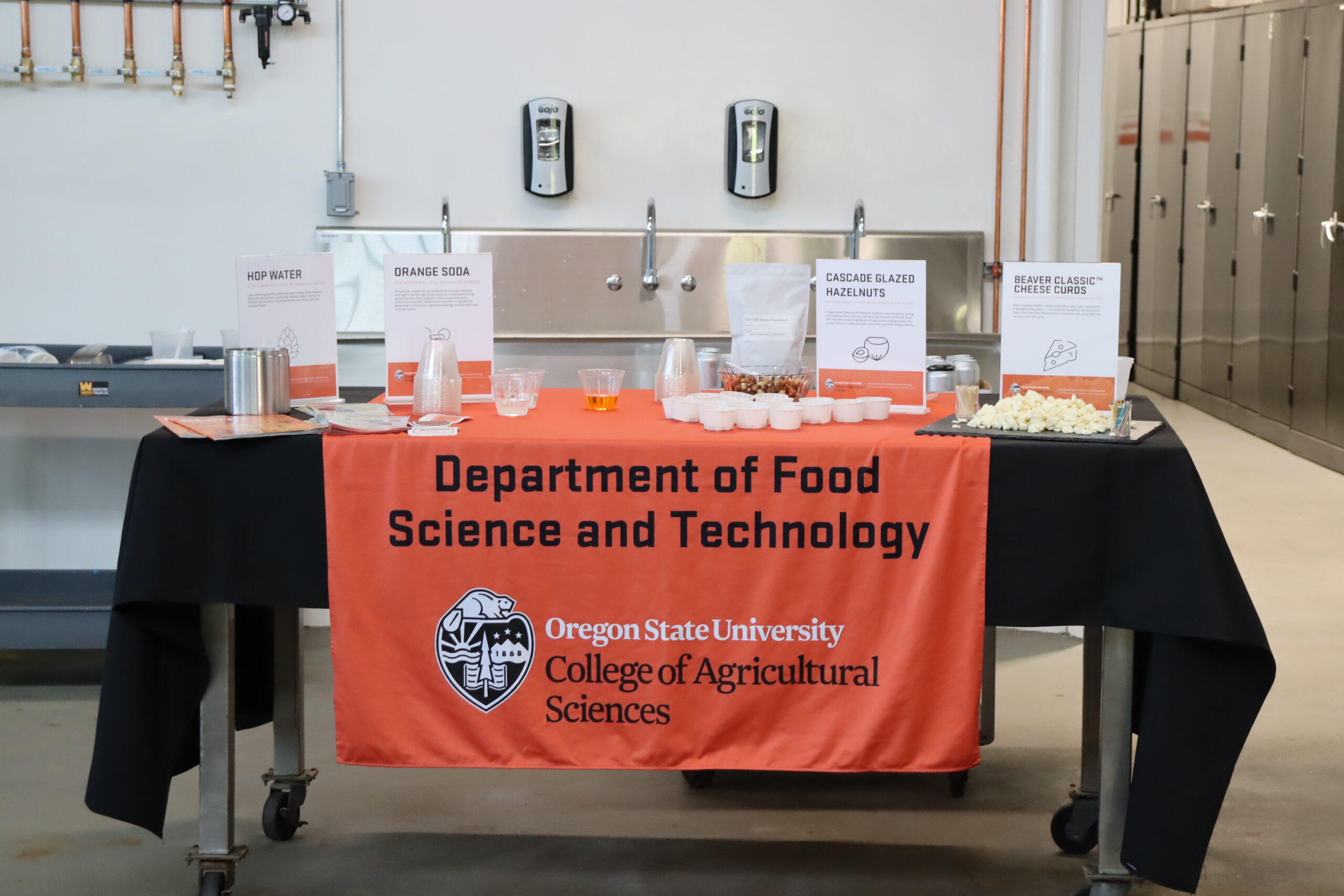
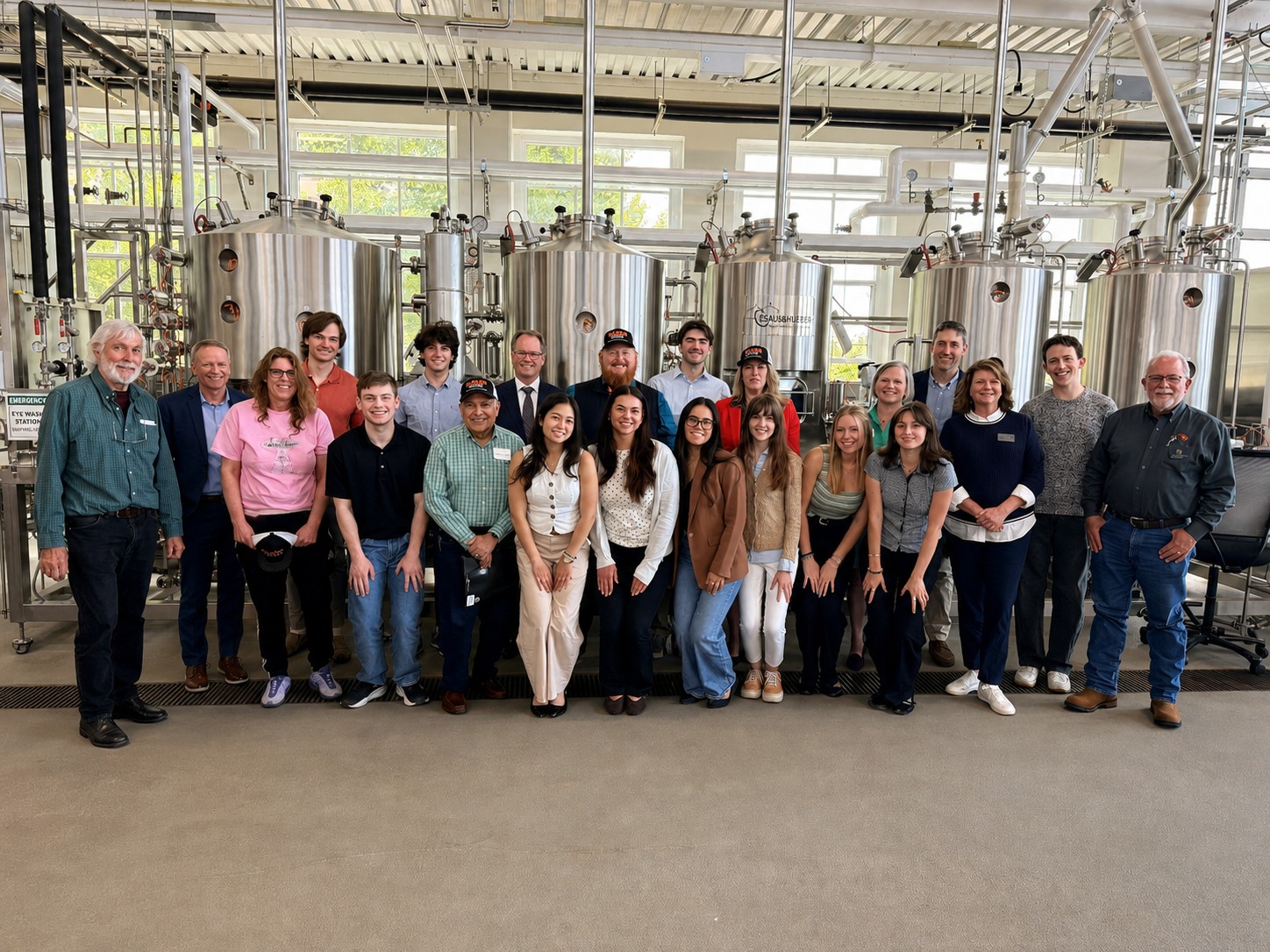
The OSU Research Brewery highlights food and beverage innovation through its work in pasteurization and packaging science. OSU’s University Legislative Scholars served as table hosts for Benton County commissioners, City of Corvallis city councilors and staff, legislators, and OSU faculty and administrators during lunch.

https://foodsci.oregonstate.edu/osu-research-brewery: OSU Government Relations Newsletter

Tribal Relations Events By: Chance White Eyes, PhD, Director of Tribal Relations

On May 16, Oregon State University celebrated its 47th Annual Pow-Wow at Gill Coliseum. The event was presented by the Native American Student Association and kaku-ixt mana ina haws (Native American Longhouse) in collaboration with the Division of Student Affairs and other university partners.

The Pow-Wow featured traditional dancing, singing, and drumming by Indigenous community members from across the region. With two grand entry sessions—one beginning at 1 p.m. and another at 6 p.m.—guests had the opportunity to experience the rich cultural traditions represented by the 13 drums in attendance and the dancers wearing traditional regalia. Attendees also enjoyed a vibrant marketplace featuring vendors offering authentic Native American arts, crafts, and other goods. This was a way that Oregon State University partners could demonstrate their commitment to supporting Indigenous communities.

On May 16, the kaku-ixt mana ina haws hosted the annual Salmon Bake to celebrate Pacific Northwest salmon culture!

The event was organized by kaku-ixt mana ina haws (OSU’s Native American Longhouse) alongside the Native American Student Association. The event typically takes place in mid-May each year, aligning with the university’s annual łatawa ina Pow-Wow. The meal is always free and open to the public.

The event features an open-pit-style bake in which salmon is cooked over cedar logs using traditional intertribal preparation methods. The fish is ethically sourced directly from Indigenous tribal fishers to support native economies.

June 30, 2025

Welcome to the OSU Government Relations Newsletter.

With this communication, we’ll highlight some of the work conducted by the office, updates from the state legislature and congressional delegation, university engagements with elected officials, and other OSU news. The newsletter will be sent at least quarterly. We encourage you to share this newsletter with your colleagues. They can also sign up by using this link.


Rep. David Gomberg celebrated OSU Lobby Day with Elise McClure, Audrey Schlotter, Jen Humphreys, Emma Böwadt, Grady Goodall, and Erica Fleishman.

2025 End of Session Report: Economic Uncertainty Shapes 2025 Legislative Priorities in Oregon

Each legislative session has a different feel and focus. In 2025, the legislative leadership was focused on managing a record number of nearly 3,500 bills, balancing a budget under a time of great financial uncertainty for the state and passage of a transportation package to fund road improvements.

The May 2025 economic forecast, used to shape the state’s next biennial budget, delivered sobering news. For the first time in years, Oregon’s Office of Economic Analysis projected a decline in expected quarterly revenue, with over $700 million less than previously forecast. Additionally, unpredictable market conditions and unresolved questions around federal tariffs have made forecasting especially difficult. This budget uncertainty negatively impacted the fate of most bills that had a fiscal impact.

Still, the revenue outlook for the upcoming biennium remains 12% higher than the last, underscoring the volatility of the current economic landscape. Most of this revenue was used for covering agency continuing service level increases, K-12 State School Fund increase, housing and behavioral health investments, and a larger than normal ending fund balances.

While the passage of a transportation package was a known legislative leadership priority for the session, progression for the bill (HB 2025) was not seen until late into the session. The package was needed to address both a $400M budget gap at Oregon Department of Transportation and cover transportation project cost escalations. Hearings on the package, which Republicans deemed as the largest tax increase in Oregon history, were tense and proceeded with some committee members being replaced or resigning from the committee assigned to hear the bill. While a scaled down version of HB 2025 passed out of committee, it did not have either enough time or support to be brought to a floor vote.

With the federal budget not being finalized before the Oregon Legislature adjourned and continued need for a transportation package, speculation is already swirling around the possibility of a special session to address emerging fiscal concerns.

Investments in Oregon’s Public Universities

The 2025 legislative session concluded with investments in public universities maintained at current service levels (7%) and mostly aligning with the Governor’s Recommended Budget. While these investments fell short of what the public universities had advocated for all session as their necessary base funding, the Legislature faced a particularly tight budget environment shaped by ongoing economic uncertainty and competing statewide priorities.

OSU was able to secure critical investments to support our mission of education, research, and public service across the state. However, key priorities requesting investments in the Carlson College of Veterinary Medicine, the University Innovation Research Fund, early childhood education, and capital projects on OSU campuses fell short. This session underscored the difficult balancing act of maintaining core services while navigating a flat revenue forecast and a “sluggish but stable” economic outlook.

$1,068.8M for the Public University Support Fund. Continued service level funding (+7% from 2023-25) to support the educational and operational expenses at Oregon’s public universities. The 2025-27 allocation represents a smaller increase than requested by the universities and does not fully cover rising operating costs. This number is reflected in the budget model that OSU used in developing our FY 26 budget.

$329.4M for the Oregon Opportunity Grant. Continued service level funding (+7% from 2023-25) to provide tuition support to more than 30,000 Oregon resident students each year. Additionally, HB 3025 updates OOG awarding language to remove outdated and unused methodology, close a gap in financial aid award eligibility for students who are eligible for all other forms of state aid, allow HECC to award financial aid on a scale that better accounts for student course loads, and create the possibility of awarding financial aid for both credit and non-credit certificate programs.

Continued funding for benefits navigators, who assist public university students resolve food insecurity, housing instability, and challenges affording and accessing textbooks, transportation, childcare, among other basic needs. Funding for benefits navigators had not been included in the Governor’s recommended budget, and student advocacy was instrumental this Session in ensuring the investment.

$18.9M for Sports Lottery. The Lottery Funds allocation for each public university to support intercollegiate athletics (+2.9% from 2023-25) received the same percentage distribution formula that has been used since 2019-21: $1.38M for OSU, which reflects a 7.3% distribution from the fund.

$26M for the Oregon Tribal Student Grant. The Oregon Tribal Student Grant pays for most or all public college-related expenses—including tuition, housing, books, and other costs not covered by other grants—for eligible students who are enrolled members of Oregon’s nine federally recognized Tribes.

$120M for capital improvement & renewal. A $20M increase. This CI&R funding is allocated to the seven public universities by HECC using education and general square footage and a density factor.  Funding is intended to help maintain existing facilities and manage deferred maintenance backlogs, with a focus on modernization, code compliance, safety, and accessibility.


HECC Budget Note. A budget note directs an agency to take administrative and managerial action related to the agency’s execution of its biennial budget. They are of limited scope, not intended to circumvent, supplant, or replace other substantive or policy measures or law. HECC’s budget contained an unprecedented, lengthy budget note that lumped the complexity of each university’s financial and operational situation into one narrative that does not correctly reflect all seven universities and directs HECC to conduct in consultation with universities a comprehensive review of university spending, efficiency, and revenue strategies to inform future funding models and ensure that public universities can continue to deliver quality education while remaining financially viable.

Investments in Oregon State University and Other Programming

$244.6M for Statewide Public Service Programs (7% increase) to sustain core mission programs and services of OSU Extension Service, Agricultural Experiment Station, and Forest Research Lab. The OSU “Statewides” are a core component of OSU’s land grant mission by integrating state-of-the-art research and community-based education.

$66M for Public University State Programs (7% increase) for 21 public university projects of specific interest to the state of Oregon. The State Programs through which OSU will receive funding include the TallWood Design Institute, Fermentation Science, the Oregon Cybersecurity Center of Excellence, Ocean Vessels Research, Institute for Natural Resources, Oregon Climate Change Research Institute, Oregon Climate Service, the Veterinary Diagnostic Lab, Environmental Justice Mapping Tool, Juniper Removal Program, Engineering Technology Sustaining Funds, and Signature Research.

$410K to study PFAS in biosolids. HB 2947 directs the Extension Service and the College of Agricultural Sciences of Oregon State University to study the distribution and occurrence of perfluoroalkyl and polyfluoroalkyl substances (PFAS) found in biosolids applied to agricultural fields that do not produce crops intended for human consumption.

$48M for Outdoor School. In 2016, voters approved Ballot Measure 99, which allocated 4% of lottery funds towards Outdoor School and designated OSU Extension as the program administrator. The legislature reduced the budget $12M below the 4% voter approved allocation, which will have a direct impact on 5th and 6th graders Outdoor School experience throughout the state.

Behavioral health promotion. SB 920 directs the OSU Extension Service to oversee a project that convenes local committees from across the behavioral health sector to develop a behavioral health promotion plan and facilitate community conversations about mental health and substance abuse. No direct state investment toward this project.

Lumber grading training. SB 1061 requires the director of the OSU Extension Service to establish a lumber grading training pilot program for small woodland and sawmill operators. No direct state investment toward this project.

Farmworker research. HB 2548 funds the Center for Public Service at PSU to conduct, in consultation with OSU, a study examining the labor standards and working experiences of farmworkers in Oregon, and to integrate the study findings with a study conducted by the Legislative Policy and Research Office relating to the labor standards in the agricultural industry.

$200,000 to operate the AgriStress Helpline. Established by the Legislature in the 2023 and administered by OSU Extension. AgriStress is a free, 24/7 crisis hotline administered by OSU’s Extension Service for the state’s agricultural and forestry communities, including farmers, ranchers, fishermen, foresters, and their families.

Legislation Affecting All Public Universities

Name, image, and likeness. HB 3694 modifies Oregon’s NIL statutes to conform with the House v. NCAA settlement agreement by permitting institutions to directly compensate student athletes or prospective student athletes for the use of their name, image, likeness, or athletic reputation. Takes effect on passage.

Sexual misconduct reporting. HB 3731 requires additional data (e.g., allegations of sexual misconduct toward unknown persons; the types of violence reported) and narrative sections to be included by institutions of higher education in their annual report to the HECC and others regarding allegations of sexual misconduct and violence on the campus of the institution.

Resident tuition for asylum seekers. HB 2586 adds “asylum seeker” to the list of noncitizens who qualify for an exemption from nonresident tuition and fees at public universities. This action builds on previous legislation that granted resident tuition to certain immigrant groups, including refugees and special immigrant visa holders.

Veterans’ tuition benefits. HB 3920 modifies the Veterans’ Dependent Tuition Waiver, available for dependents of disabled or deceased service members and Purple Heart recipients. It raises the age by which a dependent child can apply for the waiver from 23 to 31, removes the requirement that qualified students apply for a master’s degree within 12 months of receiving a baccalaureate degree to receive a tuition waiver for a master’s degree, and allows an exemption to the age limit for anyone qualifying for the federal Survivors’ and Dependents’ Educational Assistance program. Also, HB 798 provides out-of-state members of the Oregon National Guard with in-state tuition and other higher education benefits.

Other Investments of Interest

$4M for Osborn Aquatic Center. The Corvallis School District will receive the funds for the Center’s structural rehabilitation project. While the Aquatic Center has been closed, many programs and classes have been utilizing OSU facilities.

Investments in housing infrastructure. Among the investments is $4M for Adair Village wastewater infrastructure that will allow for housing expansion into that community.

$15M for the Universal Representation Fund. The URF is a statewide universal representation program to provide certain immigration services including legal services, access to community-based navigators, and referral coordination. OSU students have utilized this program when facing immigration challenges.

$3M in additional funding for Centers of Innovative Excellence grants. These public-private partnerships focus on supporting innovation within emerging or established sectors of importance to the state’s economy. $4.6M for juniper control project. The Legislature expanded a 2023 adopted project by including additional areas and resources for local soil and water conservation districts (SWCD) to control juniper encroachment into watersheds. OSU serves as a technical resource for SWCDs and was funded for our continued work.

For further information, questions, or to flag specific issues or actions of interest, please reach out to Katie.Fast@oregonstate.edu or Katheryn.yetter@oregonstate.edu.


Additional Updates

Welcome to the OSU Government Relations Newsletter.

With this communication, we’ll highlight some of the work conducted by the office, updates from the state legislature and congressional delegation, university engagements with elected officials and other OSU news. The newsletter will be sent at least quarterly. We encourage you to share this newsletter with your colleagues. They can also sign up by using this link.

OSU Provost Ed Feser joined a roundtable discussion with U.S. Representative Suzanne Bonamici and Oregon higher education leaders at the Patricia Reser Center for the Arts (PRAx) to discuss the federal landscape.

State Relations

On March 19, the Ways & Means Co-Chairs, Senator Kate Lieber and Representative Tawna Sanchez, released their 25-27 Budget Framework. It broadly outlined the conservative two-year spending plan, which was mostly a current service level budget that left a balance of $987 million. These remaining funds would be utilized for “only the most critical investments.”  

Looming over the state budget is uncertainty around the outlook for federal funding – which makes up about a third of the state budget. The $987 million balance could also be used to bridge potential federal reductions. 

Higher education, including the Public University Support Fund and the Oregon Opportunity Grant, received a 7-7.5% increase. This amount represents the continuing service level for universities determined by Department of Administrative Services. The framework that was released will serve as the basis for legislators to build the state budget fund. The 25-27 budget will be officially crafted based upon the state May 14 revenue forecast. 

Public universities, including OSU, will present their funding priorities to the Ways & Means Subcommittee on Education during hearings on April 17, 21, and 22. These discussions will provide critical input as lawmakers shape the 25-27 Legislatively Approved Budget. Key items on OSU’s agenda include support for the Statewide Public Service Programs, Outdoor School, and State Programs such as the Oregon Cybersecurity Center of Excellence.  

Oregon’s future relies on its public universities to do more than solely educate students. They power our economy, fuel research, and strengthen our communities. They train future teachers, engineers, nurses, and business leaders — people who keep Oregon running. In partnership with the other public universities, OSU is asking the state for a $1.275 billion investment in the Public University Support Fund, and $150 million for the Oregon Opportunity Grant

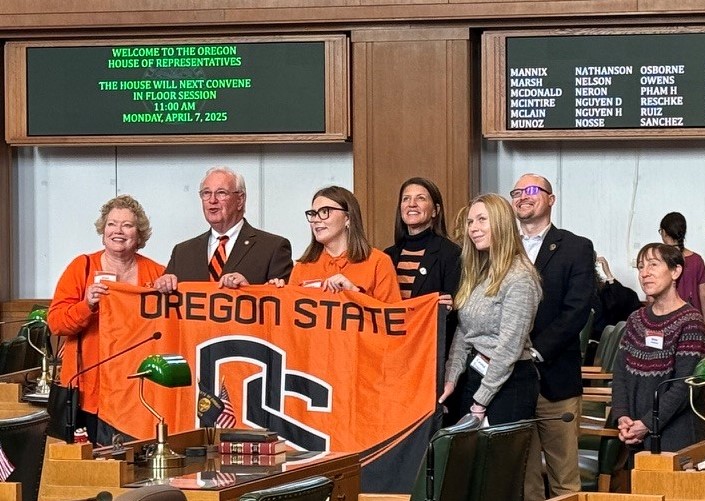
On March 5, supporters of OSU Extension, the Agricultural Experiment Station and the Forest Research Lab joined OSU leaders at the State Capitol to advocate at OSU Statewides Day. Representative Greg Smith brought 4-H Ambassadors and other participants onto the House Floor for a behind the scenes experience.

In every long session, Ways and Means committee members travel around the state to hear from Oregonians on budget priorities. These “road shows” present an opportunity to advocate for public university funding priorities through public testimony. Please consider attending and signing up to support investments in the Public University Support Fund, the Oregon Opportunity Grant, OSU Statewides and OSU’s capital improvement requests for the STEM Learning Center and OSU-Cascades. You can review specifics of OSU’s current asks here. These events are likely to be well-attended and persons signed up to testify will be selected at random. 

The dates and locations of the community budget hearings are:  

Astoria | Friday, March 28 (5-7 p.m.) 
Liberty Theatre Astoria 
1203 Commercial Street, Astoria, OR 97103 
Register to testify 

Warm Springs | Friday, April 4 (5–7 p.m.)  
Old Warm Springs Elementary School 
1112 Wasco Street, Warm Springs, OR 97761 
Register to testify 

La Grande | Friday, April 11 (5–7 p.m.) 
Eastern Oregon University, Hoke Union Building #339 
1 University Boulevard, La Grande, OR 97850 
Register to testify 

Salem | Wednesday, April 16 (5–7 p.m.) 
Oregon State Capitol Building, Hearing Room F 
900 Court St NE, Salem, OR 97301 
Register to testify 

Klamath Falls | Friday, April 25 (5–7 p.m.) 
Klamath Community College, Building 4 Commons 
7390 South 6th Street, Klamath Falls, OR 97603 
Register to testify 

On February 26, Oregon state economists Carl Riccadonna and Michael Kennedy presented the March 2025 Economic & Revenue Forecast. As anticipated, the forecast showed little change from November 2024’s outlook, pointing to continued growth, though at a slower pace. 

The revenue forecast plays a critical role in guiding OSU’s legislative strategy. Each session, OSU submits a range of funding requests, and the forecast helps assess the likelihood of success. According to the March forecast, the legislature will have approximately $38 billion to allocate this session—an increase of $350 million from November’s projection.   

Despite the slightly improved revenue forecast, the legislature faces significant challenges. Federal funding reductions are expected to create gaps in funding for essential state services, leaving uncertainties about the level of state support needed to fill these shortfalls. OSU has been asked to present several funding scenarios outlining how its requests could be adjusted if necessary.

Legislative Dates of Importance

  • April 3 | OSU Lobby Day & Legislative Reception 
  • April 9 | Deadline for Bills to Move Out of 1st Chamber Committee
  • May 5 | OSU-Cascades Lobby Day 
  • May 14 | Revenue Forecast 
  • May 23 | Deadline for Bills to Move Out of 2nd Chamber Committees 
  • June 29 | Constitutional Sine Die 

For further information or questions or to flag specific issues or actions of interest, please reach out to Katie.Fast@oregonstate.edu or Katheryn.Yetter@oregonstate.edu.


Federal Relations

We are fully underway with the Trump administration and a new-look 119th Congress with Republican control in both chambers. The administration has been driving efforts to implement sweeping changes across the federal government to reconsider what government does, how it does it, and who does it, with goals for significant budget savings. Many administration-led efforts impact federal research and education enterprises and are direct interest to universities. OSU Federal Relations has been working closely with university leaders as we navigate this dynamic federal environment with a focus on issues and funding resources important to our mission and community. 

The amount of activity at the federal level this past quarter has been significant – below are some select updates for awareness: 

  • Presidential actions: There have been a flurry of Presidential actions and administration-led changes to federal agencies over the past two months with a complex array of court challenges in response. Most recently, on March 20, President Trump signed an executive order to dismantle the Department of Education. A full closure and transfer of responsibilities, like the federal financial aid enterprise, would require congressional action. 
  • Federal funding legislation enacted for the remainder of the federal fiscal year: Congress enacted legislation on May 14 to fund the government through September 30 at levels relatively similar to federal fiscal year 2024. While the legislation makes $13 billion in cuts to non-defense research and education agencies, the cuts are managed by focusing the impacts on eliminating earmarks and otherwise effectively provides level funding for non-defense agencies. Defense agencies have an overall increase of $6 billion in funds with no meaningful change expressed for basic research but modest reductions to applied research programs. Of note, however, the funding bill does not also provide the administration with an “explanatory statement” that typically accompanies a spending bill – this is the source of additional detail on congressional intent for allocating funds at the agency or program level. In effect, the spending bill gives the administration more flexibility on the allocation of funds across the federal government compared to fiscal year 2024. 
  • Annual appropriations for fiscal year 2026: With the current fiscal year spending bill completed, Congress can turn its attention to legislation to fund the government for the upcoming federal fiscal year (October 1-September 30, 2026). We expect Congress to start getting work underway in April/May. 
  • Federal budget legislation in progress: Congress and the administration share a priority to enact legislation that would reduce overall federal spending, extend and expand tax cuts and make targeted new investments in defense, energy, and border security. In February, the House passed a budget resolution that provides instructions for further legislation to address these goals. The Senate is now considering the legislation with the instructions. Both the House and Senate have to pass the same bill with instructions and then both chambers will work on developing the legislation to achieve the expressed goals. The bill with instructions passed by the House proposes dramatic cuts of at least $1.5 trillion to the federal government, including at least $330 billion to education programs, likely focused on higher education and child nutrition programs, as well as at least $880 billion to energy and commerce programs, which would require cuts to Medicaid or other entitlement programs. This particular type of legislation, a Budget Resolution, can move through Congress under rules that only requires a simple majority to pass in either chamber. While the majority party in both chambers is sufficient to pass legislation without minority party votes, this is a challenging process that will require much debate and more iterations before anything is complete. 

A huge thank you to OSU colleagues for promoting the university’s impacts and interests on Capitol Hill: 

  • Scott Ashford, dean of the College of Engineering, promoted key strategic initiatives like the Jen-Hsun Huang and Lori Mills Huang Collaborative Innovation Complex to advance cutting edge innovations, as well as COE’s education programs that are developing engineers and leaders for the future. 
  • Staci Simonich, dean of the College of Agricultural Sciences and Kris Elliott, interim vice president for Extension and Engagement promoted OSU’s statewide programs, partnerships across the state with agricultural and other community partners, and the importance of USDA-sponsored research and extension programs for this work. 
  • Karina Nielsen, director of Oregon Sea Grant, Francis Chan, director of OSU’s NOAA Cooperative Institute (CIMERS), and Bob Cowen, associate vice president for research & operations at Hatfield Marine Science Center promoted OSU’s coastal and oceans work and highlighted the important partnerships OSU has with NOAA, EPA and other federal agencies. 
  • Tom DeLuca, dean of the College of Forestry, promoted strategic efforts underway to advance healthy working forests, mass timber innovation and addressing wildfire, as well as the critical importance of federal partners like the U.S. Forest Service for this work. 
  • We also appreciate all the research faculty who volunteer with their professional associations to help inform Congress of the impacts of federally sponsored research (and who give OSU Federal Relations a heads up of their plans in advance!)  

For further information or questions or to flag specific issues or actions of interest, please reach out to Gabrielle.Serra@oregonstate.edu.


OSU in the News

Becky Munn (right), OSU Open Campus coordinator for Multnomah and Washington counties, meets with a student in the College Access Latinx Initiative Center at the Portland Community College Rock Creek campus. Credit: Liz Mota