
Written by Opeyemi Odule
“June 7-12, 2026, I had the opportunity to travel to Seoul, South Korea, to attend the KSWST/SWST International Convention, a joint gathering of the Korean Society of Wood Science and Technology and the Society of Wood Science and Technology. As an M.S. candidate in Wood Science and Engineering at Oregon State University, I went in expecting good science. What I did not fully anticipate was how much the trip would reshape my thinking about my own research and what it means to be part of a global wood science community.
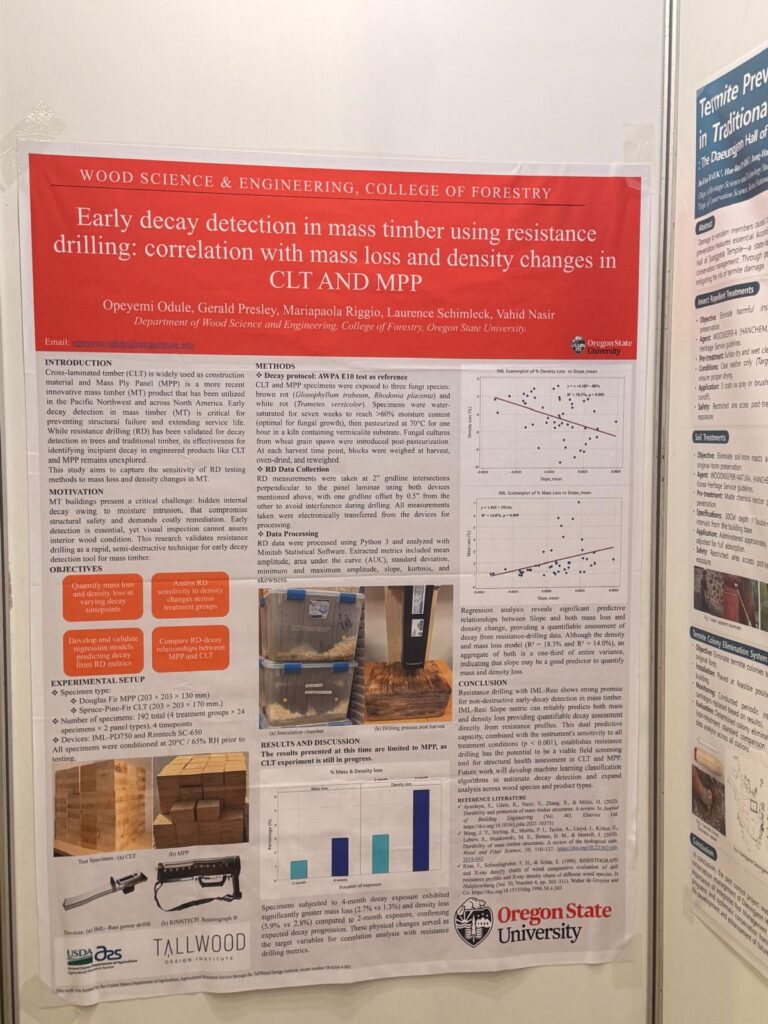
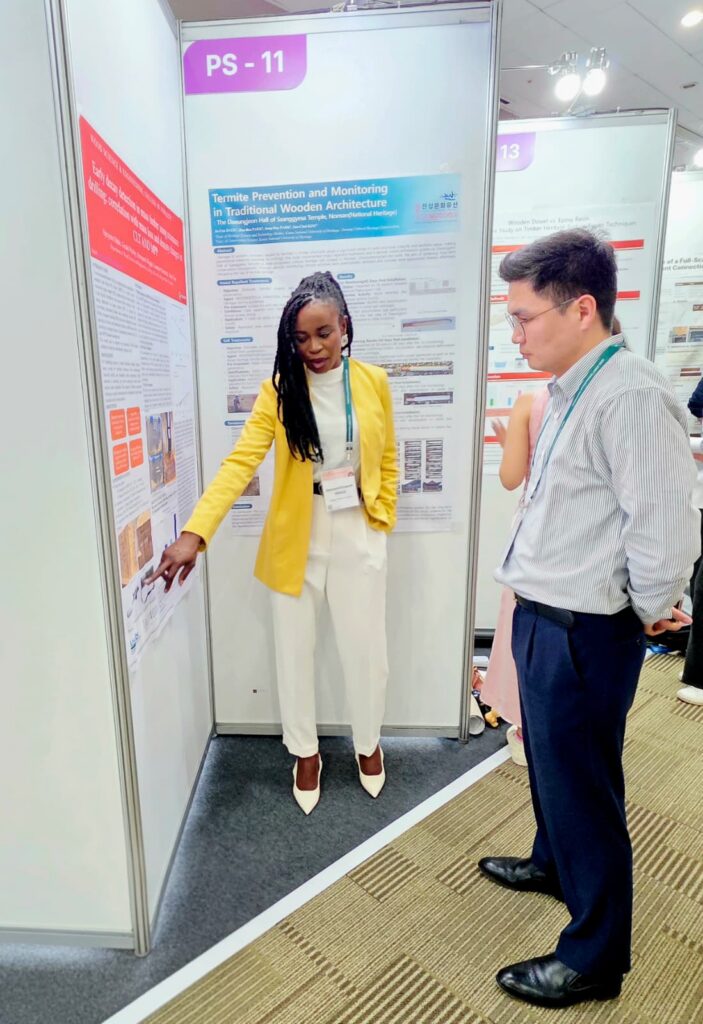
During the conference, I presented a poster titled “Early Decay Detection in Mass Timber Using Resistance Drilling: Correlation with Mass Loss and Density Changes in CLT and MPP”. The research examines whether resistance drilling, a tool traditionally used to assess the internal condition of trees, can reliably flag early-stage decay and delamination in engineered mass timber products before they become structurally significant. I was proud and genuinely surprised to place 3rd in the Student Poster Competition. Standing next to my poster while researchers from institutions across the world stopped to ask questions was one of those moments that remind you why the work matters beyond your own thesis.
The conference sessions were just as valuable as the competition itself. One oral presentation that has stuck with me described a moisture-activated densified wood dowel, a fastening system designed to replace adhesives and metal connectors in mass timber assembly. The phrase itself feels like a contradiction, but the goal behind it is straightforward: reduce formaldehyde emissions from the adhesives currently standard in the industry, without sacrificing structural performance. It was a good reminder that decay detection, my corner of the field, is only one piece of a much larger push toward cleaner, more durable mass timber production.
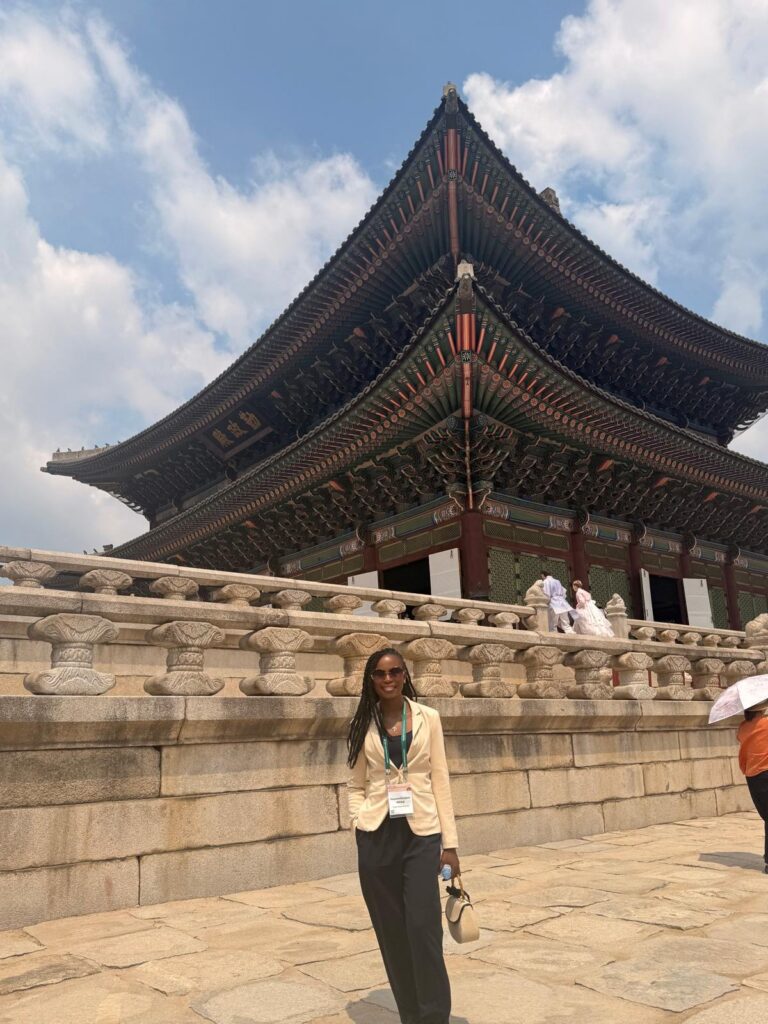
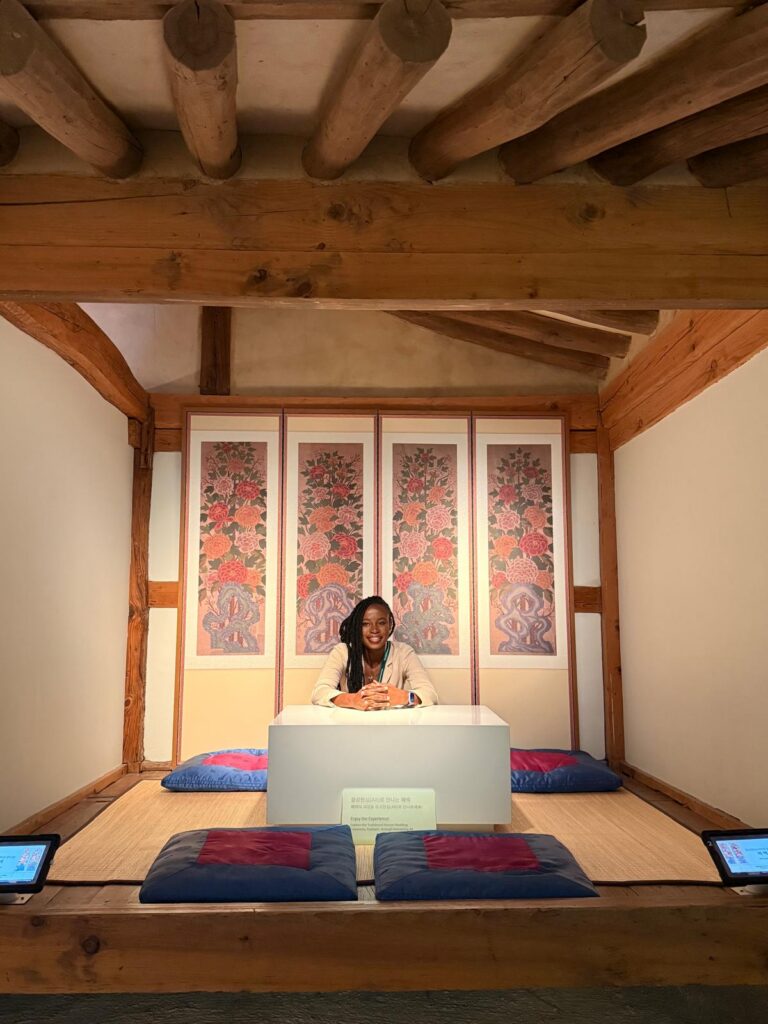
Some of the most interesting parts of the trip happened outside the session rooms. A conversation with one researcher led to a connection with a European research group working on problems remarkably close to my own, a link I would not have found from a literature search alone. I also spent time talking with a Norwegian professor, not just about research, but about what comes after grad school and, inevitably, about food. Conversations like these are the reason conferences matter as much as they do; they build the kind of informal network that shapes a career over years, not just a single presentation.
None of it was entirely smooth. With attendees from dozens of countries, the language barrier was real, and there were moments where explaining a nuance of my methodology took real patience on both sides. It was a useful kind of discomfort, one that pushed me to communicate my research more simply and more clearly than I had before.
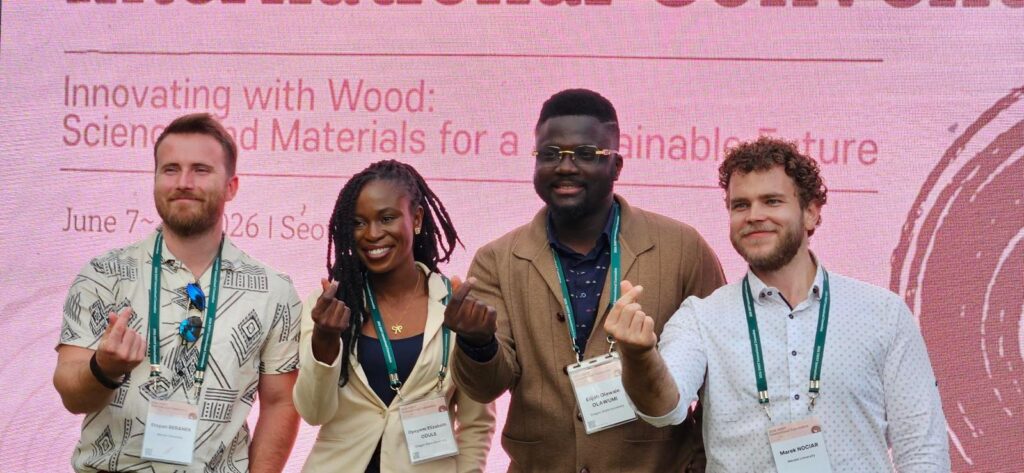
In all, the Seoul experience is one I will carry with me for a very long time. To any student considering an international conference: go in curious, not just to present. The sessions outside your own work are where you realize the field is bigger than your thesis. Believe in yourself!”
Dean’s Fund for International Engagement
The College of Forestry is proud to award Opeyemi Odule the Dean’s Fund for International Engagement to support their participation in this international experience. The College seeks to support students in understanding the global context of their academic studies. For more information about this fund, see our webpage at https://www.forestry.oregonstate.edu/students/scholarships/deans-fund.


