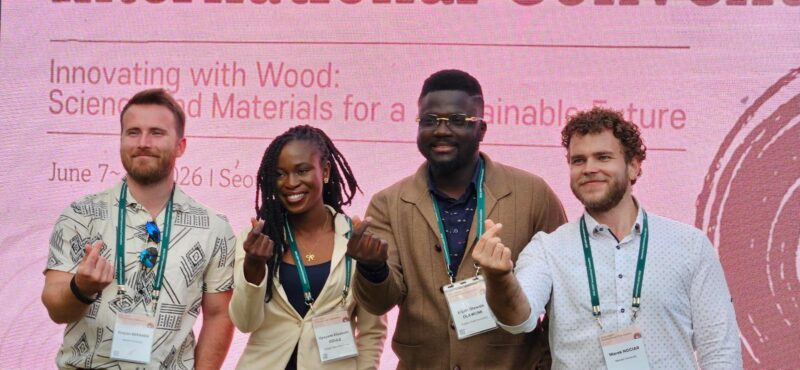
The third annual Microclimate Ecology and Biogeography conference took place on June 1st, 2026, in Montpellier, France. This exciting international event brought together a diverse range of topics and experts on microclimate and its applications in ecology and biogeography.
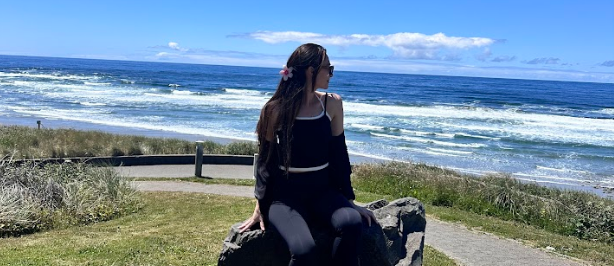
Hannah Sachs, a Master’s student in Betts Forest Landscape Ecology Lab and NSF Graduate Research Fellow, shares their unique experience attending this years Microclimate Ecology and Biogeography Conference.
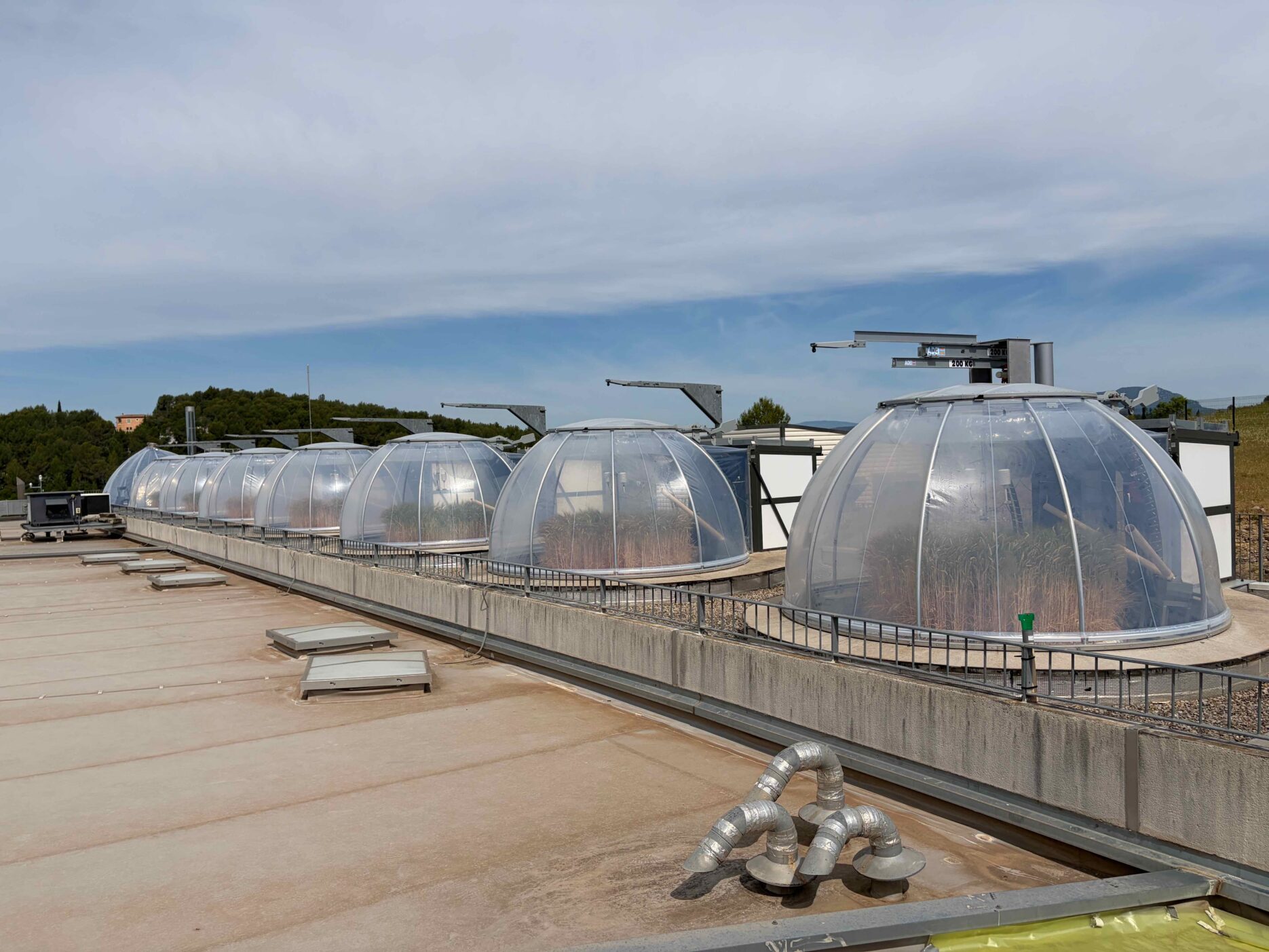
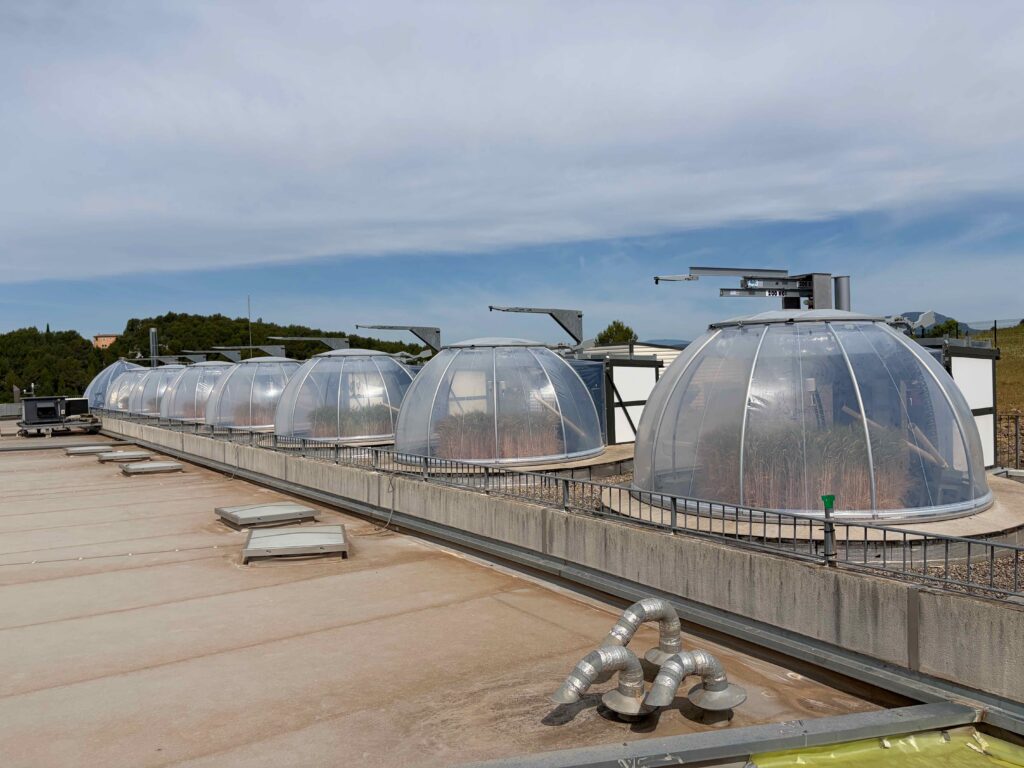
“I arrived during the heat dome in late-May 2026. It was 30°C outside yet, at Ecotron, they were conducting climate-controlled experiments in clear, plastic domes on a south-facing slope. This was the first stop on our field trip to learn about microclimate experiments in the south of France. Ecotron is a facility started and run by engineers working alongside scientists to study climate impacts on ecosystem processes. They have specialized equipment that allows them to manipulate climates to measure specific ecophysiological processes in a controlled environment. One of the experiments we saw required transplanting hundreds of tons of soil into climate-controlled domes (called macrocosms) to study plant water uptake, soil moisture changes, and nutrient fluxes in response to soil type and soil disturbance.
Cirque de Navacelles
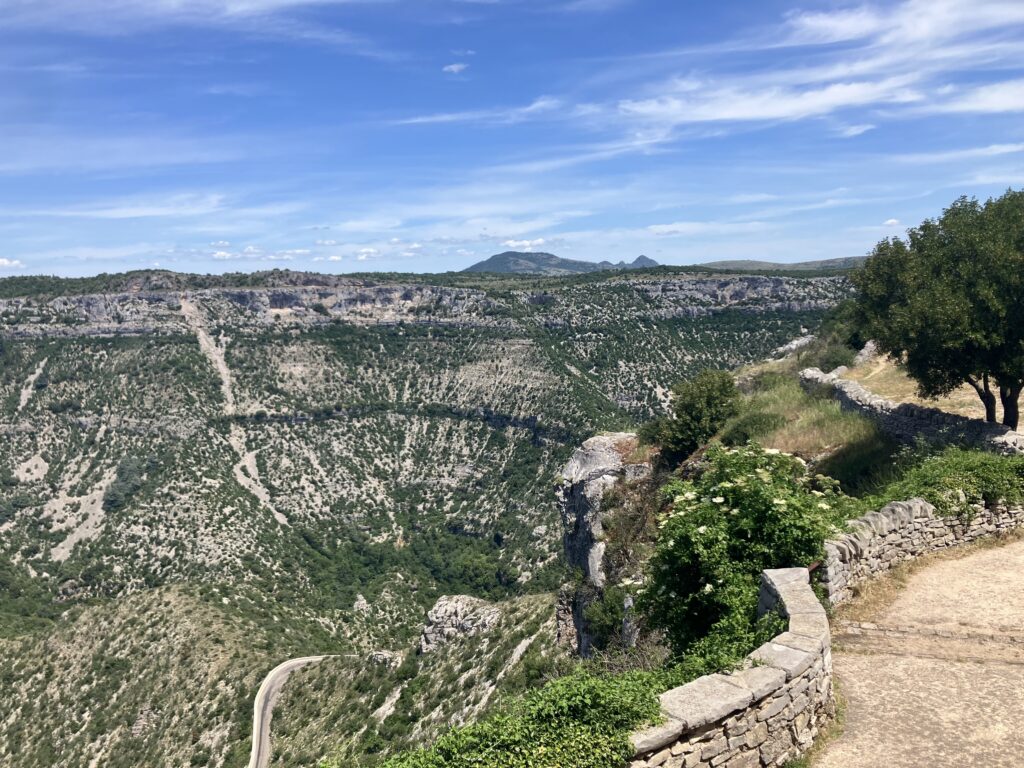
After this stop, we were bussed to an organic restaurant for lunch overlooking the breathtaking Cirque de Navacelles, an ecologically unique canyon containing mediterranean shrublands and mixedwood oak forests. In the hot afternoon, we toured through the forests at the valley bottom, learning about, of course, the microclimates. After all, I was at a microclimate conference!
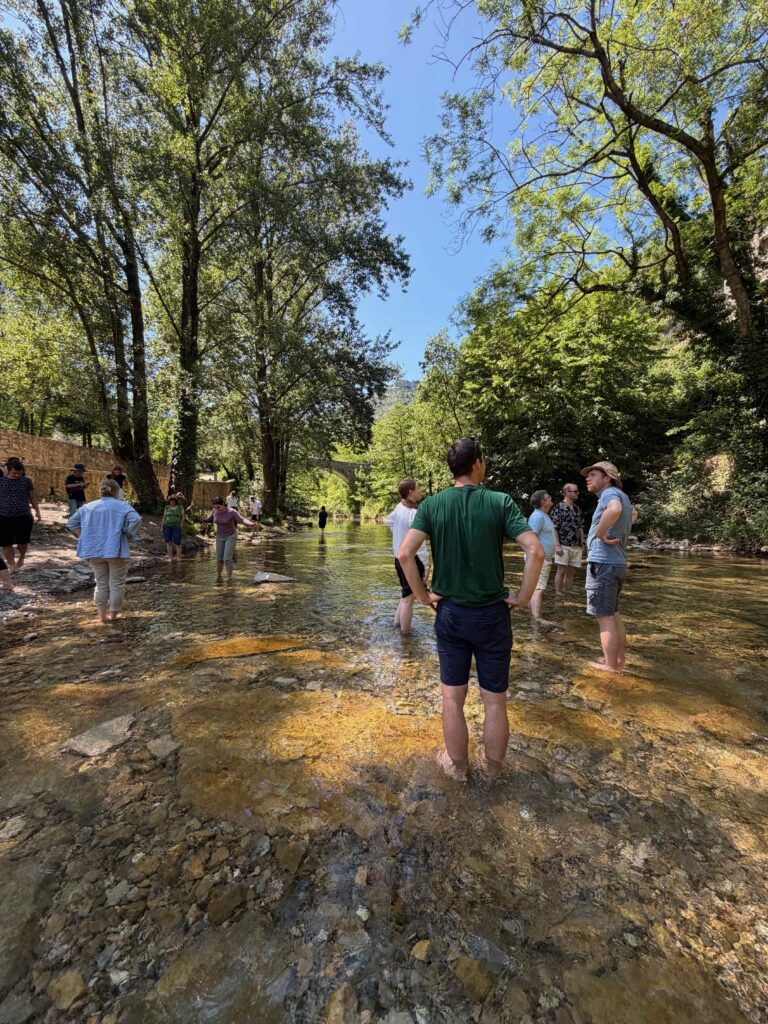
We topped off the first day by dipping our toes in the cool river below before being bussed along the winding countryside roads back to Montpellier.
Research Presentations
That was the start of my week at the 2026 Microclimate Ecology and Biogeography Conference in Montpellier, France, a tight-knit conference attended by many researchers in the field of microclimate ecology. I spent the next four days watching presentations by other graduate students, post-docs, and senior researchers. Topics included soil microclimates, methods in measuring microclimates and mechanistic modelling, aquatic microclimate ecology, and microclimates across forest biomes. There were many talks directly related to my research area, microclimates in a forest management and disturbance context, from which I gained many ideas. However, I also listened to many presentations outside of my field, like the impact of climate warming on microclimates in the Antarctic and urban microclimates and their effects on runners.
As well as listening to numerous talks, I also presented some of my research on the immediate post-fire effects of the Lookout Fire on understory temperatures at the HJ Andrews Experimental Forest. My talk was very well-received, and many were interested in collaborating further. Given that this was my first conference presentation, I was very happy with how it went.
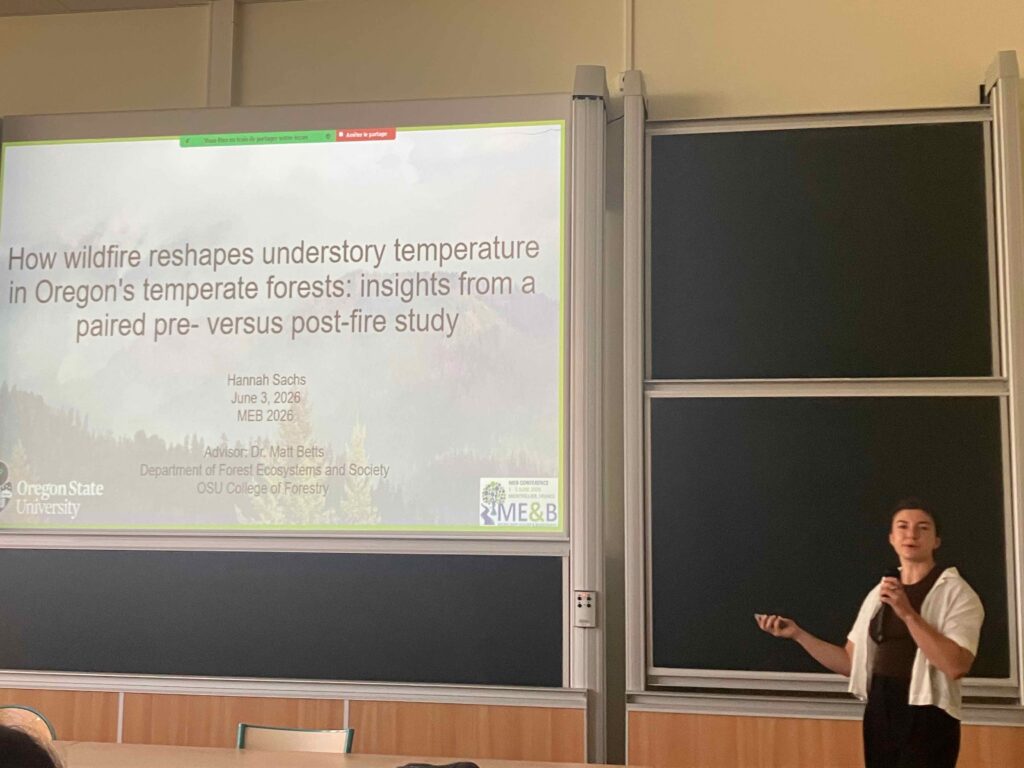
I ended up winning an award for having “clear methods” and the prize was a near-surface and soil temperature sensor!
Exploring Montpellier
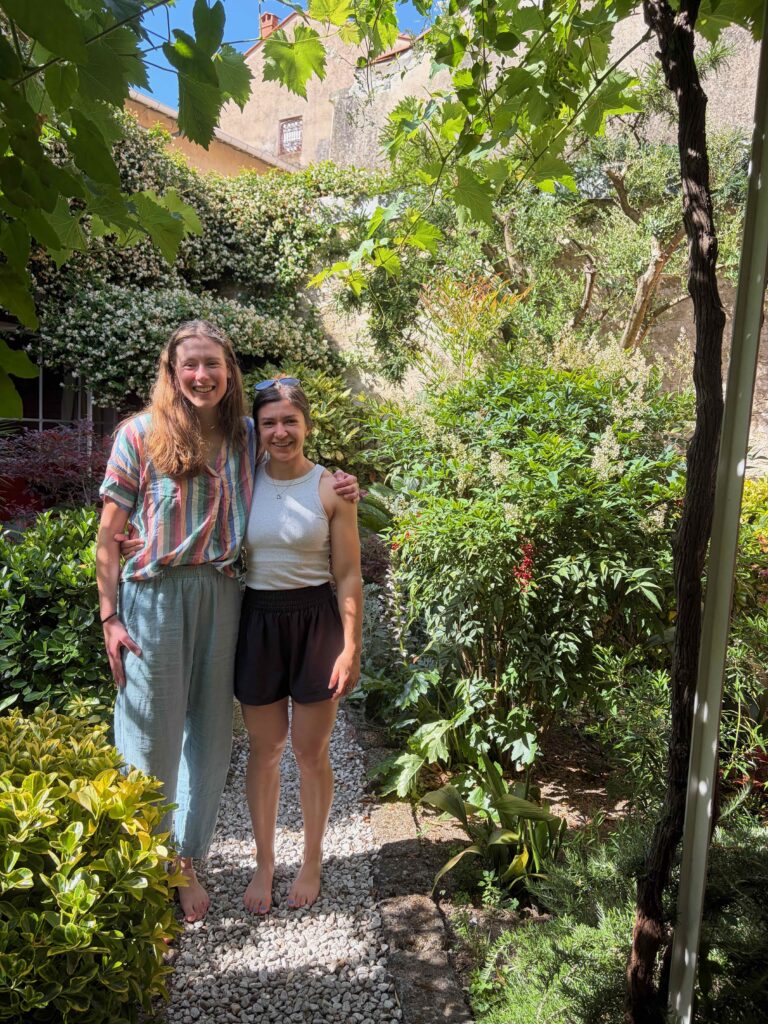
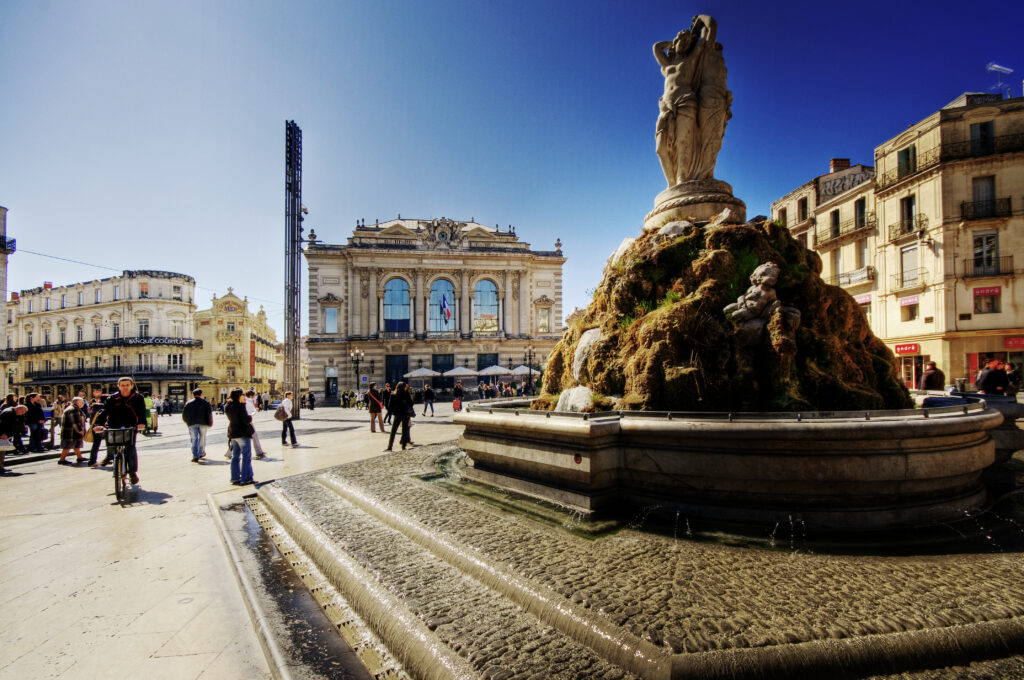
I not only attended the week-long conference but was also able to explore and enjoy Montpellier with my fellow lab mate and post-doc, Amelia. We had a beautiful garden in our Airbnb and we spent our evenings exploring the old city and indulging in local bread, cheese, and treats from the shops in our neighbourhood.
I could not have attended this international conference without the support from my major professor, Dr. Matt Betts, from the College of Forestry, and from my department, Forest Ecosystems and Society. When the opportunities arise, I think that it is very important to broaden our experiences outside of our study systems and meet and collaborate with other researchers away of our home universities. I am extremely grateful for the support that I received to do this and encourage other graduate students to pursue these opportunities as well.”
Dean’s Fund for International Engagement
The College of Forestry is proud to award Hannah Sachs the Dean’s Fund for International Engagement to support their participation in this international experience. The College seeks to support students in understanding the global context of their academic studies. For more information about this fund, see our webpage at https://www.forestry.oregonstate.edu/students/scholarships/deans-fund.