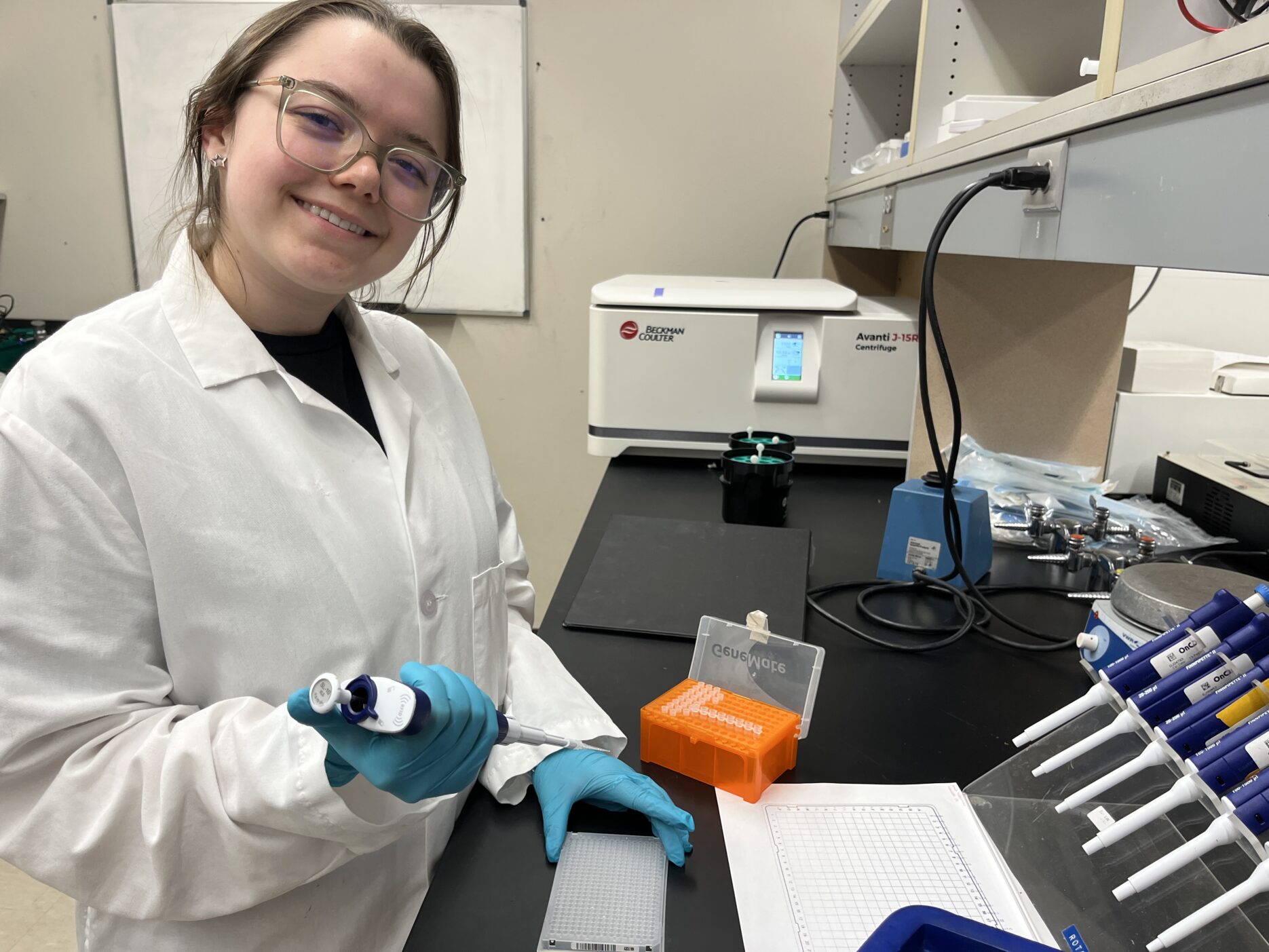
BioResource Research Major, toxicology option, with minors in toxicology, chemistry, and environmental occupational health
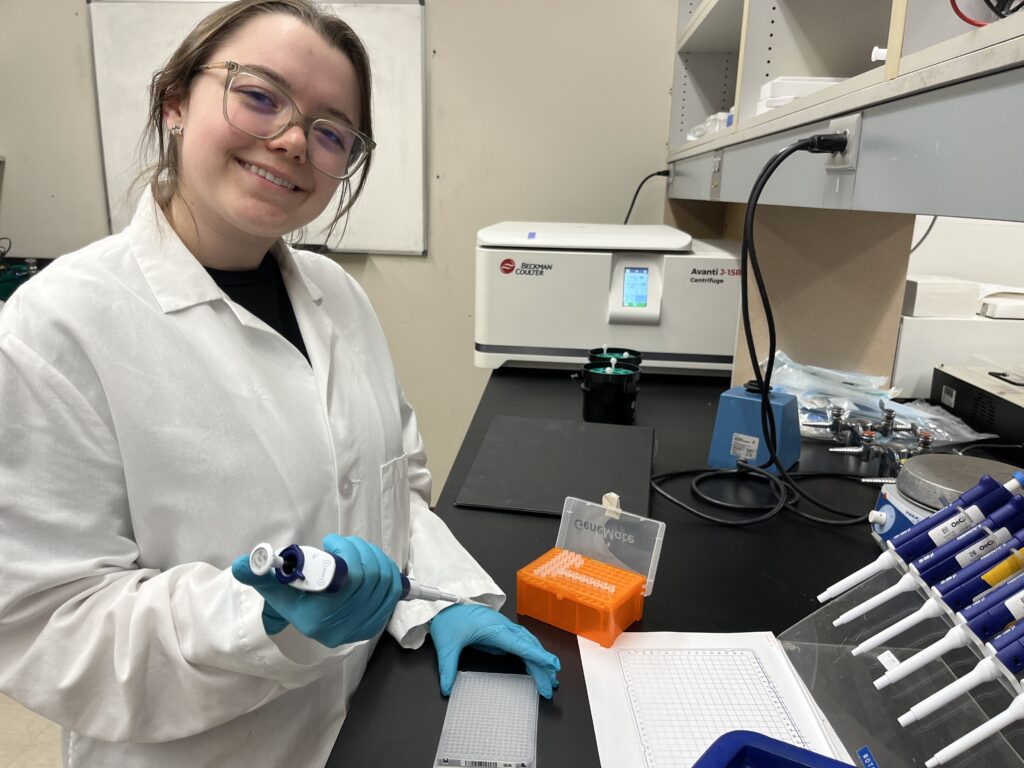
Question: So Maud, what can you tell me about yourself and what drew you to the major?
“Well, I’m a second year BRR student and what kind of drew me to the major is I was an out of state student who was really enthusiastic about research and the scientific process in high school… One of the reasons I was drawn to Oregon State in general was because of their undergraduate research programs and I initially came in as an exploratory student because I wasn’t 100% sure how I wanted to channel that interest. I kept hammering to my exploratory advisor ‘please put [me] in somewhere where I can have a path to research because that’s what I want to do’. So he put me in BRR 100 with a bunch of BRR freshmen and it was really good exposure to the program, to mentors, to people who were very self-assured at a time where I had no idea what I was really going to do. So that kind of pretty much sold me on being part of this major and this path to doing a research project, doing a thesis. So yeah, now I am a BRR major with an option in toxicology, minors in toxicology, chemistry, and I recently added an environmental occupational health minor… I am currently doing a little bit of an unconventional pre-med track.”
Question: Can you tell me a bit about your project and what you would like the average person to understand about your research?
“Yes, so I’m in Dr. Julia Cui’s lab and we are studying the gut microbiome. We’re investigating the gut-brain axis and how inflammation in the gut from exposure to certain toxins, certain chemicals, may cause inflammatory cascades that may worsen the progression of things like Alzheimer’s, which is what my focus is. So investigating this environmental health concern… and you know something that we are exposed to basically everyday as Americans and as people who just come in contact with microplastics on a daily basis. Being able to see like the connection and the real impacts that it may have on us has been super interesting.
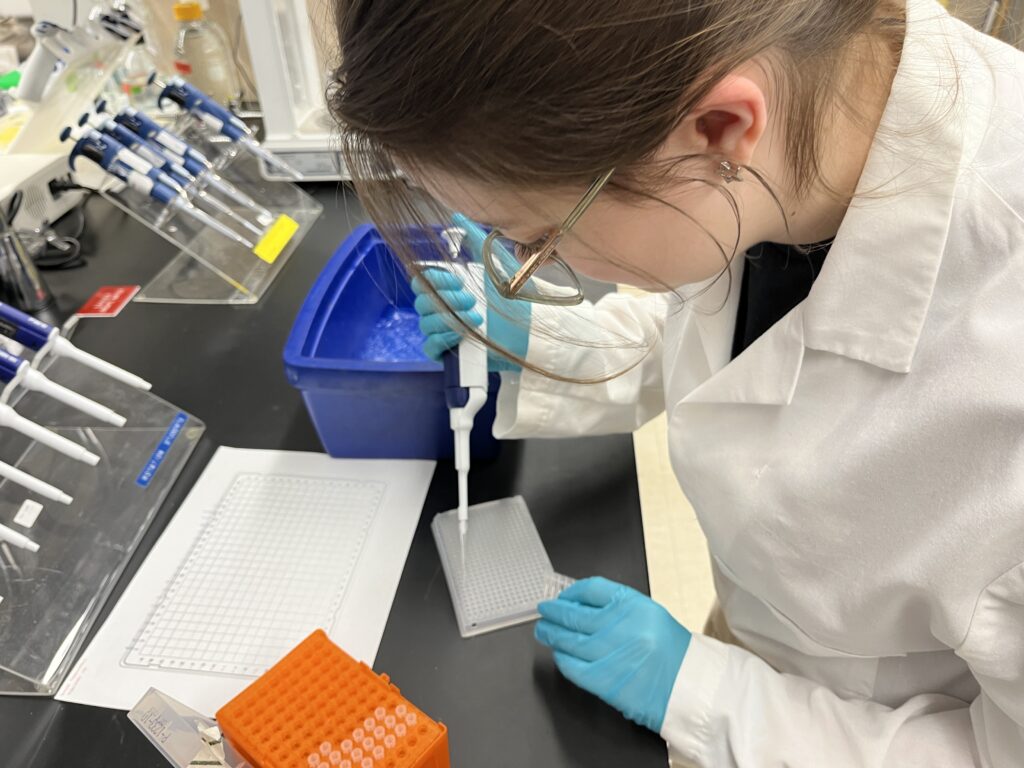
So I am studying mouse models. I’ve been synthesizing mice intestines samples and mice hippocampus [brain] samples, and have just been working to see gene activation and indicators… that could indicate some progression of Alzheimer’s and these like neurodegenerative diseases… So we know in the gut that microplastic exposure can cause an immune response, which is that inflammation, and we know that one of the key mechanisms for Alzheimer’s is this consistent inflammation in the brain over time that is sustained… Just trying to be able to connect it in a succinct way that also has to do with the gut microbiome and you know, trying to develop ways to kind of create precision medicine and unique treatments based on your gut microbiome.”
Question: What do the next steps in continuing this work look like? Is this something you are interested in continuing yourself?
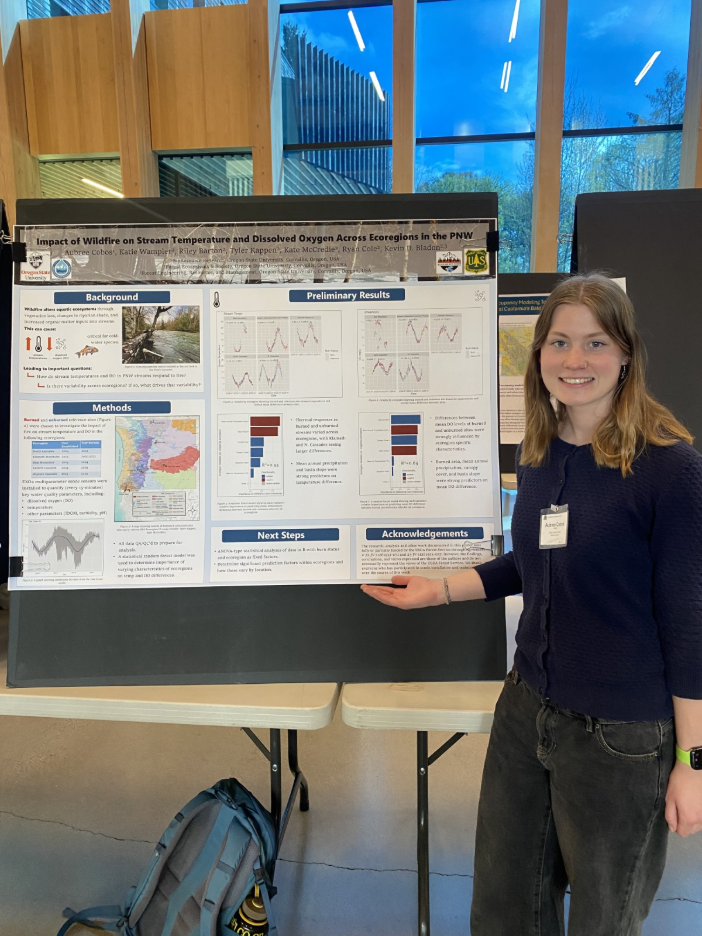
“So next steps are, in terms of communicating this, I plan to present what I have currently; the data analysis, the sample synthesis that I have done… at the spring undergraduate poster symposium and from there I plan to join regional and national chapters that have toxicological interest such as PANWAT and SOT and just really try to put myself and my research out there.
Future steps after I complete a BRR thesis are to join the tox AMP program. I would love to get an accelerated masters in toxicology. I like working under Julia, collaborating with her and her lab, and I just enjoy doing research, and I hope to get out of that some publications perhaps. It’s something I have really been looking forward to and a lot of that is to make me a stronger applicant for what I am hoping to do after Oregon State… I would love to find a niche that intersects with patient care and laboratory research, which are both things that I am super passionate about. So yeah, I think physician researcher is definitely the ultimate title that I am going for right now.”
Question: Do you have any advice for students considering or recently joining the major?
“Yes, I mean just being in BRR and having such a positive experience with mentors, including Wanda, as well as older BRR students, has made me really want to step into a mentorship role myself, but also just being able to customize your academic career is something that not a lot of students get and so taking advantage of that and really making the major work for you as much as you’re working for the major is something that’s really cool to see and really rewarding.
You’re also exposed to some of the most intelligent people on campus in terms of professors, in terms of students, and it’s really underrated I would say, just being exposed to positive things that are happening in research and in the world of academia especially during uncertain times…
I guess the final bit of advice for undergraduates and new students is that the people around you will absolutely just give you a plethora of resources that you are able to use, and should use, to your full advantages to get what you want out of the major. You know it’s for very independent people, very self-driven people, and so just being able to be a go-getter with what you’re provided, what this major does provide you opportunities to do, is super important.”