Paper Mario: The Thousand Year Door is a Good Game

It’s such a good game that we decided to move forward with that visual aesthetic then having everything in our immersive world be in 3D. … Or it was by my request and because I love it.
Tasks Accomplished: Week 5
| Technical Tasks | Art Tasks |
| More work on NavMesh pathfinding | Painted concept art for seance scene |
| Wrote NPC/background character spawner | Began 3D modeling, then stopped |
| Wrote “Paper Mario” effect script for 2D sprites in 3D environments | |
| Made progress with random target generation script (for NavMesh pathfinding) |
Games Made in 2.5D
Okay, ours isn’t going to be in 2.5D. It’s still going to be in 3D, but with 2D sprites.
2.5D games have environments that appear to be 3D, but you’re still restricted to 2D movement in the ‘x’ and ‘y’ axes. Since we’re doing an immersive VR game, we can’t have that restriction, but we can pull inspiration from the visual styles born from it. Take for example, the Paper Mario series:
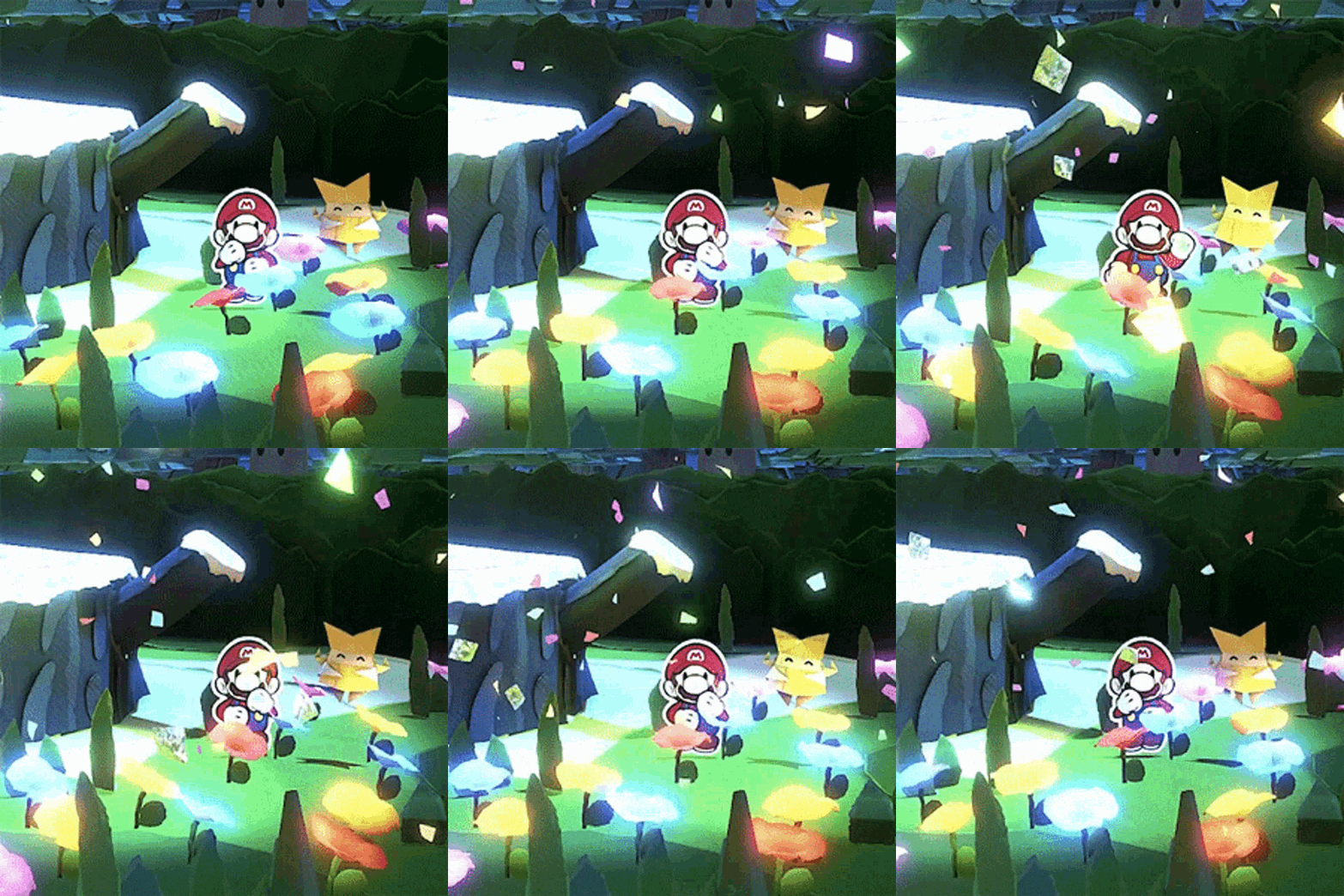
Not from the The Thousand Year Door (booooo), but here’s a good example from The Origami King. Mario should be an animated 2D sprite on either a single-faced or very low poly plane, yet he’s placed in an environment that includes the z-axis in appearance.
Games Made in 2.5D
With blessings from my project partners, I’ve decided to move our game’s aesthetic from full 3D assets to a mix of 2D and 3D. I’ve begun to implement some scripts that will help keep the 2D sprite field in 3D.
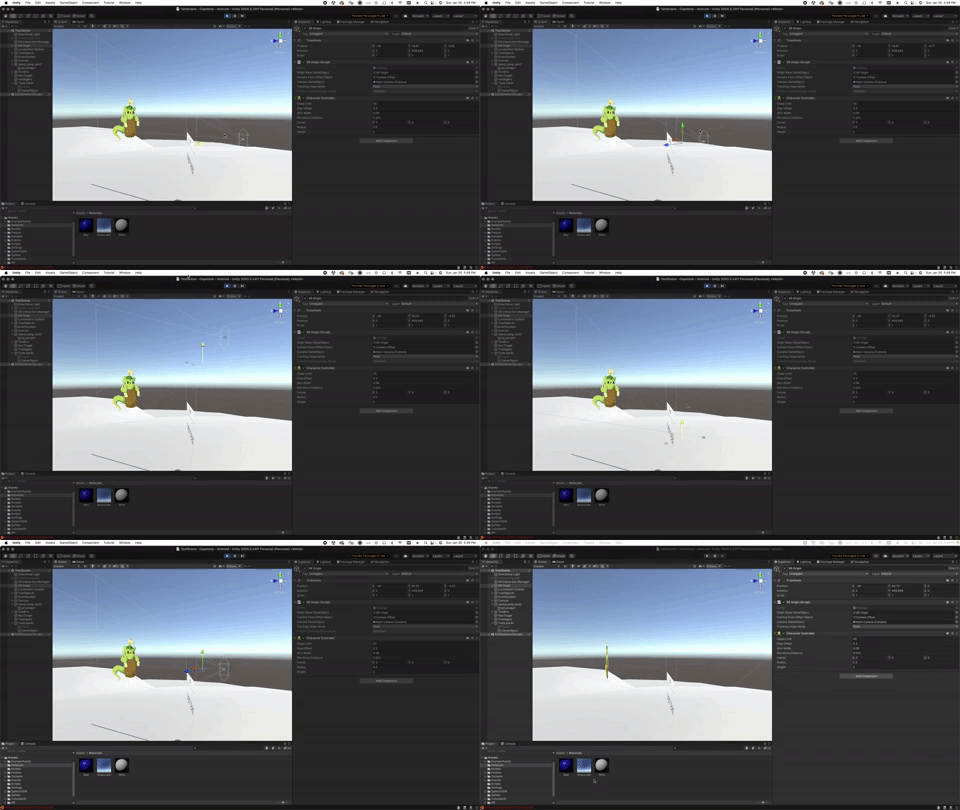
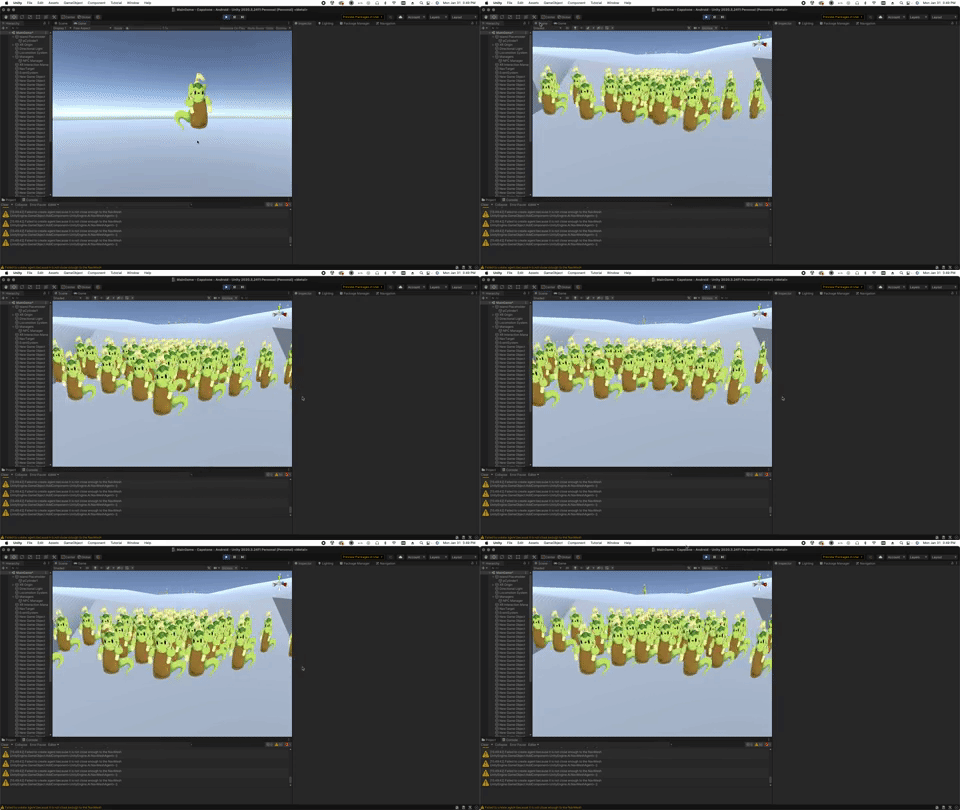
You can see some of my generated sprites got stuck due to the angle of the ramp. :’)
After watching some tutorials and experimenting, the trick to getting something in the vein of Paper Mario is all about restricting the sprite’s rotations to the y-axis only (which I did after that first gif). I next need to figure out how to calculate when the NPC’s back should be facing the character as opposed to their… face.
?????????????????

A: I realized that while I can do basic character modeling, I can be much faster with 2D drawings, which I’m more skilled at anyways. Continuing with 3D modeling was going to put my team behind.
I’m also not confident enough in my knowledge of topology after realizing that you can see models from all angles in VR. A really obvious observation, but I just missed it somehow still. Shame on me. Really, if any weird polygonal bends happen in any of the organic meshes, the immersion will be broken. These bends can be caused by a myriad of issues, including:
- “Stars”: When a single vertex is the endpoint for five or more edges
- Not enough edge loops for areas that bend (elbows in this of our project)
… many of which my in-progress models had. Retopology wasn’t going to help either as I had started to model the characters with a lower polycount in mind. Glad this 2.5D-inspired solution will work better for us though!
Goodbye, going to buy lots of Gamecube stickers due to a rush of nostalgia.
Ryan Davis