Goodbye Oregon Coast ☹

Hello everyone,

I’ve had an incredible summer working with SEACOR (Shellfish and Estuarine Assessment of Coastal Oregon) at ODFW. I feel so grateful to have gotten the chance to work on such a dedicated and passionate team. 😊 This internship has been so valuable! For example, I knew prior to this summer that I enjoyed fieldwork, but I had never worked in a marine setting. Being able to spend 5+ hours in the water each day was a dream! Even though it can get tiring, it was so fun and cemented what I want to pursue in the future.

This summer has also redefined my career goals. I thought I’d want to work in completely marine settings, with ecosystems such as coral reefs or kelp forests. While I still think these would be amazing to study, I’ve become really interested in estuary work. Estuaries are so important no matter what lens you’re looking through—environmental, economic, and/or cultural. It has felt super rewarding to study and work with them this summer.

I’m very excited to share that I’ll be working at the Smithsonian Marine Station in the Benthic Ecology Lab in Florida starting in September! The research project’s focus is on characterizing the little invertebrates that live at the bottom of an estuary called Indian River Lagoon. The estuary has suffered biodiversity loss caused by many different threats, including harmful algal blooms, development, and excess freshwater input. For 15+ years, the Benthic Ecology Lab has used invertebrate biodiversity as a measure of ecosystem health! I’m incredibly excited to continue my scientific career focused on estuary work and am interested to see how I can apply what I’ve learned in Oregon down there!

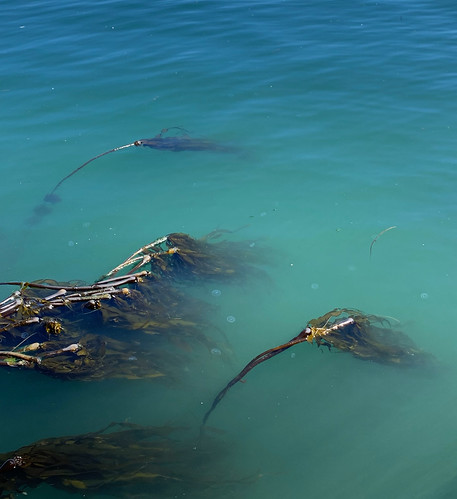
Photo 1. Emma Chesley holding a cockle clam on a mudflat in Tillamook Bay. Photo taken by Summer Henricksen on 8/13/2022.

Perspectives on coastal climate work

The first half of my fellowship has been such an incredible experience of working with experts in conservation science and policy and learning how science can support policy and vice-versa. My fellowship project is a general exploration of how blue carbon pathways operate in Oregon’s coastal ecosystems, how they may contribute to the state’s greenhouse gas reduction goals, and who is currently doing the work. Blue carbon as a climate mitigation strategy is a fairly recent development, and the research is still in its early stages in the Pacific Northwest. My fellowship work will hopefully help inform how blue carbon can fit into Oregon’s natural and working lands.

To be honest, it’s hard to think about climate change daily without having to manage some amount of climate anxiety. The crisis we face is at a scale bigger than comprehension, and at times it’s hard to imagine blue carbon alone having a large enough impact to offset—let alone reduce—carbon emissions to have a positive climate effect. At the same time, defeatism is less than helpful, and it’s simply incorrect to believe that nothing we do can mitigate climate change and its effects. There will not be one solution. It will take a lot of people working in lots of ways to tackle the challenge, to change systems and turn the tide. Natural climate solutions (NCS), including blue carbon, is one tool we have to approach climate and biodiversity issues. NCS use conservation and restoration strategies to enhance climate benefits but does not elevate carbon reduction above ecosystem function. This is one aspect that I appreciate about NCS—it does not look at nature as a technology to maximize carbon sequestration but instead values ecosystem health and function for multifaceted benefits.

I had struggled initially because carbon crediting seems to focus simply on the most ‘productive’ estuarine systems that build carbon-rich soils However, many of the people working on blue carbon do not think of carbon projects as simply carbon farms that are separated from ecosystem function. There is deliberate consideration of the inherent value of coastal and nearshore ecosystems alongside the many ecosystem services, of which carbon is one. This attitude shared by my new colleagues is really a heartening one, and I’ve been supported in considering the role of complex oceanic ecosystems (like kelp forests) that are critical Oregon coastal habitat and sequester carbon.

Aequorea among bull kelp

A Summer of Growth

Hello everyone!

I have only a few weeks left working as a member of the SEACOR (Shellfish and Estuarine Assessment of Coastal Oregon) team! ☹ This summer has been instrumental in my personal and professional growth. Before this internship, I thought I would want to pursue a career in academia. However, this summer has shown me there are so many other paths I can take while still doing exciting scientific work. I can totally see myself pursuing a career with a state or federal agency now. Being able to communicate our data so readily with the public is what sparked my interest in pursuing this different path.

A professional development opportunity arose to work on an independent data project. So, I’ve also taken time this summer to learn how to code in R, which is a programming language for statistics that is often used in ecology. We’re looking at habitat associations between the different clam species in Tillamook Bay. I’m still working on the project, but I’m excited to present my findings at the symposium next week! Coding is completely out of my comfort zone, but it’s such a valuable skill to have in this field. I’m hoping to continue my R learning after this internship.

The biggest thing that surprised me this summer is I don’t mind getting up at 4:00 AM to go sampling. Who would’ve thought?!

Photo 1. Emma Chesley cooling off in a dry suit in Tillamook Bay. Photo taken by Mo Bancroft on 8/4/22.