Recently, I am more interested in the project of Metaverse, because it seems that all the technology giants are engaged in this project recently.
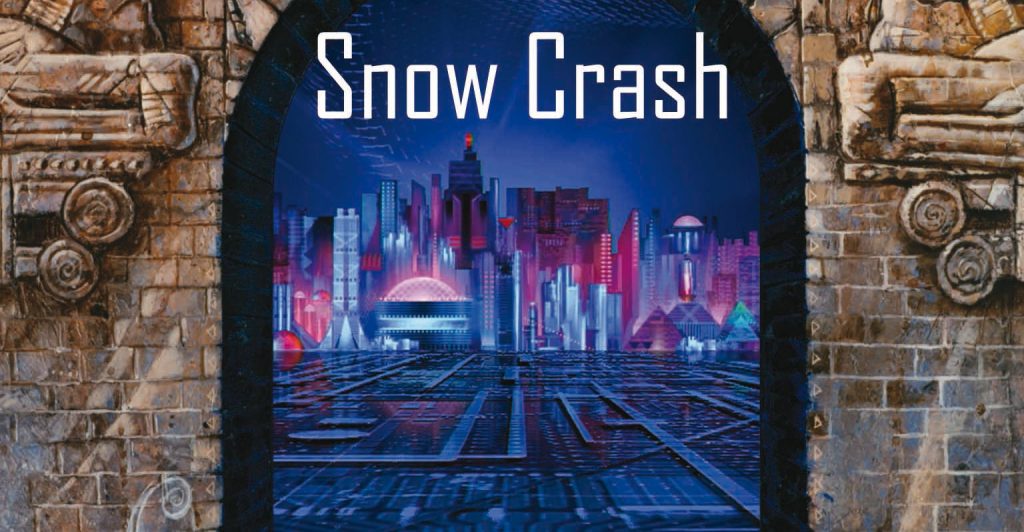
The metaverse is actually derived from Neil Stephenson’s “Snow Crash” in 1992. This book describes a virtual world parallel to the real world, Metaverse, where all people in real life have a network avatar. Wikipedia’s description of the meta-universe is: through virtual augmented physical reality, presenting the characteristics of convergence and physical persistence, based on the future Internet, a 3D virtual space with the characteristics of link perception and sharing.
Just like the scene in the movie “ready player one”, one day in the future, people can switch identities anytime and anywhere, freely shuttle between the physical world and the digital world, and learn, work, and work in the “meta universe” formed by virtual space and time nodes. Making friends, shopping, traveling, etc. Meta universe, a virtual world built on the blockchain, is a decentralized platform that allows players to enjoy ownership and autonomy. Through the immersive experience, let the virtual closer to reality.
In fact, the development of the meta universe is also very difficult, because the technology required is also a few of the more complex technologies in the world today.
From the perspective of technology, the “meta universe” of technical significance includes content systems, blockchain systems, display systems, and operating systems, and finally displayed as a 3D interface that exceeds the limitations of the screen. It represents the future after the PC era and the mobile era. The era of holographic platforms. The technology cluster supporting “Meta Universe” includes 5 sectors:
First, network and computing power technologies: including spatial positioning algorithms, virtual scene fitting, real-time network transmission, GPU servers, edge computing, reducing costs and network congestion;
Second, artificial intelligence;
Third, electronic game technology: such as a game engine that supports game program codes and resources (images, sounds, animations);
Fourth, display technology: VR, AR, MR, especially XR, continue to iteratively upgrade, virtual immersive reality experience ladder, and continuous deepening of perception interaction;
Fifth, blockchain technology: through smart contracts, a decentralized clearing and settlement platform and value transfer mechanism, the ownership and circulation of value are guaranteed, and the operation of the economic system is stable, efficient, transparent and certain.

In addition to being a digital space concept, the meta-universe can also be a physical space concept. The Internet of Things will input data and geospatially triggered content mirroring into the meta-universe, allowing us to understand, manipulate and simulate the real world in new ways. Metaverse’s virtual real estate supports digital assets, and various digital arts can shine in this space.
