Oct 31 & Nov 1

Oct 31

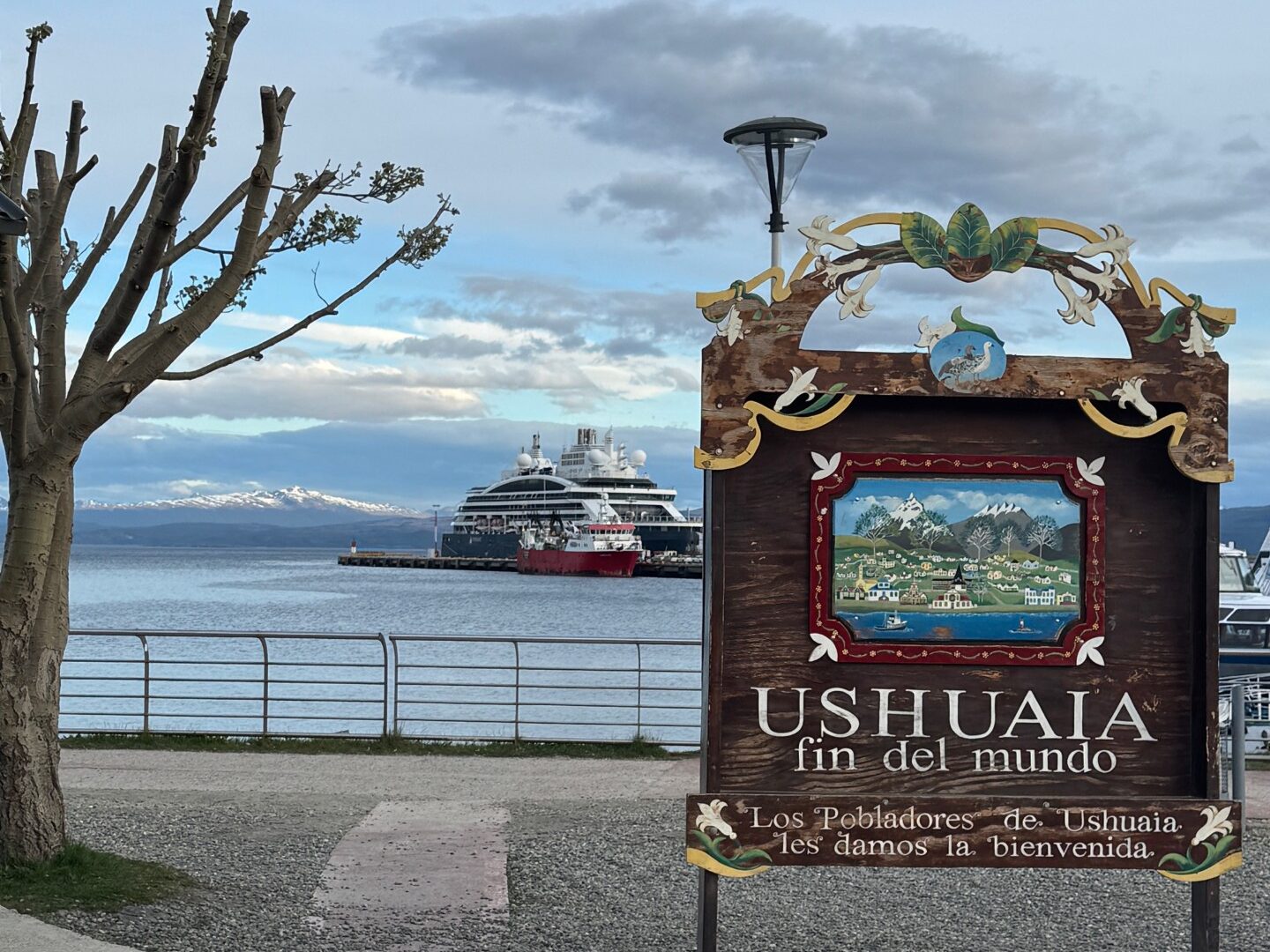
The Ushuaia sign that reads "Fin del Mundo. Los Pobladores de Ushuaia les damos la bienvenida" with the cruise vessel behind it at port in the distance and a bare tree on the left.
La Commandant Charcot awaits its passengers at the port of Ushuaia behind the famous “fin del mundo” sign. Photo: MariAnna Hinojosa

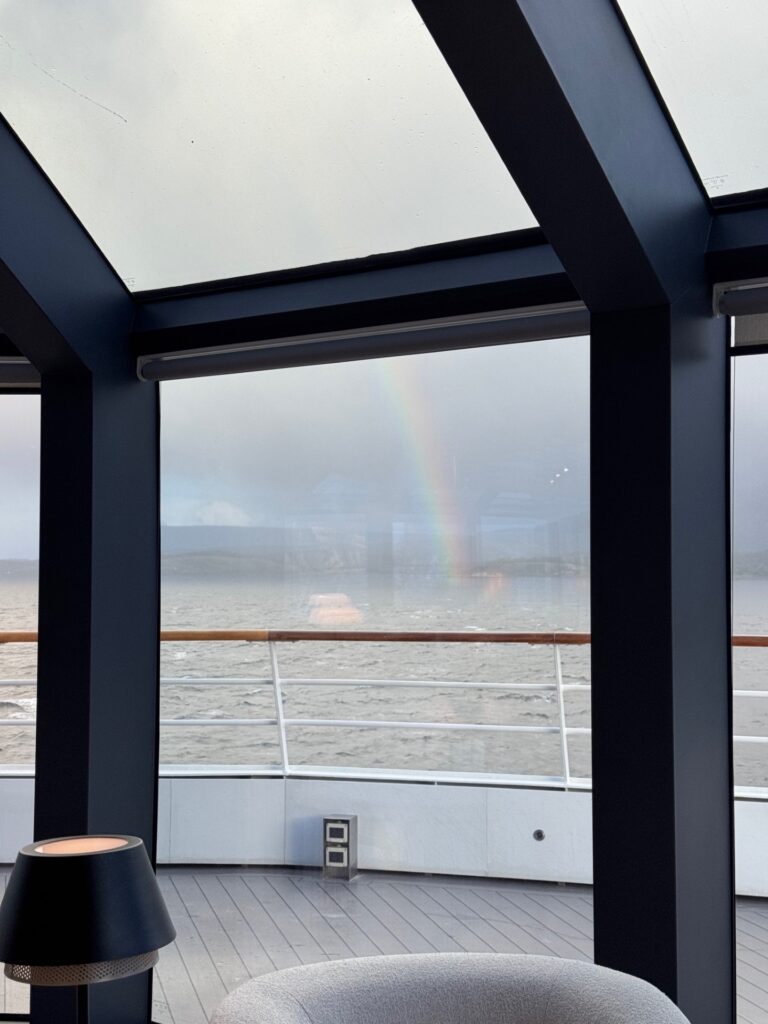
October 31, 2025 After an overnight stay in Ushuaia at the Albatros Hotel, we made our way down the port dock to board Le Commandant Charcot. We were greeted by the Science Officer, Gwen Trividic, who got us checked into our room and showed us around the science labs onboard. At the discretion of Captain Stanislas Devorsine, we departed a couple of hours early to beat a low-pressure system rolling in. At 5:30pm ropes were up and we were on our way through the Beagle Channel, one of the few navigable routes that connects the Atlantic and Pacific Oceans. Leaving early proved very insightful as we had beautiful weather throughout the evening and avoided high winds and large swells. During our transit through the channel, we were greeted by a beautiful rainbow visible from the observatory lounge. We hoped that was a positive sign for the adventures ahead of us. Due to the complexity and focused nature of navigating out of the port and through the channel, we were not able to access the bridge to begin surveys. We instead became acquainted with the science officer and the vessel by attending mandatory safety meetings and sharing dinner with Gwen. The boat rocked us gently to sleep through the 3-5m swells as we passed Cape Horn and entered the Southern Ocean overnight. We looked forward to beginning data collection the next morning! 
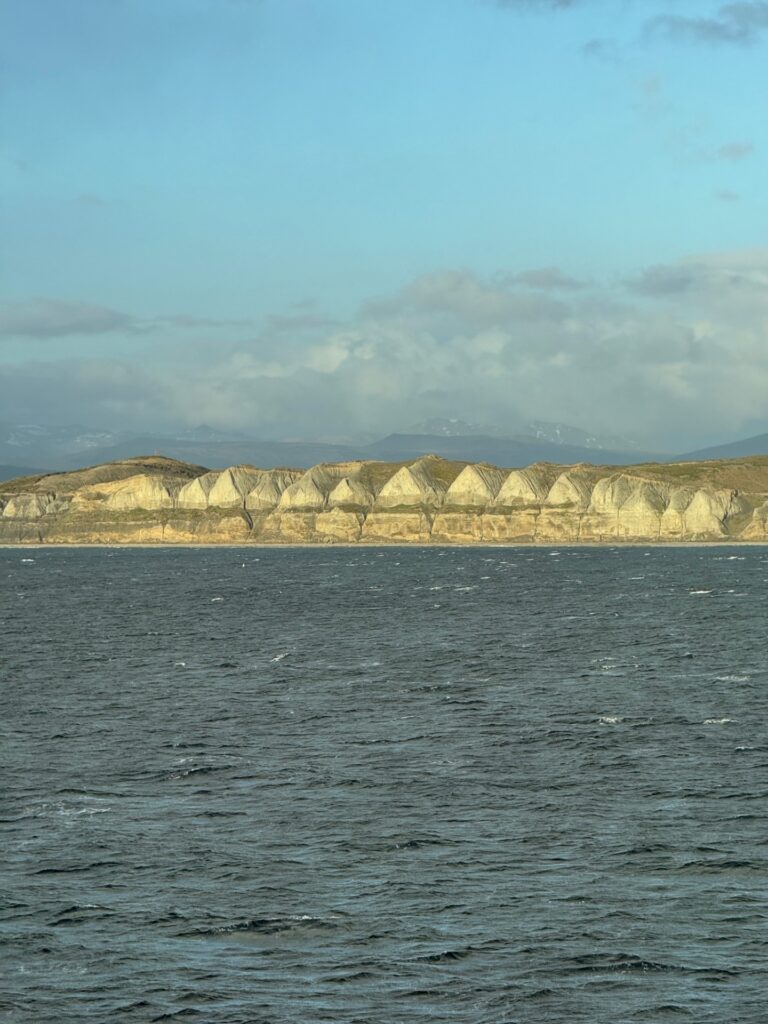
A cliff face of triangular or pyramidal rock formations at the edge of the water.
A view of unique triangular coastal cliffs as we transited through the Beagle Channel toward the Drake Passage. Photo: MariAnna Hinojosa
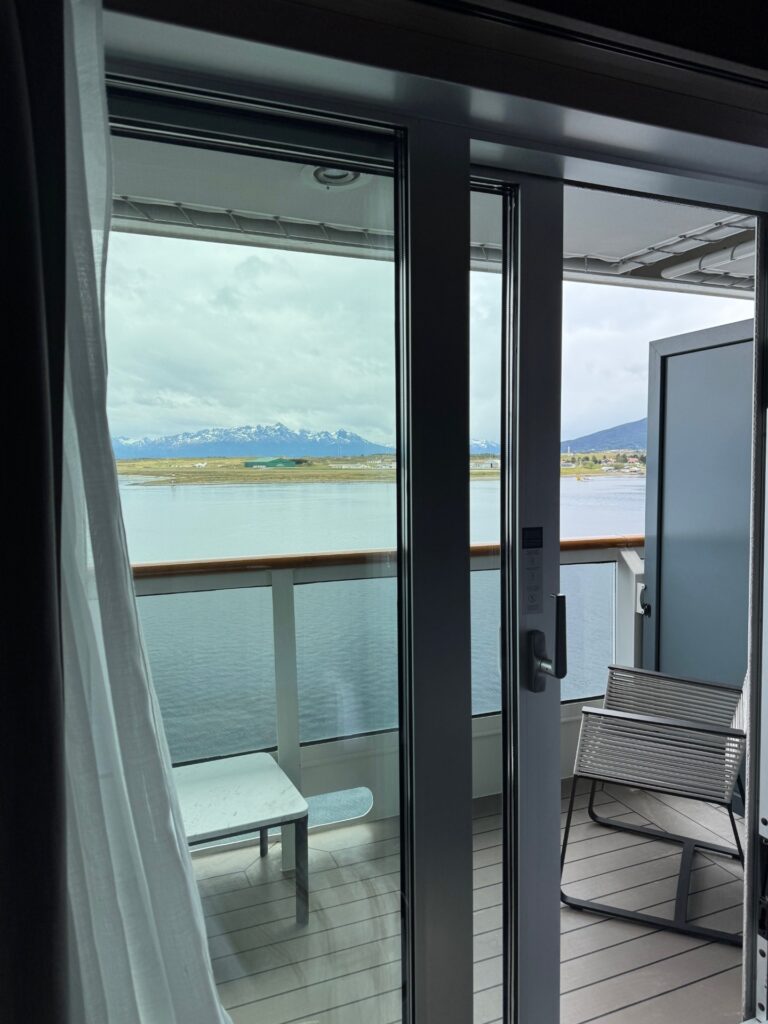
A chair and side table overlook the water and mountains of Ushuaia from the balcony of the room on the vessel.
The view from the balcony attached to our stateroom onboard the Charcot. We are grateful to have ceiling to floor views and will help us keep an eye out for sightings on the port side of the vessel. Photo: MariAnna Hinojosa
A rainbow over the water viewed through a large window from on the ship.
A rainbow visible from the Observatory Lounge on the 9th deck of the Charcot as we were transiting the Beagle Channel was a hopeful start to our journey. Photo: MariAnna Hinojosa

Nov 1

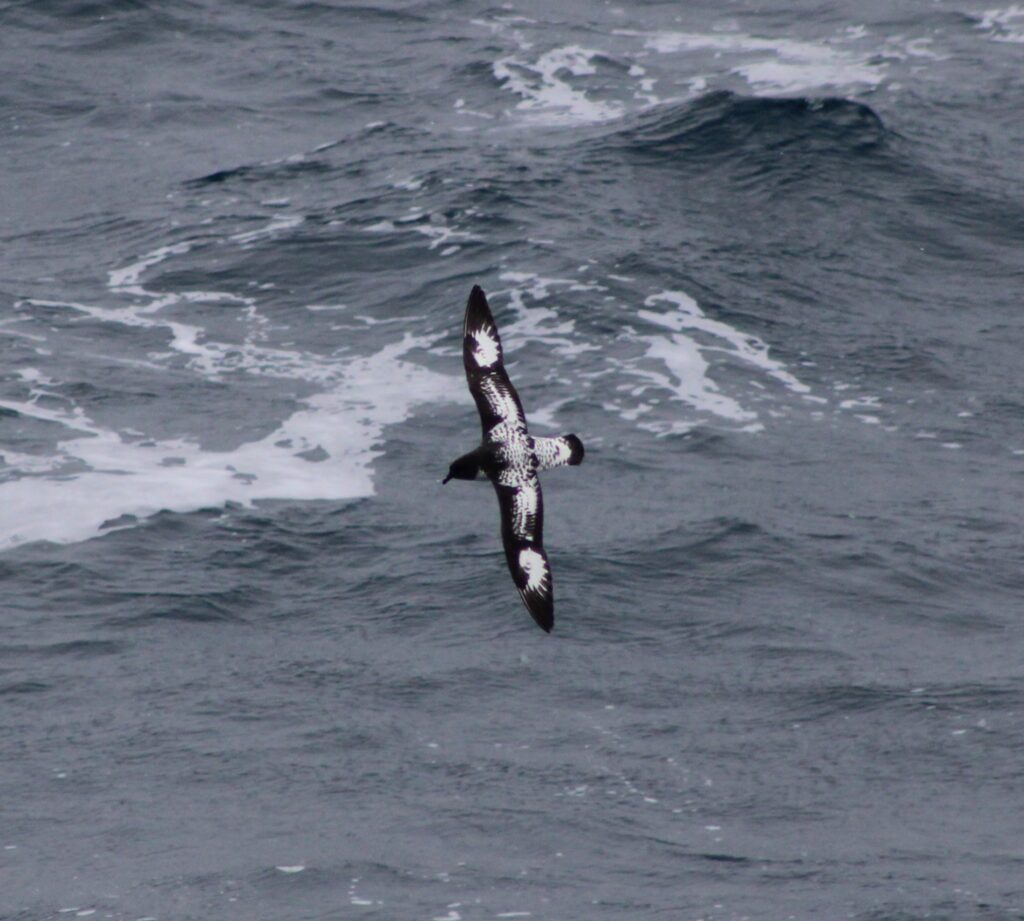
November 1, 2025 We woke up early to the more than gentle rock of the ship near the middle of the Southern Ocean. We were eager to start our first transect survey from the bridge of the vessel before attending the required Antarctic regulations briefing. Despite being four hours ahead of our time zone back home, we were well rested and ready to see what marine mammals and seabirds we would see. We saw several blue petrels, black-browed albatross, kelp gulls, and many cape petrels (a new favorite of ours with their distinct black and white patterns), but we didn’t see any whales, dolphins, or pinnipeds, to our dismay. Ironically enough, during a short break and visit to the gym, MariAnna spotted a brief sighting of a blue whale diving very close to the ship and that evening a naturalist informed us she had seen a beaked whale earlier that day. 

In the afternoon we met with the expedition guides who will coordinate future science talks and guest engagement sessions with excursions and relevant activities the guests will participate in. We had several meetings, briefings, and changes of schedules as the itinerary fluctuated with the ever-changing weather system rolling in. We made time to do a few hours of observations while settling into the routine aboard the vessel. Knowing we were likely going out on the zodiac for hydrophone recording the next day, we worked on prepping equipment and protocols to best utilize our shared time and use of the zodiac with a glaciologist, Caroline Needell, from Woods Hole Institute of Oceanography. 

Included in the daily program that is given to all guests, our biographies with our photos were inserted (to our pleasant surprise), so we had several cruise guests approach us and ask us about our work or to help identify bird photos they took from their balcony. We also had the delight of attending the Welcome Gala, hosted by Captain Devorsine, where we met the crew and guests onboard. 
Introductions

Expedition into the Weddell Sea: Whales, Seals, and Seabirds is a research excursion aboard the French cruise ship Le Commandant Charcot, a Polar Class 2 rated ice breaker vessel, of the Ponant fleet. During the voyage we will travel from Ushuaia, Argentina through the northwest Weddell Sea and back between October 31, 2025 and November 12, 2025. We aim to determine the diversity, distribution, and abundance, of whales, seals and fur seals, and seabirds during the Austral Spring. To do this we will be using photo-identification methods with the assistance of Happywhale for baleen whales while contributing to the Weddell photo-identification seal catalog and collecting bioacoustics data of seal (and hopefully!) whale vocalizations. The data collected during this fairly understudied time in this region will help provide a better understanding of how marine mammals and birds are using the area during that seasonal transition period. This project is in collaboration with the South Pacific Whale Consortium (SPWC). 

Dr. Renee Albertson (she/her) is a research affiliate at Oregon State University’s Marine Mammal Institute. She collaborates with scientists and policy makers from Island Nations and Australia to evaluate whale migratory connections of the South Pacific and the Antarctic. Her other collaborations include multiple scientists within Oregon State University’s Marine Mammal Institute, where she studies metabolic rates and aerobic dive limits of whales and seabirds.  Her research on the biology, physiology, and population structure of marine species keeps her knowledge current for teaching several field courses in the Department of Fisheries, Wildlife, and Conservation Sciences. 

MariAnna Hinojosa (she/her) is a recent Oregon State University alumna who during her undergrad worked with Dr. Albertson and the SPWC to upload several years of humpback whale fluke photos and metadata into the Happywhale database. She currently works at Hatfield Marine Science Center doing Course Support and Special Programs coordination and looks forward to soon pursuing a graduate degree in humpback whale behavior and bioacoustics. 

Follow along to see our daily recaps of the happenings and our preliminary findings!