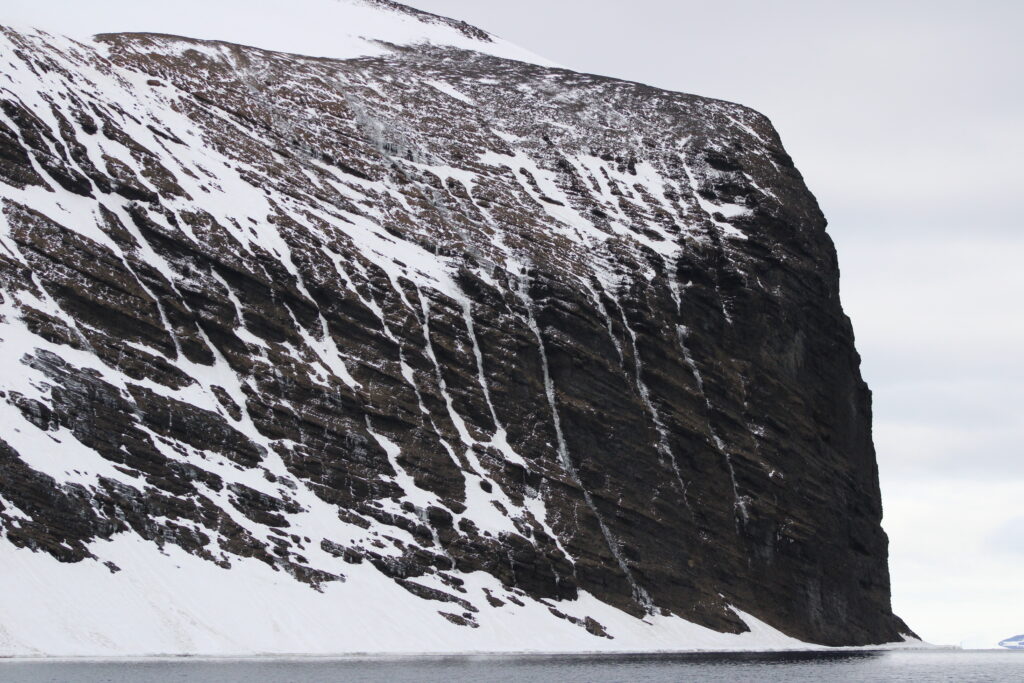
November 9, 2025 We woke up bright at early and had a quick breakfast in order to meet our 7:40am zodiac outing time. We had stopped at Devil Island near the northernmost part of the North Antarctic Peninsula. Our first location for glacier measurements was not conducive for hydrophone sampling due to the proximity to the vessel and the shape of the bay. We instead went out toward the open channel to do a recording. We were pleasantly surprised to hear a very distant chainsaw-like grunting, and recorded the sound for 10 minutes. After looking at it in RavenPro later, the spectrogram showed a repetitive harmonic call that was similar to fin and blue whale calls we had seen before. We believe it was a baleen whale, but it needs further analysis.
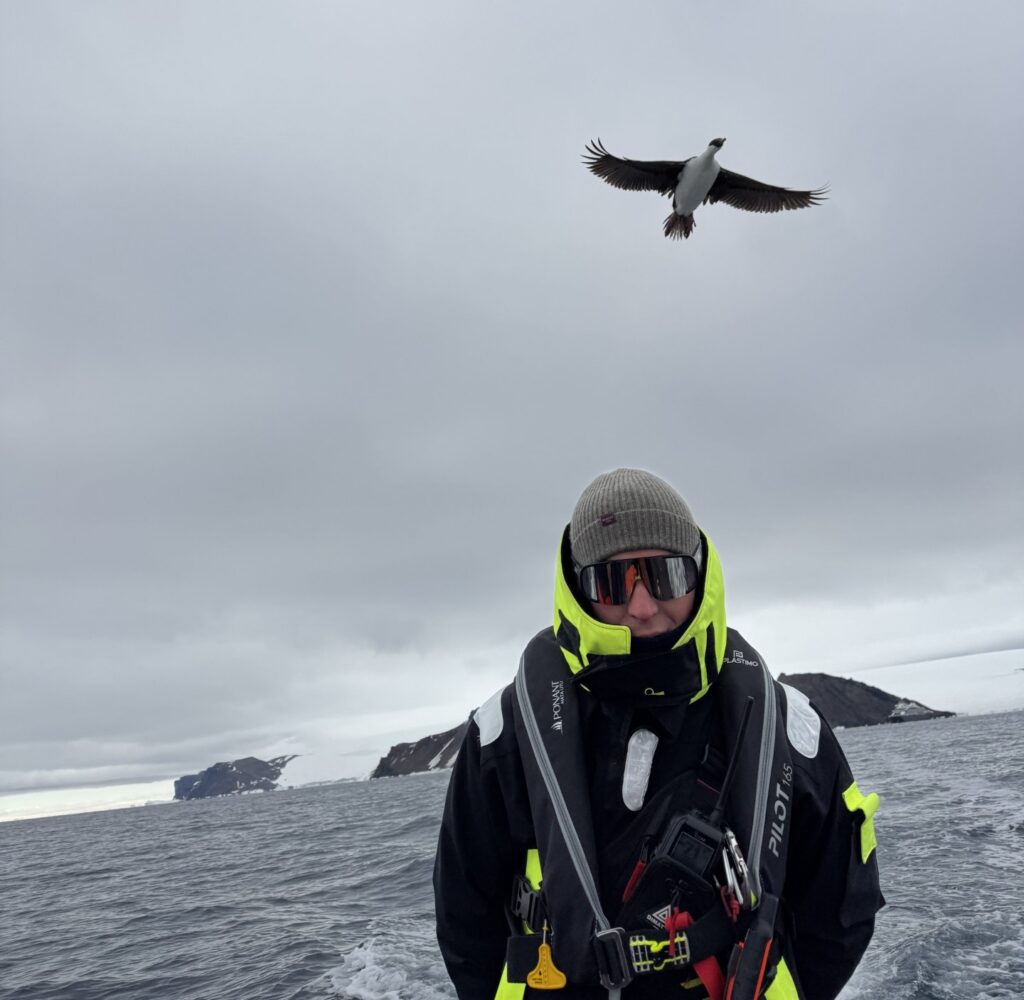
While transiting to different sample sites around Devil Island we were busy recording and photographing the various birds in the area. We had a close encounter with one particular imperial shag that flew up behind Gwen as he was driving the zodiac. It was so close and fast it looked like it was nearly going to hit him! We also saw several kelp gulls for the first time in a while, in addition to terns and snow petrels.
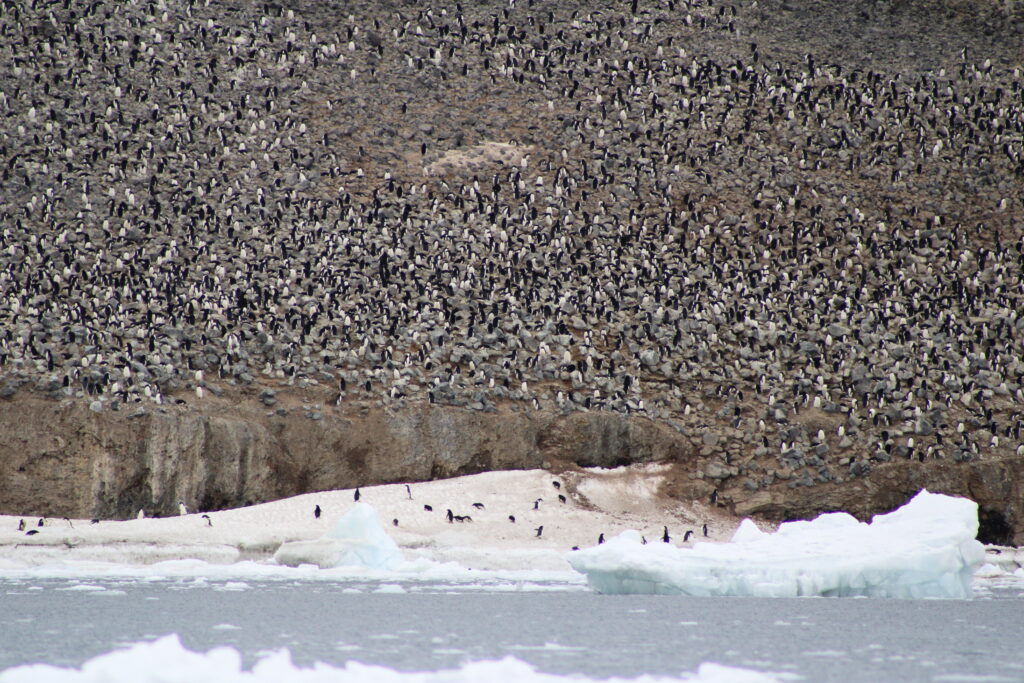
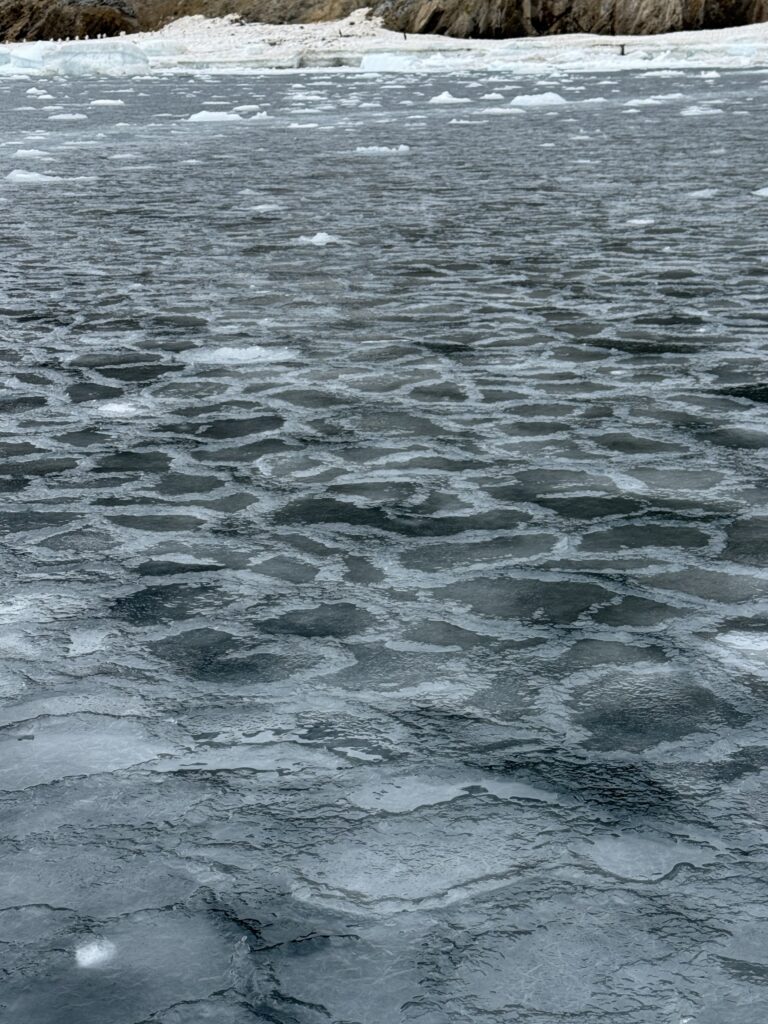
We went to the opposite side of Devil Island near the Adélie colony, and a large swath of ice floes, and recorded some seal calls while a few penguins popped up around our zodiac. We concluded the zodiac trip with a quick visit to the colony to get photos of the whole colony for long-term monitoring of abundance and disturbance estimates. This was our first time seeing pancake ice up close as well. It was incredible to see how the icy landscape could rapidly change as the winds moved the ice across the surface of the water. We were back on the ship by 10:00am to prepare for the next transit.
We were up at the bridge to conduct transect surveys for the transit from Devil Island to Brown Bluff shortly after boarding from our zodiac outing. We were overwhelmed by the number of birds we were counting early on as we travelled near, but not yet through, the ice floes. As we entered the ice, we encountered several small groups of Adélies (groups of 4-10 individuals) on ice floes. They would scurry to the other side of the ice and jump into the water as the ship passed. We saw several shags, petrels, skuas, gulls, and terns. We saw a few crabeater seals as well, including two dead crabeaters within 500-800m of each other. They had no visible signs of injury and appeared otherwise healthy, but both had pools of blood around their head.
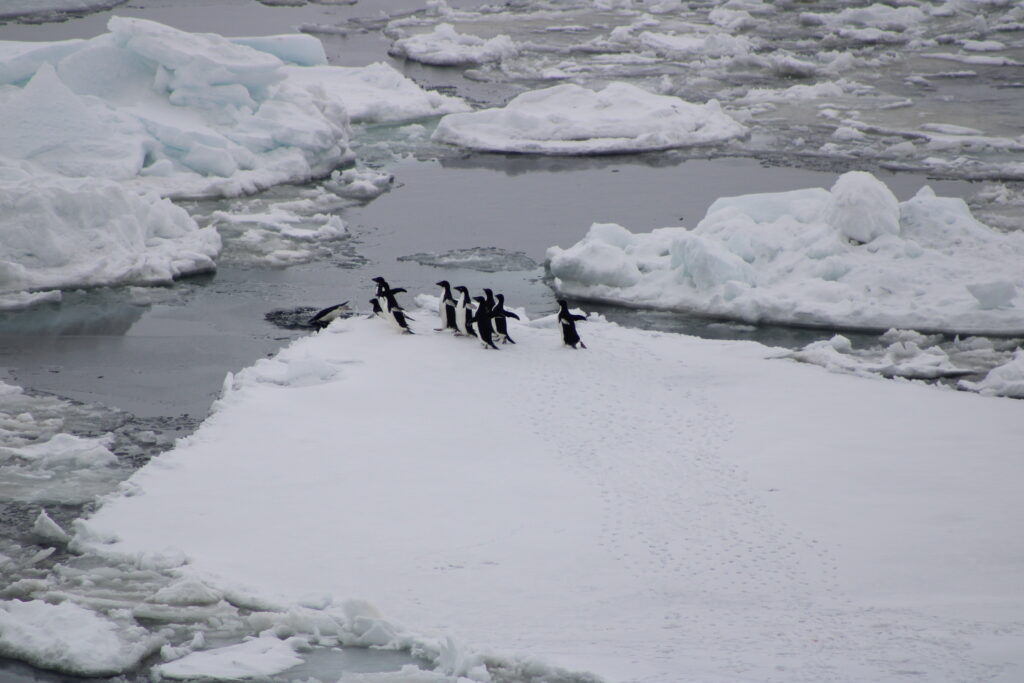
Photo: MariAnna Hinojosa
Once we got to Brown Bluff, we were back on the zodiac at 2:00pm. We did two separate hydrophone dips in the Antarctic Sound and heard absolutely nothing other than some booms and cracks from ice. No seals, no whales… nothing! We were quite disappointed as it was our last outing and last chance to collect recording data. Such is science, though! Things don’t always go according to plan (or hopes). As we travelled around on the zodiac there were several large groups of Adélies porpoising around the boat. We concluded our outing with another trip to the Adélie colony to gather photos of the colony. There we saw several skuas and gulls flying around and landing amid the penguins. There was also a lone gentoo penguin at the edge of the colony near the water. We later found out that this area has a new, budding gentoo colony forming alongside the Adélies. This is consistent with their preferred nesting habitat of ice-free rocky areas near beaches. It was a bittersweet ending to our data collection, but we were grateful for every moment and opportunity we had. We got back on the boat to prepare for the final science recap presentation for passengers the next morning as the Charcot began its journey back north through the Antarctic Sound and toward the infamous Drake Passage.
Photo: MariAnna Hinojosa