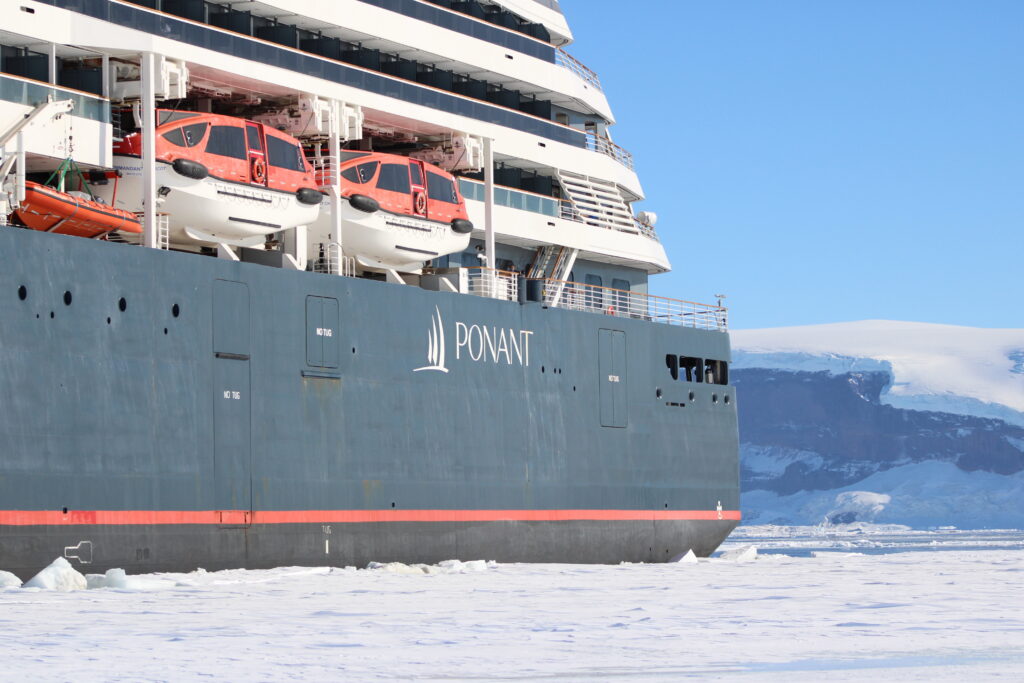
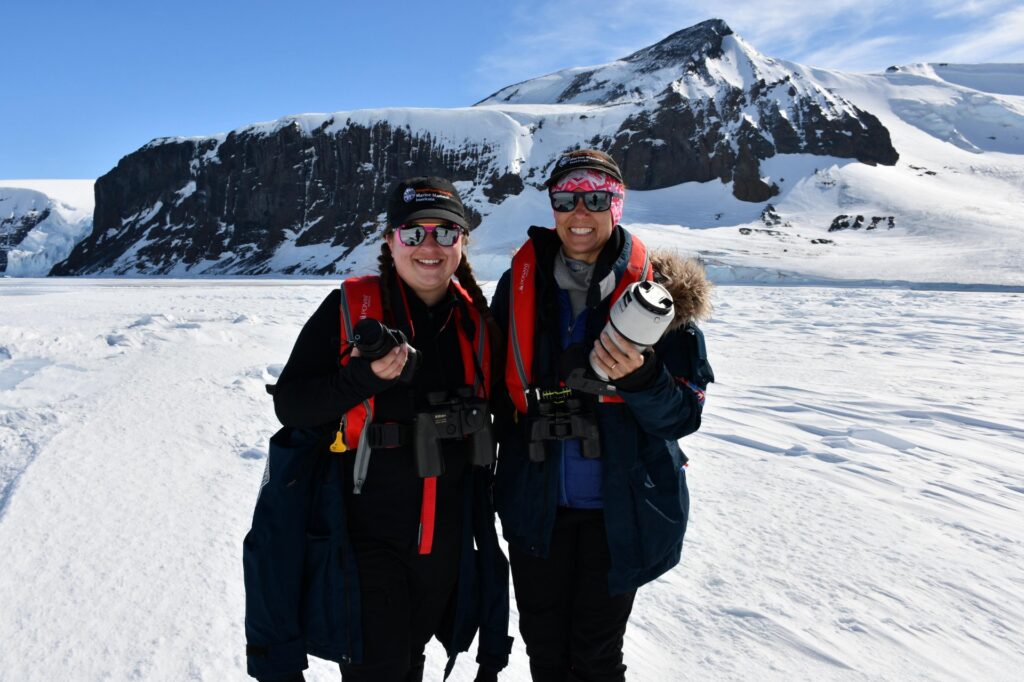
November 11, 2025 Today was our last full day on Le Commandant Charcot for our expedition down to the Weddell Sea. As the day passed, the seas calmed and we conducted a transect survey from the bridge for a couple of hours before turning in our science parkas, life vests, and equipment. Before we knew it, we could see the mountains of South America on the horizon and we entered the Beagle Channel to return to Ushuaia. We spent the afternoon preparing our science summary for the science officer and packing our bags before heading off to one final dinner. This was the trip of a lifetime, and we were extremely honored to have been the ones experiencing it and collecting the data that we did. Below is a (non-exhaustive) list of folks that we would like to thank for their part in making this trip happen and as successful as it was.
Thank you:
Ponant Science
South Pacific Whale Research Consortium
Olive Andrews
Dr. Ellen Garland
Le Commandant Charcot officers, crew, naturalists, and entertainers
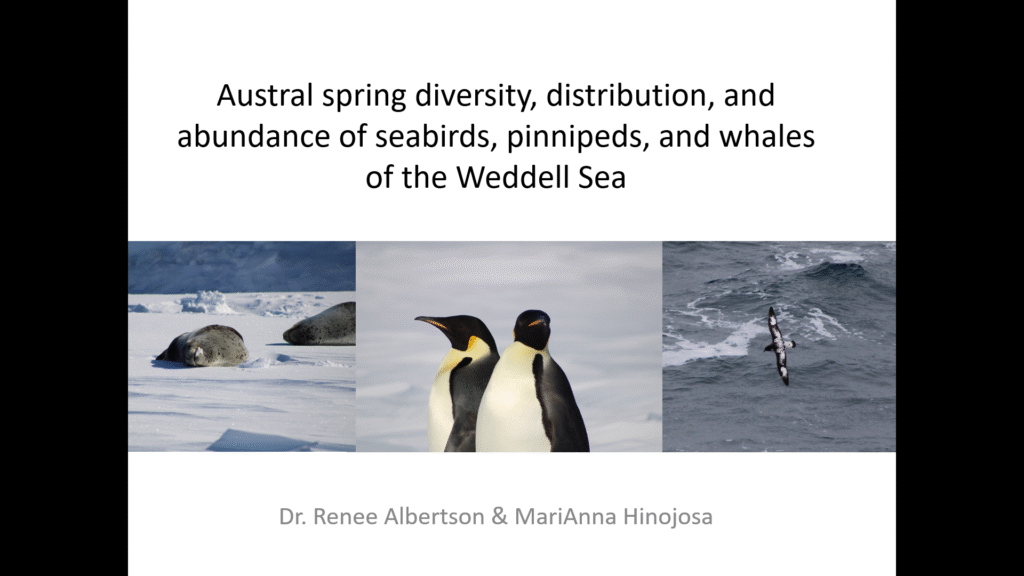
November 10, 2025 We woke up early to finalize our final science presentation to passengers to share with them what we found and learned during our trip. We shared the trends in bird sightings that we noticed as we transited from open water, to the islands, then into the ice and snow. We also played several recordings and spectrograms with them, which they seemed to thoroughly enjoy. We concluded the presentation with how the data will be shared with the South Pacific Whale Research Consortium and added to long term monitoring data to track changes in populations and inform policy and management.
The cover slide for our presentation to passengers with photos we took during the expedition.
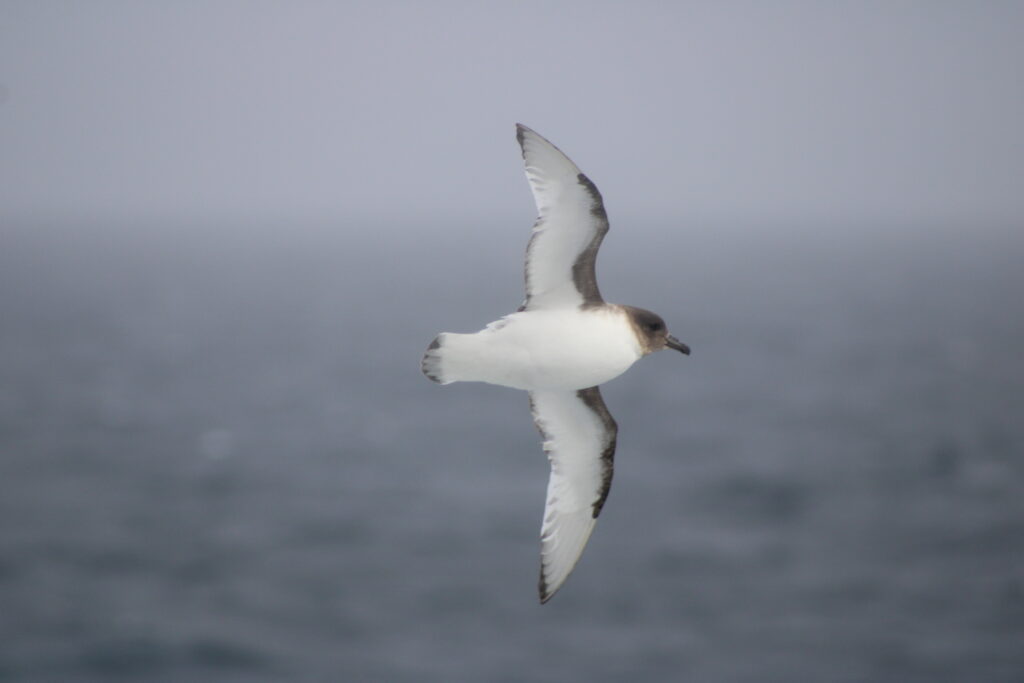
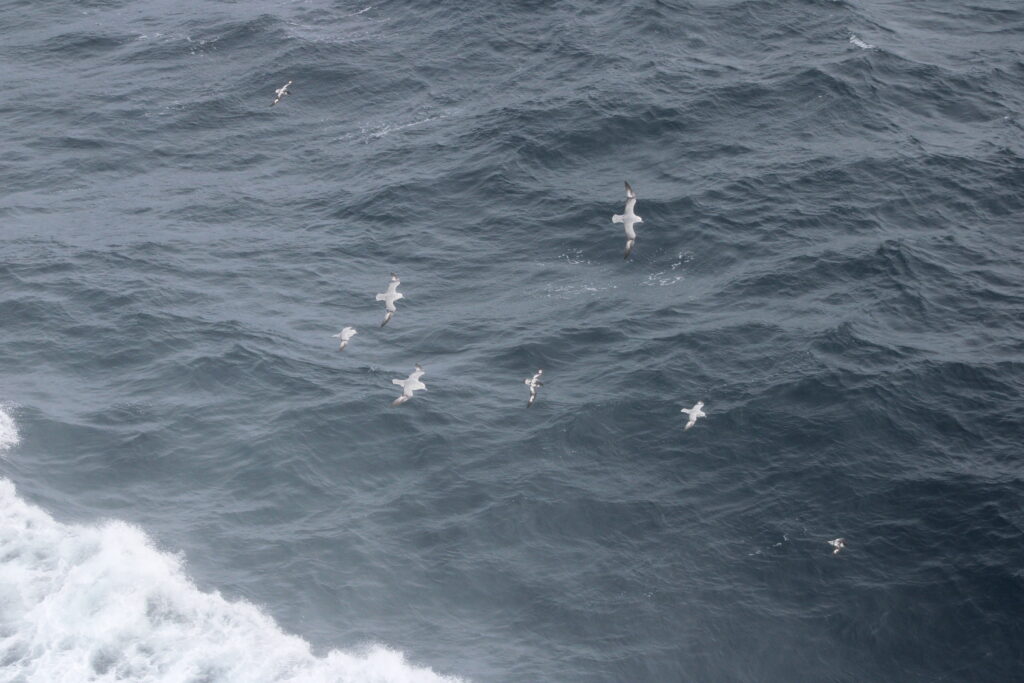
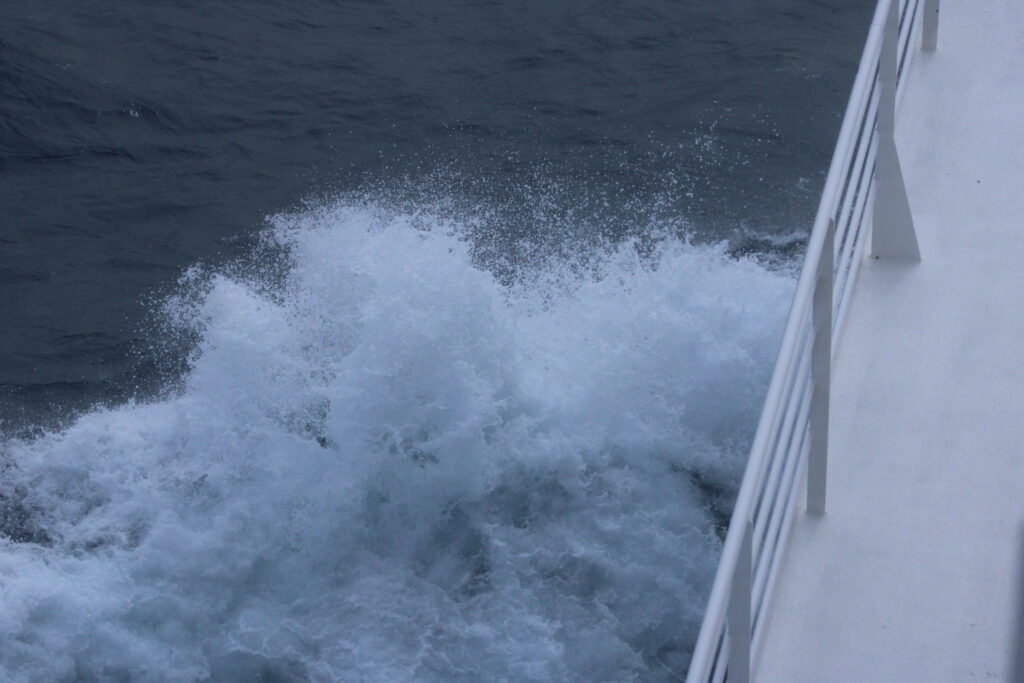
Once we concluded our presentation we headed back up to the bridge for transect surveys. Since we hadn’t been able to perform surveys on our way south through the Drake Passage we wanted to take the opportunity to do so while heading north. We saw many large groups of cape petrels and dove prions, interestingly often flying in groups together while following the vessel before landing in the water. They followed us and circled the boat for several kilometers. We also saw our first sooty shearwaters and Antarctic petrels. The whole day we had been experiencing 5m waves and incredible swells, in true Drake Passage fashion, and it was challenging to conduct surveys from the bridge.
An Antarctic petrel flies close to the windows of the bridge. Photo: MariAnna HinojosaCape petrels and dove prions following the boat before landing in the water and riding the waves. Photo: MariAnna Hinojosa
We spent the evening with a couple of American passengers for the Farewell Gala, in which the staff, crew, and officers on board were celebrated. We enjoyed dinner before attending a dance lesson and dance party while the ship rocked and rolled along with the movement of the Drake. We walked back to our rooms in sinusoidal lines and prepared to be (more than gently) rocked to sleep.
Le Commandant Charcot cutting through the large waves and swells of the Drake Passage with ease. Photo: MariAnna Hinojosa
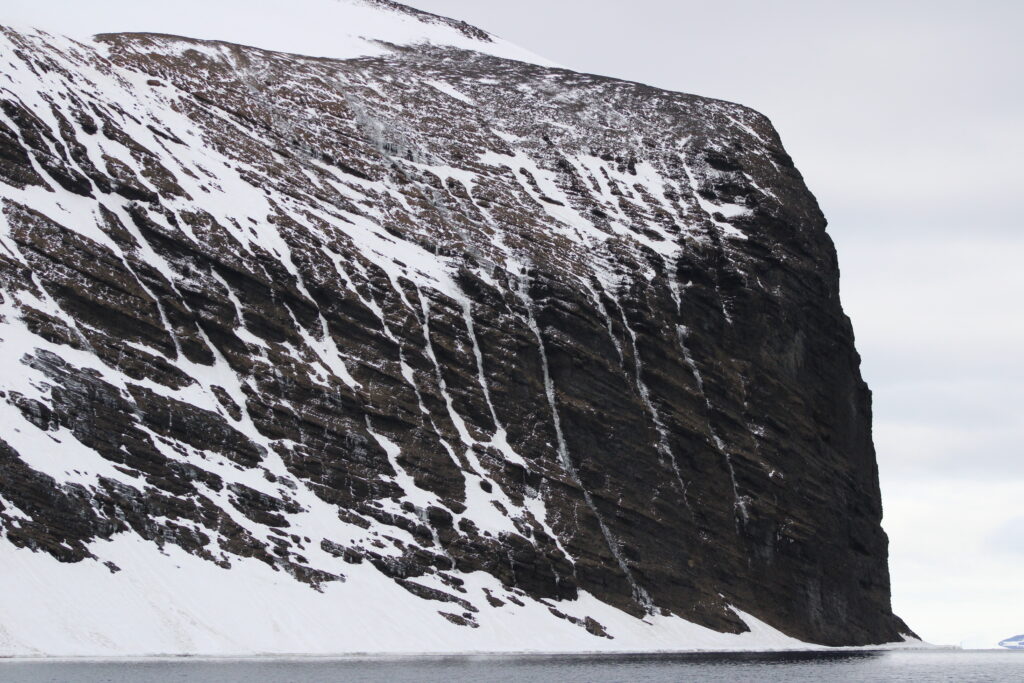
The impressive geology and size of Devil Island’s cliffs is accentuated by networks of snow and ice nestled in the cracks and crevices of the cliff face. Photo: MariAnna Hinojosa
November 9, 2025 We woke up bright at early and had a quick breakfast in order to meet our 7:40am zodiac outing time. We had stopped at Devil Island near the northernmost part of the North Antarctic Peninsula. Our first location for glacier measurements was not conducive for hydrophone sampling due to the proximity to the vessel and the shape of the bay. We instead went out toward the open channel to do a recording. We were pleasantly surprised to hear a very distant chainsaw-like grunting, and recorded the sound for 10 minutes. After looking at it in RavenPro later, the spectrogram showed a repetitive harmonic call that was similar to fin and blue whale calls we had seen before. We believe it was a baleen whale, but it needs further analysis.
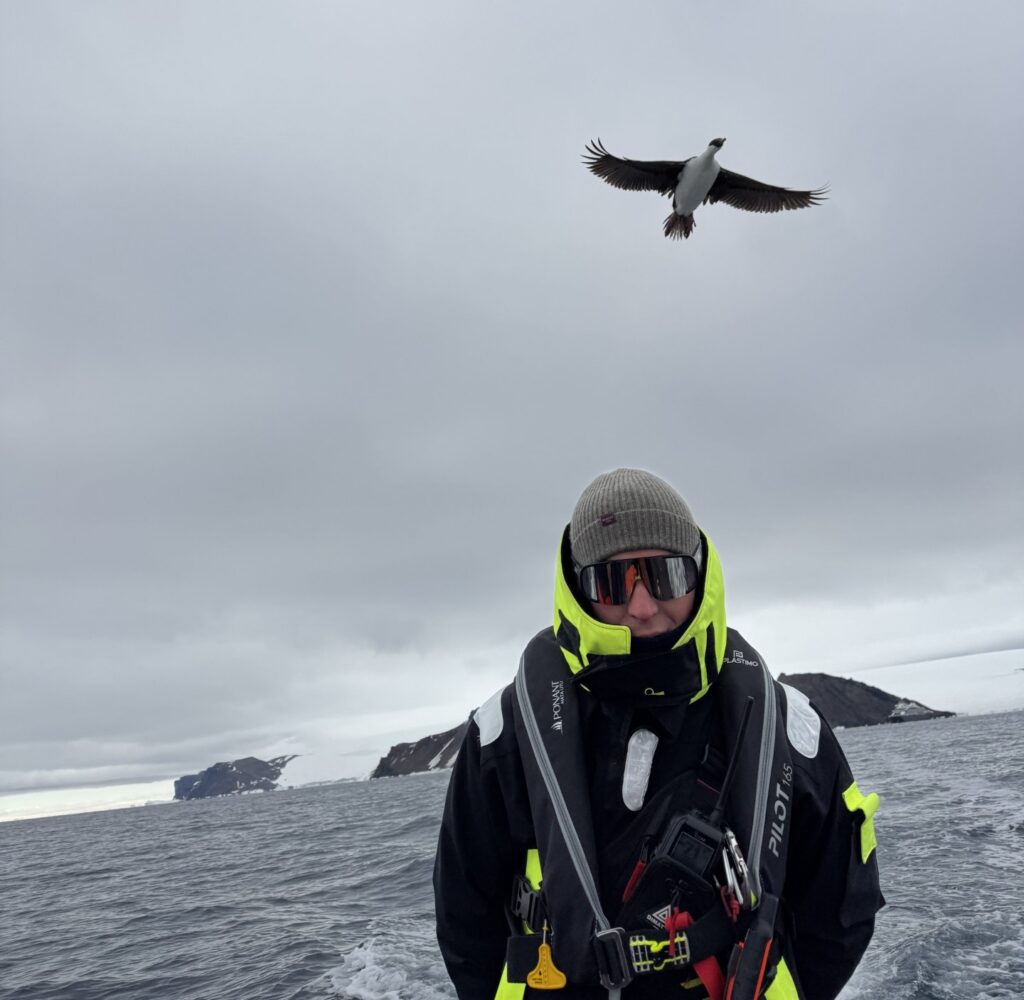
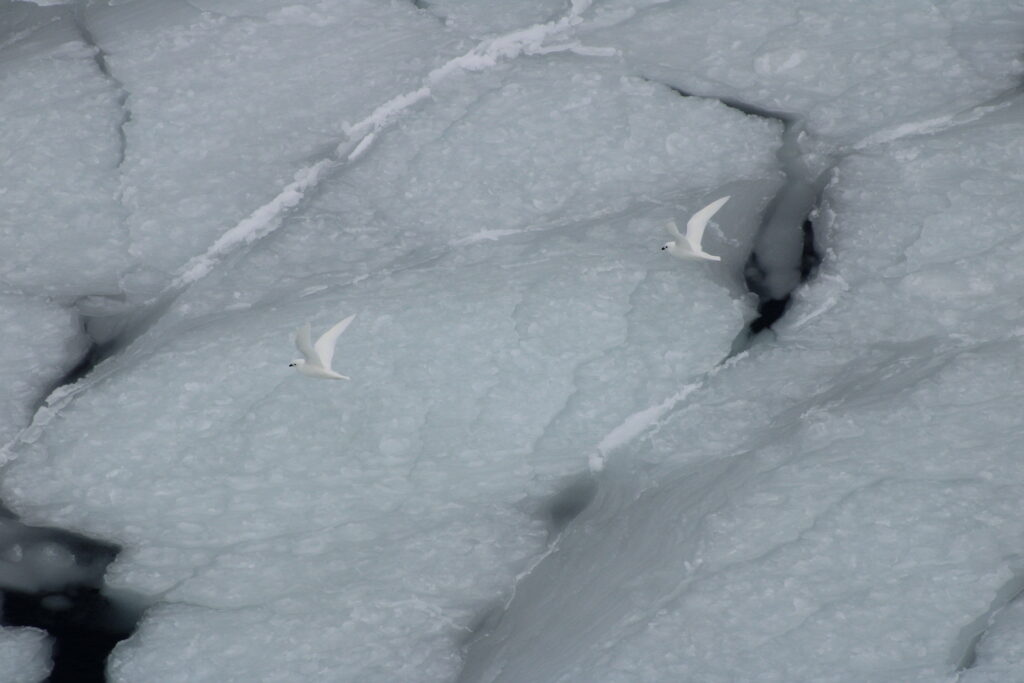
While transiting to different sample sites around Devil Island we were busy recording and photographing the various birds in the area. We had a close encounter with one particular imperial shag that flew up behind Gwen as he was driving the zodiac. It was so close and fast it looked like it was nearly going to hit him! We also saw several kelp gulls for the first time in a while, in addition to terns and snow petrels.
Science Officer, Gwen, driving the zodiac and unsuspectingly being pursued by a speedy shag. Photo: MariAnna Hinojosa
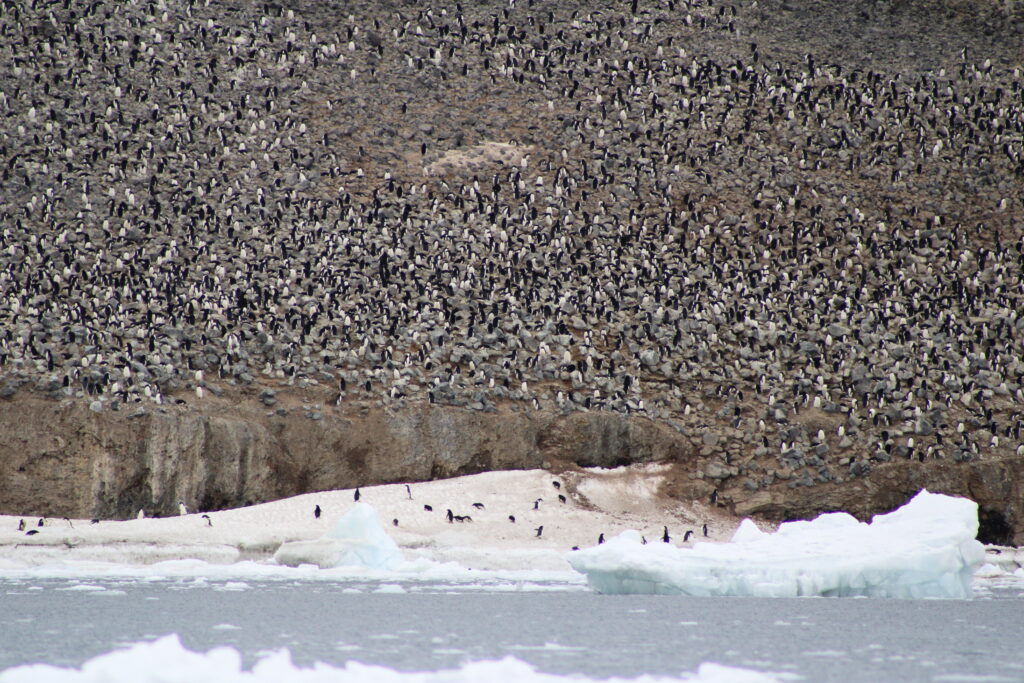
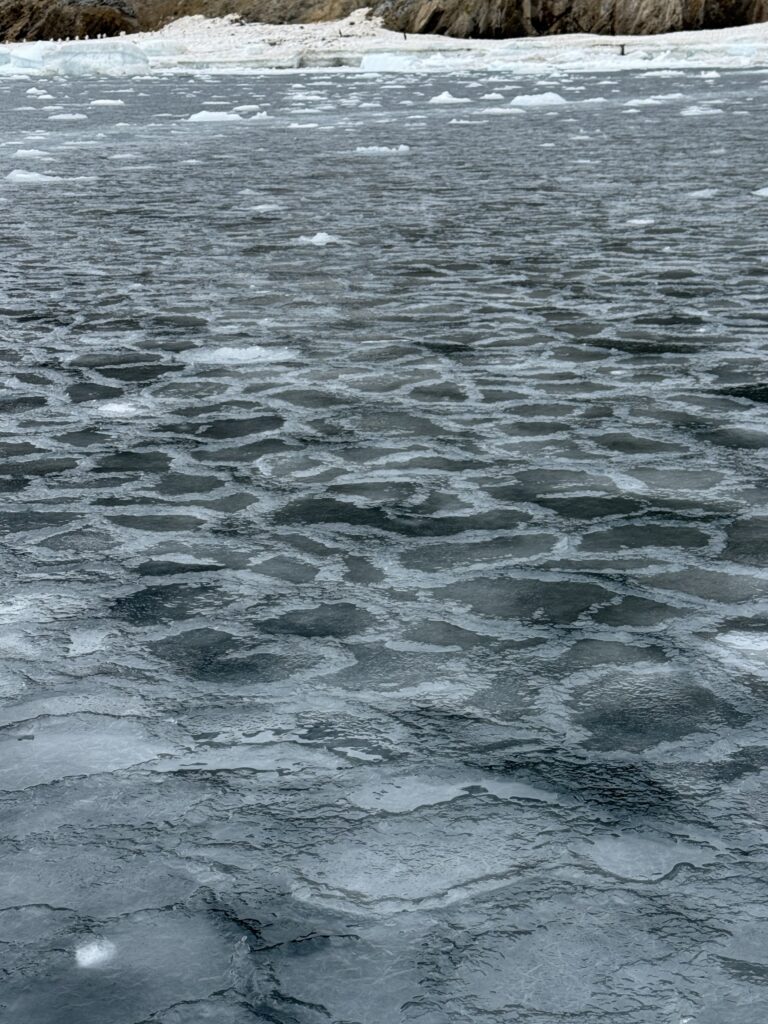
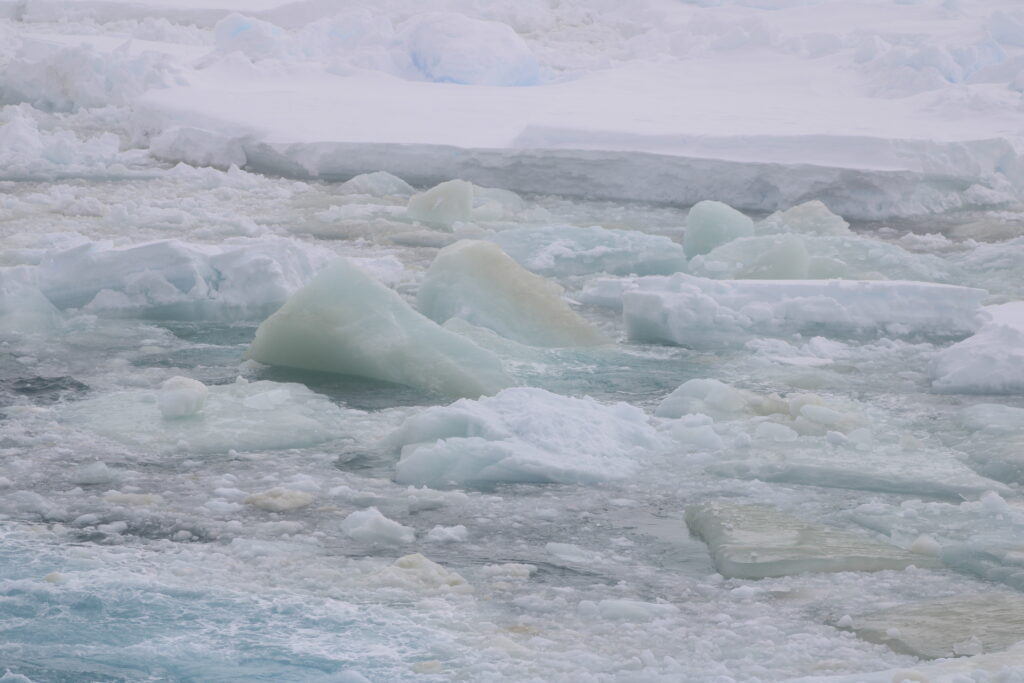
We went to the opposite side of Devil Island near the Adélie colony, and a large swath of ice floes, and recorded some seal calls while a few penguins popped up around our zodiac. We concluded the zodiac trip with a quick visit to the colony to get photos of the whole colony for long-term monitoring of abundance and disturbance estimates. This was our first time seeing pancake ice up close as well. It was incredible to see how the icy landscape could rapidly change as the winds moved the ice across the surface of the water. We were back on the ship by 10:00am to prepare for the next transit.
The Adélie penguin colony at Devil Island. Photo: MariAnna HinojosaThe formation of pancake ice on the surface of the water at Devil Island. The ice formed and flowed right before our eyes. Photo: MariAnna Hinojosa, iPhone 15 Pro Max
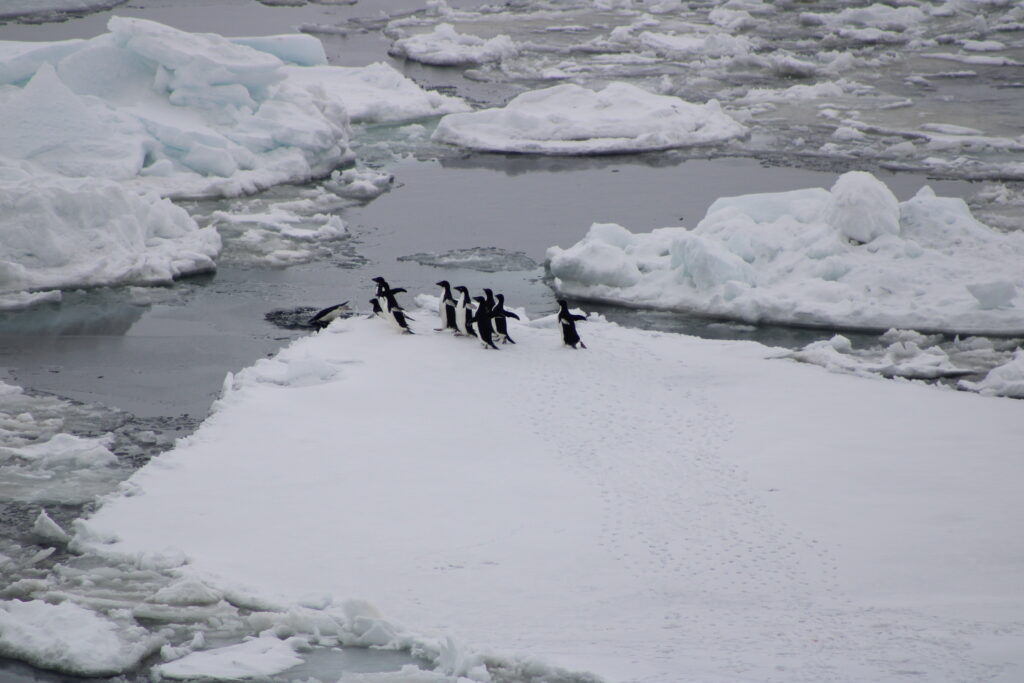
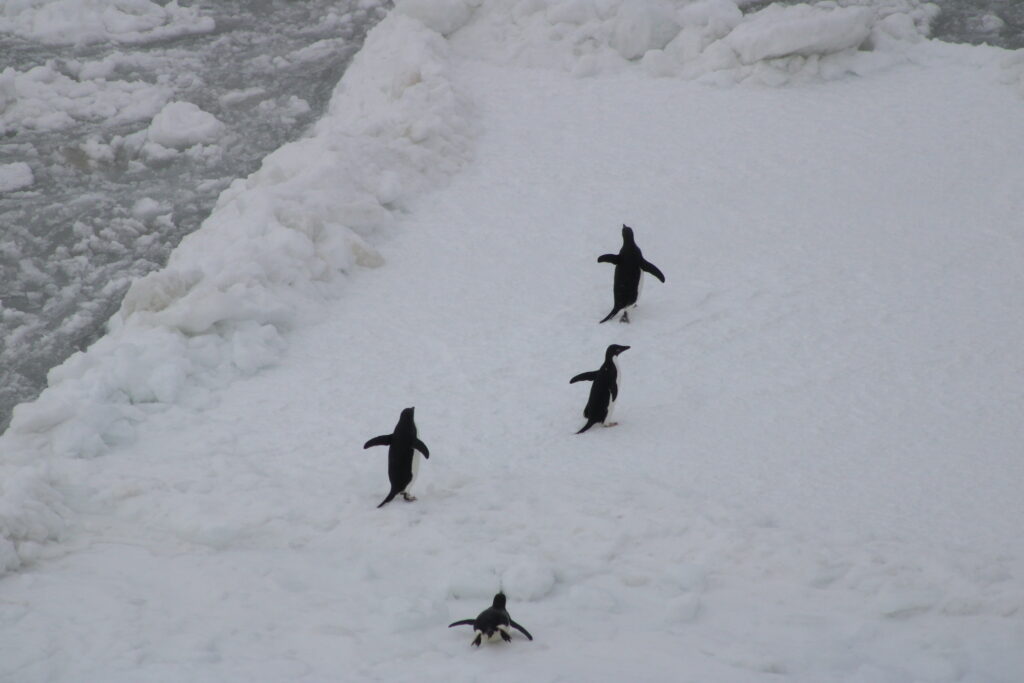
We were up at the bridge to conduct transect surveys for the transit from Devil Island to Brown Bluff shortly after boarding from our zodiac outing. We were overwhelmed by the number of birds we were counting early on as we travelled near, but not yet through, the ice floes. As we entered the ice, we encountered several small groups of Adélies (groups of 4-10 individuals) on ice floes. They would scurry to the other side of the ice and jump into the water as the ship passed. We saw several shags, petrels, skuas, gulls, and terns. We saw a few crabeater seals as well, including two dead crabeaters within 500-800m of each other. They had no visible signs of injury and appeared otherwise healthy, but both had pools of blood around their head.
A group of Adélies scuttle off the edge of an ice floe as the ship passes by. Photo: MariAnna Hinojosa
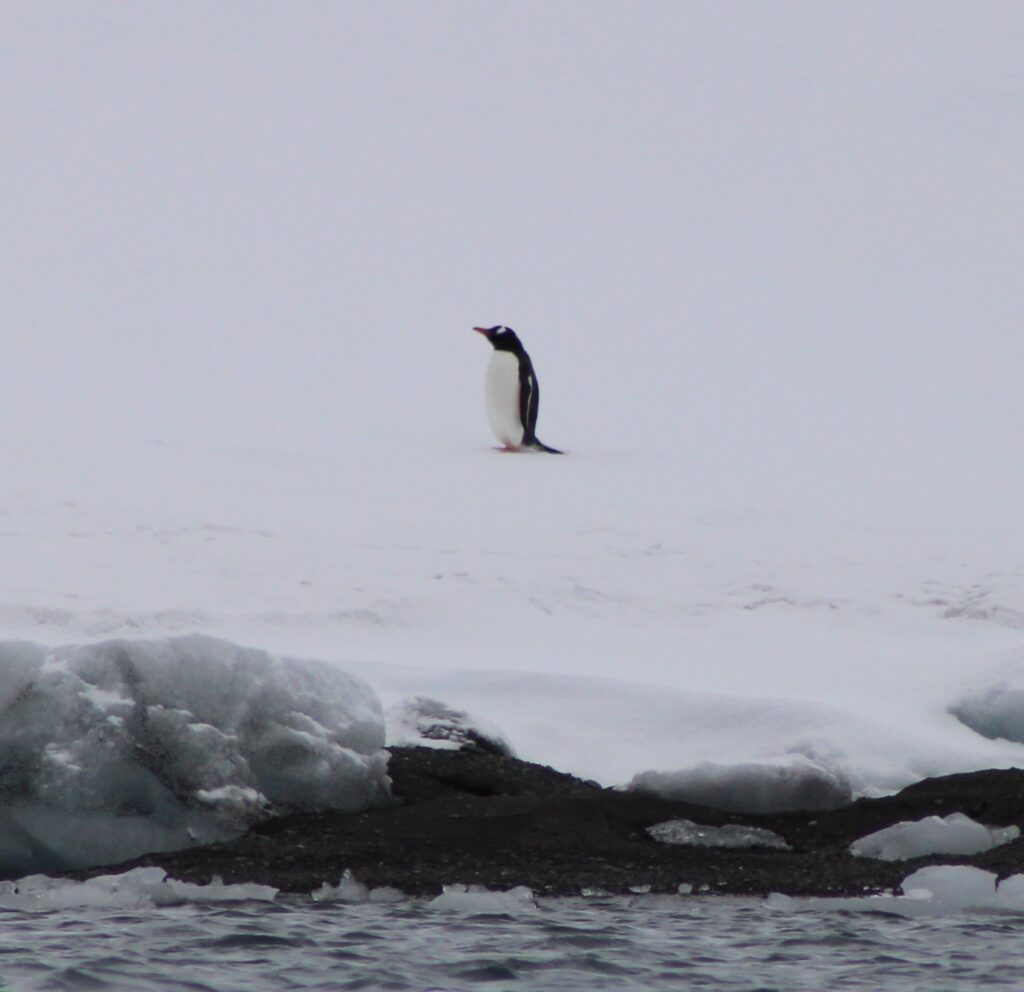
Once we got to Brown Bluff, we were back on the zodiac at 2:00pm. We did two separate hydrophone dips in the Antarctic Sound and heard absolutely nothing other than some booms and cracks from ice. No seals, no whales… nothing! We were quite disappointed as it was our last outing and last chance to collect recording data. Such is science, though! Things don’t always go according to plan (or hopes). As we travelled around on the zodiac there were several large groups of Adélies porpoising around the boat. We concluded our outing with another trip to the Adélie colony to gather photos of the colony. There we saw several skuas and gulls flying around and landing amid the penguins. There was also a lone gentoo penguin at the edge of the colony near the water. We later found out that this area has a new, budding gentoo colony forming alongside the Adélies. This is consistent with their preferred nesting habitat of ice-free rocky areas near beaches. It was a bittersweet ending to our data collection, but we were grateful for every moment and opportunity we had. We got back on the boat to prepare for the final science recap presentation for passengers the next morning as the Charcot began its journey back north through the Antarctic Sound and toward the infamous Drake Passage.
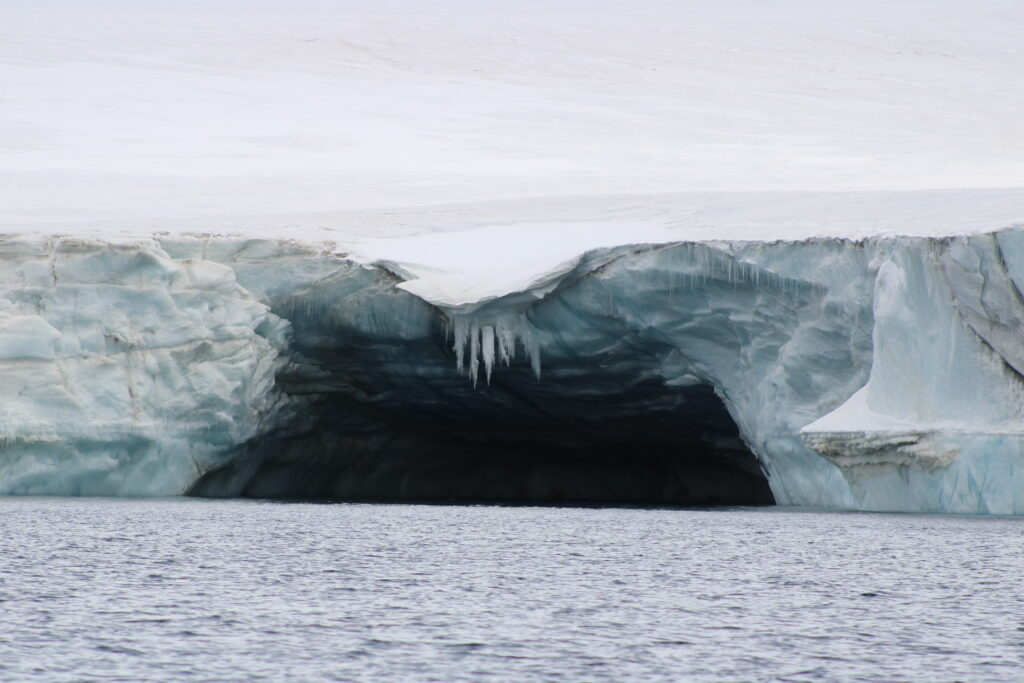
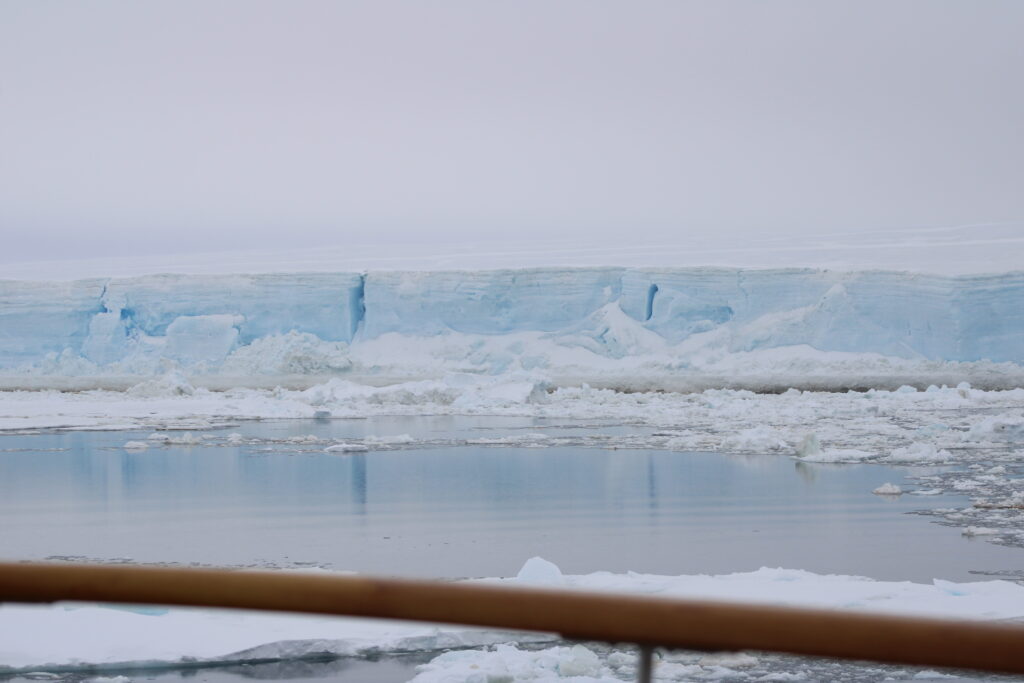
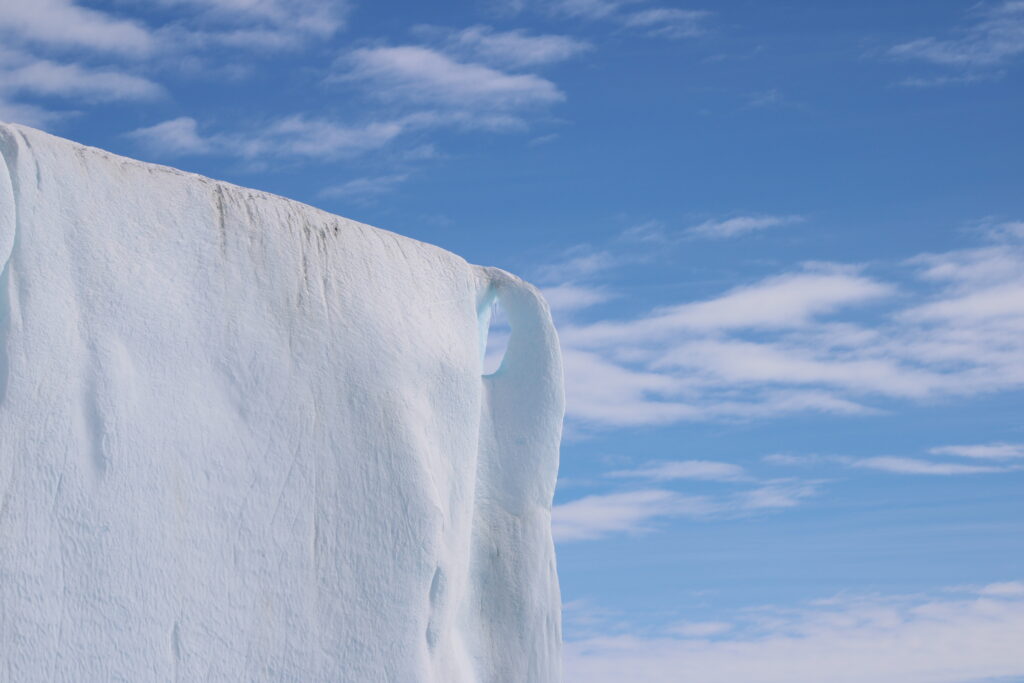
An interesting ice cave and icicles forming in the face of a glacier at Brown Bluff. Photo: MariAnna Hinojosa
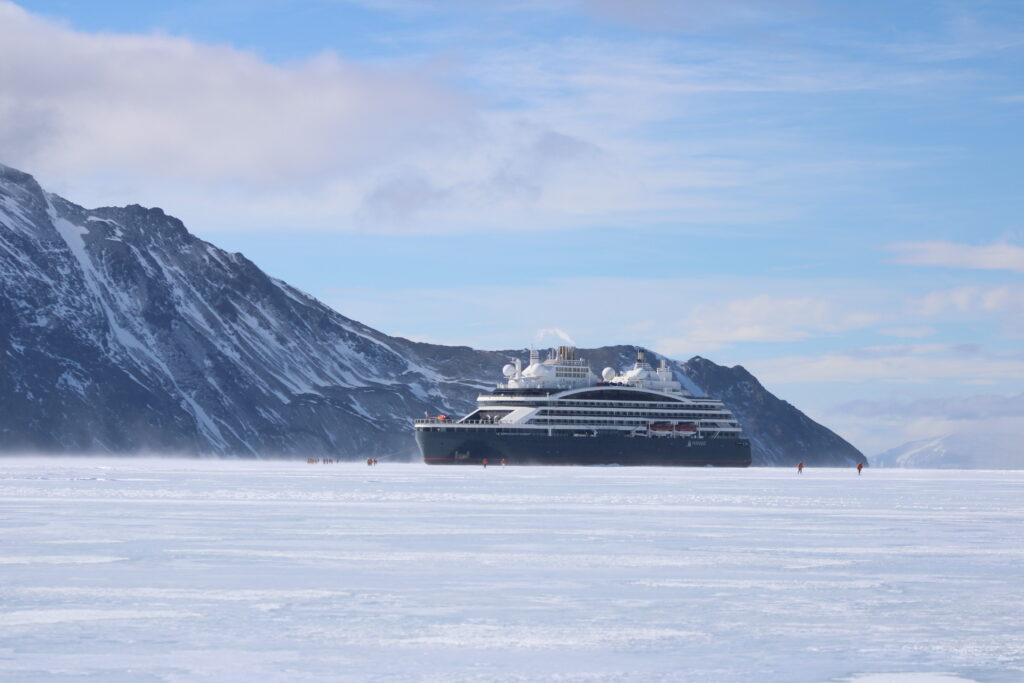
Le Commandant Charcot landed in thick fast ice in the Sjögren Inlet while passengers and scientists alike head out on the ice. Photo: MariAnna Hinojosa
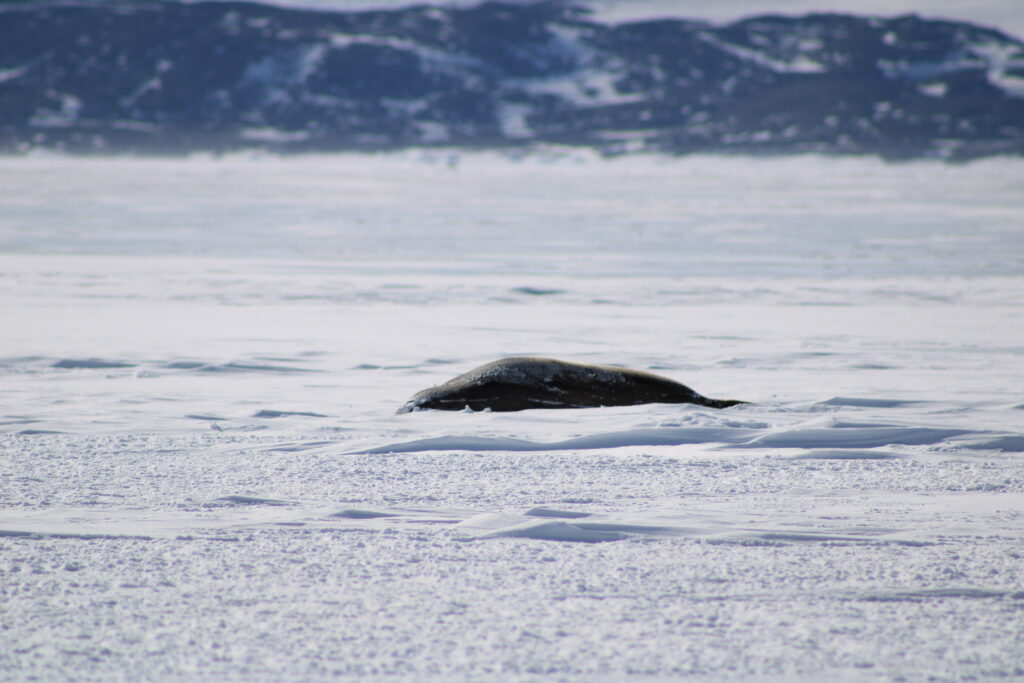
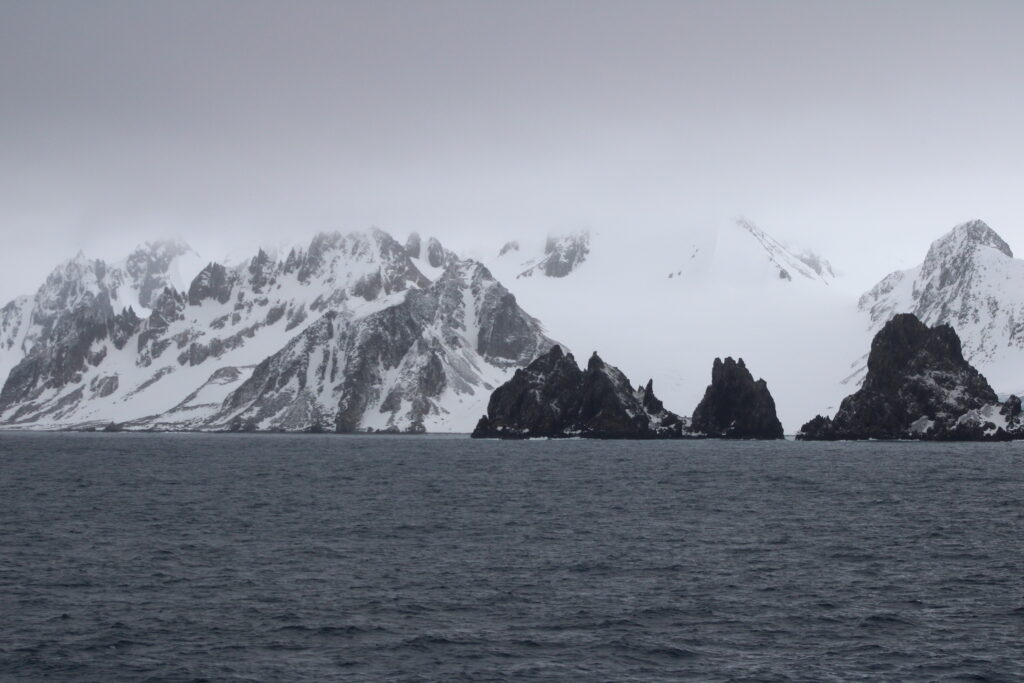
November 8, 2025 After traveling through sea ice overnight, we woke up in the Prince Gustav Channel surrounded by beautiful mountain and glacier views. We traveled between the North Antarctic Peninsula and James Ross Island to stop in Sjögren Inlet to land the boat in fast ice. Between 1996 and 2014, the Sjögren Glacier retreated 62km (39mi) and continues to do so. Due to the glacier retreat, we were able to land in the inlet and walk up to two of the remaining glacier faces for measurements with our glaciologist colleague, Caroline. It was a very chilly and windy walk with a temperature of -5°C (23°F) and 40 knot winds. The wind had blown most of the snow off the surface of the ice, so we used crampons to safely traverse the 1m thick fast ice. It wasn’t until we got back on the vessel that I checked the informational screens in the lobby that informed us that the inlet we had walked over was 368m (~1200ft) deep! Likely due to the high winds, we didn’t see many birds, only a few snow petrels, on our walking survey but we came across one crabeater seal that appeared rather thin and was covered in snow from the wind.
A crabeater seal rests on the sea ice and is dusted with snow from the high winds coming down off the glaciers. Photo: MariAnna Hinojosa
Earlier that morning while we were transiting the channel, we hosted a “Scientists Corner” with Caroline in the Observatory Lounge. This was intended to be a casual guest interaction and an opportunity for passengers to ask us about our project and what we have done so far. We had 6 guests from Australia, New Zealand, France, and Austria join us and we chatted about everything from our projects to science communication and current events. It was a nice time to meet new passengers we hadn’t interacted with yet. That evening we also joined the passengers and crews on the ice for a group photo in the shape of an “A” for “Antarctica”. While the ship transited back north toward the Antarctic Sound, all three of us scientists concluded the evening with dinner with a fellow American guest who had stopped to chat with us a few times. Our time in the Weddell Sea was officially coming to a close and we were excited to see what we would see and hear in the last couple of days on our expedition.
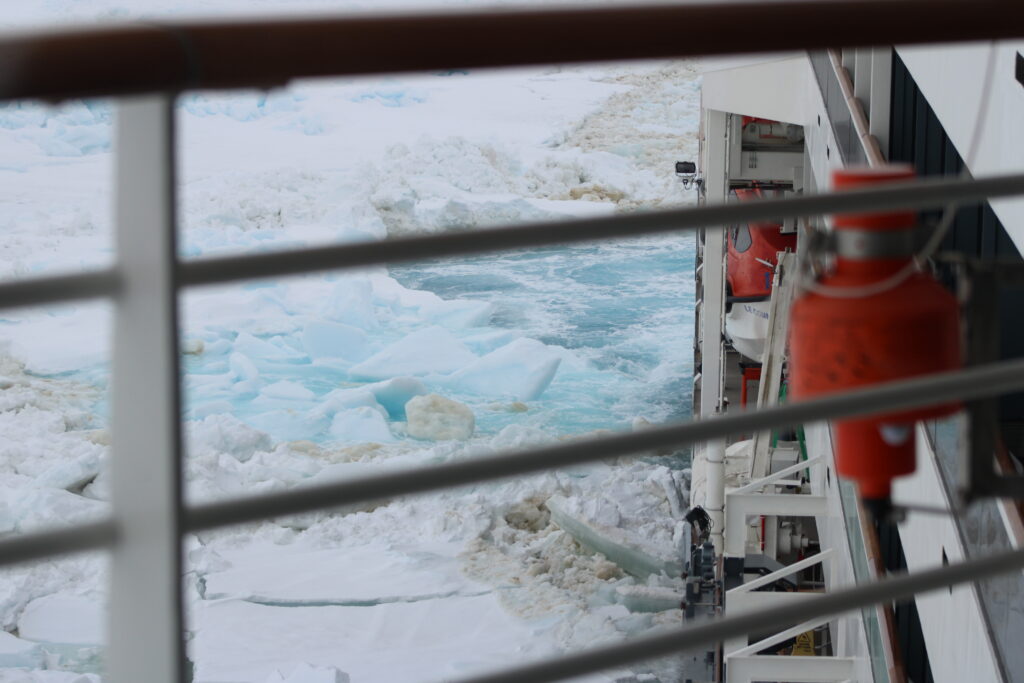
The broken fast ice visible from the port side of the Charcot.
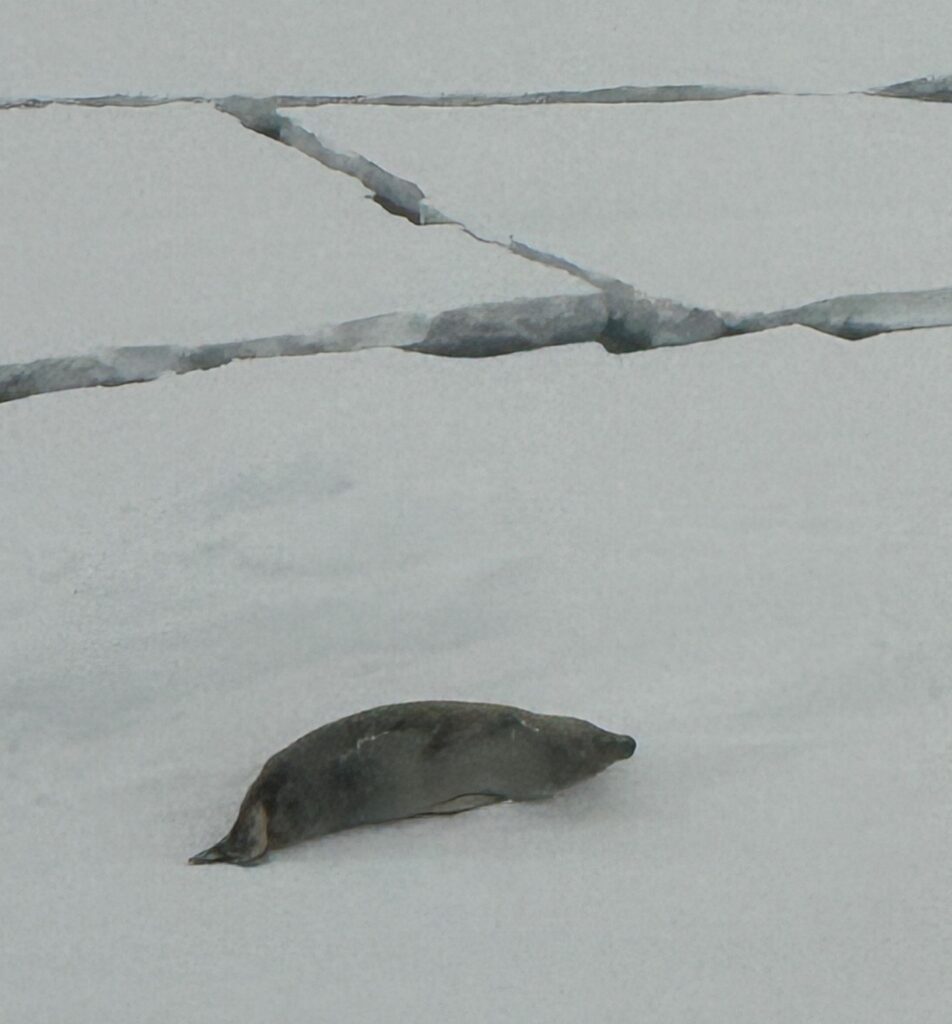
A crabeater seal rests on the ice that has recently been split overnight. Photo: MariAnna Hinojosa, iPhone 15 Pro Max.
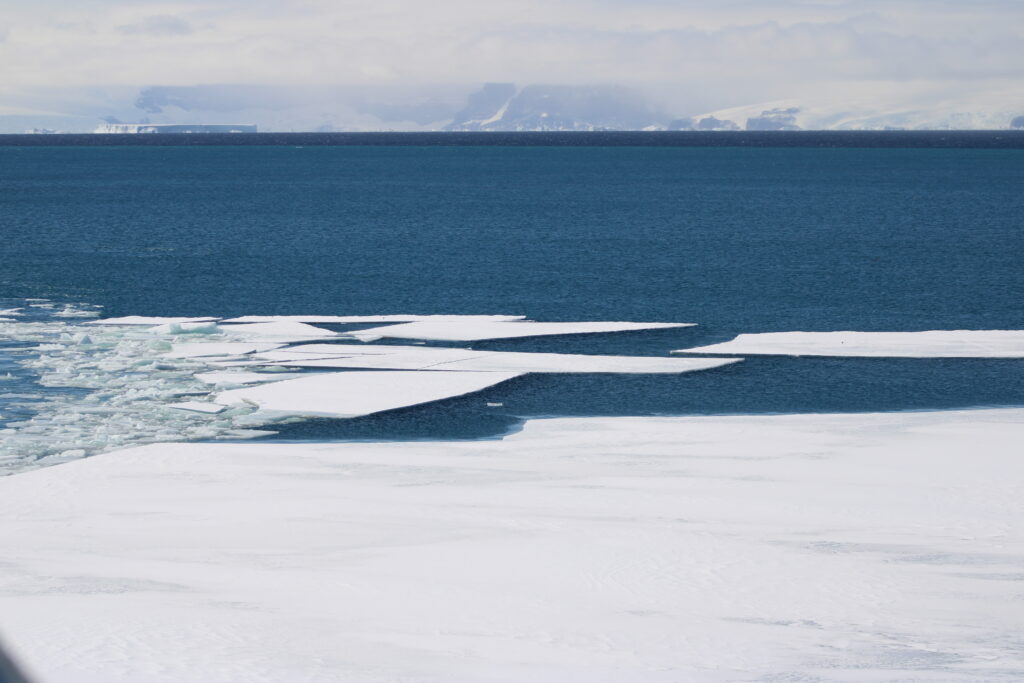
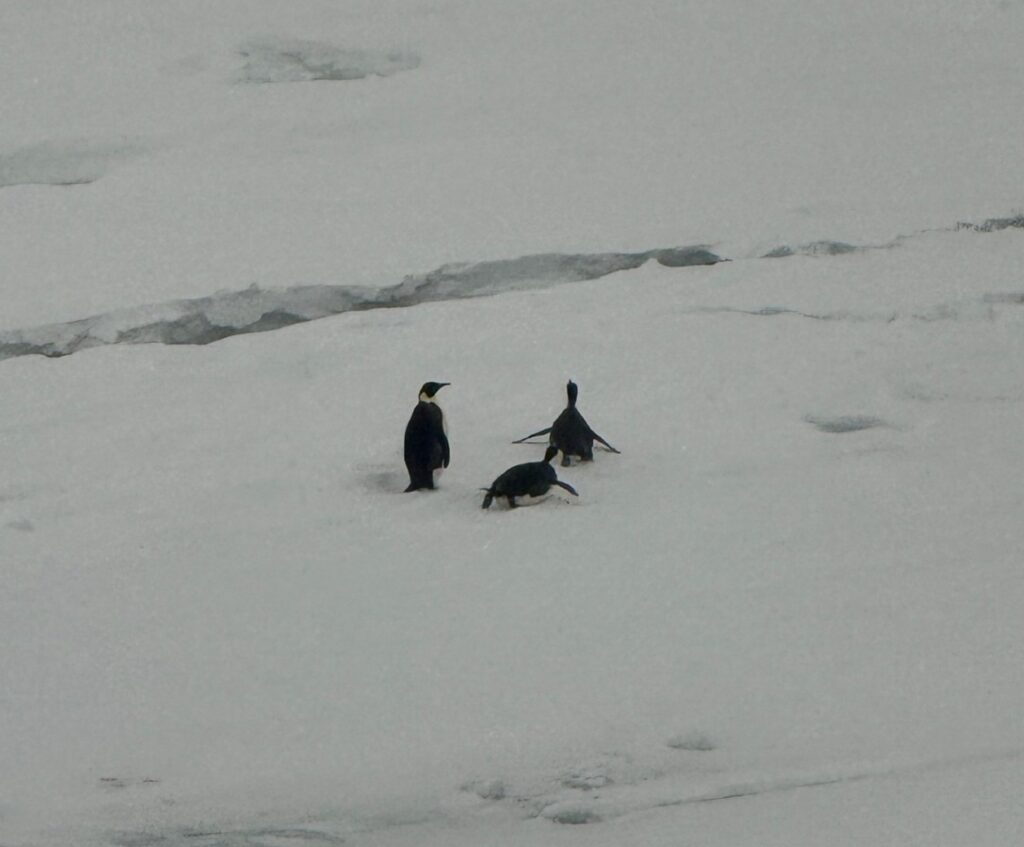
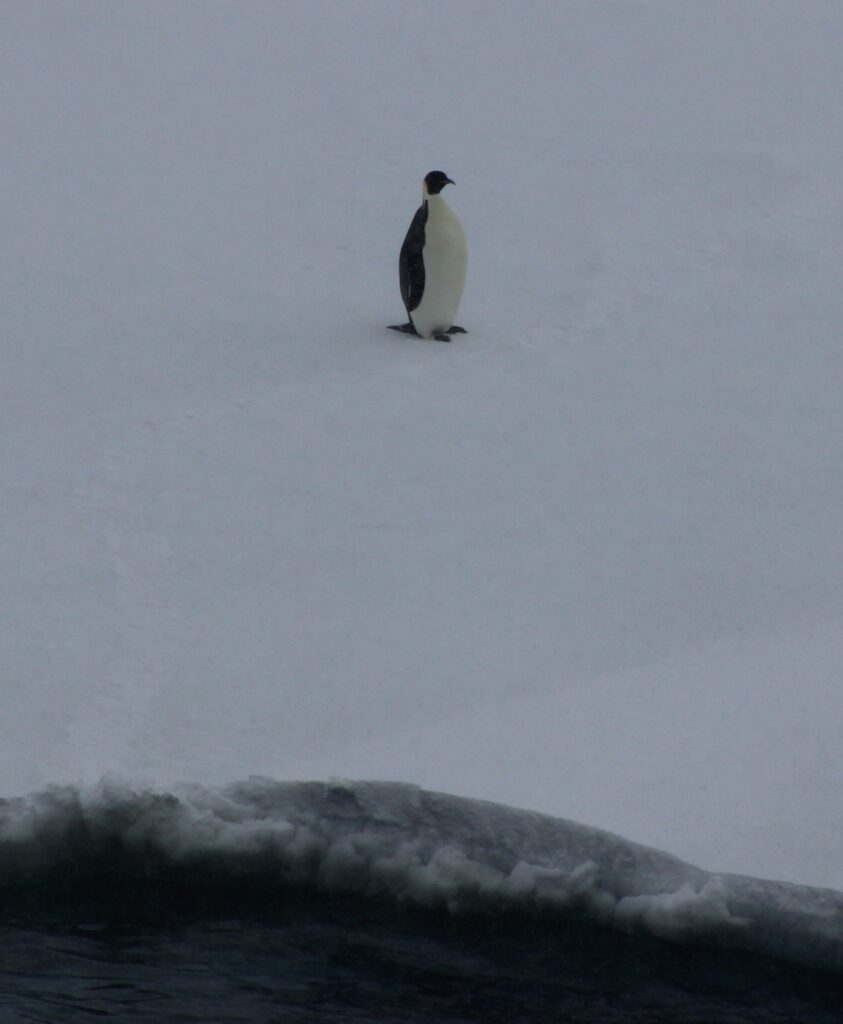
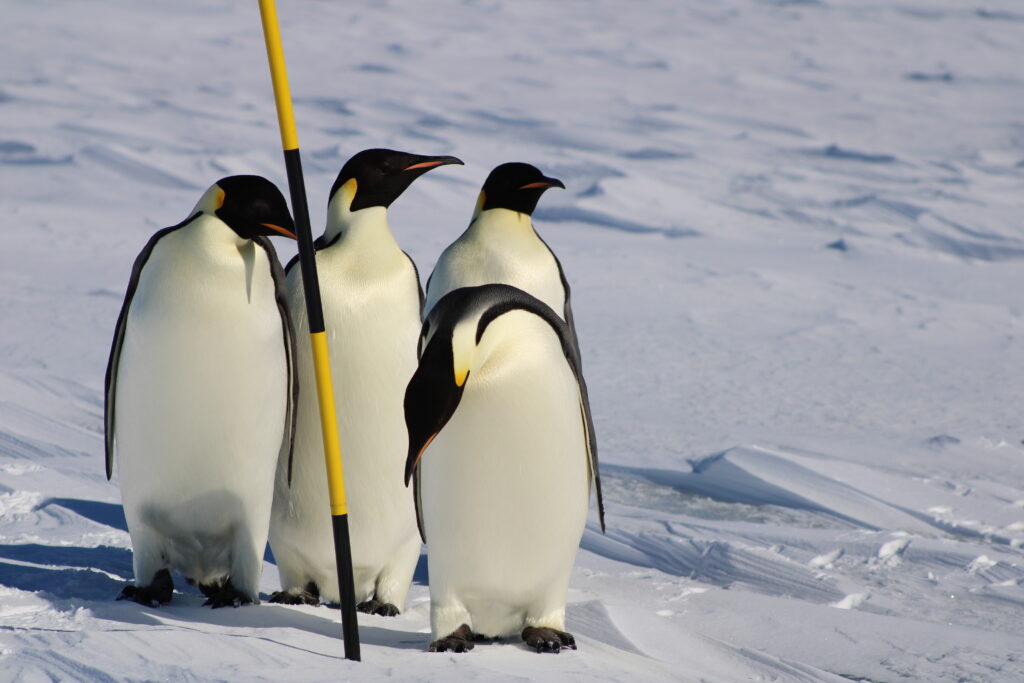
November 7, 2025 During our morning routine of waking and opening the curtains to peak out the balcony window, we were surprised to find the thick sheet of ice that had surrounded us, and we had walked on the night before, was broken up. The ice sheets, now split by large cracks with deep blue water peeking through, were speckled with several groups of emperor penguins and a handful of crabeater seals. We counted over 50 penguins and four crabeater seals within the first hour of waking.
Three emperor penguins on the sea ice that split overnight. Photo: MariAnna Hinojosa, iPhone 15 Pro Max.
The Charcot began heading southwest to round the southern edge of Snow Hill Island and were making progress through very thick ice packs. We spent the morning conducting transect surveys from the bridge. A few penguins, emperor and Adélie, and crabeater seals were spotted, both on ice and in the water. We were nearing the southernmost part of Snow Hill Island when we were halted around 11:45am by a large, impassable sheet of ice. The bridge was then closed for focus during challenging navigation and therefore our morning survey concluded. The captain then decided to head back north and transit to the west side of James Ross Island into the Prince Gustav Channel, known for its deep basins and glacial history, in the northeastern Antarctic Peninsula.
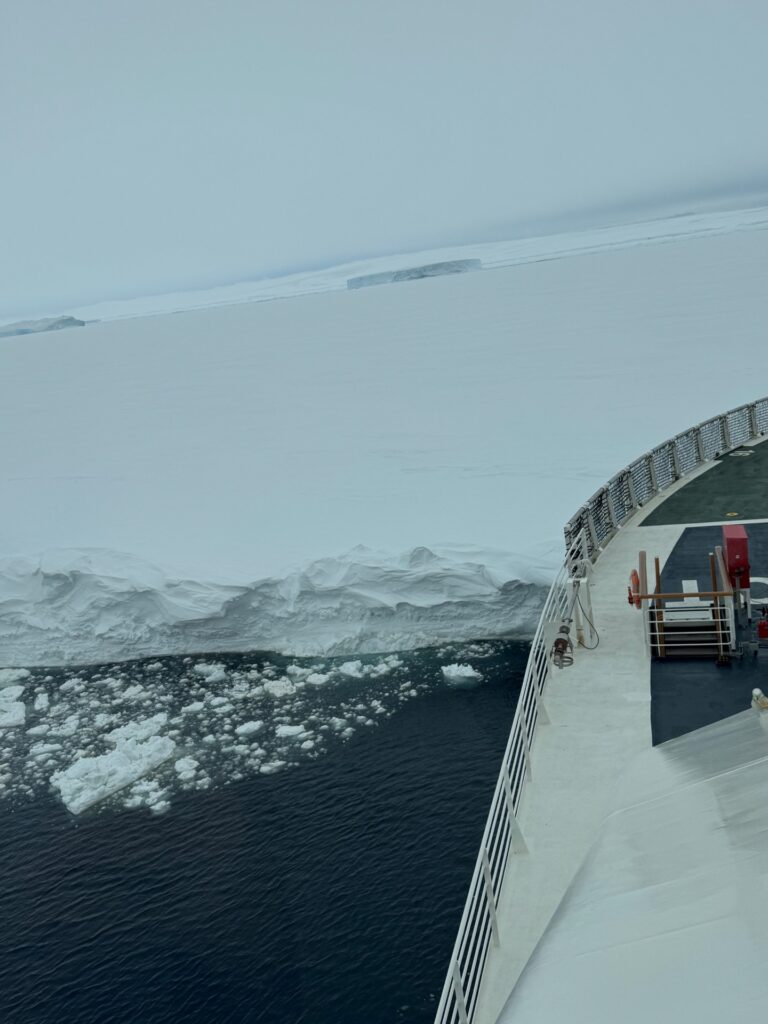
Le Commandant Charcot charges through thick pack ice. Photo: MariAnna Hinojosa.Emperor penguin drifts by on an ice flow as the ship passes by. Photo: MariAnna Hinojosa.
We stopped briefly along the east side of Snow Hill Island against a large ice floe that the captain estimated to be about 50 years old. He was excited to share that it was a rare finding! Our glaciologist friend, Caroline, measured it to be 4m tall above the surface of the water meaning it was predicted to be 40-50m in total! There was a small clearing of open water around us between several large icebergs and ice floes, so the plan was to get passengers out on zodiacs while we conducted surveys from the 5th deck aft bridge. Unfortunately, the weather took a sudden turn for the worse and it started snowing shortly after all zodiacs were lowered to the water and guides had already taken them out (naturally!). The zodiacs were recalled, and the outing was cancelled. We were able to complete our survey and spotted two emperor penguins swimming in the water, several snow petrels, and surprisingly a snowy sheathbill. Shortly after, we were back in route heading north. We travelled very slowly through thick sea ice and saw few birds and mammals before concluding our surveys for the day.
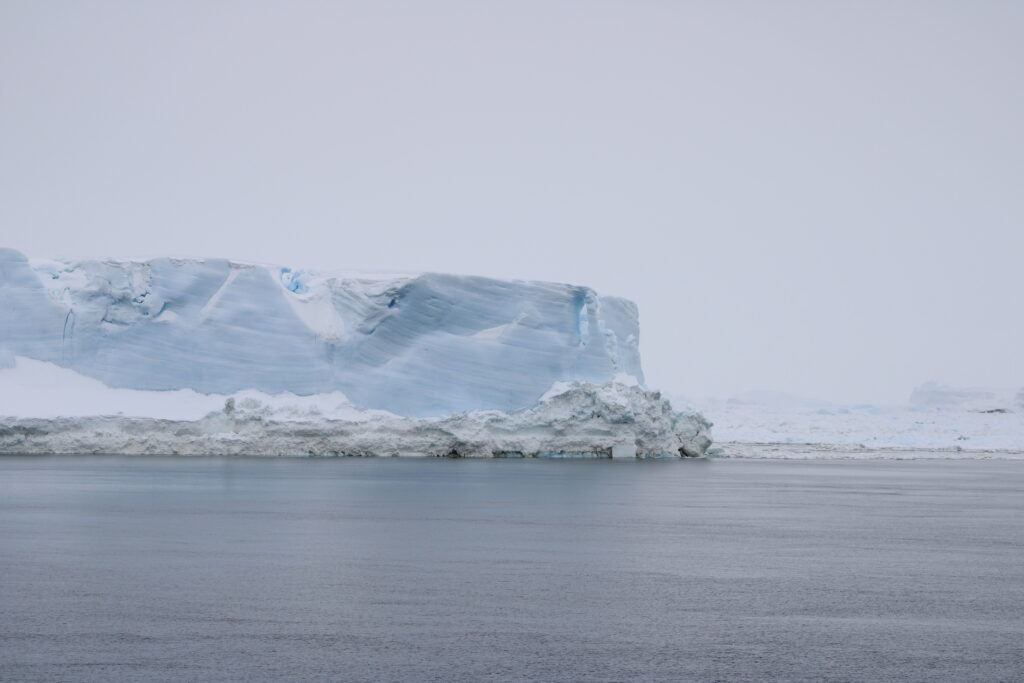
The Charcot rests against a 4m ice floe estimated to be about 50 years old. Photo: MariAnna Hinojosa.A large iceberg on the starboard side of the ship. Photo: MariAnna Hinojosa.Another large iceberg directly behind the vessel. Photo: MariAnna Hinojosa.
Renee spent the evening dining with the same three guests MariAnna had dined with last Sunday. They discussed many topics including the carbon cycle, carbon sequestration, the impacts of whaling, and the delicate balance of coastal ecosystems and the role of keystone species. It was a delightful evening with delicious food and engaging discussion. That evening we were gently rocked to sleep as we continued north through the thick pack ice. We looked forward to, and hoped for, good conditions the next day to get out on the ice or on a zodiac again for more surveys and hydrophone dips.
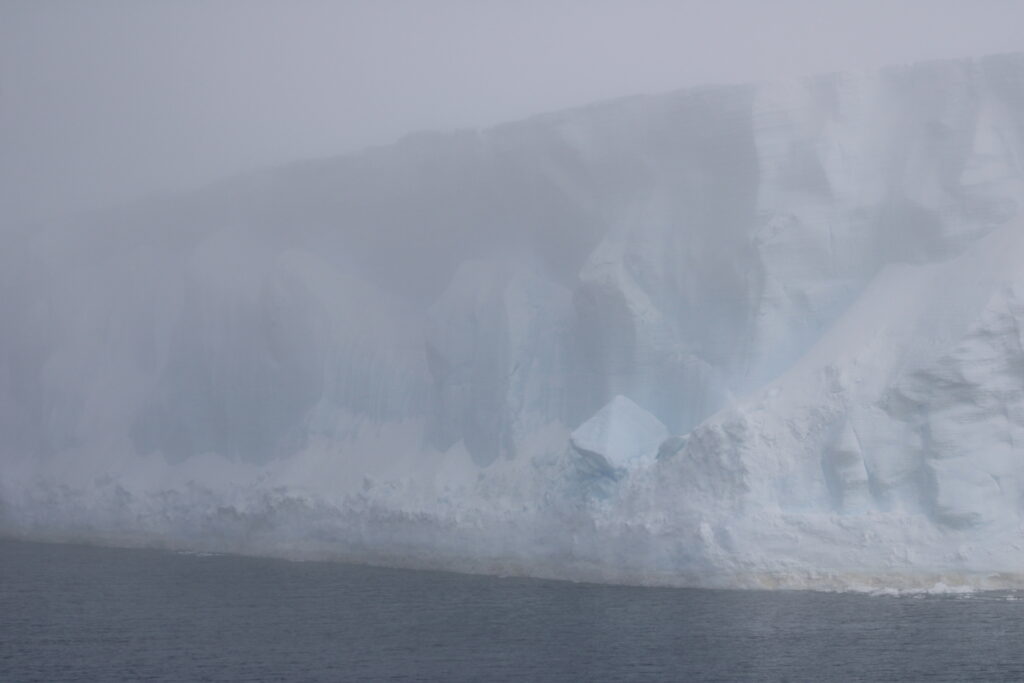
An iceberg appears through the thick fog as the Charcot sails by. Photo: MariAnna Hinojosa
November 6, 2025 We were greeted by large pack ice floating by our window when we awoke in the morning. It was a foggy, cold morning, especially in contrast to the brilliant sunny day prior. Since we were transiting to the east side of Snow Hill Island, and northwest Weddell Sea, we hurried to do morning transects from the bridge. We were limited to 100-300m visibility with the fog and we again noticed few birds and no mammals as we sailed through the ice. We decided to head down to the 5th deck where we had access to view from the aft bridge to see if there was more activity where the water had been exposed by the passing of the ship. It wasn’t until we got closer to the open water, and passed a large iceberg eerily peaking through the fog in the distance, that we saw 5 leopard seals long, dinosaur-like heads breaking the surface of the water about 300m away from the boat.
Broken chunks of ice left behind as the ice breaker charges through the sea ice. Photo: MariAnna Hinojosa
By midday, the sun was out and we had landed in fast ice. The helicopter crew went out to scout the ice and penguin colony. Based on their observations Captain Devorsine decided it would be best to find a new location to land for the day. A new, ideal location was found, and we landed for the rest of the day and overnight. Upon landing, an announcement was made to the passengers that “a group of 10 curious emperor penguins were making their way toward our ship” and we would commence group excursions. That was our cue to head to the gangway to prepare for a survey walk with the glaciologist while she measured a nearby grounded iceberg.
Le Commandant Charcot nestled in the sea ice desert. Photo: MariAnna Hinojosa
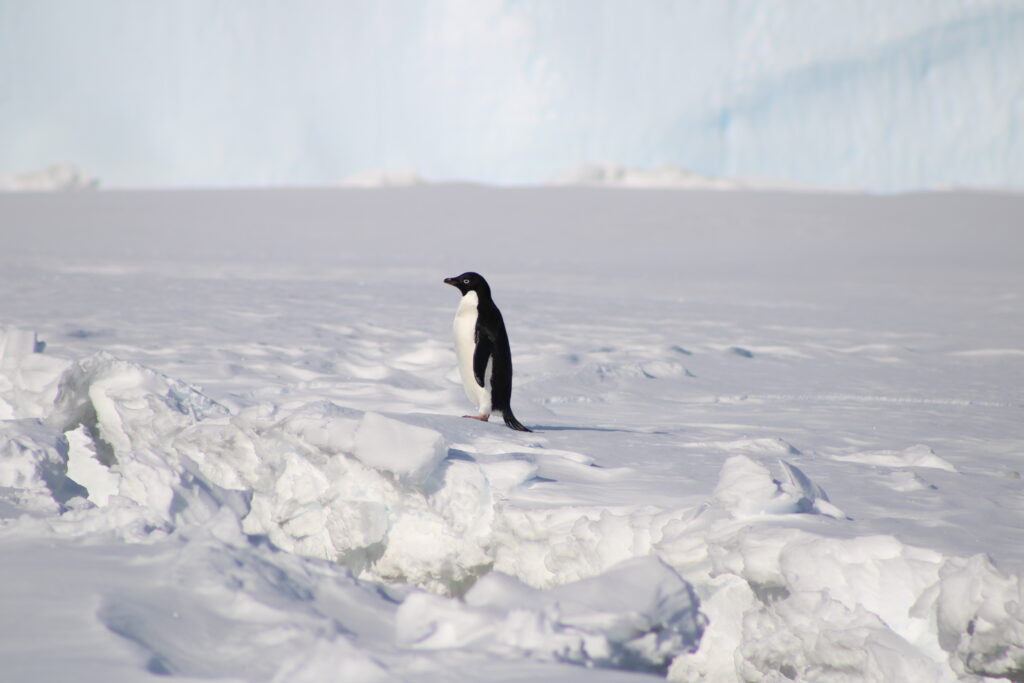
On our walking survey we saw the group of 10 emperor penguins, a curious (and noisy!) Adélie penguin, and several snow petrels. We often come across snow petrels near the icebergs as they flew out of nooks and holes in the ice. They prefer to roost in icebergs and cliffs near water but can also be found inland. We also observed, but did not approach closely or cross, two large cracks between the ice sheets. We suspected penguins were using these to leave the water since there were many footprints in the snow. Our suspicions were confirmed when we saw eight emperor penguins slipping out of the water onto the snow through the windows at the restaurant later that night. Unfortunately, but not surprisingly, no pinnipeds were seen and that was to be expected since we were so far from open water. The landscape could only be described as a snowy desert, and Renee even compared its likeness to the Sahara. Snow, ice, and icebergs everywhere in peaks, chunks, and valleys except for the occasional 1-2m crack in the ice sheet.
A curious Adélie penguin came over to inspect the group but stopped short of the crack between the ice sheets. Photo: MariAnna HinojosaA snow petrel soars above an iceberg it calls home. Photo: MariAnna Hinojosa
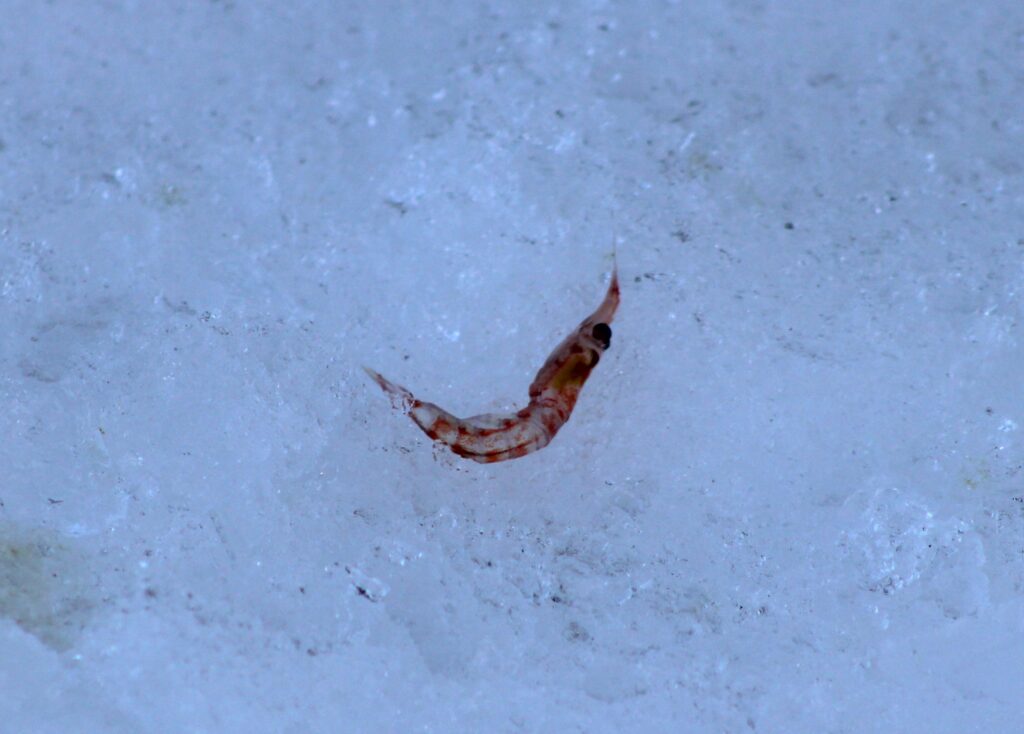
The most exciting finding of the day was brought to our attention by a naturalist near the vessel. As we approached the gangway she asked if we wanted to see some krill, and we enthusiastically jumped on the opportunity. The overturned ice from the ship entering the fast ice had brought up 4 or 5 individuals that were laying on the ice. We were very excited to get to see and photograph them!
Krill are an important (some may say the most so) part of the Antarctic food web. This one was seen at an unusual vantage, on top of the ice. Photo: MariAnna Hinojosa
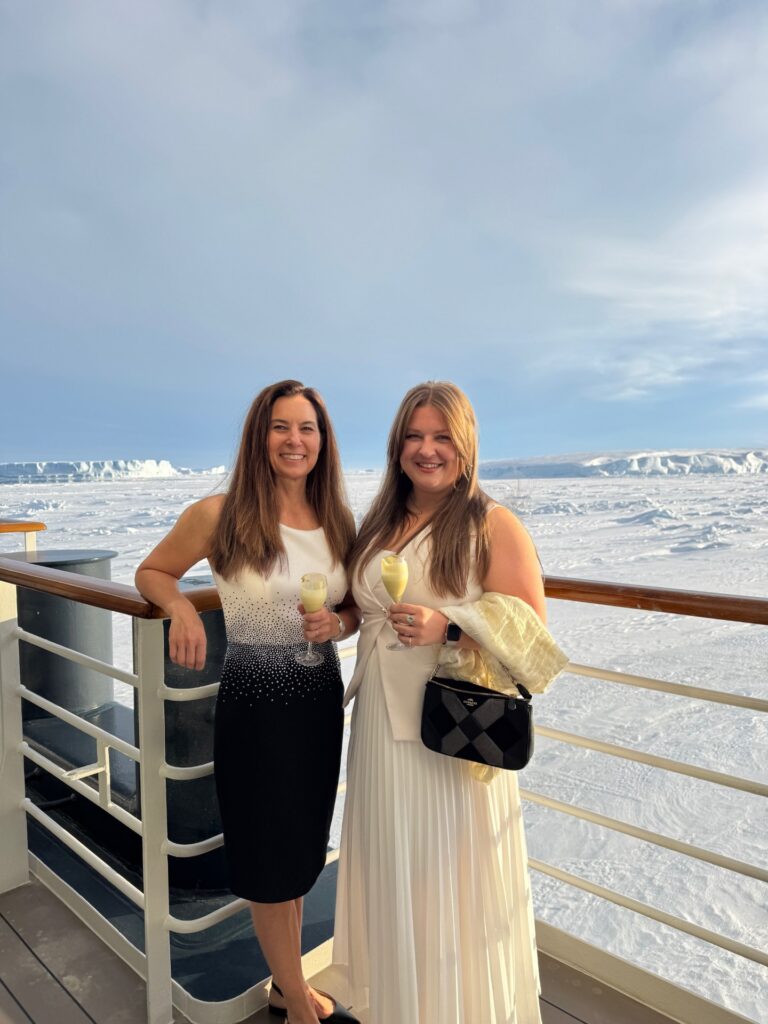
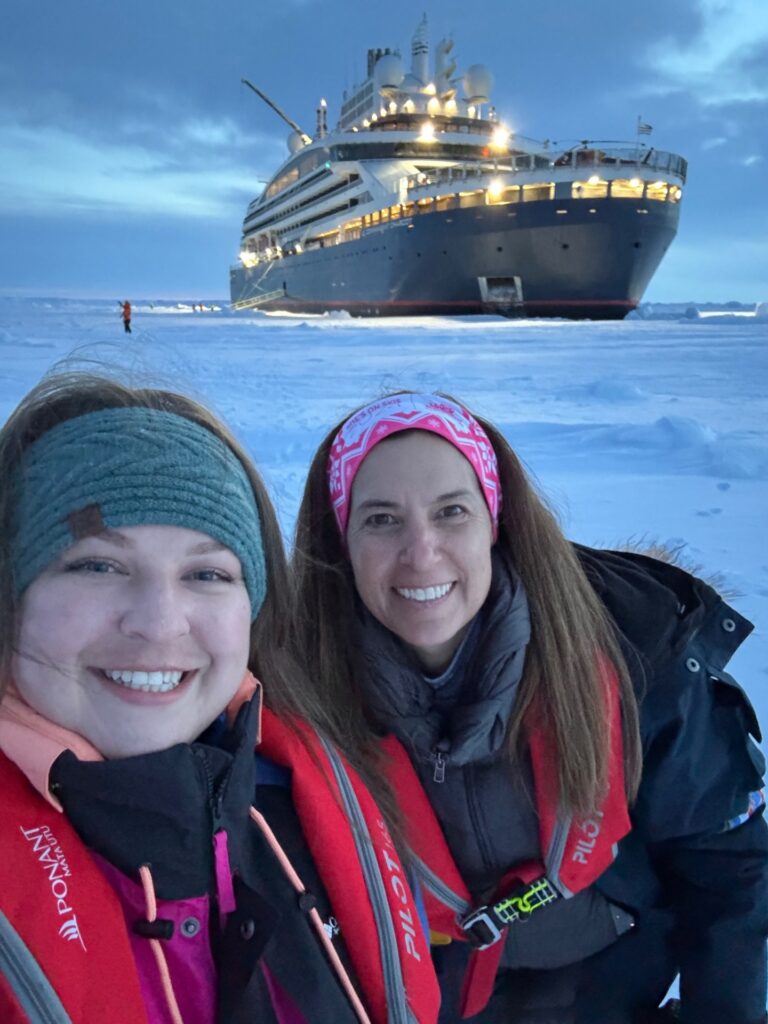
Once on board we prepared ourselves for the Officer’s Cocktail party with a dress code of white, black and white, or navy. We dressed in our finest and headed downstairs to enjoy a cocktail and small bites while chatting with passengers about the last few days’ adventures. We concluded the night with a spontaneously offered “Digestive Walk” out on the ice at 10:00pm and were in awe with the blues and purples of the icy landscape and the way the ship lights shone against the snow. MariAnna stepped into the “Parka Party” after the brief walk and enjoyed some warm mulled wine and a DJ spinning 70’s disco for several guests. Earlier in the day, MariAnna had met with a guest that asked to chat over coffee. She was interested in hearing more about the Adélie penguin foraging project MariAnna had worked on with graduate student, Suzie Winquist. Between surveys, zodiac excursions, and data management we try to engage with the guests. We do this through informal meetings and by attending events to both meet and interact with new guests and show our appreciation to the Cruise Director and Expedition Leader for their coordination efforts and enthusiasm in our participation.
Renee (left) and MariAnna (right) attend the Officer’s Cocktail party before dinner. Attire is white or black and white. Photo: Caroline NeedellMariAnna (left) and Renee (right) enjoy an evening walk on the ice for a unique look at the icy landscape and a view of the Charcot’s light’s at night.
The view of La Commandant Charcot from the ice while landed between Lockyer Island and Snow Hill Island. Photo: MariAnna Hinojosa
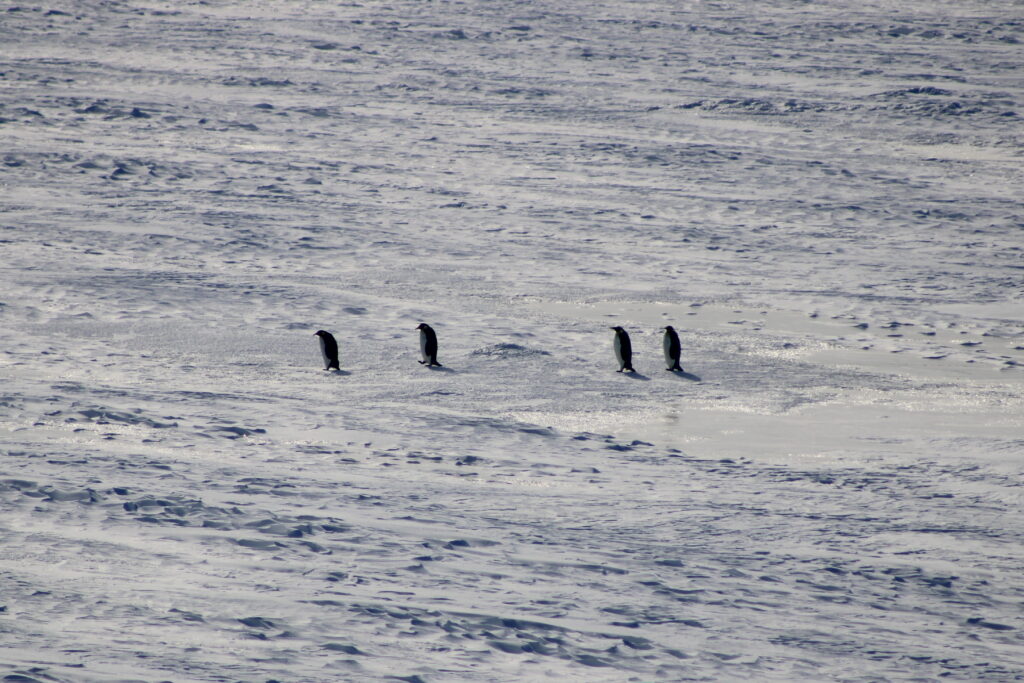
November 5, 2025 We woke up early surrounded by brilliantly glistening sea ice and were pleasantly surprised to see four of the world’s largest penguins marching (or more accurately described as shuffling) next to our vessel toward the edge of the sea ice that we had spent the previous night landed on. We were officially in the land of the emperors and had an exciting day out on the ice ahead of us.
By 8:30am, we were down in the gangway ready to embark on both of our first times on sea ice. The expedition guides had determined the day before that the ice was 1.5m thick and safe for passengers to traverse on within designated boundaries. We were completely frozen into our landing location and could not deploy zodiacs, but we were still exhilarated to be going out on the ice! It was a brisk 4°C but the sun was shining and there was absolutely no wind. Within short measure we were sweating through (and shedding!) our plethoric layers.
MariAnna (left) and Renee (right) were excited to step out on the ice for the first time and to find seals and seabirds. Lockyer Island behind. Photo: Caroline Needell
Immediately as we stepped on the ice, we had a group of 5 emperors next to the vessel on the ice edge. We walked away from the unstable ice edge and walked toward a group of seals near a landed iceberg. On our way we were greeted by the same four penguins we saw from our balcony earlier. They were very curious and vocal as they attempted to approach us. We backed away slowly (much to their disappointment) as they continued to advance until they decided to head a different direction.
Four curious emperor penguins inspect the boundary markers placed by expedition guides. Photo: MariAnna Hinojosa
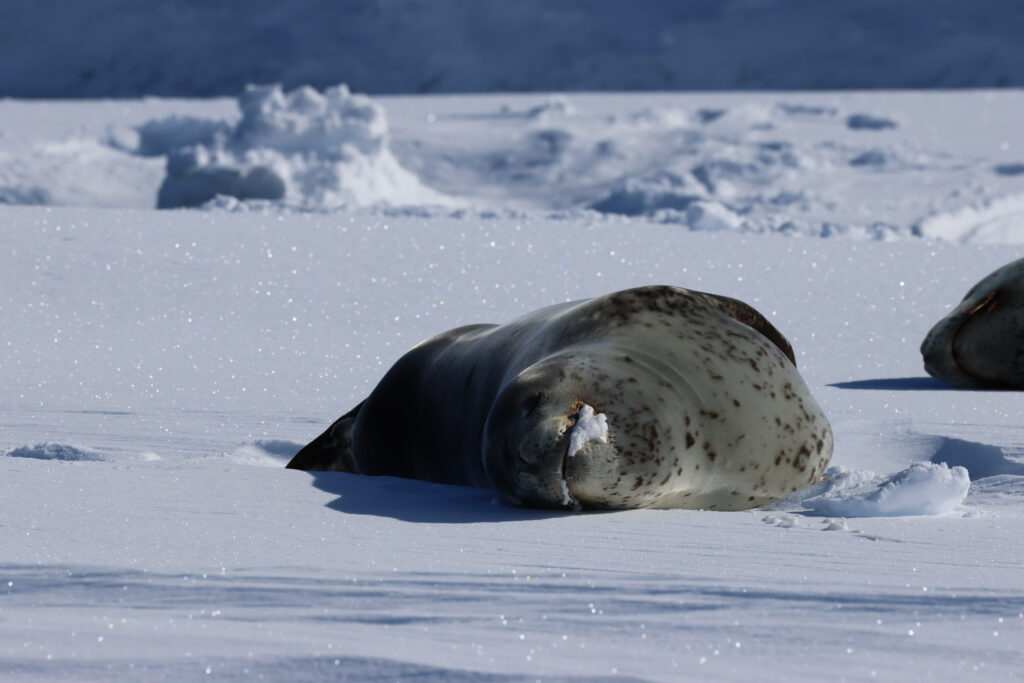
We carried on toward the sleeping seals that we had suspected were Weddell seals from a rough visual at distance, but upon arrival we were pleasantly surprised to find they were three leopard seals and a crabeater seal all sharing an apparently ideal napping location. We photographed each individual while we listened to the leopard seals snooze before carrying on to another group of seals a bit further from the boat, and beyond guest walking range. We came across a lone crabeater seal with several killer whale scars that earned him the comparison to a russet potato. As we approached the other seal group an extremely eager Adélie penguin noticed us and beelined in our direction all the while calling and sliding across the ice as fast as his little legs would propel him. When he got too close, we stepped back, which stopped him in his tracks. He assessed us for a moment before deciding we were not interesting and proceeding back in the direction he came, coincidentally in the same direction we were headed, but this time he kept a safe distance near the ice edge. We observed four more crabeater seals, two of which were pups, and with that, concluded the first of two ice walks.
A leopard seal sleeps soundly on the glistening snow near other leopard seals. Photo: Renee AlbertsonA male crabeater seal lays on the snow-covered sea ice. The marks on his stomach are scars from killer whale encounters. Photo: MariAnna Hinojosa
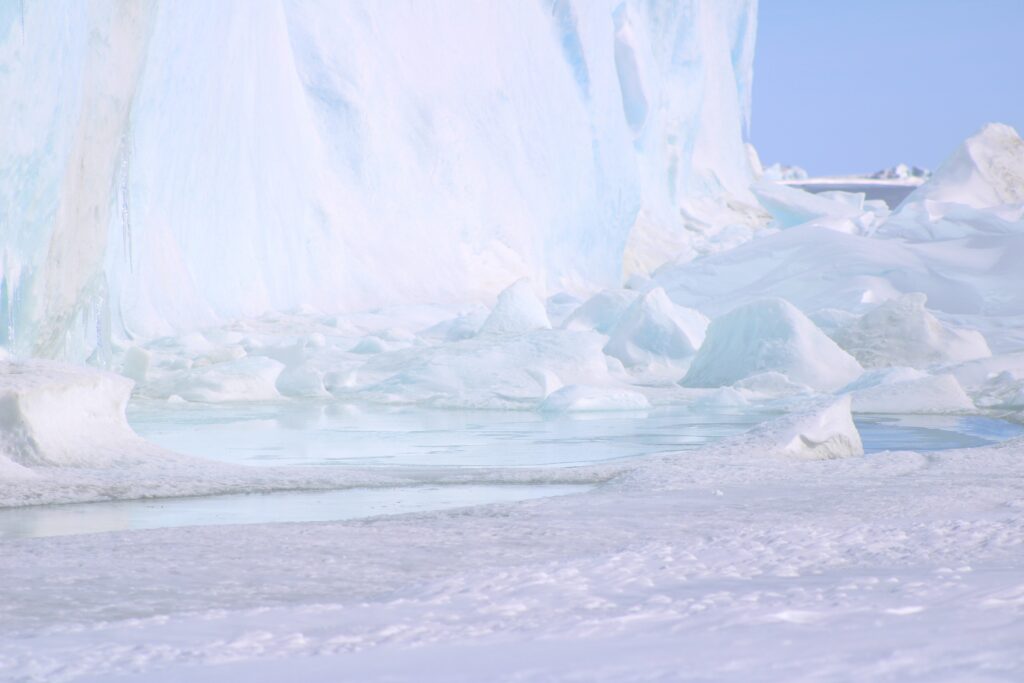
After a quick lunch we were back out on the ice heading the opposite direction, toward Lockyer Island, south of James Ross Island and aptly named after the Royal Navy captain and one of Ross’s friends. We were heading out to survey seabirds and pinnipeds on the ice while our glaciologist companion measured a glacier on the island. Near the glacier we found seven crabeater seals, one leopard seal, and two emperor penguins, one of which stayed within a group of five seals while the other headed inland. We headed away from the ice edge towards a large landed iceberg to measure but only saw one crabeater and one Weddell seal at a distance. We were surprised by a snow petrel that quickly flew out of a hole in the corner of the iceberg that it had taken shelter in. The stillness in the air had the sounds of the melting iceberg water dripping carry over the snow, only interrupted by the occasional call of a penguin or the crunch of a boat in snow and ice.
An interesting feature in the corner of an iceberg stuck in the sea ice. Photo: MariAnna HinojosaA pool of melted iceberg water collects at the base of the iceberg. Photo: MariAnna Hinojosa
After a total of 6 hours on the ice and 13.3km (8.25mi) covered on the ice, we were sunburnt, exhausted, and exhilarated by the experience! Other notable sightings include an unidentified skua and a few kelp gulls, but alas no whales… Guests were excited to share with us the footage of their incredible opportunity to see emperor penguin chicks after braving the 6hr round trip hike to the Snow Hill Colony, one of the northernmost breeding sites for emperors. We stayed up late enough to see the largest and brightest full moon of the year (coincidentally being the beaver moon, Go Beavs!). The sun keeps the sky illuminated well after 10:00pm so it was a late night for us. We looked forward to a good night’s rest and what the next day would bring as we transited out of Admiralty Sound and around to the other side of Snow Hill Island overnight.
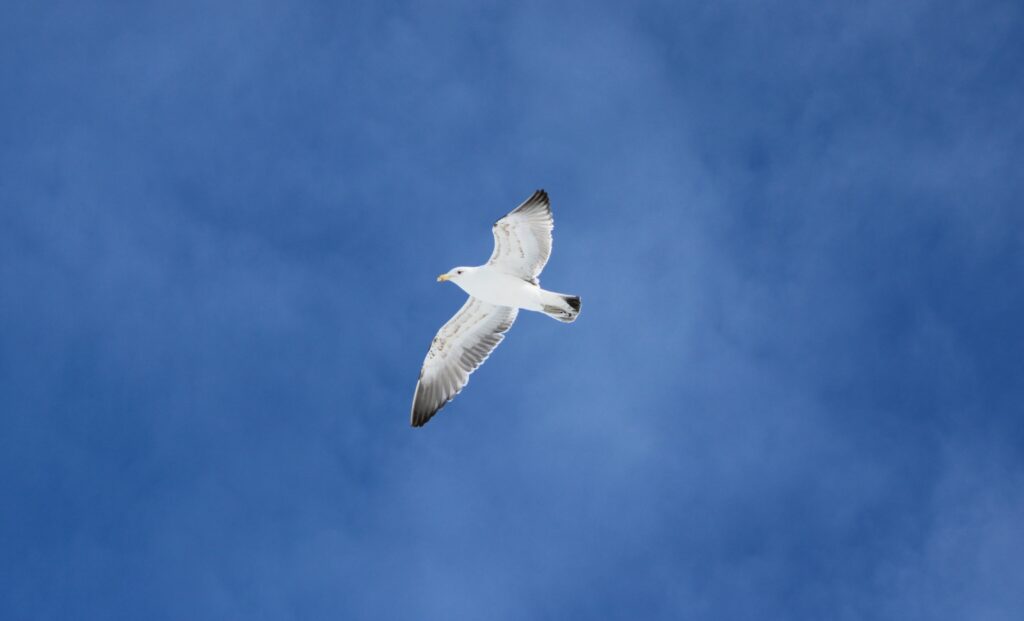
A kelp gull soars above in the clear, blue sky. Photo: MariAnna HinojosaThe super moon rising over the ice floating on the water. Photo: MariAnna Hinojosa, iPhone 15 max pro.
November 4, 2025 Overnight we crossed the Bransfield Strait and our morning was spent transiting the Antarctic Sound which gave us a great opportunity to get in several transect surveys from the bridge. During our first survey from 8:00-9:00am we saw new birds, Wilson’s storm petrels and Adélie penguins, and by the end of the survey we were in our first ice floe. Interestingly, we noticed there weren’t many birds surveyed while transiting through ice floes, other than penguins. By 10:00am we were out of the Sound and on our way to Snow Hill Island, where we hoped to find emperor penguins making the trek to the ice edge to forage now that their chicks have hatched. We did two more transect surveys before our afternoon science presentation to guests in English. During our last survey, right before we had to hurry off to our presentation, we saw an ice floe with four or five emperor penguins about 300m away. Our first sighting of emperors on this trip! By the time we concluded our presentation we were nearing our ice landing location between James Ross Island and Snow Hill Island.
Four Adélie penguins “hurry” across a chunk of floating ice as the boat passes by.
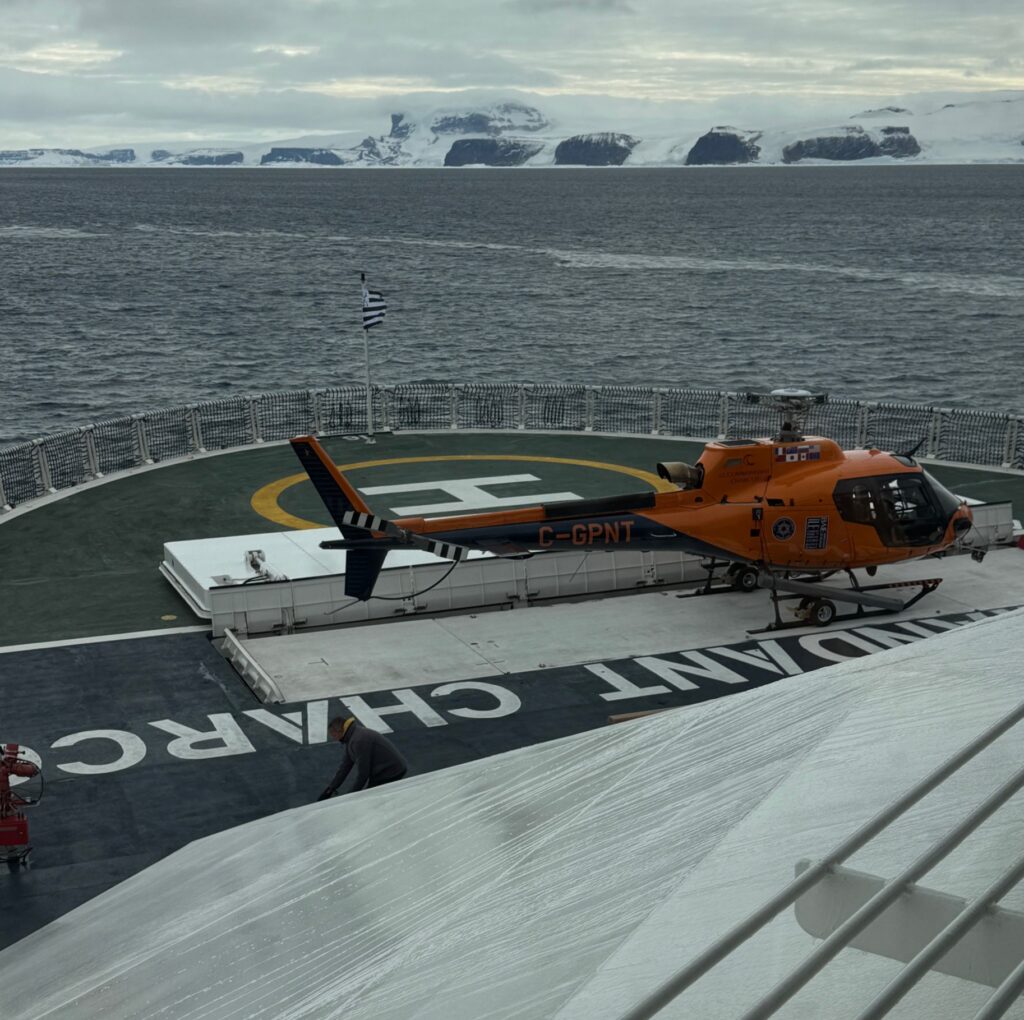
Once we were landed, they prepared the helicopter to fly ahead and scout the penguin colony location and size. The deployment of the helicopter gathered a large crowd of excited onlooking passengers at the bridge as we wrapped up a transect. There was a crabeater seal on the ice about 300-400m from where the ship entered the fast ice. We watched it diligently to see if and how it would react to our arrival and to our surprise it could not have been less interested. When the zodiac went ahead to guide the landing and when the helicopter blades started up, it glanced our direction but quickly rested its head again. Even as the boat entered the ice and carefully wedged itself into position for the evening, the seal did not so much as budge. Expedition guides also went out on the ice to assess the thickness of ice for guest expedition safety. We remained onboard the rest of the afternoon and evening with no outings scheduled. From the vessel we could see some emperor penguins and crabeater seals in the distance! The whole ship was buzzing with excitement and anticipation of seeing the penguins and seals. The animals, on the other hand, did not seem remotely interested in our arrival. We’re looking forward to time out on the ice and in the zodiac for some glacier measurements and hydrophone dips.
Four emperor penguins shuffle along the sea ice toward the ice edge near our ship.
The helicopter crew prepare to survey the area and the Snow Hill Colony.
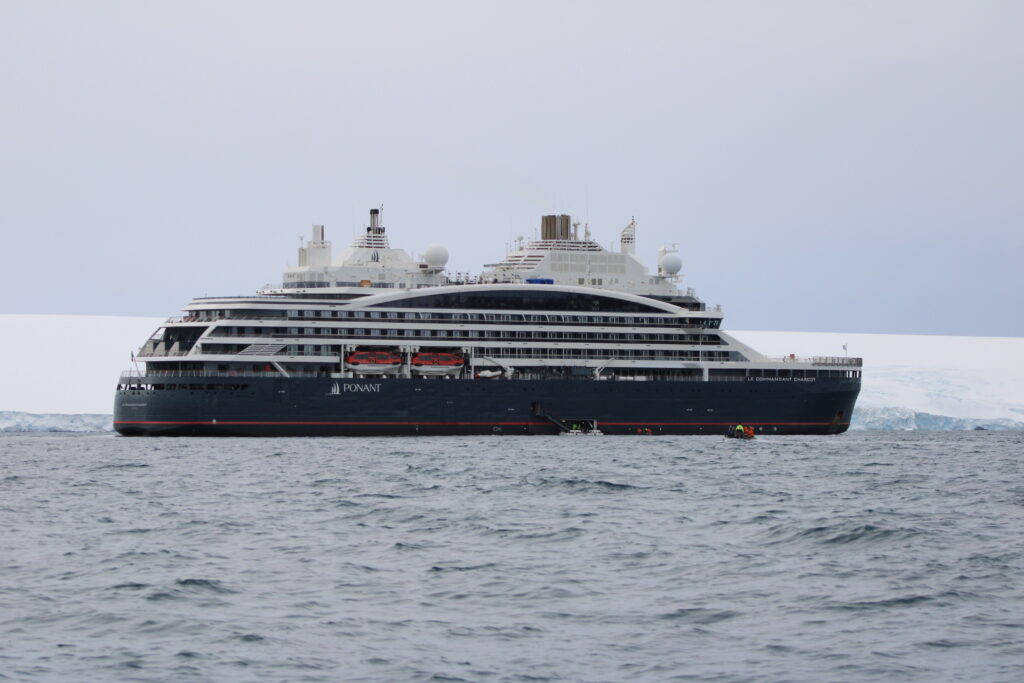
La Commandant Charcot floats on the water. Photo: MariAnna Hinojosa
November 3, 2025 We started our day bright and early and were on the zodiac by 8:30am to get our field-based data collected. We collected hydrophone recordings at four different locations around the Aitcho Islands at the north entrance of the English Strait between Greenwich Island and Robert Island. We had beautiful weather and conditions for a zodiac excursion with an overcast sky, minimal wind, and the temperature around -4°C.
Our first sampling site in a small bay on the northwest side of Robert Island had perfect conditions for recording with minimal waves and crystal clear water, clear enough to see the pebbles and a gentoo penguin swimming around and below the zodiac. While we were waiting for Caroline to collect her glacier data, we saw a Weddell seal surface about 200m from the zodiac. We decided to quickly drop the hydrophone in to record and were treated to a variety of very clear, close vocalizations. After recording for 20 minutes, we travelled to a further location in the central channel between islands, but the wind had picked up so we were getting a lot of surface water sound and more vocalizations from the same seal, just more distant. We travelled to a few different locations but found it difficult to find areas around the islands where we could avoid vessel noise from the Charcot. After two more recordings without any vocalizations we concluded recordings and instead scanned the beaches of the islands for seabirds and seals. We saw snowy sheathbills (the only terrestrial bird endemic to continental Antarctica), chinstrap penguins, gentoo penguins, kelp gulls, imperial shags, a juvenile northern giant petrel, and Antarctic terns.
After 2.5 hours on the zodiac, we returned to the ship for lunch and were quickly informed that we were travelling back to the southwest side of Greenwich Island to Yankee Harbor for more guest excursions and thus another zodiac trip for us. We were back on the zodiac at 3:30pm for a couple of hours of data collection. While at another glacier, noticed a longe gentoo penguin before we saw a Weddell seal near it on shore. A short while later another Weddell seal surfaced near the seal on land before slipping away into the water, never to be seen again. We dropped the hydrophone in and captured another great variety of Weddell seal vocalizations. Due to the size of the bay we were sampling in, we were a short distance (~1km) from where guests were being shuttled to shore so we captured a lot of zodiac noise in the background. While we were sampling a dark cloud had formed to the south and winds started to pick up, but in an effort to record further from the zodiacs we attempted one more recording in the McFarlane Strait. Instead we had vessel noise from the Charcot but we couldn’t go any further away as visibility was declining rapidly and it was beginning to snow. After recording for 5 minutes we decided to turn in, and wisely so. As soon as we headed in a snow flurry quickly engulfed us and waves became much taller and harsh to navigate.
Once all were onboard, the vessel began heading south to cross the Bransfield Strait toward the peninsula to transit the Antarctic Sound and enter the Weddell Sea in the morning!
A Weddell seal pops its head out of the water to inspect what we are doing on the zodiac.A lonely gentoo penguin stands on the snowy shore of Yankee Harbor, not far from a sleeping Weddell seal.A colony of countless gentoo penguins cover the snowy and rocky patches of Robert Island.
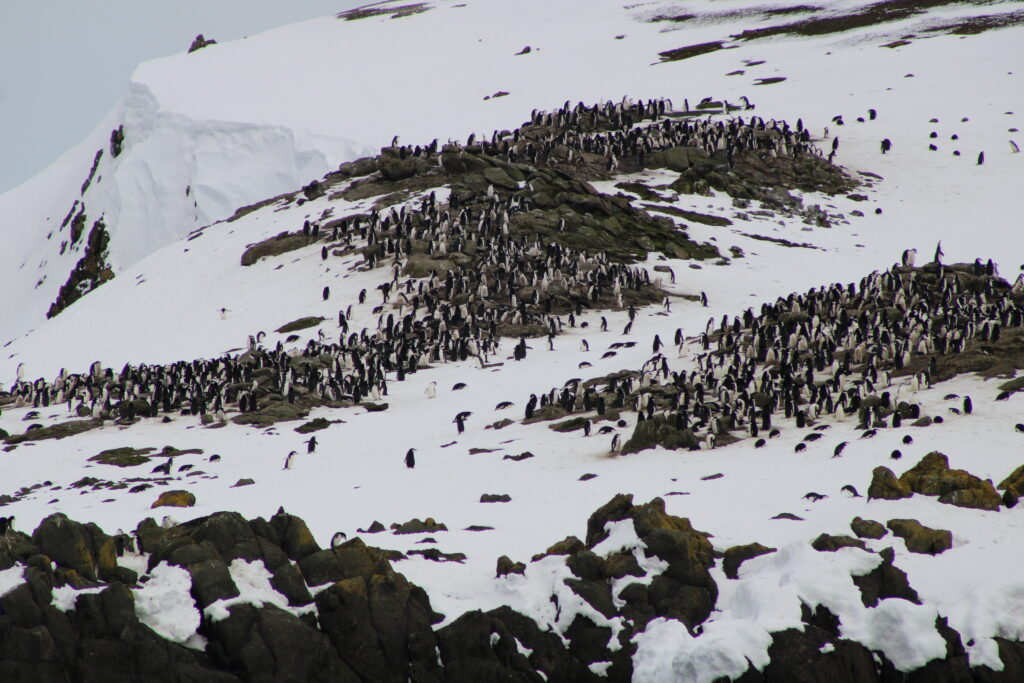
November 2, 2025 In the morning, we gave our first scientist presentations to guests, kindly translated to French by Gwen, where we introduced ourselves and our projects. Our ship transited to Half Moon Island, home to one of the largest chinstrap penguin colonies in the region with to regular sightings of skuas, snowy sheathbills, and Antarctic terns. The island is located between Greenwich Island and Livingston Island of the South Shetland Island chain. We picked up our field gear (parkas and boots) kindly provided by Ponant and did all required biosecurity training and preparation for field expeditions before fitting in a transect survey. We saw more of our favorite cape petrels, kelp gulls, and some newcomers to us the snow petrels, juvenile northern giant petrels, and a skua. This was also the first time we saw small floating chunks of ice passing our vessel. Weather conditions were generally fair with partly cloudy skies, mild wind speeds and swell, and temperatures in the low negatives (°C).
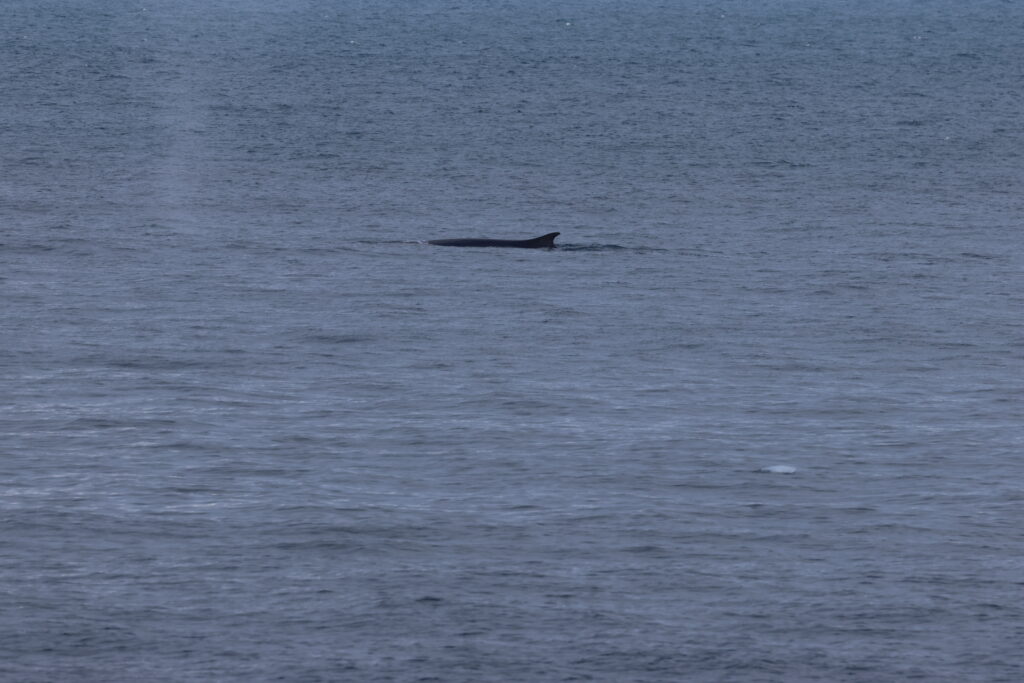
Shortly after concluding our transect survey during transit to Half Moon Island an intercom announcement around midday alerted us to several humpback blows near the ship. We quickly made our way to the 5th deck promenade deck with cameras and reticle binoculars to catch them off the aft of the ship. There were 7 sei whales, comprised of two different groups of whales, quickly moving perpendicularly to the ship. They were not diving so there were no displays of flukes to capture for identification. We captured pictures of dorsal fins, group size, and distance from the vessel.
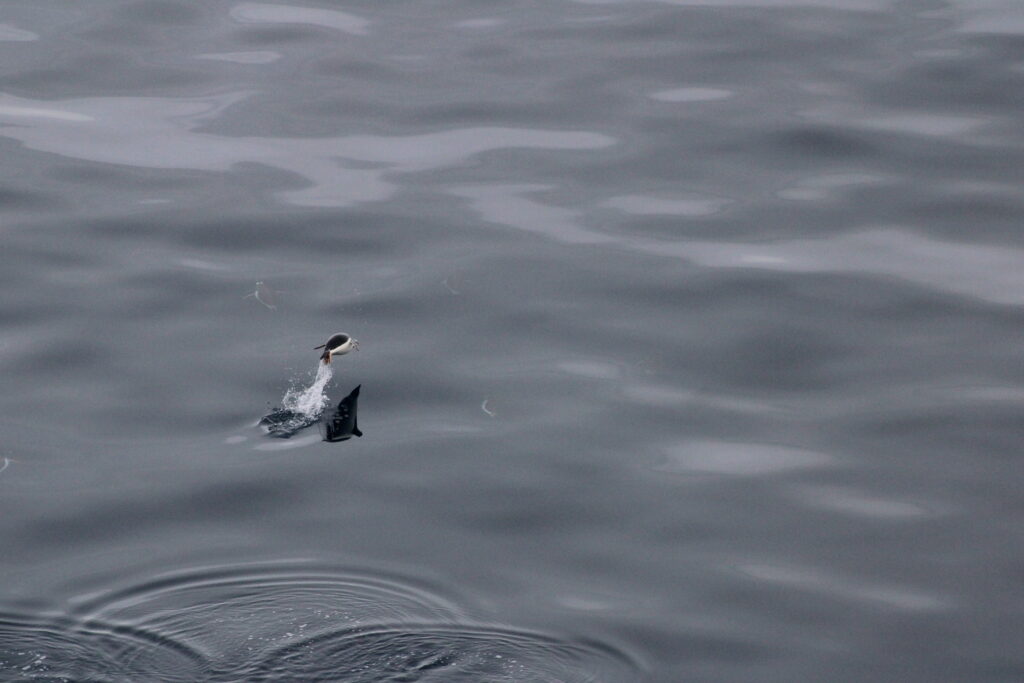
A couple of hours later, while guests were out exploring the penguin colony, Renee went out on the first zodiac boat trip in the afternoon for several hours. She was able to deploy the hydrophone for three recordings which captured two Weddell seals (and possibly a Leopard seal!) vocalizations. A group of gentoo penguins swam toward the zodiac while they were collecting data but quickly turned the other direction once they got close to the boat. She also saw a few groups of imperial shags and blue petrels. Another group of about 20 Gentoo penguins were seen approaching the Charcot before swimming the opposite direction.
Later that evening while transiting to the next anchoring location for the evening at Dee Island, an ice-free island between Greenwich Island and Aitcho Island, the science officer informed us that two whales were spotted from the bridge. We identified them as fin whales despite their shorter than expected blows. They were staying in one place for quite a while and often floating at the surface for extended periods. It is believed that their stout blows were due to brief foraging dive activity rather than deep diving or traveling exhalations.
MariAnna spent the evening as an invited guest dining and engaging with cruise passengers. They were very interested in learning about ocean systems and how they are all interconnected. In particular, they wanted to discuss the ocean as a carbon sink and the various processes that support that and how whales are a part of, and impacted by, that. As part of being an onboard scientist with Ponant expeditions, the opportunity to have discussions with interested guests from around the world is a welcomed experience for both guests and scientists alike.
The dorsal of a sei whale is visible as it surfaces to breathe.Gentoo penguins flying through the air and water as they swim alongside the vessel.