Categories
Uncategorized

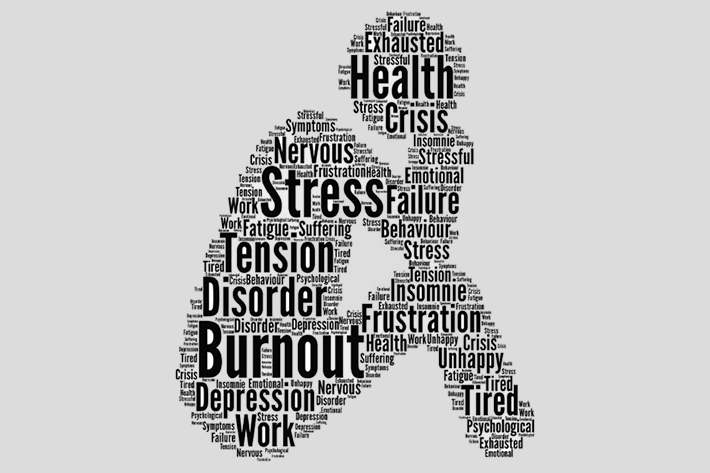
Burnout Is Real

(Photo courtesy of https://q-reviews.com/insights/nurse-burnout-moral-injury-addressing-the-current-crisis/)

According to the CDC, healthcare worker stress levels, due to working conditions, can lead to poor physical health and poor mental health (CDC, 2024).  This level of healthcare worker stress is a result of constantly caring for sick patients, exposure to human death and suffering, workplace relationship pressures, long shifts, physically demanding shifts, administrative influences, and work schedule issue (CDC, 2024). Healthcare workers know this going into the field; therefore, I believe that when choosing a position they not only consider healthcare benefits, but also other benefits that support work-life balance. According to the Kerry Jones’ article “The Most Desirable Employee Benefit,” next to healthcare benefits the most-valued benefits were those that offer improved work-life balance which includes flexibility, work-from-home options and generous vacation options (Jones, 2017). I work in healthcare and I agree that work stress levels are at times very overwhelming.

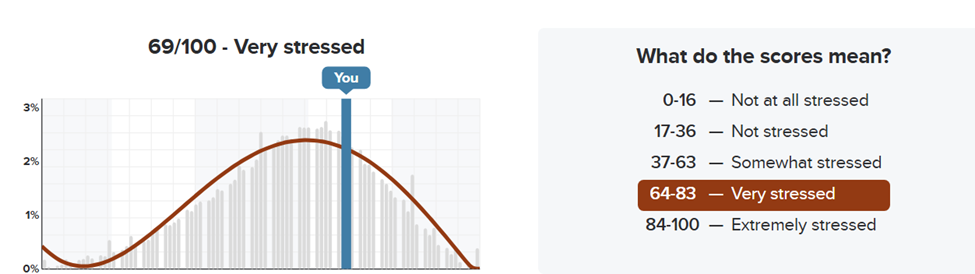
I took the three test required for this weeks blog assignment and honestly the results were not surprising because I know I am stressed. My Life Stress Questionnaire score was a 335 which came with the disclaimer “above a score of 350, you may be 75% sure of trouble in the months ahead.” Great, just want I need! My Coping and Stress management test results – “very stressed.” No surprise there!

My stress levels are likely combination of life events over the last 8 years, my current job, returning to school, and the normal life stressors of raising a family. Sometimes I think we are on “hard” mode and I wish it could just be “easy” mode.” I know it could be worse but still its a lot sometimes. My husband was diagnosed with leukemia 8 years ago this coming August. At the time, I was 4 months pregnant, we had a 5-year-old starting kindergarten in the fall, and I was just about to start new nursing job. Since then, life really hasn’t slowed down and stress levels haven’t improved much. He still struggles with post- transplant-issues, work isn’t getting easier, and the kids are just getting busier.

Some days are better than others, but I carry most of the burden juggling work schedules, school schedules, sports schedules, 4H schedules, house chores, appointments, etc.  I keep my current job because it offers excellent benefits, not because I love it. When I come home at the end of the day I am often exhausted and over stimulated. I am actively looking to move to a different role in the organization, but it will take time.  This job for now, is what I need to be – consistent income and good benefits. Both are needed to be able to support my family. My job is challenging at times. It can also be very rewarding, but its a lot and all I can say is burnout is real. I am burned out – just like many other healthcare workers.

The third test I took, the personality test, highlight that out that I am a Type A personality, surprise!  This personality type does not really help my stress levels. I am driven, competitive, and time-urgent just as the results pointed out.  Needless to say, because of these qualities, some of the stress I bring on myself. For example, I like to be one of the best at whatever it is and I tend to want to move into leadership roles in most settings. When I think of the characteristics driven and time-urgent, it makes sense why I have pushed so hard this last year taking 12 – 18 credit hours while working. And if that isn’t enough, I worry about my grades and if I feel like I am underperforming, I stress about it.  Needless to say, my type A personality doesn’t exactly help lower my stress levels.

I think a lot of nurses are Type A personalities, it may be what makes us good as what we do; however, as Kaiser noted in their “Employee Burnout Guide” 83% of employees feel emotionally drained, 67% experienced burnout, and 25% have severe burnout (Kaiser Permanente) Their guide notes that the single most predicting factor in worker’s comp claims and cost is stress (Kaiser Permanente). Therefore recognizing that risk of burnout and stress is important for organizations so that they can work to mitigate it effects.

I believe now more than ever employers are recognizing this and some are trying to build a culture of well-being.  According to Kaiser Permanent burnout and quiet quitting are also an organizational concern just not an individual concern and this can be combated by supporting and prioritizing mental health to help with work-place inflected stresses (Kaiser Permanente) Employee Assistance Programs (EAP), flexibly schedules, access to mediation apps, supportive leadership are ways organizations are addressing stress and burnout in the workplace.

References

Recognize and address the early signs of employee burnout. (n.d.-o). https://business.kaiserpermanente.org/content/dam/kp/ccp/documents/kaiser-permanente-employee-burnout-guide.pdf

Centers for Disease Control and Prevention. (2024d). Risk factors for stress and Burnout. Centers for Disease Control and Prevention. https://www.cdc.gov/niosh/healthcare/risk-factors/stress-burnout.html

Jones, Kerry. The Most Desirable Employee Benefits

Harvard Business Review Digital Access. April 15, 2017, 2-6

Categories
Uncategorized

Compesation Does make a Difference

My current position is a great example of how compensation was a motivating factor in my decision to change employers.  As mentioned in lecture one of this week’s material, total rewards offered by employers can be a strong motivating factor that influences one’s decision to change field or jobs.  I can say that the total rewards offered by my current employer, including both extrinsic and intrinsic rewards, were significant motivating factors in my decision to change employers.

Previously, I worked as a school nurse, it was a wonderful position for a individual that wanted to work part time, be home when her kids were home, and have relatively good medical benefits; however, there was no room for growth and almost no opportunities for overtime. When my husband was able to work full time, this was a great gig. I was able to bring my son to school with me and take him home at the end of the day, I had all holidays, and breaks off and I paid virtually zero out of pocket for monthly insurance premiums and the co-pays were excellent.  This was fantastic until my husband was diagnosed with Leukemia. Initially the job offered what we needed to get through his initial treatments, but it quickly became apparent that my income was no longer sufficient as he could no longer work and I would never be able to advance my career with the district without going back to school.  

I had a friend that had moved over to where I currently work, she recommended I apply for a position in her clinic.  I did, she let her manager know, and I was ultimately brought me in for an interview. Though I was not offered the first position, I was offered another position in another clinic.  Despite my concerns about leaving my previous position, I decided to change employers because my new employer offered much better extrinsic rewards – benefits, pension, and wages. After doing the math, my weekly earnings would be much higher. Even though I have to pay mandatory union dues and my hourly wage was less intially per hour, I knew after about a year, my hourly wage would exceed my max earning potential at my previous job so I decided to accept the job offer.

After accepting, I learned that in addition to the tuition reimbursement and training offered by my current employer, the union I was now a part offered wage replacement and tuition reimbursement which was even better. (this is a huge reason why I was able to go back to school and will be graduating this year!!)

A changed needed to be made for professional and personal growth. Ultimately, the position has proved very rewarding as moved into a lead role and now I am in the process of applying for administrative positions.  I would have never considered making this move if it was not for the total reward system offered by my current employer.

As Mr. Pepper discusses in the New York Times Article“Paying Employees to Stay, Not to Go,” building a culture where employees feel valued is essential. If employees feel taken care of, it will translate to employees taking care of their customers (reenhouse & Strom, 2014).  Ultimately, I believe the company I work for has the same belief system. They try to build a culture of appreciation, they want to see their employee succeed. By providing good wages, even better benefits, and opportunities for higher education and advancement in our careers, they are investing in us and our patients.  The more we feel appreciated, the better work life balance we have, and the more training we have will translate, in most cases, to better patient care.

Honestly, the total rewards offered my employer are enough that I hope to continue to advance my career with this organization and retire from them in the future, they as the article title suggests, are “paying me not to go”.

References

Week 8 Lectures

Greenhouse, S., & Strom, S. (2014). Paying Employees to Stay, Not to Go. New York Times. https://www.nytimes.com/2014/07/05/business/economy/boloco-and-shake-shack-offer-above-average-pay.html

Categories
Uncategorized

Onboarding Matters

Nearly a decade ago I went to school to become a Licensed Practicing Nurse(LPN). It was a pathway to a much-needed career change.  It involved a thirteen-month program where I trained to become a nurse. It was months of classwork and trainings on various procedures as well as test taking skills. The goal of the program.. train the students to be competent and safe nurses that could pass the NCLEX exam.

The school utilized a check-offs system. We received training on a certain procedure and then we had to perform said procedure on a manikin while pretending it was an actual patient. We, the students, had to be successfully “checked-off” before we could perform any of the skills in the clinic setting on actual patient.

I’ll never forget feeling more unprepared then when I took my first nursing job. I felt so under prepared because most of my training had been on a manikin or during my short preceptorship.

The worse onboard/training I received was at my first nursing job. I had done my preceptorship at this facility and was assured that I would still received a solid 30 days of onboarding and training; however, that was not the case. I think I was running my own floor within a weak.  Certainly not ideal for a new nurse and/or patients.  I training on the go. Though I learned a lot from this experience it was awful.  

It wasn’t until a couple years later; I was hired at a different company where the on-boarding process took several months to allow for appropriate training. It was not until this new position I realized the value of good training and appropriate onboarding because I didn’t know what that looked like.

In nursing training is vital to safe patient care. If a nurse can’t place a catheter properly or change a dressing properly, they are putting their patient at risk for infection and an adverse event.

As the article “Your New Hires Wont Succeed Unless you Onboard them Properly” explains that onboarding supports new hires through social and professional support which not only helps the new hire feel welcome and supported but reduces new hire turn over.  The article references a study that 17% of new hires are lost during their first 90 days (Ellis et al., 2017) highlighting the importance of appropriate onboarding and training.  The article also states that appropriate onboarding improves skills, knowledge and job satisfaction which leads to measurable improvements like profit growth (Ellis et al., 2017). In nursing this could mean better patient outcomes. For example, fever infections.

Personally, I can attest to the importance of appropriate onboarding and training as in the healthcare setting it can positively and/or negatively impact patient outcomes.   If nurses are not trained properly, patients health is in jeopardy and organizations risk losing good nurses. 

The best training I ever received was hands on training under the supervision of a qualified preceptor.  The worst training I received was training in the Skill Setting where I was not given my full 30 days of training before running the floor alone.   The best training involved watching and then performing the skills under careful supervision before I was allowed to care for patients without a preceptor. I felt empowered, valued, and prepared to provide safe and quality patient care.

Ultimately, training and onboarding are very important and valuable.  

Ellis, A., Nifadkar, S. T. N. B., and Berrin Erdogan, Bauer, T., & Erdogan, B. (2017). Your New Hires Won’t Succeed Unless You Onboard Them Properly.

Categories
Uncategorized

Implicit Bias

Test Results

I took two of the tests on the Harvard University Project Implicit website. I will be honest; I was a bit surprised and if I am being honest, frustrated with my results. The first test’s topic was transgender. According to the results, I was much faster sorting “Transgender People” with “bad words” and “Cisgender People” with “good words.” I also took the test about weight, and my results showed that I was much faster sorting “thin people” with “good words.” I assume these results hint at my own implicit bias and that I associate cisgender individuals and thin people with “good” however, I am not sure I entirely agree with these results.

When I logged on to the website, I initially thought I had to take all the tests, so I started with the transgender test. I was not really sure what to expect, other than I did expect the test to show a bit of bias, just not the level of bias the test seems to imply. I am not sure I completely agree with the test because the design felt a bit cumbersome. There was a pattern for the first four sections, so I could almost predict the word association pattern; however, in the final three sections, the predictability changed and, to me, it was a bit harder. I wonder if the test were to reverse the progression for the questions and word associations, if the results would be the same.

Being that I was surprised by my results, I decided I would try to take another test, so I took the test about weight. The progression was the same and, around the fourth part of the test, it felt very cumbersome again. It felt like the test was almost rigged, which is why I struggle a bit with the results. Perhaps I just struggle because I am not wanting to accept that I am not more immune to implicit bias.

How to Combat Implicit Bias

I am a pretty open-minded person and try my hardest not to have implicit bias, though I know I do. I try not to see color, race, or size when choosing friends or acquaintances. I am also required to take training on a yearly basis as a condition of my employment. Each year, the training is a good refresher about drawing conclusions based on implicit bias or how to stop them before they progress further. This skill set is extremely important in my workplace, as I work as a nurse and help take care of people from all backgrounds.

I have learned that the best way to combat implicit bias is to acknowledge that it exists and learn how to recognize it and reframe my thought process or “knee-jerk reactions” before they progress too far. The Be Better Blog about implicit bias has a similar take, stating that working through implicit bias is like having to break a bad habit. The blog highlights that the best way to combat implicit bias is to do the work and that having awareness alone is not enough (Chang, 2024). One has to be mindful of their thought processes and assumptions, as well as broaden their perspective. Essentially, the Be Better Blog says combating implicit bias requires one to be committed to change and persistence. It starts at the individual level but must also take place through workplace training and at the organizational level by holding individuals accountable and changing the implicit bias narrative (Chang, 2024).

Organizations can combat implicit bias by designing a recruitment process that mitigates bias through a structure interview process and adequate training for those conducting the interviews.  It is important to mitigate bias as much as possible as it can impact reliability or validity of the selection process. If individuals are making decision solely on their on individual bias or implicit bias, the best candidate may be selected for reasons that do not reflect their qualifications or abilities to do their job; therefore, it is extremely important that at the organizational level there is a commitment to combating implicit bias through accountability and change.

Chang, C. (2024, December 30). Understanding implicit bias-and how to work through it. Better Homes and Gardens Real Estate Be Better Blog. https://bhgrecareer.com/bebetterblog/implicit-bias/

Categories
Uncategorized

Importance of Interviews

I have only sat through a handful of interviews in my life. Most of the interviews that I have been a part of are a direct result of my nursing license. I had to interview to get into nursing school, and I have gone through several panel interviews for various nursing jobs. All of the interviews asked questions regarding leadership, critical thinking, time management, organization, and teamwork skills. Some interviews have been better than others, but I can honestly say I have learned something new in each one. No interview is the same, but the general structure and concept behind the questions are very similar. Ultimately, I think all the interviews I have participated in, as the interviewee or interviewer, were effective due to the reliability and validity of the interview design and implementation.

As the interviewee, I always expect questions that are designed to determine if I can effectively perform my job as a nurse and if there are any red flags about my skills and abilities. However, it was not until I was on the other side of the interview that I realized there is a lot more that goes into the interview process than just a group of individuals gathering together for a series of questions.

Through my capstone and its job shadow hours, I have had the opportunity to shadow several managers. Each interview follows the structure discussed in this week’s lectures. The general design of the interviews is consistent across departments; they all are panel interviews with a series of questions as well as time at the end for questions. The questions are different between departments and managers, but for a specific job listing, the interview questions are consistently the same. I had one manager go as far as reminding all those participating that if any question were asked “off-script,” we would need to record the question asked and then be sure to ask it to the next candidate. After reviewing this week’s material, I understand why this is so important; this scoring guide helps to compare candidates, which also limits bias risks to help sift through candidates in order to find the right person for the position and the team.

Ultimately, asking the same questions to each of the candidates provides reliability when comparing them because it ensures consistency and gives the team the ability to compare candidates via a scoring method to reduce the risk of bias. Also, the type of question chosen is important, as it can help validate the candidate’s ability to do the job. Appropriate questions can draw out relevant information that can predict the candidate’s ability to successfully perform the job requirements in the future.

For example, in one of my interviews, I was asked about how I would work through a scenario where I was running a provider’s schedule and was asked to help a teammate. There was also a question about how I would manage 2–3 patients in a clinic who had different needs. Each question was designed to assess validity, specifically the relevant aspects of the job I was applying for, and whether my answers indicated future job performance. These questions assess critical thinking skills, nursing judgment, and my ability to safely and successfully multitask, all of which are necessary and important skills to safely perform the job. For example, if there were three patients, one wanting water, one having difficulty breathing, and one needing an appointment scheduled, and I chose to get the patient water or schedule an appointment before assisting the patient who was having difficulty breathing, that would indicate I lack the appropriate critical thinking skills needed for the position likely removing me as a candidate. At the time, I had no idea if the same questions were asked to other candidates, but I assume they likely were for the sake of reliability.

A this week’s lectures discuss, carefully designed interview can provide great insight into the candidates being interviewed by successfully highlighting strengths and weaknesses, all while using a scoring method to mitigate bias and support the decision-making process.

Categories
Uncategorized

In Importance of Job Descriptions

HR Management Spring 2026

References


Buckingham, Marcus, and Curt W Coffman. First, Break All the Rules : What the World’s Greatest Managers Do Differently, Gallup Press, 2014. ProQuest Ebook Central, http://ebookcentral.proquest.com/lib/osu/detail.action?docID=1584214.
Created from osu on 2026-04-25 05:03:29.

Tyler, K. (n.d.). Job Worth Doing: Update Descriptions The basic job description is the foundation of nearly every HR function. 2026,

Categories
Uncategorized

HR Management – Blog 1

I reviewed three different companies in three different fields to compare how each company practices HR to see if there were any commonalities among these top companies and their HR practices. In all three companies, it is apparent their HR practices follow the concepts that people matter and organizational culture matters; in all three organizations, employees report one or more of the following: being proud to work there, management leads ethically, employees are treated well regardless of their position, and/or they are able to take time away from work when needed.

It is evident that at Hilton and American Express, the HR concept that people matter is important, as 97% of employees report that they are proud to tell others they work there. At Hilton, American Express, and CHG, nearly all employees report feeling welcome when they join the company, also supporting the concept that people matter.

It is evident that all three practice the concepts that organizational culture matters, as employees report that their companies foster environments of working toward a common goal, valuing employee wellbeing, and acknowledging employees for the work they do. At Hilton, employees feel a sense of working toward a common goal. At American Express, employees boast good parental benefits and support for employee growth. And finally, at CHG, they have created a culture that promotes employees’ success through celebration.

Looking forward to the future when I move into a management position, I hope to be a manager that leads by example. I hope to be a manager that can support my staff, cultivating a team that cares for, respects, and supports each other. I also want to be a manager that is able to provide my staff appropriate resources to do the jobs they are asked to do, as well as a manager that celebrates victories and successes, no matter how big or small. I want to be approachable and reliable, but still respected.

Challenges I may face as a manager are budget constraints and expectations passed down from leadership above me. Meeting the expectations of upper management and those of staff can be challenging while meeting budgetary needs/expectations.

Reference

Fortune 100 best companies to work for® 2025. Great Place To Work®. (n.d.). https://www.greatplacetowork.com/best-workplaces/100-best/2025

Categories
Uncategorized

Hello world!

Welcome to blogs.oregonstate.edu. This is your first post. Edit or delete it, then start blogging!