
Categories
Uncategorized

Driven to Lead,Learning to Pause

After completing the Life Stress Inventory, Coping and Stress Management Skills Test, and Type A Personality Survey, I’ve found some meaningful insight into how stress shows up in my life. Let’s start with my life stress questionnaire score. I scored 380, which is in the 75th percentile, which makes a lot of sense with school, losing my sister two weeks ago, and just the daily life of being a full-time employee and a full-time college student. My stress score was 68/100, placing me in the very stressed category. My Type A score was 80/100, confirming what I already know about myself, such as my traits of being ambitious, competitive, and organized, and my high personal standards.

Seeing these results on paper has made me feel like I need to take a second and pause. While I am pursuing my MBA and working full-time in a specialty, I naturally take on leadership roles, set high expectations for myself, and try to keep myself busy. While this helps me perform at a high level, it increases my vulnerability to chronic stress. As a person with a Type A personality, I often experience pressure to achieve, and I put this on myself because I have a fear of failure. I show difficulty relaxing and impatience, which can elevate stress, causing health risks if not managed properly.

Moving forward in my professional career with my goal of becoming a healthcare executive in mind, I must be intentional about stress management. Strategies I plan to implement include time management, delegation, regular exercise, and setting clear boundaries for work-life balance. Prioritizing sleep and downtime to read will be critical. Many organizations now recognize the importance of employee wellness. A lot of healthcare organizations and corporate settings are investing in Employee Assistance Programs, offering flexible scheduling, mental health days, wellness initiatives, and leadership development programs focused on resilience. My company has been implementing programs that incorporate stress management workshops and offer counseling services to address burnout.

Overall, this assignment has helped me realize that success and stress are often. Two-edged sword, especially for someone like me who is an overachiever. However, a sustainable leader requires balance. If I want to lead effectively in healthcare, I must be the spokesperson of healthy stress management practices, this is not only for myself but for the teams I plan on overseeing in the future.

Categories
Uncategorized

How Compensation Influenced My Career Decision

When I look back compensation has played a big role in my career decisons than what I realized at the time. A few years ago, I was working in healthcare. I liked my coworkers, and I settled into my rhythm. But the pay base was non-existent, no real upward path, no performance boost, and no chance to rise financially. I was given a job with a higher base salary and performance bonuses, and in a hurry, had to figure out what was important. I accepted the new role in the end. This wasn’t just a higher paycheck for the workers; there was also incentive pay tied to performance metrics, which made me feel I got what I fought for, and my effort showed in the earnings. That structure prompted me in a different way. I became more directive, tracked my productivity (in other words, monitored it), and sought better ways up, since there was a clear link between effort and reward. In hindsight, the best thing about this was the transparency and growth potential built into the compensation plan! My old job felt static; no matter how hard I worked, my pay would stay the same. The new position, by contrast, was that the performance-reward relationship was obvious. It added a sense of control and fairness to the mix, which altered my level of engagement. Compensation’s functions go beyond paying bills. It evokes value, opportunity, recognition, and acknowledgment of worth. In my position, it had real-time ramifications for not only my decision to quit a nice job, but also my motivation and determination afterward. It reiterated that when employees perceive a strong connection between effort and reward, their behavior naturally shifts toward higher levels of performance.

Categories
Uncategorized

Why Some workplace training Is Effective

If you’ve ever worked full-time while in school, recognize that not all training is created equal. Some sessions give you greater confidence at work, and other sessions feel like something you speedily complete just to get the check mark. I have been exposed to both for the first time in a healthcare call center, and the difference comes down to how the training is structured. The best training I ever received was during onboarding for patient calls. Rather than simply discussing policies, the trainers worked on real-life situations, practice calls, and immediate feedback. That practical, hands-on experience also made the material stick, because I could see how it linked to an everyday job right away, right? Studies find that for adults, hands-on, active training directly related to job performance yields the best learning outcomes (Noe, 2020). On the other hand, one online compliance training I took was a whole other kettle of fish. It required clicking on long slides filled with policy jargon, followed by a brief quiz. There were no instances, talk, or practice decisions. Even after I got that, I didn’t feel any more prepared. Kirkpatrick’s training model argues not only for completion but also for whether learning produces behavioral effects at all and, therefore, whether it improves outcomes, and that these are crucial metrics for effective courses (Kirkpatrick & Kirkpatrick, 2006). Looking back on the day I learned, effective training has much less to do with the quantity of information provided than with the engagement and practical connection it gives to life itself. Giving you a chance to practice will improve your self-confidence. When it is passive, then things can be forgotten in no time.

References
Kirkpatrick, D. & Kirkpatrick, J. (2006). Evaluating Training Programs.
Noe, R. (2020). Employee Training and Development.

Categories
Uncategorized

What My Implicit Bias Test Taught Me About Hiring Decisions

After completing Harvard University’s Project Implicit Race Implicit Association Test (IAT), my results were an eye-opening experience. I do consider myself to be fair-minded,however, the results showed that I have an unconscious association i wasnt aware of. The results had me take in and reflect onhow easily implicit bias can influence decisions, even when you think youre acting on good intentions.

Implicit bias can significantly affect the reliability and validity of the selection process. When hiring managers are unaccustomed to relying on objective evidence, candidates may face evaluations that appear incisive, thereby reducing reliability. Validity is compromised when decisions are influenced by personal impressions instead of job-related qualifications. As discussed in our week 3 materials on EEO and diversity, resume screening and unstrcutred interviews are vulnerable to bias becuase they leave room for subjective judgement than standarized evaluation. (Pfeffer &Sutton, 2006).

A surefire way to counteract implicit bias in hiring is the use of structured interviews with standardized scoring criteria. When interviews are structured to require all candidates to answer the same questions and are evaluated using the same rubric, this limits the influence of unconscious biases. Research has shown that structured selection methods provide greater fairness and are stronger predictors of job performance than an informal approach (Scientific American, 2014).

Overall, my IAT results have shown me that biases are not a personal failure but a human blemish. Addressing it requires accountability and commitment to fair hiring practices that align with EEO principles and organizational integrity.

References:

https://implicit.harvard.edu/implicit/Study?tid=-1

Pfeffer, J., & Sutton, R.I. (2006). Hard Facts, Dangerous Half-Truths, and Total Nonsense.

Scientific American. (2014). How to Think About Implicit Bias.

Categories
Uncategorized

Not Just a Gut Feeling: Designing Better Interviews

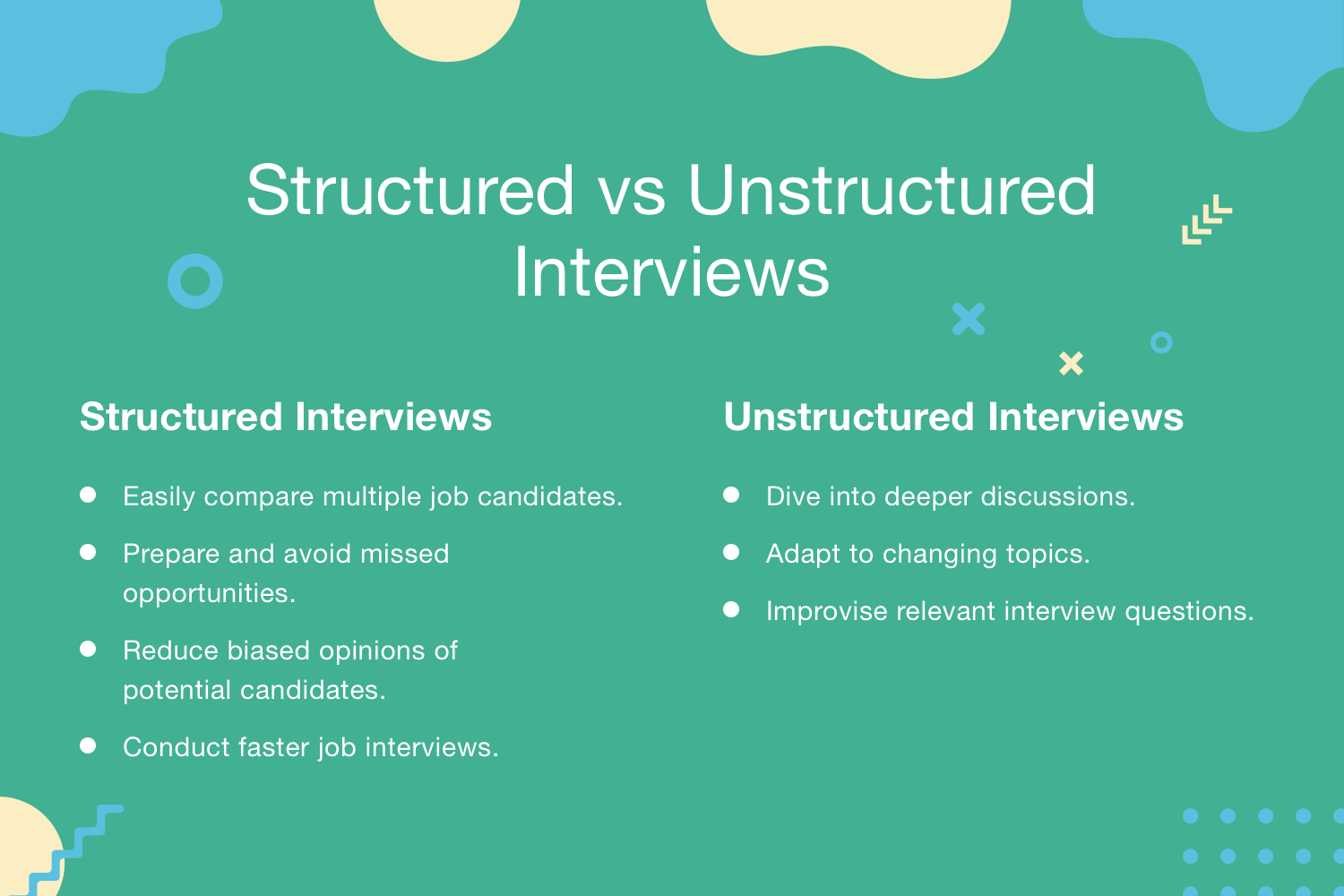
From what I’ve seen as a jobseeker, interviews can come across as either planned and fair or random and frustrating. Analyzing these experiences from the perspective of ‘reliability, validity of the interview and utility’ can contribute to clarifying why some interviews are more effective than others. My best interviews have been structured. Interviewers used standardized, job-related questions and assessed responses against established standards. Structured interviews are reliable because they provide consistency across candidates and help mitigate potential interviewer (Cieri,2026). Unstructured interviews, in contrast, in which questions differ substantially and scoring is informal, are also subjective and depend on first impressions, making them less reliable.

https://www.hiresuccess.com/assets/posts/structured-vs-unstructured-interviews/structured-vs-unstructured-interviews-1d2ac9847ff0d00124c21520240efcf122db8a445425636a30dfacfb8d2927baa7242d6f597ce1761b95633742561484a64b07850d530b926e4399b31a74028b.png

Validity was best when interview questions were firmly grounded in the job performance. Behavioral interview questions, which ask candidates to describe how they responded in the past, were compelling because past behavior is among the best predictors of future performance. (Cieri,2026).

Personalistic or “culture fit” interview questions that lacked the grounding in job requirements were judged to be less valid and did not measure KSAOs correctly. Outline – Selection. All of this leaves utility in the interest of both employers and applicants. When the benefits of an employee or a job outweighs the time and cost involved, selection methods are most useful; utility is directly affected by validity, administrative fees, and the value of the job to the organization.

https://www.illinoissenatedemocrats.com/images/2021/belt-eeo-031721.jpg

Well-developed interviews clarified expectations and enabled me to assess whether there was a strong person–job and person–organization fit. Some advice to employers? I suggest conducting job analyses, using structured behavioral interviews, and developing a benchmark answer / a scoring guide. Consequently, these practices improve reliability, enhance validity, and ultimately increase the overall utility of the interview process.

https://www.workitdaily.com/media-library/professional-man-answers-behavioral-questions-during-a-job-interview.jpg?id=21079343&quality=50&width=800
Categories
Uncategorized

Why Job Descriptions Matter More Than We Think?

Job descriptions are often precevied as static and adminstrative documents that often are lost on workers however, reading this weeks material emphasizez that there are dynamic tools that influence organizational effectiveness, employee expectaations, and faireness. Both the readings and my own experiences in the office reinfoirce the difficulty organizations conet to face in creating and keeing up with the organizations accurate job descriptions and the realitied of all in the workplace. One of the main challenges of job description crafting or service-oriented roles, resposnbilities often ae beyond the job descriptions. When job analysis is characteriezed by them systematic collection and ongoing review data on a certain job, bu not offtenly praticed due to time and other availability limits within organizations. Properly aligning job descriptions with performace standards can be another challenge that needs to be work through. When a job description is inaccurate to what is required of the role it can often lead to a megative impact in recruitment, training, and performacxe evaluations. I’ve gone though this personally when it came to the role in currently in (call cemter rep). I found myself not only handling specialty scheduling but also indexing referrals and a lot of insurance verifications. Thus leading to employees feeking misled in there day-to-day resoonsibilites deferring significantly form what was orginally advertised. A lack of job specifications often lead to organizational problems. In my case this role led to an inconsistant accountability, a excessive work load and agruments arised.

Organizations can overcome thse challenges if they approach the job descriptions as living documents. Regualr job analysis,employee input, and regularly scheduled reviews can help reinforce the descriptions accuracy and reflect the current work demands. When job descriptions are maintained they show a transparent and role-specific; they establish trust in the organizations and employee key factors in sustainig organizationsal effectiveness.

Categories
Uncategorized

What Great Companies Teach Me About HR and the Manager I want to Be

Delta Airline

Delta Airline. Delta Airline is famous for its people-first philosophy. Theyre big on employee engagement and widespread training. 88% of employees love the career development, support, care, and encouragement they provide, and they also challenge one another to operate at a higher level. In addition, recognition programs and celebrations at the company foster emotional connections with employees. The leadership actively learns from frontline employees by implementing immersive programs that ground the company in their experience. As a future manager, it’s essential to view employees as partners, not workers.

Hilton

Hilton’s HR practices include inclusion, work-life balance, and career development. They invest heavily in leadership development, and because they have a great work environment and work with people from all walks of life, 95% of employees absolutely love working here. They discover new cultures that represent diversity. They have a great in-home atmosphere where most of your employees feel welcome and proud to work here. One of the Hilton managers, as an essential part of providing a safe environment, thinks that workers need to work as a team and coaches them on how to get the job done.

The Cheesecake Factory

In contrast, The Cheesecake Factory emphasizes internal growth and structured training.
87% of workers value not having their workloads overlap, which creates time for personal life. Many of those managers began in junior positions; the company is built to develop from within, and employees are well-trained and enjoy benefits uncommon in the restaurant sector. The Cheesecake Factory emphasizes growth and stability, which provide a reliable and friendly workforce and are reflected in the workplace.

Conclusion

Conclusion. Delta Airline, Hilton, and The Cheesecake Factory all show that investing in our people delivers stronger organizational results. Creating an atmosphere that encourages growth and offers meaningful rewards helps foster environments where employees thrive. Not only does the company enjoy employee satisfaction through its high-quality treatment, but it also achieves long-term business success, distinguishing it from competitors in the industry.

Categories
Uncategorized

Hello world!

Welcome to blogs.oregonstate.edu. This is your first post. Edit or delete it, then start blogging!