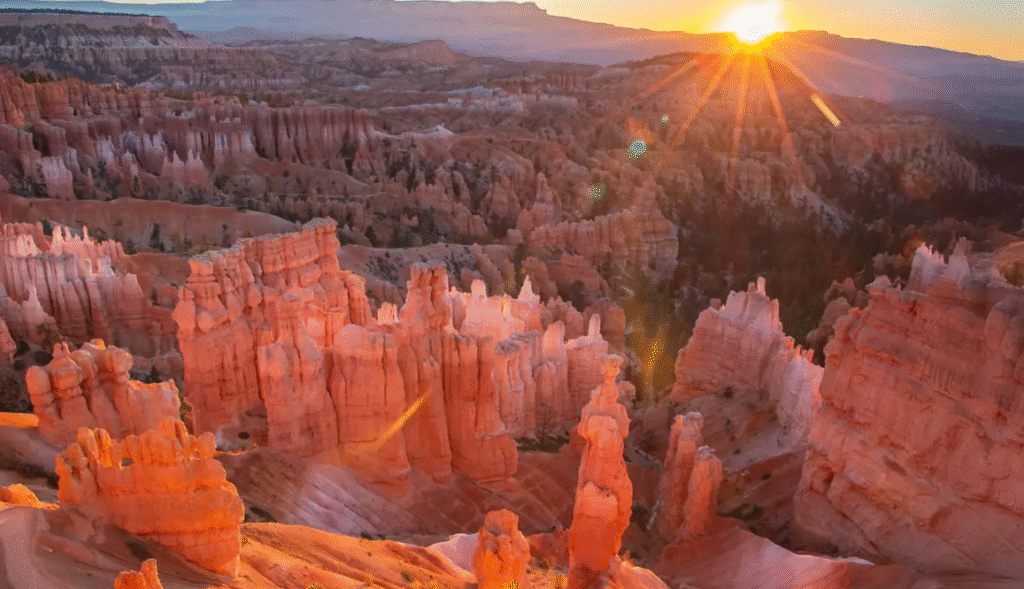
If you have ever seen photos of Bryce Canyon National Park, you probably recognize the tall orange rock spires that almost look unreal. Bryce Canyon is located in southwestern Utah and is famous for its massive concentration of hoodoos, which are tall rock columns that formed over millions of years through erosion and weathering. The park covers more than 35,000 acres and sits on the Colorado Plateau, which is known for some of the most dramatic landscapes in the United States.
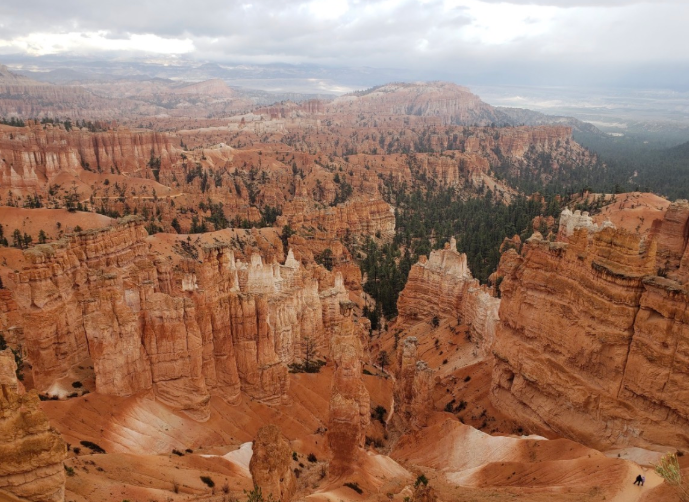
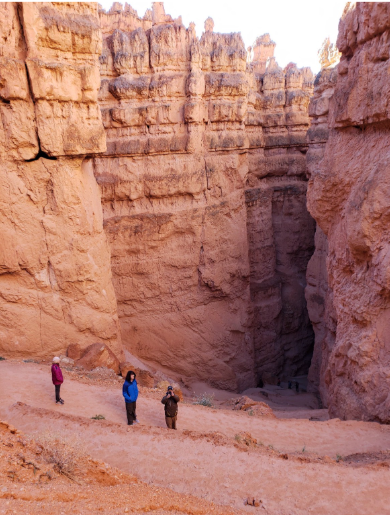
Visitors travel to Bryce Canyon for a wide range of activities, including hiking, biking, running trails, camping, bird watching, and ranger-led programs. There are also unique experiences like Full Moon hikes and some of the best stargazing in the country because the park has extremely dark night skies, According to the official National Park Service website, Bryce Canyon protects the largest concentration of hoodoos found anywhere on earth and sits at the top of the Grand Staircase in southwestern Utah, making it a high elevation sanctuary with incredible geological and ecological diversity.
Even though Bryce Canyon is an amazing place to visit, tourism and environmental change can create serious sustainability challenges. The park welcomed over 2.3 million visitors in 2024, which shows how popular it has become for travelers looking to experience its unique landscape. However, an article from Chaseday explains that climate change may already be affecting the park by altering the freeze-thaw cycles that help Bryce Canyon’s iconic hoodoos and by impacting vegetation and ecosystems in the area. Because of these pressures, the article A Framework for Sustainable Tourism Development in and around National Park” by Kelly S. Bricker and colleagues explains that sustainable tourism requires balancing environmental protection, visitor experiences, and benefits for local communities. The purpose of this blog is to explore some of the tourism impacts affecting Bryce Canyon and the use of sustainability frameworks like the Global Sustainable Tourism Council (GSTC), mentioned in our Group One Reading for Sustainable Tourism, and destination criteria to think about possible solutions. We invite readers to reflect on their own experiences in national parks and consider how tourism can be managed so that places like Bryce Canyon can be protected for future generations.
Why does sustainability matter here?
When people think about national parks, sustainability might seem obvious. Of course, we want to protect them. But at Bryce Canyon National Park, sustainability is especially important because the landscape itself is fragile. The hoodoos that make Bryce Canyon famous form through freeze-thaw cycles, where water freezes in cracks in the rock and slowly breaks it apart over time. Scientists have found that climate change has reduced these cycles by about fifty days per year since the 1960s, which could eventually change how the hoodoos form. Tourism also adds pressure to the environment. With millions of visitors each year, trails become worn down, and sensitive desert areas can be damaged when people walk off designated paths. The park contains cryptobiotic soils– “Crypto means hidden, while biota means life. These crusts are composed primarily of very small organisms that cannot be seen with the naked eye” according to the National Park Service official website – that help prevent erosion and support plant life, bit once these soils are disturbe,d it can take decades for them to recover. Because of these factors, sustainability plays a huge role in how tourism should be managed in places like Bryce Canyon.
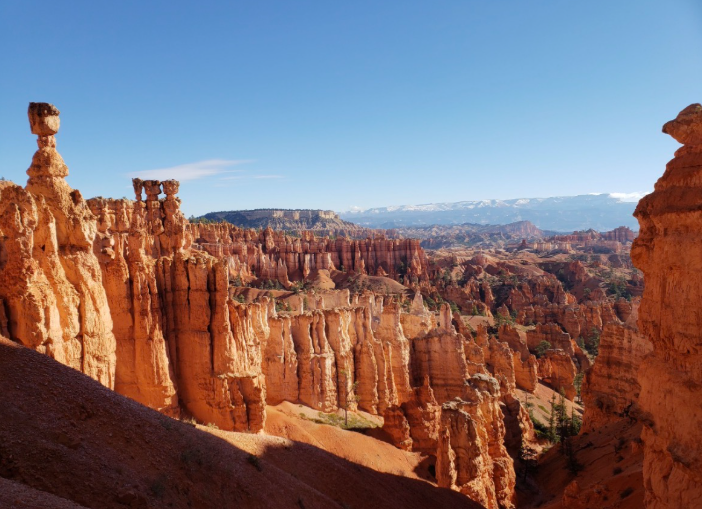
In our class, we explored the idea of a sustainable tourism framework using the article “A Framework for Sustainable Tourism Development in and around National Park” by Kelly S. Bricker and colleagues, which explains that tourism in protected areas must balance environmental protection with visitor experiences and benefits for local communities. Basically, a sustainable tourism framework is a way of managing tourism so that it protects the environment, supports local communities, and still allows people to enjoy the destination. The framework looks at four main dimensions: environmental, socio-cultural, economic, and governance. The environmental dimension focuses on protecting ecosystems and reducing damage to landscapes. The socio-cultural dimension considers how tourism affects local communities and cultural values. The economic dimension examines how tourism can provide jobs and benefits for communities without creating problems such as price increases or unequal benefits, a topic also discussed in Nicholas Pizam’s tourism impacts research. Finally, the governance dimensions look at how governments, park managers, businesses, and communities work together to manage tourism responsibly. In this blog, we will use this framework to organize our discussion of tourism impacts at Bryce Canyon and to explore possible solutions that protect the park while allowing visitors to experience it.
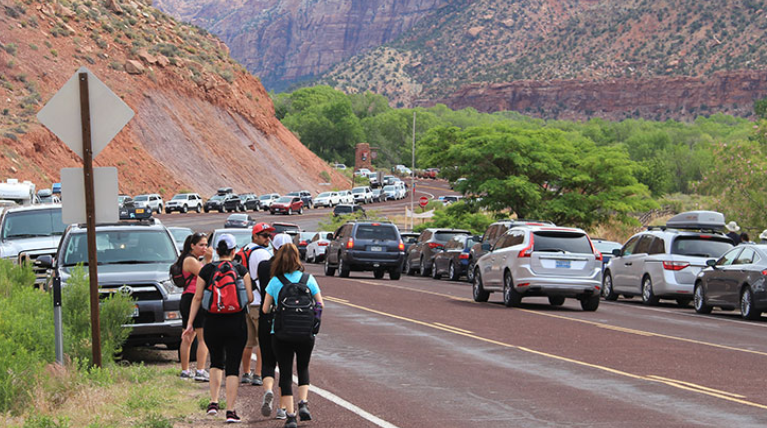
One of the largest issues facing Bryce Canyon National Park, and many of Utah’s other national parks, is overcrowding. While it’s incredible that so many people want to see these spectacular views, too many visitors can cause harm in various ways. When popular hiking trails become too crowded, some hikers choose to diverge from the intended trail. This phenomenon forms what are called “social trails” and are very damaging to the environment. In forming these trails, hikers trample vegetation, displace wildlife, and erode the soil. Bryce Canyon is particularly vulnerable to erosion because that’s how the park was created millions of years ago. Overcrowding is detrimental to the ecosystem in Bryce Canyon.
Pollution from within Bryce Canyon and its local communities also causes damage to the park’s environment. Fossil Fuel emissions are a major problem affecting Utah’s National Park. One of the most obvious forms of emissions comes from vehicles driven within the park, but the largest problem comes from outside. Coal-fueled power plants are prevalent in Utah, and their emissions are quite damaging. According to David Condos of KUER 90.1, “98% of U.S. national parks suffer from hazy skies and that air quality is unsatisfactory at all of Utah’s national parks.” This isn’t just a Bryce Canyon problem, almost every national park faces the same issue. This pollution can also cause high sulfur levels, creating acid rain. This rain is not good for plant development and hinders tree growth. Poor air quality negatively affects the tourists who come into the park, as well as the wildlife.
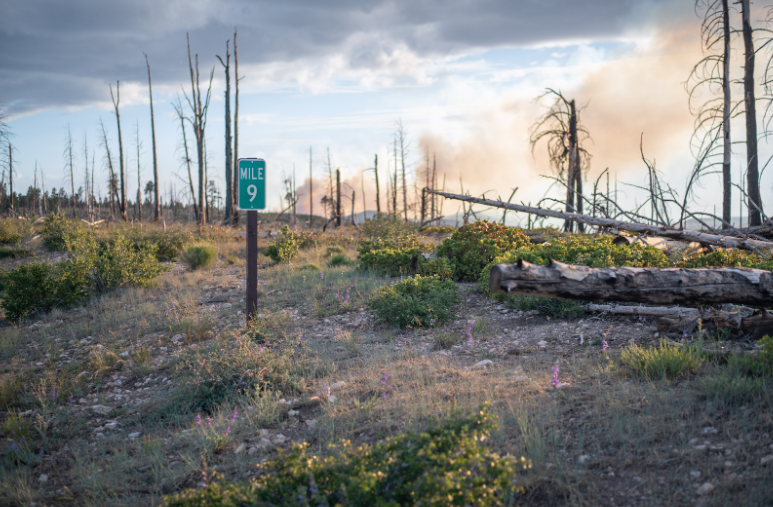
There have been devastating wildfires in many of the United States’ National Park, and Bryce Canyon is no expectation. The largest being the Bridge Fire in 2009, which burned 3,947 acres, and the Riggs and Lonely Fires in 2018, which burned 2,300 acres. While both of these fires were started by lighting strike, many wildfires have been started by humans. When people don’t know proper fire safety, flames can quickly become out of control and destroy everything around. These wildfires have a negative impact on tourism for a multitude of reasons. Wildfires can cause poor air quality and visibility due to smoke, road closures, and destruction to vegetation. These beautiful views are left scarred, and many visitors don’t want to see this. They have this safe, perfect image of the park in their head, so they may be deterred from visiting for a while. Not only do these giant wildfires cause damage to the park, but they also cause a decrease in tourists.
Adverse Socio-cultural Impacts
Tourism affects everyone surrounding Bryce Canyon. The community that has historically been affected the most is the local Native American Tribes. The National Park Service writes, “For thousands of years, native peoples passed through the Bryce Canyon area, leaving subtle evidence of their presence.” Many tribes have inhabited this area, including the Southern Paiute, Hopi, Zuni, Ute, and Navajo tribes, and they have been around much longer than tourists have been visiting it. When tourists aren’t educated on the cultural and historical significance of an area, they often act recklessly and can cause damage to important artifacts. If these places are damaged beyond the point of no return, the native community is deeply affected. But future tourists are also impacted because they may never get to see and learn about these cultures and their practices.
Overcrowding in Bryce Canyon doesn’t just negatively impact the environment, but it can also impact the tourists’ experience. According to Conor Knighton in the article Our National Parks is a Dangerous Combination, “At Bryce Canyon, an hour-and-a-half drive away from Zion, the park website cautions road-tripping visitors that just one parking space exists for every four cars entering the park.” When even entering the park becomes a challenge, many people will be turned off immediately. They’ll question whether it’s even worth it or not, or even worse, they’ll tell their friends about this bad experience and encourage them not to visit. It also becomes a safety risk when there are massive crowds all hiking the same narrow trails. Park Rangers and staff do all that they can to give visitors a positive experience, but they can only do so much with the minimal funding they receive.
The final community affected by tourism is the locals living in gateway towns, like Bryce Canyon City. These cities rely just as much on tourism as the park itself does. In 2019, officials in Bryce Canyon City proposed a new city plan. This plan was meant to improve tourists’ visits to the town. They wanted to expand local businesses for residents and tourists, improve walkability and parking within the city, increase housing, and create a uniform rustic aesthetic to match the park. The goal of this plan was to get more tourists to spend their time and money in town.
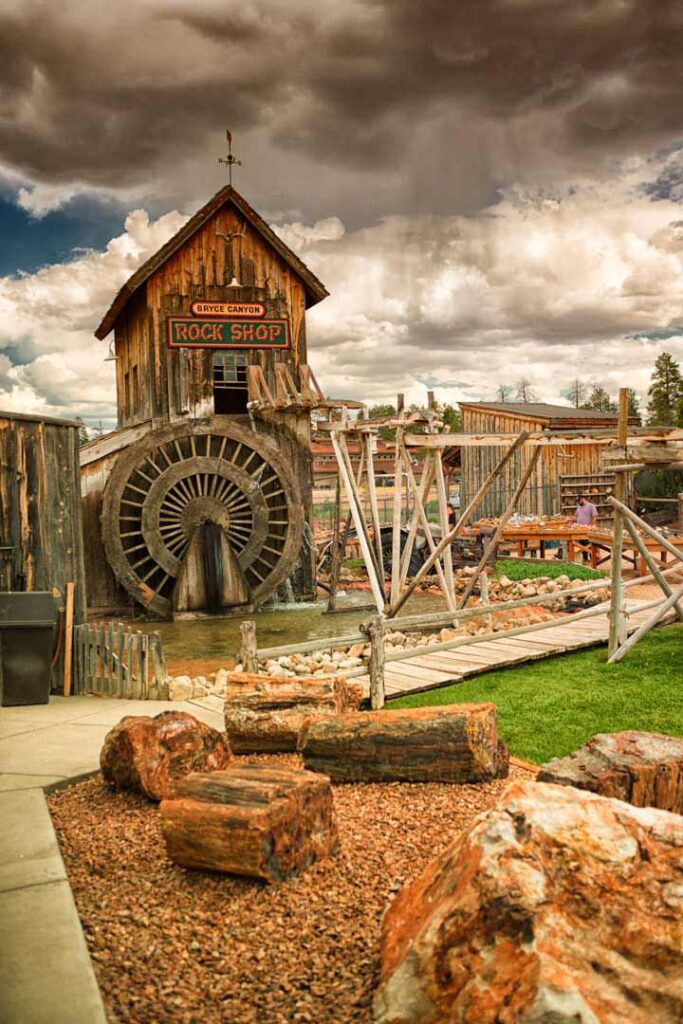
These local communities rely on tourists to make a living, so when tourist numbers drop, they start to struggle financially. But a survey that came out of the University of Utah shows that many of the locals feel disdain towards these tourists. Their biggest complaint was a lack of infrastructure, making their lives and the lives of tourists more challenging. One resident states the biggest problem is “Lack of infrastructure with campgrounds: roads, turn lanes, etc. There are lots of vehicle accidents in the peak months.” Another claims, “They should employ more rangers, people are very destructive. It also prevents injury.” But I think this resident’s quote sums it up perfectly, “We get so many people who are camping and there are no facilities, they pollute and it’s more than we can take. They come to be alone but nobody can be alone anymore.” Tourists come into this community and use up the minimal resources in the area, making the locals’ lives even more difficult.
Tourism’s Impact on Economics in Bryce Canyon’s Gateway Communities
Bryce Canyon’s gateway communities feel the impacts of tourism in many ways. One is that tourist visitation patterns in Bryce Canyon peak during the summer season while travelers follow good weather and road conditions, and almost disappear in the winter. The profits of local businesses follow suit. Because Bryce Canyon sits at a high elevation with cold winters, the park experiences a short peak season. Local businesses are forced to earn most of their revenue during this limited summer time period, with no way to make up deficits later in the year (Condos). This creates an economy that is heavily dependent on good high traffic summer seasons, and therefore unstable. Not only does this kind of economic structure breed vulnerability for local businesses and poor economic resilience, but it also narrows the job opportunities that people in the communities have access to. According to Bryce Canyon City’s Community Plan, employment options for locals in town are nearly exclusively tourism-related, and the city faces a strong demand for employment. Additionally, these jobs are often seasonal, and therefore unstable as well.
Another adverse impact of tourism in these gateway communities is uneven economic benefit distribution. Tourists pour a lot of money into these cities, but it often does not reach all the way to the community. The National Park Service reported that in 2017, the majority of tourist spending was in hotels (“Bryce Canyon Tourism”). However, Bryce Canyon Cities largest hotel is Ruby’s Inn, for example, is a Best Western. Best Western is a private, for-profit corporation, whose profits will not benefit the community in Bryce Canyon City. Tourists’ spending in this gateway community is also concentrated on a small number of businesses for certain needs. Hotels, restaurants, and other large businesses capture the majority of tourists’ money, so the economic benefits are not distributed evenly though the community. Socially, the consequences are economic inequality and limited diversification of jobs and businesses, pushing the city farther into tourism dependency. This adversely affects local residents, workers, small local businesses, and community development.
Bryce Canyon National Park receives about 2.3 million yearly visitors (Schnee). For the parks surrounding cities, this large number of tourists drives tourism-related industries. An economy dependent on tourism is highly sensitive to fluctuations in visitor numbers, and declines can be detrimental to the local economy.
“Tourism is king out here, and our economy lives and dies by tourism.” – Lance Syrett, owner of Ruby’s Inn in Bryce Canyon City (Condos).
The community consequences of this economic system mean economic vulnerability, limited employment opportunities outside of tourism. This kind of fragile economy means local residents are negatively affected by the status of the park and tourism declines.
Looking Forward and Finding Solutions
To reduce overcrowding on the most popular hiking routes, park managers could introduce a timed reservation system that limits the number of visitors allowed on certain trails during specific time blocks. Visitors would reserve a hiking time in advance online or at the park entrance. This system would help spread visitation throughout the day and prevent large surges of hikers on the same trails at once. By controlling the number of people on trails, the park could reduce congestion that often encourages hikers to step off the trail and create damaging “social trails.” Timed entry reservation systems have been used in several U.S. national parks, such as Rocky Mountain National Park, to manage visitor numbers. These systems help distribute visitors throughout the day, reducing congestion while protecting park resources and improving visitor experiences (“Timed Entry Permit System”). One potential solution to reduce pollution impacts at Bryce Canyon National Park is to expand sustainable transportation options that reduce vehicle emissions within the park. The National Park Service has implemented shuttle systems and transportation management programs in several national parks to limit private vehicle traffic and lower air pollution. Encouraging visitors to use park shuttles, carpooling programs, and electric vehicle infrastructure can significantly reduce fossil fuel emissions that contribute to haze and poor air quality. According to the National Park Service, transportation initiatives in parks are designed to reduce congestion, improve air quality, and protect park resources while still allowing visitors to access popular destinations (Environmental Benefits of Transit Systems).
Expanding Indigenous-led education and interpretation programs for visitors at Bryce Canyon National Park could help protect indigenous cultural resources. The National Park Service increasingly partners with Tribal Nations to incorporate Indigenous perspectives into exhibits, signage, and visitor programs, helping tourists understand the cultural significance of the land and encouraging respectful behavior around artifacts and sacred sites. These collaborations allow tribes to share their histories directly with visitors while also supporting the protection of cultural resources in national parks . By educating tourists about the importance of Indigenous heritage, parks can reduce harmful behavior and promote more culturally responsible tourism.
One way to reduce the instability caused by seasonal visitation is to promote tourism activities during the winter and shoulder seasons. Summer is the busiest time, but Bryce Canyon offers unique winter scenery, including snow-covered hoodoos and quiet trails. Local tourism organizations and park partners could expand promotion of winter recreation such as snowshoeing, guided winter hikes, photography workshops, and small winter festivals. Developing more winter-friendly visitor services, such as guided tours, warming stations, and seasonal events in Bryce Canyon City, could also attract visitors outside the peak season. Increasing visitation during the off-season would help local businesses earn revenue more consistently throughout the year, improving economic stability for workers and businesses. Another Economic solution is to strengthen the role of locally owned tourism businesses so that a larger share of visitor spending stays within the community. Local governments and tourism boards could support small businesses by offering business development programs, grants, or marketing support for locally owned lodges, restaurants, tour companies, and shops. Visitor information centers and tourism websites could also highlight locally owned businesses and encourage tourists to support them during their visit. By directing more tourist spending toward local entrepreneurs rather than large corporations, the economic benefits of tourism could be distributed more evenly throughout the community.
Works Cited
Bricker, Kelly S., N. Qwynne Lackey, and Leah Joyner. “A Framework for Sustainable Tourism Development in and around National Parks.” Journal of Park and Recreation Administration, vol. 40, no. 1, 2022, pp. 134–153.
Haralambopoulos, Nicholas, and Abraham Pizam. “Perceived Impacts of Tourism: The Case of Samos.” Annals of Tourism Research, vol. 23, no. 3, 1996, pp. 503–526.
National Park Service. Bryce Canyon National Park. U.S. Department of the Interior, https://www.nps.gov/brca/index.htm. Accessed 12 Mar. 2026.
“Conservation at Home.” Bryce Canyon National Park, National Park Service, https://www.nps.gov/brca/getinvolved/conservation-at-home.htm. Accessed 12 Mar. 2026.
“How Climate Change Is Affecting Bryce Canyon National Park.” ChaseDay, https://www.chaseday.com/how-climate-change-is-affecting-bryce-canyon-national-park/. Accessed 12 Mar. 2026.
“Canyons Adventure: Bryce, Zion & the Grand Canyon.” Natural Habitat Adventures, https://www.nathab.com/us-national-parks-tours/canyons-adventure. Accessed 12 Mar. 2026.
Ball, Samantha, and Dianne Meppen. Utah Resident Opinions on Tourism: Local Area Survey Results . Kem C. Gardner Policy Institute, Mar. 2022, https://travel.utah.gov/wp-content/uploads/Utah-Resident-Survey-Local-Area-Brief-Mar-2022.pdf.
Bryce, Mailing Address: P. O. Box 640201, et al. American Indian History – Bryce Canyon National Park (U.S. National Park Service). https://www.nps.gov/brca/learn/historyculture/americanindianhistory.htm. Accessed 12 Mar. 2026.
Community Plan | Bryce Canyon City. https://brycecanyoncityut.gov/community-plan/. Accessed 12 Mar. 2026.
“Federal Rollbacks and Urban Pollution Threaten the Air at Utah National Parks.” KUER, 26 Aug. 2025, https://www.kuer.org/politics-government/2025-08-26/federal-rollbacks-and-urban-pollution-threaten-the-air-at-utah-national-parks.
Kim, Man-Keun, and Paul M. Jakus. “Wildfire, National Park Visitation, and Changes in Regional Economic Activity.” Journal of Outdoor Recreation and Tourism, vol. 26, June 2019, pp. 34–42. ScienceDirect, https://doi.org/10.1016/j.jort.2019.03.007.
Knighton, Conor. “Why Underfunding and Overcrowding Our National Parks Is a Dangerous Combination.” Literary Hub, 9 Apr. 2020, https://lithub.com/why-underfunding-and-overcrowding-our-national-parks-is-a-dangerous-combination/.