The Legislative Session is Coming! The Legislative Session is Coming!

It’s started folks, the 2017 Oregon Legislative Session is here, as of Feb 1. Working in the Governor’s office I could feel the wave building, a collective anticipation of the impending deluge of legislative concerns around the office. I won’t say that folks braced for impact, but there was the feeling of straightening of shoulders and a clearing of decks.

Already one week of the session has passed and I’ve already learned so much about how government works. Before Session, I knew in the back of my mind that bills introduced to the legislature would be posted online, or would at least be subject to public records requests. I hadn’t ever gone looking for what my legislators were up to or what issues where the topic of discussion in the halls of the Capitol. If I came across legislation at all, it was filtered through an advocacy group telling me I should care about it via an email or a petition circulated through social media.

Now, especially given the increased interest in activism since the Presidential election in November, I tell everyone I know to go searching. Until very recently, I was in the position of not quite knowing how to find out what’s happening in the Oregon legislature. Fear not, here are three steps to get plugged in:

Step one: Find out who’s introducing what. Go to the Oregon State Legislature’s Oregon Legislative Information System https://olis.leg.state.or.us. On the top left corner, you can click “Bills” and you can search by bill text (that’s keywords), bill sponsor (that’s which legislator(s) supports the bill by sponsoring it) or by bill number (good for if you’re already familiar with a bill from another source, like a newspaper article). If you’ve read my previous blog posts, you might guess that I searched “ocean” right away and you’d be correct (26 bills with some mention of ocean in the text!).

Step two: Do some research. You can read the bill on OLIS…they often aren’t nearly as dense and unreadable as you might think. You can read about any considerations regarding financial impact on various industries. If the bill has received any hearings in committees* you can read summaries and testimonies. You can even WATCH a video or live feed of the hearing! On the subject of committees, once a bill is introduced (or “dropped” if you’re hip to the lingo), it gets assigned to a committee of legislators with knowledge of the subject area. Figure out what committee your bill of interest is in.

Do an internet search for the bill or the associated keywords and see who’s talking about it. Maybe there’s an analysis or opinion from a news organization, or an advocacy group which you could read critically to inform your opinion. Talk to your friends and family (civil discourse y’all…) and see what they think. Is there a bill that you like or don’t like a whole bunch?

Step three: Tell your legislators what YOU think (find your legislator and their contact info here). Which legislators are on the committee considering the bill? Contact them too. Is the bill up for a hearing? Go testify at the hearing, or if that’s logistically unfeasible or too intimidating, submit some written testimony (on the committee page there is a link to an “exhibit email”).

They listen, truly. I know because I’m now occasionally party to citizens telling their government what they think about the decisions being made. Sometimes folks voice their support for a decision or a bill. More often, folks speak up when they don’t like something. Maybe that’s human nature.

You can do the same thing for the US Congress in Washington, D.C. You can search the bills that have been “dropped.” You can find your legislators in the Senate and House.

Go forth and be informed!
How to Make A Difference: Reflections on a Year on Capitol Hill by Eva Lipiec

Posted on behalf of Eva Lipiec, a 2016 Knauss Fellow who served her legislative fellowship in the U.S. House Committee on Natural Resources, Democratic Staff.

Every day, we are bombarded by stories of partisanship and gridlock in Congress, between branches, and increasingly between our very own neighbors. To break through these barriers, especially after our most recent election, it is important to become more involved in the issues we hold dear and understand how the decisions of our elected officials impact those issues.

Personally, as a scientist and voter, it can get depressing – how are we ever going to deal with global problems like climate change and the resulting regional hostility around the world if our elected officials can’t even talk about it in a constructive way?

During my time as a John A. Knauss Sea Grant Fellow on “the Hill”, I’ve had the opportunity to inform Members of Congress on topics impacting our oceans, wildlife, and open spaces (see more about my work here). I’ve also gotten a peek into how change really happens in our nation. My host office has been a wonderful place to spend a year as a fly on the wall; these musings are purely my own and do not reflect the views of my host office. Below I share a few insights I’ve gathered from my year as a Fellow:

  1. Elected officials are human – No matter what side of the aisle, each person elected to office is a human, warts and all. They may be very well versed in specific topics and have values of their own – but it’s your job to inform them of topics and values that are important to YOU.
  2. Local elections really matter! – From the hallowed halls of the Capitol to meetings in local community centers, the people that end up as your officials (whether you voted or not) are your voice! If you want to guarantee they hear you and represent you, you have to vote!
  3. Your job is not done once you vote – When we elect an official, they are assuming the role of our voice and are paid by our tax dollars. If something is happening, or not, the best way to voice your support or discontent is to contact them. Every office tracks its constituents in a physical database – and these concerns are depended upon to make real changes. Think your community needs something? Tell your representative, and then tell your friends to do the same. Think you senator should support an initiative? They want to hear from you! Every day, congressional staff meets with groups from all over their district, state, and the nation. These groups represent some, but not all, of your views. Call or email – if the official wants to keep representing you, you will get a response!
  4. Have a topic that’s really important to you? – Local businesses? Community poverty? Elementary schools nearby? International conflicts? There are groups most likely in motion already thinking of those issues, so get involved with them! They will be your best source for information and can help lead the charge to inform and push our representatives in the right direction.

Oftentimes it’s easy to dismiss the discussions, or lack thereof, in the Capitol and our capitals. However, our democracy only works when each and every person utilizes their rights and holds their officials accountable. In the craziness of our lives, democracy can be as easy as picking up the phone.

Application season for the Summer Scholars Program!

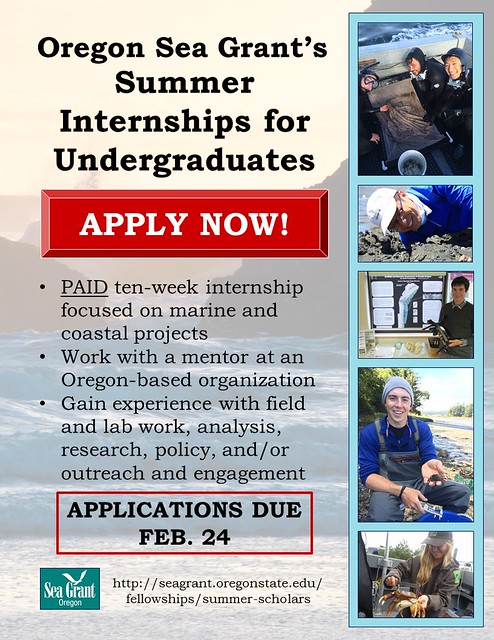
With the close of 2016 the Research and Scholars Team at Oregon Sea Grant are now beginning to ramp up for the 2017 Summer Scholars Program. Host applications are due this week and student applications are due next month on February 24th. Spring is always a busy time of year for the Scholars program as we review applications, interview candidates, and place successful applicants with host organizations. In 2016 we received nearly 150 applications, and with our increase in advertising to reach a broader audience, I suspect we will reach at least 200 applications this year. The caliber of applicants is always extremely high, and narrowing the applicants down to just ten Scholars is always extremely difficult and takes plenty of time and a team of diligent people.

Summer Scholars are outstanding undergraduate students or recent graduates from around the nation who come to Oregon to work under a mentor on a marine-related project. Scholars work on everything from analyzing fecal indicator bacteria in the Tillamook estuary to evaluating the impacts of lost crabbing gear to creating identification videos for tidepools. Ten students were placed last year in various positions and all blogged weekly throughout the summer. To find out more about the 2016 scholars experience and projects just scroll through this blog and you will encounter plenty of posts!

If you know of any students (or if you yourself are this student!) that would be interested in a paid summer internship on a coastal or marine project, please visit the Oregon Sea Grant Summer Scholars website.

Summer Scholars 2017 RFA Poster

A reflection over the past year

In the summer of 2015 I was fortunate to participate in the Oregon Sea Grant Summer Scholars Program. Having just graduated from Oregon State University the weekend before the internship started, I was uncertain as to my next steps in the real world. For the first time in my life I was out of the education system. I had no plans for after the Summer Scholars Program ended in August, besides some personal travel. I had no idea how big of an impact this program was going to end up having on the next two years of my life.

I was placed with the Oregon Department of Fish and Wildlife’s (ODFW) Marine Reserves Program in Newport, Oregon. Going from living in the Willamette Valley my whole life to living on the Oregon coast for a summer was a huge change. Where were my ninety degree days floating down the river? The change in weather wasn’t the only big change though. My position was focused on the human dimensions side of the marine reserves, and I was paired up with the ‘lone social scientist’ of the organization, Tommy Swearingen. Social science was a completely foreign topic to me coming from a strict biology background, and I was nervous about how the summer would go. How was I supposed to conduct research and write reports on a field of study I knew next to nothing about? Luckily I had a fantastic mentor that took the time to teach me everything I needed to know (and more at times). It is easily apparent by his genuine interest in my education that Tommy used to be a college professor.

Well I somehow made it through that summer (I went with a fake-it-till-you-make-it approach) and my position as a Summer Scholar turned into a position as a part-time research assistant for the Marine Reserves Program. I also ended up landing a job with Oregon Sea Grant (OSG) part-time as the Summer Scholars Liaison, effectively managing the program that I just came out of. My positions’ titles and roles have changed and expanded as the time I’ve spent in these jobs has progressed. At OSG I’ve gained experience with multiple fellowships, facilitating grant review, planning events, and participating in many professional development workshops. At ODFW I have mentored an intern, been an author on many agency reports, taken the lead on a study from idea formulation to report completion, and presented our work at multiple events.

OSGFinalSymposiumMtg2016

The last meeting with the 2016 Summer Scholars cohort following the Final Symposium at Hatfield Marine Science Center.

Going into the Summer Scholars Program in June of 2015, I had no idea the connections I would make would result in two fantastic jobs with respected organizations. The experience and skills I have gained make me feel more prepared and confident when applying for future positions. Currently I am looking into finding a Master’s graduate program to start in the fall of 2017. I’m generally interested in studying mammals, amphibians, or reptile habitat use and how this use changes as a result of climate change and human influence. (Email me if you have any school or professor recommendations!) While my time with OSG and ODFW has been invaluable, and I know I’ll be sad to go when the time comes, I’m itching to get back to my biology roots and do some field work. Whether that comes in the form of graduate school or a research technician position, I don’t yet know, but I’m excited to find out!

OSGProgramWideMtg2 (crop)

Presenting on the 2016 ODFW visitor intercept study at the OSG Program-Wide Meeting in Yachats.

Week 10: The End (and Beyond)

I am writing this from my cute little house in Bloomington, Indiana. I am already in my fourth week of classes at IU – can you believe it?

My last week at ODFW was spent finishing up my final report of my results. I polished the report, cleaned out my desk, and caught a glimpse of Portland on Wednesday before boarding a plane back to St. Louis on Thursday. Four days later, I was sitting in my Evolution class in Jordan Hall, IU’s biology building.

A rushed transition, to be sure (I think I am finally getting settled into a routine), but Newport has not yet left my mind, and I think a few thank-yous are in order.

The crew at ODFW helped shape both my project and personal experience this summer. My mentor, Justin Ainsworth – along with other members of the Shellfish Division, Mitch Vance and Steve Rumrill – offered superb guidance, patience, and support. Carri Andersen, Marilyn Leary, Anne Vandewalle, and Adrian Cardoso made my data collection not only possible, but also enjoyable. They are, and will continue to be, missed.

I could not have asked for a better group of Sea Grant Scholars with which to spend the summer and explore Oregon. Steph, Erin, Jess, Lexi, Collin, Angus, Justin, Ed, and Skyler – it was lovely getting to know you, and you made my summer what it was.

And finally, thank you to Oregon Sea Grant for making this experience possible. Thanks to Sarah, Mary, and Haley in particular for running the program flawlessly. Such a special program requires outstanding leaders, and Oregon Sea Grant has certainly found them.

Moving forward: I will graduate this May with a B.S. in Biology (and some other stuff). After that, I plan to take a year “off” before applying to graduate school. For once, I am not sure what my plans are for the immediate future, which is thrilling. And who knows – maybe I will see Oregon again sooner than I expect.

IMG_3145

Cat Dayger meets Collaborative Independence in Salem

Welcome to the first blog post of the 2016-2017 Oregon Sea Grant Natural Resources Policy Fellow! It feels like an impressive title compared to PhD student, the hat I’ve been wearing for the past 5 years. Basically everything about this fellowship is different from what I experienced as a full-time PhD student and I find that I can’t stop marveling at the contrasts.

For one thing, I have a regular schedule. My husband has heard me say a million times “Science waits for no one” to explain why I unexpectedly needed to stay late at the lab, work weekends, and go into the lab early in the morning.

An imposing building to work in to go with my imposing - maybe just long - title.

An imposing building to work in to go with my imposing – maybe just long – title.

Bench science – experiments in a lab – often take more or less (ha! never!) time than expected, which means making plans with friends and family are constantly derailed or postponed. Now, as a Policy Fellow working in the Governor’s office, my schedule is largely confined to regular business hours. There are holidays! I find the more predictable schedule refreshing.

For another, I am surrounded by colleagues excelling in the career I see for myself pursuing. I knew fairly early on in my PhD career that I was not interested in a career in academia, at least not at an institution primarily focused on research. I love doing bench science and field work, and I love the teaching and mentoring I’ve done, but the prospect of packing grant writing and academic service on committees around research and teaching only fills me with dread rather than excitement. I find that I am inspired and focused in ways I haven’t felt in a while because I’m immersed in the field I’m most interested in. I guess I’m also relieved to feel like I’ve made the right choice.

IMG_0045

The State of Oregon coffee (tea) cup I bought the first day at the Capitol.

Not everything is so different though. I still work primarily independently, at least so far. I spend some time working as part of a team on projects with tight deadlines, which I’ve always perversely found enjoyable. And I still drink tea almost constantly at my desk. How do people live without hot drinks?

One of the unexpected surprises of my first few weeks has been the commute to Salem, OR. I was dreading it, frankly, but I’ve been riding the Amtrak train and watching the sunrise over the farm fields recalls to me the time I spent driving through corn fields to feed horses and go to horse shows early in the morning when I lived in Michigan and Illinois. It seems I still have a soft spot

The tumble of morning glories on my walk to work.

The tumble of morning glories on my walk to work.

for early mornings in rural America. I’m also enjoying exploring Salem itself on my lunch breaks. I keep finding this beauty out of the blue that stops me, literally, in my tracks.

I don’t have much to report on the actual work I’m doing yet. I’m still getting on all the right people’s radar so they know I’m the person to contact about ocean and coastal issues. Today, I look forward to attending the Oregon Shellfish Task Force meeting where they will finalize their recommendations to the legislature. I’ve been hearing about the progress of Shellfish Task Force for more than a year from Kessina Lee, my predecessor and PSU Biology colleague, so it’s exciting to see the product of all that work.

Next time, I hope to be able to outline the projects I’ll be working on and maybe highlight some of the neat architecture and sculpture I get to walk by every day working around the Oregon State Capitol.


The Last Week: A Reflection

I can’t believe that I’ve already been away from Oregon for a week. As I’m telling my friends back home my experiences, I know that Oregon will always have a place in my heart. My last week at WRCA wrapped up pretty uneventfully, making sure that I put a bow on all of my projects so that they’re easily accessible to those in the future that will use them.

Off work, I spent my time saying see you later to the friends that I made, and trying to cram all of the stuff that I had acquired into my suitcase. I tasted the famous Denny’s Pizza in Coquille (still the best pizza ever) again, and I tried out a few local hotspots that I had been wanting to try – Edgewaters (I tried Halibut for the first time!), Coastal Mist (delicious chocolate company, where you can get their awesome chocolate mixed with coffee for a great mocha), and Broken Anchor (a local bar & grill favorite, where I learned how to play shuffleboard for the first time). I walked all around Bandon and visited their cute artisan stores, finally settling on my favorite sea-glass necklace (made my Sally, who also sells seashells on the Port of Bandon, a.k.a. the Sea Shore).

I learned a lot about development efforts in the rural United States, and I’ve already been able to use this knowledge in a few of my classes in the first week of school. But most importantly, Oregon taught me most about who I am – in the quiet summer, humbled by the giant trees, listening to the sea breeze, I looked inside and was really able to discover who I am, critically reflect on my career path, and determine where I want to go in the future. One of my goals of the summer was to “find peace” –- to learn how to focus my mind and energy and determine what activities allow me to be the most peaceful and productive. I believe I’ve found just that, and it’s allowed me to settle into my school year, with my sights on my senior projects, making new friends, and applying to graduate school. I cannot thank enough Oregon Sea Grant, Oregon State, WRCA, and everyone involved in the programs for selecting me to receive this invaluable experience. Thanks to those who mentored me along the way, and for all that you’ve taught and shown me. I will be forever grateful. I know that it is not a goodbye to Oregon – I am already planning my next trip up. See you soon!

Giving Thanks

I couldn’t think of a better last day than having it be the last Shop at the Dock. I spent Thursday making some baked goods to thank all of the fishermen who participated in the program (and tolerated our presence on the docks). Through all of the events, the best part was getting to see how grateful participants and fishermen were and I’m lucky to have been a part of it.

cookies

I am unbelievably proud of this.

With the program over, I’ll look forward to spending some time with my family, getting in some traveling, and finding a job. I’ve always been interested in science and education. Helping with Shop at the Dock and being a part of Sea Grant has solidified my interest in pursuing both. It was really great seeing what a powerful tool education can be and I’d like to find a career where I can incorporate education and outreach with science.

nametag

So long Sea Grant

I wanted to finish off by thanking the village of people who worked so hard to make this summer happen. So thanks Haley, Mary, Sarah and every other Sea Grant employee who made the Summer Scholars Program possible. I am eternally grateful to my mentors, Kaety Jacobson and Kelsey Miller, for the wealth of information, the never-ending guidance and support, and for being a constant source of inspiration. Also huge thanks to the rest of the Shop at the Dock crew- Jess Porquez, Amanda Gladics, and Mark Farley- for teaching me about Newport, fisheries, different career paths, and how to be understanding and gracious towards others with conflicting opinions.

Thank you to my fellow Summer Scholars, who made this summer unforgettable. I’m so grateful to have been surrounded by such incredible, kind, and caring people and I will miss you all dearly. Cheers to the many outdoor adventures, the endless sass and sarcasm, the great meals and conversations, and everything in between.

And finally, thanks very much for reading and (hopefully) listening along with me. I’ll finish this post with my final song of the summer from Edward Sharpe and the Magnetic Zeros called Home. Partly because I’m happy to be headed home for a bit, but mostly because I’m so grateful to have found a little piece of home along the Oregon Coast. Newport, you will be missed.

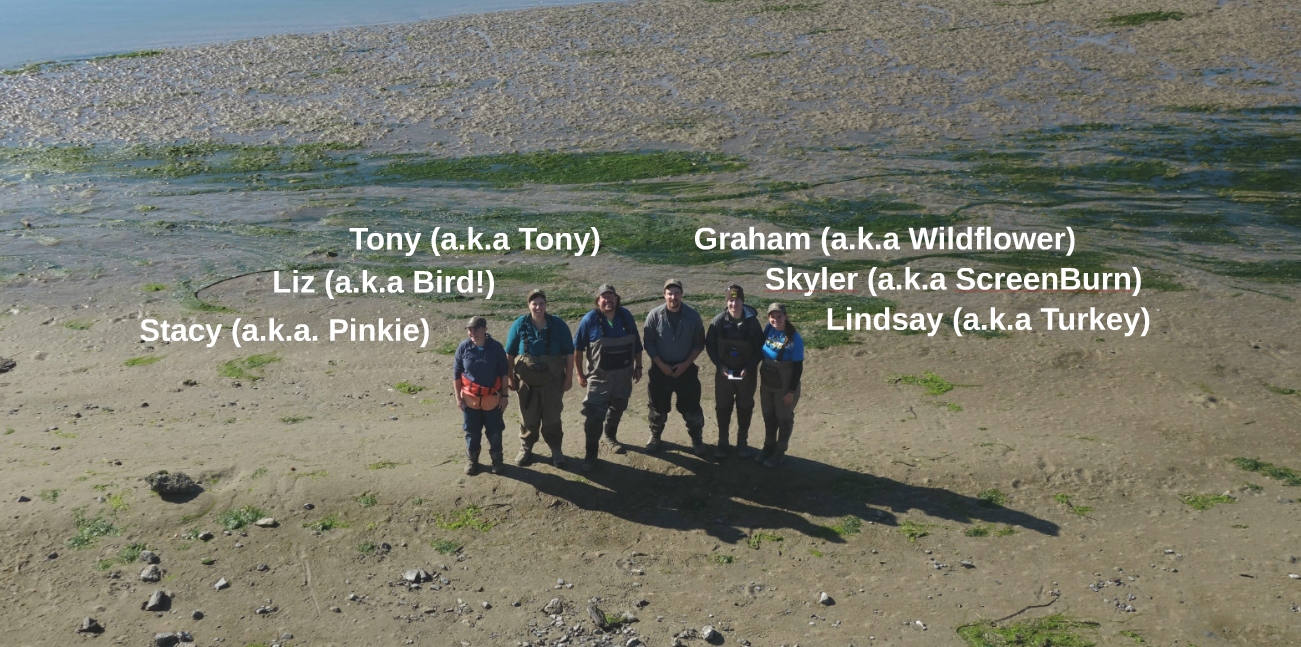
Skyler’s Weekly Review – Week 10

All things that begin must end. But not all things have to end the way they began. Friends made, memories of the journey, and the momentos of progress and challenge all are forged in time. Each token of time will remain a keepsake to me forever. Things certainly did not end the way they began: the Oregon coast has been explored, several estuaries have beeen preserved in cyberspace and eagerly await analysis, and my curly mug has been etched into the brains of at least 20 people. A journey like this teaches many things, but as with all teachings the lessons are unique to the one experiencing  it. My mentors include my team, SEACOR, the tides and the ocean, my fellow summer scholars, the Sea Grant Staff, and of course practically the entire Hatfield Marine Science Center staff; all of which deserve personal thanks.

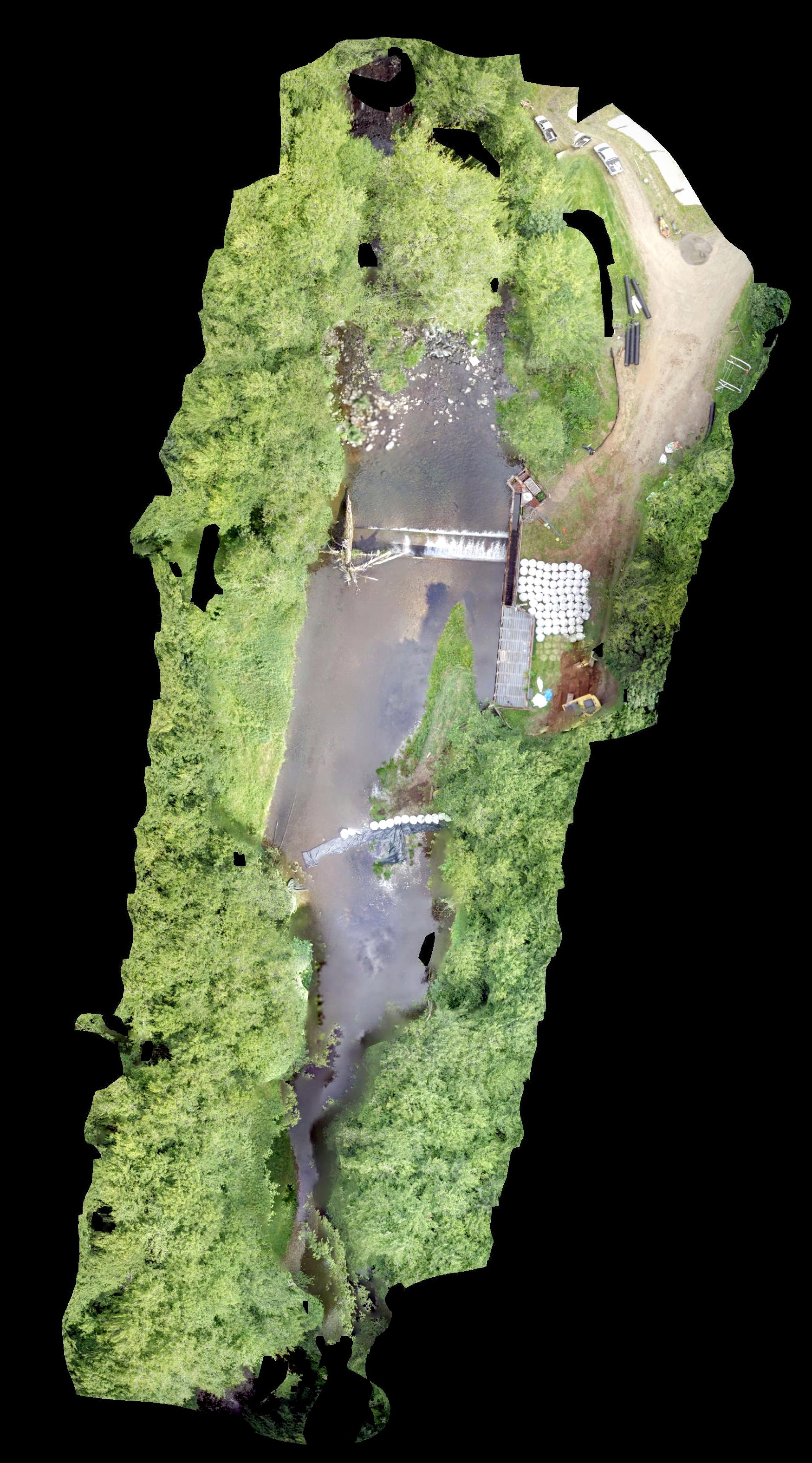
Perhaps my favorite part was personally experiencing (and at least partly responsible for creating) the beauty of images taken 7-60 meters above the ground (click on them!):

Final Alsea Bay Flight; collected via TurboAce MAtrix-E w/ Sony RX100 M3. A Labor of love, these mosaics require intense attention to detail for long periods of time.

Mill 18, Courtesy Erik Suring.

Trask River Dam Removal


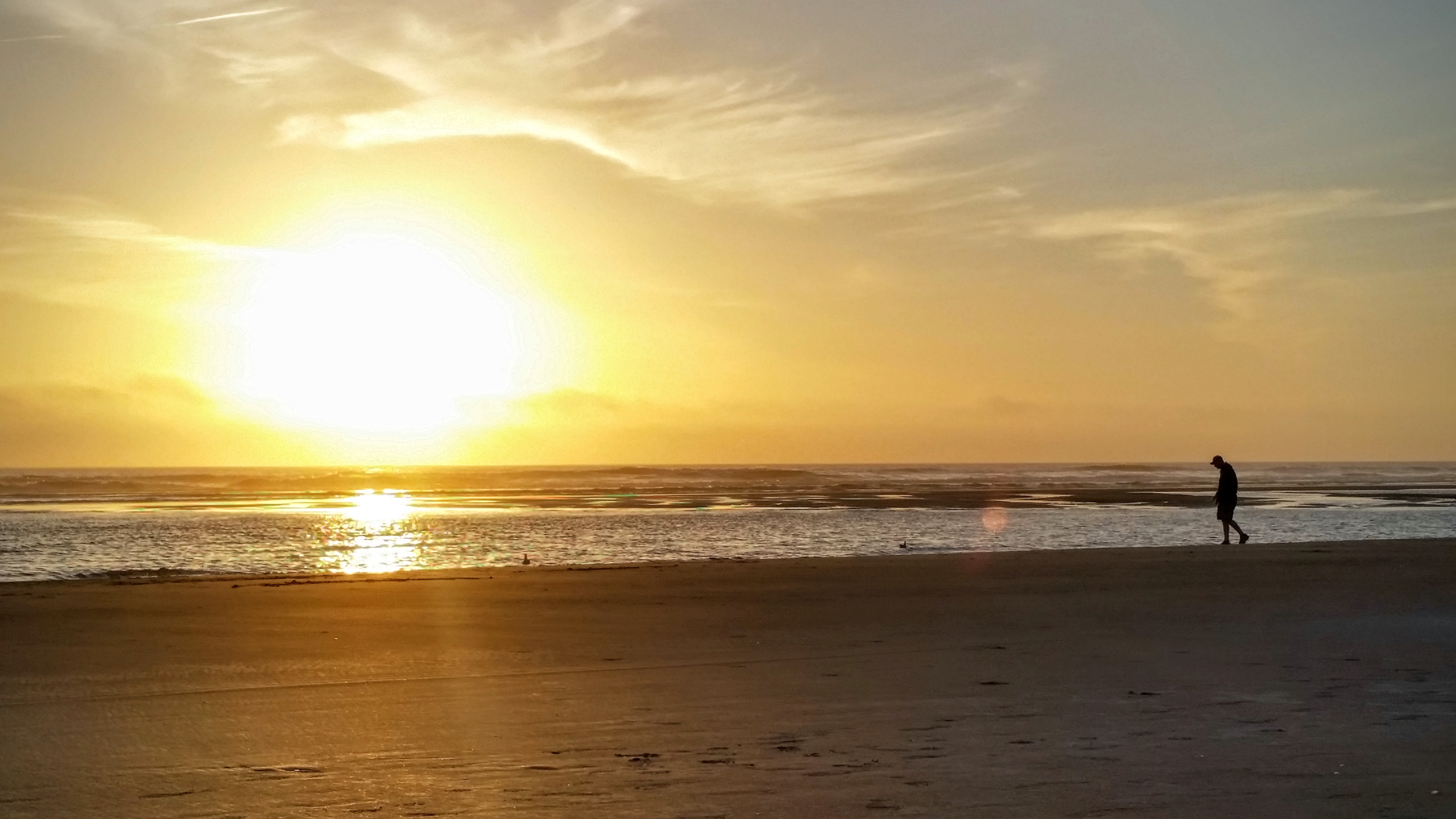
Or perhaps it was the places I went, the way the sun rised and set, or the things I met:


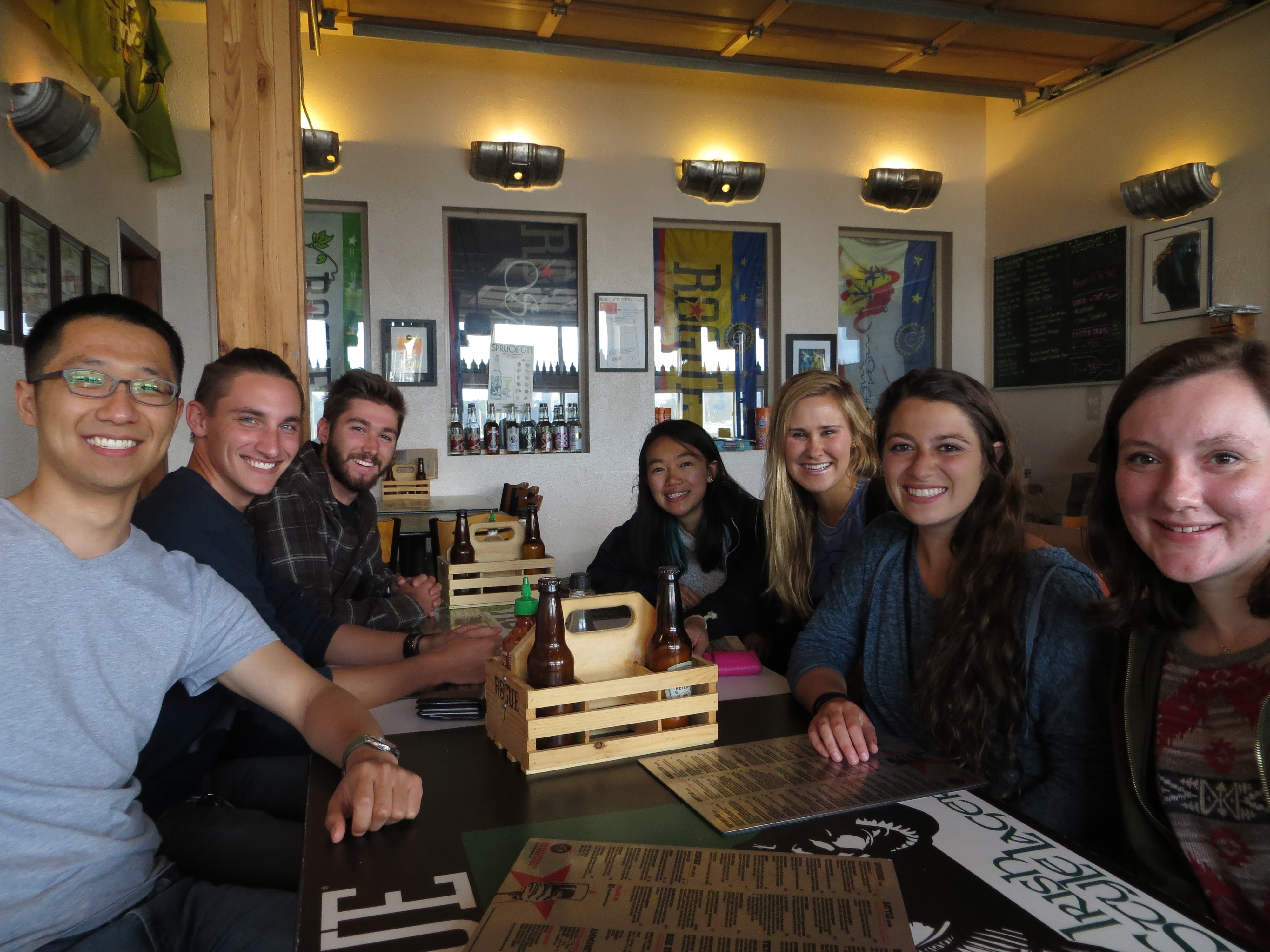
But I know for sure it was the people I encountered and befriended, the people who taught me so much, the friends who became family, and the family who I will surely miss:

Week 10 – fin: The Naturalist

Way back during my sophomore year of college, I took a course on general natural history – although the way the professor taught, it was more like story time than a lecture. He was one of those old school naturalists from the 1960s who built their careers simply by walking around and observing the subtle ecological interactions that you and I would have obliviously strolled past. Even now half-deaf from countless doses of antimalarial drugs and wizened from decades of work in the tropics, he retained a noticeable enthusiasm in his voice every time he regaled us about this particular insect or that peculiar plant.

His passion for nature was one that was superseded only by his mission for conservation, something that he strove to emphasize in every lecture. I took the following passage from an assigned article of his, one that I was reminded of as I reflected over the past ten weeks.

Science and society are uneasy partners in the wildland garden: In the best of worlds we may achieve a very fine and finely negotiated partnership, and in the worst of worlds, annihilation of one by the other. A wildland garden with gentle trodding from caring gardeners just might achieve the partnership. A wilderness faces certain annihilation as a battlefield.

This description is a summary of a larger ideal, one in which we humans view nature not as an unfathomable wilderness, but as a giant, valuable garden. It’s an ideal that has yet to be realized. In this modern age of technology and industry, the only way to ensure we have wild spaces left is to appeal to human authority and market the wilds as pragmatic and worth saving. An intact nature certainly does provide a wealth of ecosystem services and a multitude of other assets (not to mention aesthetics), but as it stands now, the magnitude of these benefits is lost to the majority of society.

The way things are going these days, this is the approach that we must pursue. But at the same time, I think there’s still hope for a paradigm shift, one where we will eventually acknowledge nature not just on its tangible worth, but also on its intrinsic values. My time here with the ODFW Marine Reserves Program has been an enlightening experience of what has so far been accomplished and also what needs to be done further in this regard. If there’s anything I can pass along to those of you who are reading, it would be these few lessons that I’ve learned both here and in years past.

  1. Nature has been extraordinarily resilient against humanity’s “management,” but there is a breaking point.

One of the greatest follies of human nature is that we think we know best (the operative word here being “think”). But the truth is that we have learned after the fact too many times for us to know what is and isn’t good for the environment:

And yet people still think ventures like the Pebble Mine are good ideas. I could go on and on, but the message is that most of the time our intentions are neutral at best and irreparably catastrophic at worst. We’ve seen it countless times already, we’re still seeing it happen in the present, and we’re bound to repeat it in the future if something doesn’t change.

The solution? Allow our scientists and their research to inform and guide us, which takes us to my next point.

  1. Science takes time.

…but right now there is no time, which is why endeavors such as the marine reserves that conserve the study area throughout the research process are so critical. The reserves are due for an evaluation by legislature in 2023, more than a decade after they were created. A lot can happen in ten years, and already for many places it would be too late to begin research without some kind of protection plan in place, as is the case here.

In the meantime…

  1. We need to tap into our inner naturalists.

There is a very real and ongoing disconnect between humans and nature, a phenomenon that I believe is at the heart of the problem. It seems to me that there’s a correlation between technological advancement and a diminishing appreciation for nature. That isn’t to say the modern world we’ve created is inherently bad, but as we stray farther from our primitive roots, we lose the ability to identify with the outside world. The society we’ve become is one that is incapable of recognizing the well-being of anything outside of its own domesticated bubble. Simply put, if we don’t have any reason to care, then we have no reason to shoulder any responsibility.

Amidst all of the contention, there is a proverbial light at the end of the tunnel. Oregon’s marine reserves (and indeed, all of our protected areas) are serving as the models we need going forward. Put science at the forefront in dictating policy, set definitive boundaries that give biodiversity a fighting chance to bounce back, and communicate the virtues of a robust ecosystem to the rest of the world. Until there is a universally understood obligation to maintain our wild spaces, it’s perhaps the only way we’ll attain any semblance of harmony.

The alternative if we don’t? Human encroachment continues until there are only isolated and ecologically useless patches of wilderness left, pollution sullies the rest, and our natural resources are eventually depleted as we consume with reckless abandon. Society will be left to ponder what went wrong. As with many things past, we’ll only know what we lost when it’s well and truly gone.