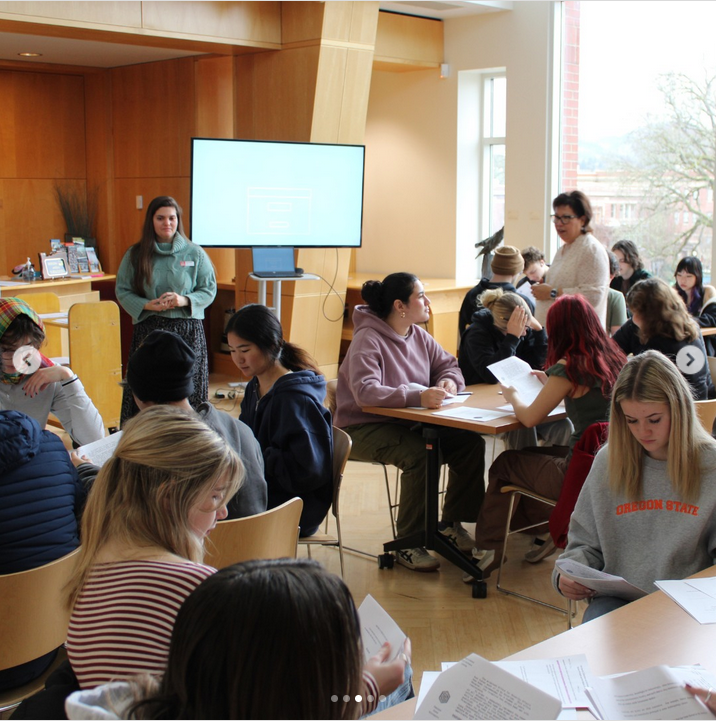
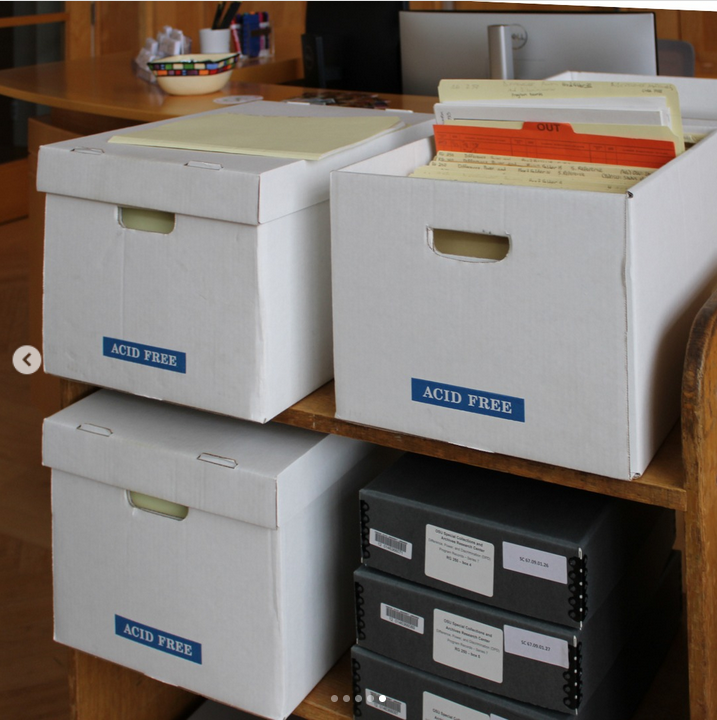
During fall term 2025, College of Education instructor Carrie Pilmer reached out to Natalia Fernández to develop an activity using archival materials for her ED219: Social Justice, Civil Rights, & Multiculturalism in Education course. In winter term 2026, SCARC hosted a total of 170 ED 219 students (2 sections of the course) in the SCARC Reading Room to engage with materials from the OSU Difference, Power, and Discrimination Program Records (note: the program is now called Difference, Power, and Oppression).
The purpose of ED 219 is to examine equity and injustice based on socially constructed groupings such as race, gender, language, religion, class and ability through history and current times. The course explores asset-based approaches and power in systems and institutions of society (e.g., schooling, curriculum, educational policy) and how to actively make change. The course emphasizes self-inquiry and contemplation of multiculturalism and personal experiences through a resilience-focused wholeness approach.
ED 219 is a Difference, Power, and Oppression (DPO) designated course. It fulfills the requirement to engage students in the critical reflection on the complexity of the structures, institutions, and ideologies that sustain systemic oppression, discrimination, and the inequitable distribution of systemic power and resources within and across communities. Such examinations enhance and promote responsible, ethical, and anti-racist engagement by preparing students to understand and disrupt these systems as they manifest in their field.
Because of the DPO requirement fulfillment and the course’s subject matter – the history of education – Carrie and Natalia decided to use the history of the DPO program as a local history case study for the students to analyze. Even better, because the spark for establishment of the DPO was BIPOC student activism, Natalia and Carrie wanted to emphasize the power of student voices to create change at OSU.
In addition to Carrie’s course, we invited Ana Ramírez’s course section as well, and during week four of the winter term, SCARC hosted four sessions (the two classes were split into two groups) of ED 219 students.
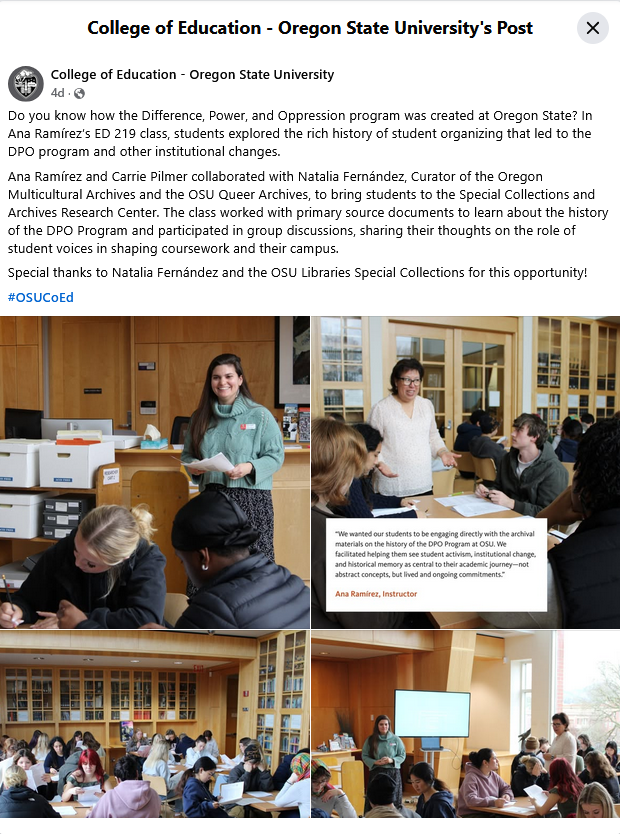
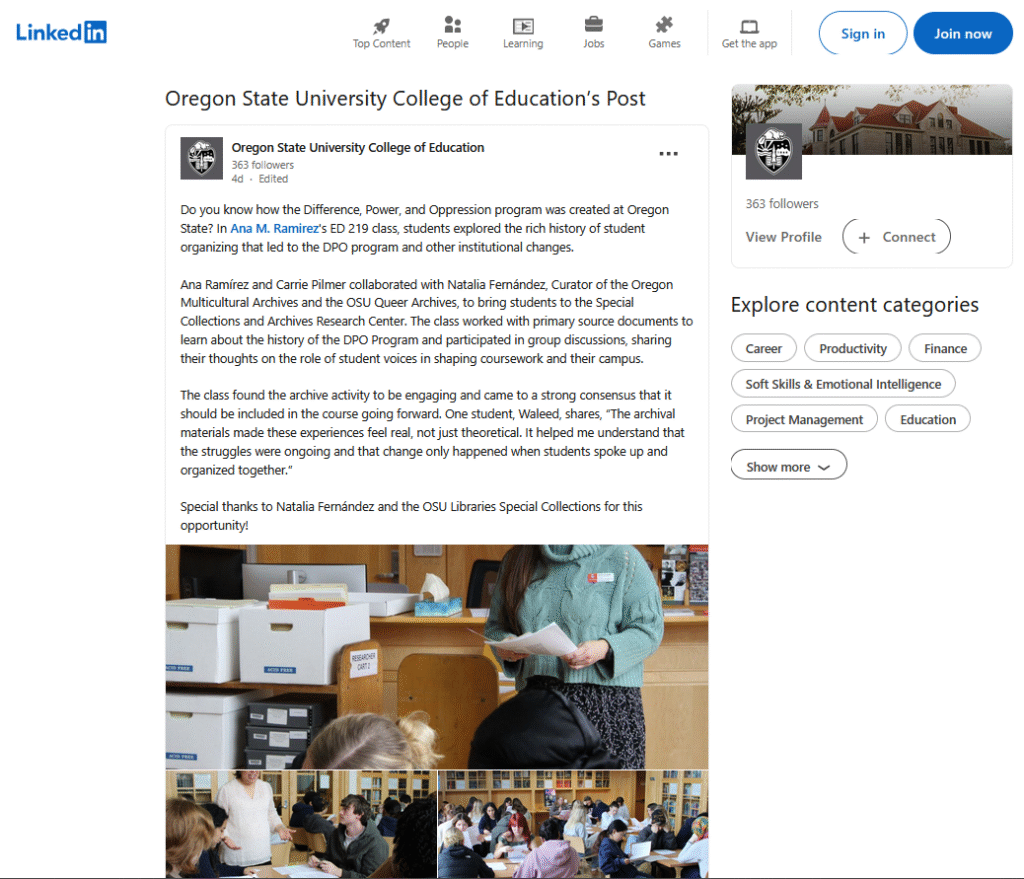
The College of Education wrote a piece about the collaboration; that article and accompanying photos are included below!
~~~~~~~~~~~~~~~~~~~~~~~~~~
A Trip to the Archives: An Education Class Explores the Impact of Student Activism at Oregon State
Published February 27, 2026
Do you know how the Difference, Power, and Oppression program was created at Oregon State? In Ana Ramírez’s ED 219 class, students explored the rich history of student organizing that led to the DPO program and other institutional changes.
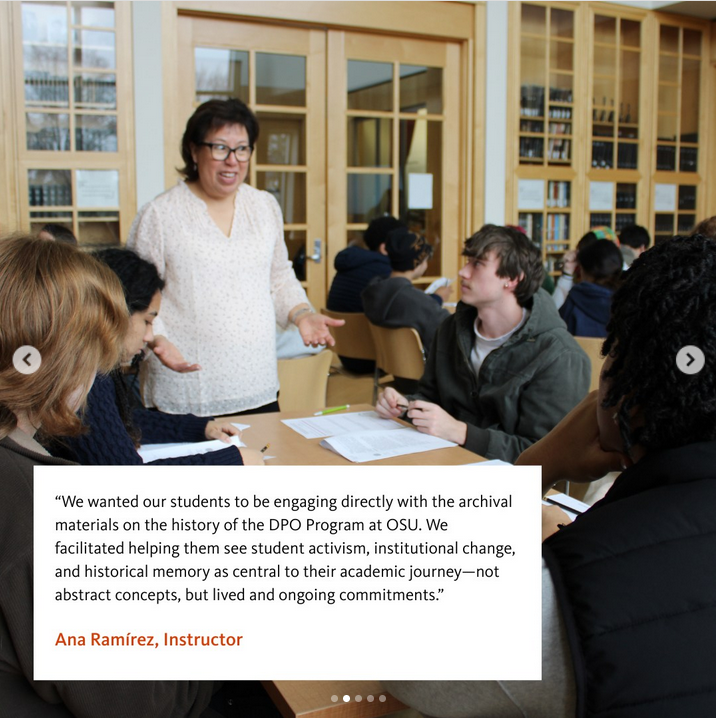
Instructors Ana Ramírez and Carrie Pilmer collaborated with Natalia Fernández, Curator of the Oregon Multicultural Archives and the OSU Queer Archives, to bring students to the Special Collections and Archives Research Center. The class worked with primary source documents to learn about the history of the DPO Program and participated in group discussions, sharing their thoughts on the role of student voices in shaping coursework and their campus.
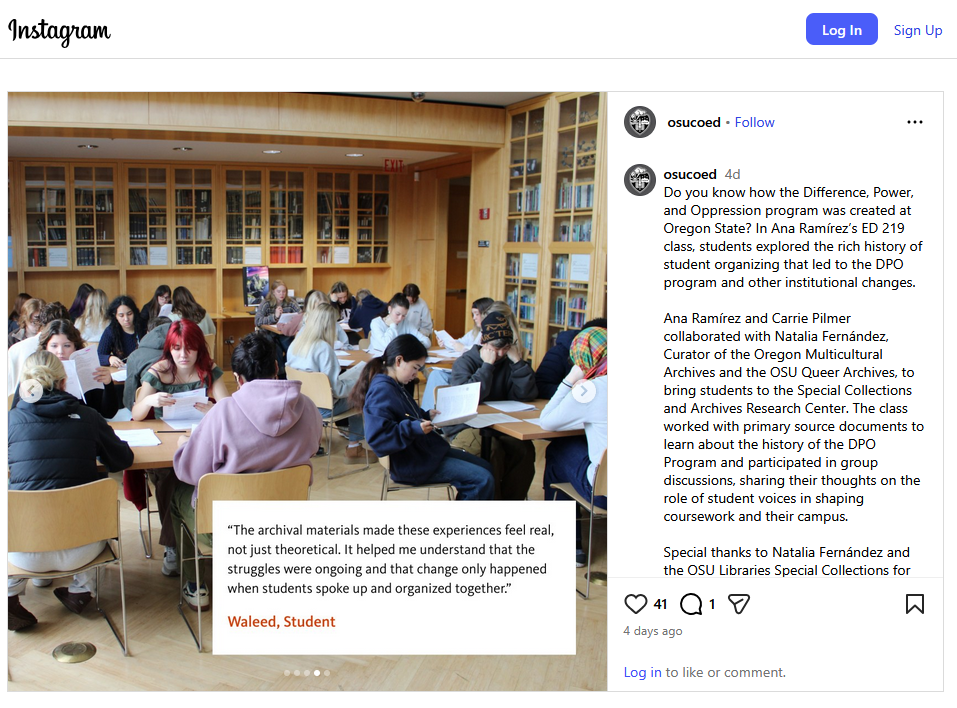
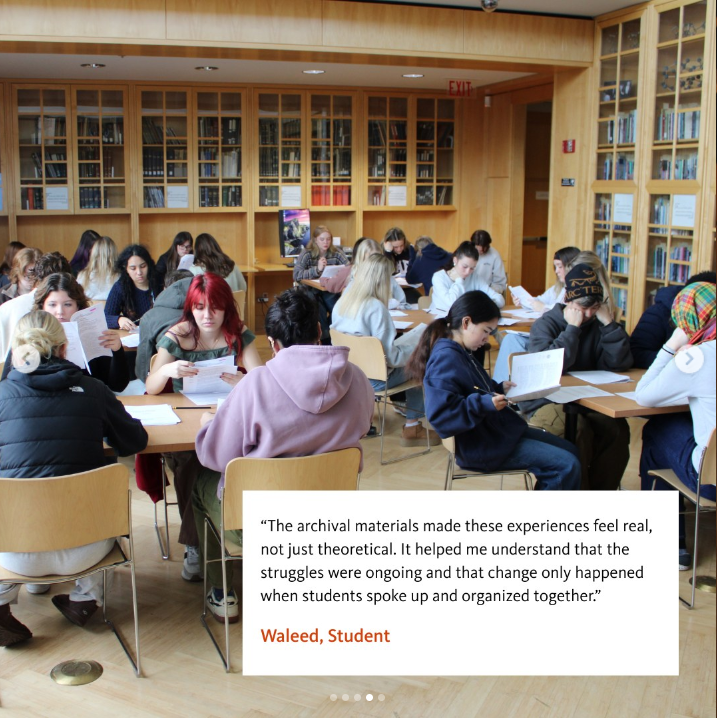
The class found the archive activity to be engaging and came to a strong consensus that it should be included in the course going forward. Student Waleed shares, “The archival materials made these experiences feel real, not just theoretical. It helped me understand that the struggles were ongoing and that change only happened when students spoke up and organized together.”
Several students noted that it was powerful to hear student voices directly from the source. When asked about the most impactful part of the activity, Molly says, “the proposal from the students felt the most impactful to me because I can only imagine the amount of courage and strength it took for these students to speak up. It also shows how something such as a letter or proposal can snowball into a whole new program that creates change for generations.”
Many also remarked that it was interesting to examine history and civil rights from a local perspective—that it was especially engaging to learn about this history of their university in particular. Student Aubrey says, “The large group discussion we had at the end of today’s class in the Archives really helped me tie in how we can learn from past OSU student activism and use it in a real, modern day context. Hearing my peers explain in their own words how we need to take ownership over issues at OSU helped me grasp the concept of real student activism, and in some ways even inspired me.” The class drew connections between the primary source accounts and current political and social issues.
The trip to the Special Collections and Archives Research Center proved to be a success and fulfilled Ramírez’s goals for the activity. She tells us, “We wanted our students to be engaging directly with the archival materials on the history of the DPO Program at OSU. We facilitated helping them see student activism, institutional change, and historical memory as central to their academic journey—not abstract concepts, but lived and ongoing commitments.
Special thanks to Natalia Fernández and the OSU Libraries Special Collections for this opportunity.
~~~~~~~~~~~~~~~~~~~~~~~~~~
And, the article was shared across multiple outreach platforms!