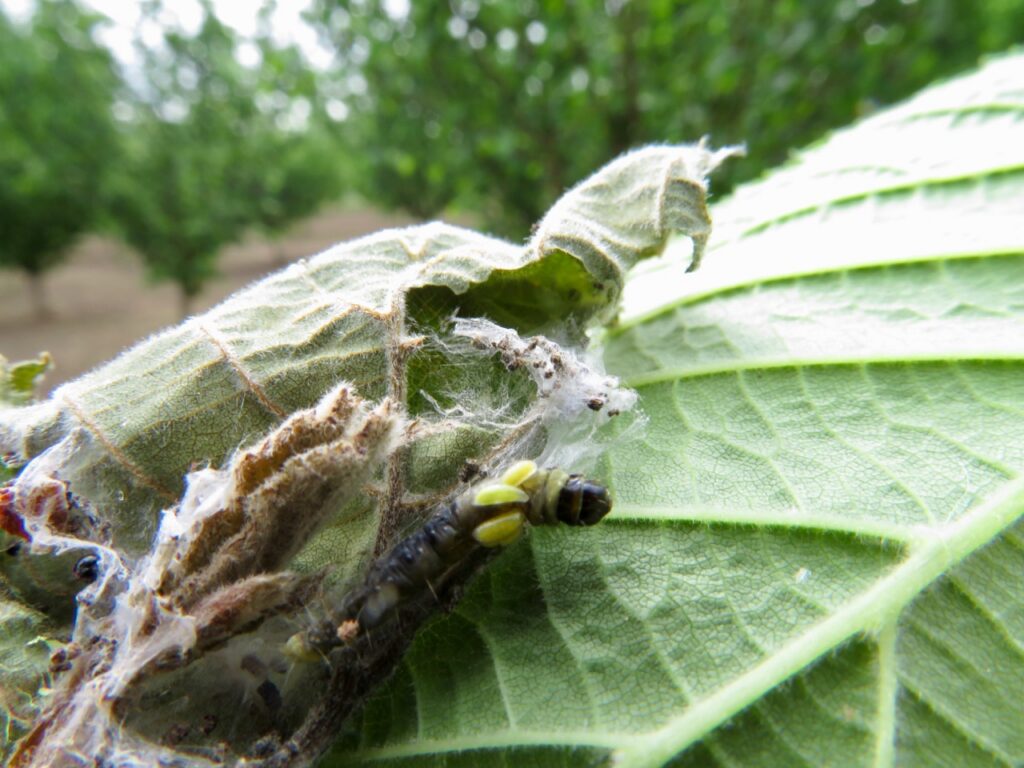
Leafrollers in the hazelnut orchard. Leafrollers are a pest we usually don’t worry too much about, they are not a direct pest that attack the nuts (generally) and in that regard they are not as important as other pests like filbertworm. Leafroller is a descriptive name for multiple species in the moth family Tortricidae. These insects share a common behavior: larvae roll or bunch leaves together using silk produced from glands in the head, forming a protected feeding site. If disturbed, the larva will often perform a rapid backward wriggle and descend from the leaf on a silk strand. Leafrollers could have inspired the break dance move known as “The Worm”.
We have two major species of leafrollers that affect hazelnuts: the “filbert” leafroller (FLR; also known as rose tortrix), Archips rosana, and the obliquebanded leafroller (OBLR), Choristoneura rosaceana. We also occasionally see omnivorous leaftier, Cnephasia longana, mainly in new plantings where it can be highly destructive to new growth. If we were to include all tortricid moths affecting hazelnuts, we would also include filbertworm, Cydia latiferreana. However, it has a different life history and does not tie leaves together with silk.
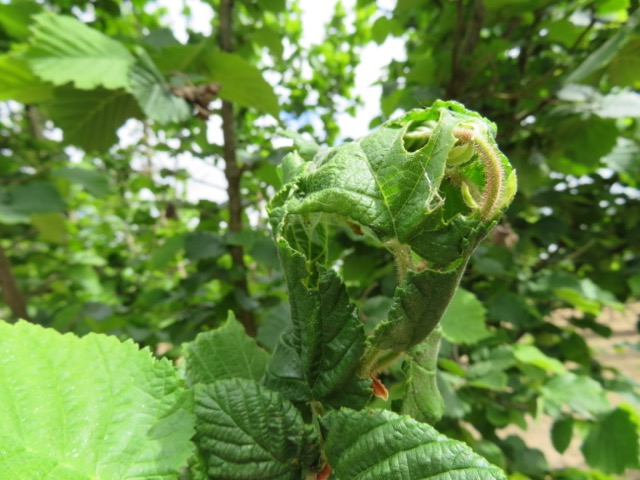
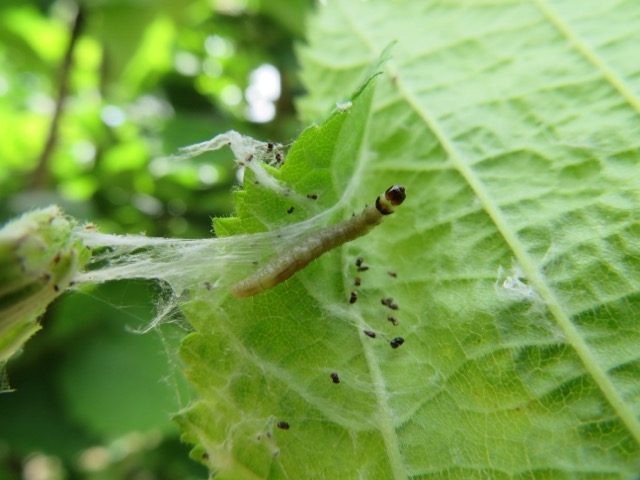
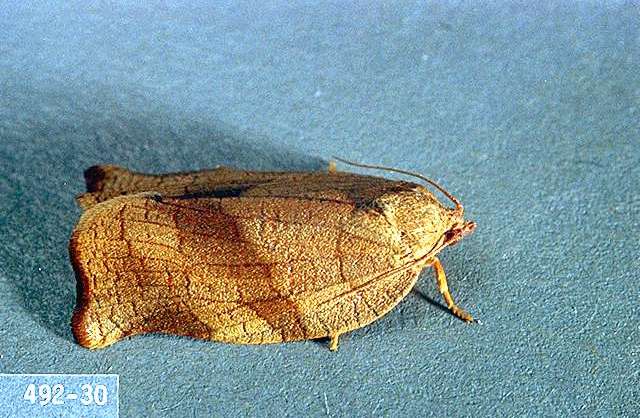
Life history. FLR and OBLR are difficult to distinguish. Both are greenish caterpillars with a brown head capsule, though OBLR may have a black head. The adult moths also look similar: tan with brown banding patterns on the wings and a characteristic bell-shaped resting posture.
Despite these similarities, their life histories differ. FLR overwinters in the egg stage as masses laid on the bark. Eggs hatch around bud break, and larvae begin feeding on buds and young leaves. After feeding and pupation, adults emerge, mate, and lay eggs for the next season—resulting in one generation per year.
OBLR, in contrast, overwinters as young larvae that move into buds in spring. It typically has both a spring and a summer generation. In general, this is one case where the grower or manager need not identify the species, the damage and management are the same.
Damage. Leafrollers feed primarily on vegetative tissue, especially leaves. In most cases, orchards can tolerate some leaf loss without reductions in yield or productivity.
However, in spring, leafrollers may pull developing nut clusters along with leaves into their feeding shelters. If enough clusters are affected, this can reduce nut set and yield. The likelihood of economic damage increases with population density.
Later in the season, OBLR may girdle green nut shells or cause minor injury to nut clusters. In many cases, the filbertworm management program and biological control keep the late season pressure low.
Management. Leafrollers are common in orchards and are observed every year, but populations are typically not high enough to warrant treatment. Following the transition away from organophosphate to selective insecticides and mating disruption in the 1990s and early 2000s, there was a brief resurgence of leafrollers in orchard crops. Since then, populations have stabilized, and treatments are rarely needed in hazelnut orchards.
That said, populations appear to be unusually high this spring. This may be related to the mild winter of 2025–2026, with few freeze events in the Willamette Valley to suppress pest populations. Reports suggest elevated pest pressure across multiple crops this season.
If you are concerned about leafroller pressure, inspect trees by checking three terminals per tree across approximately 10 trees. When 20–25% of terminals are infested, populations are likely above threshold.
When treatment is warranted, one of the best options is Bacillus thuringiensis subsp. kurstaki (Btk) a biological insecticide that is selective for moth larvae and relatively safe for natural enemies. Conservation of natural enemies is important in spring to suppress pests like aphids. Good coverage is essential, as feeding sites are protected.
Other materials used for filbertworm control may also be effective, including chlorantraniliprole, spinosyns, and insect growth regulators such as methoxyfenozide and pyriproxyfen. Check the PNW Insect Management Handbook or the Hazelnut Pest Management guide for all the options. Speaking of filbertworm- we have been moving the management earlier and earlier. However, the timing does not quite work for a springtime leafroller treatment to also capture those early filbertworm moths. The filbertworm moths first have to fly (starting mid-late May, mate, and lay eggs).
Biological control. Leafrollers are highly susceptible to natural enemies, particularly as larvae develop and mature. This is why early intervention—if needed—is most effective. Treatments should target early instars to minimize impacts on beneficial insects.
As larvae grow, they are increasingly attacked by parasitoid wasps and flies and are common prey for spiders and other generalist predators. By this stage, most feeding damage has already occurred, and growers are often better off saving a spray and allowing natural enemies to clean up on the remaining population of leafrollers.