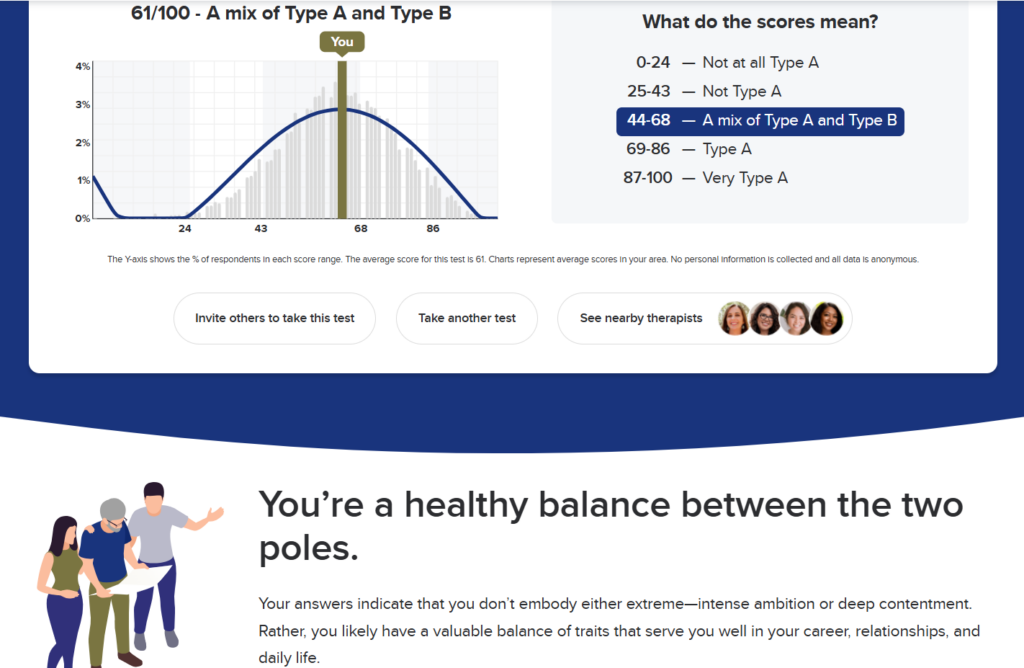
According to Psychology today, Type A individuals tend to be competitive, ambitious, impatient, perfectionist, achievement oriented, and can be aggressive. Type B individuals tend to be more flexible, creative, and low-stress. After taking the Type A personality test, I learned that I am more a mix of Type A and Type B, although I have long thought that I tend to be more Type A.
There are many different ways to manage stress related to the workplace but some of my favorite ways to reduce stress levels are to go on a walk, stretch in a yoga session, or just move my body in general. Being active is not only good for the body, it can also act as a mental reset, switching the nervous system from a sympathetic state (fight or flight) to a parasympathetic state (rest and digest). According to the lecture material, engaging in physical activity is a healthy way to manage feelings of anxiety or frustration.

To help identify and deal with workplace stress, OSHA offers downloadable and printable outreach materials like posters and brochures that build awareness, knowledge, and acceptance around stress. I like this approach because it is a low cost option for employers to give their employees as a resource for stress management.
Other ways organizations are helping their employees deal with stress are by offering more benefits that encompass mental, physical, and emotional health. United Health Care for example is offering a mix of quality medical care, affordable pharmaceuticals, access to mental health professionals, financial wellness programs, and holistic wellness programs to help create healthier more productive workforces. While this isn’t the least expensive option for companies, UHC argues that their product pays for itself through higher productivity and lower absenteeism and turnover.
SOURCES
Lecture Notes – Job Stress
https://www.osha.gov/workplace-stress/outreach-materials
https://www.osha.gov/sites/default/files/Helping_Your_Coworkers_and_Yourself.pdf