By Jerry Herbage
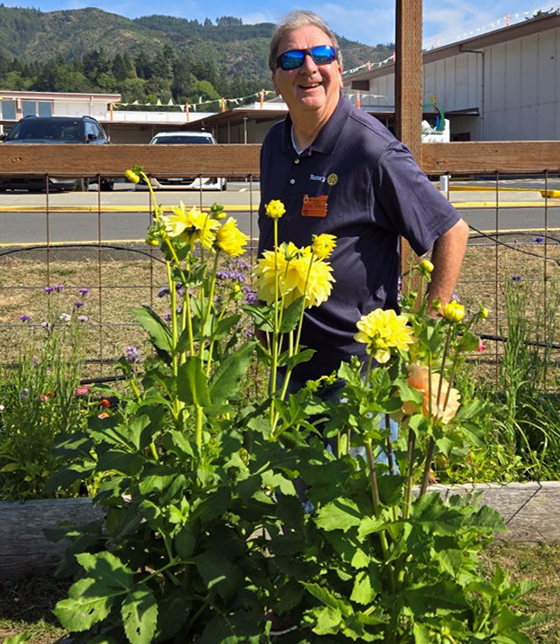
Some 35 plus years ago, when I was serving as a Curry County Deputy District Attorney for child support enforcement, I attended a conference in Salem, Oregon related to support enforcement. One of the speakers was a dahlia grower, and although dahlias had nothing to do with the conference, he asked if any of the attendees would like some dahlia tubers. Even though I had never grown them previously, I raised my hand and gave him my address here in Gold Beach, Oregon.
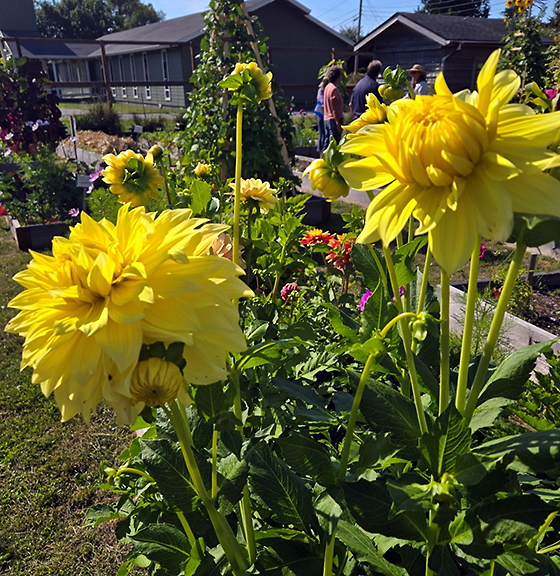
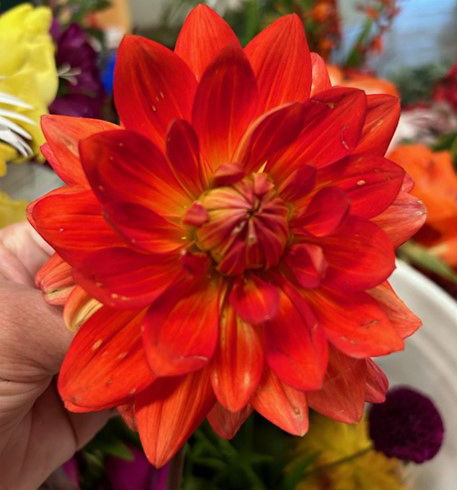
Photos by Sarah Mocas
A few weeks later, and at no charge to me, he sent to me via the US Mail approximately 8 dahlia tubers, which I promptly planted. The dahlias thrived, and created a passion in me that has survived to this day.
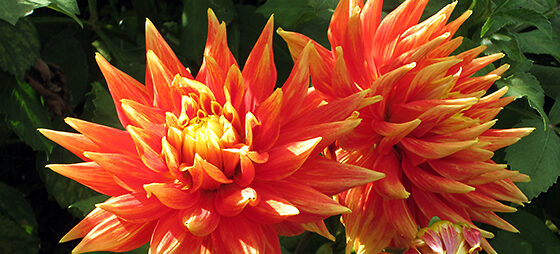
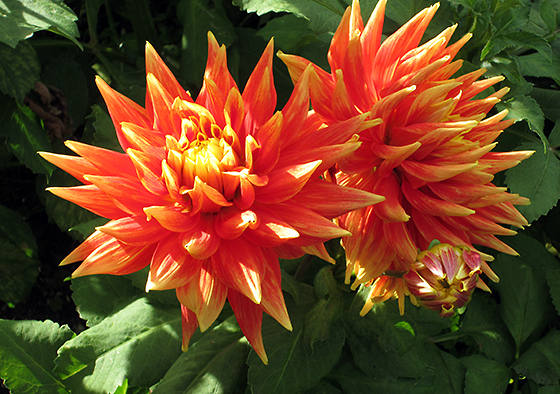
Over time, this hobby of mine has flourished. I expanded the space in my yard devoted to growing dahlias, participated in various shows where dahlias are judged and displayed, began growing dahlias at Saint Charles Catholic Church, and became a member of the Wild Rivers Dahlia Society which was organized and operated by Bob Chibante, who is a local expert in growing dahlias. Also, beginning this year, I have planted and help grow dahlias at the Riley Creek School Garden in Gold Beach (managed by Master Gardenertm volunteers). I now grow about 350 dahlias, representing some 100 varieties and almost all of the classification types (such as formal decorative, informal decorative, poms, semi-cactus, stellar, laciniated, collarette, single, orchid, waterlily and ball). Flowers are in almost all colors but blue (which is genetically not possible with dahlias). Please see attached pictures of our home dahlia garden. My favorite varieties include Galaxy, Citron du Cap, Elma Elizabeth, Helen Richmond, and Honey Dew. My wife Cathy and I share cut flowers with the community and never charge for them. Cathy is especially talented in flower arranging.
Purpose and Scope of the Article
The purpose of this article is to offer some ideas or suggestions on how to grow dahlias in our area of the State. It is based upon my own trial and error and information received from other growers and other sources. Because of space and time constraints, not all dahlia topics (including digging, dividing and storage, as well as container growing) are covered within this article.
Planting
Planting should generally occur in April or May; a rule of thumb is to not plant beyond Father’s Day which is in June. Apart from that, planting should be weather dependent. Do not plant during an extended wet and/or cold period or when one is expected. (If it is cold and wet, the tubers are susceptible to rot.) Generally, the temperature around the time of planting should be 60 degrees Fahrenheit, or warmer.
Select an area for growing that has good drainage and sufficient sunlight (around 8 hours or more). An area protected from the wind is a plus. The soil should be rich in nutrients, and acidic (with a pH in the ballpark of 6.5 to 7.) It may be necessary or wise to add soil amendments. One of my favorite amendments is rabbit manure mixed with straw (not wood chips). I have used rabbit manure for many years and I have found that it will not burn the young plants, helps grow excellent vegetation, and will help you build up the soil. Another option is to use cow or steer manure, but if you do so, be careful not to over-fertilize.
When you plant, work about the top 2 feet of the soil. Dig a hole and plant the tuber about 6 inches deep with the eye(s) (buds from which dahlia shoots sprout) facing up to the sky. I place a small amount of bone meal, blood meal, and sometimes mycorrhizae powder next to the tuber before covering it up with soil. Spacing of dahlias can vary depending upon the size of the full-grown variety, but about 2 feet apart will work. Do not plant where the dahlia plants will have competition for sunlight.
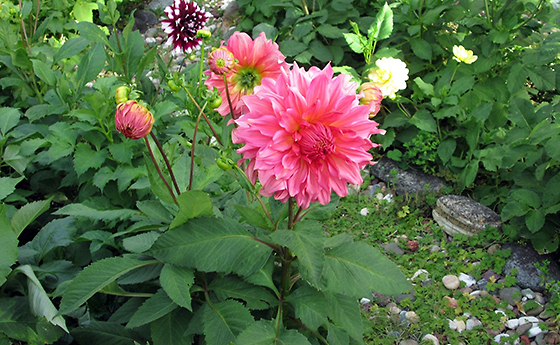
Photos by Jerry Herbage
Watering and Fertilizing
Do not water at the time of planting your dahlia tubers, and hold off watering at all until the plants actually come up. Thereafter, do not hand water. Rather, use a sprinkler or drip system. The reason is that dahlia plants need the water to soak down deep, which requires watering over a period of time. I like to set up a sprinkler for at least a couple of hours or more. This, of course will depend upon the temperature, time of year, etc. When I finish watering, I like to let the soil dry out before watering again. It is not good for dahlias to have the soil constantly soaked with water.
With respect to fertilizing, dahlias do not like large amounts of nitrogen proportionately. It can cause them to be leggy. For that reason, be careful about using liquid fertilizers as many of them are high in nitrogen. I prefer using dry fertilizers with a formula similar to 10-10-10.
General Growing Tips
Consider the following practices…
Staking – Especially for large dahlias, it is a good idea to provide stakes to prevent your dahlias from falling over. If you stake at the time of planting, you will avoid damaging the roots at a later time.
Pinching – This is recommended by many experts, but a practice I do not generally do. When your plants are about 18 inches tall, consider cutting the center branch above the 3rd set of leaves. This promotes plants with better stems for cutting.
Disbudding – Remove the 2 smaller buds next to the central one in a flower cluster. (This practice is required before entering flowers in competition, and is a good practice.)
Deadheading – Remove the flower at the time it fades. (The dahlia will then spend more of its energy on flowers rather than producing seeds.) If you want it to produce seeds, then disregard this step.
Pests
Leaf eating Insects – For these critters that leave holes in your dahlia vegetation, I like to apply Garden Tech – Seven Insect Killer, which is a powder.
Slugs – Try to make the garden around the dahlias unattractive to slugs by eliminating or reducing moist areas. For treatment, I use Sluggo.
Deer – This prompts a question- Do deer eat dahlias? The unequivocal answer is yes. Although dahlias are not a deer’s favorite (like roses or strawberries), they do munch on dahlias from time to time. For prevention, actual deer-proof fencing is best. If that is not practical or available, try using Liquid Fence Deer and Rabbit Repellant. I apply it to rags attached to bamboo poles which I place at various outside points of my dahlia garden.
Wild Rivers Dahlia Society
For a number of years before COVID, Bob Chibante ran a local dahlia club called the Wild Rivers Dahlia Society. We met regularly on a monthly basis, had some great instruction, and hosted a yearly dahlia show in Gold Beach with participants from throughout the State of Oregon and from northern California. It was great fun! In the last few years, the club has been inactive. If you have an interest in joining the Wild Rivers Dahlia Society, please contact me.
Overall Benefit of Growing Dahlias
I find growing dahlias enormously rewarding. They are a visual treat, and attract hummingbirds, bees and butterflies. They make excellent cut flowers and are wonderful for making bouquets and sharing with friends. If you have not previously grown dahlias, consider doing so next year.