Nov
16
2009
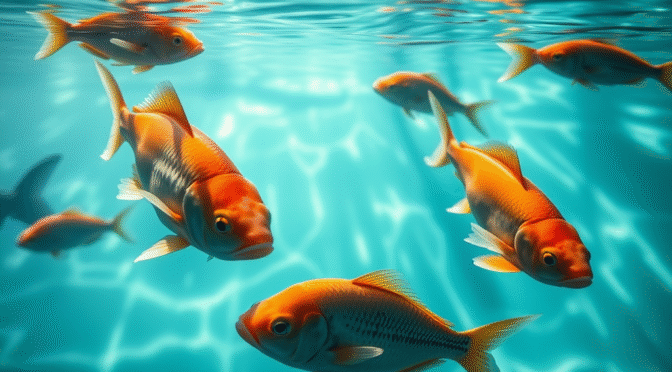
Below are a few images from the 2009 ZNA show which ended yesterday. The ZNA is an international koi hobbyist organization which was founded in Japan but now has chapters all over the world, including one in Portland, Oregon. Enjoy the pictures.
Oct
26
2009
The Oyster Cloyster, the annual fundraising event for the Aquarium Science Program at Oregon Coast Community College occurs Saturday November 7th, 2009 at the Oregon Coast Aquarium.
If you are in the Pacific Northwest this is a great evening event. Plan to spend the weekend. Spend the day Saturday at the Hatfield Marine Science Center – Visitor Center (HMSC-VC) and the Oregon Coast Aquarium. Then return to the Oregon Coast Aquarium for an evening of oysters prepared by our PNW chefs, desserts, wine, various musical entertainments and a chance to view the aquarium at night.
For those that wish to stay overnight in Newport I will offer a tour of our newly remodeled Aquatic Animal Health Laboratory at the Hatfield Marine Science Center Sunday morning at 1030. This is the primary teaching laboratory for the Ornamental Fish Health Program. This facility is where we offer many of our industry oriented training programs as well as programs for our aquarium Scienece students, veterinary students and veterinarians. Please meet me at the Front entrance to the HMSC – VC at 1030.
If you are interested in the Sunday tour please email me by Thursday 11/5 at tim.miller-morgan@oregonstate.edu so that I can get a rough head count. Please put Post Oyster Cloyster Tour in the subject line.
Hope to see you there. It’s a fun event and supports a great cause, training future aquarists from the ornamental fish industry, public aquaria, aquatic research laboratories and resource hatcheries.
Aug
25
2009
See the recent post by Nina Shen Rastogi at http://www.slate.com/id/2221024/.
Some other important points that I would also emphasize:
- Learn as much as you can about the particular fish species and their needs in captivity before they are purchased. This research might lead one to decide that a particular fish is not the right species for them to maintain in an aquarium.
- Focus on purchasing healthy fish in the first place. Learn the general signs that indicate a healthy fish as well as a sick fish ( I’ll discuss these in future posts).
- Find a trusted fish supplier that is genuinely concerned about selling healthy fish and educating his or her customers about maintaining healthy fish.
- Seriously consider utilizing a quarantine for all new arrivals before they are added to holding or display tanks (more about this later).
We can all do our part by keeping our fish as healthy as possible. We do this by understanding the needs of the animals in our care, demanding healthy well handled fish from our supplier and by practicing excellent health management while these animals are in our care. These are a few of the small, but important, ways we can work to preserve the wild resources by striving to keep the animals in our care healthy and long-lived.
Can this be a truly green/sustainable industry/hobby? If so, what do you think that would look like in 20 years?
Comments and criticisms?
Jul
29
2009
From AVMA, AquaVetMed an interview with one of our local, Pacific Northwest Fish Veterinarians:
As the field of aquatic veterinary medicine expands, so do the medical options available for fish. One of these options is surgery.
As fish become more popular as pets, the demand for veterinarians to look after their health also increases. Whether you’ve got a guppie or a koi, any fish owner who develops a strong bond with their fish wants access to the best health care they can find. As the field of aquatic veterinary medicine expands, so do the medical options available for sick or injured fish. One of these options, explains Dr. Craig Adams, a mixed-animal veterinarian and owner of Aquatic Veterinary Services in western Washington, is surgery.
Listen to the podcast, or download as an MP3.
Jun
18
2009
In less than 4 weeks the AVMA Annual Convention will occur in Seattle, WA, July, 11-14, 2009. We have assembled 4 days of training seminars for veterinarians and veterinary technicians with an interest in pet fish and commercial production of shellfish. Click here for a schedule of the sessions we will offer. Further, the World Aquatic Veterinary Medical Association will hold its Annual General Meeting and two days of clinical presentations related to symptomatology, diagnosis and treatment of common aquatic maladies.
I hope to see you there.
May
06
2009
Words From A Wet Vet, along with Sea Grant’s other blogs and podcasts, has made the virtual move across campus to blogs.oregonstate.edu, the new WordPress blogging community for Oregon State University departments, faculty and students. You’ll still be able to find all our archived posts at the new location.
Please bookmark our new address: http://blogs.oregonstate.edu/wetvet
If you subscribe to the blog via FeedBurner, you won’t need to do a thing – the feed will automatically bring you updates from the new location, whether you subscribe via a feed reader or by e-mail.
For more information about Oregon Sea Grant’s growing number of marine science blogs and podcasts, visit our Web site.
Feb
20
2009
Aquatic Invasive Species (AIS) are a growing global concern. The ornamental fish industry is certainly coming under increased scrutiny as it is involved with the international movement of thousand of aquatic species.
In an effort to educate industry members Ornamental Fish International (OFI) has organized an Invasive Alien Species Conference at the 2009 Aquarama Trade Show in Singapore, May 30, 2009.
OFI has also posted some articles from the OFI Journal that provide some industry perspective on this issue.
The ornamental industry is just one of many industries that will be impacted by this emerging issue which posses significant threats to ecosystem health, human health and economic health on a local, national and global scale.
Oregon Extension Sea Grant has been heavily involved in AIS outreach for a number of years primarily through Sam Chan our Aquatic Ecosystem Health Educator. If you would like to learn more about AIS, particularly in the Pacific Northwest of the United States, visit Sam Chan’s web site. Through his site you can also link to many other sources of information regarding this important topic.
Nov
13
2008
We’ve been able to visit about 10 breeders in Japan, 8 breeders in Niigata and one in Hiroshima. Here are a few of my quick impressions/observations so far based upon the visits to these few facilities:
- Most all of the fish I’ve seen are very healthy and vigorous. I was particularly impressed with the 1 year-olds (tosai). WOW!!, No I don’t have a good eye but from a health standpoint they looked great.
- Those that appeared “off” were not for sale.
- Most common diseases appear to be Anchor worm and Columnaris. The columaris is generally a problem when the fish come out of the ponds and move into the greenhouses.
- Sleeping disease is also a problem. This disease, which is not well characterized, causes problems primarily with 1-2 year old koi in the Winter months. The fish tend to lie unmoving on the bottom of the pond. They will swim when stimulated.
- Costia can also be a problem at times.
- The government requires testing for Spring Viremia of Carp and Koi Herpes Virus four times a year.
- Biosecurity concepts are understood and practiced to varying degrees as we see in the US. Most breeders have moved to locked facilities, appear to have separate sets of equipment for each facility and all we visited have foot baths at the entrances (however, actual use seems to vary). few places also have hand wash stations.
- A couple facilities have quarantine greenhouses into which recently harvested fish are moved for observation and to await testing.
- All breeders seem to be very concerned and try to be conscientious about biosecurity. The level of practice is often related to the actual amount of fish trade (economics). More trade in koi results in more funds that can be invested in biosecurity. Fish or ponds that are ill or appear off are generally isolated, pulled from sale, or moved from the holding areas until resolved.
- As we see in the US biosecurity requires constant diligence by everyone in each facility and throughout. Everyone must: Think Biosecurity, Plan Biosecurity and Act Biosecurely,
- I’ll post some photos of a selection of facilities and some more information/thoughts in the near future. This was just a few quick notes. All-in-all this has been a great learning opportunity for me and I really appreciate all the patience from the breeders with all of my questions. I have seen some beautiful fish!!!
Nov
09
2008
I’ve travelled to Japan to spend a week visiting a number of koi breeders around Niigata and Hiroshima and to attend the ZNA All Japan Nishikigoi (Koi) show. I was invited by Tony Prew and Arthur Hixon of Oregon Koi Gardens to travel with them on one of their annual buying trips. My travel was very generously sponsored by Gil and Jan Gilman of Peaceful Ponds.
I arrived in Narita international airport last night on a flight from Hawaii (more about that part of the trip later) and met Tony. We then caught a train into Tokyo. From there we traveled on the Shinkasen (the Bullet Train) to Nagaoka. Then a one of Tony Prew’s friends, a local breeder, Mr. Hoshino met us and drove us to our hotel in Ojyia City. After a good night’s sleep and some breakfast we were off to the Koi Show.
This show is the ZNA All Japan Koi Show. It is in its 44th year and is the premier show for hobbyists in Japan.
One feature that I found interesting was their solution to the Japanese style vs the English style koi show. For those of you that are not familiar with these terms in a Japanese style show all the fish in the same size class and variety are generally placed in the same tank for judging. This method presents some serious risks to the fish in terms of potential disease transmission in that you are mixing fish from different sources with potentially unknown health histories. The solution to this problem was the English style koi show in which all fish from the same owner are placed together in one tank regardless of size and variety. This presents a problem for the Judges as they cannot compare all of the fish of the same class side-by-side. They must circulate between all of the tanks. However, the risk of disease transmission is significantly reduced provided people keep their hands out of the water and all equipment is adequately disinfected between tanks and measures are taken to reduce the risk of splash between tanks.
The the solution the Japanese have now developed is to hold the fish in bags for judging where they are grouped by size and variety. Once they are judged the bags surfaces are disinfected and the fish are transferred to tanks allocated to each owner in the English style fashion. These plastic bags apparently have an improved optical quality that allows the judges to adequately assess the fish. Further, the fish that I observed appeared to be quite calm and in general I did not see many fish with overt signs of stress. An interesting solution. I will be curious to see how this method pans out over the next few years.
More photos (click for larger view):

ZNA show

ZNA show

Show fish in bags for judging

Kohaku in bag

Show fish in bags for judging

Grand champion

Grand champion