Category Archives: Uncategorized

The Wonders of the Dunawi Wetlands

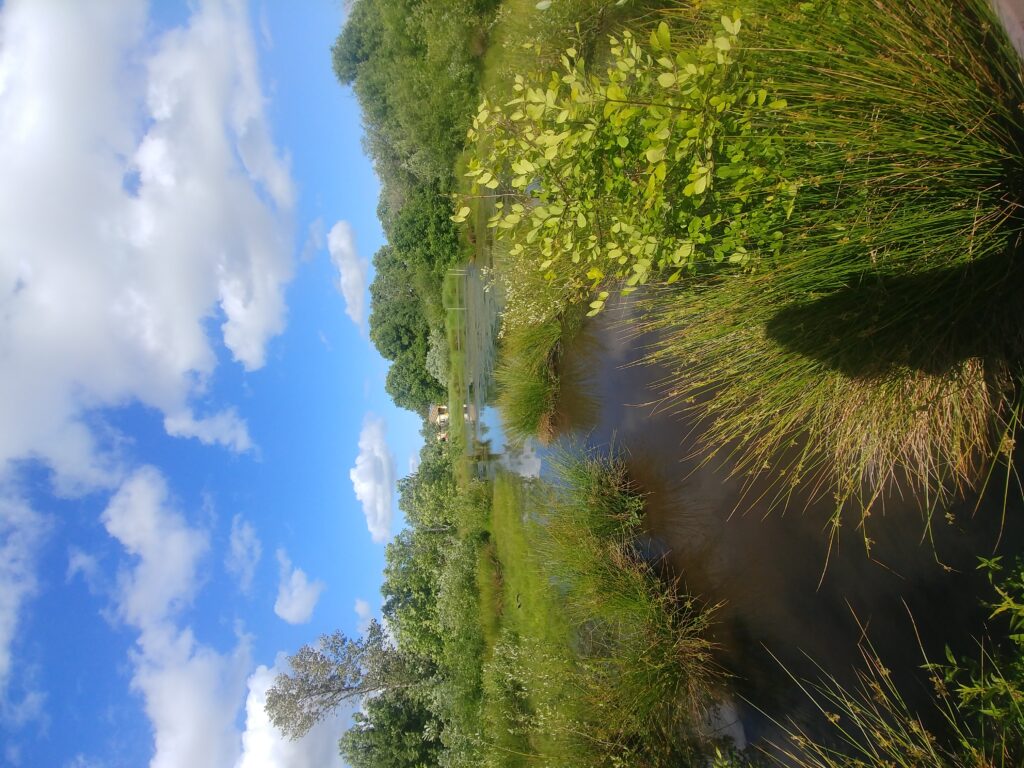
Fig. 1. A Large Pond Along the Loop Trail.

Overview

For those Corvallis residents who are familiar with Bruce Starker Arts Park, the first thing likely to pop into their minds when they think of it is its East section. Located near the Dunawi Creek Community Garden, this section of the park hosts an amphitheater, a playground for adventurous children, and a large pond with beautiful fountains. However, despite these many interesting attractions, this is not the part of the park that I find myself drawn back to at least once a week. For me, the true gem of the park is the Dunawi Wetlands. I first visited this section of the park at night. It was dark and somewhat eerie, but still fascinating. But that was nothing compared to what it was like during the day. When I visited the wetlands next, it was like I had entered a whole new world, and it was beautiful.

How do you get there?

The section of the park containing the wetlands is located across the street and to the West of the other section. From most places in Corvallis, it is best to drive there, but you could also walk over from the other section, or even follow the Corvallis-Philomath Multi-use Path. The park can also be easily accessed by residents of the apartments and houses located on the block of SW Country Club Drive and SW 53rd Street.

What’s so special about it?

Though not as glamorous as Bruce Starker Arts Park’s other section, the wetlands have their own merits. The wetlands have an interesting history, their own fun attractions, and they boast a beautiful landscape and a wonderful variety of wildlife to observe. Above all, it’s a wonderful place to escape to and let your mind relax after a long day pent up indoors.
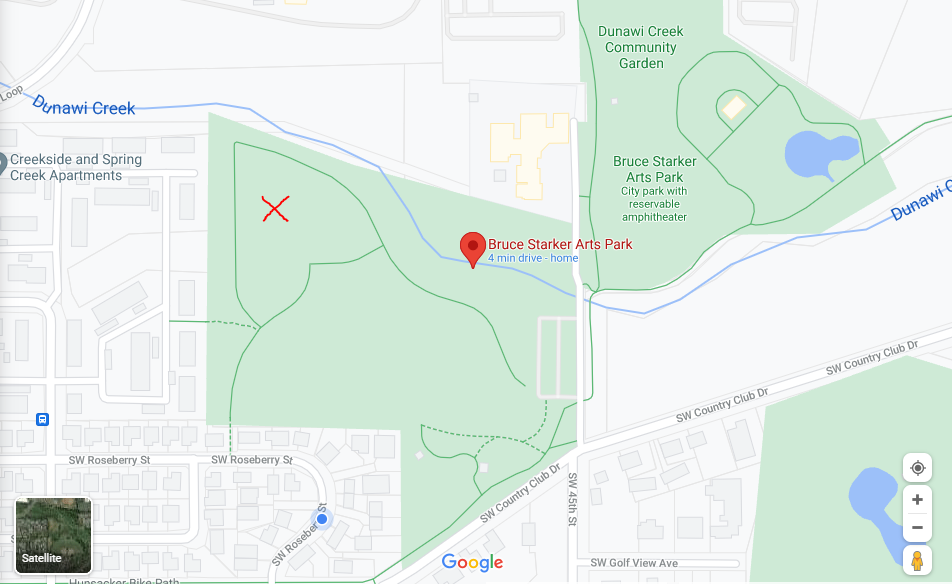
Fig. 2. Map of Bruce Starker Arts Park and the Dunawi Wetlands from: “Corvallis, Oregon.” Map, Google Maps. Accessed 4 June 2021.

History

Not much has been written on the history of Bruce Starker Arts Park and especially the Dunawi Wetlands. However, what little information that is out there is quite interesting.

Who was Bruce Starker?

As one might guess, the park was named after Bruce Starker. According to the Corvallis Gazette-Times’ “Starker History Timeline,” Bruce came from a family heavily involved in timber and forestry. He earned his masters in Forest Management, helped run his family’s timber business, and became a member of the Board of Forestry. Following his tragic death in a plane crash in 1975, the land for the Bruce Starker Arts Park was donated by Bruce’s family to the city of Corvallis as a memorial.
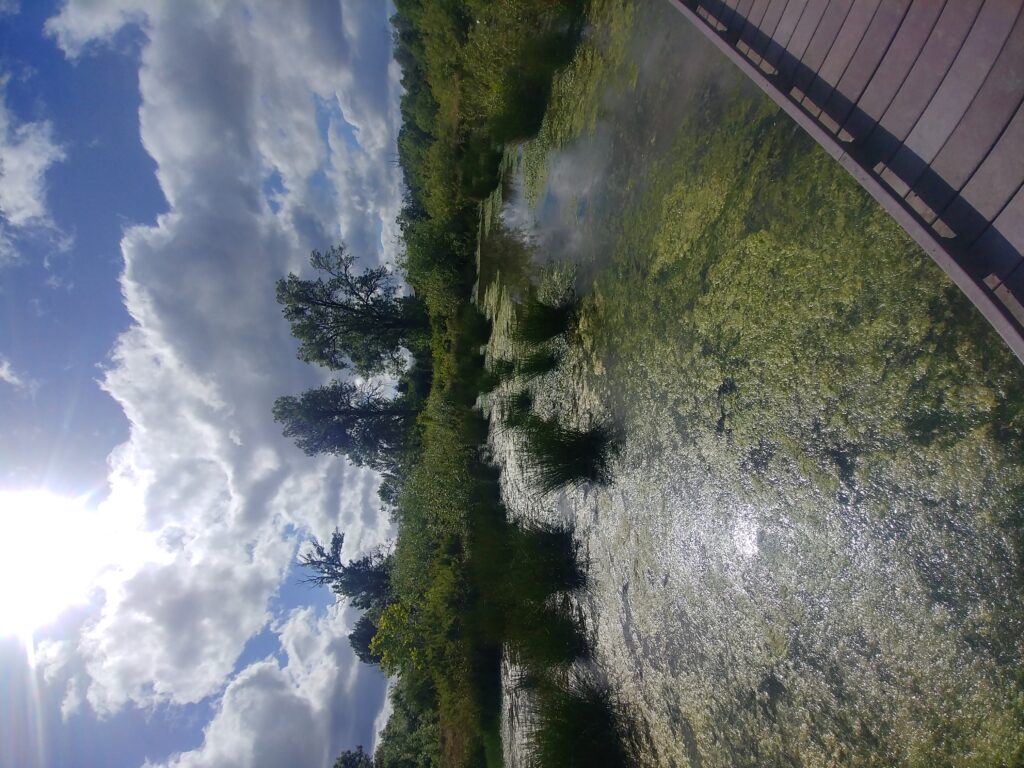
Fig. 3. Pond and Boardwalk.

What about the Dunawi Wetlands?

The Dunawi Wetlands shares its name with Dunawi Creek, which runs along the wetlands. According to the “Dunawi Creek” page on the Corvallis Sustainability Coalition’s website, the word Dunawi is Kalapuyan and refers to female elders.

An article on the website for KLCC titled “Corvallis’s Sunset Park Now Has Restored Wetlands” provides some helpful information on the wetlands’ history. This title gave me pause at first, and it’s likely doing the same for many of you now. After all, I have claimed that the wetlands are part of Bruce Starker Arts Park, so how could the wetlands be claimed by Sunset Park too? Based on my research, it seems that the wetlands are simply claimed by both. In any case, according to the KLCC article’s author Kyra Buckley, a period of flooding caused an old softball field to be converted into the wetlands that many know and love today. Buckley notes that restoration efforts began in 2006, but the project was not completed until 2016 due to “staff turnover.” Nevertheless, the results were well worth the wait.

Attractions
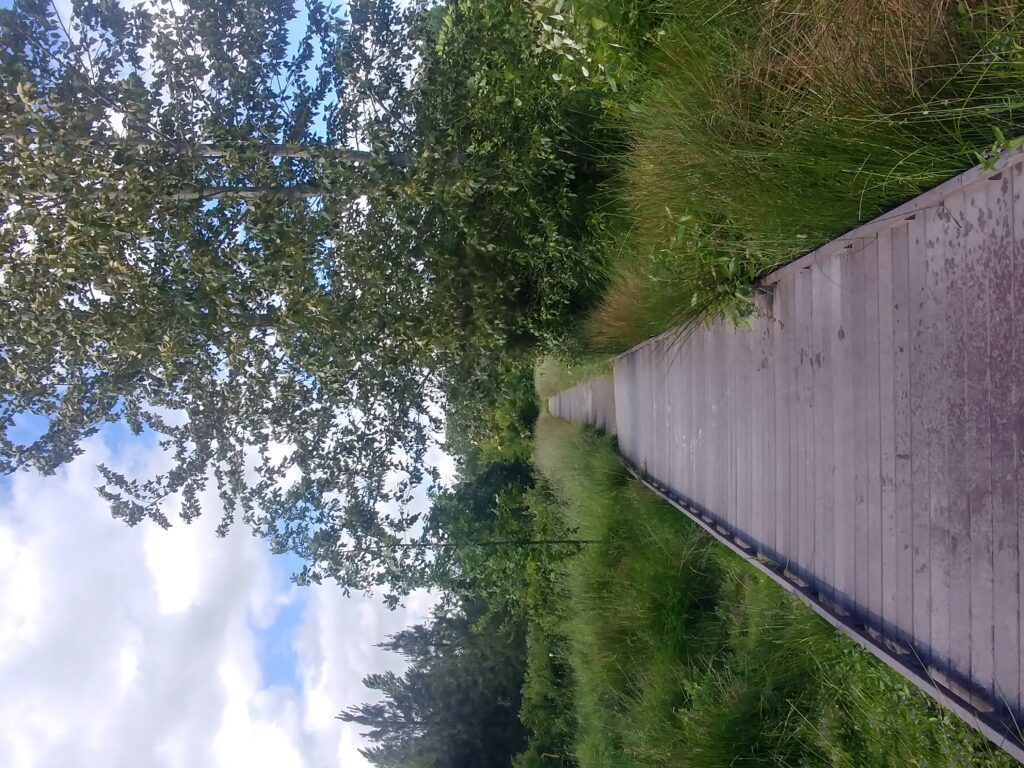
Fig. 3.  A Section of the Boardwalk Trail.

The Boardwalk

One of the main attractions of the Dunawi Wetlands is a boardwalk loop trail. Some short sections of the trail consist of a gravel path, but all sections of the trail are flat. As such, the trail is quite wheelchair-friendly and overall easily accessible. Being a loop, it is admittedly a fairly short walk through the wetlands. However, I would argue that you get the best experience by meandering your way through the wetlands, taking your time, and observing the scenery and wildlife as you go. You could also stop and read the signs along the trail, which offer educational material on some of the plants and animals you will find in the wetlands.

Dog-friendly?

The boardwalk trail is absolutely dog-friendly. One of my most recent trips to the park proved a wonderfully busy day for seeing dogs at the park. As soon as I stepped foot on the trail, I saw a beautiful orange husky accidentally walk off the boardwalk and into the pond – hence the splash pattern in the image at the start of this section. He walked it off like a champ, though, with his tail wagging. Later on, I even got the chance to pet an adorable puppy that was a German shepherd, Malamute, and gray wolf mix. As many would confirm, the wetlands are a great place to bring man’s best friend; just be sure to bring a leash!

As wonderful as the boardwalk trail is, though, by far the best attractions of the park are the wetlands and wildlife themselves.
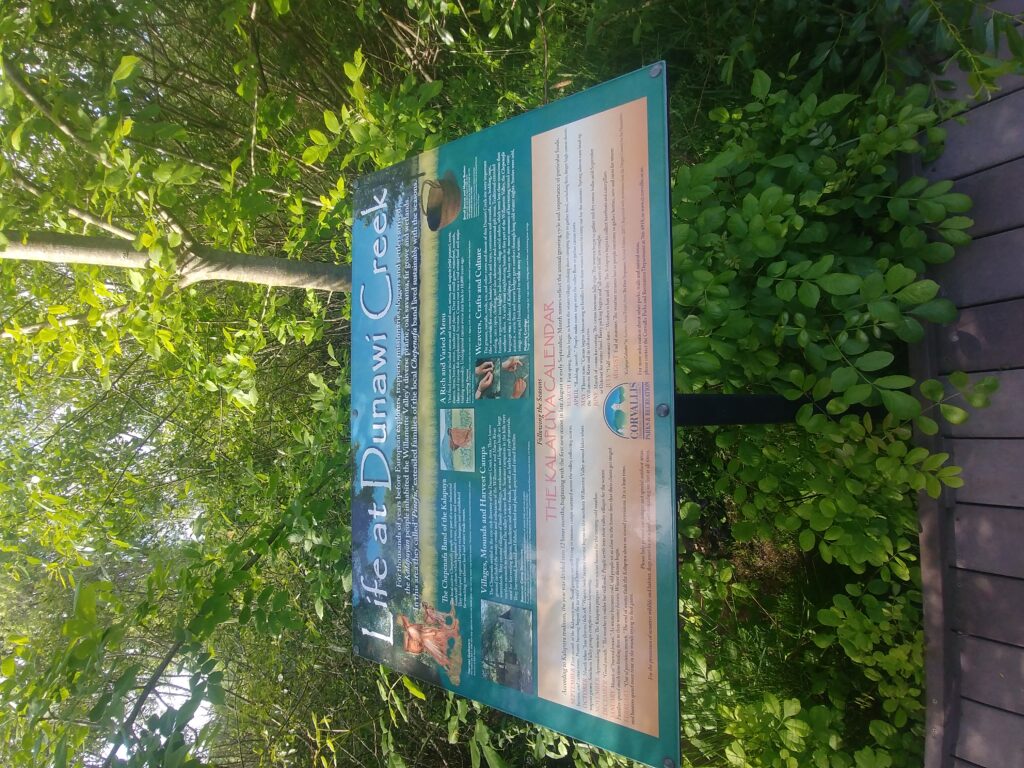
Fig. 4. Informational Sign on the Boardwalk.

The Wetlands Ecosystem

Nature and Wildlife

The plants and animals that inhabit the Dunawi Wetlands are the main draws of the park. Walk along a path surrounded by tall wetland grasses; gaze up at towering dogwood trees; and admire yellow-twig dogwood shrubs, wildflowers, and much more. Along the way, stop at the ponds and watch the ducks as they float on the still water. Look out for the blue and black flashes of dragonflies darting through the air, stop and stare at the nutria as they swim around the pond, and enjoy the singing of birds in the trees. I find it continually entertaining to watch the birds swoop through the air, particularly when smaller birds chase around a crow that has likely stolen something from their nest.

Best times to visit?

Come by in spring to get a glimpse of fluffy ducklings and baby nutria. Granted, spring is also allergy season and the winds do stir up some pollens, so be sure to take some Claritin before your outdoor adventure. Rest assured, though, it’s worth it. If you want to see a lot of wildlife, stop by around sunset to see the fields dotted with nutria and the ponds crowded with ducks and swooping bats. The setting sun does tend to bring on mosquitos, but that’s nothing a little bug spray can’t fix. Once, as the sun set, my friends and I were even lucky enough to spot a deer!
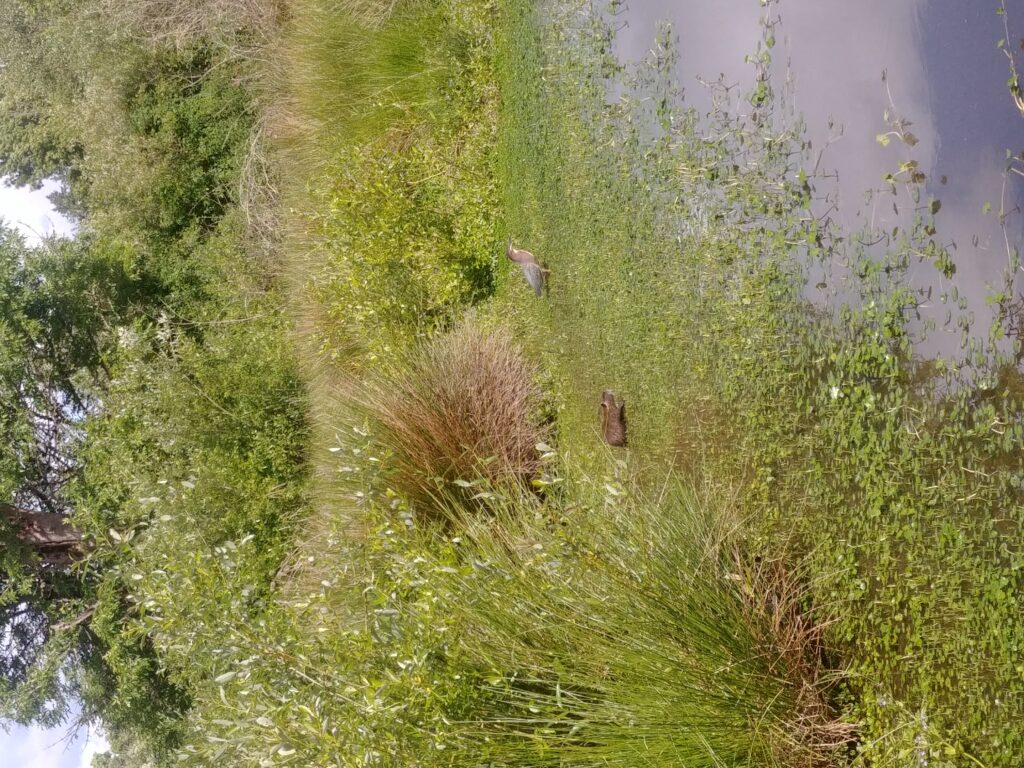
Fig. 5. Baby Nutria and Wild Bird.  

When’s your next visit?

Overall, the Dunawi Wetlands are a wonderful place to spend your time. Whether you need an escape after a long day or simply wish to take some time to observe and enjoy nature, the wetlands are the perfect place to go. Listen to the wetland grasses rustling in the wind, watch the ducks glide along the pond, and be at peace.

Works Cited

Buckley, Kyra. “Corvallis’s Sunset Park Now Has Restored Wetlands.” KLCC, 1 Aug. 2016, www.klcc.org/post/corvalliss-sunset-park-now-has-restored-wetlands.

“Dunawi Creek.” Corvallis Sustainability Coalition, sustainablecorvallis.org/action-teams/water/corvallis-creeks/dunawi-creek/.

“STARKER HISTORY TIMELINE.” Corvallis Gazette-Times, 19 July 2011, www.gazettetimes.com/starker-history-timeline/article_f2cd158d-097b-52be-9a5f-d9f0d164b2f5.html.

Little Tokyo: A landmark of Los Angeles

Little Tokyo: A landmark of Los Angeles

          Alongside the cultural giants of Alvera Street and Chinatown, Little Tokyo is its own amazing local landmark to the city of Los Angeles. Within these few square blocks of Los Angeles is a bastion of local Japanese culture that has a long history of both struggle and success. Founded in the early 1900s as a community center for Japanese immigrants and their businesses Little Tokyo has seen many ups and downs. From early racial tensions to eventually World War Two where many within the Japanese community lost not only their property, but their rights and community not just Little Tokyo, but the entire Japanese community in the United States has faced so many struggles (and in many ways still face them today). Yet now Little Tokyo has become a symbol of something beyond that. It’s become an area of revival and renewal for the Japanese community as local businesses and community efforts now have a home to foster them.

Locations

      There are many notable locations in the roughly four acres that make up Little Tokyo. Ranging from museums, temples, gardens, and local small businesses. A central location for Little Tokyo is the Japanese American National Museum. Located less than a block away from a Los Angeles Metro stop, this museum archives the history and struggle of the Japanese American community. The JANM is a powerful experience as well as a location for many local events such as summer festivals and revolving exhibits.

          Across the way from the museum is the Japanese Village Plaza which holds many local restaurants, snack stands, local indie clothing flagship stores, and local souvenir shops. One such local small business is Popkiller. This local fashion brand embodies the more modern side of Little Tokyo by combining retro Japanese culture with LA fashion. Stores like this embody the fact that although Little Tokyo is meant to be a cultural center for the Japanese community, it also is a vital piece of LA’s cultural fabric. The Japanese Village Plaza acts as a central hub that leads out to the many different sections of the Little Tokyo Area. From there it’s an easy walk to areas such as the Weller Court Shopping Center (home of Kinokuniya bookstore as well as more delicious food option) and the Little Tokyo Galleria (a small local mall that houses Daiso, a specialty Japanese stationery store).

Food

          Another gem of Little Tokyo is its local food scene. For Japanese cuisine lovers, Little Tokyo is a hub of both traditional restaurants such as Mitsuru Cafe (which has amazing mitarashi dango as well as other traditional snacks by the way) to unique restaurants such as Kula Revolving Sushi Bar. In addition, with the wide variety of snack stands and Japanese markets, Little Tokyo is a great source of snacks before going out to explore the city.

     If you are going to Little Tokyo another must-do is to visit Fugetsu- Do. This over one-hundred-year-old institution is a staple in the community by creating what some locals claim is the best mochi in all of Los Angeles! With a wide variety of mochi and traditional Japanese sweets ranging from the traditional red bean-filled mochi to more modern flavors like strawberry and peanut butter, Fugestu-Do embodies the spirit of Little Tokyo by combing the legacy of the traditional with the innovation of the new.

Events

          Little Tokyo is at its heart a center for the Japanese community in Los Angeles. And with any ethnic community and its legacies festivals play a key role in celebrating the community and culture. As such Little Tokyo has many local festivals such as the summer Nisei week and Oban festivals. Little Tokyo has also been known to host the LA Art Book Fair at the Geffen Contemporary space. With the large LA art scene, the LA Art Book Fair is an amazing opportunity to get a hold of artbooks, zines, and other art media from local artists, all at a free event!

          With so much to do in such a small area it’s almost impossible to fully touch on everything that makes Little Tokyo such a staple of Los Angeles. With that in mind if you have the chance to visit absolutely take the opportunity to explore all the niches and nooks that make Little Tokyo Little Tokyo.

Sources:

Bricker, T. (2017, July 13). Japanese American National Museum Review & Tips. Travel Caffeine. https://www.travelcaffeine.com/japanese-american-national-museum-review-tips/.

Champlin, C. (2016, January 23). 21 Fun Things To Do In Little Tokyo If You Happen to Be in The Neighborhood. RSS. https://www.welikela.com/things-to-do-little-tokyo/.

Fugetsu-Do is a family-owned mochi and manju sweet shop in the Little Tokyo area of Los Angeles, California since 1903. Welcome to the Fugetsu-Do Confectionery. (n.d.). https://www.fugetsu-do.com/.

Little Tokyo. Historical Background, Little Tokyo, Los Angeles. (n.d.). http://www.publicartinla.com/Downtown/Little_Tokyo/little_tokyo.html.

Little Tokyo: Los Angeles, CA 90012. Little Tokyo | Los Angeles, CA 90012. (n.d.). http://www.visitlittletokyo.com/.

Los Angeles Conservancy. Fugetsu-Do | Los Angeles Conservancy. (n.d.). https://www.laconservancy.org/locations/fugetsu-do.A Walking Tour of Little Tokyo. Discover Los Angeles. (n.d.). https://www.discoverlosangeles.com/things-to-do/a-walking-tour-of-little-tokyo.

Proposal Rock and the Ghost Forest: Neskowin’s Heart

Written by Corey J.

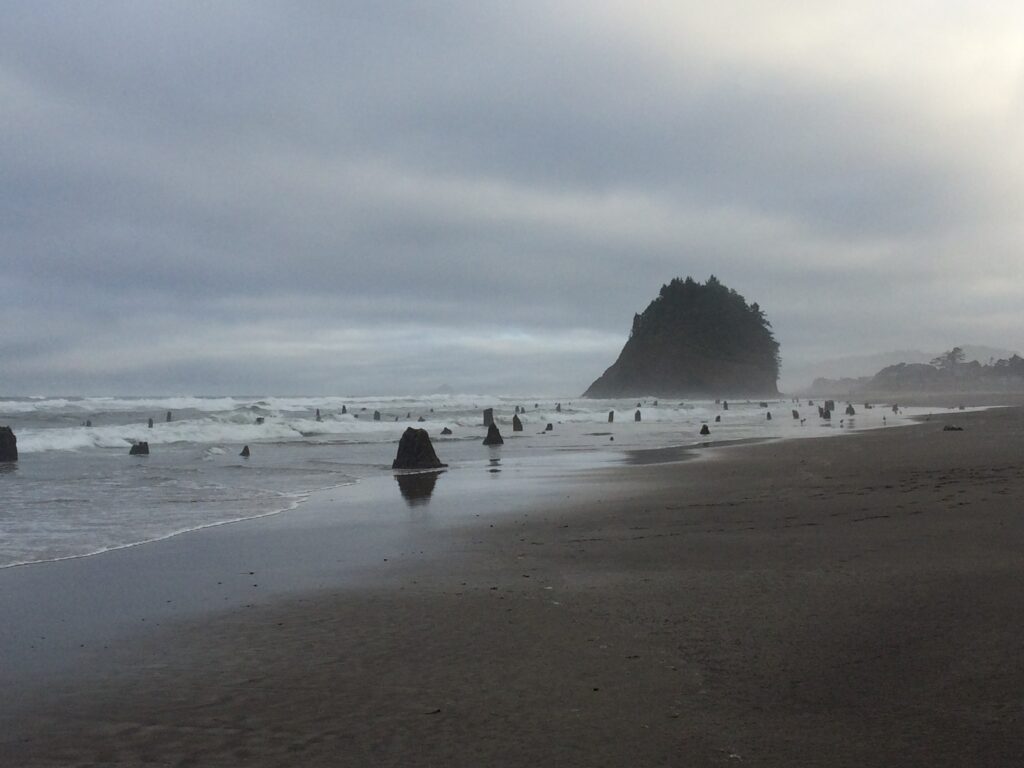
          I awake to a foggy December day. I roll out of bed, take a shower, get into cozy clothes, slap on a few jackets, and head towards the beach. After about five minutes of walking, the visage of a rocky formation juts out from the sand and fog in the distance.

           As I walk along the creek that cuts through the beach, salt and fresh water clash. The wind rips the waves into a frenzy, adding mist to the fog, a refreshing change from city air.

           As the sun shines dimly through the fog, Proposal Rock casts a shadow along its southern side. Within said shadow lies a Ghost Forest. Stabbing through the fog and sand are the remnants of an ancient forest, long since dead. The fog and wind add to the hauntingly beautiful atmosphere as waves crash into the eternal sentinels of petrified wood.

           It’s a perfect day on the Oregon Coast.

Introduction to the Town of Neskowin:

          Neskowin, Oregon is a relatively unknown town to the general public. Lifelong locals usually like to keep it as that hidden gem, only really liking outsiders during the summer months. That isn’t to say the people of Neskowin are rude or xenophobic, but permanent residents enjoy the quiet atmosphere and lack of mass tourism. While Oregonians are more likely to know of its existence, Neskowin residents love their seclusion from large crowds. As of the 2019 census, there were only 164 permanent residents in Neskowin (Wikipedia).

          Neskowin is a small coastal town that does not have much at a glance. However, as a seaside town, it has beach access. As people who have visited the Oregon coast know, the sand and water are cold most of the year, hence why my family will usually bring several jackets for a walk on the beach in spring. One thing that is immediately noticeable about Neskowin is the existence of Proposal Rock and the petrified Ghost Forest.

          With Proposal Rock acting as town mascot, the town’s main draw is the beach and what is on it. Other cities have massive rocks, but Proposal is unique in how easy it is to get to. On occasion, bald eagles can be seen circling above the tree-coated rock.

          The central part of the beach is divided by a river. However, depending on rain or the time of the year, the beach can look drastically different between different months. For example, it is typically divided between north and south beach, but if the river has been running high or there has been a lot of rain, the north beach can cease to exist.

Proposal Rock:

          As stated, Proposal rock acts as Neskowin’s mascot. Along with the looming sea stack rock comes a local legend. Depending on the version, some details differ, but this is how it goes:

           In the late 1800s, there was a sailor named Charley Gage. The exact details of Charley are thin, but Della Page is the daughter of a homesteading family that grew crops along the Neskowin Creek. Apparently, one day the pair climbed the rock and chose to get married while gazing out across the sea. “Della’s mother was so thrilled she named the prominent landmark ‘Proposal Rock,’ a moniker that endures to this day” (Urness).

           My family has a story not too different from this. In 2019, my sister Megan and her now-husband Ty went out for a walk on the beach. Everything was normal during their walk, but while Megan was watching the sunset on the expansive ocean, Ty got down on one knee and proposed in Proposal Rock’s shadow.

           While I have never climbed to the top of Proposal Rock, I have seen groups of people who have scaled its rough exterior. To climb Proposal is not for the faint of heart or tender of hand. Depending on what the creek has done to the beach, it can sometimes be quite difficult to reach Proposal Rock. During low or minus tides, you can walk around the backside of Proposal Rock.

The Ghost Forest:

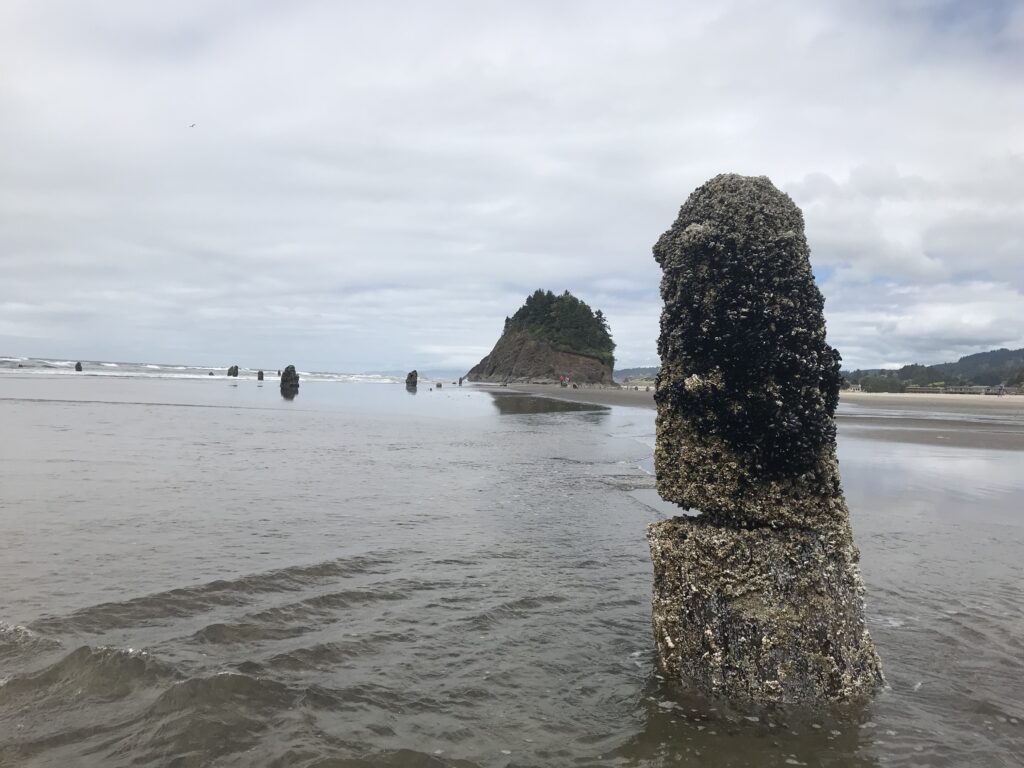
            Most visible in the winter during low tides, the Ghost Forest juts from the waves and sand to show a time long since passed. While the petrified tree stumps are around 2,000 years old, they have only been consistently visible since the winter of 1997 (Atlas Obscura).

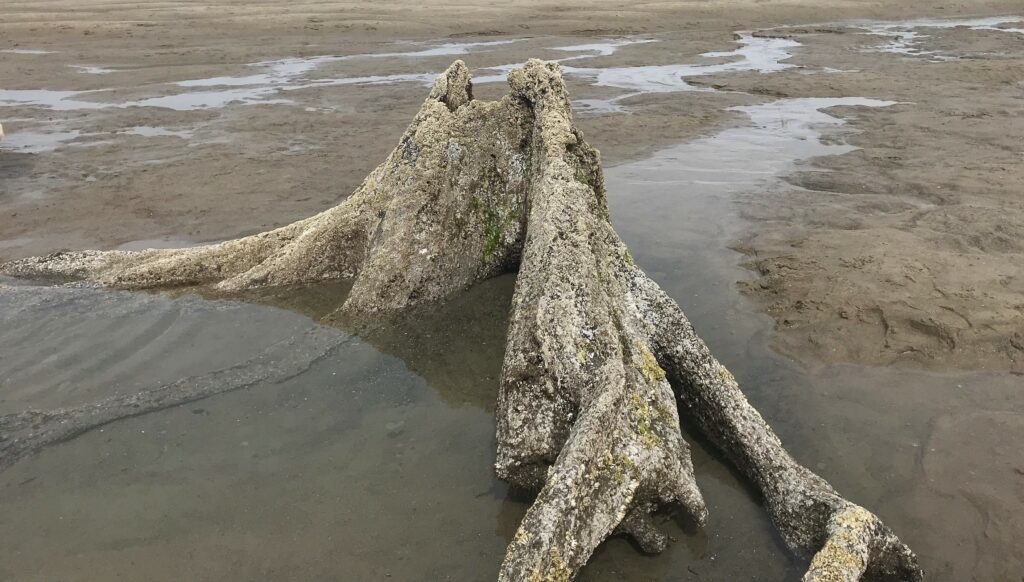
          The running theory is that an earthquake hit the Cascadia subduction zone around 1700. The shake was strong enough to drop “the forested land into the tidal zone. When the ocean rushed in, it buried the decapitated trunks in the mud, which staved off decay and preserved the forest remains for years to come” (Atlas Obscura).

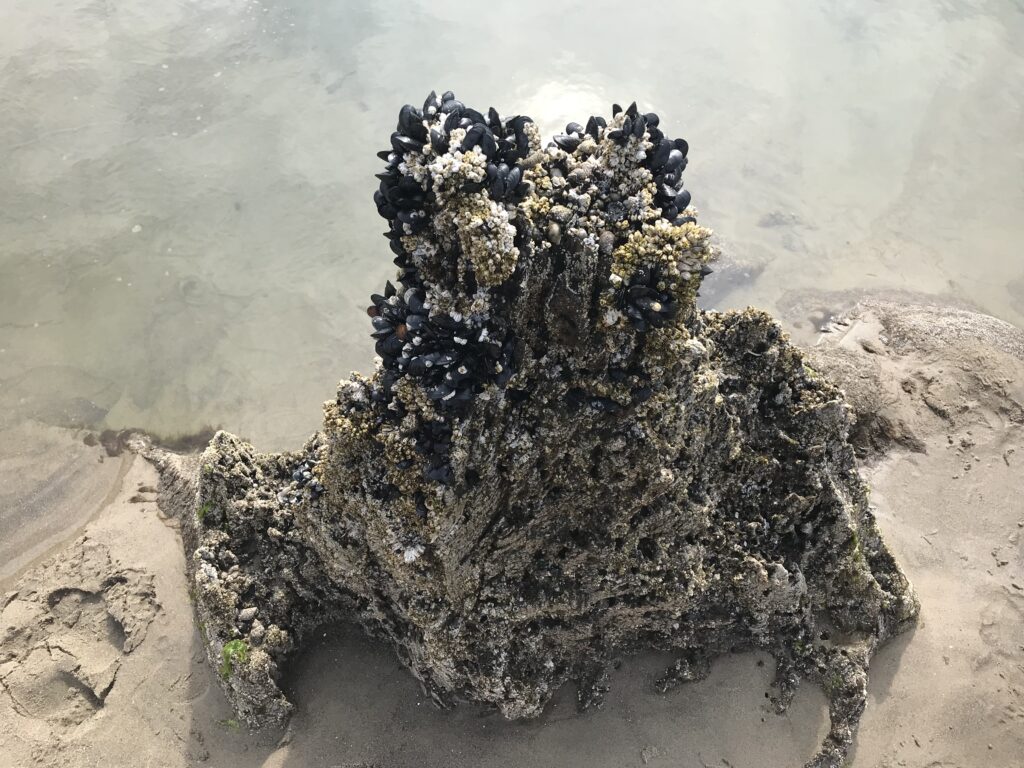
          The trees were Sitka spruce trees that potentially reached heights between 150 to 200 feet tall. For most of the remains, the base of the trees remains buried under sand and water. Nearly every stump is covered with barnacles and muscles, and each stump is unique.

To Summarize:

          Neskowin is a beautiful and small coastal town. While the name “Ghost Forest” sounds ominous, it is a hauntingly stunning location to visit. While the town itself is fantastic, the beach is what draws people to Neskowin. In addition, the stories and legends surrounding its most famous landmarks draw tourists to the town during the summer, ensuring the town can stay afloat financially.

Sources:

Urness, Zach. “Oregon’s Proposal Rock Named for 19th Century Romance, but Also Home to Spooky ‘Ghost Forest.’” Statesman Journal, 23 Sept. 2014, https://www.statesmanjournal.com/story/travel/outdoors/2014/09/24/proposal-rock-ghost-forest-capture-allure-coast/15840019/.

“Neskowin, Oregon.” Wikipedia, https://en.wikipedia.org/w/index.php?title=Neskowin,_Oregon&oldid=972255061.

“Neskowin Ghost Forest.” Atlas Obscura, http://www.atlasobscura.com/places/neskowin-ghost-forest.

Nguyen, Megan. Personal Interview, November 3, 2019.

The Best View in Baseball: Oracle Park

Jess Linde-Goodfellow

Location

Oracle Park is home to the San Francisco Giants in San Francisco, California. Located in the South Beach neighborhood, this park is home to one of the best views in baseball. Even from the cheapest seats, Oracle Park faces the bay for an astonishing view during the day and at night. From certain seats, spectators are able to see the newly renovated San Francisco – Oakland Bay Bridge.

Oracle Park, San Francisco Giants ballpark - Ballparks of Baseball

Since Oracle Park is in the city, public transportation makes it very accessible. One of the most popular ways to get to the park for Bay Area inhabitants is via BART (Bay Area Rapid Transit). However, unlike the Coliseum where the Oakland Athletics play across the bay, BART does not have a direct stop at Oracle Park. As a result, most people will get off at Embarcadero station then take MUNI (San Francisco Municipal Transportation Agency) the rest of the way. According to San Francisco’s Municipal Transportation Agency, there is a special game-day service to bring fans to King & 2nd street (Schofield). Since parking can cost you upwards of $40, BART is the most popular mode of transportation to reach Oracle Park. Some fans who travel from Sacramento to see a game and will take AMTRAK (The National Railroad Passenger Corporation).

Attractions

One cannot go to a Giants game without getting a hot fudge sundae from Ghirardelli. Even during a night game when it’s windy and 40 degrees, a Ghirardelli hot fudge sundae is a must at Oracle Park. Although I have never tried it myself, most people who visit Oracle Park love the Dungeness crab sandwiches from Crazy Crab’z. Eater San Francisco describes this sandwich as a “Dungeness crab sandwich, piled between two slabs of buttery, grilled sourdough for a decadent game-day treat” (Staff). This sandwich is the epitome of San Francisco—fresh crab and local sourdough bread. And no Giants game is complete without garlic fries. With Gilroy just a few hours away, Oracle Park has some of the best garlic fries I have ever had. As soon as you enter the gates of Oracle Park, you are greeted with the smell of fresh garlic fries. 

CRAZY CRAB'Z - 240 Photos & 231 Reviews - Seafood - 24 Willie Mays Plz, San  Francisco, CA - Restaurant Reviews

Ghirardelli Sundae | National icecream day, San francisco giants baseball,  San fran giants

Baseball is a notoriously long and sometimes boring game. Despite this, countless families go to baseball games for a fun family outing. If the kiddos can’t sit still, there are plenty of things for them to do! One of the most iconic elements of Oracle Park is the Coca-Cola bottle slide. The Coca-Cola bottle “contains viewing platforms and four slides, two 56-foot-long curving slides (the “Guzzler”), and two 20-foot-long twisting slides (the “Twist-Off”)” (“Oracle Park Attractions: Fan Lot”).  Another fun attraction for the kids is the Little Giants Park. This is a miniature-sized baseball field where kids can go play a pick-up game of T-ball.

Coca-Cola slide at AT&T Park target of another lawsuit – The Mercury News

Why is it so special?

There is a strong sense of community at every Giants game. Even though Oracle Park is in a large city, it still feels like you know everyone you sit next to. The Giants also frequently give back to the community and host multicultural nights. A few years ago they included an LGBTQ+ night which, unfortunately, received a lot of backlash. The Giants didn’t care. They continue to have this night because it is important that they show their support of the LGBTQ+ community. 

Mission Creek | Bay Water Trail

A unique aspect of Oracle Park is the ability to listen to the game from the water. Fans will take their boats or kayaks, wade in McCovey Cove, and listen to the game on the radio waiting to catch a splash hit. On a rare, warm, summer day, the cove will be full of fans waiting for the chance to catch a ball.

Downsides

Attending a Giants game is not cheap in the slightest. Even if you save money by getting seats in the nosebleed section, food and parking will cost you an arm and a leg. This makes going to see a game fairly exclusive to those who have money to spend. Billy Witz of The New York Times says “Tickets to see the San Francisco Giants play at AT&T Park, their jewel of a ballpark set on the water’s edge, are not only among the priciest in baseball, but they are also among the hardest to get — especially during the playoffs” (Witz). However, there is a way to see the Giants play for free. Just outside of McCovey cove, there is a standing-room-only area that allows 75 people to watch 3 innings right against the outfield. Although it is a first come first serve, this is a great way to watch the Giants play for free. 

Another downside to Oracle Park is the weather. Mark Twain once said, “‘The coldest winter I ever spent was a summer in San Francisco’” (“San Francisco Weather”). This is no understatement. When attending a Giants game, layers are an absolute necessity. The wind and fog are intense, even in the middle of the summer. I suggest that everyone who goes to a game there bring a sweatshirt, windbreaker, beanie, and at least one blanket. 

Conclusion

In a busy bustling city like San Francisco, it’s nice to be able to sit back, relax, and enjoy a game of ball with friends or family. Oracle Park has everything anyone could possibly need to relax after work: good beer, good food, a great baseball team, and a killer view. Oracle Park holds a special place in my heart and others alike. If you are ever in the area during baseball season, I highly recommend seeing the Giants play. Even from the cheapest seats in the park, you’re in for a treat. 

Works Cited

“Oracle Park Attractions: Fan Lot.” MLB.com, www.mlb.com/giants/ballpark/fan-lot#:~:text=Coca%2DCola%20Superslide%20is%20one,%22Twist%2DOff%22). 

“San Francisco Weather.” San Francisco Travel, www.sftravel.com/article/san-francisco-weather#:~:text=%22The%20coldest%20winter%20I%20ever,knew%20from%20whence%20they%20spoke. 

Schofield, Jesse. “Oracle Park.” SFMTA, San Francisco Municipal Transportation Agency, 19 May 2021, www.sfmta.com/places/oracle-park. 

Staff, Eater. “What to Eat at San Francisco’s Oracle Park, Home of the Giants.” Eater SF, Eater SF, 29 Mar. 2018, sf.eater.com/2018/3/29/17166036/att-park-oracle-park-san-francisco-food

 Witz, Billy. “One-Third of the View, but for None of the Price.” The New York Times, The New York Times, 8 Oct. 2014, www.nytimes.com/2014/10/08/sports/baseball/giants-offer-free-standing-room-area-at-att-park.html. 

A Tour Through the Enchanted Forest

Have you ever read a fairytale and wondered what it would be like to stroll through the world of the characters? Have you ever desired exploring the three bear’s cottage, the crooked man’s house, or the seven dwarves’ mine? You can experience all these places and more if you visit Enchanted Forest in Turner, Oregon. Take your family on a walk through a magical forest while discovering all the wonders this park has to offer.

History:

www.enchantedforest.com

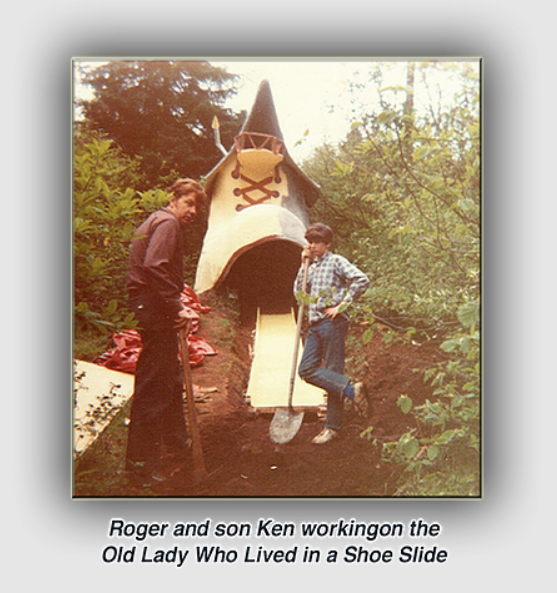
The idea for Enchanted Forest was sparked in the 1960s when Roger Tofte, the founder, realized there was not much for a family to do in the town of Salem, Oregon. He decided a theme park was the perfect addition to the area, and though he did not have much time or money to make it happen, he did his best to pursue it anyway. He worked his way through the construction of the park slowly, building onto it after work and on weekends, and repairing watches to help finance his goal.

            The people around him did not believe in his dream, and yet he persisted anyway. Even the banks did not believe in him, which made it difficult to obtain a loan to finance the finishing touches of his project. Eventually, Roger and his wife Mavis found a bank that took a chance on them, and they were able to open on August 8, 1971.

Attractions:

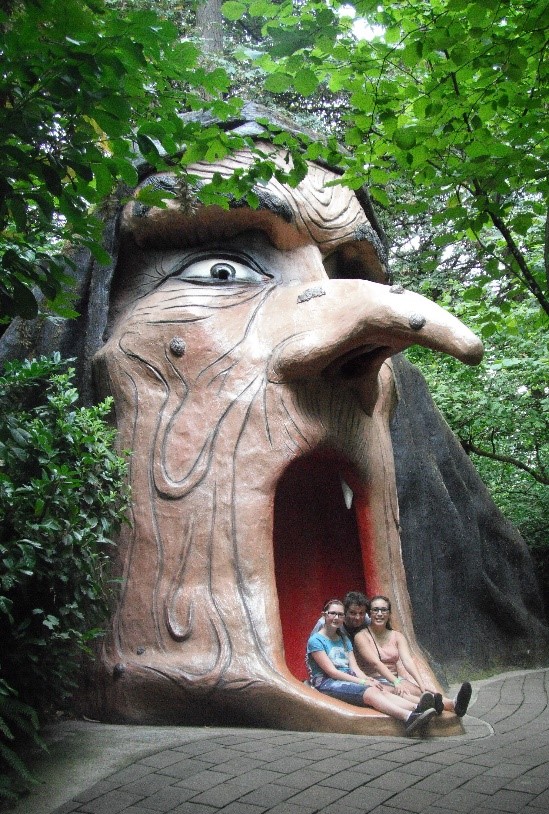
Enchanted Forest has many compelling attractions. As soon as you enter the park you begin a journey down Storybook Lane, meeting many different storybook characters along the way. Humpty Dumpty, the witch from “Snow White,” and Alice from Alice’s Adventures in Wonderland are all among the friends you might make along this stone path through the forest. The path then leads you to Tofteville Western Town. In this section of the park, you will discover various enjoyable attractions such as the log cabin-esque playground and slide Fort Fearless, the log flume ride Big Timber Log Ride, and the classic Haunted House. In this area of the forest, they play a documentary recounting the tale of Enchanted Forest itself, from the moment that Roger had the idea for the park, all the way through to where the park is now.

After you have enjoyed a break to watch the film, your next stop will be the Old European Village. This portion of the park is home to even more attractions, including Pinocchio’s Playhouse, an indoor target shooting ride called the Challenge of Mondor, and live music by the band Possibly Irish. Across the stone path from the Gathering Hall where people dance and clap along to the traditional Irish themes, you will find a delightful show titled the Fantasy Fountains. This show is a demonstration involving water and lights dancing to music composed by the daughter of Roger Tofte, Susan Vaslev.

Every attraction mentioned so far makes for a wonderful afternoon, but in my opinion, the best part of the park is their Comedy Theatre. Also created by Susan Vaslev, the Comedy Theatre performs Susan’s takes on various fairytales, adding a comedic twist to them all. The theatre was opened in 1973, and Susan has written and directed every show performed, taking inspiration from “Fractured Fairytales” and the “Carol Burnett Show,” according to their website (“Enchanted Forest”).

Rides:

www.enchantedforest.com

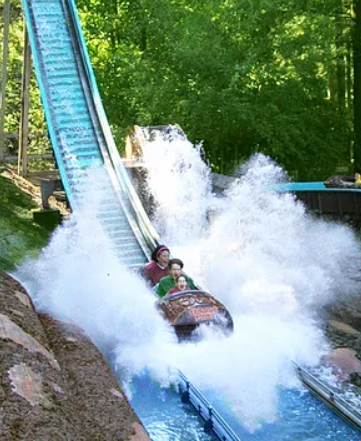
Along with their immense number of charming attractions, they also have a delightful selection of rides to take part in. One of the most popular rides is the Big Timber Log Ride mentioned above. On this spectacular adventure, you float through a logging mill, glide through the forest, and eventually make your way to a 40-foot drop where you are almost guaranteed to get wet. This ride is ideal on a hot summer day after you have been walking around, admiring the attractions for a few hours. Another rollercoaster present in the park is the toboggan-themed Ice Mountain Bobsled. On this ride, you make your way up a steep incline and through an icy cave full of twists and turns over 1,600 feet of track. This was the first ride that opened in the park. Other rides include the fantasy-themed shooting game Challenge of Mondor, the Haunted House, a carousel, and the Speedway Bumper Cars. Other options are available to children, such as the Kiddy Frog Hopper, the Tiny Tune Train, the Up and Away Ferris Wheel, and the Kiddy Bumper Cars.

Accessibility:

The only complaint I could ever come up with for this beautiful park is that it is built on a hill. There is a lot of uphill walking, which can be difficult for some people. There are many benches located around the park if you need a break, and they have multiple locations that offer refreshments if desired. They do offer to assist people in wheelchairs. They are willing to provide a person to push your wheelchair if you need or want that accommodation. They also have a golf cart that you can request a ride on if that is something that would assist you in your enjoyment of the park.

Why Should You Go?

Image From the Author

Besides all the wonderful aspects of the park I have described so far and many I have left out, there is another reason why you should take your family to this truly enchanted theme park: the magic it holds. This park is so much more than just a bunch of rides in the middle of a forest. It is a place filled with love and a passion for keeping the childlike spirit alive in everyone. The employees and the family who owns the park have so much love for what they do, and you can feel it as you walk down the hand-laid stone pathways, admiring the handcrafted characters and listening to the music of the band that was created right inside that very park. You can feel the pure joy of everyone who enters the park, and the magic that joy creates. It is truly a spectacular feeling that everyone deserves to experience.

Opinions in the Community:

            Don’t just take it from me; there are many other people in the community that would vouch for this marvelous park. I spoke with a man in the community who has visited Enchanted Forest almost every year since his children were born. He called it a wonderful place and went on to discuss his admiration for the park, saying, “It was one man’s dream, and he made it come true so he could share it with everyone” (Joe). Another woman I spoke with who has visited the park a similar number of times, expressed that “there are very few places in the world where such magic can be captured through little eyes” (Courtney). Many people have been touched by the magic and wonder this park inspires, and I recommend that everyone visit this truly enchanted park at least once in their lives.

Works Cited

“Enchanted Forest.” Enchanted Forest Theme Park, www.enchantedforest.com. Accessed 20 May 2021.

Courtney, Ruby. Interview. By Crystal Lohne. 20 May 2021.

Joe. Interview. By Crystal Lohne. 21 May 2021.

Ruston Way Waterfront – Tacoma’s Shinning Star

Written by: Bradie Dodge

Whether you’re a Tacoma, Washington native, or just visiting, Ruston Way Waterfront is a must-see family-friendly destination for all things shopping, dining, and entertainment! Just minutes away from the downtown Museum District, Ruston Way Waterfront connects downtown Tacoma to Point Defiance Park, the largest city park west of the Mississippi River. Located on the scenic South Puget Sound, Ruston Way Waterfront offers a 2-mile stretch of paved walking trail that runs along the water with Mount Rainer to the West and the Olympic Mountain Range to the East. There is no better place in Tacoma to take an evening stroll while watching the waves kiss the shore.

Figure 1: Photo by Rachel Coward

Waterfront Dining

Featuring fresh Northwest seafood and breathtaking views, Ruston Way Waterfront is unbeatable for waterfront dining. Voted Best Seafood Restaurant by KING5 News Best of Western Washington viewers, Duke’s Chowder House offers plenty of parking, an outdoor deck, an upbeat atmosphere, and award-winning clam chowder! If seafood isn’t your cup of tea, Farelli’s Wood Fired Pizza features a full dining room and bar equipped with a plethora of screens for sports viewing. The outdoor patio is perfect for warm summer days on the waterfront, with a view of Puget Sound. Additional notable restaurants located at Ruston Way Waterfront include Harbor Lights, Lobster Shop, Katie Downs, Wildfin American Grill, and Stack 571, just to name a few!

Shopping and Attractions

Figure 2: pacificparasail.net

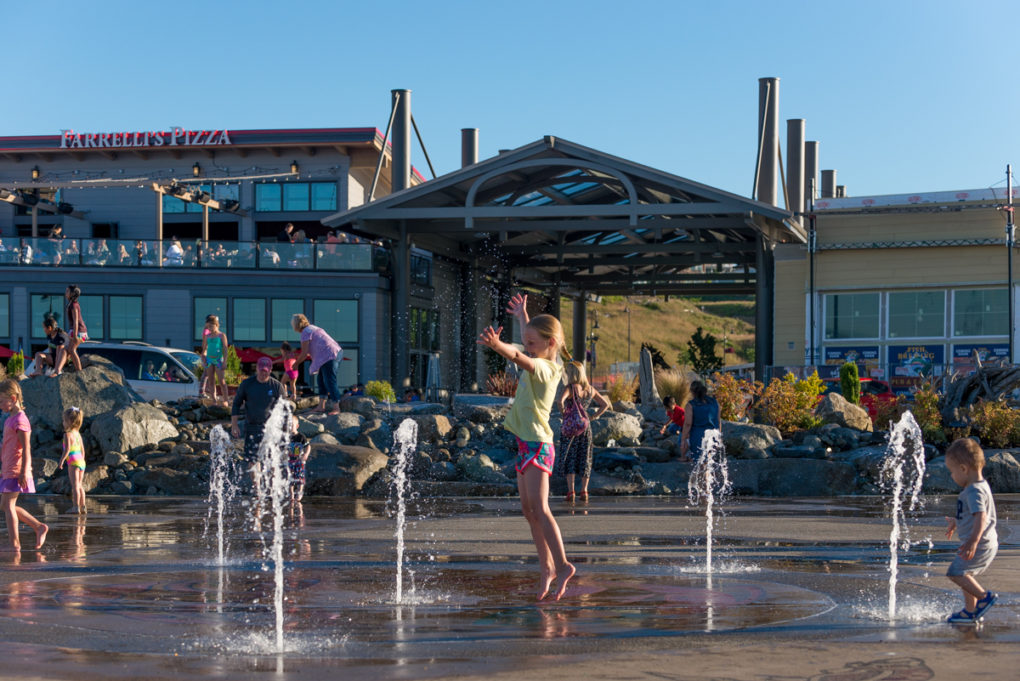
Parasailing, bike and surrey rentals, the Kids Splash Pad, and a movie theater are just a few family-friendly attractions located at Ruston Way Waterfront. Pacific Parasail is a family-owned and operated business that has provided safe parasail flights in the South Puget Sound for over 17 years. Erin Dodge, who flew with Pacific Parasail in February 2020 noted “We had a great experience! The staff was very kind and walked us through each step of the process. It was clear they are well organized and safety conscious, and they gave us an unforgettable experience!” Opened in 2015, Century Point Ruston Theater is now back up and running after closing down for a short time during the COVID-19 pandemic. This theater offers patrons a luxurious viewing experience with stadium seating featuring all reserved reclining seats. Also located at Ruston Way Waterfront are numerous small businesses for all your shopping needs, such as Purpose Boutique, Evolve Home, Rebels & Lovers, and Pink Polish Spa.

Figure 3: Kids Splash Pad

Lodging

Figure 4: Commencement View Cottage

The Silver Cloud Inn is a luxury hotel and spa located just along the shoreline at Ruston Way. The breathtaking panoramic views of the Puget Sound can be taken in from the rooftop pool and jacuzzi. Nightly rates at the Silver Cloud Inn start at $259 and include complimentary wireless internet and ample space to relax after a long day exploring Ruston Way. If a grand hotel isn’t what you’re looking for, The Loft @ Commencement Bay is a private apartment with a separate and secure entrance perched above the Ruston Way Waterfront. This cozy retreat is equipped with an impressive 180-degree view of Puget Sound. Similarly, the Commencement View Cottage, which was built in 1910, is a completely renovated house with a jaw-dropping view of the Puget Sound. Located on a quiet street with ample parking, the Commencement View Cottage is equipped with three different decks for your viewing pleasure with rates that start at $200 per night.

Year-Round Fun

Featuring live music with a view during the Summer Concert Series, and waterfront ice skating at the Frozen Fountain in the Winter, Ruston Way Waterfront is a must-visit destination during any season! Whether you are looking for a relaxing day spent walking along the paved path and enjoying the beach, or an adventure-packed trip spent parasailing and playing in the Kids Splash Pad, Ruston Way Waterfront is the place to be! From spectacular waterfront dining to endless saltwater recreation, Ruston Way Waterfront is without a doubt the shining star of Tacoma, Washington.