

Words from the Dean
September 2025
Words from the Dean
September 2025
Dear College of Science community,
Welcome to the start of the 2025 academic year. I hope everyone was able to get rested and reinvigorated over the summer. There will be a lot going on this year.
First, this seems like a good place to welcome back Roy Haggerty, former College of Science Dean, as our new provost. Many of you know Roy well. I’ve only had the pleasure of working with him since July, and it is very exciting – there is lots of momentum on big university initiatives, from student success to research to operational improvements.
I would also like to welcome Jason Podrabsky as our new head of Integrative Biology! Jason returns to OSU after more than 20 years at Portland State, where he built a respected research program and gained deep leadership experience. His experience as a first-generation student helped shape his commitment to access and mentorship, and his research on adaptation and resilience strengthens our pursuit of foundational science with relevance to global challenges.
I am thrilled to see the College of Science recognized across the board again at this year’s University Day, with faculty, staff, students and teams honored for excellence in teaching, mentoring, innovation, affordability and discovery. From transformative work in the classroom to groundbreaking research and student-centered mentorship, these awards reflect well the creativity, dedication and impact of our community. See our University Day award winners.
This year a major strategic focus under Prosperity Widely Shared (PWS) will be first-year retention. I’m super excited about welcoming our incoming first-year students with a new first-year onboarding experience, new advising model, new core curriculum, new Transitions course, etc. (Whew, that’s a lot). Faculty should expect a message from the provost today asking for greater involvement in getting out “early alerts” to students who are not doing well in classes. His initiative is modeled on what the College of Science is already doing. That said, there are implementation details to work out – I will follow the provost’s message with one of my own to discuss and solicit input on those details.
Another student-centric initiative this year will be an RFA from the dean’s office to solicit proposals for programs or materials to improve student access and inclusion. The College of Science Equity Projects will support efforts that advance equity, with a focus on systemic changes that make a lasting difference. Details will be coming soon.
On the research side, look for some changes to the logistics of the SciRIS program, but plenty of continued investment from the dean’s office in that program, as well as other seed funding initiatives across the university. The College will also be sponsoring a Responsible Conduct of Research training program in collaboration with the Division of Research and Innovation on one to two Fridays of each month from 1 to 2 p.m. in the next academic year. Learn more here.
Additionally, we have updated our research website, which now also highlights our research strength in pedagogy – take a look. We are working on making both our internal and external research information more accessible, so watch for additional changes this fall.
Continuing to consider the role of AI in everything we do will, of course, be another priority this year … stay tuned for activity in the educational, research and operational realms. On a related note, our latest issue of Impact magazine, inserted for science alumni in the fall Stater, highlights several exciting areas where AI is accelerating discovery.
Finally – I hope everyone will take a look at your directory profiles on the College website and fill in or update as necessary. That’s an important part of being accessible to our students and colleagues – and they’re often the first thing search engines display about you. Visit the directory profile guide or contact your department website team or sharon.betterton@oregonstate.edu for further guidance.
I’m glad to be “back” (OK, I wasn’t exactly gone). I’m looking forward to teaching Transitions. I’m looking forward to getting involved in research on student outcomes related to the new first-year experiences. I’m looking forward to hopefully putting in the first genetics grant of my own since starting my deanship. Most of all, I’m looking forward to helping create the best possible climate for all of you to do your jobs this year and beyond.
Thank you for all that you do for our students, for the State of Oregon, and for the broader world.
Go Beavs!
Eleanor Feingold
Dean, College of Science
All the news that’s fit to print.
Please submit news, honors and awards, discoveries, events, research funding, student news, alumni updates and more. Just send us a quick email by the end of the month.
Research
updates
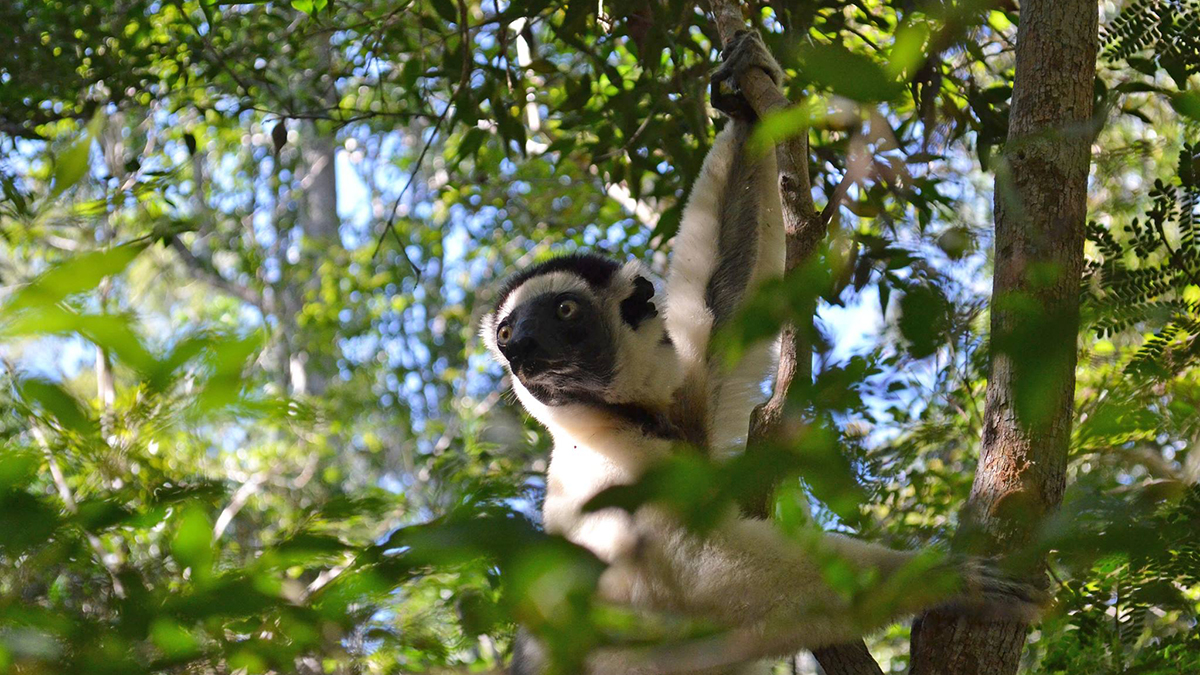
Photo of a Lemur taken by Katie Everson
Research Highlights
Materials scientist Mas Subramanian and his team at Oregon State have developed a new class of vibrant, durable and non-toxic pigments in yellow, orange and red hues. By modifying a thortveitite-like crystal structure with elements like nickel, zinc and vanadium, they created pigments that withstand high temperatures and acidic conditions while offering energy-saving potential through sunlight reflection. Discover how his work is transforming color chemistry.
Research from biologist Katie Everson provides evidence that new lemur species are still arising after 53.2 million years of evolution. This defies the evolutionary principle that says rapid species expansion is followed by a slowdown. Read the research article published in Nature Communications.
Chemist Chong Fang and his team have developed ChlorON3, a biosensor that lights up in the presence of chloride ions, revealing a surprising design principle: twisting, not flattening, of the chromophore enhances fluorescence. This breakthrough could improve real-time monitoring of chloride in the body and advance research on diseases like cystic fibrosis. Learn how Fang’s work is reshaping biosensor technology.
Microbiology graduate student Kelly Shannon is investigating how changing diets threaten West Coast salmon. Working with Chris Suffridge, he’s studying how a reliance on northern anchovy can cause vitamin B1 deficiencies that increase offspring mortality. Find out how Shannon’s research is helping protect these iconic fish.
Materials scientist Kyriakos Stylianou and two graduate students have developed advanced metal-organic frameworks that boost light emission efficiency, offering a greener alternative to traditional rare-earth metals. This breakthrough could lead to energy-saving LEDs and more sustainable display technologies. See the science behind brighter, green light.
Research Funding
The College of Science recently awarded internal funding to support two innovative projects: Biologist Mark Novak is using large language models to analyze predator diet records for improved climate-resilient fisheries management, while biochemist Adrian Gombart is studying how vitamin D shapes immune cell gene expression to uncover new insights into inflammation and autoimmune disease. Read more about these projects.
Biochemist Elisar J. Barbar was awarded $1.3M from the NIH – National Institute of General Medical Sciences for her project entitled “Training Program in Molecular Biophysics of Complex Systems.”
Chemist Ha Yeon Paul Cheong was awarded $649K from the National Science Foundation for her project entitled “Beyond the Fit, Towards Efficient Elucidation of Factors that Govern Selectivity and Reactivity in Synthetic Transformations – Models from Electron Density Topology.”
Physicist Heidi Schellman was awarded $570K from the National Science Foundation for her continuation project entitled “Neutrino Physics at Oregon State.”
Chemist Dipankar Koley was awarded $422K from the NIH – National Institutes of Health (Dental/Craniofacial Research) for his project entitled “Development of an Integrated Dental Plaque Bioanalytical Platform for Point-of-Care Diagnostics of Oral Diseases.”
Biochemist Ryan Mehl was awarded $389K from the NIH – Equipment Supplement for his project entitled “The GCE4All Center: Unleashing the Potential of Genetic Code Expansion for Biomedical Research.”
Biochemist Sarah Clark was awarded $1.9M from the National Institutes of Health for her project entitled “Molecular mechanisms of lipid transfer by bridge-like lipid transfer proteins.”
Ecologist Bruce Menge was awarded $173K from the Kingfisher Foundation for his project entitled “Sea Star Wasting Disease Post Doc Support.”
Microbiologist Maude David was awarded $150K from the OSU Foundation: Office for Research Advancement: TRSF Scale Up Valley Fellowship for her project entitled “The Gut Microbiome: a Therapeutic Target for Autism.”
Statistician Yuan Jiang was awarded $150K from the National Science Foundation for his project entitled “Flexible and Scalable Cluster Analysis of Longitudinal Microbiome Data to Define Functional Groups.”
Marine ecologist Jenna Sullivan-Stack was awarded $133K from the Pew Charitable Trusts for her project entitled “Research to inform the Pew Bertarelli Ocean Legacy Project: Effective, connected marine protected and conserved areas across the global ocean.”
Biologist Virginia Weis was awarded $125K from the OSU Office of Research Advancement for her project entitled “Cryopreservation innovation for coral reef conservation: a climate solution to a biodiversity crisis.”
Mathematician Axel Saenz Rodriguez was awarded $49K from the OSU Office of Research Advancement for his project entitled “Quantum – the frontier of energy efficient tech.”
Ecologist Benjamin Dalziel was awarded $49K from the OSU Foundation: Office for Research Advancement: Valley Fellowship for his project entitled “Building Immune Systems for Cities.”
Mathematician Philipp Kunde was awarded $42K from the Simons Foundation – Travel Support for Mathematicians Award for his project entitled “Classification, Realization and Recurrence in Dynamics.”
Mathematician Jonathan Kujawa was awarded $42K from the Simons Foundation – Travel Support for Mathematicians Award for his project entitled “Geometric and Categorical Methods in Representation Theory.”
Materials scientist Kyriakos Stylianou was awarded $30K from InSilico Medicine for his project entitled “Discovery of MOFs for advanced applications.”

Congratulations
National Honors
Biochemistry & Biophysics graduate Sahana Shah, Class of 2024, mentored by Elisar Barbar, is one of Oregon State’s two 2025–26 Fulbright U.S. Student Program recipients. With minors in chemistry and Spanish, Sahana will head to Spain to work at the Institute for Research in Biomedicine under Xavier Salvatella. Her Fulbright project focuses on developing a designed peptide to slow protein aggregation linked to autism spectrum disorder — research Shah hopes might pave the way for therapeutic options for autistic people seeking improved cognitive and social outcomes. Learn more about her goals.
Marine biology and ecology junior Natalie Donato was named a 2025 Udall Scholar, one of only 55 students nationwide recognized for environmental leadership. From researching sharks in Oregon State’s Big Fish Lab to creating digital art that makes marine science more accessible, she’s combining research and outreach to inspire conservation. See what fuels Natalie’s passion for the ocean.
University Honors
Oregon State’s annual University Day awards honor the faculty, staff and students whose leadership, teaching and research light the way for the university’s success. This year, the College of Science stood out again across multiple categories, with honorees recognized for advancing student success, championing affordability, sparking innovation and driving world-class discovery. Celebrate our winners!
Physicist Oksana Ostroverkhova has been recognized as the 2025 Margaret and Thomas Meehan Honors College Eminent Mentor for her dedication to student success. Over 20 years, she has guided 56 undergraduates across disciplines, helping them complete senior theses, co-author publications and pursue prestigious scholarships. Celebrate how her mentorship is shaping the next generation of scientists.
Visibility
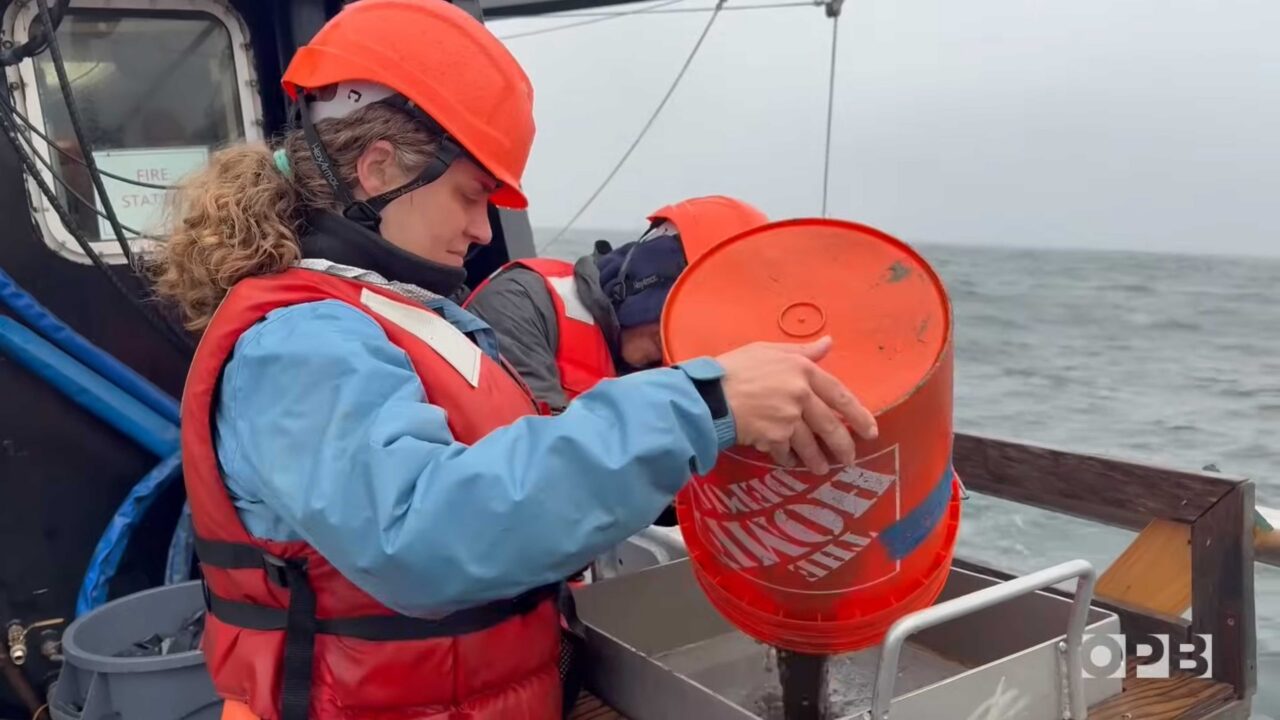
Ecologist Sarah Henkel empties samples of sea life into a sorting bucket to examine. (Still from a video by Oregon Public Broadcasting)
Oregon Public Broadcasting’s “All Science, No Fiction” covered the largest wave energy testing center on the planet, completed in Newport, Oregon. Benthic ecologist Sarah Henkel talked about how her research will help determine if wave energy is safe for marine life. Check out the full video clip on YouTube.
Could AI ever get so powerful it outsmarts us all? A Popular Mechanics story says not anytime soon – unless we build a machine that can literally “eat the sun.” Mas Subramanian, Milton Harris Chair of Materials Science, is among the experts weighing in on the limits of computer chips, the massive energy demands of AI and the leap required to reach the singularity. Read in Popular Mechanics

College News
Biologist Jason Podrabsky, an Oregon State alumnus, has been appointed head of the Department of Integrative Biology. After over two decades of leadership at Portland State University, where he developed a globally recognized research program, Podrabsky returns to Corvallis to lead the department. His research focuses on annual killifishes, which can survive extreme environmental stress by entering a dormant state. Read about Podrabsky’s goals and plans to expand the department’s reach.
Professor of Physics Davide Lazzati has been appointed associate dean for faculty affairs, effective Aug. 15. In this role, he will work with College leadership to support more than 300 faculty members, with responsibilities that include professional development, faculty mentoring and recognition, promotion and tenure, and faculty searches. His leadership will help ensure consistent support for faculty success at every stage of their careers. Read more about how this role supports faculty success.
Professor of Physics Ethan Minot has been appointed the interim head of the Department of Physics, effective June 2025. His leadership exemplifies the College’s mission to advance discovery with real impact on technology and society, while preparing students to thrive as scientists, innovators and leaders. Visit IMPACT to learn more about his Oregon State career.
The College of Science plays a vital role in expanding access to high-quality STEM education through Ecampus, offering innovative online science labs and courses, designed and taught by faculty and grounded in research on deep learning. From mailed lab kits to interactive simulations, these online science courses provide rigorous, hands-on experiences that match the quality of on-campus instruction while meeting the needs of students balancing work, family and education — discover how.
The George Earl Barr Endowed Professorship in Mathematics has been established at OSU thanks to a generous gift from Barr’s estate, honoring the lasting impact the university had on his life. George Earl Barr, a Ford Scholar recruited to UW–Madison in high school and Ph.D. graduate in 1965, spent most of his career at Sandia Labs in Albuquerque, where he was named scientist emeritus upon retirement. Reflecting on his success, Barr credited the support of his OSU professors. His donation ensures future generations of mathematicians will benefit from his legacy.
Biochemistry student Audrey Bivens combined her passion for science with a love of exploration during a study abroad program in Spain. Immersed in molecular biology and genetics while experiencing Spanish culture firsthand, she broadened both her academic and personal horizons. Learn what moment in Spain left the biggest impact on Audrey.
Biology major Jared McClure spent part of his summer studying abroad in Mexico, working with animals alongside licensed veterinarians. The program, now in its second year, aims to bridge the gap between classroom learning and real-world veterinary practice. Why does closing the gap between expectation and reality matter? Find out.
Kaitlyn Kim, a Class of 2025 Honors College graduate in biochemistry and molecular biology, champions the importance of peer mentorship and human-centered science. She served as a Learning Assistant, conducted Alzheimer’s research in Kathy Magnusson’s lab and co-founded the Students for Health Humanities Club to improve access to healthcare. Learn her plans for post-graduation.
Events
Connect 2025 events
September 21 through 26
OSU Connect is a weeklong opportunity to welcome new students to campus and highlight College of Science resources. If you have questions about these or other College of Science events, please reach out to breanna.grigsby@oregonstate.edu.
While most events are student-focused, here are key moments for our community:
Team Science Rally
Monday, Sept. 22, 2 p.m., Valley Library Quad (Kidder Hall steps)
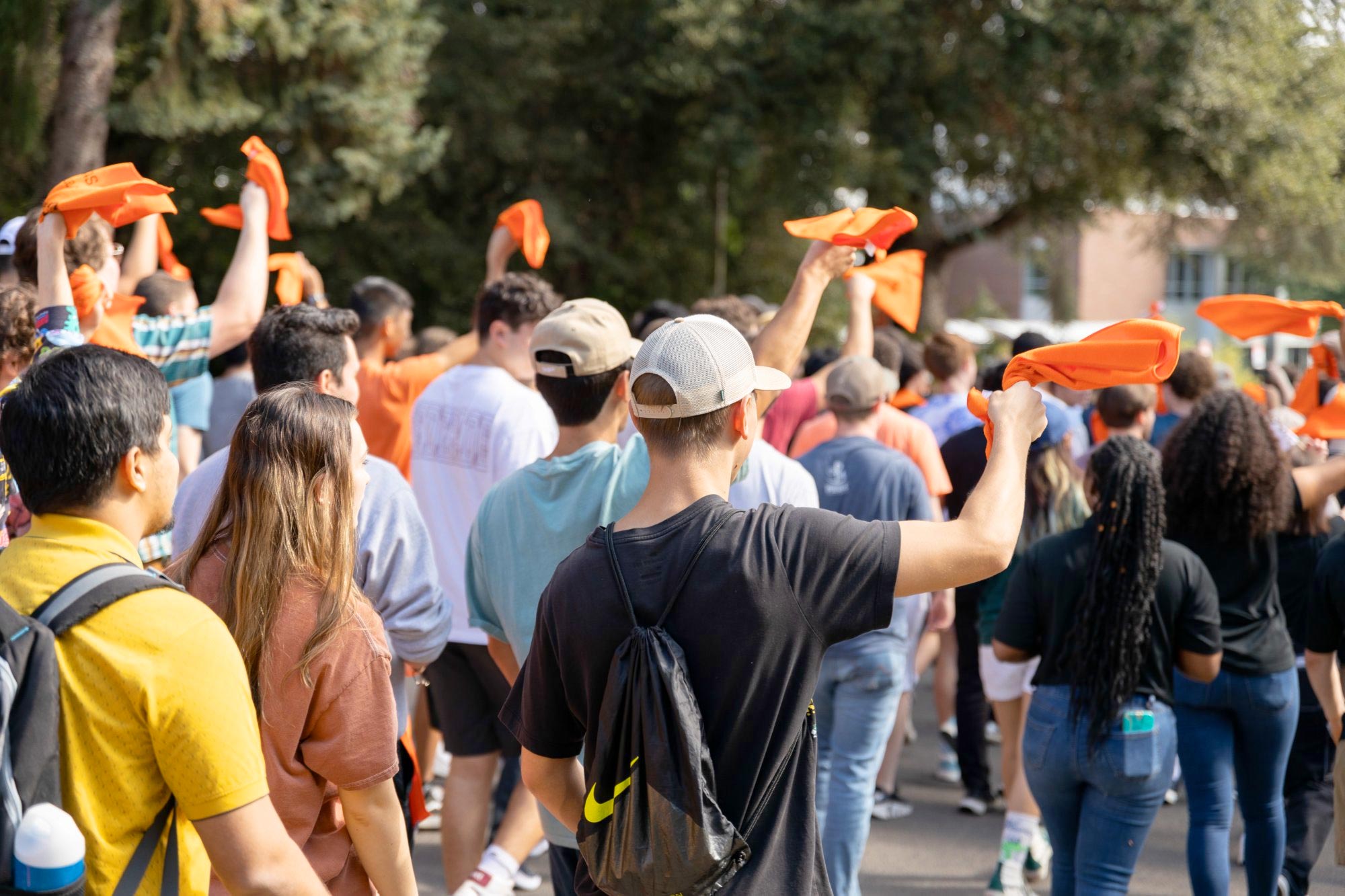
Kick off the year with Team Science! Students will meet the dean and community, pick up their College of Science bandana and get ready for Convocation.
New Student Processional & Convocation
Monday, Sept. 22, Memorial Union Quad → Gill Coliseum
- 2:30 p.m. Line up by college in the MU Quad
- 3 p.m. New Student Walk down 26th Street
- 3:30 p.m. Convocation ceremony in Gill Coliseum
Faculty and staff are warmly encouraged to join this tradition that mirrors students’ graduation walk. Please join Dean Feingold at the Team Science Rally at 2 p.m. to gather and cheer on students during their New Student Walk.
Department Welcome Sessions
Monday, Sept. 22
Students will meet department faculty and advisors at these gatherings:
- Biochemistry & Biophysics – 1 to 1:50 p.m., outside ALS
- Chemistry – Noon to 1:30 p.m., LPSC
- Integrative Biology – Noon to 1:45 p.m., outside Cordley Hall
- Mathematics – 1 to 1:50 p.m., Kidder 108
- Microbiology – 12:30 to 1:30 p.m., lawn between Nash Hall & LPSC
- Physics – Noon to 1:50 p.m., outside Weniger Hall