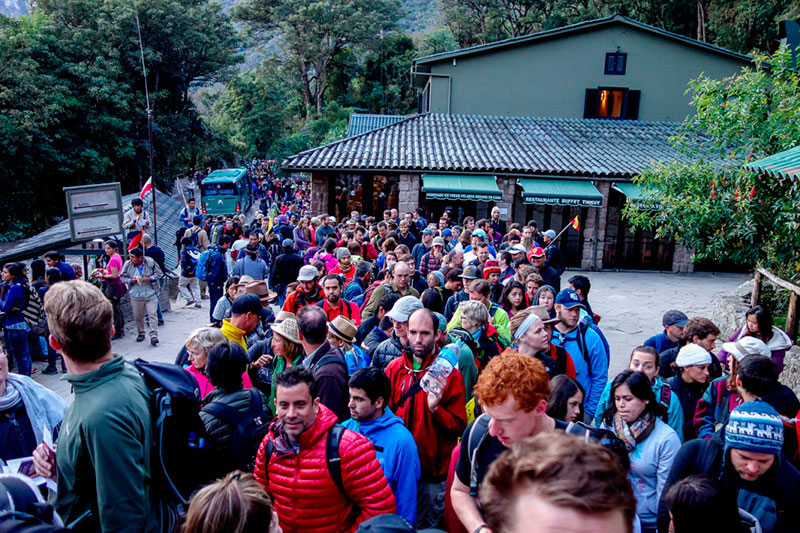
SERNANP oversees the management of Machu Picchu using many different management techniques. According to Peru Explorer (2025), amount of visitor is monitored using GIS and heat mapping with real time data. Machu Picchu also has a timed entry system, daily visitor limits, creation of new paths to stop congestion, new ways to get to the site, and a 24/7 Whatsapp help line. In 2022, Machu Picchu became the first site to achieve carbon neutrality to help with its conservation efforts.
Machu Picchu also implements rules and regulations to help preserve the park. Some of these rules include not to touch the structures, carry large backpacks, touch the animals, enter with food, make loud noises, disturb the plants, litter, or go off established paths (Ministerio de Cultura, n.d.).
Peru’s Ministry of Culture along with UNESCO have implemented a plan (2023-2027) to help adapt to the raising climate. This plan includes an enhanced drainage system, microclimate monitoring, soil stabilization, and a native species reforestation plan. The local communities are helping combat climate change by operating native tree nurseries, sharing Indigenous weather prediction knowledge, and getting educated on visitor safety and climate impacts (Machupicchu.org, 2025).
SERNANP, along with the tourism sector and local authorities have began an initiative to help reforest places that were destroyed by fires and plant new trees. From an agreement with tourism entrepreneurs and the district municipality they have planted 570 hectares of trees and are hoping to plant 1000 trees in total. This, in addition to their improvement to waste management has helped keep Machu Picchu carbon neutral and help its preservation (Braziulis, 2025). Peru has also announced the creation of the Misquiyaco Private Conservation Area in Cusco to act as a buffer zone of the Historic Sanctuary (Andes Amazon Fund, 2022).