Give up your garbage disposal!
Linda J. Brewer; Department of Horticulture; Oregon State University
A March 2019 article by the Associated Press[1] reported that “…the environmental value of kitchen disposal systems depends on the wastewater system of a given locality. Disposals make sense if your wastewater system is set up to convert food waste into energy, as is the case in a growing number of big cities.” Aurora’s wastewater system is not set up to convert food waste into energy. Moving food waste through pipes and treating it at a plant is energy- and water-intensive.
Like many cities, the City of Aurora, OR is actively discouraging homeowners from using in-sink garbage disposals.[2] While some localities in the Willamette Valley have the option to include food waste in the same bin as yard waste, the citizens of Aurora do not. Food waste in the yard cart means weekly yard cart pickup. With that comes a rate increase on the trash bill.
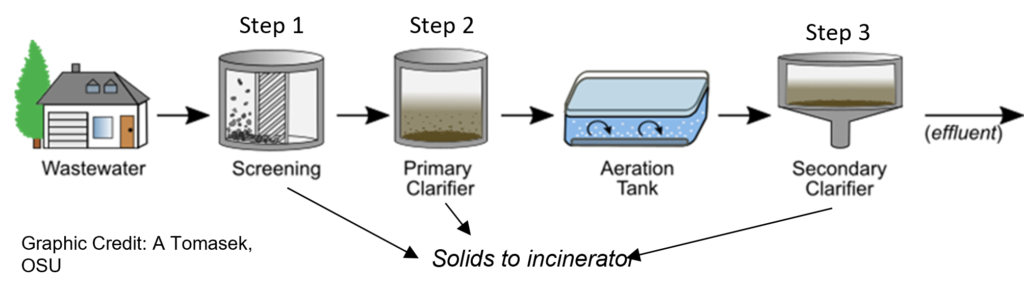
The fact is that Aurora’s older wastewater treatment plant is operating at capacity. One result is that no building permits can be issued for projects that would send additional wastewater to the plant. Grant funding has been secured to modernize the plant and expand its capacity, but that project will not be a quick fix. And frankly, the City would prefer not to receive food waste at the wastewater treatment plant.
Modern wastewater treatment is a controlled process. Step 1 in the figure above is to screen the wastewater coming into the plant to remove solids. In the case of Aurora, those solids are hauled to Salem for disposal in the Energy to Waste Facility at Gervais. The cost of hauling and disposal is $9,000 per month. Food waste adds weight to the load and increases the cost of hauling.
Steps 2 and 3 at the plant reduce the bacterial load in the effluent and reduce its chemical content. The water, which meets stringent EPA standards, is applied to fields near the plant that are permitted to receive such water.
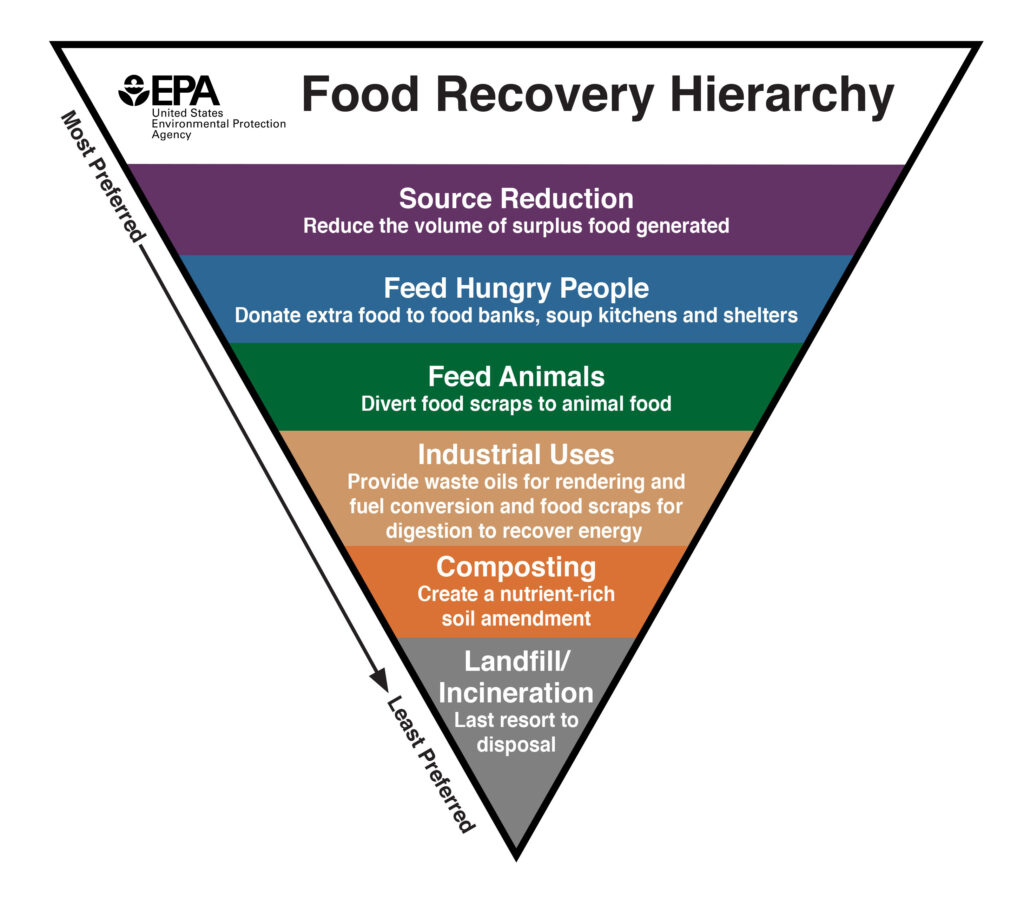
What to do? In the coming months, I’ll provide alternatives for handling household food waste.
[1] https://apnews.com/article/lifestyle-composting-us-news-environment-wastewater-32d56555e90d4190918339c91cc59da1
[2] https://www.powerknot.com/2019/09/14/should-wastewater-treatment-plants-worry-about-food-waste/

Hi, this is a comment.
To get started with moderating, editing, and deleting comments, please visit the Comments screen in the dashboard.
Commenter avatars come from Gravatar.