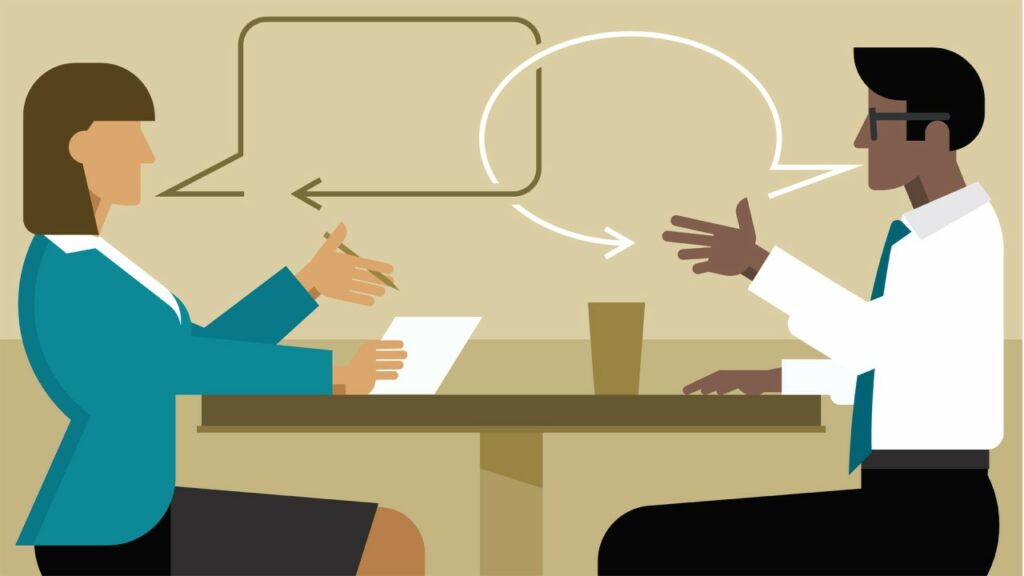
I have experienced interviews, but only once I think was effective because I had enough time to express myself. This also means the interviewer had enough time to get to know me and to consider my qualifications. However, I know such situations are rare. The interview is a technical work because we can imagine the difficulty of selecting the most suitable people from so many talents in a limited time. Therefore, a successful interview is like a wonderful negotiation, both interviewer and interviewee obtained the information they want from just right within the limited time. So, I think two factors of have a good interview.
The fear of the interviewer
The first is the interviewee’s mindset. We nervous before the interview is because of our fear of the unknown. Even though we have prepared enough, we are still afraid of unexpected problems or situations. The second is that we always believe that failure is greater than the probability of success. The interview is a contest between people. Generally, we will choose to get to know the people we will meet first before the conversation started. Therefore, we can feel familiarity and enter our comfortable condition when we facing them. However, there is nothing to do with the interviewer and who can determine the opportunities we treasured especially. Therefore, believing in ourselves, controlling our mindset not to query our preparedness by our fear and tension becomes the first element.
Interviewer’s view
As an interviewer that they must know their organization’s overall situation. By this, they know what kind of talents should be added for the benefit of big picture. Take the interviewer as the protagonist in the limited dialogue, try to explore his characteristics outside the words of the resume, understand whose work and efforts for this interview, and capture whose thought of the plan. Finally determine whether the interviewer is suitable for the organization. In this case, the reason of recruit or not can be listed and convincing, instead of relying on someone’s personal feelings or likes and dislikes to decide. This is the lesson I learned from the failed interviewer.
