Final Post and Reflection

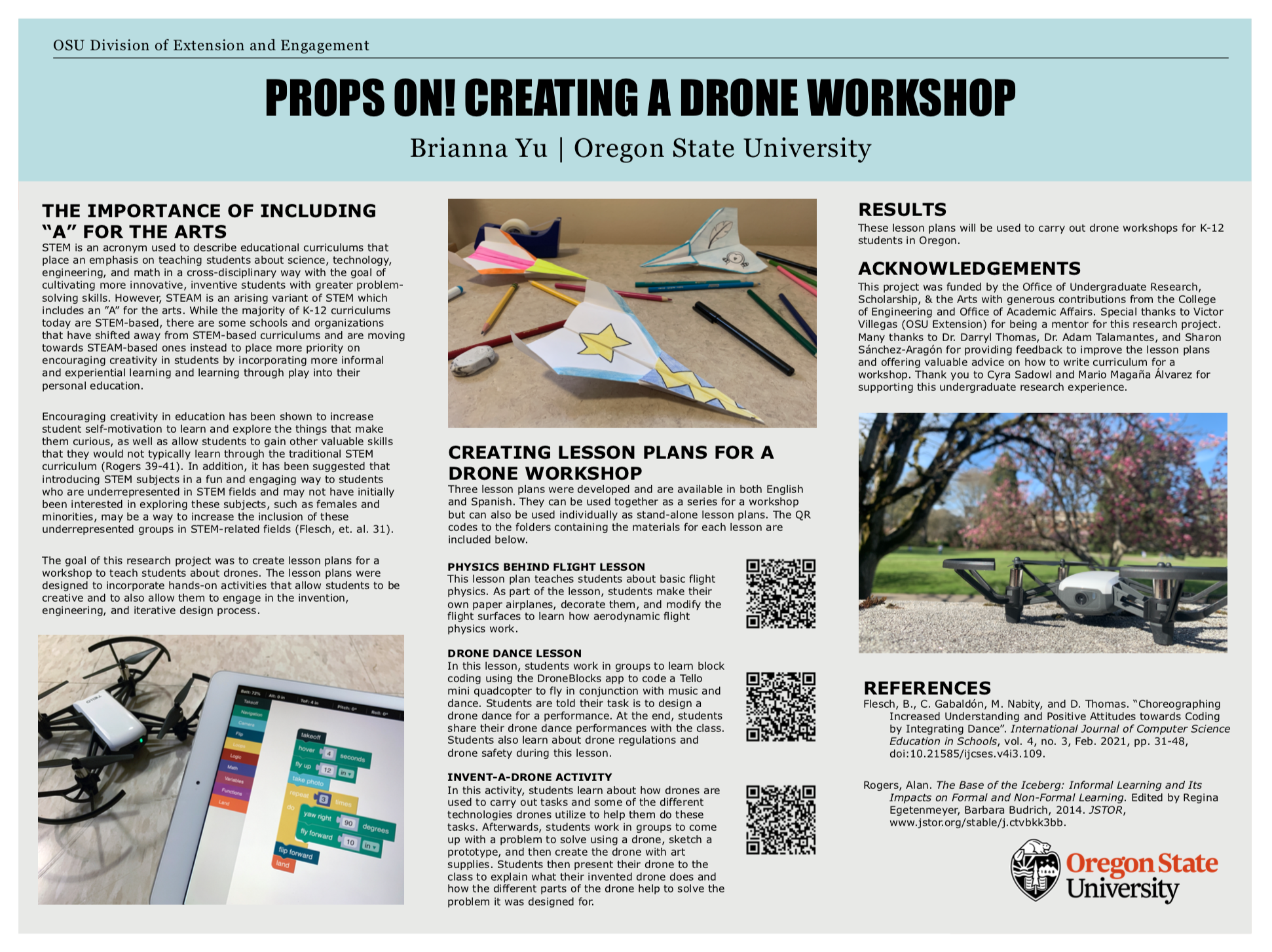
Click image to view poster in new tab.

This is my final blog post after working on my URSA Engage research project for the past 15 weeks. In this post are the links to the folders with all of the lesson plans I created, as well as a final reflection on my experiences.

This project was funded by the Office of Undergraduate Research, Scholarship, & the Arts with generous contributions from the College of Engineering and Office of Academic Affairs. I would like to sincerely thank Victor Villegas (OSU extension) for being a fantastic research mentor for me throughout this entire project. I would also like to thank to Dr. Darryl Thomas, Dr. Adam Talamantes, Sharon Sánchez-Aragón, Cyra Sadowl, and Mario Magaña Álvarez for helping me throughout the development of the lesson plans by offering valuable advice and feedback, as well as supporting my professional development as a part of this undergraduate research experience.

Lesson Plans

Below are the links to the folders containing each of the lesson plans that I worked on creating (please feel free to use them):

Physics Behind Flight Lesson: Link

Invent-A-Drone Activity: Link

Drone Dance Lesson: Link

FINAL REFLECTIOn

From February 2022 to June 2022, I participated in the URSA Engage undergraduate research program at Oregon State University (OSU).  In this program, I worked with OSU faculty mentor Victor Villegas to do research on creative STEAM outreach activities for students from underserved and underrepresented communities.  This project culminated in creating three lesson plans available in English and Spanish that can be used in workshops to teach K-12 students about drones, the arts, and coding.

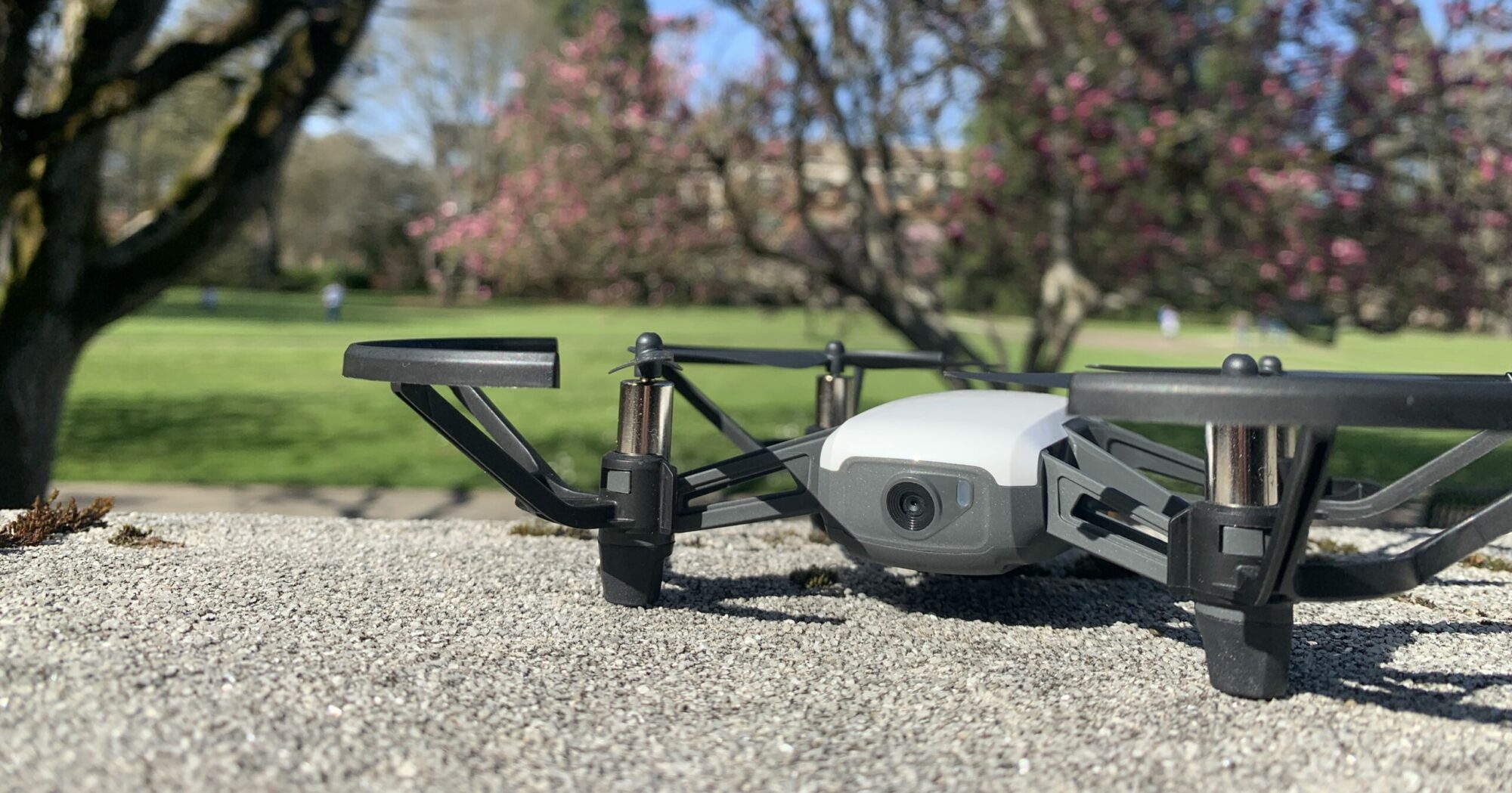
The arts are very important to develop creativity and soft skills (such as teamwork, problem solving, and divergent thinking) in students that they otherwise would not develop through a curriculum that does not include an emphasis on the arts. I worked with my research mentor to create lesson plans to teach students about drones and coding using creative activities.  I created three lesson plans which can be used in series for a workshop or just as standalone lessons. The first lesson plan is a Physics Behind Flight Lesson that teaches students basic flight physics.  After the lesson, students create and decorate their own paper airplanes and experiment with modifying the flight surfaces to see how the modifications affect the way the plane flies.  The second lesson plan is an Invent-A-Drone Activity where students learn about how drones are used to solve real-life problems and then work in groups to design and build a drone using art supplies to solve a problem of their choice.  The third lesson plan is a Drone Dance Activity where students work in groups to code a Tello mini quadcopter to fly in conjunction with music and dance using the DroneBlocks app on an iPad.  All of these lesson plans are posted and available on this blog.

Throughout the process of developing these lesson plans, I connected with many professionals through informational interviews.  I interviewed people about the work that they do surrounding creative STEAM outreach to students from underserved and underrepresented communities and their experiences with creating curriculum to get feedback on the lesson plans.  The help and support from these individuals were invaluable to developing these lesson plans.

This was my first experience doing a project with a mentor, and my mentor was a big help and support. I met with him once a week over Zoom to check in about questions I had and to discuss my progress of the lesson plans I was creating. Aside from providing support, my mentor also pushed me to grow professionally, such as encouraging me to do informational interviews to practice my speaking and interpersonal skills. This mentoring relationship contributed to making this research project a positive experience and helped me grow as I worked on this project.

I was drawn to this research project because it was an applied research project.  I did not think I was interested in research initially, and I also do not have any prior experience working in a lab or doing research at the college level, so I took on this project to see if I could develop more interest in research.  The project was about incorporating the arts into STEM education for youth from marginalized communities, which is something that I am very passionate about.  As a person of color myself, I also desire to champion those in underserved and underrepresented communities.  Furthermore, I have always loved doing art and engaging in creative projects. Having experienced a  K-12 curriculum in my early education, I believe that more creative activities should be incorporated into K-12 education to make learning more fun and exciting.  I am glad that I was able to work on a research project that relates to my interests and allowed me to contribute to causes that I am passionate about.  I hope that the lesson plans I created can make a difference. Even though I plan to go into the field of civil engineering, I want to look into ways that I can continue to support creative STEAM outreach efforts in my future.

I presented my project at the Celebrating Undergraduate Excellence (CUE) Research Showcase in May 2022.  I created a lightning talk to present to people as they walked by my poster at the showcase, and I also got to walk around and hear about other people’s research projects.  This enabled me to be able to practice my presentation skills as well as see what it is like to present at a research showcase.  I anticipate I will be presenting my thesis for my honors degree before graduation, so I was glad to be able to have a presentation experience like this as a part of the research project.

This research experience was something very new to me, and I learned so many new things about research.  I feel that I grew a lot personally and professionally from this experience, and I am deeply grateful for the opportunity to be involved with this research!

Week 4

This week I met with my mentor and worked on creating my own curriculum incorporating drone activities.

DECIDING ON A CURRICULUM TO MAKE

This was my first time creating a curriculum. It was interesting to try planning a curriculum and see how teachers and educators have to work with standards when planning out their courses. I ended up creating a draft for an art class curriculum this week. The curriculum allows students to explore both the visual arts, as well as creating art in the form of a drone dance.

When deciding which grade level to create a curriculum for, I chose to try and create a high school curriculum so that students could be able to explore STEAM subjects to decide if it is something they might be interested in doing as a future career.

During the brainstorming process, I also looked at the various subjects that I could try to incorporate drones into while still meeting the curriculum standards. I was originally looking to create a technology or computer science curriculum, but I was not able to find any publicly available standards for those subjects on the Oregon Department of Education standards website. My second plan was to incorporate drones into another STEM subject such as science or math. However, I was conflicted because the standards for these subjects were quite specific, and I was hoping to create a curriculum that focused less on learning outcomes to allow flexibility for students to experiment with the drones without worrying as much about reaching a certain end product.

As a result, I tried looking at the arts standards to see if somehow incorporating drones into an arts course could increase creative freedom for students. I recently saw some neat drone videos online where engineers used drones to create pictures in the sky, which I thought was really awesome. The video that I saw was Verge Aero flying drones on America’s Got Talent Extreme. I thought that creating a drone dance could be considered a contemporary art, which led to my idea of incorporating drones into an art class. I also thought that doing this could be a great way to show students the overlap that STEM and the arts can have, as well as allow students to explore drones and coding without the strict standards of STEM subjects. I thought that this class could also work as a way to provide students the opportunity to explore both the arts and computer science/coding within one semester.

SUMMARY OF THE CURRICULUM

Below is the Excel file where I drafted my plan for the curriculum:

I looked at the Oregon Department of Education’s high school visual arts standards and tried to use those to create a semester curriculum for a high school arts class. The first half of the curriculum (weeks 1–8) are more focused on visual arts, and the second half of the curriculum (weeks 9–16) are focused on coding and creating a drone dance. 

For the first half of the curriculum, some of the activities include having students pick some art pieces made by an artist (of their choice) and doing some research on the artist/art pieces, asking students to reflect on parts of their own identity (culture, traditions, history, values) and write about how this might influence their art/art style, and making various mediums available to students to allow them to create three pieces of their own art for a portfolio centered around a theme or topic that they will submit by the end of the quarter. I took a little bit of inspiration from the intro to visual arts course that I took as a high school freshman.

For the second half of the curriculum, I looked at the DroneBlocks modules online to see if I could incorporate the drone dancing modules into the curriculum to train students on how to code. During this part of the curriculum, students work in groups to create their own drone dance. They will create three drafts of their drone dance over the course of a few weeks (with the third one being their final product), and in between drafts, they will exchange constructive feedback with other groups in the class. This part of the curriculum culminates in students creating a drone dance that they will get to present to the class, and teachers can choose if they would like to allow students in their classes to get to vote for a favorite drone dance in the class.

At the beginning of the semester, students will each be given their own art journals that they can use to plan out their ideas, do reflections, and document their progress on all of the projects that they are doing. At the start of the term, they will be asked to decorate their art journals in a way that expresses who they are. Then, throughout the whole semester, students will be asked to write reflections in their journals in order to reflect on their ideas, progress, and final products that they make. The goal is to grade students on how thoroughly they reflect rather than the final products that they make in order to encourage students to be creative and to enjoy working with different art supplies and with the drones (the salmon-colored cells in the Excel file are activities that are meant to be used for grading). I purposefully wanted to make the curriculum so that students write their reflections about the drone dance activities in their art journals to prevent creating a divide between STEM and the arts (such as by having students write about the drone dance as if it is art instead of asking them to engage in technical writing about their process).

There are definitely a lot of things in my curriculum that I could improve. Although I specified some of the activities that students would be participating in, I have not created specific guidelines for those activities or how they would be graded ( such as based on completion, using a rubric, or something else). I also was not sure about the timing that I planned for all the activities. For example, I allotted 5 weeks for students to work on their drone dances. I was not sure if this could feel rushed or if it was way too long. I look forward to sharing this curriculum with my mentor during our meeting next week to get feedback.

GOALS FOR NEXT WEEK

This coming week, I plan on meeting with my mentor to share the curriculum that I worked on. I look forward to receiving constructive feedback on how I can improve it.