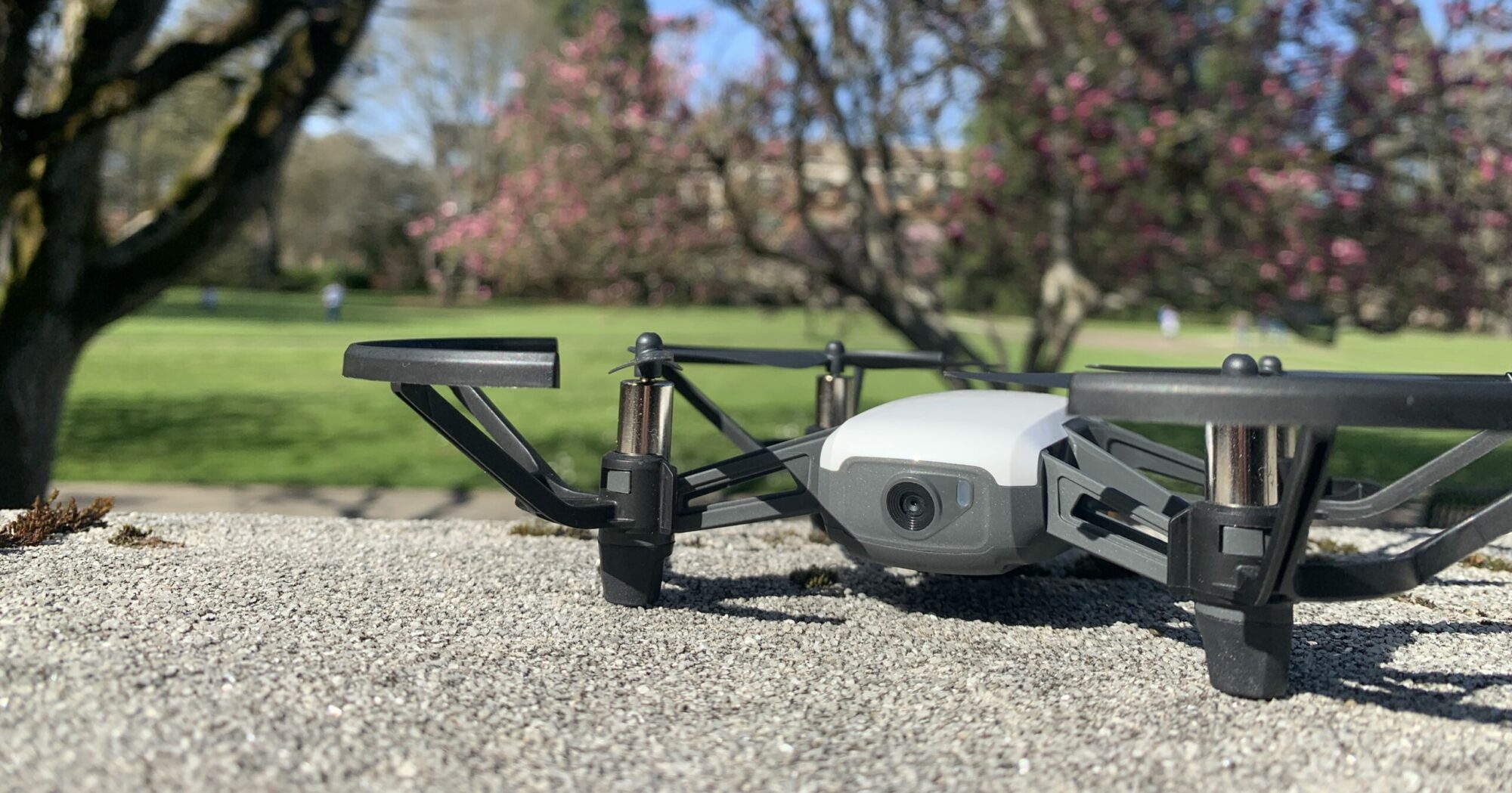
This week, I met with my mentor to share the curriculum that I created last week, worked on creating a drone dance workshop lesson plan based on that curriculum, and used a Tello quadcopter drone for the first time.
CREATING A DRONE DANCE LESSON PLAN
This week I began creating a drone dance lesson plan. Here is the document with what I have drafted so far.
So far, the lesson plan consists of an introduction to different drone types that exist, as well as drone safety. In addition to this, the lesson plan explains the different types of commands that can be used in DroneBlocks for coding. After students understand what kinds of coding commands they can use, they will be able to work in groups to create their own drone dances to music. Then, students can create a title for their drone performance and write an artist statement about the different coding choices they made. This is then followed by students sharing their drone dances with each other.
I started creating a packet (also included in the document with the lesson plan) that will be provided to students, where they can do different reflection activities, as well as keep as a resource after the workshop as a guide in case they want to continue exploring drones and coding on their own. I was not able to completely finish the whole lesson plan or resource packet this week, but I will continue working on these over the next week. I also plan to share what I have done so far with my mentor to get some feedback, as this is also my first time creating a lesson plan. I tried referencing the computer science education standards for grades 6-8 for Washington since Oregon does not have any publicly available computer science standards yet. The curriculum that I made satisfies a lot of the standards, but there were a few standards that I was not sure how to incorporate yet.
Using a tello QUADCOPTER drone
This week was also the first time I tried using a Tello quadcopter drone. It is important to me that I understand how to code and use a Tello drone since I am creating a curriculum that uses these. Eventually, I plan to try creating a drone dance to music to test out the curriculum that I made, but this week, I spent some time just trying to figure out how to get the drone to work and to try coding it with the DroneBlocks app. I have not had any experience with drones or coding, so this was something new to me.
I thought it was really nice how the app was created so that people who have no prior experience with coding can easily use it to play around with drones. I had a lot of fun playing around with it this week. It was very simple to make the drone take off, turn, flip, hover, and even take pictures. There were some commands that I was not sure how to use yet (logic, math, variables, and functions), so I plan to research those a little bit more to understand what they do.
However, something that I noticed as I was playing around with the drone was that the 13 minutes of battery life that the drone has goes by really fast. When the drone ran out of battery, it has to be recharged for another 90 minutes before it can be used again. I thought that this could be a challenge when using the Tellos for a drone dance workshop. It could be framed as an engineering constraint, but I think it would be quite challenging for students to design a drone dance if there is a limit to how many times students can test out their code before the drones run out of battery.
Goals for next week
This coming week, I hope to continue working on the drone dance curriculum and getting more familiar with using the Tello drone. I also plan on meeting with my mentor to share the progress on my drone dance curriculum and to get some feedback on how it looks so far.
In addition, I will be meeting with Professor Darryl Thomas, a Professor of Dance at Western Oregon University, for an informational interview. He has done a Code Can Dance workshop for the Mid-Valley STEM-CTE Hub STEM Week 2021, and I would like to ask him about his experiences with planning a curriculum that connects STEM to the arts.