Week 5

This week, I met with my mentor to share the curriculum that I created last week, worked on creating a drone dance workshop lesson plan based on that curriculum, and used a Tello quadcopter drone for the first time.

CREATING A DRONE DANCE LESSON PLAN

This week I began creating a drone dance lesson plan. Here is the document with what I have drafted so far.

So far, the lesson plan consists of an introduction to different drone types that exist, as well as drone safety. In addition to this, the lesson plan explains the different types of commands that can be used in DroneBlocks for coding. After students understand what kinds of coding commands they can use, they will be able to work in groups to create their own drone dances to music. Then, students can create a title for their drone performance and write an artist statement about the different coding choices they made. This is then followed by students sharing their drone dances with each other.

I started creating a packet (also included in the document with the lesson plan) that will be provided to students, where they can do different reflection activities, as well as keep as a resource after the workshop as a guide in case they want to continue exploring drones and coding on their own. I was not able to completely finish the whole lesson plan or resource packet this week, but I will continue working on these over the next week. I also plan to share what I have done so far with my mentor to get some feedback, as this is also my first time creating a lesson plan. I tried referencing the computer science education standards for grades 6-8 for Washington since Oregon does not have any publicly available computer science standards yet. The curriculum that I made satisfies a lot of the standards, but there were a few standards that I was not sure how to incorporate yet.

Using a tello QUADCOPTER drone

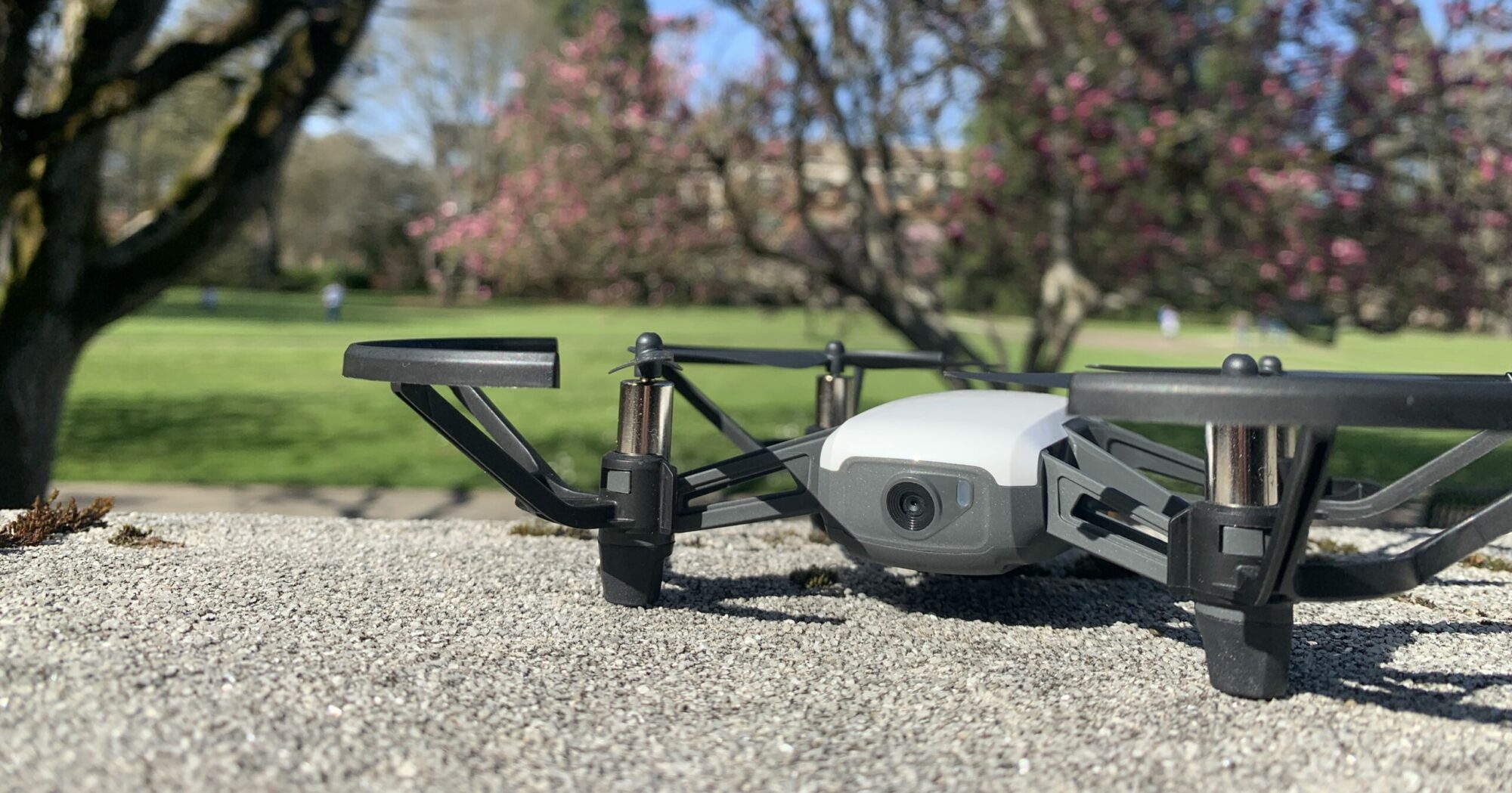
This week was also the first time I tried using a Tello quadcopter drone. It is important to me that I understand how to code and use a Tello drone since I am creating a curriculum that uses these. Eventually, I plan to try creating a drone dance to music to test out the curriculum that I made, but this week, I spent some time just trying to figure out how to get the drone to work and to try coding it with the DroneBlocks app. I have not had any experience with drones or coding, so this was something new to me.

I thought it was really nice how the app was created so that people who have no prior experience with coding can easily use it to play around with drones. I had a lot of fun playing around with it this week. It was very simple to make the drone take off, turn, flip, hover, and even take pictures. There were some commands that I was not sure how to use yet (logic, math, variables, and functions), so I plan to research those a little bit more to understand what they do.

However, something that I noticed as I was playing around with the drone was that the 13 minutes of battery life that the drone has goes by really fast. When the drone ran out of battery, it has to be recharged for another 90 minutes before it can be used again. I thought that this could be a challenge when using the Tellos for a drone dance workshop. It could be framed as an engineering constraint, but I think it would be quite challenging for students to design a drone dance if there is a limit to how many times students can test out their code before the drones run out of battery.

Goals for next week

This coming week, I hope to continue working on the drone dance curriculum and getting more familiar with using the Tello drone. I also plan on meeting with my mentor to share the progress on my drone dance curriculum and to get some feedback on how it looks so far.

In addition, I will be meeting with Professor Darryl Thomas, a Professor of Dance at Western Oregon University, for an informational interview. He has done a Code Can Dance workshop for the Mid-Valley STEM-CTE Hub STEM Week 2021, and I would like to ask him about his experiences with planning a curriculum that connects STEM to the arts.

Week 4

This week I met with my mentor and worked on creating my own curriculum incorporating drone activities.

DECIDING ON A CURRICULUM TO MAKE

This was my first time creating a curriculum. It was interesting to try planning a curriculum and see how teachers and educators have to work with standards when planning out their courses. I ended up creating a draft for an art class curriculum this week. The curriculum allows students to explore both the visual arts, as well as creating art in the form of a drone dance.

When deciding which grade level to create a curriculum for, I chose to try and create a high school curriculum so that students could be able to explore STEAM subjects to decide if it is something they might be interested in doing as a future career.

During the brainstorming process, I also looked at the various subjects that I could try to incorporate drones into while still meeting the curriculum standards. I was originally looking to create a technology or computer science curriculum, but I was not able to find any publicly available standards for those subjects on the Oregon Department of Education standards website. My second plan was to incorporate drones into another STEM subject such as science or math. However, I was conflicted because the standards for these subjects were quite specific, and I was hoping to create a curriculum that focused less on learning outcomes to allow flexibility for students to experiment with the drones without worrying as much about reaching a certain end product.

As a result, I tried looking at the arts standards to see if somehow incorporating drones into an arts course could increase creative freedom for students. I recently saw some neat drone videos online where engineers used drones to create pictures in the sky, which I thought was really awesome. The video that I saw was Verge Aero flying drones on America’s Got Talent Extreme. I thought that creating a drone dance could be considered a contemporary art, which led to my idea of incorporating drones into an art class. I also thought that doing this could be a great way to show students the overlap that STEM and the arts can have, as well as allow students to explore drones and coding without the strict standards of STEM subjects. I thought that this class could also work as a way to provide students the opportunity to explore both the arts and computer science/coding within one semester.

SUMMARY OF THE CURRICULUM

Below is the Excel file where I drafted my plan for the curriculum:

I looked at the Oregon Department of Education’s high school visual arts standards and tried to use those to create a semester curriculum for a high school arts class. The first half of the curriculum (weeks 1–8) are more focused on visual arts, and the second half of the curriculum (weeks 9–16) are focused on coding and creating a drone dance. 

For the first half of the curriculum, some of the activities include having students pick some art pieces made by an artist (of their choice) and doing some research on the artist/art pieces, asking students to reflect on parts of their own identity (culture, traditions, history, values) and write about how this might influence their art/art style, and making various mediums available to students to allow them to create three pieces of their own art for a portfolio centered around a theme or topic that they will submit by the end of the quarter. I took a little bit of inspiration from the intro to visual arts course that I took as a high school freshman.

For the second half of the curriculum, I looked at the DroneBlocks modules online to see if I could incorporate the drone dancing modules into the curriculum to train students on how to code. During this part of the curriculum, students work in groups to create their own drone dance. They will create three drafts of their drone dance over the course of a few weeks (with the third one being their final product), and in between drafts, they will exchange constructive feedback with other groups in the class. This part of the curriculum culminates in students creating a drone dance that they will get to present to the class, and teachers can choose if they would like to allow students in their classes to get to vote for a favorite drone dance in the class.

At the beginning of the semester, students will each be given their own art journals that they can use to plan out their ideas, do reflections, and document their progress on all of the projects that they are doing. At the start of the term, they will be asked to decorate their art journals in a way that expresses who they are. Then, throughout the whole semester, students will be asked to write reflections in their journals in order to reflect on their ideas, progress, and final products that they make. The goal is to grade students on how thoroughly they reflect rather than the final products that they make in order to encourage students to be creative and to enjoy working with different art supplies and with the drones (the salmon-colored cells in the Excel file are activities that are meant to be used for grading). I purposefully wanted to make the curriculum so that students write their reflections about the drone dance activities in their art journals to prevent creating a divide between STEM and the arts (such as by having students write about the drone dance as if it is art instead of asking them to engage in technical writing about their process).

There are definitely a lot of things in my curriculum that I could improve. Although I specified some of the activities that students would be participating in, I have not created specific guidelines for those activities or how they would be graded ( such as based on completion, using a rubric, or something else). I also was not sure about the timing that I planned for all the activities. For example, I allotted 5 weeks for students to work on their drone dances. I was not sure if this could feel rushed or if it was way too long. I look forward to sharing this curriculum with my mentor during our meeting next week to get feedback.

GOALS FOR NEXT WEEK

This coming week, I plan on meeting with my mentor to share the curriculum that I worked on. I look forward to receiving constructive feedback on how I can improve it.

Week 3

For my assignments this week, I did research on each of the topics listed below:

  • DroneSinger (the world’s #1 composer of parody songs about drones) 
  • Pre-existing and freely available K-12 drone curriculums
  • The Droneblocks app
  • How to create standards-based curricula for K-12
  • Education standards for Oregon and how to possibly include drone curricula within these standards

I also contacted Mr. Mario Magaña, a faculty member of OSU to schedule an informational interview, and I also attended Paul Catanese’s The Responsibility of Breath presentation as a part of the online Soundbox 5 festival hosted by OSU.

ATTENDING SOUNDBOX 5 PRESENTATION FEATURING PAUL CATANESE

This past week, I watched Paul Catanese’s presentation on his project called The Responsibility of Breath.  I thought that it was neat to hear about his project on looking at patterns of human sleep and what kinds of music and sounds those patterns can make.

I also enjoyed hearing about his work on his opera and other art projects that combined multiple forms of media (VR, videos, music performances, visual art, light and shadows and fog). I thought that combining multiple forms of art as different as something like singing with visual arts with STEM was really neat and something that I had never seen before.

Attending this event was really insightful to me. It was the first time I have been able to learn about what research being done through the arts can look like.

RESEARCH ON DRONESINGER

This week, I also did some research on DroneSinger – “The Weird AI of Drones”, the YouTube channel run by Victor Villegas. The channel features a variety of content, including parody songs about drones, ventriloquism, and puppets to talk about various topics, and videos highlighting performances by Mariachi STEAM camp students. The majority of the topics of videos on the channel are drone-related, such as drone safety and news events relating to drones, but also include videos about things like justice, equity, and inclusion, creative projects, and more.

The channel utilizes puppets, ventriloquism, humor, storytelling, drones, robots, and music to be able to reach its intended audience of underrepresented and underserved communities in order to promote STEAM education and career pathways to this group of people.

RESEARCH ON AVAILABLE DRONE CURRICULA AND DRONEBLOCKS

I began researching available drone curricula this week. One of the websites that I found was Drobot, which is a company that has created many different STEM curriculums that are available and usable by many different types of institutions (schools, learning centers, technology and maker-spaces, homeschool, private camps, after-school programs, non-profit organizations, and sports organizations), as well as STEM summer programs for K-12 students to attend (such as game design, robotics, animation, and more). These curricula are purchasable and licensable from Drobot, and there are different curricula available with different activities surrounding drones (some include drone dance and drone soccer, for example).

After looking at some of the information about the topics covered in the various available drone curricula, I saw that introducing safety before getting into the drone activities was something similar among all of them. However, each one slightly differed after that based on the focus of the curriculum. For example, the drone dancing curriculum includes looking at judging criteria for drone dancing competitions and looking closely at competition design and prep. This differed from other curricula, such as those that involved manually controlling the drones also place emphasis on going through a pre-flight checklist and how to use remote controls.

For many of the curricula that looked at autonomous drone flying, I noticed that a lot of them also included introductions to using DroneBlocks, which is an app that can be used by students for drone programming. I found out that DroneBlocks is an app that is downloadable, where anyone can use coding to program drones. Some of the ways that this can be done include using Blockly, Python, OpenCV, Node.js, and JavaScript to write code. DroneBlocks also has many curricula available for purchase and use by K-12 classrooms. Schools are able to purchase a subscription to have unlimited student access to the software and drone coding courses. I read that a part of the subscription also allows student access to a virtual simulator, which allows students to be able to explore drone coding if they have limited access to drones or space to fly drones in real life.

I downloaded the DroneBlocks app to explore it a little bit. I saw that the device which I had the app downloaded on gave me the option to connect to a drone via Bluetooth. I also saw the different coding options, such as using coding blocks or JavaScript. As someone who does not have much experience with coding yet, I really liked how block coding was an option on the app to make learning how to code drones more accessible to different experience levels.

RESEARCH ON STANDARDS-BASED CURRICULUM CREATION AND OREGON EDUCATION STANDARDS

As a part of this URSA Engage project, one of the projects that I will get to work on is creating a curriculum about drone coding for K-12 students. To prepare for this, I did some research on how to create standards-based curricula for K-12 students, and I also looked at some of the Oregon Education Standards and curriculum requirements.

A source that I looked at was the IRIS Center’s Curriculum Development modules, which talked about the steps to creating a standards-based curriculum. One of the first steps to creating a curriculum is becoming familiar with state education standards, such as the education standards from the Oregon Department of Education. The IRIS Center highlighted how there are performance standards, as well as content standards. Based on the standards, it is important for curriculum designers to figure out what subject areas need to be covered, as well as what knowledge, skills, and competencies must be taught. It is also important to consider the past curriculum topics that students will be coming into the course with, as well as the future curriculum topics that their learning will need to prepare them for.

From here, curriculum designers can plan out activities and materials to be covered in classes to help students develop the skills and knowledge required by the education standards. When doing this, it is important to consider how learning can be accessible and supportive for all students. Benchmarks can also be set by teachers at certain points in the curriculum to be able to assess student knowledge or progress towards standards. This allows teachers points during the school year to be able to evaluate student strength and needs to adjust their instruction accordingly to meet the needs of the students.

The types of ways that student learning can be evaluated can include individual-referenced (looking at how students have done compared to past performance), norm-referenced (evaluating against standards), and criterion-referenced (looking at how well students meet specific objectives). In addition, student performance can be evaluated indirectly (which involves inferring how well students are meeting certain objectives) or directly (where student performance can be directly observed). From here, the different topics and activities can be arranged into smaller units and ordered in a sequence that makes sense. Then, the units can be spaced out and planned based on the timing available (quarter, semester, etc.).

After looking at these tips for creating a curriculum, I visited the official website of the State of Oregon to look at the Oregon Department of Education’s Education Standards for K-12 students. Since creating a drone curriculum could fall under any of the categories of STEM, I looked at some of the education standards for science and math. However, I noticed the learning targets for many of the standards were quite specific, and there were also a lot of them. There were learning targets listed for each specific grade level. It made me realize that the curriculum standards can be very strict and specific, and it would be important to ensure that these criteria are all being met when designing a drone curriculum.

I also found a blog that talked about how learning about drones can be integrated into learning activities and subjects that are already being taught at schools. I thought that doing this could possibly be helpful if the design of a drone curriculum is not able to meet all the education standard criteria, as well as to allow students to be able to apply some of the things that they are learning to hands-on and drone-related activities. The blog article is called “Drones Can Be Fun – And Educational” by Heather Wolpert-Gawron.

An example activity mentioned in the blog was creating a really big grid and then allowing students to practice their math by coding drones to land on specific ordered pairs on the grid. Another example activity included having students debate current news and events about drones, such as looking at privacy concerns or the positive versus negative impacts of using drones, to learn about ethical practice while using drones. Connecting knowledge that students are already learning in school can allow drone education to be incorporated into school curricula that already exist.

As I previously mentioned in my Week 2 blog post, there are many benefits to including hands-on experiential and informal learning in K-12 education. As a result, connecting information that students are learning in school to learning about and interacting with drones can allow students to be able to apply the knowledge that they are learning to real-life activities. This could be a big benefit to incorporating drone education into school curricula as well.

When I was looking at the Drobot website, I saw that one of the main things that they promoted on their website was how they were certified and licensed by an organization called STEM.org. I visited the STEM.org website to learn more about what it was, and I found that it is the longest continually-operating and privately-held STEM education research and credentialing organization in the United States. People can send information about products, programs, people, or published work to get STEM.org AuthenticatedTM, STEM.org AccreditedTM, STEM.org CertifiedTM, or STEM.org ReviewedTM, respectively. This organization has standards that must be met in order for a STEM curriculum or program to be designated as STEM.org AccreditedTM.

Because of how widely recognized this organization is, getting a program accredited by STEM.org can add to the credibility of a STEM program or curriculum. I think that using the standards of this organization as criteria to strive to meet when designing a drone curriculum for K-12 students could be helpful to guide the lesson plan design. Going all the way to get the curriculum STEM.org AccreditedTM would be great to achieve, but even if the designer of a drone curriculum was not intending to get accredited by STEM.org, using the STEM.org standards as criteria to guide the curriculum design is still something worth striving for.

GOALS FOR NEXT WEEK

This coming week, I look forward to meeting with my mentor and sharing the information that I researched. I also plan to meet with Mr. Mario Magaña for an informational interview either this week or next week.

As I was looking at the guides for creating a curriculum, there was a really big focus on achieving specific learning outcomes as a part of the Oregon learning standards. However, when looking at these with the goal of creating a drone curriculum, these were some thoughts I had that I would like to ask my mentor about:

  • How can hands-on activities and experiential learning be prioritized without placing too much emphasis on learning outcomes? I think that focusing more on the experiences rather than the learning outcomes could make the drone curriculum more enjoyable and possibly more beneficial to students, but it could be hard to allow this to happen when specific standards must be met.
  • I read about the importance of promoting creativity in students during some of the research that I did during Week 1 about STEM vs. STEAM. Promoting creativity in students can be a big and important part of including a drone curriculum in their education, but I wonder what kinds of methods exist to evaluate creativity in students.
Week 2

This week, I did some research on play in education, informal education, and experiential education. I met with my mentor Victor Villegas and created a LinkedIn profile, as well as met with Education Director Cyra Sadowl from Airway Science for Kids for an informational interview.

Researching play in education, informal education, and experiential education

These were the sources that I looked at for each of the topics that I researched this week:

I learned that play in education is very valuable, as it engages children and allows them to develop social skills, sense of self-efficacy, social skills, and creative thinking, which are usually overlooked in typical school readiness measures.

I also read about the value of informal education, which is learning that students engage in where they acquire new knowledge and skills unconsciously. This is achieved through situated learning (being put in situations where students rely on using past knowledge and experiences to deal with new and unfamiliar situations), task-oriented learning (learning how to master a new task), social learning (learning by interacting with others), and individualized learning (learning by reflecting on oneself). The value of informal education should be given more recognition, as the knowledge and skills learned via informal learning are highly applicable and usable in situations both inside and outside the classroom.

I also looked at experiential learning, which is a four-step cycle where students participate in experiencing, reflecting, thinking, and acting all within a single activity. Experiential learning can improve meta-cognition in students, which has been shown to increase the probability of students succeeding in their tasks. Experiential learning has many benefits compared to traditional learning, especially in that it promotes more of a growth mindset in students rather than a fixed one.

Setting up a linkedin profile

This week was also my first time setting up a LinkedIn profile. I learned about how to add different profile sections to highlight different things about me, such as skills, projects, honors & awards, and education background.

I also practiced requesting a connection and writing a message. I learned that including a note when requesting to connect with someone can be valuable to let them know who you are and why you want to connect with them. I sent a connection request to Cyra Sadowl, the Education Director of Airway Space for Kids, to set up an informational interview with her later in the week.

meeting with cyra sadowl, educational director of airway space for kids

I met with Cyra Sadowl for an informational interview to learn more about what she does at her job as the Education Director at Airway Space for Kids. She works with the Airway Space for Kids organization, which aims to bring aerospace and aviation programs to kids in underserved communities. They focus on outreaching to students who are traditionally underrepresented in STEAM programs in an effort to reduce the systemic barriers that make it harder for them to pursue education in aerospace and aviation. These programs are available to kids in elementary, middle, and high schools, and all of the programs are provided for free to promote accessibility and equity.

One of the highlights from the interview was hearing about what Cyra does in her job day-to-day. Some of the tasks that she does include designing curriculums, learning kits, and modules to allow kids to be able to explore aerospace and aviation. She also connects with many different groups in the community including families, family organizations, local industries, and schools to be able to collaborate with them and share Airway Space for Kid‘s resources. She said that she also teaches classes from time to time.

I also asked Cyra about how the programs help promote creativity in kids. She talked about how artists are invited to paint murals inside the building to create a vivid and engaging environment for the students. She described how it also makes the building come to life a lot more, become a place that is welcoming to everyone in the community, and emphasize placing art at the forefront of STEM. In regards to working with students, she talked about the importance of framing questions as open-ended to spark curiosity and wonder in students, and she also said that she tries to incorporate the engineering design process in the activities that the students do. She stressed the importance of being flexible and being willing to deviate from plans to let students be able to play or further explore things that they are curious about in order to promote creative thinking and exploration.

I also asked Cyra about if the skills that students learn in the program help them to do better with school. She told me about how their programs prioritize developing soft skills and professional skills, such as patience, respect for others, and being able to work with others, which are transferable life skills. Although their program is focused on aviation and aerospace, they do not make students focus on memorizing facts or information. She also talked about how students who have gone through the program have been able to accomplish great things and make it into aviation and aerospace universities. This is a result of how the program was able to help these students overcome barriers that would have prevented them from pursuing education and careers in aviation and aerospace.

I thought that what Cyra does at her job is amazing to be able to improve access to STEAM education to students in the community. I gained a lot of insight about her organization and her work, as well as how the organization is able to promote STEAM and creativity through their programs. I was very grateful for the opportunity to meet her.

This was also my first time doing a professional networking interview, and I learned a lot about what a networking and informational interview is like. It made me realize how important speaking and interviewing skills are.

goals for next week

I plan to meet with my mentor again next week to discuss what I worked on this week and to see what I can continue working on during the upcoming week. I also plan to ask about the Soundbox 5 Festival at OSU (hosted by the College of Liberal Arts), which I plan to attend.

Week 1

This week, I met with my mentor, Victor Villegas, for the first time, set up a blog, and researched STEM vs. STEAM education.

MENTOR MEETING

During the meeting with my mentor, we discussed some of the logistics about the URSA program (weekly meetings, workload, what to expect, and professional development activities). We also discussed some potential projects I can work on during the URSA program which include:

  • Producing Viva Veggie Vida videos (puppet videos in Spanish about vegetarian recipes for social media)
  • Developing an AirGlow music controller
  • Contributing to organizing and preparing a Mariachi STEAM Camp
  • Writing STEAM-related camp songs for OSU’s outdoor school program
  • Exploring any other questions or research topics I have about creative STEAM outreach
SETTING UP A BLOG

In addition to discussing potential projects, I also set up a blog. I created my first blog post where I introduced myself and reflected on my goals for the URSA program. I learned that creating blogs through WordPress is a resource available to me as a student at OSU. In addition to this resource, I also learned about student access to library research databases online.

RESEARCH ON STEM VS. STEAM

An assignment I had this week was to do research on the difference between STEM and STEAM education, so learning to access the library reseach database was very helpful. Here is a list of the sources that I looked at as a part of this research:

To summarize, I found that STEAM is a variant of STEM that includes art as a part of the curriculum. Many studies support promoting the arts as a part of STEAM to foster student creativity. Whereas STEM promotes mostly convergent thinking, STEAM curriculums encourage students to engage in divergent thinking. Encouraging students to participate in creativity-related activities also improves students’ problem recognition skills, problem solving skills, and ability to come up with creative solutions for problems. It has also been found that STEAM education especially benefits students from underrepresented and marginalized communities.

One example of a STEAM organization that I looked at is called The Wooden Floor, which promotes exploratory dance education alongside academics for students from low-income communities in Orange County, California. The organization has been nationally recognized, and students who have graduated from the program have been more likely to pursue STEAM-related majors and to enroll in higher education. Overall, I learned that encouraging creativity in education through a STEAM curriculum can have great impacts on students by allowing them to develop additional skills that they would not have developed through a STEM program.

GOALS FOR NEXT WEEK

I will meet with my mentor again next week, with weekly meetings to be continued throughout the duration of the URSA program. I will present some of the information that I collected on STEM versus STEAM education, and I look forward to learning more about the potential projects I can help out with.

Introduction

Hi! My name is Brianna Yu (she/her), and I am an undergraduate student at Oregon State University (OSU). I am a civil engineering major in the OSU Honors College. This is a blog of my experiences participating in the 2022 Undergraduate Research, Scholarship, and the Arts (URSA) Engage research program as a freshman.

URSA Engage is a 15-week research program for freshmen, sophomores, and transfer students to be connected with faculty mentors for funded research experiences. I applied to the URSA Engage program to explore research opportunities related to my passions and interests. My research mentor is Victor Villegas, and the research I am doing is about creative Science, Technology, Engineering, Arts, and Mathematics (STEAM) outreach to underserved and underrepresented K-12 communities in Oregon. As a person of color who has lived experiences being a minority, being involved in this kind of research is very meaningful to me. I am passionate about the arts and engineering, so I look forward to making an impact through my involvement with URSA Engage.

I expect that participating in URSA Engage will allow me to grow both personally and professionally. Personally, I will be able to engage in my passions and interests while also doing something that will uplift others. In addition, this research experience will serve as a stepping stone for my Honors College thesis that I will complete during my senior year at OSU. Professionally, participating in URSA Engage will allow me to develop and practice skills in networking and professional development. This project will involve working with other people, which will allow me to develop my soft skills and learn how to work with a mentor on a project. Participating in URSA Engage is my first research experience. I look forward to learning a lot over the next few months!