Final Post and Reflection

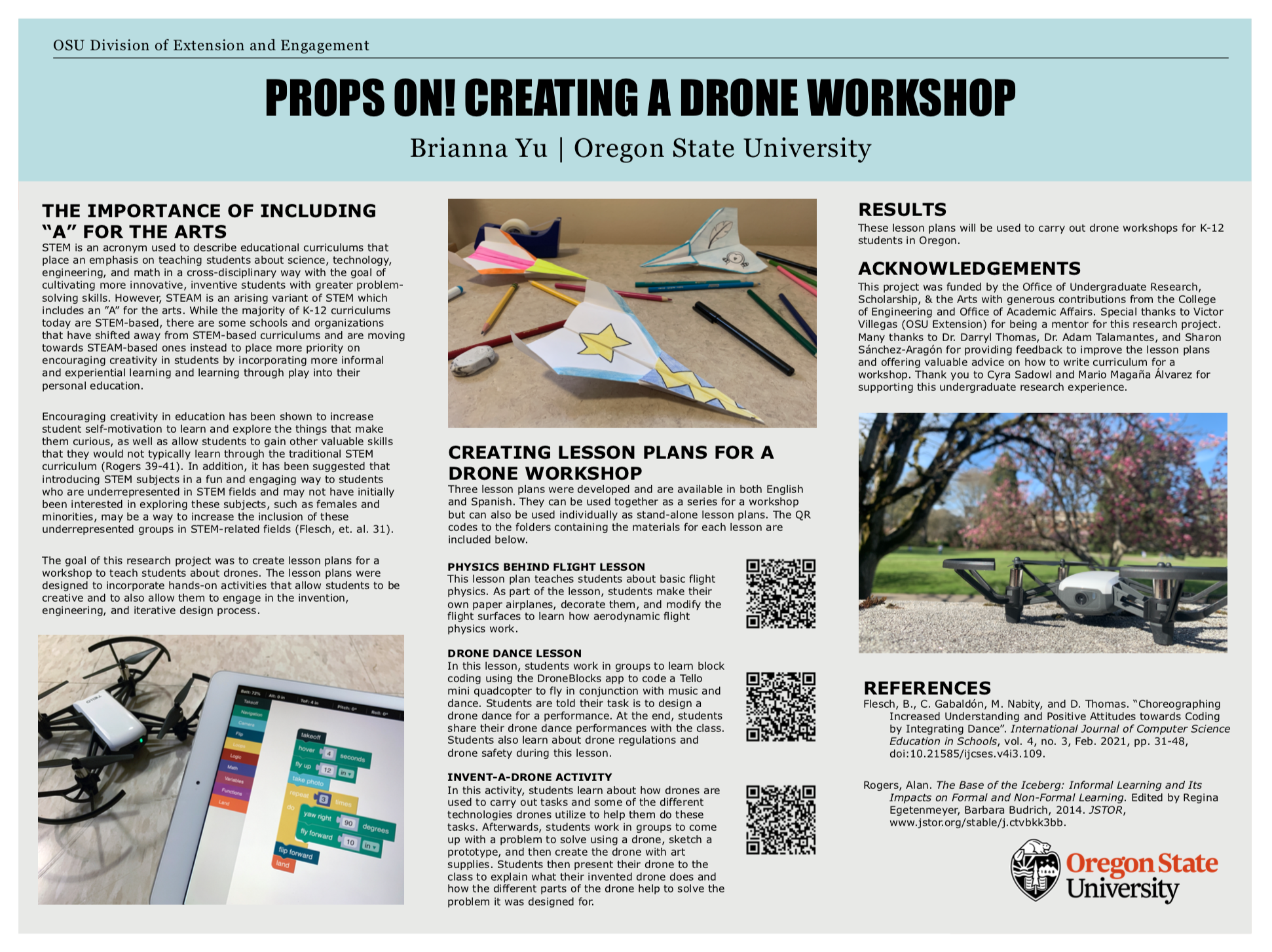
Click image to view poster in new tab.

This is my final blog post after working on my URSA Engage research project for the past 15 weeks. In this post are the links to the folders with all of the lesson plans I created, as well as a final reflection on my experiences.

This project was funded by the Office of Undergraduate Research, Scholarship, & the Arts with generous contributions from the College of Engineering and Office of Academic Affairs. I would like to sincerely thank Victor Villegas (OSU extension) for being a fantastic research mentor for me throughout this entire project. I would also like to thank to Dr. Darryl Thomas, Dr. Adam Talamantes, Sharon Sánchez-Aragón, Cyra Sadowl, and Mario Magaña Álvarez for helping me throughout the development of the lesson plans by offering valuable advice and feedback, as well as supporting my professional development as a part of this undergraduate research experience.

Lesson Plans

Below are the links to the folders containing each of the lesson plans that I worked on creating (please feel free to use them):

Physics Behind Flight Lesson: Link

Invent-A-Drone Activity: Link

Drone Dance Lesson: Link

FINAL REFLECTIOn

From February 2022 to June 2022, I participated in the URSA Engage undergraduate research program at Oregon State University (OSU).  In this program, I worked with OSU faculty mentor Victor Villegas to do research on creative STEAM outreach activities for students from underserved and underrepresented communities.  This project culminated in creating three lesson plans available in English and Spanish that can be used in workshops to teach K-12 students about drones, the arts, and coding.

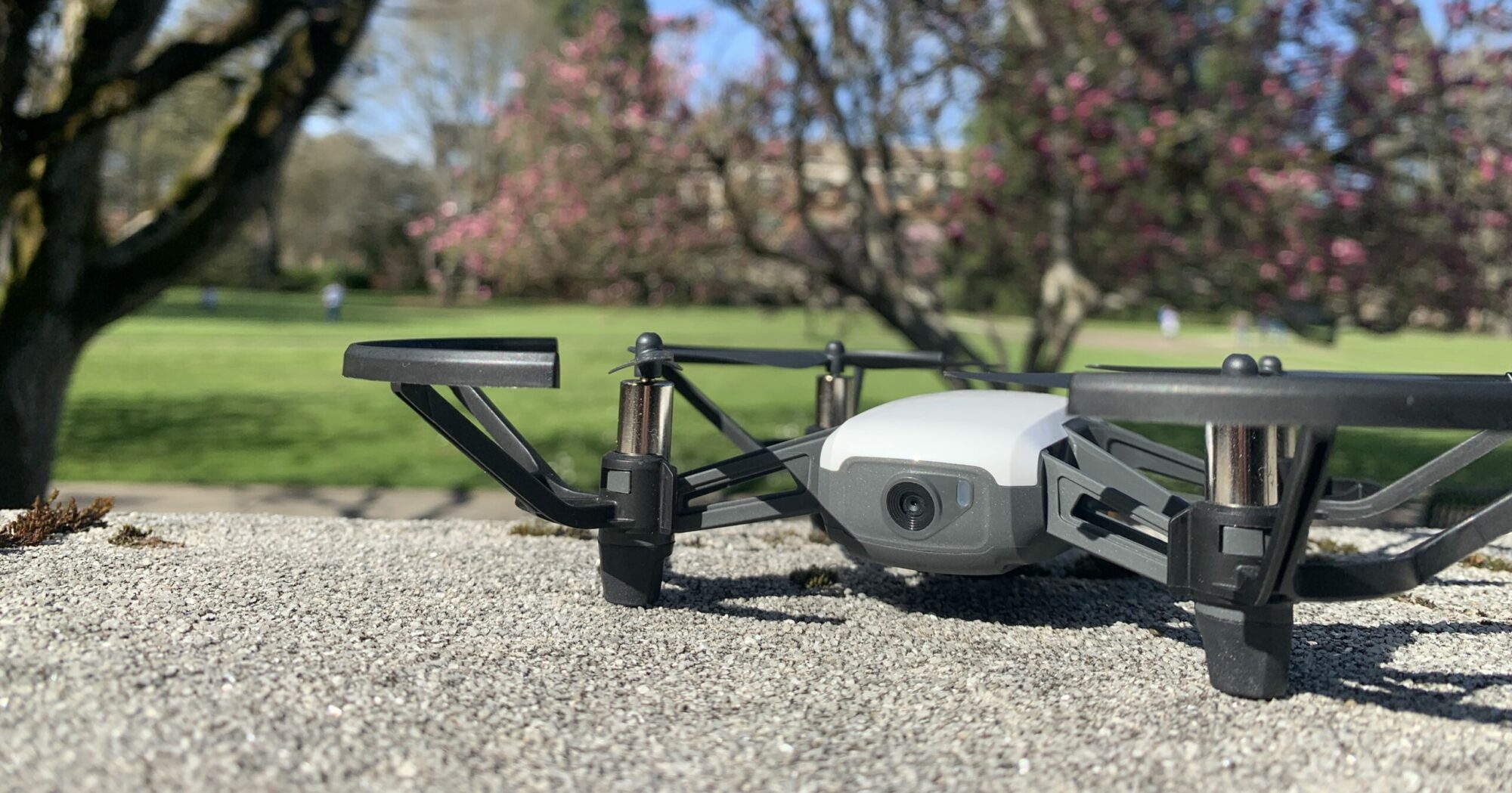
The arts are very important to develop creativity and soft skills (such as teamwork, problem solving, and divergent thinking) in students that they otherwise would not develop through a curriculum that does not include an emphasis on the arts. I worked with my research mentor to create lesson plans to teach students about drones and coding using creative activities.  I created three lesson plans which can be used in series for a workshop or just as standalone lessons. The first lesson plan is a Physics Behind Flight Lesson that teaches students basic flight physics.  After the lesson, students create and decorate their own paper airplanes and experiment with modifying the flight surfaces to see how the modifications affect the way the plane flies.  The second lesson plan is an Invent-A-Drone Activity where students learn about how drones are used to solve real-life problems and then work in groups to design and build a drone using art supplies to solve a problem of their choice.  The third lesson plan is a Drone Dance Activity where students work in groups to code a Tello mini quadcopter to fly in conjunction with music and dance using the DroneBlocks app on an iPad.  All of these lesson plans are posted and available on this blog.

Throughout the process of developing these lesson plans, I connected with many professionals through informational interviews.  I interviewed people about the work that they do surrounding creative STEAM outreach to students from underserved and underrepresented communities and their experiences with creating curriculum to get feedback on the lesson plans.  The help and support from these individuals were invaluable to developing these lesson plans.

This was my first experience doing a project with a mentor, and my mentor was a big help and support. I met with him once a week over Zoom to check in about questions I had and to discuss my progress of the lesson plans I was creating. Aside from providing support, my mentor also pushed me to grow professionally, such as encouraging me to do informational interviews to practice my speaking and interpersonal skills. This mentoring relationship contributed to making this research project a positive experience and helped me grow as I worked on this project.

I was drawn to this research project because it was an applied research project.  I did not think I was interested in research initially, and I also do not have any prior experience working in a lab or doing research at the college level, so I took on this project to see if I could develop more interest in research.  The project was about incorporating the arts into STEM education for youth from marginalized communities, which is something that I am very passionate about.  As a person of color myself, I also desire to champion those in underserved and underrepresented communities.  Furthermore, I have always loved doing art and engaging in creative projects. Having experienced a  K-12 curriculum in my early education, I believe that more creative activities should be incorporated into K-12 education to make learning more fun and exciting.  I am glad that I was able to work on a research project that relates to my interests and allowed me to contribute to causes that I am passionate about.  I hope that the lesson plans I created can make a difference. Even though I plan to go into the field of civil engineering, I want to look into ways that I can continue to support creative STEAM outreach efforts in my future.

I presented my project at the Celebrating Undergraduate Excellence (CUE) Research Showcase in May 2022.  I created a lightning talk to present to people as they walked by my poster at the showcase, and I also got to walk around and hear about other people’s research projects.  This enabled me to be able to practice my presentation skills as well as see what it is like to present at a research showcase.  I anticipate I will be presenting my thesis for my honors degree before graduation, so I was glad to be able to have a presentation experience like this as a part of the research project.

This research experience was something very new to me, and I learned so many new things about research.  I feel that I grew a lot personally and professionally from this experience, and I am deeply grateful for the opportunity to be involved with this research!

Week 15

This week, I presented at the Celebrating Undergraduate Excellence (CUE) research showcase on May 19, 2022. I also spent some time working on a supplemental packet for the Invent-A-Drone lesson.

Presenting at CUE

This week, I spent a lot of time preparing for and presenting at the CUE research showcase. This was my first time presenting at a showcase, and I was excited to present about what I have been working on for the past few weeks. I also got the chance to walk around to see some of the neat research projects of other students from different colleges and departments at Oregon State University.

working on Supplemental packet for invent-a-drone lesson

This week, after hearing about how using the lesson plans to teach some lessons at a local elementary school went, my mentor suggested creating a separate supplemental packet with information about drone technologies and capabilities. This was because, due to time constraints, it was difficult to run the lesson with enough time to go over drone technologies and capabilities as a part of the lessons.

As a result, I worked on creating a supplemental packet so that students can look through it and learn about drone technologies if there is enough time when the lessons are being taught, as well as so that they can reference it for ideas during the Invent-A-Drone activity.

GOALS FOR NEXT WEEK

I hope to review the work I did for the supplemental packet for the Invent-A-Drone lesson with my mentor next week and to see what improvements or additions I can make to it. I also hope to spend some time going back to all of the lesson plans and making any final adjustments. Since the 15 weeks of the URSA Engage program is coming to an end soon, I would also like to talk about next steps after the program with my mentor and how I can continue staying involved with K-12 STEAM research.

Week 14

This week, I met with Professor Sharon Sánchez-Áragon and finished working on the Physics Behind Flight lesson plan.

MEETING WITH PROFESSOR SHARON SÁNCHEZ-ÁRAGON

This week, I had the opportunity to meet with Professor Sharon Sánchez-Áragon, an instructor in the College of Education at Oregon State. She has background and experience in bilingual teaching for English and Spanish, and I reached out to her to see if we could meet in person to go over the lesson plans.

During our meeting, she gave me some feedback on some small changes to make to the lesson plans, and she also offered to help edit the student handouts that I wrote in Spanish. She also informed me about how I could also reach out to her if I would like to connect with someone in the College of Education to use these lesson plans to teach younger students in some of the programs they have there in the future. I was really grateful for her feedback and help on the lesson plans and to hear about the work that she does.

FINISHING THE PHYSICS BEHIND FLIGHT LESSON PLAN

This week, I also finished working on the Physics Behind Flight lesson plan. I translated the student handout into Spanish, and I finished adding extra notes and instructions for teachers. I also worked on making a worksheet for a supplemental activity where students can make and decorate paper airplanes and then experiment with changing the flight surfaces (such as the wings) to see how it changes the way the airplane flies. This lesson plan was used by my mentor Victor Villegas to teach a lesson at a local elementary school on May 13, 2022.

GOALS FOR NEXT WEEK

With the Physics Behind Flight lesson plan being used to teach a lesson at an elementary school last week, I look forward to hearing from my mentor about how it went. After this, I would like to make any changes to the lesson plan based on what can be improved. A drone workshop using all of the lesson plans is tentatively planned on May 29, 2022 at the Oregon State University Lincoln County Office of Extension, so I would like to make sure that the lesson plans are all ready to be used. I look forward to helping out with the workshop.

This coming week, I will be presenting my research poster at the Celebrating Undergraduate Excellence (CUE) research showcase on May 19, 2022. I am excited to share what I have been doing as a part of this URSA research project, and I hope to spend some time preparing for the showcase this week.

Week 13

This week, I worked on creating a lightning talk presentation to prepare for the Celebrating Undergraduate Excellence (CUE) Research Showcase, added finishing touches to all of the lesson plans to make them ready for public use, and then continued working on the Physics Behind Flight lesson plan.

WORKING ON A LIGHTNING TALK PRESENTATION

This week, I prepared a lightning talk for CUE. I began working on a PowerPoint presentation, and I also prepared a script. I am looking to practice presenting what I have so far to my mentor next week. CUE will be my first time presenting at a research showcase, so I plan to spend a lot of time over the next two weeks practicing my presentation.

EDITING THE PREVIOUS LESSON PLANS

As a part of my work this week, I also wanted to go back through all of the lesson plans to make sure that they will be ready for public use.

CONTINUING TO WORK ON THE PHYSICS BEHIND FLIGHT LESSON PLAN

Finally, I also continued to work on the Physics Behind Flight lesson plan. My mentor suggested adding a couple more things, as well as finding a good image diagram that shows lift and Bernoulli’s principle to replace one that I originally added to the student handout. I spent a lot of time looking at for diagrams online, and I ended up finding one. However, I was not sure if it demonstrated the concept much better. I would like to show the photo to my mentor this week to see if it is better than the one I originally found. Otherwise, I will try to create my own diagram to add to the lesson plan.

I also tried looking for some standards to list for this lesson plan, but I had some trouble finding standards relating to physics for students in grades 6-8. During my next meeting with my mentor, I would like to ask about what kinds of standards could be related to what is taught in this lesson plan.

GOALS FOR NEXT WEEK

My goal for next week is to finish the Physics Behind Flight student packet, work on the teacher guide for the Physics Behind Flight lesson plan, and then translate the student packet into Spanish. In addition to this, I will also be meeting with Professor Sharon Sánchez-Aragón this week to talk to her about the lesson plans, which I look forward to. I will also continue working on preparing my slideshow and speech for CUE.

Week 12

This week, I finished and submitted my research poster for the Celebrating Undergraduate Excellence (CUE) Showcase, continued working on the Physics Behind Flight lesson plan, and reached out to Professor Sharon Sánchez-Aragón to review the drone workshop lesson plans that I have been working on.

RESEARCH POSTER FOR CUE

I finished my research poster this week, and I included it in this blog post. Last week, I received helpful feedback from my mentor Victor Villegas on ways to improve my writing and to make it look nicer on the poster. I also added some QR codes to the poster for each of the lesson plans. I am excited to present my research at CUE later this month!

Click on the image to open poster in new tab.
CONTINUING TO WORK ON THE PHYSICS BEHIND FLIGHT LESSON PLAN

This week, I also continued to work on the student handout for the Physics Behind Flight lesson plan. My mentor asked me to add some more information about Newton’s Laws of Motion, Bernoulli’s Principle, and the gyro effect so that students can learn about the physics behind how drones fly in a bit more detail. I would like to show the updated student handout to my mentor again next week to see what else I can do to improve.

GOALS FOR NEXT WEEK

This week, I also contacted Professor Sharon Sánchez-Aragón to review the lesson plans I have been working on. Professor Sánchez-Aragón is an instructor for students in the English as a second language (ESOL) and Dual Language Programs at Oregon State University. She also has background in bilingual teaching for English and Spanish. I would like to ask her if she would be willing to provide feedback on the lesson plans, especially the Spanish versions of the student materials, since my Spanish proficiency is elementary.

In addition to this, I plan to continue making revisions to the Physics Behind Flight student handout. Once I have finished, I would like to translate it into Spanish and then create the plan for this lesson.

Week 11

This week, I worked on writing revisions to the student packets for the Drone Dance and Invent-A-Drone lesson plans.  In addition to this, I finished drafting the student handout that I was designing for the Physics Behind Flight lesson plan and created a poster for the Celebrating Undergraduate Excellence showcase happening in May 2022.

WORKING ON THE PHYSICS BEHIND FLIGHT LESSON PLAN

This week, I continued working on the student handout for the Physics Behind Flight lesson.  My first draft of the handout is linked here.

WORKING ON A RESEARCH POSTER FOR THE CUE SHOWCASE

This week, I also worked on making a research poster for the Celebrating Undergraduate Excellence showcase about what I have been working on for URSA Engage so that I can present at the showcase in May.  This was my first time creating a research poster and working with the Oregon State University branding guidelines. I have almost finished my poster draft, and I would like to show it to my mentor during our next meeting to ask for some feedback before I submit it for printing.

GOALS FOR NEXT WEEK

My goals for next week include finishing and submitting my poster for the CUE showcase, continuing to revise the student handout for the Physics Behind Flight lesson plan, and finishing writing up the lesson plan for the Physics Behind Flight lesson.

Week 10

This week, I continued working on the Build-A-Drone lesson plan and began working on a Physics Behind Flight lesson plan.

CONTINUING TO WORK ON THE BUILD-A-DRONE LESSON PLAN

During our meeting last week, my mentor suggested adding a section to the Build-A-Drone lesson plan that shows some examples of jobs that drones can do, as well as what kinds of technologies (such as sensors and cameras) they use to do those jobs. This is to provide students with some real-life examples of drones being used to solve problems and the kinds of technologies that drones can use, which can give them inspiration for the drones that they make later during the workshop. After adding this content to the English version of the student packet, I also translated it and added it to the Spanish version of the student packet.

BEGINNING TO WORK ON A PHYSICS BEHIND FLIGHT LESSON PLAN

This week, I also began working on a lesson plan on the Physics Behind Flight. I started working on the lesson plan, and I also started working on a student worksheet. In this lesson plan, students get to learn about some of the physics that allow aircraft to fly. Afterwards, they get to decorate their own balsa gliders or paper airplanes that they can fly. I was able to get started on the lesson plan document and make progress on the student worksheet.

GOALS FOR NEXT WEEK

Next week, I would like to continue working on the Physics Behind Flight lesson plan. I still need to add the education standards to the lesson plan, add extra notes for instructors, and finish the worksheet. I would also like to translate the worksheet into Spanish.

In addition, during this coming week, I plan to work on submitting my registration for the Celebrating Undergraduate Excellence (CUE) Showcase so that I can present what I have been working on during this URSA Engage project in May 2022.

I will also meet with my mentor again next week. During the meeting, I would like to share the progress that I have made on both lesson plans. I would especially like to talk to my mentor about the Physics Behind Flight lesson plan. I did my best to research the topics (aerodynamic forces and principal axes), but since I do not have much background knowledge in physics, I would like to double-check that the information that I put on the worksheet is correct. I would also like to ask for some feedback from my mentor on how the worksheet looks so far.

Week 9

This week, I worked on finishing up the Drone Dance lesson plan, met with Dr. Adam Talamantes to talk about my lesson plan, and worked on creating a Build-A-Drone lesson plan.

READING ABOUT THE IMPACT OF USING DANCE TO TEACH STUDENTS ABOUT CODE

This week, I read the article “Choreographing Increased Understanding and Positive Attitudes towards Coding By Integrating Dance” by Breeann Flesch, Camila Gabaldón, Matthew Nabity, and Darryl Thomas. All of the authors of this article are from Western Oregon University, and the article was published in Volume 4 No. 3 of the International Journal of Computer Science Education in Schools.

The article was about the effect of integrating dance into coding lessons to increase the participation of minority students in coding by improving their attitudes towards coding, as well as by teaching coding in a way that is fun and engaging for them.

The article mentioned Peppler’s eight guiding principles of STEAM-powered computing education that were utilized in the coding lessons used with the students. The different parts of the coding lessons were described in the article, and these guiding principles were referenced throughout as they were addressed by the lesson. After reading about these, I would like to see if the lesson plans that I am working on already meet any of these principles and to see if I can incorporate more of them to further improve the lesson.

It was really awesome to hear about some of the student responses in the article saying that they felt more comfortable with coding and had a positive experience after participating in the lesson. It was also neat to read that the authors of the article are looking into creating a college class for college students to learn about coding through dance as well. I think that the research the authors are doing is really impactful, and they are doing it on a topic that I think is really valuable to continue exploring.

MEETING WITH DR. ADAM TALAMANTES

This week, I also met with Dr. Adam Talamantes. Dr. Talamantes is a part of Oregon State’s Pre-College Programs and helps with the Science and Math Investigative Learning Experience (SMILE) program.

During the time that I met with Dr. Talamantes, I asked him more about the work that he does and about the SMILE program. I found out that he is also working on doing a literature review on how programs can support problem-solving, creativity, and innovation in students through using technology, as well as creating an evaluation that can be useful for evaluating lessons and workshops like the one that I am working on. I also got to hear more about the SMILE program, which provides STEM education to students through after-school and summer programs.

I was really grateful to also be able to get some feedback from Dr. Talamantes on my Drone Dance lesson plan. I appreciated the suggestions that he gave me, such as adding extra activities and changing the ones that I already included to provide students with more opportunities to engage in teamwork. Examples included adding an “ice breaker” activity at the start of the workshop, which not only warms students up to the material that will be taught during the workshop, but also warms them up to the other students on their team. He also suggested adding more pictures, making things more interactive, and providing demonstrations for students in real time to make the workshop more friendly to them. I really appreciated his feedback based on his experiences working with students.

CREATING A BUILD-A-DRONE WORKSHOP LESSON PLAN

In addition, I also worked on a Build-A-Drone lesson plan. This lesson is slightly simpler than the Drone Dance one, but students get to work in teams to draw and design a drone to solve a problem of their choice. Afterwards, they get to use arts and crafts materials to create that drone in real life, which they will present to the class to explain what the drone does and the different design choices they made. The link to the lesson plan is included here. Like the Drone Dance workshop, I worked on making both an English and a Spanish version of the student packet so that the lesson can be taught to a wider audience of students. I was able to completely finish the plan for this lesson this week, and I plan to present it to my mentor this coming week to get some feedback.

GOALS FOR NEXT WEEK

I will be meeting with my mentor Victor Villegas the next week, and I look forward to sharing the progress I made with the Drone Dance and Build-A-Drone lesson plans. My goal for next week is to begin working on a lesson plan for the physics behind flight that can teach students a bit more about how drones fly. I also want to set aside some time to make changes to the Drone Dance lesson plan based on Dr. Talamantes’s feedback from our meeting, as well as to add some final touches to the slideshow presentation for that lesson to finalize it.

Week 8

This week, I met with Mr. Mario Magaña Álvarez, an Outreach Specialist for 4-H Youth Development, for an informational interview about his work helping students from underserved and underrepresented communities. I also continued working on finishing up my drone dance lesson plan, translating the student packet into Spanish, and beginning to work on the PowerPoint presentation that goes with the lesson plan.

MEETING WITH MARIO MAGAÑA ÁLVAREZ

This week, I was very lucky to be able to meet with Mr. Mario Magaña Álvarez. He works with the 4-H Youth Development Program, which is a network of educators and volunteers that help youth develop professional skills while learning about various career pathways. The main way that this program supports this is by providing students with valuable hands-on experiences through experiential learning. I found out that he works as an outreach specialist to recruit students to participate in the program, as well as volunteers to help run the program. I asked about what kinds of work volunteers can help with, and he told me that volunteers are welcomed throughout the year to help out with the different programs and activities, as well as to help with camps that are held during the summer.

It was really great to hear about the amazing work that Mr. Magaña does with 4-H. I was really glad for the opportunity to get to meet with him and learn more about what 4-H does.

continuing to work on my lesson plan

I also continued to work on my lesson plan this week. I looked at the Oregon Visual Arts Education Standards and added the standards covered by the curriculum into the lesson plan so that teachers who use the curriculum can use it to teach about computer science and/or visual arts. I also finished adding the additional instruction notes for teachers to the teacher version of the student packet included in the lesson plan. After completing this, I now have a finished version of the lesson plan in English. I also began working on creating the PowerPoint presentation that complements the lesson plans.

In addition to doing this, I also translated the student packet into Spanish so that it can be accessible to a wider range of students. I eventually hope to create a version of the PowerPoint presentation that is in Spanish as well.

However, since I now have a finished version of the lesson plan, I would like to get feedback on ways that I can still improve it before it gets used for a workshop.

goals for next week

Next week, I would like to reach out to Dr. Adam Talamantes from the Office of Precollege Programs at OSU to see if I can talk to him about my lesson plan. Dr. Talamantes is a Program Coordinator for the Science and Math Investigative Learning Experience (SMILE) program, which provides underprivileged and underrepresented students gain STEM skills through afterschool science, math, and engineering programs. I think it would be really valuable to review my lesson plan with him and to hear about some of his experiences working as a Program Coordinator for SMILE. I would also like to talk with my mentor again about the progress that I have made on the lesson plan.

In addition to this, I would also like to continue working on the PowerPoint presentation to go with the lesson plan. I plan on contacting Dr. Cythia Reséndiz, and Oregon Coast STEM Hub Director for Oregon State University, to see if there is anything that I can do to help out with the planning of an in-person workshop using this lesson plan that will happen around April or May 2022.

Finally, I would also like to register for the Celebrating Undergraduate Excellence (CUE) Showcase in May 2022 to present the work that I have been doing as a part of URSA Engage.

Week 6

This week, I met with my mentor, met with Professor Darryl Thomas from Western Oregon University for an informational interview, and continued working on a lesson plan for a Drone Dance workshop.

MEETING WITH MY MENTOR

During our meeting this week, my mentor Victor Villegas taught me about the physics of how quadcopters work. I included information about how drones fly in the curriculum that I am working on, and hearing from my mentor about how drones worked helped me to better understand the content that I was putting into my lesson plan.

MEETING WITH PROFESSOR DARrYL THOMAS

I also had the amazing opportunity to meet with Professor Thomas this week. He is a Professor of Dance and Theatre at Western Oregon University (WOU). In addition to teaching classes at WOU, he has also created many lessons through the Mid-Valley STEM-CTE Hub including Code Can Dance lesson videos for STEM Week 2021 and Drone Dancing Summer Camps.

During the interview, I asked him some questions about his experiences with creating dance-related STEAM workshops in the past and also received helpful suggestions for what my workshop lesson plan so far. He helped me identify some of the computer science standards that my lesson plan worked with. His feedback also brought my attention to things that I needed to think about a lot more, such as providing teachers with instructions on how to work with drones (such as having a place for students switch out their drone batteries when they run out and establishing a protocol for students if propellers happen to come off their drones). He made some recommendations for things to change in some of my writing, such as using more concrete examples and fewer abstract ones to make the lesson packet more kid-friendly, as well as including more drone safety suggestions that I had not originally thought about.

It was really helpful to get feedback from someone who has had a lot of past experience creating lesson plans and working with Tello drones. I was really grateful for the chance to be able to talk with Professor Thomas.

CONTINUING TO WORK ON MY LESSON PLAN

After the interview, I continued working on my lesson plan both by adding on to the draft I started last week as well as adding and changing things based on Professor Thomas’s suggestions. Here is the link to my lesson plan draft so far.

After meeting with Professor Thomas, I ended up having some questions that I wanted to ask my mentor about the next time we meet. The first thing I wanted to ask about was if I should put a recommendation about how many Tello drones and batteries teachers should obtain if they want to do the lesson plan. I was hoping that my lesson plan could be usable by any teacher who might want to use it (not just a lesson plan that is can only be carried out exclusively by an organization that provides the drones and batteries, for example), but having limited numbers of these could be something that makes it hard for the lesson plan to be accessible to anyone who wants to use it.

The second thing that I wanted to ask about was if I should explain in the lesson plan how certain computer science standards (for grades 6-8) are met by the curriculum. There were a couple of standards that could be met by my lesson plan, but I was not sure how apparent they could be to someone unless I included additional explanation. I also was wondering if I should include more guidance to the instructor who would be teaching the lesson or if the information that I have written for the instructor (which is currently just the lesson plan outline with a list of the standards met by the lesson) could be more specific or include more guidance.

GOALS FOR NEXT WEEK

This coming week, I will be meeting with my mentor again, and I look forward to sharing the progress on my lesson plan so far. I also plan on continuing to work on my lesson plan during the week. In addition to continuing to make edits and revisions, I want to work on formatting to make it more kid-friendly (such as working with spacing and possibly adding more pictures) and getting started on the PowerPoint presentation that will go along with the lesson plan.