Week 6

This week, I met with my mentor, met with Professor Darryl Thomas from Western Oregon University for an informational interview, and continued working on a lesson plan for a Drone Dance workshop.

MEETING WITH MY MENTOR

During our meeting this week, my mentor Victor Villegas taught me about the physics of how quadcopters work. I included information about how drones fly in the curriculum that I am working on, and hearing from my mentor about how drones worked helped me to better understand the content that I was putting into my lesson plan.

MEETING WITH PROFESSOR DARrYL THOMAS

I also had the amazing opportunity to meet with Professor Thomas this week. He is a Professor of Dance and Theatre at Western Oregon University (WOU). In addition to teaching classes at WOU, he has also created many lessons through the Mid-Valley STEM-CTE Hub including Code Can Dance lesson videos for STEM Week 2021 and Drone Dancing Summer Camps.

During the interview, I asked him some questions about his experiences with creating dance-related STEAM workshops in the past and also received helpful suggestions for what my workshop lesson plan so far. He helped me identify some of the computer science standards that my lesson plan worked with. His feedback also brought my attention to things that I needed to think about a lot more, such as providing teachers with instructions on how to work with drones (such as having a place for students switch out their drone batteries when they run out and establishing a protocol for students if propellers happen to come off their drones). He made some recommendations for things to change in some of my writing, such as using more concrete examples and fewer abstract ones to make the lesson packet more kid-friendly, as well as including more drone safety suggestions that I had not originally thought about.

It was really helpful to get feedback from someone who has had a lot of past experience creating lesson plans and working with Tello drones. I was really grateful for the chance to be able to talk with Professor Thomas.

CONTINUING TO WORK ON MY LESSON PLAN

After the interview, I continued working on my lesson plan both by adding on to the draft I started last week as well as adding and changing things based on Professor Thomas’s suggestions. Here is the link to my lesson plan draft so far.

After meeting with Professor Thomas, I ended up having some questions that I wanted to ask my mentor about the next time we meet. The first thing I wanted to ask about was if I should put a recommendation about how many Tello drones and batteries teachers should obtain if they want to do the lesson plan. I was hoping that my lesson plan could be usable by any teacher who might want to use it (not just a lesson plan that is can only be carried out exclusively by an organization that provides the drones and batteries, for example), but having limited numbers of these could be something that makes it hard for the lesson plan to be accessible to anyone who wants to use it.

The second thing that I wanted to ask about was if I should explain in the lesson plan how certain computer science standards (for grades 6-8) are met by the curriculum. There were a couple of standards that could be met by my lesson plan, but I was not sure how apparent they could be to someone unless I included additional explanation. I also was wondering if I should include more guidance to the instructor who would be teaching the lesson or if the information that I have written for the instructor (which is currently just the lesson plan outline with a list of the standards met by the lesson) could be more specific or include more guidance.

GOALS FOR NEXT WEEK

This coming week, I will be meeting with my mentor again, and I look forward to sharing the progress on my lesson plan so far. I also plan on continuing to work on my lesson plan during the week. In addition to continuing to make edits and revisions, I want to work on formatting to make it more kid-friendly (such as working with spacing and possibly adding more pictures) and getting started on the PowerPoint presentation that will go along with the lesson plan.

Week 5

This week, I met with my mentor to share the curriculum that I created last week, worked on creating a drone dance workshop lesson plan based on that curriculum, and used a Tello quadcopter drone for the first time.

CREATING A DRONE DANCE LESSON PLAN

This week I began creating a drone dance lesson plan. Here is the document with what I have drafted so far.

So far, the lesson plan consists of an introduction to different drone types that exist, as well as drone safety. In addition to this, the lesson plan explains the different types of commands that can be used in DroneBlocks for coding. After students understand what kinds of coding commands they can use, they will be able to work in groups to create their own drone dances to music. Then, students can create a title for their drone performance and write an artist statement about the different coding choices they made. This is then followed by students sharing their drone dances with each other.

I started creating a packet (also included in the document with the lesson plan) that will be provided to students, where they can do different reflection activities, as well as keep as a resource after the workshop as a guide in case they want to continue exploring drones and coding on their own. I was not able to completely finish the whole lesson plan or resource packet this week, but I will continue working on these over the next week. I also plan to share what I have done so far with my mentor to get some feedback, as this is also my first time creating a lesson plan. I tried referencing the computer science education standards for grades 6-8 for Washington since Oregon does not have any publicly available computer science standards yet. The curriculum that I made satisfies a lot of the standards, but there were a few standards that I was not sure how to incorporate yet.

Using a tello QUADCOPTER drone

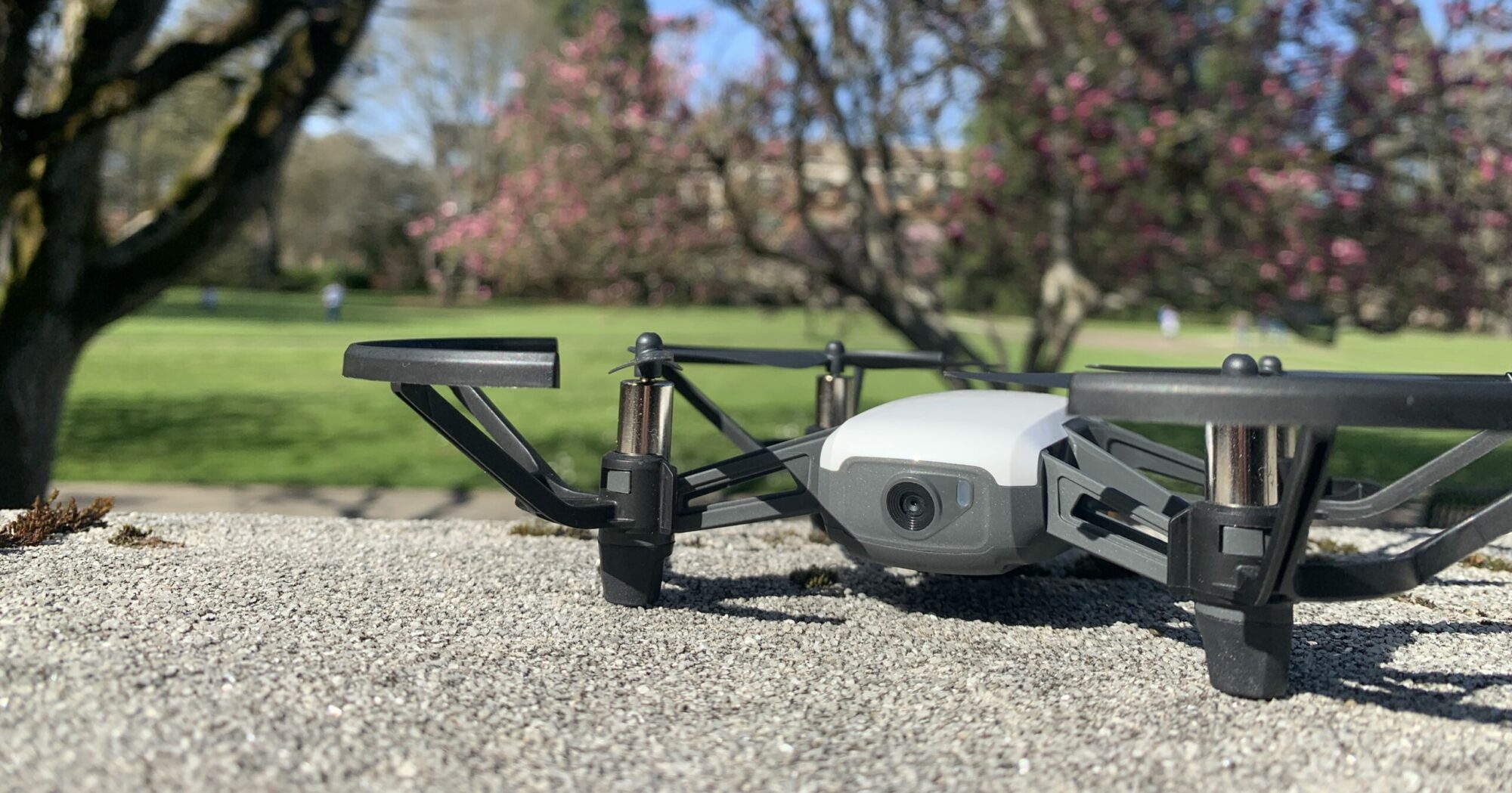
This week was also the first time I tried using a Tello quadcopter drone. It is important to me that I understand how to code and use a Tello drone since I am creating a curriculum that uses these. Eventually, I plan to try creating a drone dance to music to test out the curriculum that I made, but this week, I spent some time just trying to figure out how to get the drone to work and to try coding it with the DroneBlocks app. I have not had any experience with drones or coding, so this was something new to me.

I thought it was really nice how the app was created so that people who have no prior experience with coding can easily use it to play around with drones. I had a lot of fun playing around with it this week. It was very simple to make the drone take off, turn, flip, hover, and even take pictures. There were some commands that I was not sure how to use yet (logic, math, variables, and functions), so I plan to research those a little bit more to understand what they do.

However, something that I noticed as I was playing around with the drone was that the 13 minutes of battery life that the drone has goes by really fast. When the drone ran out of battery, it has to be recharged for another 90 minutes before it can be used again. I thought that this could be a challenge when using the Tellos for a drone dance workshop. It could be framed as an engineering constraint, but I think it would be quite challenging for students to design a drone dance if there is a limit to how many times students can test out their code before the drones run out of battery.

Goals for next week

This coming week, I hope to continue working on the drone dance curriculum and getting more familiar with using the Tello drone. I also plan on meeting with my mentor to share the progress on my drone dance curriculum and to get some feedback on how it looks so far.

In addition, I will be meeting with Professor Darryl Thomas, a Professor of Dance at Western Oregon University, for an informational interview. He has done a Code Can Dance workshop for the Mid-Valley STEM-CTE Hub STEM Week 2021, and I would like to ask him about his experiences with planning a curriculum that connects STEM to the arts.

Week 4

This week I met with my mentor and worked on creating my own curriculum incorporating drone activities.

DECIDING ON A CURRICULUM TO MAKE

This was my first time creating a curriculum. It was interesting to try planning a curriculum and see how teachers and educators have to work with standards when planning out their courses. I ended up creating a draft for an art class curriculum this week. The curriculum allows students to explore both the visual arts, as well as creating art in the form of a drone dance.

When deciding which grade level to create a curriculum for, I chose to try and create a high school curriculum so that students could be able to explore STEAM subjects to decide if it is something they might be interested in doing as a future career.

During the brainstorming process, I also looked at the various subjects that I could try to incorporate drones into while still meeting the curriculum standards. I was originally looking to create a technology or computer science curriculum, but I was not able to find any publicly available standards for those subjects on the Oregon Department of Education standards website. My second plan was to incorporate drones into another STEM subject such as science or math. However, I was conflicted because the standards for these subjects were quite specific, and I was hoping to create a curriculum that focused less on learning outcomes to allow flexibility for students to experiment with the drones without worrying as much about reaching a certain end product.

As a result, I tried looking at the arts standards to see if somehow incorporating drones into an arts course could increase creative freedom for students. I recently saw some neat drone videos online where engineers used drones to create pictures in the sky, which I thought was really awesome. The video that I saw was Verge Aero flying drones on America’s Got Talent Extreme. I thought that creating a drone dance could be considered a contemporary art, which led to my idea of incorporating drones into an art class. I also thought that doing this could be a great way to show students the overlap that STEM and the arts can have, as well as allow students to explore drones and coding without the strict standards of STEM subjects. I thought that this class could also work as a way to provide students the opportunity to explore both the arts and computer science/coding within one semester.

SUMMARY OF THE CURRICULUM

Below is the Excel file where I drafted my plan for the curriculum:

I looked at the Oregon Department of Education’s high school visual arts standards and tried to use those to create a semester curriculum for a high school arts class. The first half of the curriculum (weeks 1–8) are more focused on visual arts, and the second half of the curriculum (weeks 9–16) are focused on coding and creating a drone dance. 

For the first half of the curriculum, some of the activities include having students pick some art pieces made by an artist (of their choice) and doing some research on the artist/art pieces, asking students to reflect on parts of their own identity (culture, traditions, history, values) and write about how this might influence their art/art style, and making various mediums available to students to allow them to create three pieces of their own art for a portfolio centered around a theme or topic that they will submit by the end of the quarter. I took a little bit of inspiration from the intro to visual arts course that I took as a high school freshman.

For the second half of the curriculum, I looked at the DroneBlocks modules online to see if I could incorporate the drone dancing modules into the curriculum to train students on how to code. During this part of the curriculum, students work in groups to create their own drone dance. They will create three drafts of their drone dance over the course of a few weeks (with the third one being their final product), and in between drafts, they will exchange constructive feedback with other groups in the class. This part of the curriculum culminates in students creating a drone dance that they will get to present to the class, and teachers can choose if they would like to allow students in their classes to get to vote for a favorite drone dance in the class.

At the beginning of the semester, students will each be given their own art journals that they can use to plan out their ideas, do reflections, and document their progress on all of the projects that they are doing. At the start of the term, they will be asked to decorate their art journals in a way that expresses who they are. Then, throughout the whole semester, students will be asked to write reflections in their journals in order to reflect on their ideas, progress, and final products that they make. The goal is to grade students on how thoroughly they reflect rather than the final products that they make in order to encourage students to be creative and to enjoy working with different art supplies and with the drones (the salmon-colored cells in the Excel file are activities that are meant to be used for grading). I purposefully wanted to make the curriculum so that students write their reflections about the drone dance activities in their art journals to prevent creating a divide between STEM and the arts (such as by having students write about the drone dance as if it is art instead of asking them to engage in technical writing about their process).

There are definitely a lot of things in my curriculum that I could improve. Although I specified some of the activities that students would be participating in, I have not created specific guidelines for those activities or how they would be graded ( such as based on completion, using a rubric, or something else). I also was not sure about the timing that I planned for all the activities. For example, I allotted 5 weeks for students to work on their drone dances. I was not sure if this could feel rushed or if it was way too long. I look forward to sharing this curriculum with my mentor during our meeting next week to get feedback.

GOALS FOR NEXT WEEK

This coming week, I plan on meeting with my mentor to share the curriculum that I worked on. I look forward to receiving constructive feedback on how I can improve it.